Quick Info
Curated Experiences
Dunhuang Yulin Caves Day Tour
Private Tour to Yulin Caves and Western Thousand Buddha Caves
Silk Road Buddhist Art Excursion from Dunhuang to Yulin Caves
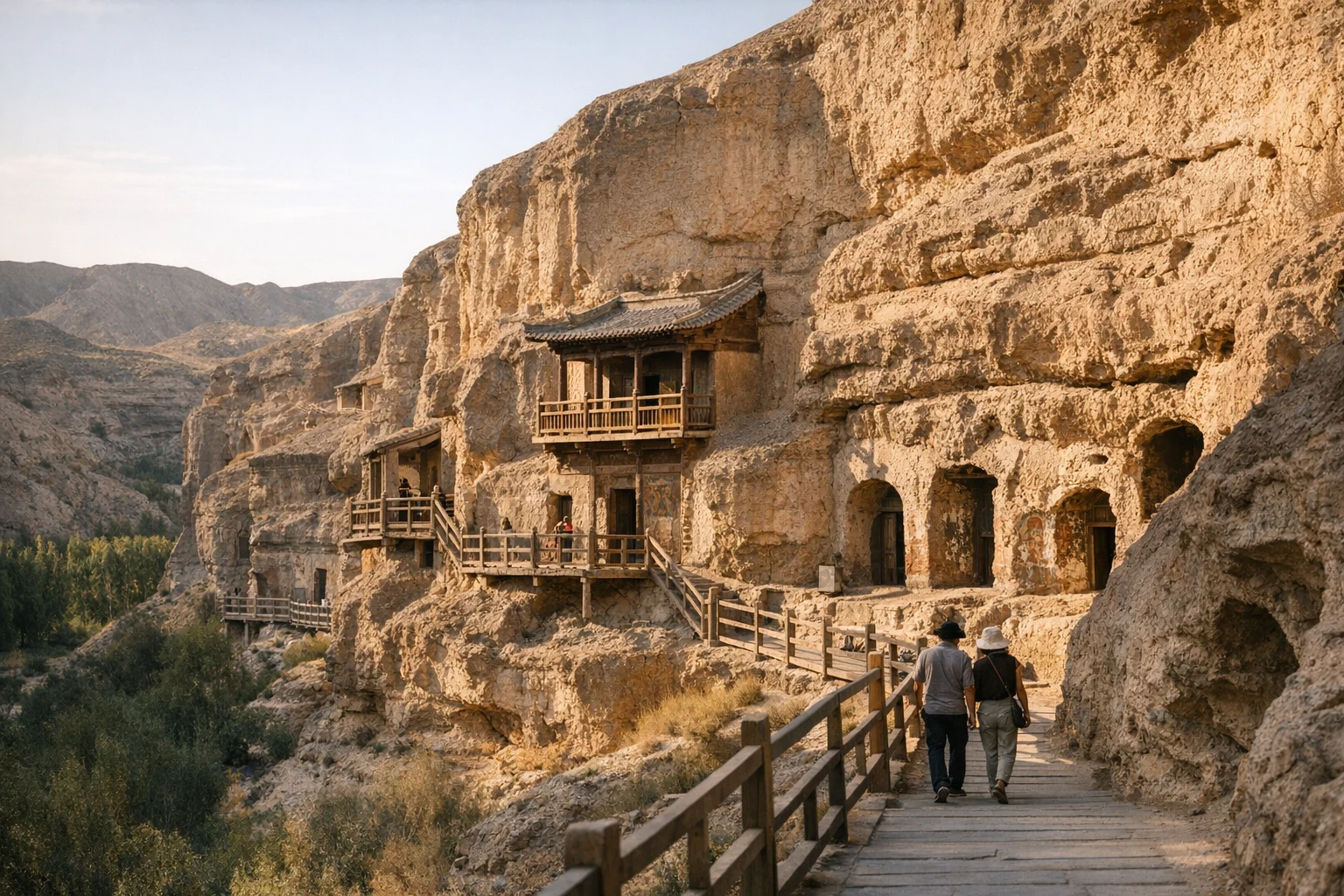
Dunhuang Yulin Caves in China feel like a quieter echo of the Silk Road world, a place where the grandeur of Buddhist cave art survives in a setting more secluded and less immediately famous than nearby Dunhuang’s better-known monuments. Reached through the dry landscapes of Gansu, the site lies in a ravine carved by the Yulin River, where vertical cliffs shelter rows of decorated cave temples cut into the rock. The approach itself helps set the tone. This is not a site that reveals everything at once. The desert opens, the ravine deepens, and then the caves appear as a chain of sacred chambers embedded in the earth, their most extraordinary treasures hidden within walls and ceilings painted centuries ago. The result is both dramatic and inward-looking: a monumental site whose greatest riches are encountered in darkness, pigment, and silence.
For travelers interested in Buddhist art, the Yulin Caves offer one of the most rewarding experiences in northwestern China. The murals here are not incidental decoration. They are the reason the site matters. Painted bodhisattvas, donor portraits, narrative scenes, celestial musicians, mandalas, and richly ornamented architectural illusions transform the cave interiors into complete devotional worlds. Sculptures and painted clay figures deepen that effect, creating environments meant not just to be viewed but to support meditation, ritual, and merit-making along the networks of the Silk Road. Yulin is often compared with the Mogao Caves, and that comparison is useful, but it can also be limiting. The Yulin Caves deserve attention in their own right as a smaller, more intimate concentration of sacred art, where remoteness has preserved a special atmosphere of concentration and stillness.
History
Silk Road Foundations and the Rise of Cave Buddhism
The Yulin Caves developed in the wider historical setting that made Dunhuang and Gansu one of the great crossroads of Eurasian exchange. This region linked the Chinese heartland with Central Asia, and through it moved merchants, monks, manuscripts, artistic styles, and religious ideas. Buddhism was one of the most important currents carried along these routes. As monasteries, shrines, and cave sanctuaries grew across the Silk Road, places like Yulin emerged as nodes in a larger sacred geography. The cave form itself had particular advantages. Rock-cut shrines were durable, symbolically powerful, and adaptable to a range of devotional uses.
The earliest caves at Yulin are generally associated with the Tang period, when Dunhuang and the surrounding region flourished as a meeting point of trade and Buddhist patronage. By this time, cave-temple traditions were already well established in northwestern China, but Yulin developed its own identity within that world. Located away from the main urban center yet still connected to the wider route system, it offered a setting suited to both devotion and retreat. The ravine’s cliffs provided natural walls into which sacred chambers could be excavated, while the relative seclusion of the site helped shape its contemplative atmosphere.
Yulin was never entirely isolated. It depended on the same cultural and economic networks that supported the better-known cave complexes of the region. But its quieter setting gave it a different spiritual and visual character.
Tang Patronage and Artistic Formation
The Tang dynasty was crucial to the growth of Buddhist visual culture across northwestern China, and the Yulin Caves took shape within that broader flowering. Patronage came from multiple directions: local elites, officials, religious communities, and donors seeking merit or prestige. In cave temples, these motives often converged. A donor might support a cave out of piety, political identity, family commemoration, or all three at once. At Yulin, this patronage produced interiors rich with painted programs and sculptural ensembles.
Tang-period art in the caves reflects the cosmopolitan nature of the Silk Road. Styles and iconography show Chinese courtly influence alongside traces of Central Asian and broader Buddhist visual traditions. Murals depict celestial scenes, bodhisattvas in elegant drapery, complex narrative episodes, and idealized sacred landscapes. These images were not intended as isolated panels in the modern museum sense. They formed immersive environments that surrounded worshippers, turning cave interiors into complete visual cosmologies.
This formative phase established Yulin as a site of serious artistic achievement rather than a peripheral imitation of larger centers. Although smaller in scale than Mogao, Yulin preserves works of exceptional refinement, and in some cases the cave paintings are especially prized for their compositional clarity and color.
Song, Western Xia, Yuan, and Later Layers
The history of Yulin did not end with the Tang. The caves continued to be used, painted, restored, and expanded during later periods, including the Five Dynasties, Song, Western Xia, Yuan, and Ming. This continuity is one of the most important things to understand about the site. Like many cave temple complexes, Yulin is not a product of one dynasty alone. It is a layered archive of changing patronage, devotional habits, political contexts, and artistic tastes.
The Western Xia period is particularly significant in the broader Dunhuang region, and Yulin preserves work that reflects the cultural complexity of frontier rule in northwestern China. During these later centuries, some caves received new mural programs while others were repaired or reinterpreted. This kind of reuse is not a sign of decline. On the contrary, it shows that the site remained alive within religious and social networks over long stretches of time. New patrons did not always erase the old; sometimes they added to it, creating chambers where visual history accumulated in layers.
Because of this, Yulin is valuable not only for the beauty of its murals but also for what those murals reveal about continuity. Dynasties changed, trade routes shifted, and political authority moved, yet the cave sanctuary remained meaningful enough to sustain repeated artistic investment.
Modern Study, Preservation, and Controlled Access
In modern times, the Yulin Caves became important to archaeologists, art historians, and conservators studying Buddhist wall painting and Silk Road culture. Their relative remoteness helped preserve them from some of the early destructive tourism and large-scale intrusion that affected other sites, though remoteness also made conservation and documentation more difficult. Over time, greater scholarly attention highlighted the caves as one of the essential companion sites to Mogao, not secondary in significance but complementary in scale and atmosphere.
Today, access is managed carefully. As with many fragile cave sites, conservation needs shape the visitor experience. Not every cave is open at all times, and guided interpretation often forms part of entry. This controlled access can initially feel restrictive, but it serves a real purpose. Murals and painted sculptures are highly vulnerable to humidity, touch, and excessive light. The current visitor model reflects an effort to preserve the site’s artistic and historical value rather than maximize throughput. In that sense, the Yulin Caves remain what they have long been: a place that rewards attention, patience, and respect.
Key Features
The greatest feature of the Yulin Caves is the mural art itself. This is one of those rare places where painted surfaces do not feel like embellishment but like the essence of the site. Once inside, the rock-cut architecture almost disappears behind color, line, and symbolic density. Bodhisattvas appear in graceful poses, celestial beings float across ceilings, donor figures kneel in devotional order, and narrative Buddhist scenes unfold across walls in carefully structured compositions. The paintings transform cave interiors into fully inhabited sacred worlds. Even when pigments have faded or details are worn, the sophistication of the original design remains unmistakable. Yulin’s murals are especially admired for their elegance and for the way they preserve shifts in style across different dynasties.
The sculptural programs add another dimension. Painted clay figures of Buddhas, disciples, guardians, and bodhisattvas project outward from the walls, turning the caves into a dialogue between flat image and three-dimensional presence. These sculptures were not meant to stand apart from the murals. Together they formed devotional environments in which sacred beings seemed to inhabit both the architectural and visual space of the chamber. This integration of painting and sculpture is one of the defining pleasures of cave temple art, and Yulin preserves it beautifully.
The ravine setting is also essential to the site’s identity. Unlike heritage sites that can be mentally separated from their surroundings, Yulin depends on its canyon environment. The cliffs, dry air, narrow river-cut landscape, and silence between cave entrances shape the emotional experience of moving through the site. There is a rhythm to visiting: sunlit exterior, dark cave interior, painted cosmology, then back into the brightness of the ravine. That alternation between openness and enclosure heightens the impact of each chamber. The caves feel less like gallery rooms and more like thresholds into another register of space.
Another key feature is the site’s relative quiet compared with more famous Silk Road cave complexes. Yulin is smaller, yes, but that smaller scale can be an advantage. It often feels more concentrated and contemplative. Visitors are less likely to experience it as a crowded checklist stop and more likely to notice the logic of individual caves, the subtle differences in painting styles, and the way each chamber expresses a particular devotional vision. For travelers genuinely interested in Buddhist art, this intimacy can make Yulin more memorable than larger sites.
The historical layering of the caves also deserves attention as a feature in its own right. Because multiple dynasties contributed to the site, Yulin allows visitors to see how Buddhist imagery evolved across time in northwestern China. Differences in line, color, composition, costume, iconography, and patron portraiture become part of the site’s story. It is not one frozen masterpiece. It is an artistic record of continuity and change on the Silk Road.
Getting There
Most visitors reach the Yulin Caves from Dunhuang, which serves as the main base for exploring this part of Gansu. The caves are located well outside the city, near Guazhou, so a visit typically requires a dedicated excursion rather than casual public transit. By private car or organized tour, the journey from Dunhuang usually takes around 2.5 to 3 hours each way depending on road conditions and route. This makes Yulin a substantial half-day or full-day outing rather than a quick add-on.
Private drivers and guided tours are the most practical options. Many travelers choose packaged excursions because they simplify timing, tickets, and site interpretation. Some tours also combine Yulin with the Western Thousand Buddha Caves or other Silk Road stops in the region. Costs vary by season and vehicle type, but transport is the major expense rather than the cave ticket alone. Independent travelers may be able to arrange taxis or chartered cars through hotels or local operators, though confirming return arrangements is essential.
Public transportation is limited and not ideal for most international visitors. Even if a traveler can get partway toward the area, the last stretch and the timing of site access make independent transit awkward. Bring water, snacks, sun protection, and identification. Because access is controlled and some caves are shown only with guides, advance planning is wise. Yulin works best when treated as a purpose-built excursion, not an improvisation.
When to Visit
The best time to visit the Dunhuang Yulin Caves is usually from late spring through autumn, especially May through October, when roads are easier, temperatures are more manageable, and Dunhuang-based travel is more comfortable overall. These months are also best for travelers combining Yulin with other regional sites such as Mogao, desert landscapes, or passes along the old Silk Road corridors. Warm weather makes the long drive easier and the ravine visit more enjoyable.
Spring and autumn are often the ideal shoulder seasons. The air can be clear, the desert light is excellent for the approach and exterior views, and temperatures are usually far more pleasant than the extremes of midsummer or winter. Summer remains popular because it fits broader travel schedules, but it can be hot and dry, especially during midday. If you go in summer, start early and carry enough water.
Winter visits are possible but less convenient. Cold temperatures, wind, and potentially reduced tourism services can make the trip harder to organize, and the long drive feels more demanding in harsher conditions. Unlike lush landscape sites, Yulin does not depend on seasonal greenery, so visual quality remains strong year-round; the real question is comfort and logistics. Whenever you go, allow time to adjust your expectations. The Yulin Caves are best appreciated slowly, as a site of concentration and detail rather than speed.
| Quick Facts | Details |
|---|---|
| Location | Near Guazhou, Gansu Province, China |
| Best Known For | Buddhist murals, painted sculptures, and remote Silk Road cave temples |
| Cultural Context | Dunhuang-region Buddhist cave sanctuary |
| Main Artistic Periods | Tang, Five Dynasties, Song, Western Xia, Yuan |
| Signature Experience | Entering richly painted cave interiors in a desert ravine |
| Nearby Base | Dunhuang |
| Typical Visit Length | Half day to full day including transport |
| Access Style | Usually by private car or guided tour |
| Best Season | May to October |
| Practical Tip | Plan ahead because access is controlled and transport logistics are significant |
Frequently Asked Questions
What are the Dunhuang Yulin Caves best known for?
The Dunhuang Yulin Caves are best known for their exquisite Buddhist murals, painted sculptures, and quieter, more remote Silk Road cave-temple atmosphere.
How are the Yulin Caves different from the Mogao Caves?
Yulin is smaller, more remote, and less visited than Mogao, but it preserves exceptionally important murals and sculptures that many travelers find more intimate and contemplative.
Where are the Dunhuang Yulin Caves located?
The caves are located in Gansu Province, China, in a river-cut ravine southeast of Dunhuang near Guazhou.
Do you need to book ahead for the Yulin Caves?
Yes, advance planning is recommended because access is controlled, visitor numbers may be limited, and some tours combine transport with guided entry.
How much time should you spend at the Yulin Caves?
Most travelers spend half a day to a full day including transport, with around 1.5 to 3 hours on site depending on the caves open for viewing.
When is the best time to visit the Dunhuang Yulin Caves?
Late spring to autumn is usually best, when road conditions are easier, temperatures are more comfortable, and Dunhuang-based sightseeing is simpler to organize.
Nearby Ancient Sites
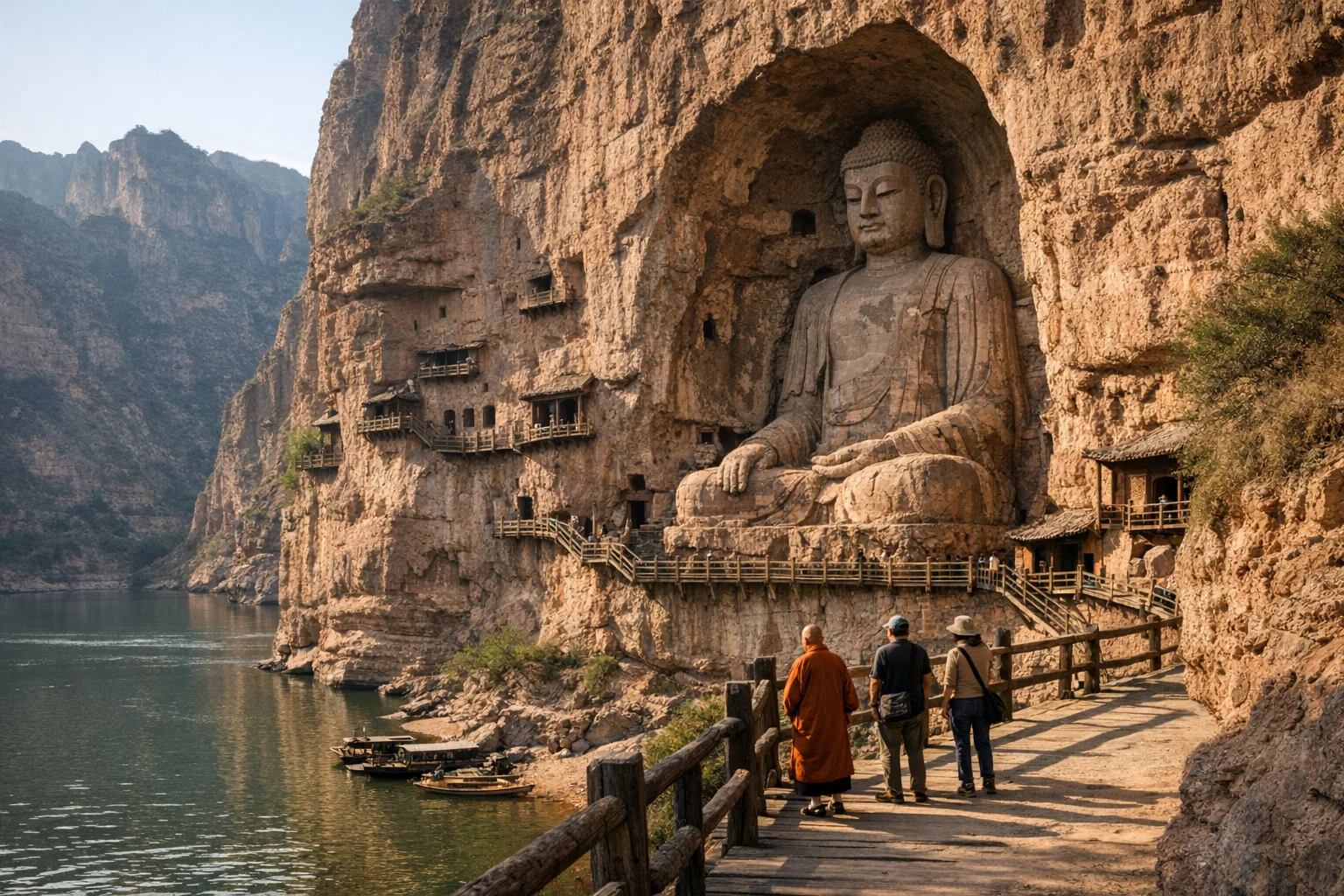
Bingling Temple Grottoes
Chinese BuddhistExplore China’s Bingling Temple Grottoes, a dramatic cliffside Buddhist cave complex of statues, mur...
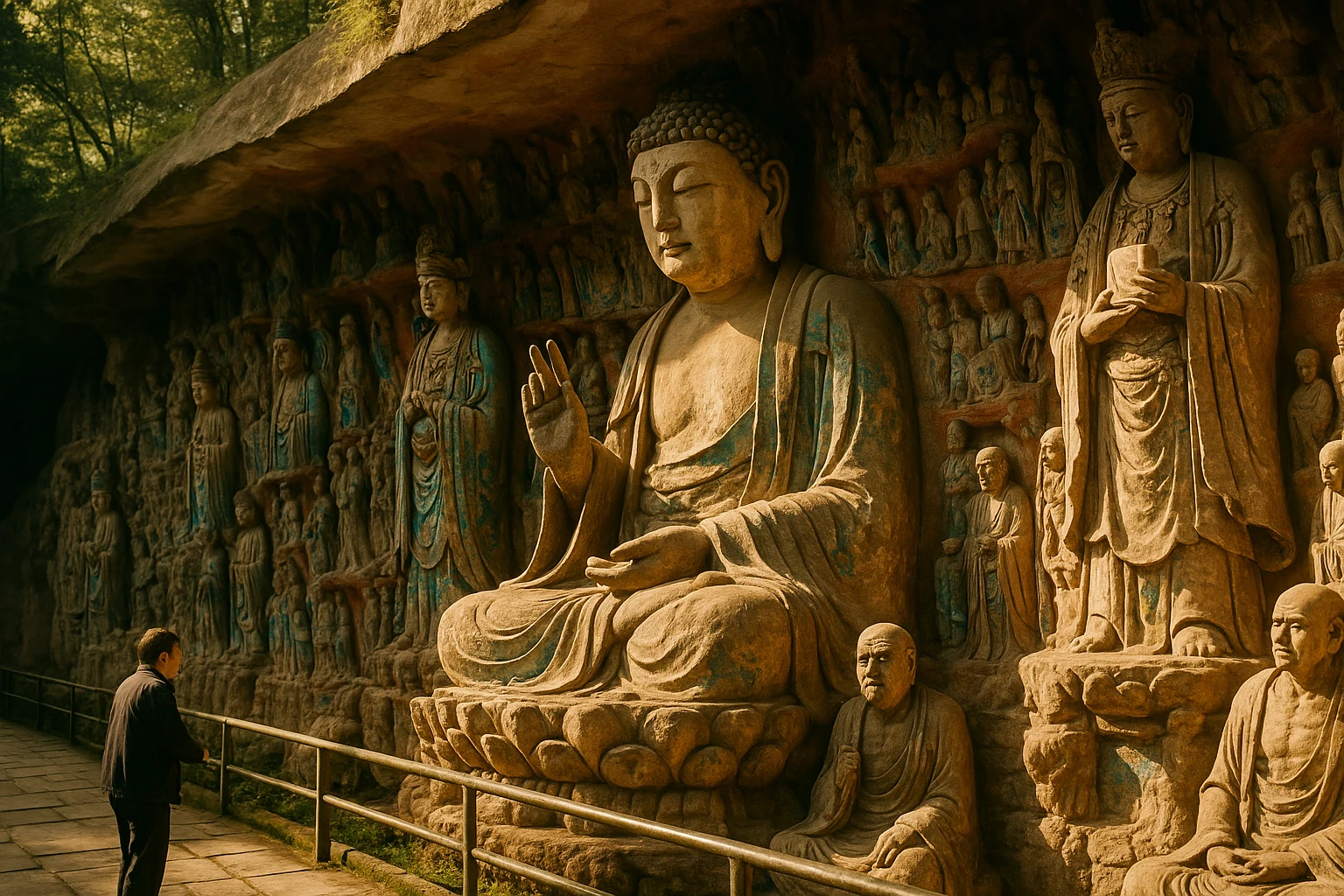
Dazu Rock Carvings
Tang and Song Dynasty ChinaAncient Buddhist, Taoist, and Confucian rock sculptures carved into cliffsides across Dazu District,...
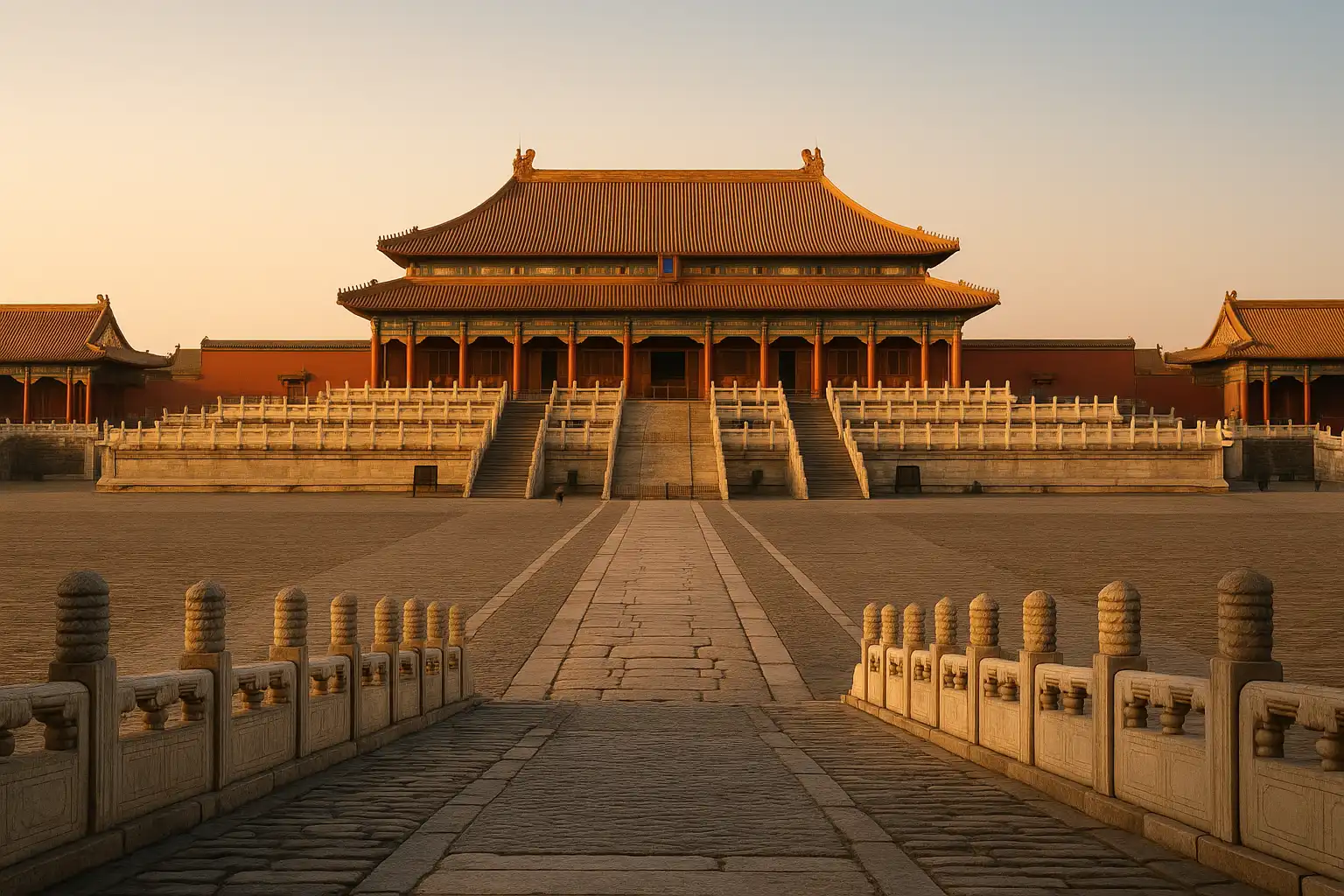
Forbidden City China Travel Guide 2026: Imperial Palace of Beijing
Chinese ImperialExplore the Forbidden City, China's imperial palace for 500 years. Discover the Hall of Supreme Harm...