Quick Info
At a glance
Dzibilchaltún in Mexico is one of those rare ancient places that feels both expansive and intimate. Only a short drive from modern Mérida in the state of Yucatán, this former Maya city opens across low scrubland, stone pathways, and bright tropical light, revealing a landscape that was once deeply urban, ceremonial, and connected. Its name is often translated as “the place where there is writing on the stones,” and while the surviving architecture may seem understated compared with some of the towering pyramids elsewhere in Mesoamerica, the site’s appeal lies in its breadth, its scholarly importance, and its sense of continuity between ancient settlement and present-day Yucatán.
Walking through Dzibilchaltún, visitors encounter a city that once covered a very large area and sustained a substantial population for centuries. The terrain is relatively flat, so the structures rise subtly rather than dramatically, but that flatness also makes the planning of the city easier to grasp. Roads known as sacbeob linked plazas and ceremonial buildings, and the nearby cenote helped make long-term occupation possible in a region where surface water is scarce. The most celebrated monument, the Temple of the Seven Dolls, is compact but iconic, especially because of its solar alignment at the equinox. Together, these elements make Dzibilchaltún more than a quick stop near Mérida. It is a place to understand how the Maya adapted to the northern Yucatán environment, built religious meaning into architecture, and maintained an important center over an exceptionally long span of time.
History
Early settlement and growth
Dzibilchaltún’s origins reach back to the Middle to Late Preclassic period, with occupation beginning around 500 BCE and perhaps earlier in the surrounding area. This long chronology is one of the site’s defining features. Unlike some Maya cities that are mainly associated with a narrower florescence, Dzibilchaltún shows evidence of sustained occupation over many centuries. Its success was tied to geography. Northern Yucatán lacks major rivers, so access to dependable water sources mattered enormously. The Xlacah cenote, one of the largest and most significant natural wells in the region, helped support settlement and made the location attractive for both daily life and ritual activity.
As the community grew, Dzibilchaltún developed into a major regional center. Archaeologists estimate that at its height it supported tens of thousands of inhabitants across a broad urban and semi-urban zone. This population was spread through residential compounds, civic precincts, and ceremonial spaces connected by causeways. The city’s scale suggests it functioned not just as a ritual center but also as a hub of administration, exchange, and local production. Its position close to the north coast of the Yucatán Peninsula likely aided trade networks that linked inland communities with coastal routes.
Classic period prominence
During the Classic period, roughly 250 to 900 CE, Dzibilchaltún appears to have reached its greatest prominence. This was the era in which many Maya cities across the lowlands built monumental architecture, refined writing traditions, and forged political relationships through trade, marriage, and warfare. Dzibilchaltún took part in this wider world, though it developed in a northern Yucatán setting that had its own ecological and political dynamics.
The city’s architecture from this period includes temples, platforms, plazas, and administrative compounds, though much of what survives today is comparatively modest in height. That modesty should not be mistaken for insignificance. The distribution of structures, the density of occupation, and the presence of extensive sacbeob indicate a well-organized and influential city. Excavations have recovered ceramics, ritual deposits, and evidence of long-distance contacts, suggesting Dzibilchaltún was integrated into broader Mesoamerican exchange systems.
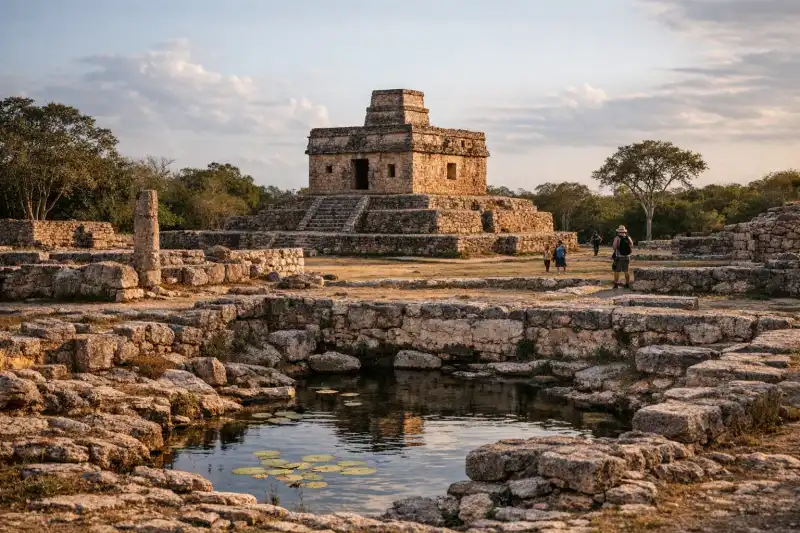
One of the most intriguing features of the site, the Temple of the Seven Dolls, dates to the Late Classic period. The structure became famous after archaeologists found a cache of unusual clay figurines inside it, giving the building its modern name. Its alignment with the rising sun near the equinoxes has drawn special attention, illustrating how architecture could express cosmology and seasonal observation. While equinox events tend to dominate popular discussion today, the building was part of a larger ceremonial and civic complex whose meaning extended beyond a single annual spectacle.
Transition and later occupation
Like many Maya centers, Dzibilchaltún experienced change during the Terminal Classic and Postclassic periods. Across the Maya world, this was a time of shifting political centers, population movement, and reorganization of trade networks. Some southern lowland cities declined sharply, while northern centers in Yucatán often remained active or were transformed rather than abandoned outright. Dzibilchaltún seems to have continued in use, though likely with changes in population density, political importance, and urban focus.
Its long occupation is one reason the site matters so much to archaeologists. Rather than representing a city frozen in one historical moment, Dzibilchaltún preserves traces of adaptation over centuries. That continuity helps researchers study how Maya communities responded to environmental pressures, regional competition, and broader shifts in northern Yucatán.
Spanish contact and modern archaeology
When the Spanish arrived in the sixteenth century, parts of the region around Dzibilchaltún were still inhabited. Colonial presence brought profound disruption, including population decline, religious transformation, and reorganization of settlement patterns. As happened at many ancient sites, stones from older structures were sometimes reused in later building. Over time, the ancient city became part of the rural landscape, its mounds and walls partially hidden by vegetation.
Scientific study of Dzibilchaltún accelerated in the twentieth century. Archaeological work revealed the city’s extraordinary size, road systems, and occupational depth. The Temple of the Seven Dolls became a major focus of conservation and public interest, while investigations of the cenote and surrounding structures expanded understanding of ritual life and environmental adaptation. Today Dzibilchaltún remains one of the key Maya sites for understanding northern Yucatán, not because it presents the tallest monuments, but because it offers a remarkably rich record of urban life over a long span of time.
Key Features
Dzibilchaltún’s most famous structure is the Temple of the Seven Dolls, and it deserves its reputation. The building is relatively compact, but it stands out because of its striking form and astronomical alignment. On mornings near the spring and autumn equinoxes, the rising sun can be seen passing through the temple’s openings, an effect that has made it one of the most photographed monuments in Yucatán. Even outside those dates, the temple is compelling. Its pale stone, clear geometry, and elevated position give it a ceremonial dignity that feels very deliberate. It is a reminder that Maya architecture was often designed not only for public ritual but also to frame the movement of light, time, and sacred order.
Beyond this iconic temple, the wider site reveals the logic of an ancient city spread over a broad limestone plain. Dzibilchaltún is especially important for its sacbeob, the raised white roads that linked different sectors of the settlement. These roads were practical infrastructure, but they also carried political and ritual meaning, binding neighborhoods and ceremonial spaces into a coherent urban landscape. For visitors, the surviving alignments help make the site legible. Rather than seeing isolated ruins, you begin to sense how plazas, platforms, and pathways once worked together as a functioning city.
Another standout feature is the Xlacah cenote. In the dry environment of northern Yucatán, cenotes were essential sources of water and often places of spiritual significance. At Dzibilchaltún, the cenote was both practical and sacred, a center of life that likely shaped the city’s growth from its earliest phases. Its clear water and natural setting offer a dramatic contrast to the cut stone of the ceremonial precinct. Archaeological finds from cenotes across Yucatán have shown that these places could be associated with offerings, pilgrimage, and communication with the supernatural world, and Xlacah fits into that larger sacred geography.
The site also contains broad plazas and lower platforms that speak to civic organization rather than sheer monumentality. Dzibilchaltún’s architecture is not dominated by a single massive pyramid. Instead, its power lies in distribution and scale across the landscape. This can be especially rewarding for travelers who enjoy imagining how ancient cities functioned in daily life. Residential areas, administrative compounds, and ceremonial buildings formed a connected environment where people lived, worked, traded, and gathered for rites over many generations.
In some periods, visitors have also been able to explore a site museum associated with Dzibilchaltún, which has housed artifacts from excavations and exhibits on regional history. Availability can vary, but when open, the museum adds valuable context by connecting the visible ruins with ceramics, sculptures, figurines, and interpretive material. This is particularly helpful at Dzibilchaltún because the site’s significance is partly archaeological and urbanistic rather than purely visual. Understanding what was found here enriches the experience of walking among the remains.
What many travelers remember most, though, is the atmosphere. Dzibilchaltún feels open, bright, and close to the rhythms of the Yucatán landscape. Birds move through the scrub and trees, iguanas sometimes appear near the stones, and the heat by late morning can become intense. The low profile of many structures means the horizon remains present, reinforcing the impression that this was a city built in dialogue with terrain, water, and sky. For anyone interested in Maya civilization beyond the best-known postcard monuments, Dzibilchaltún offers an unusually thoughtful and rewarding visit.
Getting There
Dzibilchaltún is one of the easiest Maya archaeological sites to reach from Mérida, making it ideal for travelers who want an ancient site without a very long road journey. The ruins lie roughly 15 to 20 kilometers north of central Mérida, depending on your starting point. By rental car or taxi, the trip usually takes about 25 to 40 minutes, traffic permitting. A taxi from central Mérida often costs around MXN 200 to 350 one way, though prices can vary by time of day, exact pickup point, and negotiation. Ride-hailing availability may fluctuate, so many visitors arrange a return trip in advance if not driving themselves.
Rental cars offer the most flexibility, especially if you want to combine Dzibilchaltún with other destinations in Yucatán. Daily car rental rates in Mérida often start around MXN 700 to 1,400 before insurance and fuel, depending on season and vehicle type. Roads in the area are generally straightforward, but it is wise to check current access conditions and opening hours before departing.
Public transport options can be more variable than for larger destinations such as Chichén Itzá. Local buses or colectivos heading north from Mérida may get you part of the way for a low fare, often under MXN 50, but they may not stop directly at the archaeological entrance or run on schedules that are convenient for return travel. For most visitors, a guided tour, taxi, or rental car is simpler.
Guided tours from Mérida commonly combine transport, site interpretation, and sometimes additional stops. Prices vary widely, but group tours often begin around USD 40 to 90 per person, while private excursions cost more. If you value historical context, a guide can make a major difference at Dzibilchaltún, where many of the site’s most interesting stories are not immediately obvious from the architecture alone.
When to Visit
The best time to visit Dzibilchaltún is generally during the cooler, drier months from November through March. During this period, mornings are more comfortable for walking, humidity can be less oppressive, and the risk of heavy afternoon rain is lower than in the summer wet season. Daytime temperatures can still be warm, but the experience is usually more pleasant than during the hottest months.
April and May are often the toughest months for many travelers. Heat builds significantly across Yucatán, and the exposed areas of the site can feel intense by late morning. If you visit then, aim to arrive as close to opening time as possible, bring plenty of water, and wear a hat and strong sun protection. The same early-start advice applies year-round, but it becomes especially important in late spring and summer.
The rainy season, roughly June through October, can bring lush scenery and fewer crowds on some days, but also heat, humidity, and sudden downpours. Light rain does not necessarily ruin a visit, yet muddy paths and stormy weather can affect comfort. Checking the forecast before leaving Mérida is worthwhile.
Some travelers specifically target the equinox period because of the Temple of the Seven Dolls and its solar alignment. These dates can be memorable, but they may also attract more attention and depend on clear skies. If your main goal is a quiet, reflective visit, an ordinary morning outside peak holiday periods may be even more rewarding. Weekdays are often calmer than weekends, and arriving early offers softer light for photography as well as a better chance to explore before the midday heat settles over the stones.
| Quick Facts | Details |
|---|---|
| Location | Near Mérida, Yucatán, Mexico |
| Civilization | Maya |
| Main occupation | c. 500 BCE to Postclassic period |
| Best-known structure | Temple of the Seven Dolls |
| Notable natural feature | Xlacah cenote |
| Best base for visitors | Mérida |
| Suggested visit length | 2 to 4 hours |
| Best time of day | Early morning |
| Ideal season | November to March |
| Access style | Easy half-day trip from Mérida |
Dzibilchaltún rewards travelers who are willing to look beyond size alone and appreciate a site for its longevity, planning, and relationship to the Yucatán landscape. Close to a modern city yet rooted in a deep Maya past, it offers an experience that is both accessible and intellectually rich. You can stand before the Temple of the Seven Dolls and think about solar alignments, walk near the cenote that sustained life here for centuries, and trace the outlines of a city that once connected people through roads, ritual, and trade. For visitors based in Mérida, it is one of the most worthwhile archaeological excursions in the region: manageable in distance, substantial in historical importance, and quietly memorable long after the visit ends.
Guided tours: worth it?
Self-guided works here, but a guide can add real value if you want the ruins explained as a living place rather than just a sequence of monuments.
Best for
- First-time visitors who want context, not just photos
- Short visits where a planned route saves time
When to go self-guided
Go independently if you prefer setting your own pace, reading as you go, and checking official hours or ticket rules directly before you arrive.
What I’d avoid
Skip paid tours that bundle unrelated stops you do not actually want. The best option should either save meaningful planning time or add historical context you would miss on your own.
Dzibilchaltún and Mérida Day Tours
Useful when: you want to compare guided formats before deciding
Mérida Archaeology and Cenote Experiences
Useful when: you want to compare guided formats before deciding
Yucatán Mayan Ruins Tours
Useful when: you want to compare guided formats before deciding
Some tour links are affiliate links, which may earn Ancient Travel a small commission at no extra cost to you. I try to surface options that make practical sense for the site—not just anything bookable.
Frequently Asked Questions
Where is Dzibilchaltún located?
Dzibilchaltún is in the Mexican state of Yucatán, just north of Mérida, making it one of the easiest ancient Maya sites to visit from the city.
What is Dzibilchaltún best known for?
The site is best known for the Temple of the Seven Dolls, which is aligned with the sunrise around the equinoxes, as well as for its extensive sacbe road system and the Xlacah cenote.
How much time should I allow for a visit?
Most visitors should plan for 2 to 4 hours, depending on current access, museum availability, and whether they want a slower walk through the site.
Can you visit Dzibilchaltún as a day trip from Mérida?
Yes. Dzibilchaltún is close enough to Mérida for an easy half-day or full-day excursion by taxi, rental car, or guided tour.
Is Dzibilchaltún suitable for families?
Yes, the site is relatively accessible and close to Mérida, though families should bring water, sun protection, and comfortable walking shoes because shade can be limited.
When is the best time to visit Dzibilchaltún?
The best months are generally November through March, when temperatures are milder, though early mornings are the most comfortable year-round.
Nearby Ancient Sites
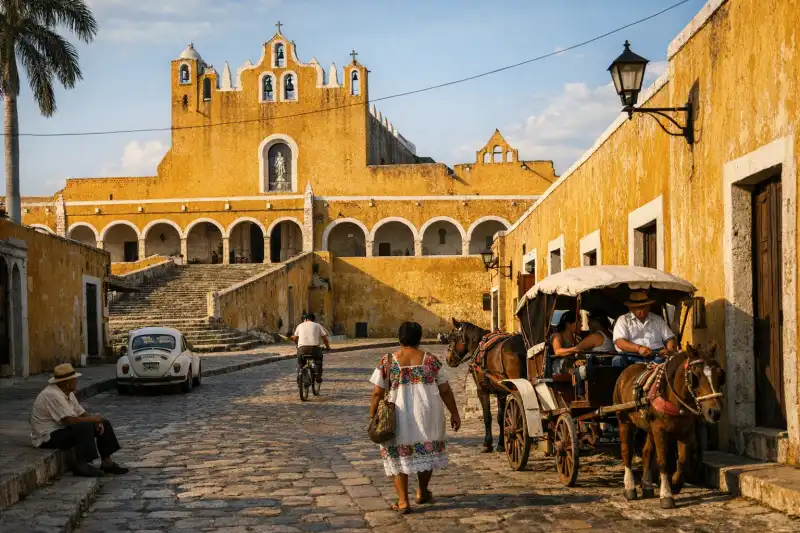
Izamal
Izamal, known as the 'Yellow City,' is a magical town in Yucatán, Mexico, famed for its golden-hued ...
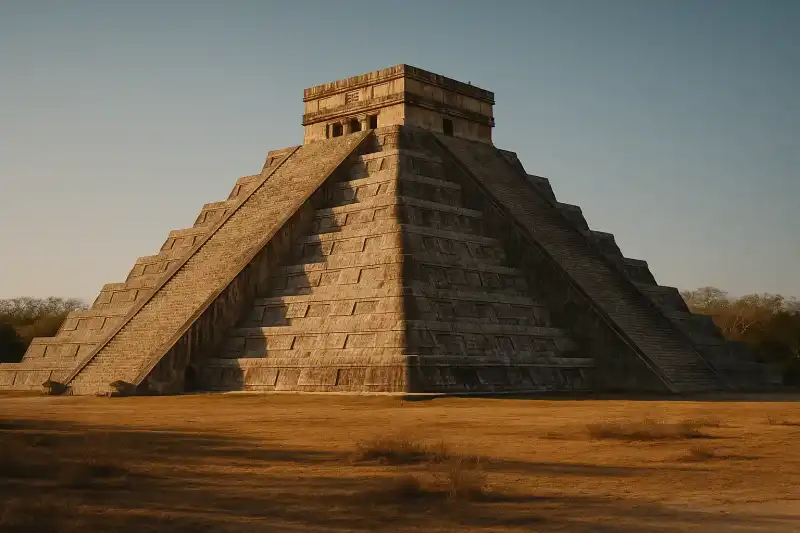
Chichen Itza Travel Guide 2026: Maya Secrets, Sacred Cenote, and Smart Timing
MayaChichen Itza stands as the most visited ancient site in Mexico, showcasing the architectural genius ...
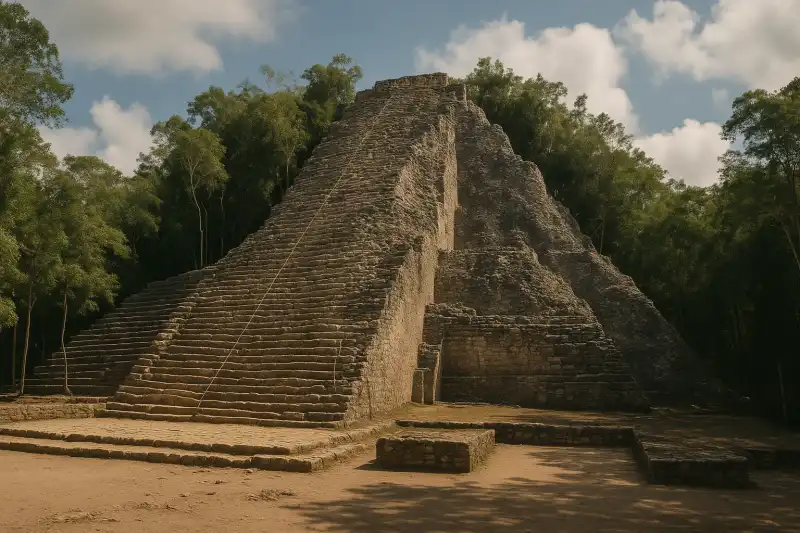
Coba Travel Guide 2026: Ruins Route, Timing, and Practical Day Planning
MayaPlan a better Coba visit with route strategy, realistic timing from Tulum or Cancun, and practical t...