Quick Info
Curated Experiences
East Mebon and Grand Circuit Temples Guided Tour
Private Angkor Grand Circuit Tour Including East Mebon
Full Day Angkor Temples Tour with East Mebon and Pre Rup
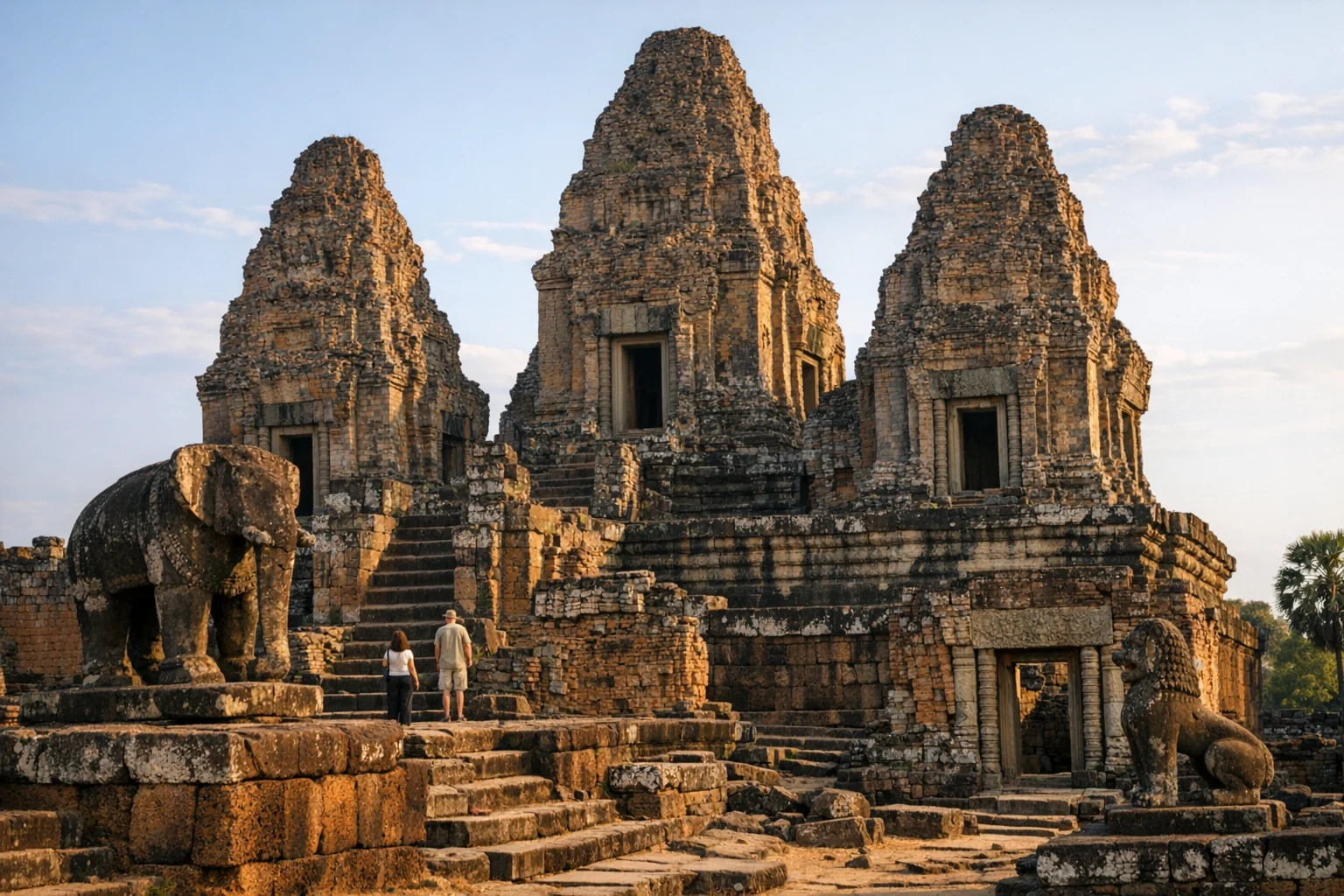
East Mebon in Cambodia is one of the clearest reminders that Angkor was never only a city of temples. It was also a landscape of water, power, and carefully staged sacred geography. Today the temple stands dry amid the fields and forested routes of the Angkor Archaeological Park, but its original setting was dramatically different. In the 10th century, East Mebon rose on an island at the center of the East Baray, one of the vast man-made reservoirs that helped define the hydraulic and symbolic world of the Khmer Empire. That lost aquatic setting still shapes the site’s meaning. Even with the reservoir long gone, the temple’s elevated terraces, axial plan, and commanding geometry preserve the memory of a monument once approached across open water.
What makes East Mebon so rewarding is the way it balances refinement and readability. It does not have the overwhelming fame of Angkor Wat or the face towers of Bayon, yet it remains one of the best temples in the Angkor region for understanding how architecture, kingship, and landscape worked together. Elephant sculptures anchor the corners, brick towers rise in neat, layered arrangements, and the structure’s stepped form creates a compact but dignified temple mountain. The monument also rewards close attention. Its carvings, lintels, and surviving architectural rhythms belong to a 10th-century phase of Khmer art that feels elegant, assured, and still close enough to earlier traditions to show the development of Angkorian classicism. For travelers who want to understand Angkor beyond its biggest icons, East Mebon is essential. It is a temple of water memory, royal ambition, and disciplined architectural beauty.
History
Rajendravarman II and the Re-centering of Angkor
East Mebon was built in 953 CE during the reign of King Rajendravarman II, one of the important rulers who helped reshape Angkor in the 10th century. His reign came after a period of political change and reorganization in the Khmer Empire, and his building projects played a major role in reasserting royal authority and ritual legitimacy. In Angkor, temple construction was never simply a matter of piety. It was also about kingship, cosmology, lineage, and the visible ordering of the world under royal power. East Mebon belongs directly to that tradition.
Rajendravarman II is also associated with Pre Rup, and the relationship between the two temples helps explain the ambitions of his reign. East Mebon was not an isolated project but part of a broader sacred and political program. By building in and around the East Baray zone, the king connected his architectural patronage to an existing hydraulic landscape of enormous significance. Water in Angkor was practical, symbolic, and political all at once, and East Mebon’s position at the center of the reservoir made it a monument that could speak in all three registers simultaneously.
The Temple on the Water
The most historically distinctive feature of East Mebon is that it originally stood on an island in the middle of the East Baray. This reservoir, likely created earlier in the 10th century under Yasovarman I, was one of the great engineered landscapes of Angkor. The baray was immense, and its scale alone made it an expression of state power. To place a temple within that watery expanse was a statement of extraordinary ambition. It transformed the reservoir from hydraulic infrastructure into sacred space.
The island setting would have made East Mebon dramatically different in experience from the landlocked ruin seen today. Approaching it by water or along controlled access routes would have emphasized separation, sanctity, and geometric centrality. The temple’s symbolism likely drew on long-standing South and Southeast Asian associations between sacred mountains, cosmic waters, and royal order. In this reading, East Mebon was not simply a shrine in a lake. It was a deliberately staged image of cosmological power, placing the temple as an axis within a vast human-made aquatic world.
Religious Dedication and Temple Use
East Mebon was dedicated primarily to Shiva, consistent with much elite Khmer temple patronage of the period, though like many Angkorian monuments it would have been part of a broader ritual environment that included royal ancestors, associated deities, and layered sacred meanings. Inscriptions suggest that the temple included images and sacred installations tied to the king’s family and dynastic legitimacy. This makes it a useful reminder that Khmer temples often functioned as both religious monuments and political genealogies in stone.
The temple’s form reinforces this duality. Its stepped terraces and sanctuary towers are characteristic of temple mountain ideas, but on a more compact scale than some later monuments. The architecture expresses sacred hierarchy while remaining accessible enough to be legible even in ruin. East Mebon would have supported ritual life, offerings, processions, and dynastic commemoration, all set within the larger hydraulic environment of the East Baray. In that sense, it was a ceremonial island as much as a temple.
Decline, Drying, and Survival
Over time, the East Baray ceased to function in its original form, and the waters that once surrounded East Mebon disappeared from the lived landscape. The reasons for changes in Angkor’s water system are complex and tied to long-term environmental, political, and infrastructural shifts. What matters for the visitor is that the temple’s setting changed profoundly. A monument once defined by water became a dry-land ruin, and its meaning became harder to read without historical context.
Like many Angkor temples, East Mebon also suffered from abandonment, looting, weathering, and the gradual loss of sculpture and superstructure. Yet enough survived to preserve the temple’s form with unusual clarity. Its tiers, towers, elephant sculptures, and many architectural lines remain legible, making it one of the more satisfying 10th-century monuments to explore. Modern conservation has helped stabilize the site, and as part of the Angkor World Heritage landscape it now stands not only as a temple ruin, but as a key witness to the lost hydraulic and ceremonial world of early Angkor.
Key Features
The defining feature of East Mebon is its former island setting within the East Baray, and even though the water is gone, this historical fact still gives the temple much of its meaning. Standing on its terraces today, you need to imagine not open land but a surrounding expanse of reservoir water, with the temple rising as a sacred centerpiece. This vision helps make sense of its compact monumentality. East Mebon was designed to be seen from a distance as a geometric and symbolic form, not just experienced up close as an architectural object.
The elephant statues at the corners of the lower terraces are among the site’s most beloved features. These large, sturdy sculptures seem to anchor the monument physically and emotionally. They are both decorative and structural in effect, helping to define the transitions between tiers while giving the temple a memorable silhouette. East Mebon’s elephants are especially striking because they survive in positions that still communicate the logic of the original design. They do not feel like scattered museum fragments. They still belong to the building.
The stepped pyramid form of the temple is another major strength. East Mebon is not gigantic, but it is highly legible. Its terraces rise in clear sequence toward the upper sanctuary zone, where brick towers once held sacred images. This makes it one of the more readable Angkor temples for understanding Khmer vertical symbolism. The monument’s composition directs the body upward and inward, from open platform to increasingly sacred summit. That clarity is one reason the temple is so satisfying to explore.
The upper sanctuary towers add a different type of appeal. Built of brick with sandstone decorative elements, they belong to an Angkorian architectural phase where material contrast itself creates elegance. The surviving towers preserve lintels, doorframes, and decorative details that show the refinement of 10th-century Khmer craftsmanship. Their relative modesty in scale compared with later temples is actually part of the charm. They allow visitors to study form and ornament without the visual overload of larger complexes.
East Mebon also benefits from its openness. Unlike heavily forested or maze-like temples, it offers broad sightlines and a strong sense of surrounding space. That suits the historical logic of the site. A temple once set in a reservoir should feel spatially aware, and East Mebon still does. Even stripped of its water, it remains a place where landscape and architecture clearly belonged to one another.
Getting There
East Mebon is located within the Angkor Archaeological Park near Siem Reap and is most commonly visited as part of the Grand Circuit route. From central Siem Reap, the drive usually takes around 25 to 40 minutes depending on your hotel location and traffic. The site is easy to reach by tuk-tuk, private car, taxi, or organized tour. Tuk-tuk drivers in Siem Reap commonly offer Grand Circuit routes for daily hire, often in the approximate range of USD 15 to 30 depending on the season, negotiation, and duration. Air-conditioned cars cost more but may be worth it for hotter days.
Most visitors combine East Mebon with Pre Rup, Ta Som, Preah Khan, or other Grand Circuit temples. This makes logistical sense because the site is rarely visited completely on its own. Guided tours are useful if you want to understand East Mebon’s place in Angkor’s hydraulic and political system, since without that context it can seem simply like another elegant temple ruin. Independent visitors, however, will find it easy to navigate and well worth a self-guided stop.
As with all main Angkor monuments, you will need a valid Angkor pass. Bring water, sun protection, and shoes suitable for climbing steps and walking on uneven stone. The site is fairly open and exposed, so planning your visit around cooler hours makes a big difference.
When to Visit
The best time to visit East Mebon is during Cambodia’s cooler dry season, generally from November to February, when walking around Angkor is much more comfortable. These months offer the most pleasant temperatures for climbing terraces and lingering to study the temple’s details. Because East Mebon is open and relatively unshaded compared with some other temples, comfort matters.
Early morning is one of the best times to visit if you want fewer crowds and softer light on the brick and sandstone surfaces. The temple feels especially clear and calm then, and its geometric structure reads beautifully in angled morning light. Late afternoon is another strong option, especially if you are pairing it with nearby Pre Rup and want to make a broader Grand Circuit afternoon of it. Midday can be hot and visually flatter, though the site remains rewarding if that is when your route brings you there.
The rainy season can also suit East Mebon in an interesting way. The surrounding greenery becomes richer, and it is slightly easier to imagine the monument within a wetter, more water-shaped world. But rain and humidity can make steps slippery and visits more physically tiring. Whenever you go, the key is to give East Mebon more than a rushed photo stop. Its beauty lies in its proportion, its lost relationship to water, and the way those things become clearer with a little time.
| Quick Facts | Details |
|---|---|
| Location | Angkor Archaeological Park, Siem Reap Province, Cambodia |
| Best Known For | Temple once standing on an island in the East Baray reservoir |
| Builder | King Rajendravarman II |
| Historical Period | Angkor period, 10th century CE |
| Main Dedication | Shiva |
| Signature Features | Elephant corner statues, stepped terraces, and brick sanctuary towers |
| Recommended Visit Length | 30 to 60 minutes |
| Best Nearby Base | Siem Reap |
| Best Time to Visit | Early morning or late afternoon in the dry season |
| Practical Tip | Pair East Mebon with Pre Rup and imagine its original island setting to fully understand why the temple was built the way it was |
Frequently Asked Questions
What is East Mebon best known for?
East Mebon is best known for its elephant corner statues, brick sanctuary towers, and for originally standing on an island at the center of the East Baray reservoir.
Who built East Mebon?
East Mebon was built by King Rajendravarman II in the 10th century as part of the Angkorian royal and religious landscape.
Why is East Mebon important?
It is important because it reveals the close relationship between temple architecture, royal power, and water engineering in the Khmer Empire.
How much time should you spend at East Mebon?
Most visitors should allow 30 to 60 minutes, though architecture lovers may want longer to study the towers, carvings, and elevated layout.
Is East Mebon worth visiting if you are already seeing bigger Angkor temples?
Yes. East Mebon offers a distinct experience, with elegant 10th-century design, fewer crowds, and a unique historical setting within the former East Baray.
When is the best time to visit East Mebon?
Early morning and late afternoon are best, when the light is softer and the open temple terraces are more comfortable to explore.
Nearby Ancient Sites
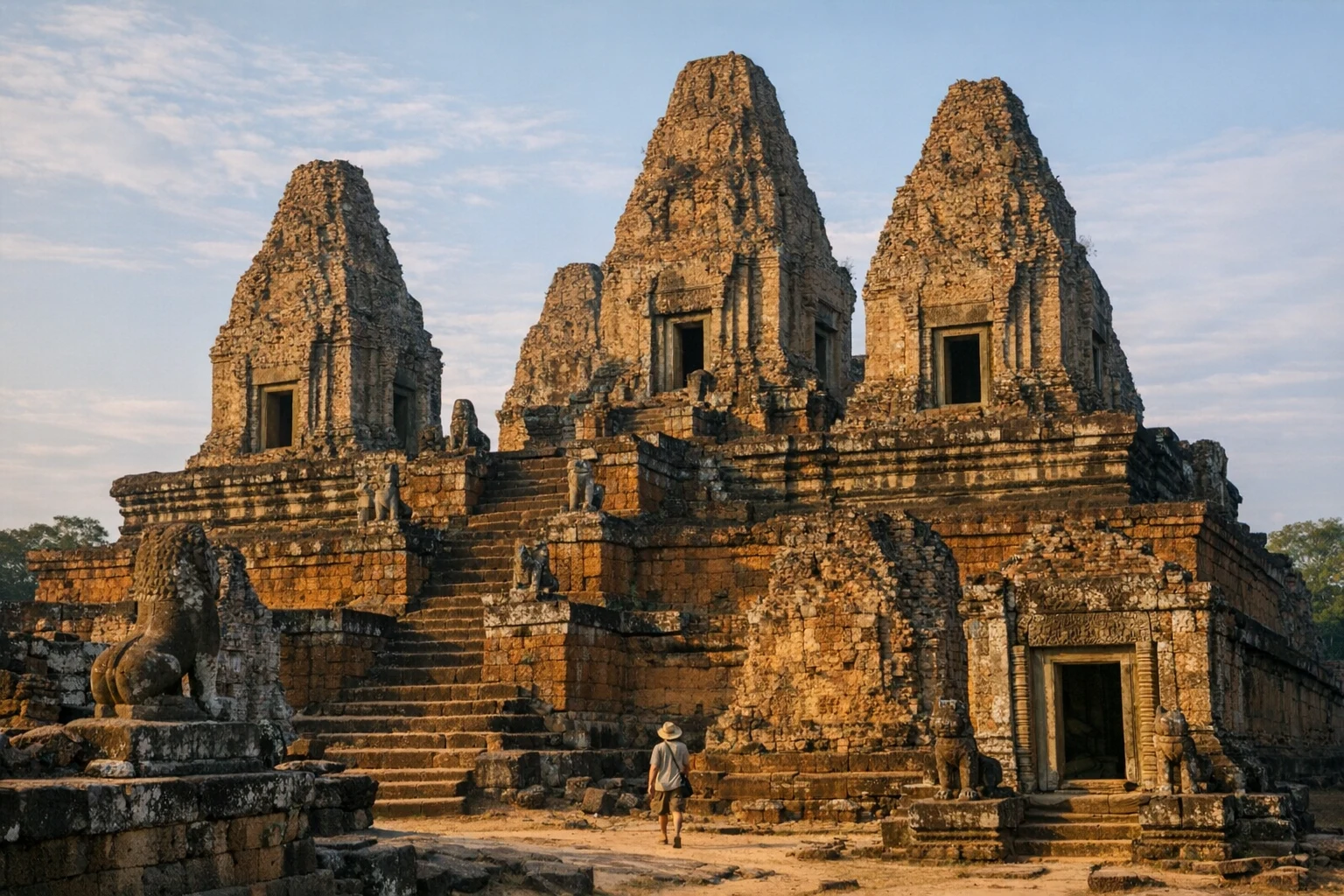
Pre Rup
KhmerExplore Cambodia’s Pre Rup, a striking Angkor temple-mountain famed for its brick towers, steep terr...
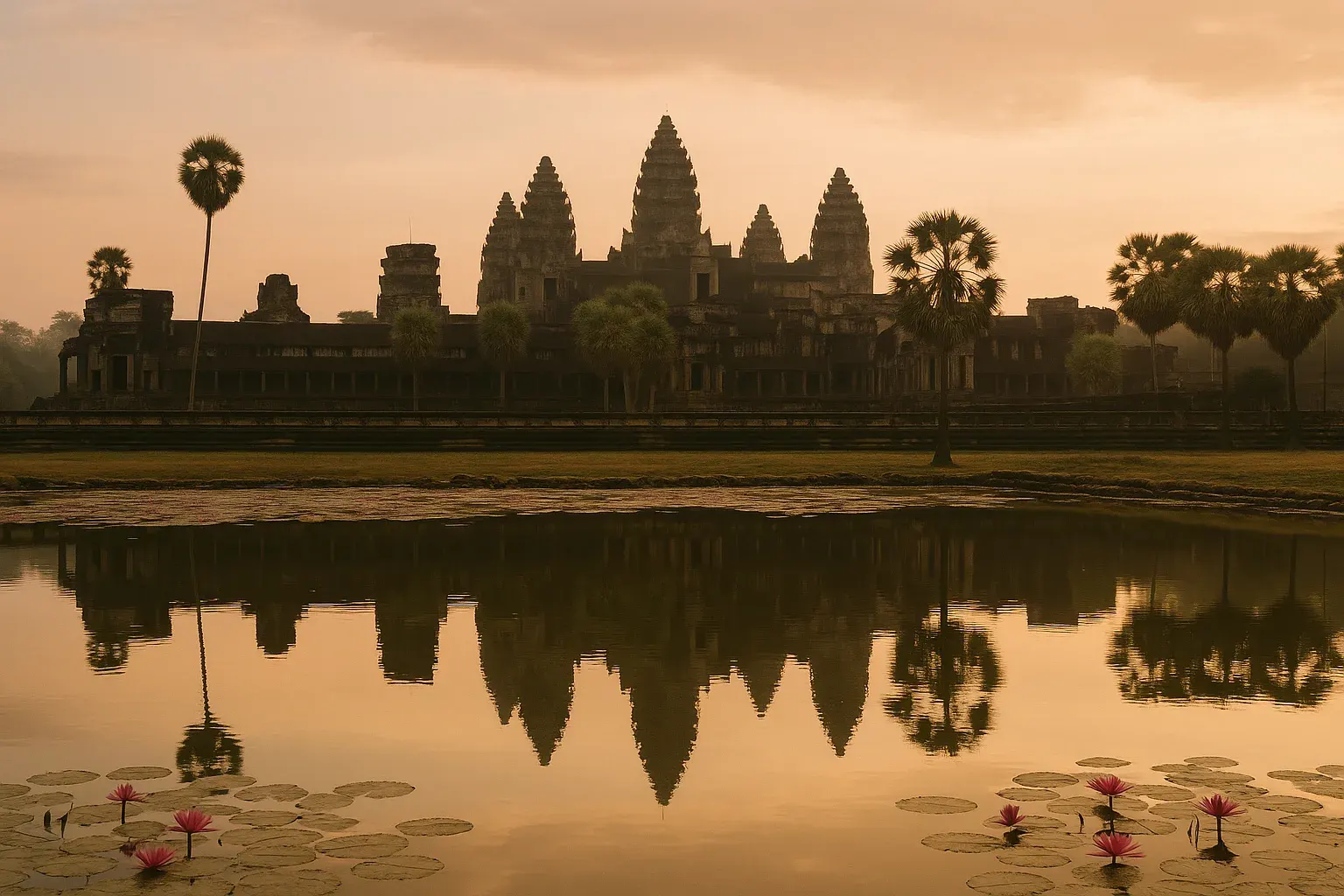
Angkor Wat Travel Guide 2026: Everything You Need to Know
KhmerAngkor Wat, the world's largest religious monument, spans over 400 acres in the heart of Cambodia. T...
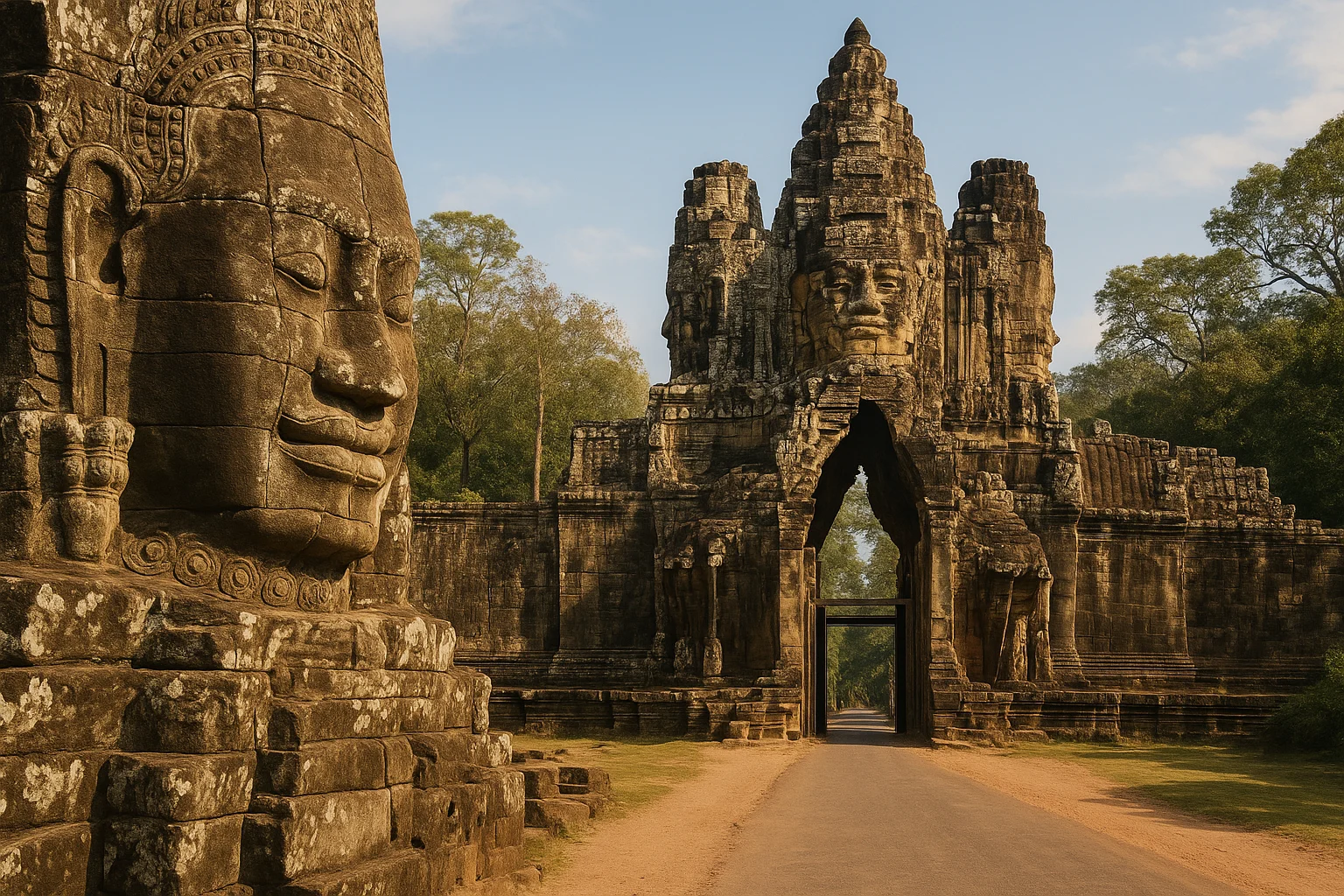
Angkor Thom Travel Guide 2026: Bayon Faces, Gates, and the Khmer Royal City
KhmerAngkor Thom was the last great capital of the Khmer Empire. This guide covers how to visit Bayon, th...
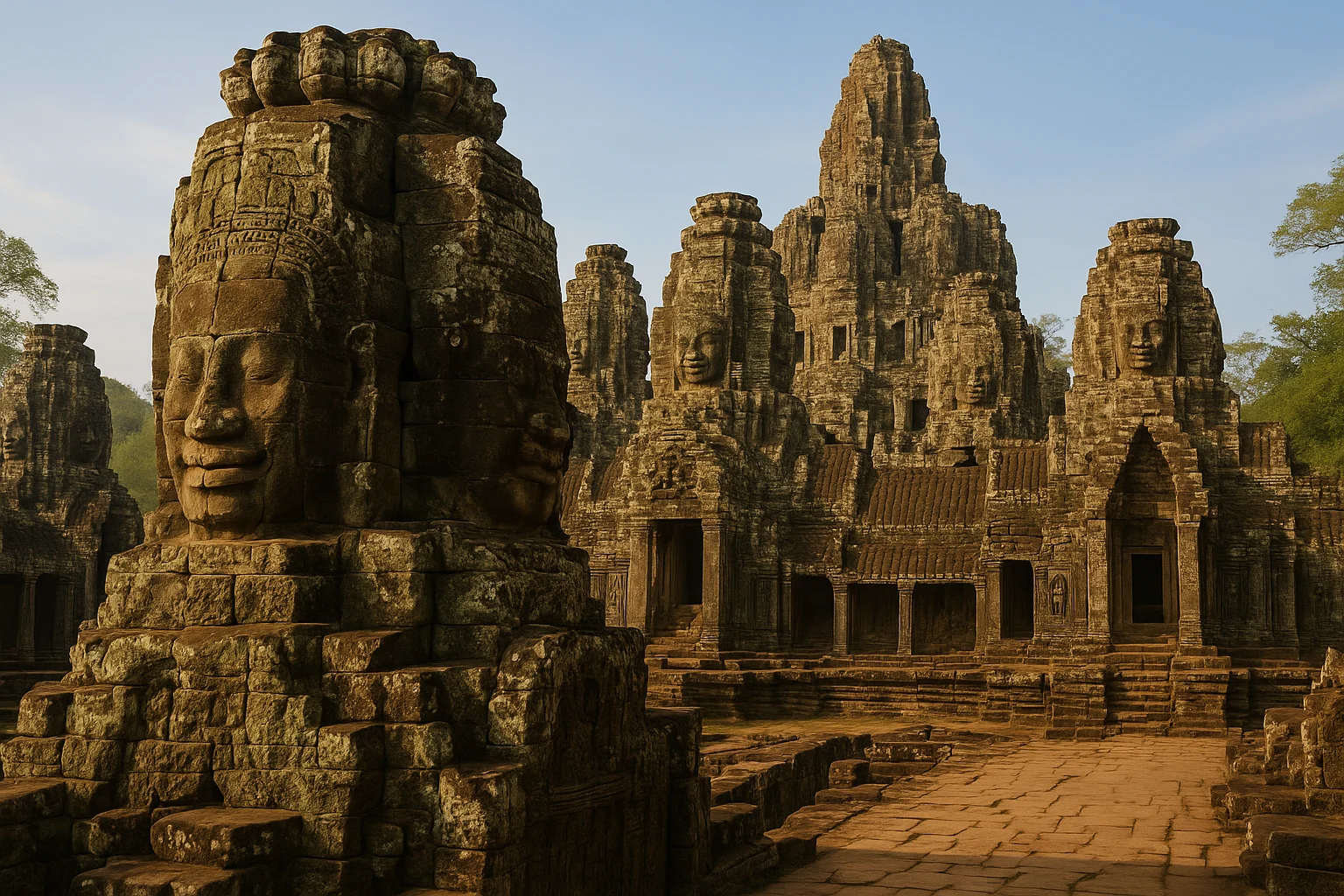
Bayon Temple Travel Guide 2026: Face Towers, Bas-Reliefs, and Best Visit Timing
KhmerBayon Temple sits at the center of Angkor Thom and is famous for its carved stone faces. This guide ...
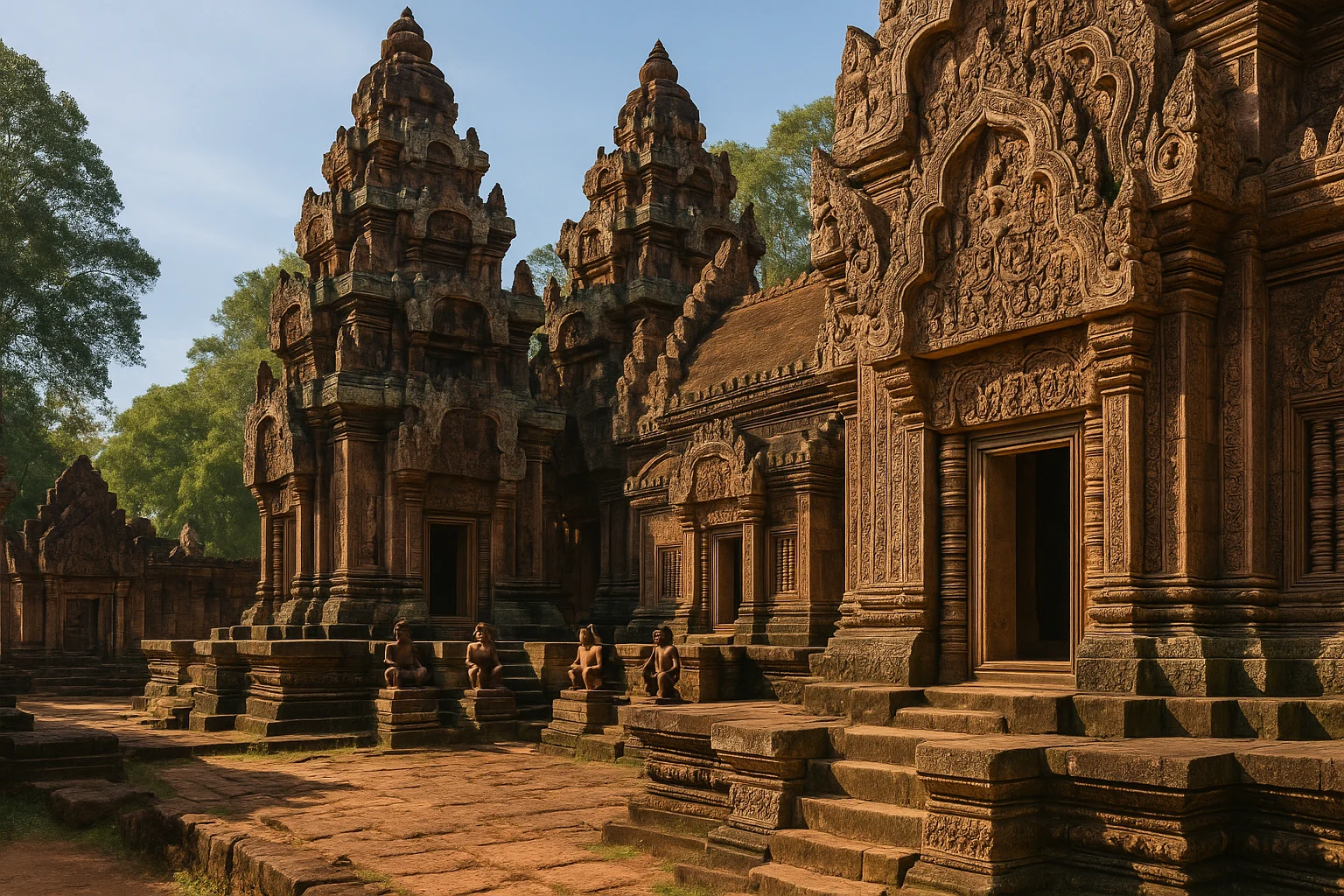
Banteay Srei Travel Guide 2026: Pink Sandstone Temple, Carvings, and Visit Tips
KhmerBanteay Srei is one of Cambodia’s most detailed Khmer temples, known for fine pink sandstone carving...