Quick Info
Curated Experiences
Edfu Temple Day Tour from Luxor or Aswan
Private Nile Temples Tour Including Edfu Temple
Edfu and Kom Ombo Guided Excursion
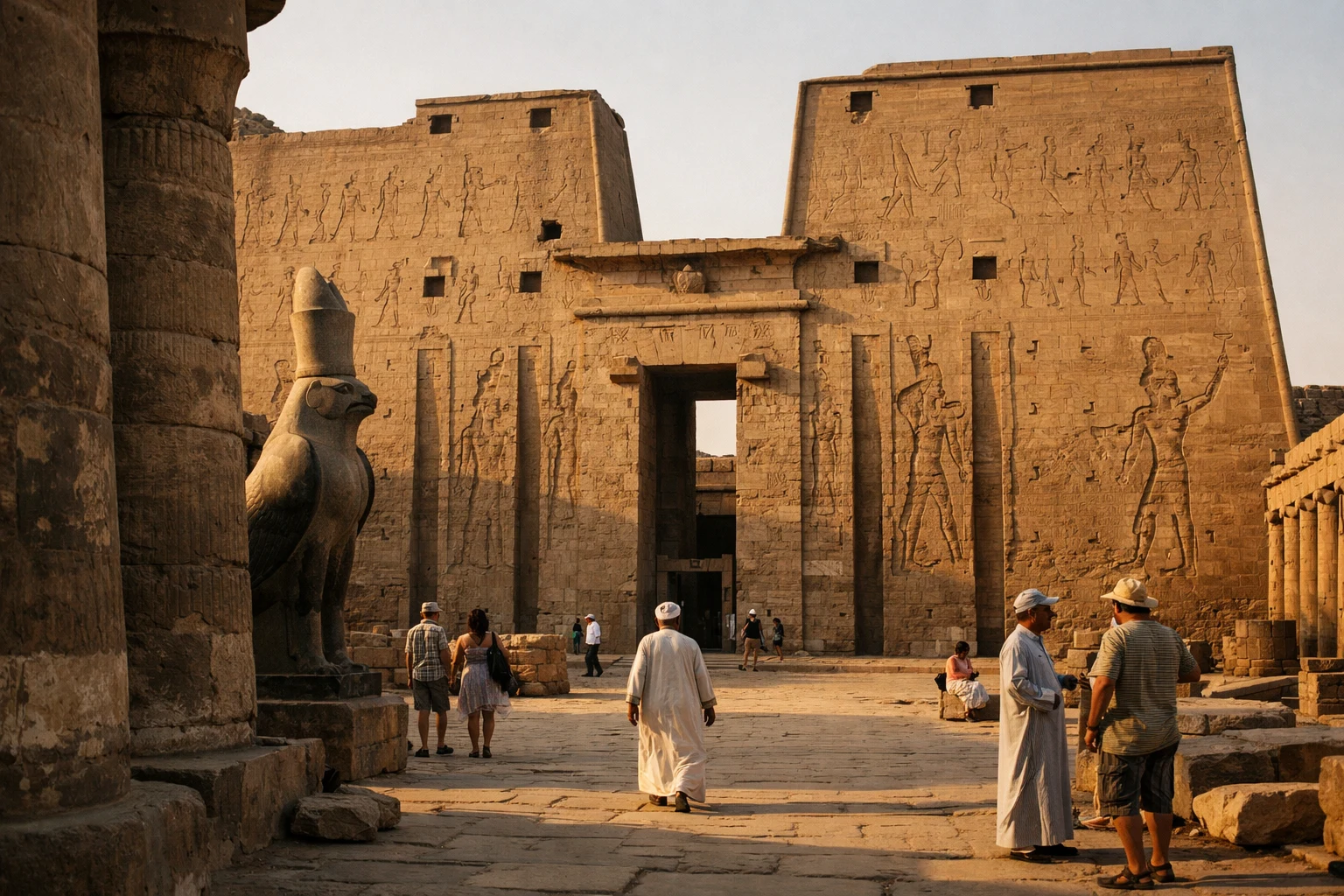
Edfu Temple in Egypt is one of the rare ancient monuments that makes the Egyptian temple plan feel instantly understandable. South of Luxor and north of Aswan, the great sanctuary of Horus rises above the modern town of Edfu with a level of completeness that can be startling even for travelers who have already seen Karnak, Luxor, or Philae. The pylon is immense, the courtyard broad, the halls progressively darker and more restricted, and the sanctuary still legible as the sacred heart of the complex. Instead of forcing you to imagine a temple from scattered blocks and broken outlines, Edfu presents the architecture almost as a full argument: this is how a major Egyptian temple was meant to guide movement, frame ritual, and embody divine kingship in stone.
That clarity is what gives the site its special power. Edfu is not the oldest temple in Egypt, nor the most mythologically famous in global popular culture, but it is among the most rewarding because its survival is so strong. Built in the Ptolemaic period, it preserves the classical Egyptian temple tradition in a remarkably complete late form, showing how local religious life, royal ideology, and sacred architecture remained vibrant long after Alexander and his successors transformed Egypt politically. This is a temple to Horus, the falcon god of kingship, victory, and divine legitimacy, and its reliefs, halls, and ritual spaces still carry that energy. For visitors, Edfu offers something precious: not just beauty, but intelligibility. It is one of the best places in the country to understand how an Egyptian temple worked as a whole.
History
Sacred Edfu Before the Standing Temple
The city of Edfu, ancient Behdet or Djeba in older forms, had sacred significance long before the current temple was built. It was associated above all with Horus, whose mythology connected the site to divine kingship and the cosmic struggle against Seth. In Egyptian religious geography, such local cult centers mattered deeply. Temples were not interchangeable shrines but focal points of regional identity, theology, and ritual. Edfu’s role as a major center of Horus worship gave it enduring importance through multiple political eras.
Earlier temples almost certainly stood here before the Ptolemaic sanctuary now visible. As was common in Egypt, sacred sites were often rebuilt, enlarged, or renewed on top of older foundations. This continuity mattered politically as well as religiously. Rulers who sponsored new temple construction were not creating holiness from nothing; they were inserting themselves into already ancient sacred lineages. By the time the Ptolemies built Edfu Temple, the city was already embedded in a religious tradition that made it an ideal site for monumental patronage.
Ptolemaic Construction and Royal Legitimacy
Construction of the present Edfu Temple began in 237 BCE under Ptolemy III Euergetes I and continued for nearly two centuries under successive Ptolemaic rulers. This alone is revealing. The Ptolemies were Macedonian Greek rulers who governed Egypt after the conquests of Alexander the Great, yet in temple architecture they adopted the full visual and ritual language of Egyptian kingship. At Edfu, they depicted themselves as pharaohs making offerings to Egyptian gods, participating in ancient rites, and renewing the sacred order.
This was not empty imitation. Temple building was central to how the Ptolemies legitimized themselves in Egypt. By supporting major sanctuaries like Edfu, they tied their rule to established religious traditions and presented themselves as rightful participants in the pharaonic world. The result is one of the great paradoxes of Egyptian history: some of the most complete and visually coherent “traditional” Egyptian temples are actually relatively late. Edfu is a perfect example. Though built in the Hellenistic age, it preserves the formal logic of Egyptian sacred architecture with extraordinary faithfulness.
Horus, Myth, and Ritual Performance
Edfu was not simply a monumental shell dedicated to Horus in name. It was a living cult center where ritual reenacted myth and affirmed cosmic and political order. One of the most important religious themes at the site is the victory of Horus over Seth, a mythic struggle bound up with kingship, justice, and legitimacy. The temple’s reliefs and inscriptions preserve ritual texts and scenes associated with these themes, making Edfu one of the richest sources for understanding late Egyptian temple religion.
The sanctuary also played a role in regional ceremonial networks, including festivals involving nearby Dendera, where the goddess Hathor was worshipped. Ritual union between deities, processions, and sacred journeys linked temple centers along the Nile into a larger religious landscape. Edfu’s monumental architecture supported these activities by structuring access, movement, and hierarchy. Public outer spaces gave way to increasingly restricted inner areas, culminating in the sanctuary where the divine presence was localized. In this way, architecture and ritual were inseparable.
Burial, Excavation, and Modern Preservation
One of the main reasons Edfu survives so well is that it was buried over centuries by sand and by the accumulation of later settlement around and above parts of the temple. While this obscured it from view, it also protected the monument from the degree of dismantling and weathering that affected many other ancient sites. By the 19th century, much of Edfu remained embedded beneath debris and houses until modern excavation began to reveal the structure in full.
This excavation dramatically changed the temple’s modern afterlife. What emerged was not a scattered ruin, but one of the most intact major temples in Egypt. Edfu quickly became indispensable to the study of Egyptian architecture and religion because it preserved so much of the full sacred sequence from gateway to sanctuary. Today it remains one of the finest places in Egypt to study not only artistic detail, but the complete organizational logic of temple space.
Key Features
The most immediately striking feature of Edfu Temple is the great entrance pylon, one of the tallest and most imposing in Egypt. Its battered walls tower above the forecourt, covered in reliefs showing the king smiting enemies before Horus and other deities in the traditional iconography of royal power. This is architecture designed to overwhelm and orient at once. Before you even pass through the gateway, the temple declares its two core themes: divine kingship and sacred hierarchy.
Beyond the pylon lies the open courtyard, one of the best surviving examples of how Egyptian temples balanced ceremonial openness with controlled progression inward. Surrounded by colonnades and still anchored by monumental presence, this court gives visitors a chance to feel the rhythm of the temple before they enter its darker, more inward spaces. The surviving falcon statue of Horus in black granite near the entrance area is one of the site’s most memorable elements. It gives a direct physical form to the deity who dominates the entire sanctuary and creates a powerful focal point for both photography and devotion.
The hypostyle hall and inner chambers reveal the temple’s greatest strength: completeness of sequence. At Edfu, visitors can move through the transition from public to increasingly sacred space in a way that is unusually easy to read. Columns grow closer, ceilings lower, light dims, and the architecture shifts from monumental display to concentrated ritual atmosphere. This is where Edfu becomes more than visually impressive. It becomes pedagogically invaluable. You can feel how the temple controlled not just movement, but access to holiness.
The sanctuary itself is another major highlight. Though no longer active in its original cult function, it remains deeply evocative. Here the sacred bark shrine and the innermost focus of the temple survive well enough to make the religious logic of the complex tangible. Around it are chapels and service rooms that reveal the practical complexity of temple religion. Egyptian sanctuaries were never just symbolic centers; they were operational sacred systems requiring storage, preparation, offerings, and ritual maintenance.
The reliefs and inscriptions across the temple are also of exceptional importance. Edfu preserves extensive textual material about rituals, myths, temple functions, and royal devotion. For specialists, this makes it a critical source for late Egyptian religion. For ordinary visitors, it means there is always more to look at than the big architectural forms. The temple works at two scales simultaneously: as a grand whole and as a dense surface of carved meaning.
Getting There
Edfu Temple is located in the town of Edfu between Luxor and Aswan, making it a common stop on Nile cruise itineraries and overland temple routes. For many travelers, the easiest way to visit is as part of a cruise, since boats often dock nearby and excursions are built into the schedule. If you are traveling independently, Edfu can be reached by train, private car, or guided tour from Luxor or Aswan. Travel time varies, but it generally takes around 1.5 to 2.5 hours from either city depending on route and traffic.
Private drivers and organized tours are especially convenient if you want to combine Edfu with Kom Ombo or other Upper Egyptian sites. Prices vary, but a private overland tour usually costs more than local transport while offering flexibility and explanation. In town, some visitors still experience the short transfer to the temple by horse carriage, though walking or taxi options may also be available depending on your arrival point.
Because Edfu is a popular stop, arriving with a plan helps. If you are not on a cruise, aim for earlier hours to avoid the busiest tour clusters. Bring water, sun protection, and comfortable shoes. The site is easy to access once you are in town, but the quality of the visit improves a lot when you are not squeezed by rigid group timing.
When to Visit
The best time to visit Edfu Temple is from October through April, when temperatures in Upper Egypt are far more manageable. In these cooler months, the exposed courtyard and approach areas are much more pleasant, and it becomes easier to spend real time reading reliefs and exploring inner spaces without rushing through the heat. Morning is usually the ideal time to go, especially if you are traveling independently. The light is softer, temperatures are lower, and the temple is easier to appreciate before the day’s largest visitor flows build up.
If you are arriving by Nile cruise, your schedule may be somewhat fixed, but even then, earlier visits are generally more comfortable than later ones. Afternoon visits can still be rewarding, particularly in winter, but the temple’s exposed stone and large forecourt make midday heat more draining than some travelers expect. The inner halls do provide some relief, though the site is still fundamentally an outdoor visit.
Summer is possible, but temperatures can be severe. If you travel in hotter months, begin as early as possible, carry more water than you think you need, and pace yourself. Edfu’s strength lies in how well it preserves the complete temple sequence, and that sequence is best appreciated when you are not simply trying to escape the sun. In practical terms, a cool-season morning gives the best experience.
| Quick Facts | Details |
|---|---|
| Location | Edfu, Aswan Governorate, Egypt |
| Best Known For | One of the best-preserved ancient Egyptian temples and the great sanctuary of Horus |
| Main Builder | Ptolemaic rulers, beginning with Ptolemy III |
| Historical Period | Ptolemaic Egypt |
| Main Dedication | Horus |
| Signature Features | Monumental pylon, falcon statue, hypostyle hall, and intact sanctuary sequence |
| Recommended Visit Length | 1.5 to 3 hours |
| Best Season | October to April |
| Typical Access | Nile cruise stop, guided overland tour, or independent visit from Luxor or Aswan |
| Practical Tip | Go early if possible, because Edfu rewards slow exploration and is one of the best places to understand the full layout of an Egyptian temple |
Frequently Asked Questions
What is Edfu Temple best known for?
Edfu Temple is best known as one of the best-preserved ancient Egyptian temples and as the great sanctuary of Horus, with exceptionally complete Ptolemaic architecture and reliefs.
Who built Edfu Temple?
The temple was built during the Ptolemaic period, beginning under Ptolemy III Euergetes I in 237 BCE and completed under later Ptolemaic rulers.
Why is Edfu Temple so well preserved?
It survived so well because it was gradually buried under sand and later settlement debris, which protected much of the structure until modern excavation.
How much time should you spend at Edfu Temple?
Most visitors should allow 1.5 to 3 hours to explore the pylons, courtyard, hypostyle hall, sanctuary, and reliefs without rushing.
Is Edfu Temple worth visiting if you have seen other temples in Egypt?
Absolutely. Edfu is one of the clearest places to understand how a full Egyptian temple functioned because its plan and decoration survive so completely.
When is the best time to visit Edfu Temple?
Morning is usually best, especially in the cooler months, when temperatures are lower and the temple’s exposed courtyards are more comfortable.
Nearby Ancient Sites
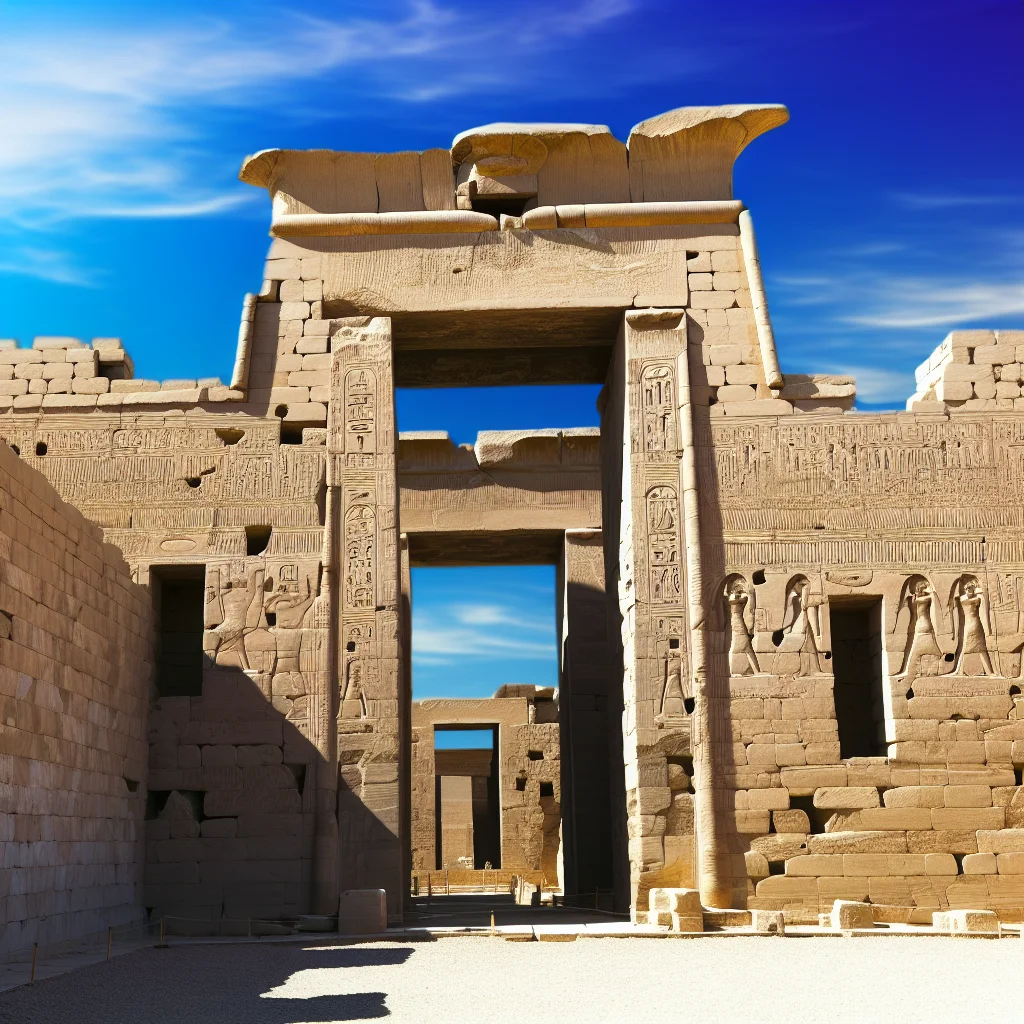
Edfu Temple Egypt Guide 2026: Temple of Horus & Dramatic Battle Reliefs
PtolemaicEdfu Temple near Aswan: Temple of Horus with stunning battle scenes, ritual texts, and the best-pres...
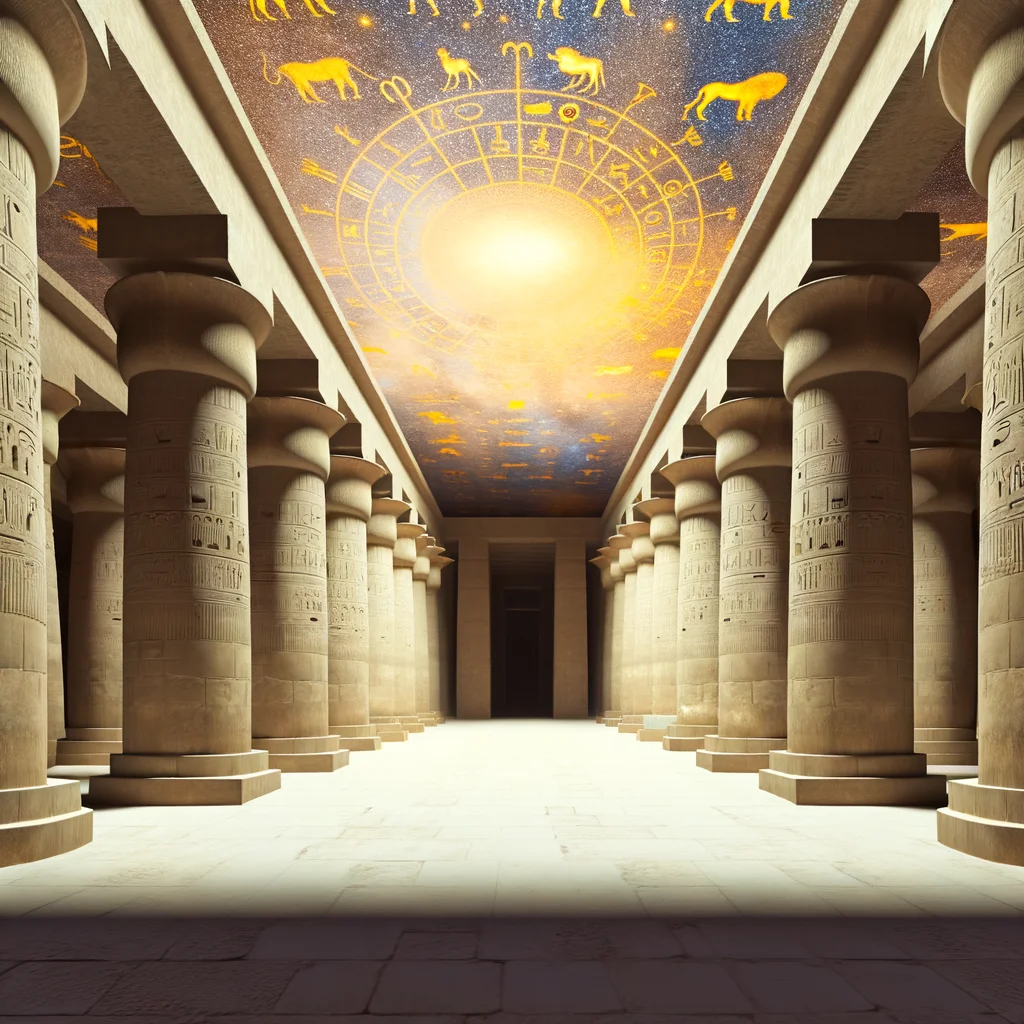
Dendera Temple Complex Egypt Guide 2026: Temple of Hathor & Zodiac Ceiling
Ptolemaic-RomanExplore Dendera's magnificent Temple of Hathor near Luxor. Star-mapped zodiac ceiling, Ptolemaic arc...
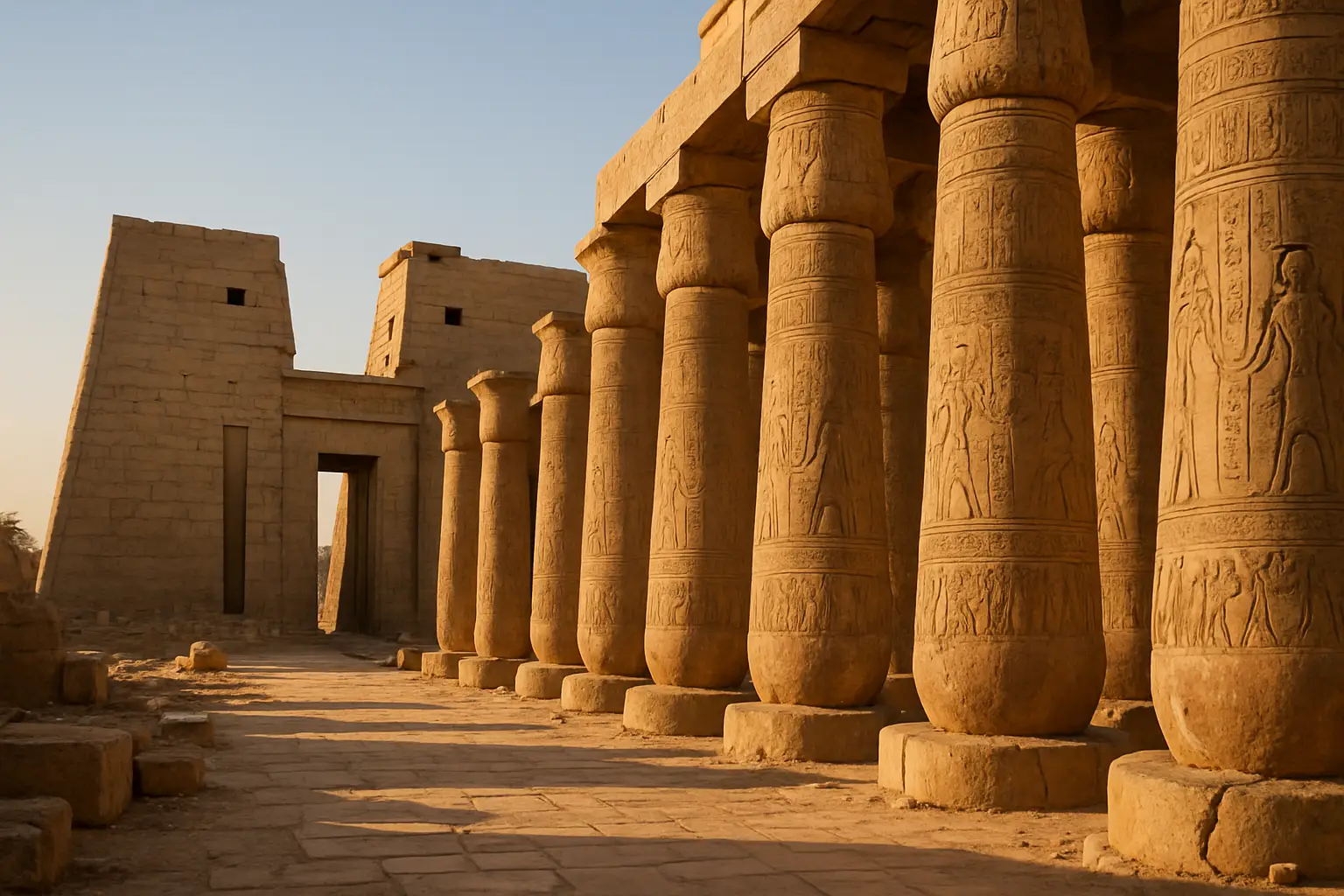
Karnak Temple Complex Egypt Travel Guide 2026: Egypt's Greatest Temple
Ancient EgyptianExplore Karnak, the world's largest ancient religious complex. Discover the Hypostyle Hall, Sacred L...
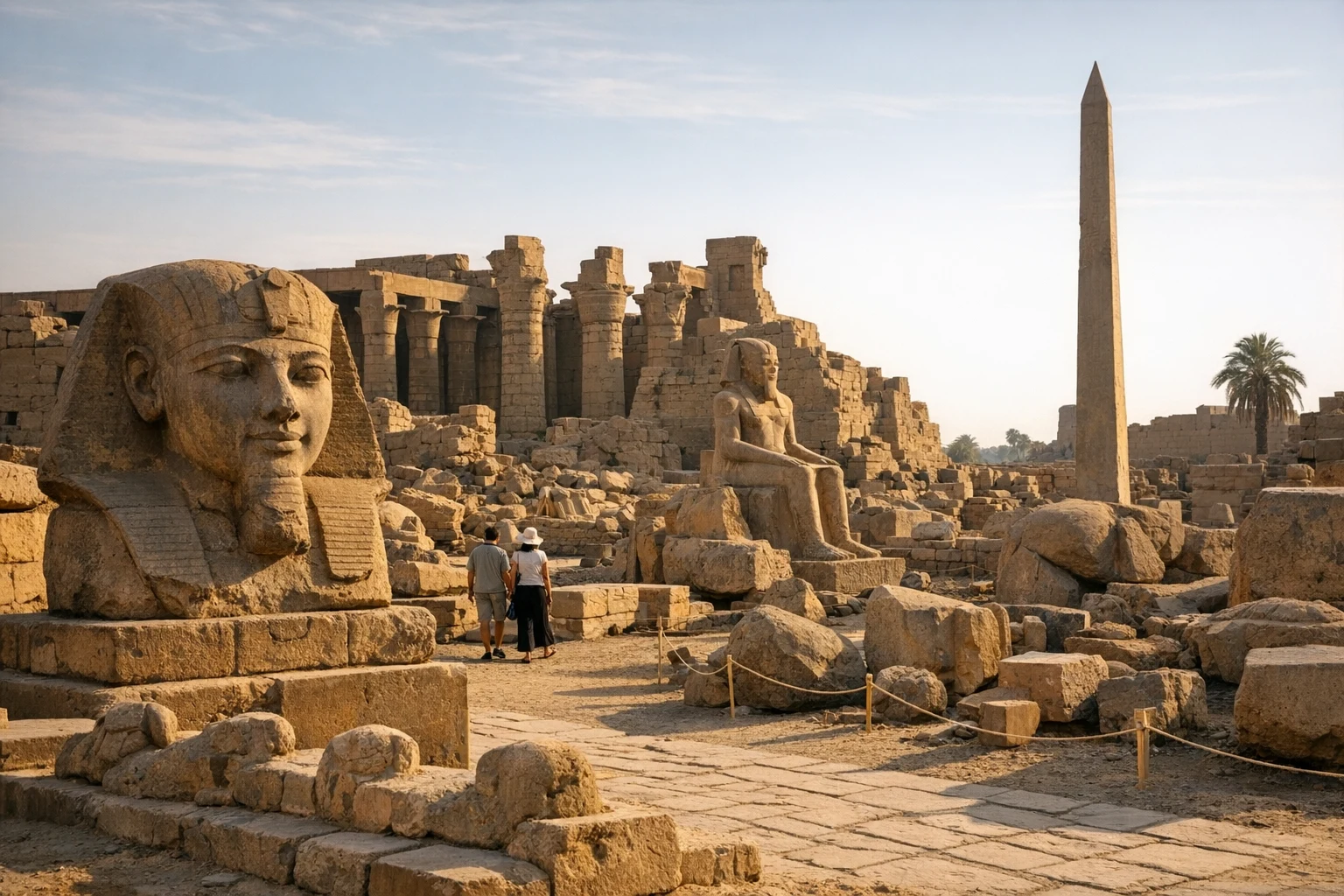
Karnak Open Air Museum
Ancient EgyptianExplore Egypt’s Karnak Open Air Museum, where reconstructed chapels and reliefs reveal hidden layers...
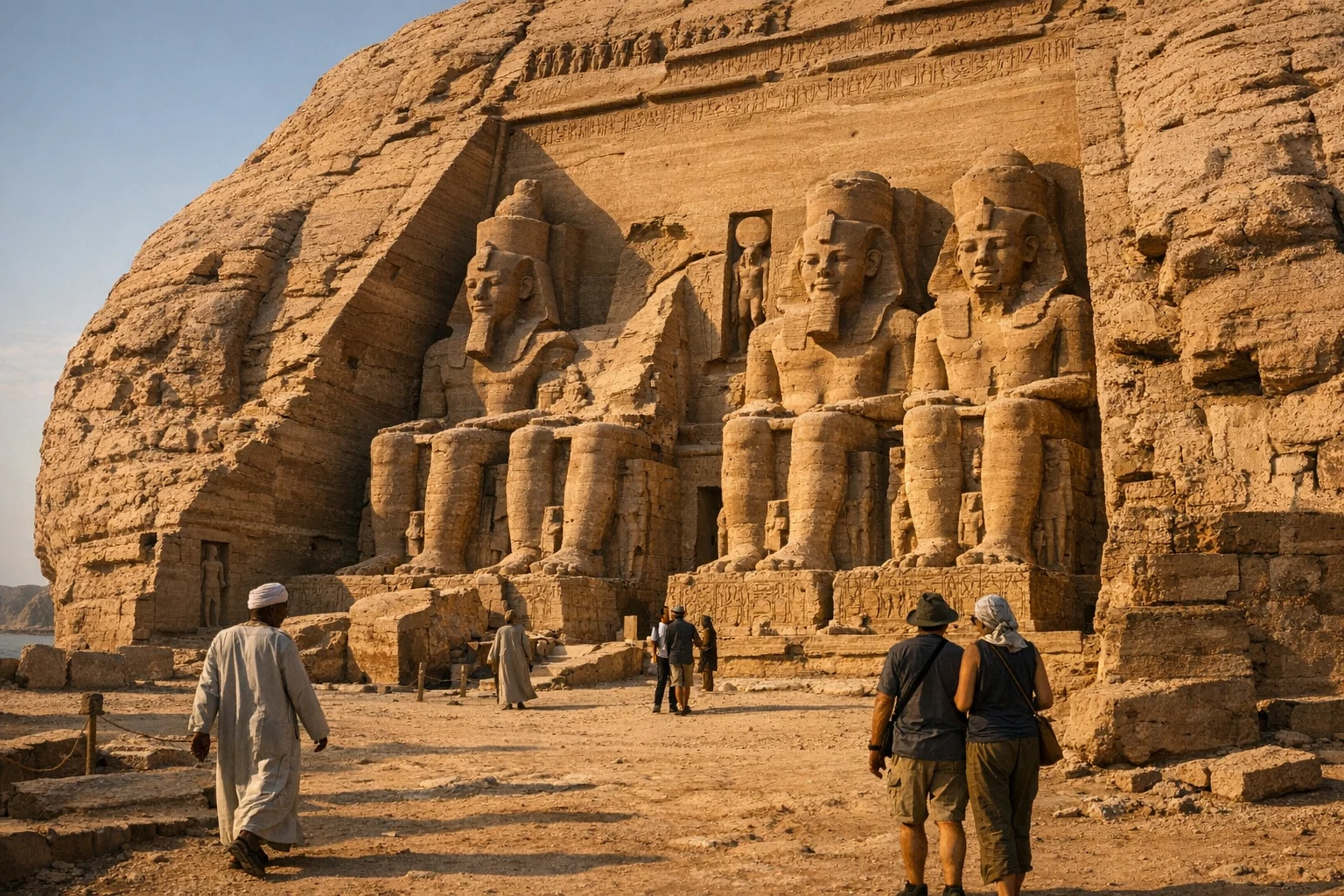
Abu Simbel
Ancient EgyptianDiscover Abu Simbel in Egypt, where colossal rock-cut temples of Ramses II rise above Lake Nasser ne...