Quick Info
Curated Experiences
Tour to El Brujo Archaeological Complex
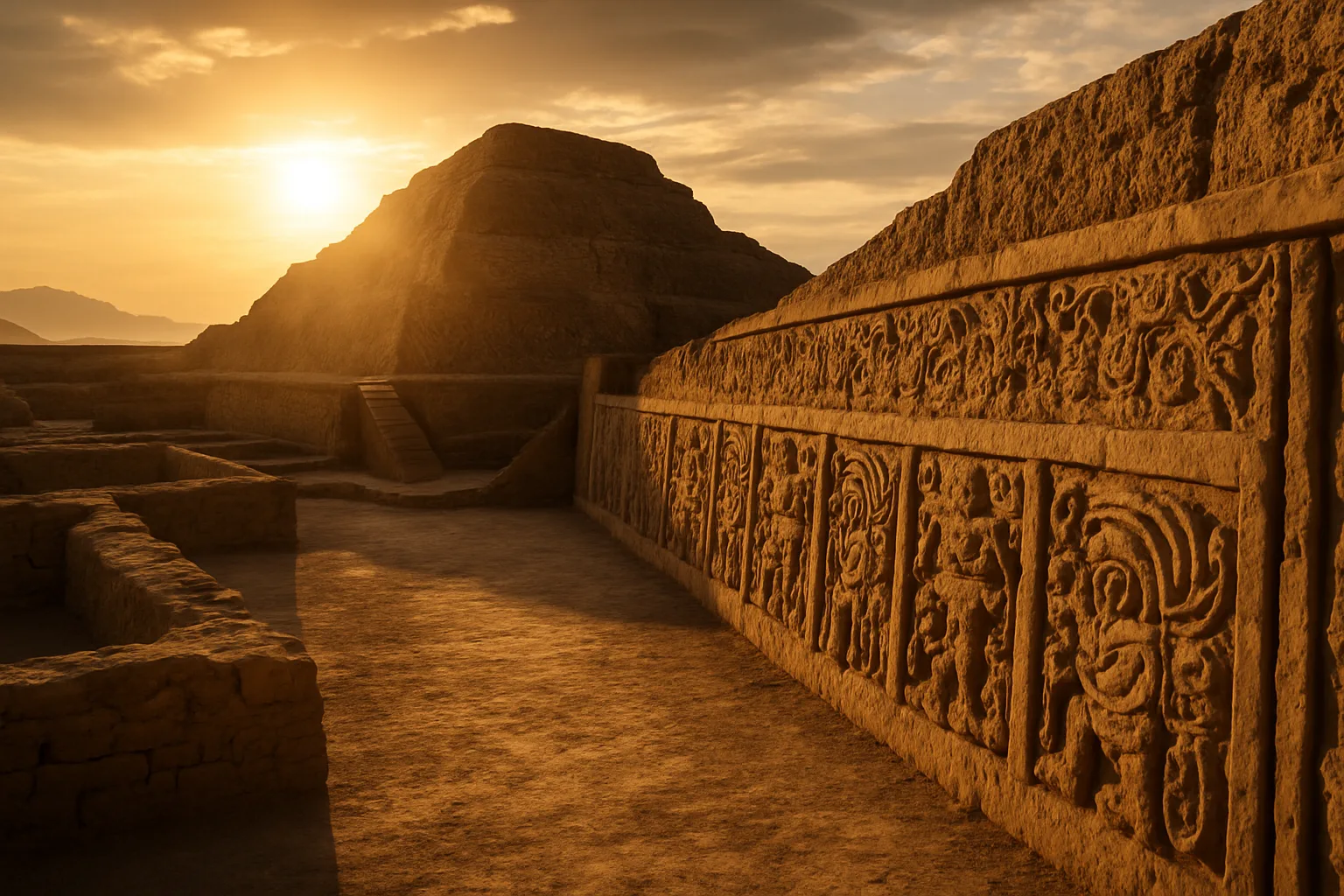
On the edge of a coastal bluff where the Chicama Valley meets the Pacific, a stepped adobe pyramid rises forty meters above the desert floor, its ancient surface painted with warriors, prisoners, and supernatural beings in ochre, red, black, and white. This is Huaca Cao Viejo, the ceremonial heart of El Brujo Complex — and for the Moche civilization that built it sometime in the first millennium CE, it was a place of sacrifice, political power, and divine communion between the living and the dead. The site’s modern name, El Brujo, means “the sorcerer,” a name given by local farmers who sensed for generations that something extraordinary lay beneath the desert sand. In 2006, excavations confirmed what the legends implied: buried inside this pyramid was the tomb of one of the most remarkable individuals ever discovered in the Americas.
El Brujo Complex, located 60 kilometers northwest of Trujillo in northern Peru, encompasses three major Moche pyramid mounds spread across roughly two kilometers of Pacific coastal desert. The site’s occupation spans at least 2,500 years, from early ceremonial platforms raised in the second millennium BCE through a final Chimu occupation before the pyramid was ritually sealed and abandoned. But what draws travelers today is the story that unfolded in 2006, when archaeologist Régulo Franco Jordán and his team uncovered the Lady of Cao — a tattooed female Moche ruler interred with warrior regalia, sacrificial offerings, and the bodies of those who accompanied her into the afterlife. This guide covers the key monuments, the on-site museum, transport from Trujillo, the best seasons to visit, and how to combine El Brujo with Peru’s other remarkable north coast sites.
History: From Desert Shrine to Royal Tomb
Early Occupation (c. 1500 BCE–100 CE)
Long before the Moche state emerged, this stretch of northern Peru’s coast attracted ceremonial activity. Archaeological evidence indicates platform construction at the El Brujo site dating to approximately 1500 BCE, placing it within the broader coastal tradition of ceremonial mound building that characterizes the Cupisnique and Chavin periods. These early builders likely gathered here for their proximity to the sea, the Chicama River valley’s agricultural bounty, and the elevated bluff offering clear views in every direction. The earliest platforms, buried beneath later Moche construction, preserve traces of this pre-Moche sacred geography that the later civilization deliberately incorporated into its own ritual landscape.
Moche Florescence (100–700 CE)
The Moche civilization dominated Peru’s north coast during the first seven centuries CE, organizing vast irrigation systems, producing extraordinarily refined ceramic and metalwork, and constructing monumental adobe pyramids that still define the coastal horizon. At El Brujo, the Moche built Huaca Cao Viejo as the complex’s primary ceremonial center: a stepped pyramid with multiple construction phases, each burying the previous level and rising higher above the desert. The pyramid’s exterior walls were painted with elaborate polychrome murals depicting the Sacrifice Ceremony — the central ritual of Moche state religion in which captured warriors were bled and offered to supernatural forces. These murals, protected for centuries under accumulated sand, survive today in remarkable condition.
The Lady of Cao (c. 450 CE)
The discovery of an elite burial within Huaca Cao Viejo’s fourth construction phase revealed a woman of approximately 25 to 30 years of age, heavily tattooed with serpents and spiders on her arms, interred with a collection of objects previously associated exclusively with male Moche lords. Her tomb contained gilded copper war clubs, spear throwers, a gold-and-silver headdress bearing owl motifs, two gold serpent-headed rattles, and the remains of two sacrificed young men placed beside her. She predates the famous Lord of Sipan by approximately a century and represents the earliest identified female political authority in pre-Columbian Peru.
Chimu Reoccupation and Abandonment (700–1200 CE)
After the Moche collapse around 700 CE, El Brujo passed through successive periods of reduced activity before the Chimu Kingdom established the final major occupation. The Chimu constructed Huaca El Brujo — the second major pyramid visible at the site — during this period, adding a northern axis to the ceremonial complex. By approximately 1200 CE, the site was ritually sealed, its entrances blocked, and its surfaces deliberately buried. The abandonment appears deliberate rather than catastrophic, consistent with Andean practices of closing sacred spaces by burial rather than destruction.
Modern Rediscovery
Systematic archaeology at El Brujo began in the 1990s under the Cao Archaeological Project, led by Régulo Franco Jordán of Peru’s Ministry of Culture. The Lady of Cao discovery in 2006 transformed the site from a regionally significant pyramid complex into an internationally recognized landmark. The Museo de Cao, purpose-built on-site to house and display the tomb’s original artifacts, opened in 2009 and remains one of the finest small archaeological museums in Peru. Conservation work continues, and Huaca Cao Viejo’s murals are now protected under permanent shade structures that have dramatically slowed weathering.
The Key Monuments: What to See at El Brujo Complex
Huaca Cao Viejo
The centerpiece of El Brujo Complex is Huaca Cao Viejo, a massive stepped adobe pyramid measuring approximately 130 meters at its base and rising in four terraced levels to a height of 40 meters above the surrounding plain. Constructed entirely from hand-formed adobe bricks — billions of them, organized into vertical columns that archaeologists can use like fingerprints to identify different work gangs — the pyramid was the primary ceremonial platform of the Moche state religion at this location. The structure you see today represents the outermost construction phase; successive earlier pyramids lie sealed inside it like nested boxes.
The pyramid’s most extraordinary feature is its polychrome mural program running along the ceremonial platform’s front face. These murals depict the Moche Sacrifice Ceremony in vivid detail: oversized supernatural figures clasp prisoners by the hair, warriors brandish weapons, and a procession of naked captives moves toward ritual death. The figures were painted in mineral pigments — ochre, white, red, black — over clay plaster, and the dry coastal climate has preserved colors that retain startling vibrancy after 1,500 years. Access is via a raised viewing walkway that positions visitors directly opposite the main mural panels. Morning light illuminates the west-facing murals most effectively; arrive by 9 AM to see them before midday glare flattens the relief.
The Tomb and Burial Chamber of the Lady of Cao
Within the pyramid’s fourth construction phase, archaeologists preserved and partially reconstructed the burial context of the Lady of Cao for in-situ display. Visitors descend through a protected passage into a replica burial chamber that replicates the spatial arrangement of the original tomb: the wrapped funerary bundle at center, the flanking war club displays, and the positions of the sacrificed attendants. The actual mummy and artifacts were relocated to the adjacent Museo de Cao for conservation, but the chamber provides powerful context for the objects displayed in the museum. Standing inside the burial space — sealed underground, ceremonial, charged with the weight of the offering — communicates something that no glass case can replicate.
Museo de Cao
The Museo de Cao is an architectural achievement as much as a museum: a low-profile modern building designed to recede into the desert landscape while providing climate-controlled protection for some of the most significant pre-Columbian artifacts ever excavated. The permanent collection centers on the Lady of Cao’s burial assemblage displayed in reconstructed burial context, including her complete set of war clubs and spear throwers, the elaborate gold and silver headdress with owl imagery, serpent-head rattles, the necklace of gold-and-silver human faces, and ceramic vessels recovered from the offering deposits. A second gallery traces the Moche occupation of the Chicama Valley with ceramics, textiles, and architectural models. The museum gift shop offers one of the better selections of quality archaeological reproductions on Peru’s north coast — considerably more curated than what is available in Trujillo’s markets.
Huaca El Brujo and Huaca Cortada
Two additional pyramid mounds complete the complex. Huaca El Brujo is the largest structure on-site by footprint, a Chimu-period construction rising from the northern sector of the complex, currently undergoing active excavation and not fully open to visitors. Its eroded silhouette against the Pacific sky and the ongoing work provide a compelling contrast to the restored presentation of Huaca Cao Viejo. Huaca Cortada (“the cut pyramid”), named for the deep slice carved into its south face by huaqueros (grave robbers) in the colonial period, stands between the two major pyramids and retains traces of Moche-period painted decoration on surviving wall sections. The view from the coastal bluff between the pyramids — the Pacific crashing onto the beach 40 meters below, the Chicama Valley’s green agricultural corridor extending inland, the Andes visible as a blue-grey ridge on clear days — is one of the most dramatically situated panoramas at any Peruvian archaeological site.
Getting There: Transportation and Access
El Brujo Complex lies 60 kilometers northwest of Trujillo, accessible by road through the Chicama Valley and across a stretch of coastal desert.
From Trujillo
The most practical approach from Trujillo is a private taxi or pre-arranged tour. The drive takes approximately 1.5 hours each way via the Pan-American Highway north and then west through the valley.
- Private taxi (round trip): 100–160 PEN ($26–42 USD) for the vehicle; negotiate a round-trip fare with waiting time (3–4 hours at the site). Ask your hotel to arrange a trusted driver.
- Organized tour: 150–200 PEN ($40–53 USD) per person including transport, guide, and entry fee. Available through tour agencies in downtown Trujillo. The Viator-listed guided tour departs Trujillo and includes professional guiding at Huaca Cao Viejo and the museum.
- Public combi: Combis depart Trujillo’s Ovalo Grau for Magdalena de Cao village (approximately 4 PEN/$1 USD, 1.5 hours). From the village, it is 4 kilometers on unpaved road to the site; mototaxis or on-foot walking are the only options, and return transport is unreliable. Public transport is not recommended unless you have ample time and flexibility.
Admission and Hours
El Brujo Complex is open daily from 9:00 AM to 5:00 PM. Admission is 15 PEN (approximately $4 USD) per adult, payable in cash at the site entrance. No multi-site pass currently covers El Brujo; it operates independently of the Trujillo Boleto Turístico used at Chan Chan. The Museo de Cao admission is included in the site entry fee. Cash only — there is no card payment facility on-site. A small café near the museum entrance serves beverages and light snacks during peak hours but cannot be relied upon as the sole water source for the day. Bring at least two liters per person.
When to Visit: Seasonal Considerations
Spring (September–November)
Temperatures along Peru’s north coast during spring range from 18–24°C (64–75°F), making this a comfortable transition into the best visiting season. Coastal fog (garúa), which characterizes the winter months, lifts reliably by October. Spring brings growing visitor numbers as the dry-season weather solidifies, but El Brujo remains far less crowded than Trujillo’s Chan Chan complex throughout the year.
Summer (December–March)
Summer is Peru’s warmest and wettest season inland, but the north coast benefits from the Humboldt Current, which moderates temperatures to 22–28°C (72–82°F). However, El Niño years can bring significant rainfall even to the coast, and the adobe pyramid’s unprotected upper sections are genuinely vulnerable to rain damage. The mural panels are now sheltered, but summer rain remains a risk for the unprotected ruins. Morning visits are strongly recommended to finish before afternoon heat.
Autumn (April–June)
April through June represents the ideal window: the rainy season has ended, temperatures sit at 20–26°C (68–79°F), coastal skies are clearest, and the Andes are visible as a snow-dusted backdrop on good days. Crowds are modest. This is the single best season for photography — the low-angle morning light produces deep shadows in the pyramid’s relief murals and the colors of the painted surfaces appear at their most saturated.
Winter (July–August)
Winter brings persistent coastal fog and overcast skies that rarely lift fully until early afternoon, with temperatures dropping to 15–20°C (59–68°F). The muted light is actually reasonable for photographing mural detail without harsh shadows, but the grey sky reduces panoramic views. Crowds are at their annual low, guide availability is excellent, and entry is unconstrained. Bring a layer; the coastal bluff wind is sharp in the morning hours.
Combining El Brujo Complex with Trujillo’s North Coast
El Brujo Complex sits at the northern end of a remarkable concentration of Moche and Chimu sites that extends south through the Moche Valley and can be organized into a two-day north coast itinerary based in Trujillo.
A logical full-day pairing begins at El Brujo by 9:00 AM — arrange your private driver or tour departure no later than 7:30 AM from Trujillo to arrive as the site opens. Spend two hours at Huaca Cao Viejo studying the mural program, then 45 minutes in the Museo de Cao. Walk the connecting path to Huaca El Brujo and Huaca Cortada before the midday heat becomes uncomfortable, completing the complex by approximately 12:30 PM. Return through the Chicama Valley and stop in the town of Chocope or nearby Cartavio for a simple lunch at a local restaurant before continuing back to Trujillo, arriving by 2:30 PM. This leaves the afternoon free for Chan Chan, the vast Chimu capital 5 kilometers west of Trujillo, which is best visited in late afternoon light. The two sites — El Brujo representing the Moche religious tradition and Chan Chan representing its Chimu successor — offer a compressed history of Peru’s north coast civilization within a single day.
For travelers with more time, a second day can extend north to Sipán near Chiclayo (3 hours by bus), where the Lord of Sipan’s intact Moche royal tomb provides the male-ruler counterpart to the Lady of Cao’s story. The Museo Tumbas Reales de Sipán in Lambayeque is one of the finest archaeological museums in South America and rounds out the Moche civilization narrative begun at El Brujo.
Why El Brujo Complex Matters
El Brujo Complex forces a revision of what we thought we knew about gender and power in the ancient Americas. For most of the twentieth century, Moche iconography was interpreted through an exclusively male lens: the warrior kings, the sacrificial lords, the figures brandishing weapons in the ceremonial scenes painted on pottery and pyramid walls. The Lady of Cao did not merely expand that understanding — she demolished a fundamental assumption. A woman buried with the full regalia of Moche political and military authority, at a time when her civilization was at the height of its territorial and cultural reach, means that the story told on the pyramid walls beside her tomb was her story, not just a male ruler’s.
Standing on the coastal bluff at El Brujo, with the Pacific below and the pyramid behind you, the scale of what was built here over centuries becomes visceral. These were not marginal people in a marginal place. They commanded labor, organized ritual, accumulated wealth, and established a state capable of producing some of the finest metalwork and ceramics in human history. The Lady of Cao was one of their rulers. Her tomb waited fifteen centuries for the excavation that would reveal her, and the desert preserved both her tattooed skin and the objects that spoke her authority. That preservation is its own kind of miracle — and the reason that El Brujo, despite its remote location and modest infrastructure, belongs on the itinerary of every traveler following the thread of ancient Peru’s north coast.
Quick Facts
| Attribute | Details |
|---|---|
| Location | Magdalena de Cao, La Libertad, Peru |
| Ancient Name | Cao Viejo (Moche ceremonial name) |
| UNESCO Status | Not listed (Chan Chan, 60 km south, is UNESCO WHS) |
| Established | c. 1500 BCE (early ceremonial platform) |
| Distance from Trujillo | 60 km northwest; approx. 1.5 hrs by car |
| Entry Fee | 15 PEN (~$4 USD); cash only |
| Hours | Daily 9:00 AM–5:00 PM |
| Best Time | April–June (dry season, clear skies) |
| Suggested Stay | 3–4 hours on-site; full day from Trujillo |
Explore More Peru
- Chan Chan: The largest pre-Columbian city in South America, a vast Chimu adobe capital 60 km south of El Brujo
- Sipan Royal Tombs: The intact Moche royal tombs near Chiclayo that redefined understanding of Moche elite burials
- Tucume Pyramids: Twenty-six adobe pyramids in the Lambayeque Valley, the largest pyramid complex on Peru’s north coast
Plan your complete Peruvian archaeological journey with our Peru Ancient Sites Guide. Learn how to connect the north coast sites with our Northern Peru Itinerary Guide.
Frequently Asked Questions
How much time should I plan at El Brujo Complex?
Allow 3 to 4 hours for a thorough visit covering Huaca Cao Viejo, the Museo de Cao, and the surrounding complex. Most guided tours from Trujillo include 4 to 5 hours on-site plus 1.5 hours each way in transit, making this a full-day excursion.
What is the best time to visit El Brujo Complex?
May through October (Peru's dry season) offers the most reliable conditions: clear skies, cooler coastal air, and no risk of rain softening the unprotected adobe ruins. Arrive by 9 AM to walk the pyramid before midday heat builds. Morning light is also ideal for photographing the polychrome murals on the pyramid's west face.
How do I get to El Brujo Complex from Trujillo?
El Brujo Complex is approximately 60 km northwest of Trujillo, a 1.5-hour drive through the Chicama Valley. The most practical option is a private taxi or organized tour from Trujillo (50-80 PEN/$13-21 USD one way by taxi). Public combis run to Magdalena de Cao village but leave the last 4 km to the site on unpaved road without onward transport.
What will I see at El Brujo Complex?
Key highlights include the stepped adobe pyramid Huaca Cao Viejo with extraordinary polychrome murals depicting Moche ritual combat, the reconstructed burial chamber of the Lady of Cao, and the Museo de Cao with original artifacts from her tomb including gold crowns, war clubs, and sacrificial objects. The coastal cliff views overlooking the Pacific are also remarkable.
Who was the Lady of Cao?
The Lady of Cao was a high-ranking Moche ruler or warrior-priestess buried at Huaca Cao Viejo around 450 CE. Discovered in 2006, her tomb contained regalia previously associated only with male Moche lords: gilded war clubs, spear throwers, a gold headdress with owl motifs, and the remains of human sacrificial victims. She is the earliest known female ruler identified in pre-Columbian Peru.
Is El Brujo Complex safe for tourists?
Yes, El Brujo Complex is a well-managed archaeological site with on-site staff and guided pathways. The surrounding Chicama Valley is rural and safe for tourists traveling with a reputable tour operator or private driver. Standard Peru precautions apply: arrange transport through your hotel or a licensed agency and carry water and sun protection for the exposed site.
Nearby Ancient Sites
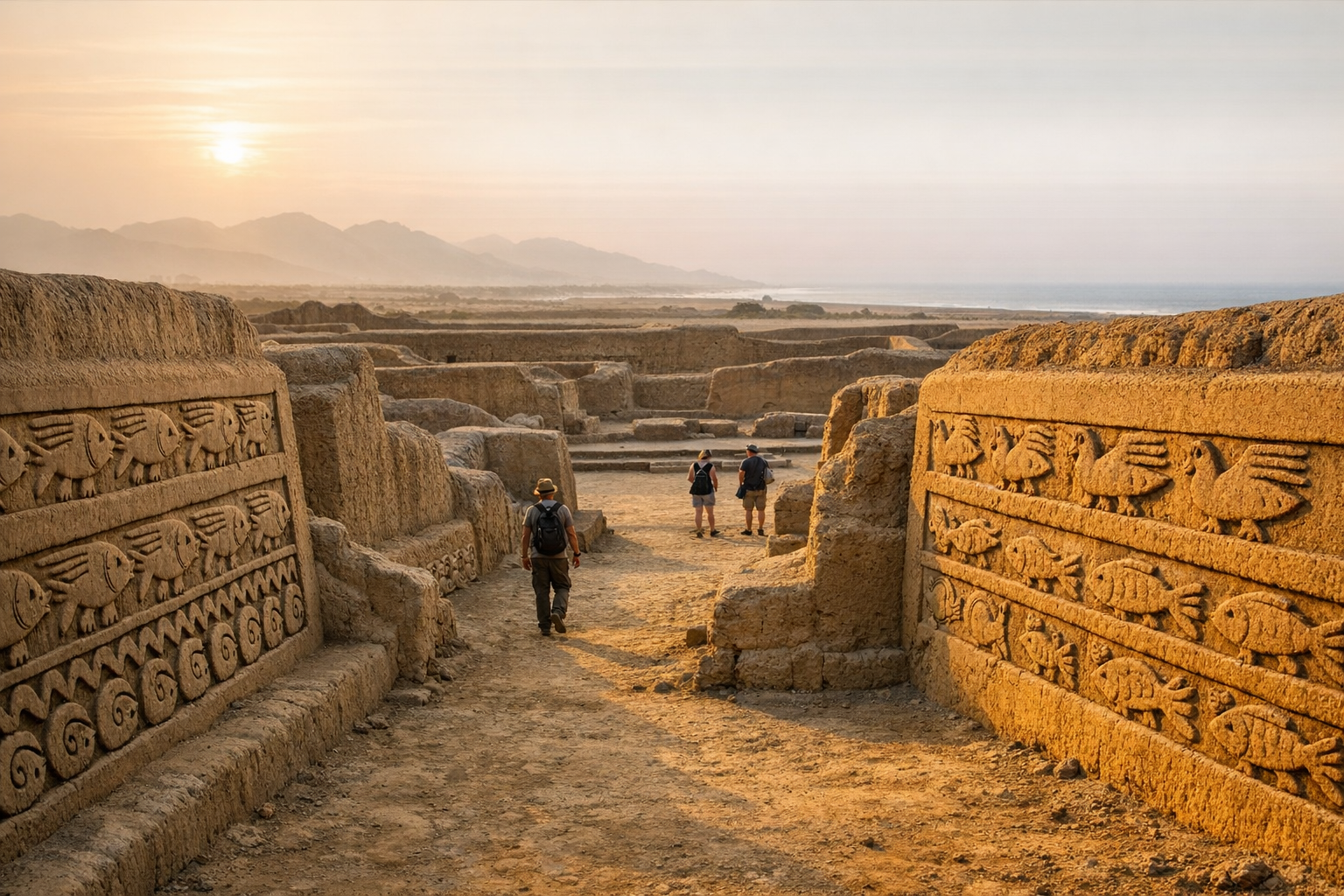
Chan Chan Peru Guide 2026: Chimu Capital & Adobe Citadels
ChimuExplore Chan Chan near Trujillo — the largest pre-Columbian city in the Americas. Discover the Chimu...
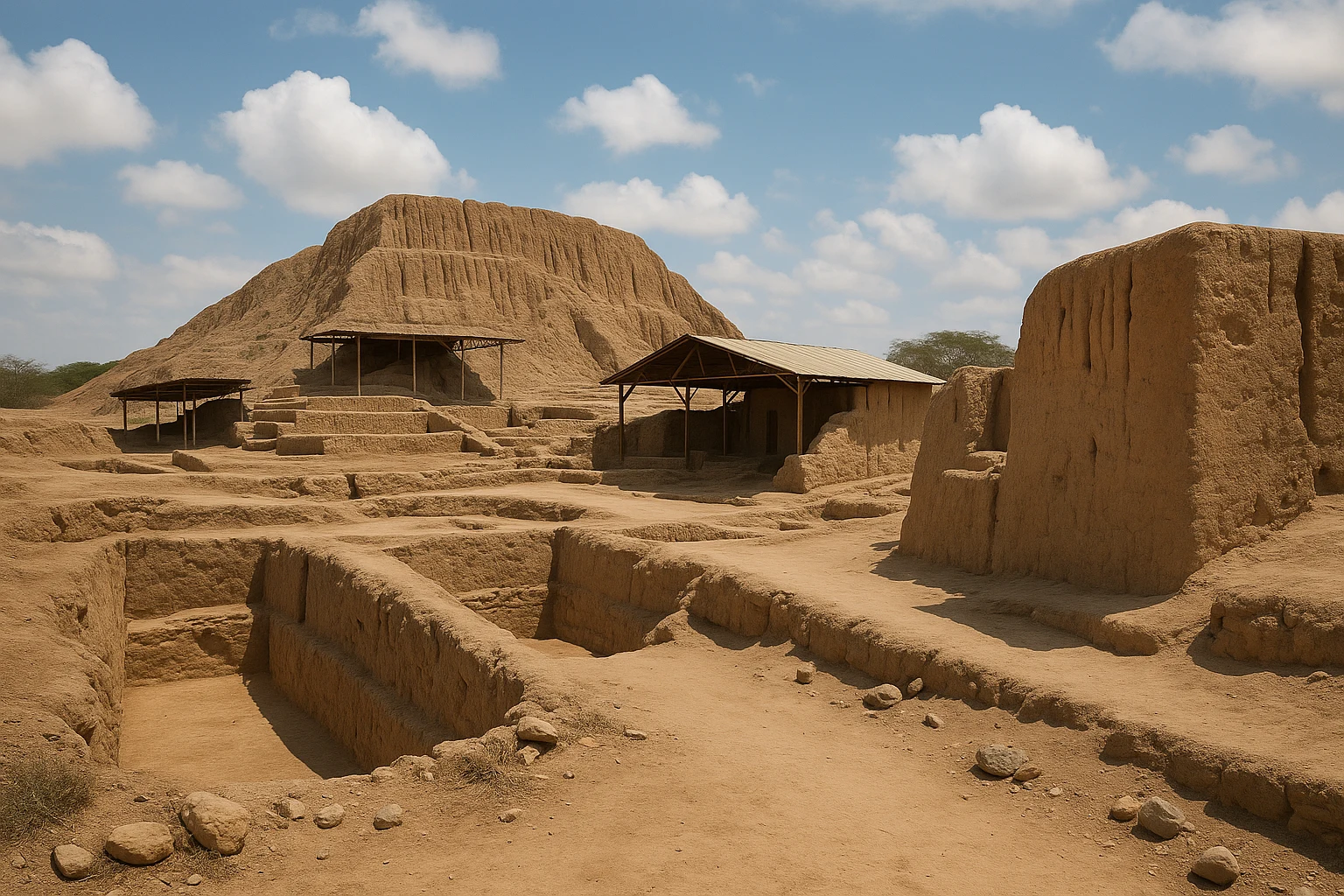
Sipan Royal Tombs Peru Guide 2026: Lord of Sipán & Moche Gold
Cupisnique-Moche-Lambayeque-Inca-Spanish ColonialVisit Peru’s Sipán Royal Tombs to see Moche elite burials, museum treasures, and practical tips for ...
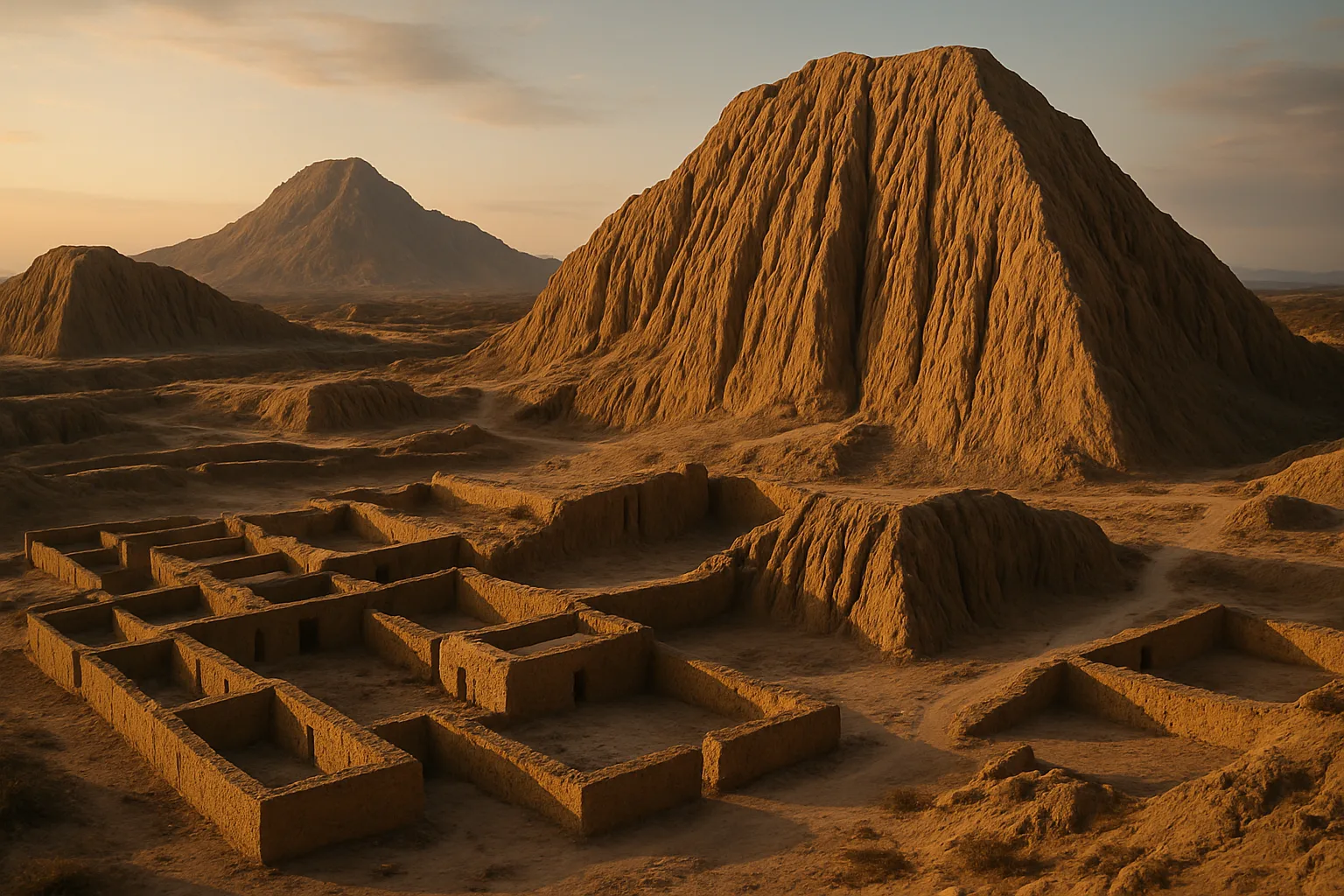
Tucume Pyramids Peru Guide 2026: Adobe Huacas & Lambayeque Valley
Lambayeque-Chimu-IncaTucume's 26 adobe pyramids near Chiclayo hold Lambayeque, Chimu, and Inca history. Explore Huaca Lar...