Quick Info
Curated Experiences
El Jem Amphitheater and Kairouan Mosque Full-Day Tour from Tunis
Private Carthage, El Jem, and Sousse Tour
El Jem Roman Amphitheater Guided Day Trip
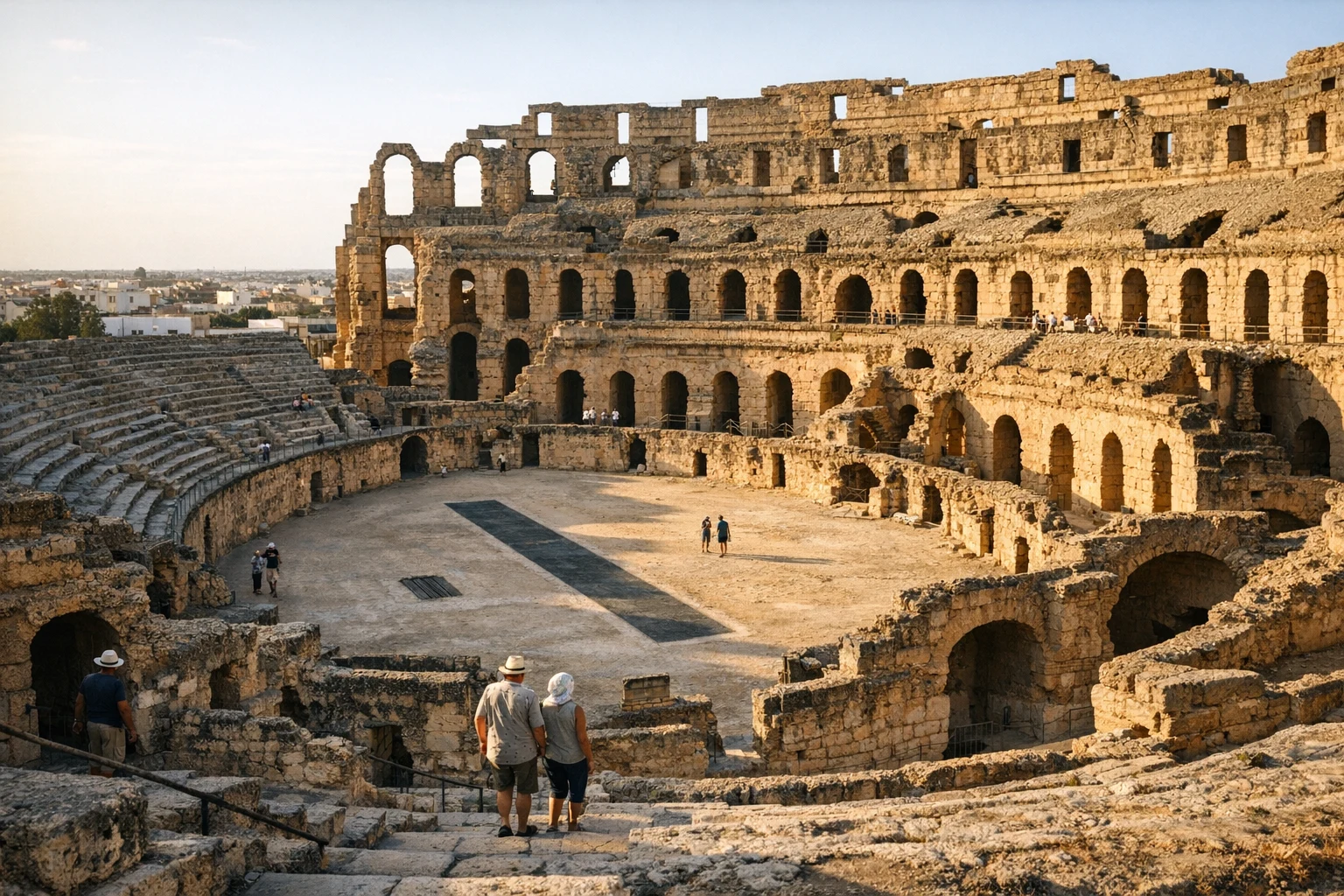
Standing in the heart of Tunisia, beneath the sweeping North African sky, the El Djem Amphitheater commands both awe and curiosity. As you approach this colossal structure, unmistakably rooted in the arid landscape of the Mahdia Governorate, centuries of history rise before you in weathered stone. Known in antiquity as Thysdrus, El Djem was once a flourishing Roman settlement, growing rich on olive oil trade and blending local Berber influences with imperial grandeur. The amphitheater is arguably Tunisia’s most iconic ancient monument—a rival to Rome’s own Colosseum, yet uniquely North African in its origin and resilience. Whether you are a lover of Roman history, an architecture aficionado, or a traveler enamored with UNESCO World Heritage sites, El Djem’s impressive scale and remarkably preserved features make it a bucket-list destination.
Visiting El Djem Amphitheater is to step into an era where gladiators, roaring crowds, and imperial spectacles dominated the rhythms of daily life. It is among the world’s largest surviving amphitheaters, able to seat up to 35,000 spectators within its three-tiered arcades. The walls soar to more than 36 meters, casting long shadows over the golden plain—an enduring symbol of the Roman Empire’s southern reach. Unlike Rome, the amphitheater at El Djem remains relatively unencumbered by modern development, and the surrounding town offers a tranquil counterpart to the monumentality of the ruins. Here, time slows and echoes of ancient festival days seem almost tangible. From performances and festivals in its past to today’s cultural events, El Djem Amphitheater remains as vibrant as ever—a testament to the endurance of both architecture and spirit in this crossroads of Mediterranean and African worlds.
History
Origins and Construction: The Roman Empire Arrives in North Africa
The history of El Djem Amphitheater is firmly rooted in the expansion of the Roman Empire into North Africa during the first and second centuries CE. Originally, the site was part of Thysdrus, which, by the 2nd century, had grown into one of the province of Africa Proconsularis’s prominent settlements. Tunisia’s fertile plains were a linchpin in Rome’s grain and olive oil supply, which led to significant investment in public works. The construction of the amphitheater is traditionally dated to around 238 CE, during the reign of the emperor Gordian III, though some archaeologists believe work began under the emperors Maximinus Thrax or Gordian I.
The architectural ambition of El Djem reflected both local prosperity and imperial pride. The project consumed vast resources—local limestone was quarried and thousands of laborers enlisted for the task. Situated at the intersection of important trade routes that connected the African hinterlands to the coast and to Carthage, Thysdrus was a logical site for a grand amphitheater. When completed, El Djem’s arena became one of the largest in the empire, second only to Rome’s Colosseum and the Capua amphitheater in Italy.
The Arena in Roman Life: Spectacle and Society
For the Roman citizens of Thysdrus, the amphitheater was far more than just a theater for violence and spectacle—it was a stage for imperial authority, social gatherings, and civic identity. Massive crowds would gather to witness gladiatorial combat, venationes (animal hunts), public executions, athletic competitions, and dramatic reenactments of battles. The amphitheater’s design reflects a society that valued spectacle and unity: broad entrances facilitated the movement of thousands, while the three levels of arcades organized the seating according to social status, from prominent citizens near the arena to ordinary townsfolk above.
Events would often coincide with the religious calendar or honor visiting dignitaries. The games were sponsored by wealthy elites—sometimes as part of electoral campaigns—and the amphitheater’s grandeur was a physical manifestation of local accomplishment and Roman civilization on Africa’s southern frontier. Its influence extended beyond civic pride: the amphitheater in El Djem, like its counterparts in other Roman cities, was a tool of governance, reaffirming the power of Rome through shared experience and imperial ideology.
Decline, Transformation, and Legacy
The fortunes of Thysdrus—and the amphitheater—shifted with the ebb and flow of empire. In the late 3rd century, the city’s economic importance waned, and the general instability across the Roman world bred conflict. In 238 CE, Thysdrus itself was involved in the so-called “Year of the Six Emperors” when local elites attempted to support a rebellion against the emperor Maximinus Thrax. The rebellion was ultimately crushed, and the city’s prominence faded thereafter.
Following the collapse of Roman authority, the amphitheater’s role was reimagined. In subsequent centuries, it served as a fortress and provided refuge during invasions by Vandals and later Arabs in the 7th century. By the Middle Ages, it became a quarry for local builders, though much of its original structure remained intact. In the 17th to 19th centuries, parts of the building were again fortified, as local populations used it as a stronghold during conflicts. Nevertheless, El Djem Amphitheater survived in impressive condition.
Recognition of the amphitheater’s significance came in the modern era. French archaeologists undertook major restoration in the 20th century, and UNESCO designated El Djem a World Heritage site in 1979. Today, it stands not just as a relic of Roman engineering, but as an enduring symbol of Tunisia’s layered history and its ongoing dialogue with the past.
Key Features
Wandering through El Djem Amphitheater, visitors are immediately struck by its sheer scale and the intricacy of its architecture. The structure’s elliptical footprint stretches 148 meters long by 122 meters wide, easily on par with Rome’s Colosseum. What sets El Djem apart, however, is not just its size but the integrity of its construction and the easy flow between the vast exterior plaza and the many passageways within.
The outer facade comprises three levels of massive arcades, constructed from honey-colored limestone that blazes in the midday Tunisian sun. Despite centuries of earthquakes, battle damage, and stone robbing, much of the outer wall remains undiminished—a testament to the skill of Roman engineers. Entering through one of the principal gates, visitors find themselves led along wide corridors beneath soaring vaults. From here, staircases ascend to upper galleries where panoramic vistas reward the climb; the rural landscape, dotted with palms and olive groves, expands in all directions.
Perhaps the most impressive features lie beneath the arena floor. Like its Roman cousin, El Djem’s amphitheater boasted an elaborate system of underground chambers and corridors—hypogea—that housed gladiators, wild animals, and complex machinery. Restored sections of the hypogeum are now open to visitors, allowing a visceral sense of what performers and animals would have endured awaiting the roar of the crowd above. The subterranean world stands in stark contrast to the arena’s openness, evoking anticipation and fear in equal measure.
On the arena floor itself, you can picture the choreography of ancient contests. The oval space is surrounded by high protective walls, designed to shield the audience from danger. Tiered seating fans out from the arena in a graceful curve, with architectural cues demarcating sections for dignitaries, citizens, and women—an echo of the careful social ordering of the Roman Empire. The sightlines are superb from every level, a result of the mathematic precision that defined Roman amphitheater construction.
Today, El Djem is celebrated for its high degree of preservation. The seating galleries are largely intact, as are the passageways and several of the original staircases. Occasional remnants of Roman mosaics, marble claddings, and inscriptions speak to the luxury once lavished on this public monument. At dusk, the play of shadows along the columns and corridors creates an atmosphere both haunting and awe-inspiring. The amphitheater’s design not only ensured the enjoyment of spectators in antiquity but also offers modern visitors a vivid window into a lost world.
One of the more unique contemporary features is the amphitheater’s continued use: every summer, it hosts the International Festival of Symphonic Music, transforming the stone arena into a spectacular open-air concert hall. Acoustics that once amplified the cheers of gladiatorial games now elevate the sounds of orchestras, providing a moving testament to the resilience and adaptability of ancient architecture. Whether you explore the underground passages, climb to the upper tiers, or simply sit quietly soaking in the history, El Djem Amphitheater offers a deeply immersive encounter with the classical world.
Getting There
Reaching El Djem Amphitheater is both straightforward and rewarding, thanks to Tunisia’s well-developed transportation network and the proximity of the site to major cities in the region. El Djem sits roughly halfway between Sousse and Sfax on the main coastal highway, making it easily accessible by road and rail.
For many travelers, Tunis—the capital city and the country’s principal international gateway—serves as the starting point. From Tunis, El Djem is approximately 200 kilometers (124 miles) to the south. The most economical option is the SNTRI public buses, which connect Tunis to El Djem multiple times per day; fares range from 18 to 30 TND (5 to 10 USD) one way, with a journey time of around 2.5 to 3 hours. Comfortable intercity louages (shared minibuses) depart from Tunis’s Bab Alioua station, filling up quickly; these cost about 20-25 TND (7 to 8 USD) per seat.
Train travel is also a popular and scenic choice. The national railway (SNCFT) operates several daily trains along the Tunis-Sfax line, stopping at El Djem. The ride from Tunis takes roughly 3 hours, with second-class fares starting at 16 TND (5 USD). From the El Djem train station, it’s a short taxi or even a pleasant walk to the amphitheater.
Travelers based on the coast—in Sousse, Monastir, or Sfax—can make El Djem a half-day or full-day trip with little hassle. Driving is convenient, and car rentals are widely available from major cities, with daily rates ranging from 60 to 120 TND (20 to 40 USD). Ample parking is available close to the site. For those preferring guided experiences, many tour operators offer day trips that include hotel pick-up, a visit to the amphitheater, and other cultural stops in the region.
Within El Djem itself, the amphitheater dominates the small town. Local taxis are affordable for short hops, and the site is well-signposted. Visiting independently or as part of a group is equally feasible. For travelers seeking an in-depth encounter with the site’s history and architecture, hiring a licensed guide (available at the entrance for 30 to 50 TND) is highly recommended.
When to Visit
El Djem Amphitheater is open to visitors year-round, but the timing of your trip can greatly enhance your experience. Tunisia’s Mediterranean climate brings long, hot summers and mild winters to the Mahdia Governorate.
The peak season for visitors aligns with the Tunisian spring and early summer, from March to June. During these months, the weather is warm but not oppressive, with daytime temperatures averaging 22–28°C (72–82°F). Skies are generally clear, and the amphitheater glows in brilliant sunlight, perfect for photography and exploration. During April and May, wildflowers bloom in the surrounding countryside, creating a picturesque contrast with the ancient stones.
From July to September, summer brings intense heat, with temperatures often reaching or exceeding 35°C (95°F). While the amphitheater’s thick walls provide some respite, much of the site is exposed; carrying water, sunhats, and sunscreen is essential. Notably, the International Festival of Symphonic Music is held annually in July or August. If you attend a concert, plan for warm evening temperatures and the unique pleasure of listening to live music inside the ancient arena.
Autumn (September to November) is another ideal period. The heat eases, crowds thin, and the site takes on a more contemplative atmosphere. December through February brings cooler weather, with average highs around 16–18°C (61–64°F), and occasional rain. Winter visits reward with tranquility and soft, diffused light but require light jackets or sweaters.
Whatever the season, El Djem Amphitheater rarely feels crowded compared to Europe’s best-known ancient sites. Early morning and late afternoon provide the best light for photography and offer a quieter, more atmospheric exploration. Public holidays and weekends may see increased local visitors, but even then, the vastness of the monument ensures plenty of space to wander in peace. Most importantly, always check local schedules for special events or temporary closures before planning your visit.
Quick Facts
| Feature | Description |
|---|---|
| Location | El Djem, Mahdia Governorate, Tunisia |
| GPS Coordinates | 35.2956° N, 10.7069° E |
| Date of Construction | Circa 238 CE |
| Civilization | Roman Empire |
| Capacity | Up to 35,000 spectators |
| Structure Type | Roman Amphitheater (arena) |
| UNESCO World Heritage Status | Inscribed in 1979 |
| Main Materials | Local limestone |
| Main Uses | Gladiatorial games, animal hunts, civic events, modern concerts |
| Notable Modern Events | International Festival of Symphonic Music (annual, July/August) |
| Accessibility | Partially accessible (ground level and exterior) |
| Distance from Tunis | ~200 km (~124 miles) |
| Recommended Visit Duration | 2-3 hours |
| Onsite Facilities | Restrooms, café, ticket office, optional guided tours |
| Nearby Attractions | Museum of El Djem, Carthage, Mahdia, Sousse coastal resorts |
Frequently Asked Questions
What are the opening hours of El Djem Amphitheater?
El Djem Amphitheater is generally open daily from 8:00 a.m. to 7:00 p.m. in summer, and until 5:30 p.m. in winter. Hours may vary on holidays.
Is photography allowed inside the amphitheater?
Yes, photography is permitted throughout the amphitheater for personal use. Drones and commercial shoots require special permission.
Are there restroom and food facilities at the site?
Restrooms and a small café are available near the entrance. For a wider selection of restaurants, head into El Djem town.
Can I book a guided tour on-site?
Yes, official guides can be hired at the entrance, or you can book a tour in advance online for English, French, or Arabic languages.
Is the amphitheater wheelchair accessible?
The ground level and exterior of El Djem Amphitheater are partially accessible, but steep stairs and uneven terrain limit access to higher levels.
Nearby Ancient Sites
Carthage
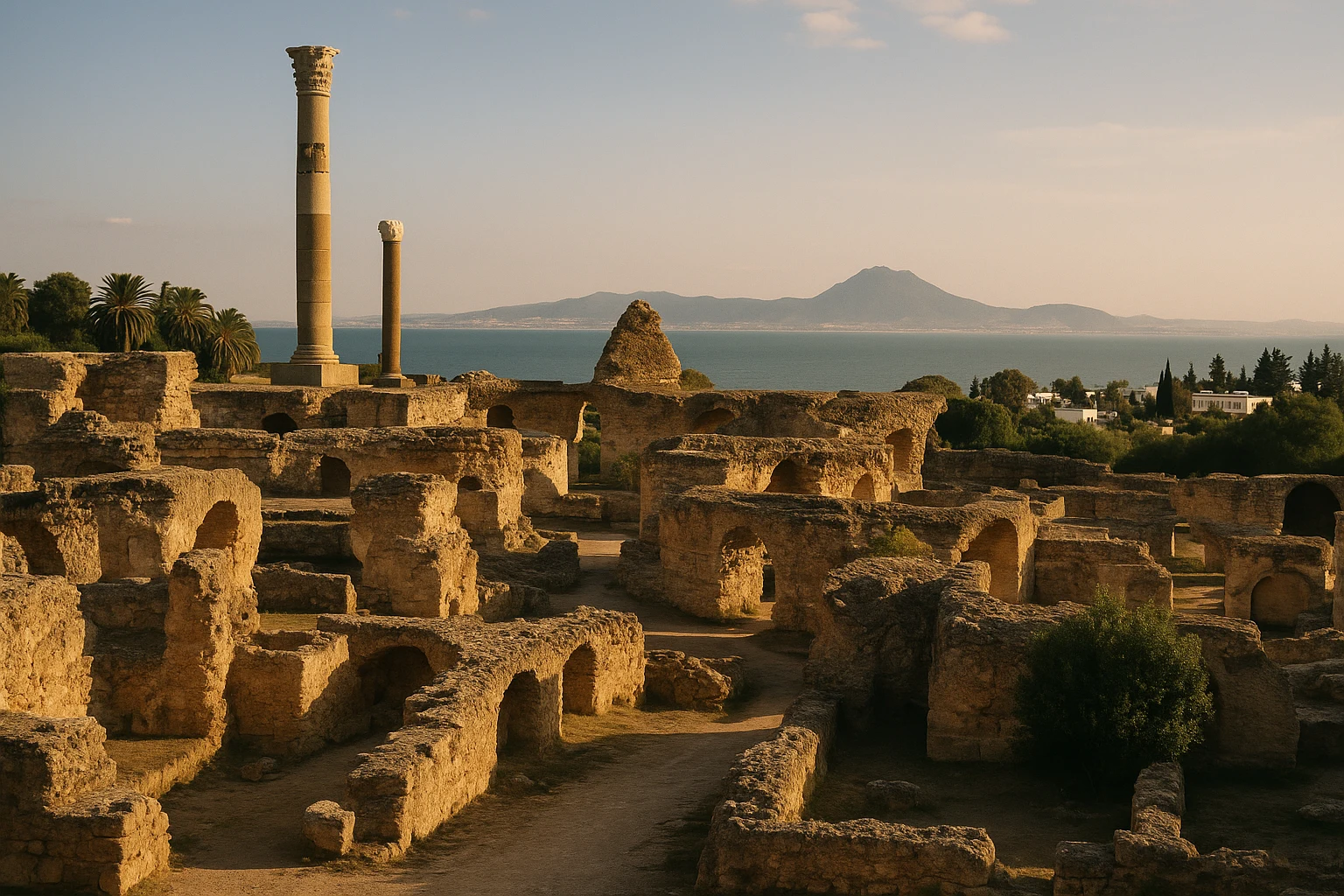
Phoenician / Carthaginian / RomanCarthage in Tunisia preserves the ruins of a once-mighty Phoenician empire and Roman provincial capi...
Colossi of Memnon
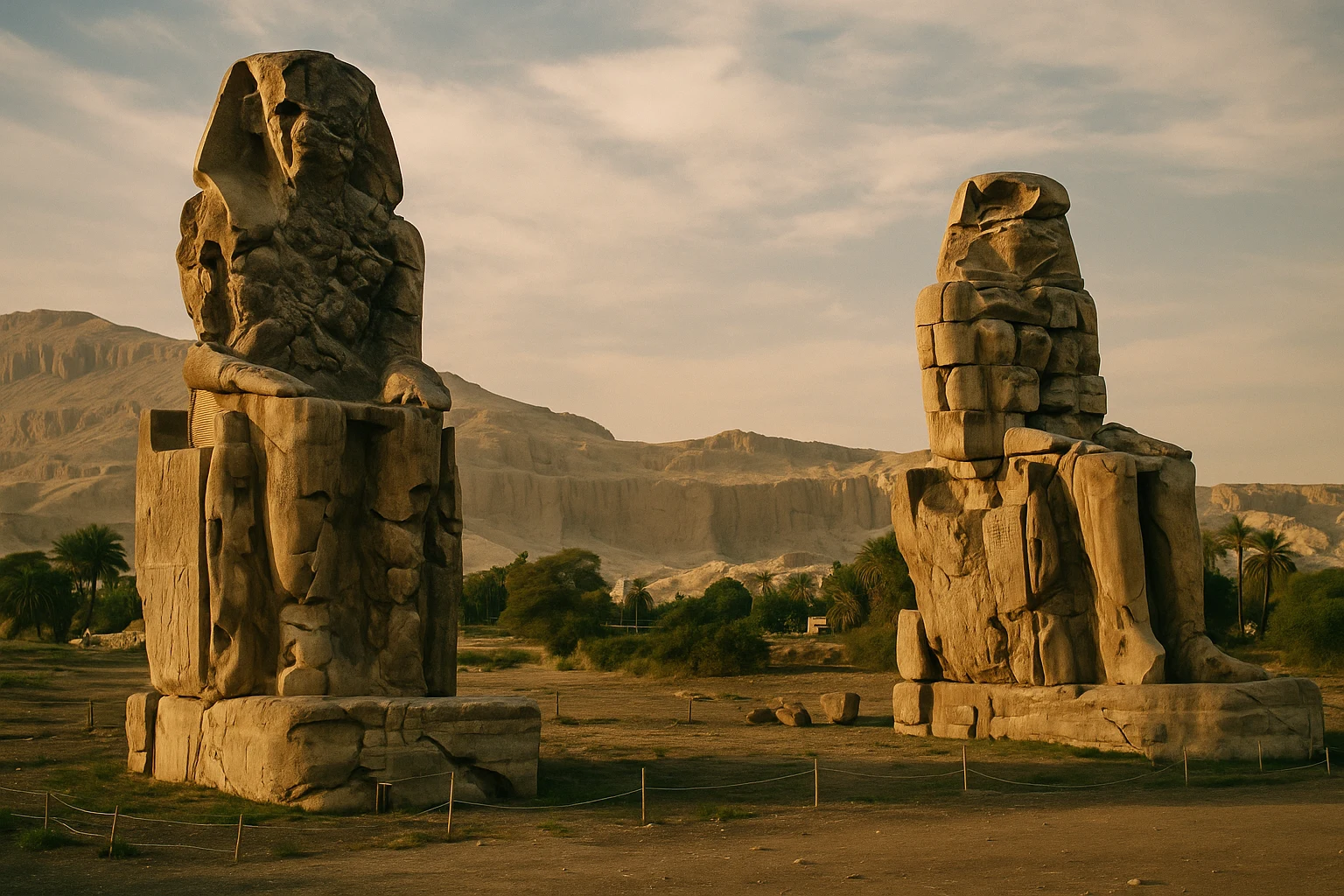
Ancient Egypt (New Kingdom)Twin colossal statues of Pharaoh Amenhotep III guarding the Theban necropolis on Luxor's West Bank, ...
Great Sphinx of Giza Egypt Travel Guide 2026: Guardian of the Pyramids
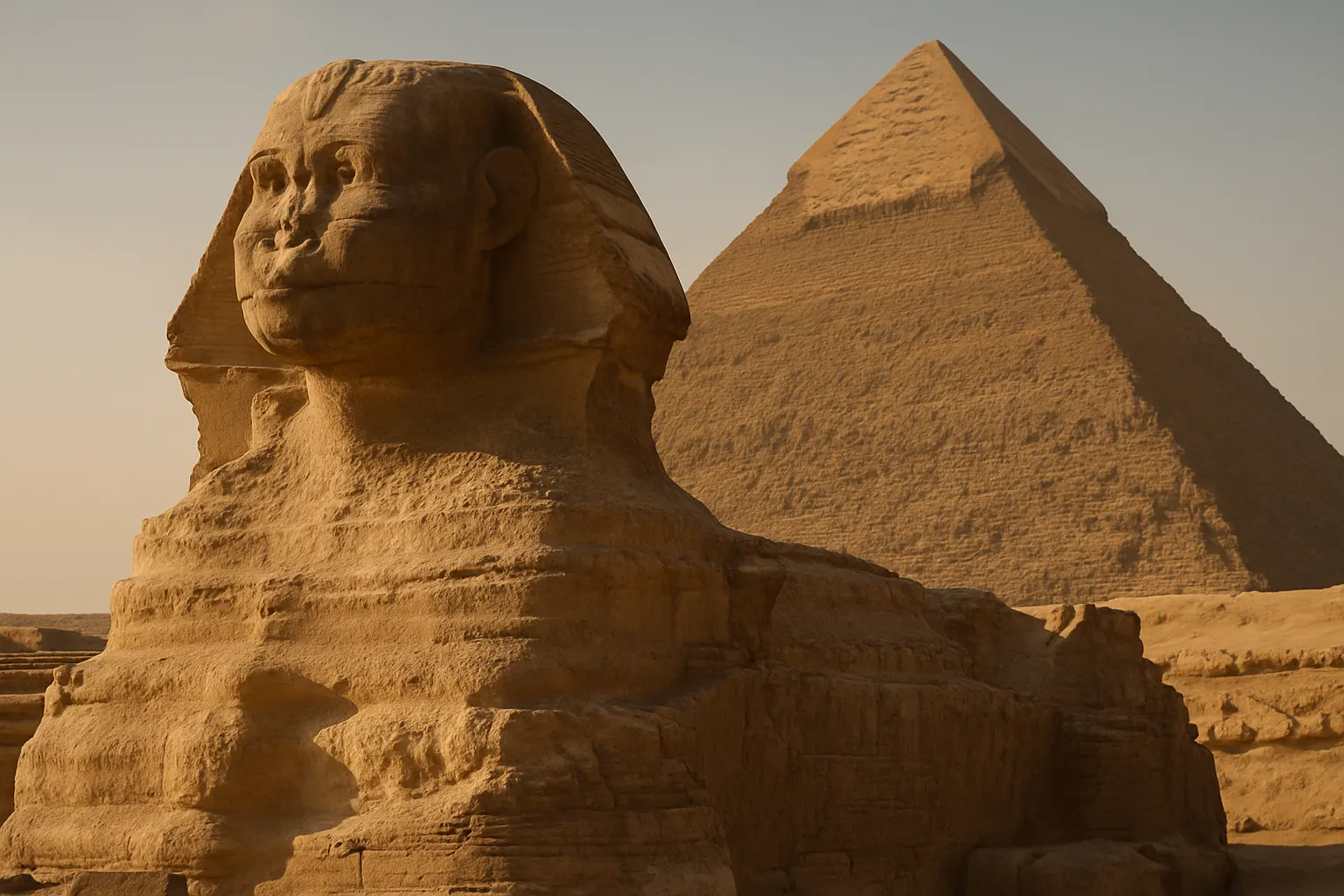
Ancient EgyptianVisit the Great Sphinx, Egypt's enigmatic limestone guardian. Our guide covers the Sphinx's history,...