Quick Info
Curated Experiences
El Tajin and Papantla Cultural Day Tour
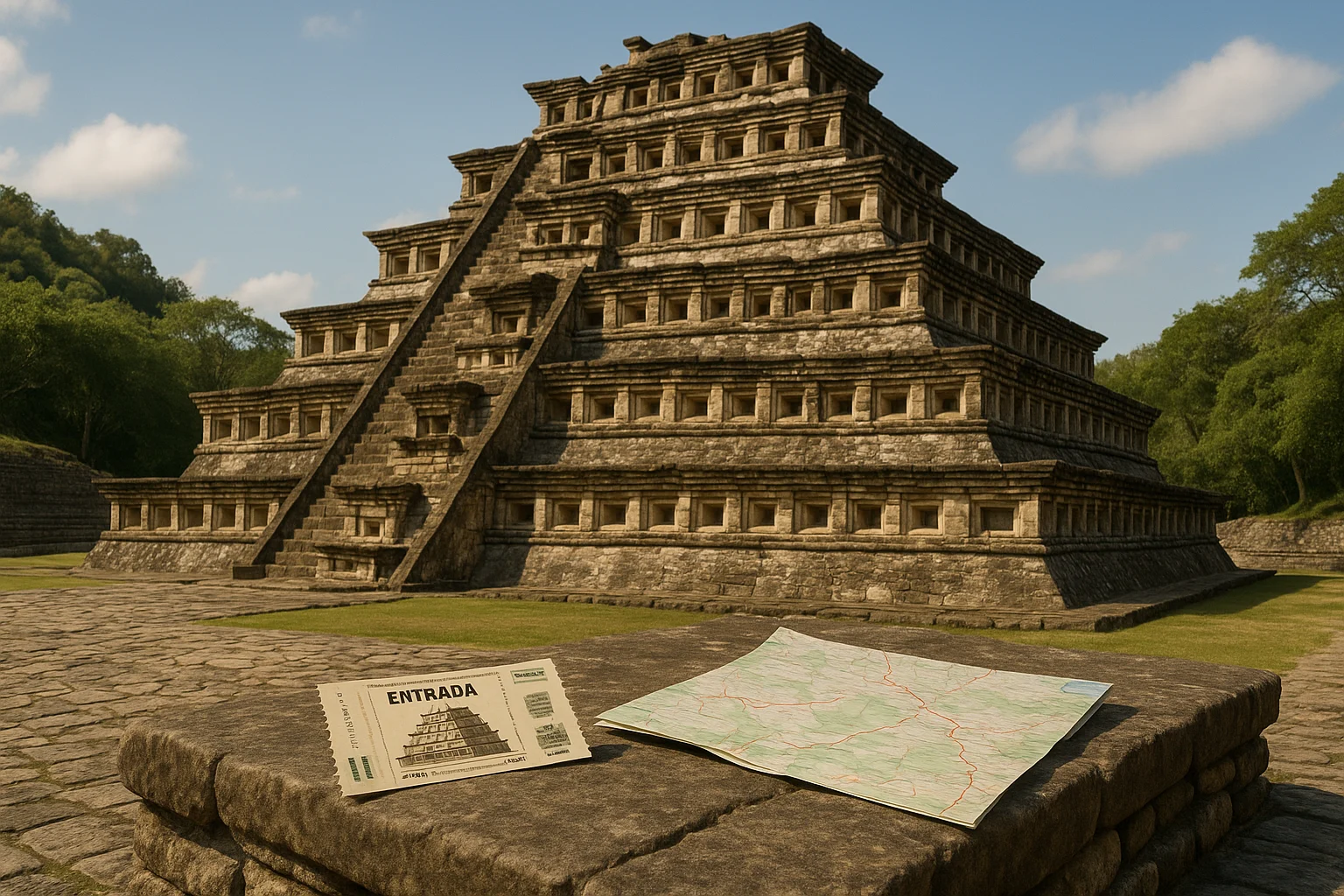
You notice the niches before anything else. Approaching the Pyramid of the Niches at El Tajin, what registers is not height or mass but rhythm — 365 deep-set recesses carved into seven tiers of stone, each one casting its own shadow at a slightly different angle as the sun moves. The effect is architectural syncopation, a building that seems to breathe with light. No photograph prepares you for it, because the experience is kinetic: you have to stand there and watch the shadows shift to understand what the builders were doing with geometry and time. This is not decoration. It is a solar calendar rendered in stone, and it has been marking the days since the 7th century CE.
El Tajin sits in the tropical lowlands of northern Veracruz, far from the tour-bus circuits of the Yucatan and the day-trip orbit of Mexico City. Getting here takes effort — a five-hour drive from the capital, or a flight to Poza Rica followed by a short transfer. That remoteness is part of what makes the site extraordinary. While Chichen Itza and Teotihuacan manage thousands of daily visitors behind roped-off pathways, El Tajin receives a fraction of that traffic and asks almost nothing of you in return except attention. You can walk right up to the ballcourt reliefs. You can circle the Pyramid of the Niches at your own pace. The site feels like discovery because, for most visitors, it still is one.
The civilization that built El Tajin — known to archaeologists as Classic Veracruz culture — left a body of work that looks like nothing else in Mesoamerica. Their scroll motifs, flying cornices, and sculptural density belong to a regional artistic tradition with no clear parallel in the Maya, Zapotec, or central Mexican traditions. Visiting here is a corrective to the assumption that Mesoamerican civilization was a single story told in regional dialects. El Tajin is a different language entirely.
Historical Context
El Tajin’s origins reach back to the 1st century CE, when the site began as a modest settlement in the Sierra Norte foothills. But the city’s rise to regional power came later, during the vacuum left by Teotihuacan’s collapse around 550-600 CE. As the great central Mexican metropolis fractured and its trade networks unraveled, Gulf Coast cities found space to assert themselves. El Tajin became the most powerful of them, and by the 8th century it controlled a territory that stretched across the northern Veracruz lowlands and into the Sierra Madre Oriental.
The city’s wealth rested on control of products the rest of Mesoamerica desperately wanted. Cacao, vanilla, cotton, and natural rubber all grew in the surrounding lowlands, and El Tajin’s merchants brokered these luxury goods through a trade network that reached from the Maya world to the highlands of Oaxaca. The rubber trade was particularly significant: the Mesoamerican ballgame required rubber balls, and El Tajin’s access to the raw material may explain the city’s extraordinary investment in ballcourt construction. At least 20 ballcourts have been identified within the site — more than any other known Mesoamerican city — suggesting that the ritual game held political and religious importance here that surpassed even the considerable status it enjoyed elsewhere.
At its height between 800 and 1100 CE, El Tajin supported a population estimated at 15,000 to 25,000 people. The city was organized into distinct zones: a public ceremonial precinct in the lower areas, an elevated elite residential sector called Tajin Chico on the hillside above, and a surrounding network of residential and agricultural terraces that supported the urban core. The architectural style that emerged during this period — characterized by deep niches, elaborate cornices, scroll-shaped ornaments, and an emphasis on light and shadow as design elements — represents the most sophisticated expression of Classic Veracruz aesthetics. The style influenced construction across the Gulf Coast and may have reached as far as the Maya lowlands, where similar niche motifs appear at several Terminal Classic sites.
The question of who built El Tajin remains genuinely unresolved. The Totonac people, who inhabited the region when the Spanish arrived and who maintain a vibrant cultural presence in Papantla today, have traditionally been associated with the site. But archaeological evidence is ambiguous — the Classic Veracruz artistic tradition predates clear evidence of Totonac ethnic identity, and some scholars have proposed Huastec or other Gulf Coast groups as the original builders. What is certain is that the culture responsible for El Tajin was distinctive, sophisticated, and connected to the wider Mesoamerican world through trade, religion, and the ubiquitous ballgame.
The city’s decline began around 1100 CE, probably driven by a combination of political fragmentation and pressure from Chichimec groups migrating south into the Gulf lowlands. By 1200 CE, El Tajin had been largely abandoned and burned — layers of ash in the archaeological record suggest a catastrophic final episode, whether from invasion, internal conflict, or deliberate abandonment accompanied by ritual destruction. The Totonac people, who may or may not have been the original builders, maintained cultural memory of the site, and when Spanish friars arrived in the 16th century, local populations still regarded El Tajin as a sacred place. The ruins were not formally documented by outsiders until 1785, when a colonial official named Diego Ruiz stumbled onto the Pyramid of the Niches while searching for illegal tobacco plantations in the jungle.
What to See
Pyramid of the Niches
This is the structure that defines El Tajin and one of the most visually striking buildings in all of Mesoamerica. Its four sides are carved with 365 deep-set niches arranged in seven tiers, each originally painted in red and black against turquoise-blue walls. The niches are not merely decorative: their number corresponds to the days of the solar year, and their depth creates a play of light and shadow that changes throughout the day as sunlight enters and retreats from each recess at a different angle. The effect is most dramatic in the morning, when the east-facing niches fill with deep shadow while the upper tiers catch direct sunlight, creating a rhythmic alternation of dark and light that seems to animate the stone.
Arrive early enough to watch this transformation — it reveals how deliberately the builders worked with light as an architectural material. The pyramid stands roughly 18 meters tall and dates to the 7th century CE. You cannot climb it, but you can walk its entire perimeter and examine the sculptural details on each face from close range. The cornices between tiers are carved with the interlocking scroll patterns that define Classic Veracruz decoration, and traces of the original polychrome paint are still visible in sheltered areas if you look closely.
Tajin Chico
The elevated northern sector of the site held elite residences, administrative structures, and what appear to be private ceremonial spaces. The stonework here is finer and more intimate than the public precinct below, with elaborately carved cornices and scroll motifs that demonstrate the Classic Veracruz style at its most refined. The most important structure is Building A, where fragments of the original roof demonstrate an unusual poured-concrete technique — a lime-and-aggregate mixture that hardened into a monolithic slab. This technology predates anything comparable in the region and remains one of the site’s most remarkable engineering achievements.
The climb to Tajin Chico is steep but short, and the elevated perspective back across the lower ceremonial zone rewards the effort. From the upper terraces, you can see the layout of the entire site — the Pyramid of the Niches centered in the lower precinct, the ballcourts arrayed around it, and the green hills of the Sierra Norte foothills rising behind. This is the view the ruling elite enjoyed daily, and it makes the hierarchical organization of the city immediately legible.
The South Ballcourt
Do not treat the ballcourts as minor stops between pyramids. El Tajin’s South Ballcourt features six carved narrative panels depicting ballgame rituals in extraordinary detail: players in elaborate costume, the sacrifice of a ballplayer by a figure wielding a knife, and the descent of a death god to receive the offering. These reliefs are among the most detailed surviving records of the ballgame’s ceremonial function anywhere in Mexico. The carving quality is exceptional, with fine-line details that remain legible after twelve centuries. Each panel tells a sequential story, and reading them in order reveals a ritual narrative that moves from preparation through play to sacrifice to divine communion.
The ballcourt’s walls also concentrate sound in unusual ways — stand at one end and speak toward the opposite wall to hear how the architecture amplifies and focuses your voice. This acoustic quality was likely intentional, designed to make the sounds of the game audible to audiences seated above the playing surface and to amplify ritual pronouncements during the ceremonies that accompanied it.
Voladores de Papantla
On most visit days, Totonac performers re-enact the Danza de los Voladores near the site entrance — four flyers attached by ropes to a 30-meter pole, spinning in widening circles as they descend while a fifth performer plays flute and drum at the summit. This is a living ritual tradition recognized by UNESCO as Intangible Cultural Heritage, not a tourist entertainment. The ceremony has roots in pre-Hispanic fertility and agricultural rites, and the 52 rotations the flyers complete correspond to the 52-year cycle of the Mesoamerican calendar. Timing varies; ask at the entrance when the next performance is scheduled, and plan your site visit around it. The ceremony typically lasts about 20 minutes and is performed several times daily, weather permitting.
Building of the Columns
Located in the upper part of the site near Tajin Chico, this partially ruined structure preserves carved column drums depicting the deeds of a ruler named 13 Rabbit, who governed El Tajin during what appears to have been its political zenith. The narrative scenes on the columns include ballgame rituals, military conquests, and interactions with supernatural beings, making them a rare source of historical narrative from the Classic Veracruz tradition. Many of the carved drums have been moved to the site museum for preservation, but enough remain in context to understand the building’s function as a commemorative monument to royal authority. The ruins of the Building of the Columns also offer some of the site’s best views down toward the lower precinct.
The Central Plaza and Minor Pyramids
Between the Pyramid of the Niches and the South Ballcourt, the central plaza area contains several smaller pyramids and platform structures that are easy to walk past in favor of the major landmarks but reward attention. Pyramid 5 and Pyramid 3 flank the open plaza space, creating a ceremonial precinct that would have functioned as the primary public gathering area for festivals, markets, and ritual events. The spatial relationship between these structures and the surrounding ballcourts suggests a carefully planned urban center where movement between sacred and civic spaces was choreographed by the architecture itself. The plaza area also contains several carved stone drains and channels that managed rainwater runoff during the tropical wet season, a practical engineering detail that reveals the city’s builders paid as much attention to infrastructure as to decoration.
The Site Museum
The small museum near the entrance is included with admission and deserves more attention than it typically receives. Its collection of carved stone yokes, palmas, and hachas — ritual objects uniquely associated with the Classic Veracruz ballgame tradition — is one of the best anywhere. These heavy stone objects were ceremonial counterparts to the leather equipment worn during actual play, and their elaborate carving demonstrates the artistic investment that Gulf Coast cultures poured into ballgame ritual. The yokes, U-shaped stone objects worn around the waist during ceremonial contexts, weigh up to 30 kilograms and are among the most technically accomplished stone carvings produced anywhere in Mesoamerica, with interlocking scroll motifs and deity portraits carved with a fluidity that belies the hardness of the stone.
The museum also displays carved column drums from the Building of the Columns and ceramic figurines that provide evidence of daily life at the site. A small section covers the Voladores tradition with photographs and historical context. Budget 20-30 minutes, more if you have an interest in the ballgame artifacts, which are genuinely world-class and not duplicated in any other museum collection.
Timing and Seasons
The site opens at 9:00 AM and closes at 5:00 PM daily. Arrive at opening for the best combination of cooler temperatures, thinner crowds, and optimal light on the Pyramid of the Niches. The niches face east and catch the most dramatic shadows in the morning hours; by afternoon, the western face is in shadow and the visual effect diminishes.
November through March is the most comfortable season for visiting, with lower humidity and temperatures in the mid-70s to low 80s°F (24-28°C). The Gulf Coast climate is hotter and more humid than Mexico’s highlands year-round — if you are coming from Mexico City or Oaxaca, the difference is immediate and significant. April through June brings the worst heat, with temperatures reaching the low to mid-90s°F (33-36°C) and oppressive humidity. The rainy season from July through October produces heavy afternoon downpours, but mornings are often clear and the landscape turns vivid green. During the Cumbre Tajin festival, typically held in March, the site hosts music, cultural events, and additional Voladores performances; crowds increase substantially but the atmosphere is celebratory.
Midday through mid-afternoon is the most physically demanding window at any time of year. The lower ceremonial zone has almost no shade, and the climb to Tajin Chico is fully sun-exposed. Budget your time so that you visit the open structures in the morning and save any shaded areas or the site museum for the hottest hours.
Tickets, Logistics, and Getting There
Admission costs approximately 85 pesos ($4.25 USD) as of 2026. A video camera permit is an additional 45 pesos. Sunday admission is free for Mexican nationals and residents. Cash is the safest payment method at the entrance; card readers exist but are unreliable. There is no advance booking system — tickets are purchased at the gate on arrival.
Most travelers base in Papantla, a small hillside Totonac town about 15 minutes from the site by taxi (80-100 pesos one way) or colectivo (15 pesos). Papantla has modest but adequate hotels — Hotel Provincia Express and Hotel Tajin are reliable mid-range options — a pleasant central plaza with a massive Totonac mural on the hillside, and excellent regional food. Look for the local mole and tamales at the market stalls around the plaza. Papantla is also the heart of Mexico’s vanilla-producing region, and vanilla pods, extract, and vanilla-flavored liqueur are available throughout town at prices far below what you would pay elsewhere.
From Veracruz city, the drive is roughly four hours on winding but well-paved roads. From Mexico City, expect five to six hours by car, or take a domestic flight to Poza Rica (1 hour, several daily departures from Mexico City) followed by a 30-minute taxi transfer. Poza Rica itself is a utilitarian oil town with limited charm but functional hotels and car rental agencies for those who want to drive independently.
If driving, the road from Poza Rica to El Tajin passes through rolling green countryside dotted with vanilla plantations and citrus groves. Parking at the site costs 30 pesos. The entrance area has a small cluster of food stalls selling regional snacks — zacahuil (a massive tamal wrapped in banana leaves), gorditas, and fresh juices — but options are basic. Eat properly in Papantla before or after your visit.
Practical Tips
- Bring more water than you think you need. Shade inside the site is sparse, and the Gulf Coast humidity compounds the heat significantly. Two liters per person is a reasonable minimum.
- Wear shoes with solid grip. Surfaces are uneven, the Tajin Chico stairs are steep, and everything becomes slick after rain.
- A hat and high-SPF sunscreen are essential, not optional. The lower ceremonial zone is almost entirely exposed.
- Insect repellent is useful during the rainy season, particularly in the more vegetated areas near Tajin Chico.
- Bring a wide-angle lens if you photograph architecture. The Pyramid of the Niches is difficult to capture in full from close range, and the ballcourt reliefs reward detail shots.
- If you can time your visit during the Voladores ceremony, do so. Ask at the entrance for the schedule and plan your route accordingly.
- The Papantla vanilla market is worth a stop before or after your site visit. Prices are excellent and the quality is genuine.
- If you are staying overnight in Papantla, the town is small and walkable. Evening strolls around the central plaza, where the massive Totonac mural covers an entire hillside, are pleasant and give a sense of the living indigenous culture that connects to the ancient site.
- There is limited cell service at the site. Download any maps or reference material before arriving.
- If visiting during the Cumbre Tajin festival (usually March), book Papantla accommodations well in advance. The town’s modest hotel capacity fills quickly.
Suggested Itinerary
Standard visit (2.5 to 3 hours):
Arrive at 9:00 AM. Begin with the site museum near the entrance (20 minutes) to establish context for the ballgame artifacts and sculptural traditions you will see throughout. Walk to the Pyramid of the Niches (10 minutes) and circle it slowly, observing how the shadows shift in the morning light (20 minutes). Continue to the South Ballcourt to examine the narrative relief panels (20 minutes). Climb to Tajin Chico for the elite sector and the view back across the lower precinct (30 minutes). Descend and explore the remaining ballcourts and minor structures (20 minutes). Time your exit to catch the Voladores performance if one is scheduled. Return to Papantla for lunch.
Extended visit (4 to 5 hours):
Follow the standard route but add the Building of the Columns, the northern ballcourts, and a second pass of the Pyramid of the Niches as the sun angle changes — the midday light creates a very different pattern of shadows in the niches compared to the morning view, and photographing both allows you to see the building’s kinetic design most clearly. Spend more time in the site museum, which is undervisited and contains carved stone objects that are not on display anywhere else in Mexico. Combine with an afternoon in Papantla’s historic center, visiting the Totonac mural on the hillside, the vanilla market, and the pleasant central plaza.
Nearby Sites
El Tajin is geographically isolated from Mexico’s other major archaeological sites, which makes it a destination rather than a stop on a convenient loop. For the civilization that preceded El Tajin’s rise and profoundly influenced all of Mesoamerica, connect your itinerary with Teotihuacan near Mexico City — a five- to six-hour drive or a short domestic flight. The contrast between Teotihuacan’s geometric monumentality and El Tajin’s sculptural intimacy illuminates how differently Mesoamerican cultures conceived of architectural power.
For another powerful ceremonial center from a different tradition entirely, connect with Monte Alban in Oaxaca. Where El Tajin is a lowland Gulf Coast city built around rubber, vanilla, and the ballgame, Monte Alban is a mountaintop Zapotec capital built around astronomical observation and military display. Together, they demonstrate the remarkable diversity of pre-Hispanic Mexican civilization.
Chichen Itza in the Yucatan shares some architectural and iconographic elements with El Tajin, particularly in ballcourt design and the cult of Quetzalcoatl, suggesting trade or cultural connections between the Gulf Coast and the Maya lowlands during the Terminal Classic period. Reaching Chichen Itza from Veracruz requires crossing most of southern Mexico, but for travelers building a broader Mesoamerican itinerary, the connection illuminates how ideas and artistic traditions moved across the ancient world.
If you have extra time in the Veracruz region, the port city of Veracruz itself offers the fortress of San Juan de Ulua, excellent Gulf Coast seafood, and the lively Malecon boardwalk. The highland city of Xalapa, two hours south, houses the Museum of Anthropology of Xalapa — the finest archaeological museum outside Mexico City — with Classic Veracruz objects that complement what you see at El Tajin, including colossal Olmec heads from the nearby sites of San Lorenzo and Tres Zapotes. The museum alone justifies a stop in Xalapa.
Final Take
El Tajin is not a convenient side trip, and that is exactly its strength. The journey to get here filters out the crowds, and the site itself rewards the effort with architecture, sculpture, and atmosphere that rival anything in Mexico. The Pyramid of the Niches is one of the most visually arresting buildings in the Americas — not through sheer size, but through the precision of its geometry and its uncanny engagement with light. Give it the slow attention it deserves, take the ballcourt reliefs seriously, and stay for the Voladores if you can. This is one of Mesoamerica’s great sites. It just does not advertise.
Discover More Ancient Wonders
- Teotihuacan: The colossal ancient metropolis near Mexico City that shaped all of Mesoamerica
- Monte Alban: Zapotec mountaintop capital with extraordinary valley views in Oaxaca
- Chichen Itza: The iconic Maya-Toltec city with connections to Gulf Coast traditions
- Explore more destinations in our Mexico Ancient Sites Guide
Quick Facts
| Attribute | Details |
|---|---|
| Location | Papantla, Veracruz, Mexico |
| Country | Mexico |
| Region | Veracruz |
| Civilization | Classic Veracruz |
| Historical Period | c. 600-1200 CE |
| Established | c. 1st century CE |
| UNESCO Status | World Heritage Site (1992) |
| Admission | ~85 pesos ($4.25 USD) |
| Hours | 9:00 AM - 5:00 PM daily |
| Time Needed | 2.5 - 4 hours |
| Coordinates | 20.4453, -97.3792 |
Frequently Asked Questions
How long do you need at El Tajin?
Most travelers need 2 to 3 hours for the core zone, with more time if combining Papantla in the same day.
What is El Tajin known for?
El Tajin is best known for the Pyramid of the Niches and its refined Classic Veracruz ceremonial architecture.
Can you do El Tajin as a day trip?
Yes, but transport times can be long depending on your base city. Start early and keep your route simple.
Nearby Ancient Sites
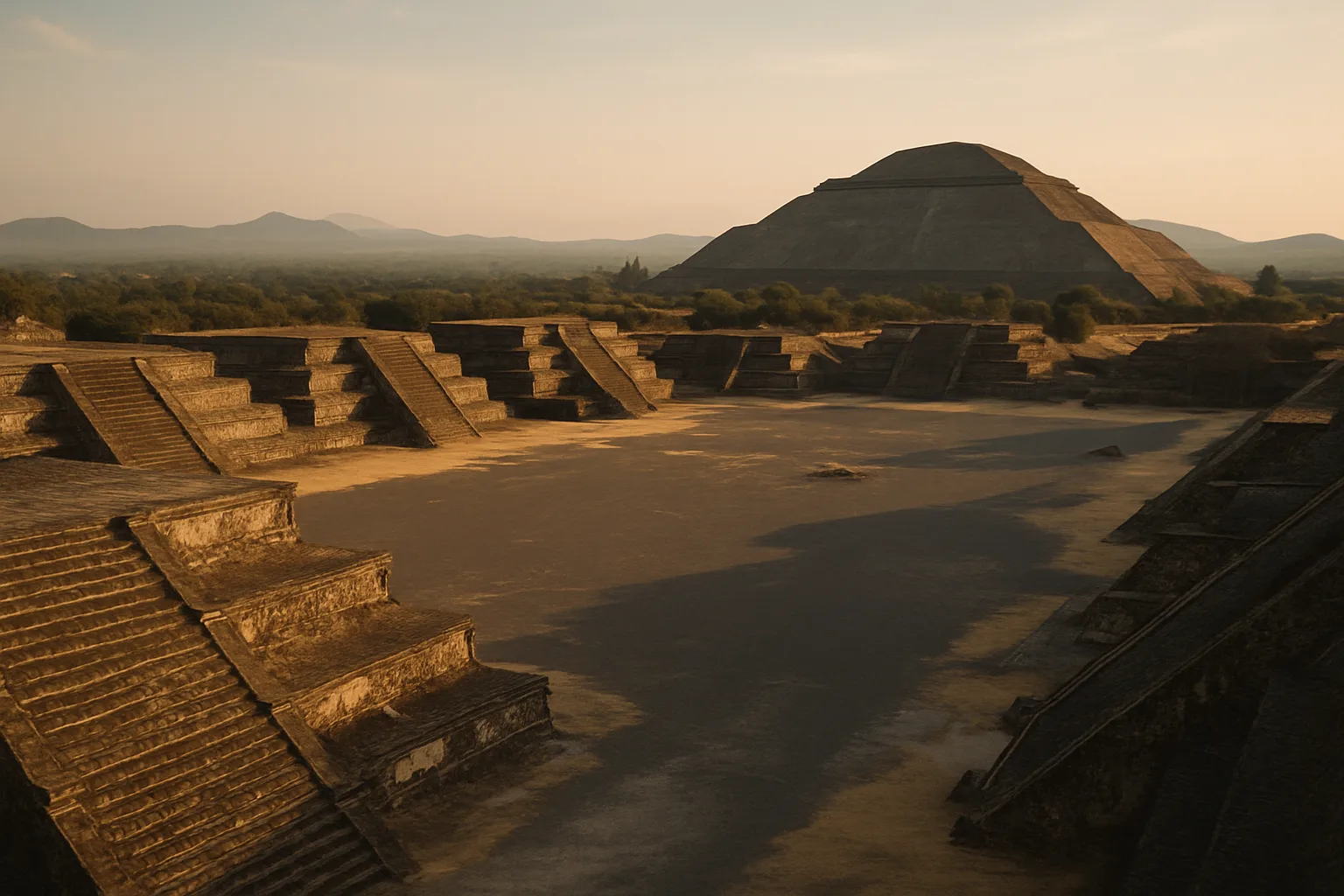
Teotihuacan Mexico Travel Guide 2026: Pyramids, Mysteries & Day Trips
TeotihuacanoTeotihuacan, the 'birthplace of the gods,' remains Mesoamerica's most influential ancient city. This...
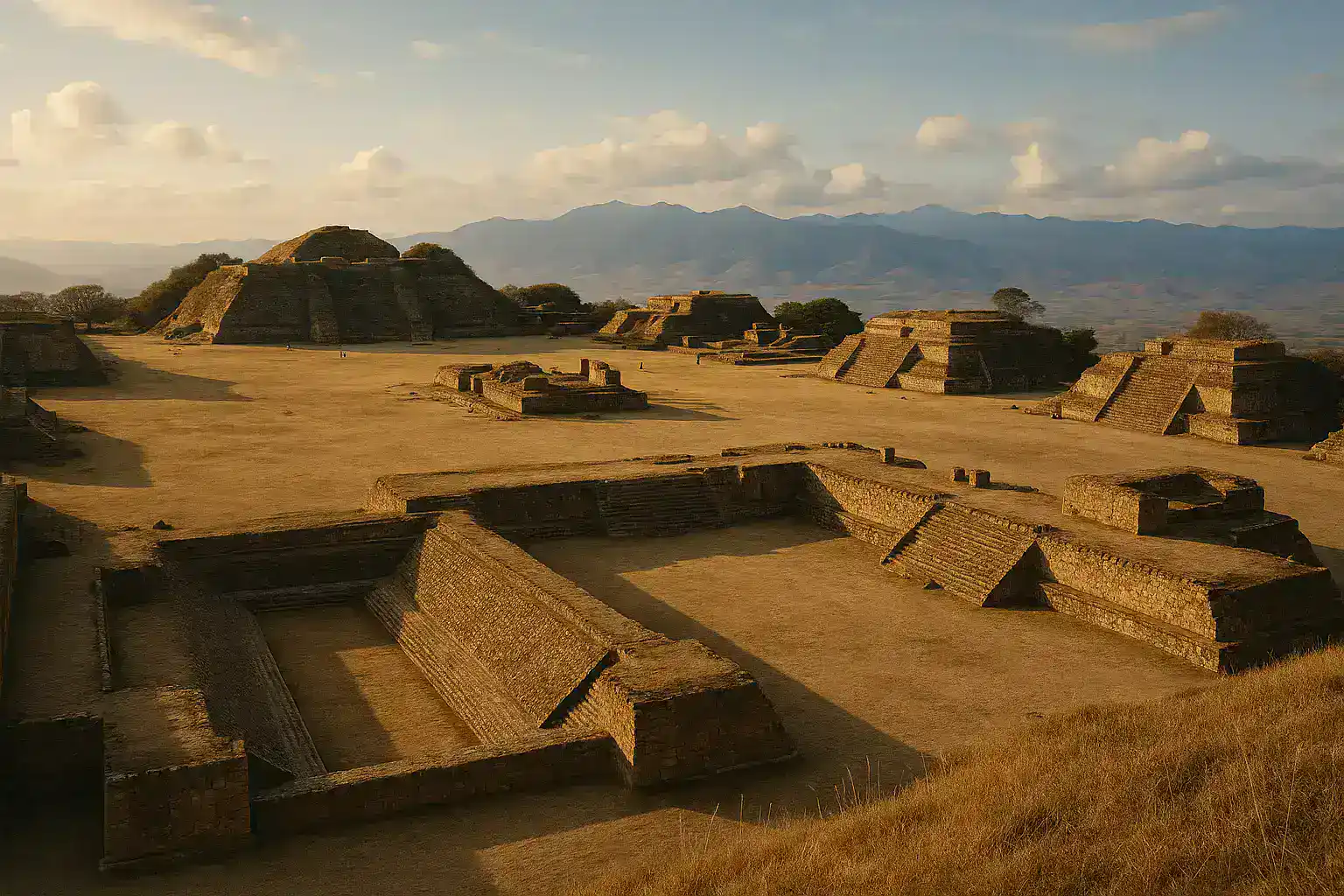
Monte Albán Mexico Travel Guide 2026: Zapotec Capital Above Oaxaca
ZapotecExplore Monte Albán, the ancient Zapotec capital perched above Oaxaca. Discover the Grand Plaza, bal...
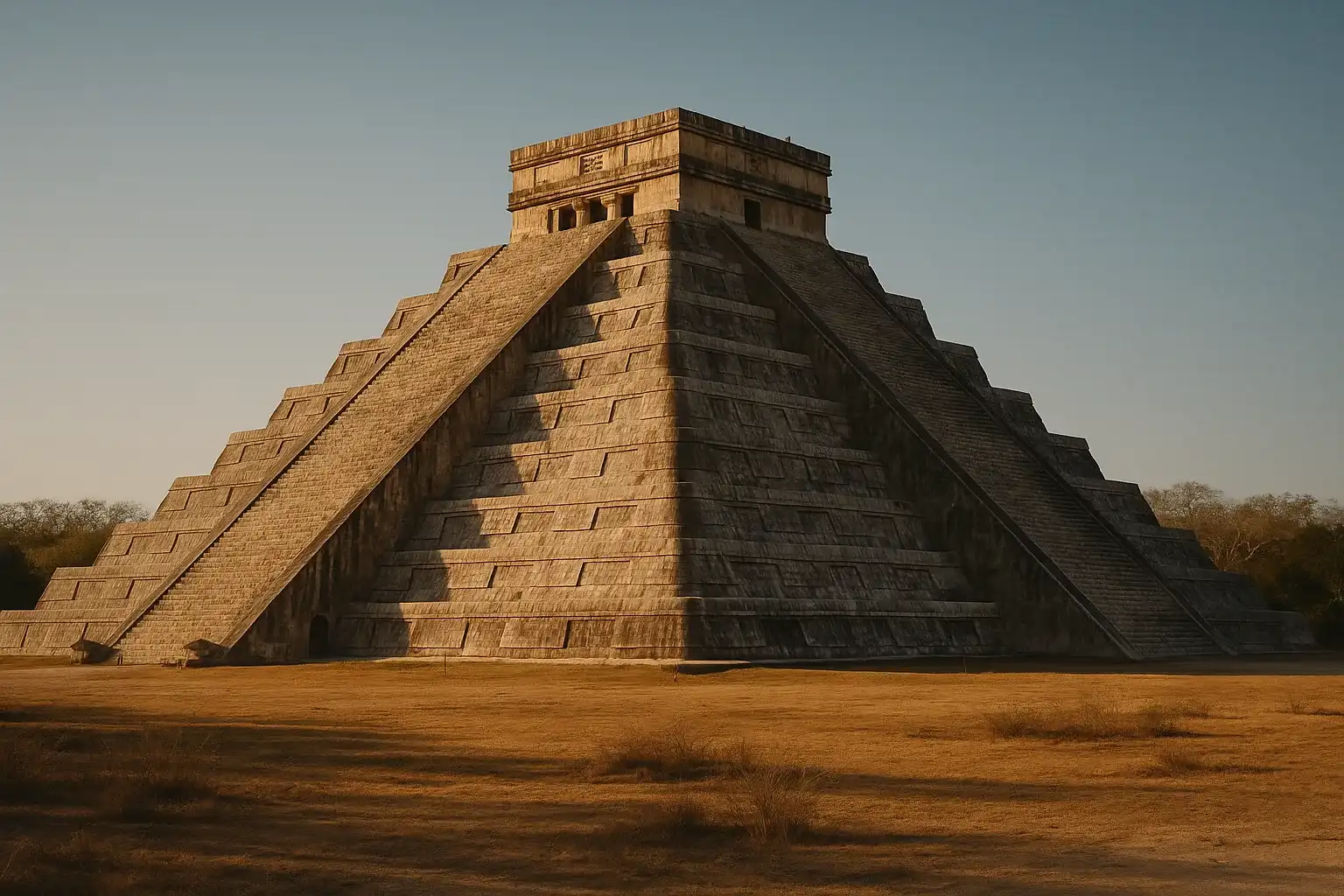
Chichen Itza Travel Guide 2026: Maya Secrets, Sacred Cenote, and Smart Timing
MayaChichen Itza stands as the most visited ancient site in Mexico, showcasing the architectural genius ...