Quick Info
Curated Experiences
Aswan and Elephantine Island Private Tour
Elephantine Island & Nubian Village Experience
Ancient Ruins on Elephantine Island Guided Visit
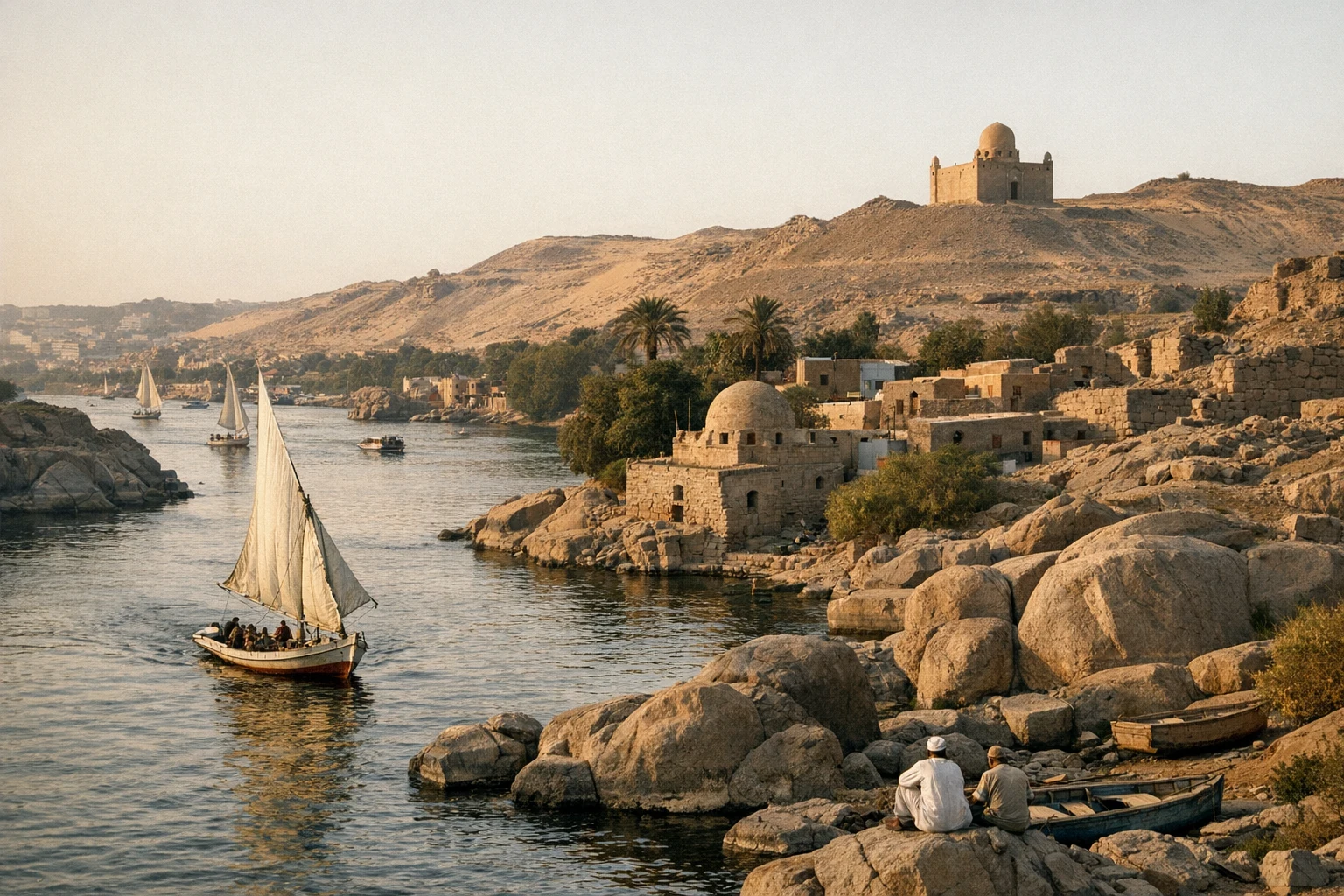
Elephantine Island, set elegantly in the Nile’s tranquil embrace, stands as both a literal and symbolic threshold to the riches of Upper Egypt. Located in the heart of Aswan city, this storied island has captivated travelers and explorers for thousands of years. As the southernmost bastion of ancient Egypt, Elephantine Island played a pivotal role in trade, religion, and the administration of the kingdom. The name itself, derived from the Greek for “elephant,” may refer to the island’s importance in the ivory trade or, perhaps, the distinctive boulder formations along its shores, which suggest the hulking backs of bathing elephants.
Today, Elephantine Island offers visitors a rare blend of archaeological wonders, thriving Nubian communities, and hints of its continuous habitation stretching back to the pre-dynastic era. Amid atmospheric palms and flowering shrubs, you’ll find ancient temples, monumental gateways, and the fabled Nilometer—meticulously cut into bedrock, designed to record the annual flood levels that dictated Egypt’s fate. Small villages with mud-brick houses painted vibrant blue and ochre provide a friendly welcome, and the footpaths between alleys wind past archaeological sites into flourishing gardens nurtured by the Nile’s life-giving waters.
Setting foot on Elephantine, there is a sense of crossing into a place uniquely suspended between ages. You are at once in Aswan—the modern city with its riverfront corniche and bustling markets—and within the meditative hush of an ancient settlement where gods, floodwaters, and traders all played their part. The island’s wealth of ruins, museums, and living tradition creates an immersive experience for anyone compelled by Egypt’s layered history.
History
Prehistoric Beginnings and the Birth of a Bastion
Long before written records, the location of Elephantine Island made it a natural habitat for early human settlers. Archaeological discoveries indicate that it was inhabited as far back as the pre-dynastic period, possibly as early as 3000 BCE or even before. Its granite outcrops and secure position at the Nile’s First Cataract—the traditional frontier between Egypt and Nubia—helped it evolve into both a defensive outpost and a prosperous trading hub. Here, Egyptians met Nubians, and the first currents of international commerce began.
The very shape and rockiness of the island made it ideal for monitoring movement along the river. As the southern limit of the Egyptian state, it soon became an administrative center charged with guarding the nation’s southern borders and managing relations with Africa’s interior. Archaeologists have unearthed pottery fragments, tools, and burial sites from the earliest settlers. These relics tell tales of a community attuned to the rhythms of the Nile floods and the shifting alliances with their powerful Nubian neighbors.
Pharaonic Era: Sanctuary and Strategic Stronghold
As Egypt’s kings consolidated power during the Old Kingdom (c. 2686–2181 BCE), Elephantine grew even more important—not only militarily but spiritually. The island’s main settlement bore witness to the construction of immense temples dedicated to Khnum, the ram-headed god of the Nile’s cataracts and the patron of creation, and to Satet, goddess of the inundation. These shrines became focal points for pilgrimage, ritual, and local governance.
The legendary Nilometer, cut into the island’s granite, is first recorded in the Pharaonic period. Its precise measurements of the Nile’s annual rise were used to predict harvests and decide how much tax would be levied on the land. During the Middle Kingdom and onwards, Elephantine remained a critical garrison, with inscriptions from the reigns of Senusret III and subsequent pharaohs testifying to its military significance. Soldiers, priests, traders, and craftsmen coexisted on this strategic island, and generations of governors left records carved in stone.
Elephantine was also a diplomatic crossroads, where ancient ambassadors received or sent missions into Nubia and further south. Its temples attracted offerings from pharaohs seeking to secure Egypt’s lifeblood: the reliable flooding of the Nile.
Greco-Roman Age and Beyond
With the conquest of Egypt by Alexander the Great in 332 BCE and the arrival of the Ptolemaic dynasty, Elephantine retained its religious and commercial importance. The old temples continued to be maintained and refurbished, and new inscriptions were added by Greek rulers who sought to weave themselves into local tradition. Later, under Roman rule, Elephantine’s military value persisted, and a garrison was stationed here well into the Byzantine era.
The island hosted a thriving Jewish community by the fifth century BCE—a remarkable example of Egypt’s cultural diversity. Papyrus documents found on Elephantine reveal a daily life as complex and cosmopolitan as any in the Mediterranean world: contracts, marriages, property transactions, and appeals to distant authorities.
By late antiquity and into the Arab period, the island’s prominence waned as trade and power centers shifted, but it was never truly abandoned. It became a home for Nubian villagers, whose descendants still animate its alleys today.
Modern Rediscovery and Preservation
The 19th and 20th centuries saw Elephantine Island rise anew in the world’s imagination. Early explorers, artists, and archaeologists, drawn by legends and clues half-buried in the sand, undertook extensive mapping and excavation. German and French archaeological missions unearthed temples, fortifications, and entire residential quarters—shedding new light on Egypt’s southern frontier.
Today, the protected ruins, local Nubian villages, and the Aswan Museum combine to make Elephantine one of the richest historical sites in southern Egypt—a layered palimpsest where millennia of human endeavor remain vivid.
Key Features
Elephantine Island’s magic lies in the way its key features are both intertwined and positioned within a landscape marked by the restless Nile and timeless granite rocks. Entering the archaeological zone, first-time visitors are greeted by the imposing remains of the Temple of Khnum, its stone columns and walls revealing the grandeur that once drew pharaohs and pilgrims alike. Although much of the temple lies in ruin, its reconstructed gateway and remaining sanctuaries hint at a sacred past that linked the fate of Egypt’s rulers to the gods of the cataract.
Near the temple, the Nilometer captures both the scientific precision and cosmological importance of ancient Egyptian civilization. This stairway of stone steps, descending directly to the riverbank, was meticulously calibrated to measure the rise and fall of the Nile. It remains one of the best-preserved Nilometers in Egypt and provides a powerful connection to the ancient world’s efforts to harness the unpredictable might of the river. Inscribed with hieroglyphs and references to different flood heights, it is a poignant symbol of life’s dependence on water.
A short walk away, the Aswan Museum occupies the former residence of the excavating archaeologists. The museum displays a rich assemblage of finds from Elephantine and its environs, including statuary, pottery, and everyday artifacts spanning Egypt’s full historical breadth. Its garden, shaded by old acacias and flowering trees, is scattered with monumental fragments—column drums, statues of deities, and granite sarcophagi.
Wander deeper into the island and you’ll encounter the ruins of small temples dedicated to Satet and the Nubian goddess Anuket, both closely connected with the Nile’s waters and fertility. Their remains, surrounded by wildflowers, offer an evocative setting for contemplation. Also notable are the remnants of a Jewish synagogue and residential quarters that testify to the multicultural population that once called Elephantine home.
Yet the island is not only a static monument to antiquity. The contemporary Nubian villages of Koti and Siou, sprawling along the western and southern shorelines, animate the scene with mud-brick houses painted in dazzling hues, lively courtyards, and the sound of laughter and music. Here, visitors are welcome to experience Nubian hospitality, sampling local dishes or observing traditional crafts. The absence of cars and the gentle pace of daily life create a special atmosphere—it is possible to lose oneself among hand-painted gates, fragrant gardens, and panoramic river views.
Finally, Elephantine’s pathways invite exploration at every turn, whether following the shaded lanes between village houses, tracing the ancient boundary walls, or pausing at vantage points overlooking the Nile’s endless journey. The interplay between ruin and living culture makes this island a singular destination in Egypt’s living museum.
Getting There
Elephantine Island’s appeal is heightened by its ease of access. Located directly opposite Aswan’s Corniche, the island is separated from the city by only a channel of the Nile, approximately 200 meters wide. The most traditional and atmospheric way to reach the island is aboard the public ferry, which departs every few minutes from a well-marked dock near the Aswan Old Cataract Hotel. A single trip on the public ferry typically costs just 5 EGP (less than $0.20 USD), making it both affordable and convenient.
For those seeking a more leisurely introduction, private feluccas—traditional sailboats—can be hired from numerous spots along the Aswan Corniche. A short sail to Elephantine, often combined with a sunset cruise and a stop at neighbouring islands, can be negotiated for around 100–200 EGP ($3–7 USD) per person, depending on party size and bargaining skills. Many visitors find the felucca option a delightfully serene way to soak up the majestic river landscape and arrive in style.
Once on the island, no motorized vehicles are permitted, preserving its tranquil character. The walk from the dock to the primary archaeological sites is easy and pleasant, taking no more than 10–15 minutes through garden pathways and village alleys. Signs (in English and Arabic) help orient visitors toward the temple complex, the Aswan Museum, and the Nilometer.
If you are coming from outside Aswan, the city itself is readily accessible by overnight train from Cairo (prices from 300–600 EGP in second class, journey 13–14 hours), flights from Cairo (1.5 hours, starting around $50–$100 USD), or by road and river cruise from Luxor or Edfu. Taxis, tuk-tuks, and local minibuses connect Aswan rail station and airport to the Corniche. Elephantine’s proximity to town means that you can easily visit as a half-day or full-day sidetrip, with plenty of cafés and accommodations in Aswan for longer stays.
When to Visit
Elephantine Island’s unique ambiance is present year-round, but the timing of your visit can greatly shape your experience. The most comfortable period to explore is from October to April, when Aswan basks in warm, dry weather and the Nile shimmers beneath soft, golden sunshine. Daytime temperatures typically range from 20°C to 30°C (68°F to 86°F) during these months, making walking between ruins, gardens, and villages a pleasure rather than a challenge.
Winter, particularly December through February, is considered peak season for tourism in Upper Egypt. Expect the island’s archaeological sites and surrounding areas to be livelier, with more visitors and occasional guided tours. Early morning and late afternoon are the preferred times for sightseeing—not only for the soft light but also to avoid larger tour groups arriving from cruise ships.
From May to September, Aswan’s temperatures soar, often exceeding 40°C (104°F) during midday. While the Nile’s breezes and the island’s shaded walks offer some respite, sightseeing can become demanding during the hottest part of the day. If you do visit in summer, plan your outdoor activities for the early morning or just before sunset. Carry water, wear a hat, and make use of the island’s small cafés as refreshing rest stops.
Religious holidays and local festivals, particularly the Islamic Eids, may bring additional vibrancy to the Nubian villages, with celebratory decorations and gatherings. However, services and museum hours may vary slightly during these times.
No matter the month, Elephantine Island rarely feels crowded compared to Egypt’s better-known monuments. Dawn and dusk reveal the island at its most magical—temples and palm groves awash with honeyed light, and the city’s hum giving way to birdsong and water lapping against ancient stone.
Quick Facts
| Fact | Detail |
|---|---|
| Location | Nile River, Aswan Governorate, Egypt |
| Coordinates | 24.0898° N, 32.8872° E |
| Earliest Habitation | Pre-dynastic period (~3000 BCE or earlier) |
| Key Sites | Temple of Khnum, Nilometer, Satet Temple, Aswan Museum, Nubian villages |
| Access | Public ferry (5 EGP), private felucca (100–200 EGP), no motor vehicles |
| Opening Hours | 8:00 AM – 4:00 PM (typical, may vary by site) |
| Admission Fee | 80 EGP (foreign adult), discounts for students and children |
| Languages Spoken | Arabic (Egyptian and Nubian dialects); English widely understood |
| Facilities | Small cafés, restaurants, shops |
| Nearest City | Aswan (directly north of the island) |
| Best Visit Time | October–April (mild, pleasant weather) |
| UNESCO World Heritage | Aswan area inscribed as part of the Nubian Monuments (1979) |
| Main Civilizations | Ancient Egyptian, Nubian, Jewish, Greco-Roman, Islamic |
Frequently Asked Questions
How do I reach Elephantine Island from Aswan?
The most common way to reach Elephantine Island is by taking a public ferry or a private felucca from Aswan’s Corniche. Ferries run frequently and take about 5 minutes.
What are the must-see sites on Elephantine Island?
Key attractions include the ruins of the ancient temples, the Nilometer, the Aswan Museum, and the Nubian villages with their traditional houses.
Is Elephantine Island suitable for families with children?
Yes, the island offers fascinating ruins, a relaxed atmosphere, and car-free paths perfect for families to explore safely.
What are the opening hours and entrance fees?
Sites generally open from 8:00 AM to 4:00 PM. The entrance fee for foreign adults is typically around 80 EGP, with discounts for students and children.
Can I find food or facilities on the island?
Yes, there are small cafés, restaurants, and local shops, primarily in the Nubian villages and near the ferry dock.
Nearby Ancient Sites
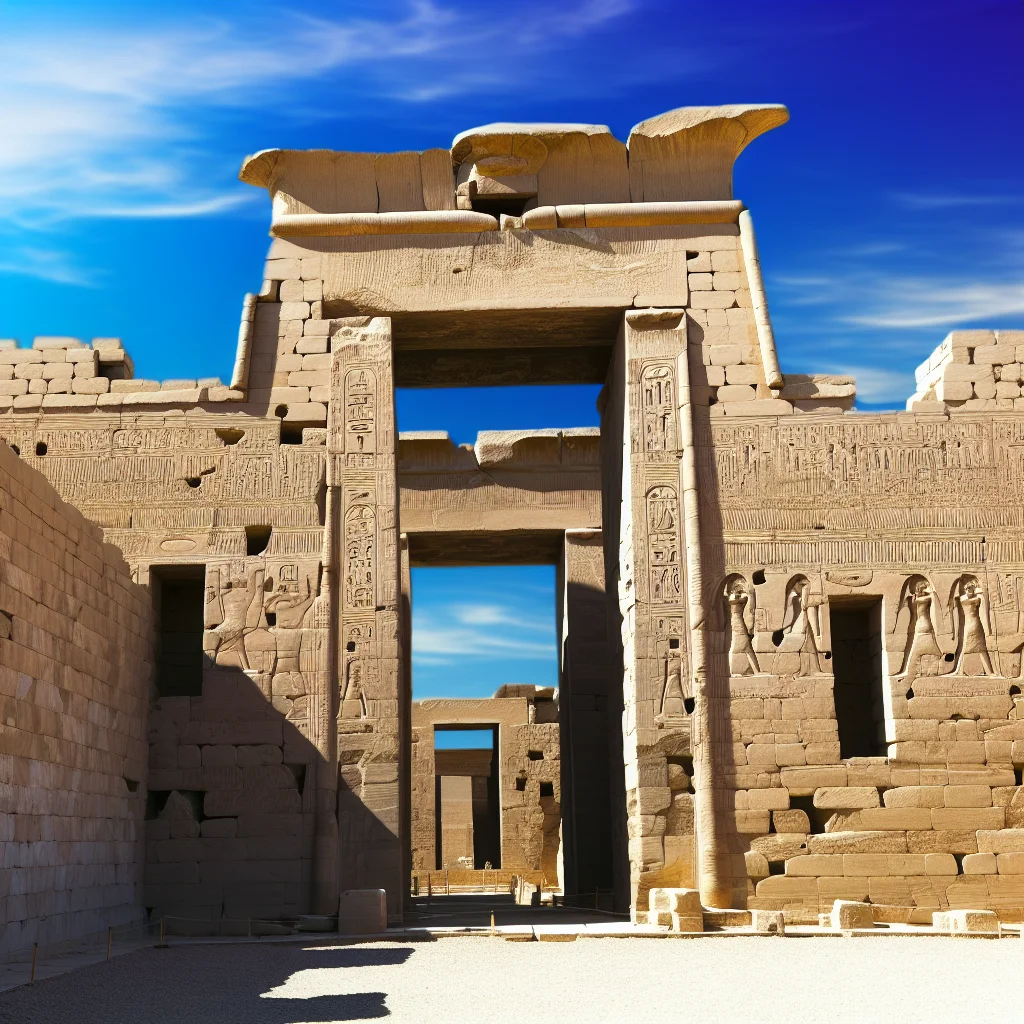
Edfu Temple Egypt Guide 2026: Temple of Horus & Dramatic Battle Reliefs
PtolemaicEdfu Temple near Aswan: Temple of Horus with stunning battle scenes, ritual texts, and the best-pres...
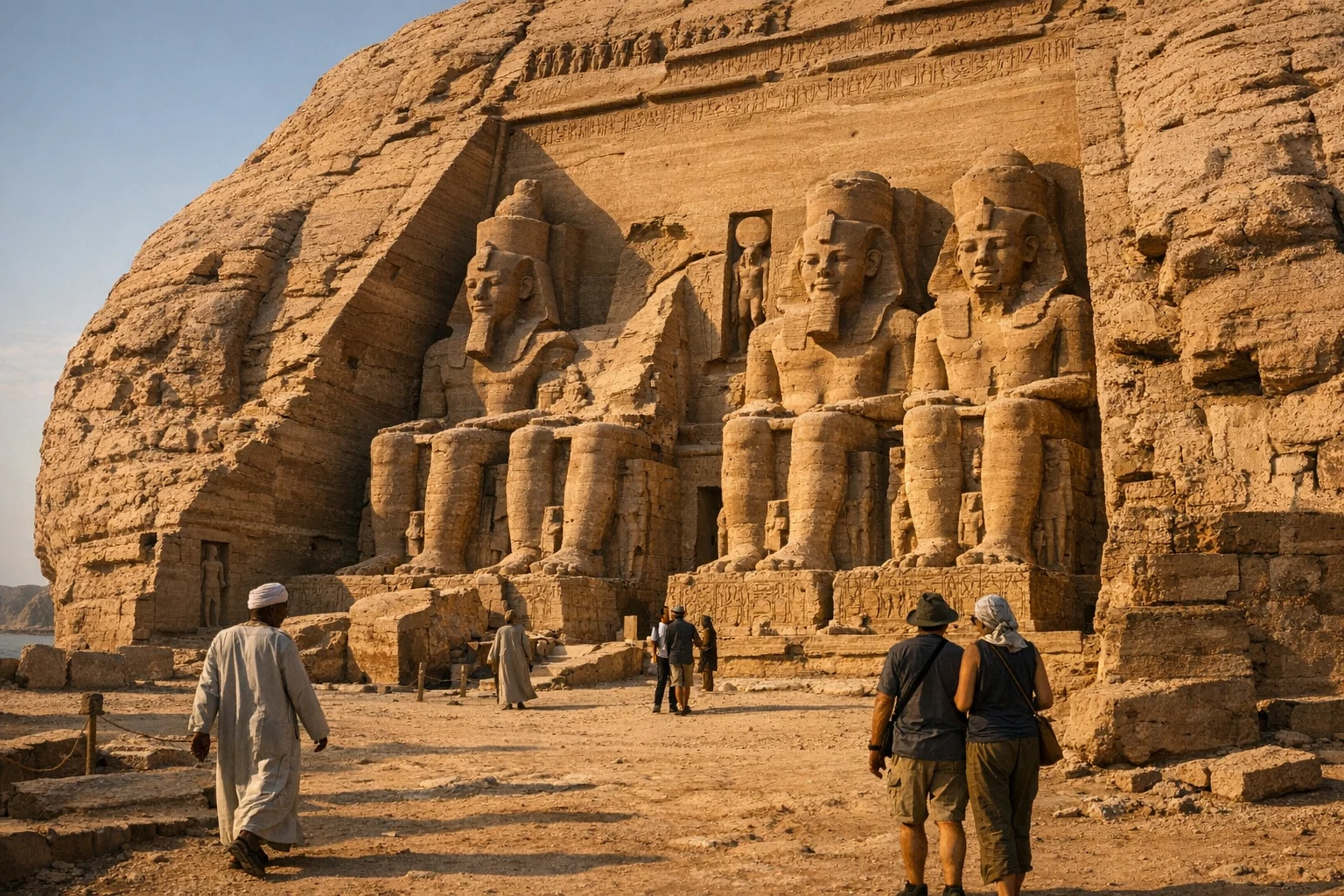
Abu Simbel
Ancient EgyptianDiscover Abu Simbel in Egypt, where colossal rock-cut temples of Ramses II rise above Lake Nasser ne...
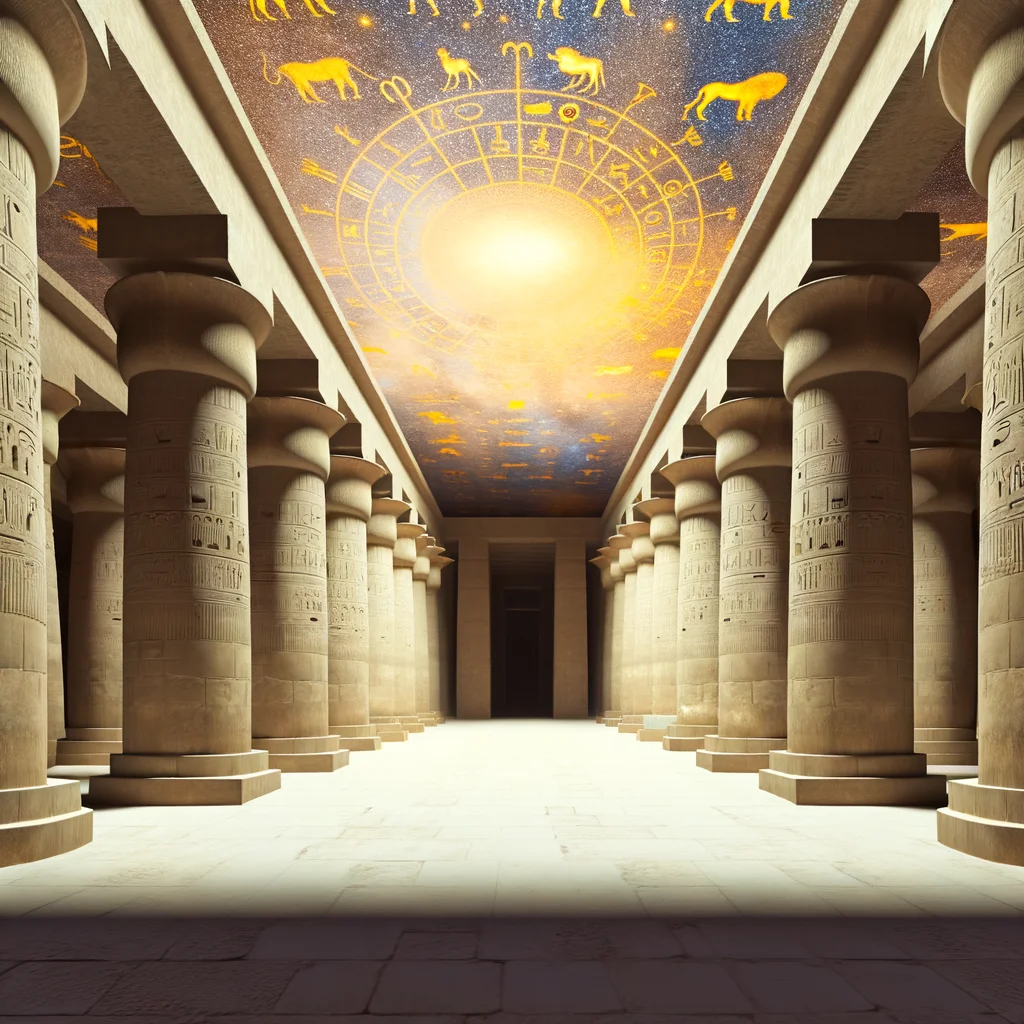
Dendera Temple Complex Egypt Guide 2026: Temple of Hathor & Zodiac Ceiling
Ptolemaic-RomanExplore Dendera's magnificent Temple of Hathor near Luxor. Star-mapped zodiac ceiling, Ptolemaic arc...