Quick Info
Curated Experiences
Private Tour in Ephesus and Traditional Turkish Bath from Port
Ephesus Day Trip from Istanbul incl Domestic Flights
Ephesus Walking Tour
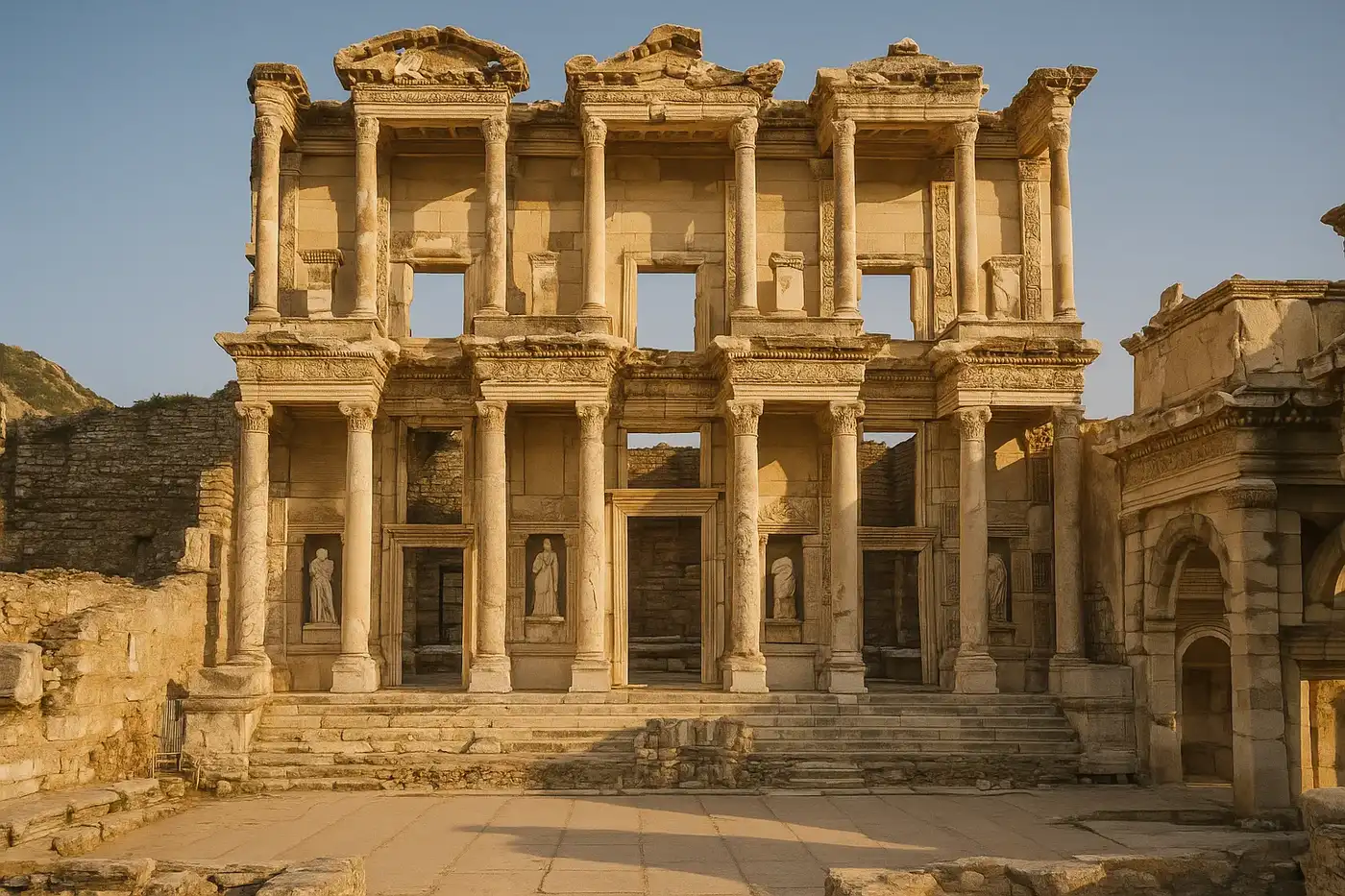
You come around a bend in the marble-paved street, past a row of broken columns and a headless statue, and then the Library of Celsus is suddenly in front of you — two stories of sculpted facade rising from a broad plaza, its columns and pediments so intact that for a disorienting moment it looks less like a ruin and more like a building someone is still using. The morning light hits the Corinthian capitals and the stone glows warm gold. A few other early arrivals stand in the plaza taking photographs, dwarfed by the scale. This is the moment Ephesus earns its reputation, and it arrives before you have covered even half the site.
Ephesus is not a collection of scattered foundations that requires imagination to interpret. It is a city — a real, legible, walkable city whose marble streets, public buildings, houses, baths, theaters, and temples survive in a state of preservation unmatched in the Mediterranean world. At its peak in the 1st and 2nd centuries CE, this was the fourth-largest city in the Roman Empire, home to a quarter million people, capital of the province of Asia, and site of one of the Seven Wonders of the Ancient World. Walking its main streets today, past shop fronts and fountains and public toilets that still have their stone seats, you grasp something that no textbook quite conveys: the sheer sophistication of Roman urban life, the density and comfort and ambition of it, preserved here at a scale that makes other ancient sites feel like rough drafts.
Whether you arrive by cruise ship at Kusadasi, by train to the nearby town of Selcuk, or by car along the Aegean coast, budget at least three hours for the main site and add an hour for the Terrace Houses. Come early, enter from the Lower Gate, and walk uphill against the flow of the tour groups. The city reveals itself best that way.
Historical Context
Ephesus was founded by Greek colonists, traditionally Ionian settlers from Athens, around the 10th century BCE, though the site had been occupied by Anatolian peoples for centuries before. The city’s early prosperity was tied to the cult of Artemis, a fertility goddess whose temple — the Artemision — grew over centuries into one of the Seven Wonders of the Ancient World. The temple attracted pilgrims and their money from across the Mediterranean, establishing Ephesus as a religious and commercial center long before Rome entered the picture.
The city passed through Lydian, Persian, and Hellenistic control before becoming part of the Roman province of Asia in 133 BCE. Under Roman administration, Ephesus flourished as never before. Augustus made it the provincial capital, and the city expanded rapidly during the 1st and 2nd centuries CE, its population reaching an estimated 250,000. The harbor connected it to maritime trade routes; the roads radiating inland connected it to the wealth of Anatolia. Public building programs produced the Library of Celsus, the Great Theater, monumental baths, a commercial agora, and the terrace houses that served as luxury residences for the city’s elite.
Ephesus also played a significant role in early Christianity. Saint Paul lived and preached here for roughly three years, and his confrontation with the silversmiths who made their living selling Artemis figurines — described in the Acts of the Apostles — is one of the earliest recorded conflicts between the new religion and the pagan economy it threatened. Tradition holds that Saint John wrote his Gospel here and that the Virgin Mary spent her final years in a small house on nearby Bulbul Mountain. The Council of Ephesus in 431 CE, which declared Mary the Mother of God, cemented the city’s importance in Christian history.
The decline was slow and geographic. The harbor silted up over centuries, cutting Ephesus off from the sea trade that had sustained it. Earthquakes damaged major buildings. By the 6th century the population had dwindled, and the remaining inhabitants retreated to the hill around the Basilica of Saint John. The abandoned lower city was gradually buried under alluvial deposits, which had the unintended effect of preserving its marble streets and buildings in remarkable condition. Systematic excavation began in the 1860s under the Austrian Archaeological Institute and continues today. By some estimates, only 15-20% of the ancient city has been uncovered.
What to See
The Library of Celsus
The defining monument of Ephesus, the Library of Celsus was built in 117 CE by the consul Gaius Julius Aquila as a monumental tomb and library honoring his father, the Roman senator Tiberius Julius Celsus Polemaeanus. The two-story facade, painstakingly reconstructed from original fragments in the 1970s, is an architectural masterpiece of calculated illusion: the central columns and pediments are slightly larger than those at the edges, creating a forced perspective that makes the building appear grander than its actual dimensions. Four statues in niches between the lower columns personify Sophia (wisdom), Arete (excellence), Ennoia (thought), and Episteme (knowledge). The library originally held approximately 12,000 scrolls in wall niches, making it the third-largest collection in the ancient world after Alexandria and Pergamon. Celsus himself is buried in a sarcophagus beneath the reading room — one of the rare instances of a burial within a Roman city’s walls, a privilege that reflects the extraordinary honor in which he was held.
The Great Theater
Carved into the western slope of Mount Panayir, the Great Theater could seat approximately 25,000 spectators — a capacity that speaks to the city’s size and the Romans’ appetite for public spectacle. The theater hosted dramatic performances, musical competitions, gladiatorial displays, and political assemblies. Its most famous moment came in the mid-1st century CE, when Saint Paul’s preaching provoked the silversmiths into a two-hour riot, the crowd chanting “Great is Artemis of the Ephesians” in the very seats you can climb today. The acoustics remain extraordinary: a speaker at stage level can be heard clearly in the top rows without amplification. Walk to the upper tiers for the view down the ancient Harbor Road, which once ran straight to the sea — the harbor is now several kilometers inland, silted into farmland, a visual lesson in the geological shift that killed the city.
The Terrace Houses
The Terrace Houses are the single best reason to pay the supplementary admission fee. These six luxury residences, built into the hillside above Curetes Street and occupied from the 1st through 7th centuries CE, preserve the domestic world of Ephesus’s elite with an intimacy that the public monuments cannot match. Beneath a protective modern roof, elevated walkways carry you above rooms whose mosaic floors, painted walls, and marble veneers survive in vivid color. One house retains a fresco of Socrates. Another preserves a dining room whose wall paintings depict theater masks and garlands. Central courtyards had fountains; underfloor heating systems warmed the rooms in winter; private latrines had running water. You are looking at Roman domestic life as it was actually lived — not inferred from foundations, but visible in paint, stone, and tile. Allow at least 45 minutes. The Terrace Houses close earlier than the main site, so visit them before 4:00 PM.
Curetes Street and the Temple of Hadrian
The main thoroughfare of Ephesus, Curetes Street runs from the Library of Celsus uphill toward the Heracles Gate, paved in marble and lined with the remains of shops, fountains, and public buildings. Walking this street, you are following the exact route that Ephesians used two thousand years ago, and the density of surviving architecture on both sides gives an unmatched sense of what a functioning Roman city street actually looked like. Along the way, the Temple of Hadrian stands out for the quality of its preservation — a small but exquisite structure with a beautifully carved arch depicting Tyche (Fortune) and a frieze showing gods, emperors, and Amazons. Just past the temple, the Scholastica Baths occupy an enormous complex that served the city’s hygiene and social needs for centuries. Look for the public latrines nearby — communal stone seats arranged around three sides of a room, where citizens conducted conversation while conducting business.
The Marble Way and Commercial Agora
Below Curetes Street, the Marble Way leads past the Library toward the commercial agora, the city’s main marketplace. The agora was a vast colonnaded square where merchants traded goods from across the Mediterranean. Look for the carved footprint in the marble paving near the Library — ancient tradition holds that it was an advertisement pointing the way to the city’s brothel, though archaeologists debate whether this is graffiti, a directional marker, or something else entirely. The Gate of Mazaeus and Mithridates, connecting the Library plaza to the agora, was dedicated by two freed slaves of Augustus in gratitude for their manumission — a reminder that Roman social mobility, while constrained, was real.
The Arcadian Way (Harbor Road)
This broad, colonnaded boulevard ran from the Great Theater straight to the ancient harbor, 530 meters of marble-paved grandeur that was one of only three streets in the Roman Empire illuminated by oil lamps at night. In its prime, the Arcadian Way was lined with shops, its columns supporting a covered walkway that sheltered pedestrians from sun and rain. Today the road runs toward empty farmland where the harbor once stood, and the perspective down its length gives the most powerful sense of Ephesus’s scale. The road is less visited than the central city and offers a welcome stretch of relative quiet.
Timing and Seasons
April through May and September through October are the ideal months. Daytime temperatures hover between 20-28°C, the light is warm without being punishing, and crowds are present but manageable. These shoulder seasons also coincide with the best weather for combining Ephesus with the Aegean coast, where swimming is comfortable through October.
Summer (June through August) brings temperatures of 35-40°C to a site with almost no shade. The marble streets radiate heat, and between 10:00 AM and 2:00 PM the crush of tour groups from Kusadasi cruise ships makes the Library plaza feel like a rush-hour platform. If you must visit in summer, arrive at the 8:00 AM opening and plan to leave by 11:00 AM, or come in the final two hours before closing (6:30 PM in summer).
Winter (November through March) is the hidden season. Temperatures are mild (8-15°C), rain is intermittent, and the site is nearly empty. You may have the Library of Celsus to yourself for five minutes at a time — a luxury that is simply impossible from May through October. Accommodation in Selcuk is heavily discounted.
The site opens at 8:00 AM year-round. Arrive at opening. By 9:30 AM the first wave of tour buses arrives, and by 10:30 AM the main streets are congested. If you enter from the Lower Gate (near the Great Theater) and walk uphill, you move against the flow of the majority of groups, who enter from the Upper Gate and walk downhill. This counter-current strategy gives you a less crowded experience and a more dramatic approach to the Library of Celsus.
Tickets, Logistics and Getting There
Standard admission to the main archaeological site is 600 Turkish lira (approximately $18 as of 2026). The Terrace Houses require a separate ticket of 300 Turkish lira (approximately $9). Both can be purchased at the entrance gates. Museum Pass Turkey, if you are visiting multiple sites across the country, covers Ephesus and many other major sites at a significant discount.
From Selcuk: The town of Selcuk, 3 km from the site, is the natural base for independent travelers. Dolmus (shared minibuses) run from Selcuk’s center to both the Upper and Lower Gates of Ephesus every 15-20 minutes, costing a few lira. Taxis from Selcuk to the entrance cost about 50-80 Turkish lira. Many visitors walk the 2 km from town to the Lower Gate — it is flat, straightforward, and takes about 25 minutes.
From Kusadasi (cruise port): Kusadasi is 20 km southwest. Taxis cost approximately $25-30 each way. Most cruise passengers book organized shore excursions through their cruise line ($80-150) or through independent local operators ($40-70 for small group tours). If your ship arrives early (before 8:00 AM), booking an independent transfer gets you to the site at opening, well ahead of the larger cruise-line groups that depart later.
From Izmir: Buses run regularly from Izmir to Selcuk (about 1 hour, 50-70 lira). Izmir Adnan Menderes Airport is the closest international airport, about 60 km north. Rental cars are available at the airport and provide the most flexibility for combining Ephesus with the House of the Virgin Mary, Sirince village, and other nearby sites. Parking is available at both Ephesus entrance gates.
From Istanbul: A day trip is possible via domestic flight to Izmir (1 hour) plus ground transport, though it makes for a very long day. Organized fly-in tours from Istanbul run $400-500 including flights and guide.
Practical Tips
- Wear sturdy shoes with good grip. The marble streets are polished by centuries of foot traffic and become genuinely slippery, especially when damp or in the early morning dew.
- Bring at least 1.5 liters of water per person. There is a small cafe near the Lower Gate and vendors outside both entrances, but nothing inside the site itself.
- Sun protection is critical from May through September. Hat, sunscreen, and sunglasses are non-negotiable. There is almost no shade along the main streets.
- A licensed guide transforms the experience. Ephesus is well-signposted, but a knowledgeable guide turns columns and walls into vivid stories. Licensed guides are available at both entrance gates for around $50-80 for a 2-hour tour. Audio guides rent for approximately $5.
- The Terrace Houses close 30 minutes before the main site. Visit them first or in the early afternoon to avoid being shut out.
- Photography is permitted throughout the site, including the Terrace Houses.
- For lunch, skip the tourist restaurants outside the gates and head into Selcuk, where Ejder Restaurant and Selcuk Koftecisi serve excellent local food at local prices. If you have a car, the hilltop village of Sirince, 15 minutes away, offers charming restaurants with valley views and locally produced fruit wines.
Suggested Itinerary
8:00 AM — Arrive at the Lower Gate at opening. Enter and walk directly to the Terrace Houses before they get crowded. Spend 45-60 minutes inside.
9:00 AM — Exit the Terrace Houses and walk uphill along Curetes Street, stopping at the Temple of Hadrian, the Scholastica Baths, and the public latrines. Pause at the Heracles Gate at the top of the street.
9:45 AM — Turn around and walk back downhill, this time taking in the Library of Celsus from the elevated approach. Spend 15-20 minutes in the Library plaza before the tour groups arrive in force.
10:15 AM — Walk along the Marble Way to the Commercial Agora, then continue to the Great Theater. Climb to the upper tiers for the view and acoustics test. Walk down the Arcadian Way toward the old harbor.
11:00 AM — Exit through the Lower Gate. Take a taxi or dolmus to the House of the Virgin Mary (7 km, 15 minutes), a peaceful hilltop chapel with religious significance for Christians and Muslims alike. Allow 30 minutes.
12:00 PM — Return to Selcuk for lunch. In the afternoon, visit the Basilica of Saint John on the hill above town, and the small Ephesus Museum in Selcuk’s center, which houses artifacts from the site including two famous statues of Artemis.
Optional afternoon: Drive 15 minutes to Sirince village for fruit wine tasting and a late lunch, or visit the scant remains of the Temple of Artemis (one reconstructed column in a marshy field — more symbolic than visually impressive, but it completes the Seven Wonders connection).
Nearby Sites
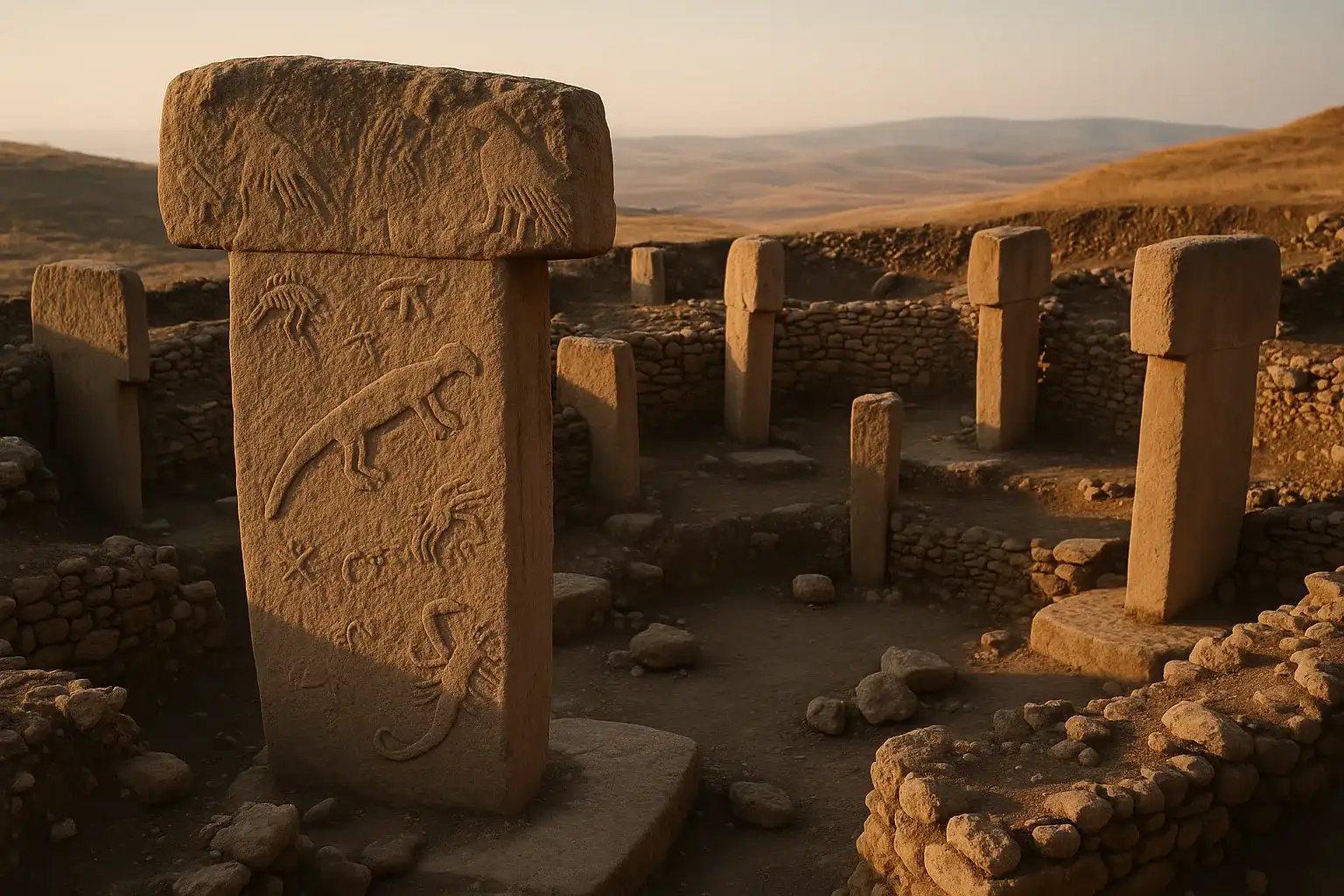
Gobekli Tepe in southeastern Turkey is the world’s oldest known temple complex, dating to roughly 9500 BCE — predating Ephesus by nearly nine millennia. It requires a domestic flight to Sanliurfa (about 90 minutes from Izmir) but is the single most important archaeological discovery of the 21st century and pairs with Ephesus to bookend the span of Anatolian civilization.
Priene, Miletus, and Didyma form a trio of ancient Ionian cities within a 90-minute drive south of Ephesus. Priene’s hilltop grid plan offers the best-preserved example of Hippodamian urban planning. Miletus retains a massive theater and impressive baths. Didyma’s Temple of Apollo — never completed but staggering in scale — rivals anything at Ephesus for architectural ambition. The three can be combined in a single day trip.
Pergamon (Bergama) lies about 2.5 hours north along the Aegean coast. Its hilltop acropolis, the steepest theater in the ancient world, and the remains of the great library that rivaled Alexandria make it a natural companion to Ephesus for travelers exploring classical Anatolia.
Pamukkale and Hierapolis, the white travertine terraces and adjoining Greco-Roman spa city, are about 3 hours inland from Ephesus. The combination of natural wonder and ancient ruins makes for an excellent overnight side trip.
Final Take
Ephesus delivers on its reputation with a completeness that few ancient sites can match. The Library of Celsus alone would justify the visit, but it is the cumulative effect — a city’s worth of streets, monuments, houses, and public spaces preserved in marble and stone — that distinguishes Ephesus from every other classical ruin in the Mediterranean. This is not a site where you need to squint at foundations and imagine what once stood. The buildings are here, the streets are here, the scale is here. What is required is time, early arrival, and the willingness to look past the obvious landmarks to the details carved into sidewalks and painted onto walls where ordinary people lived and worked two thousand years ago.
Come at opening, walk against the crowd, pay the extra fee for the Terrace Houses, and give Ephesus the full morning it demands. You will leave understanding why this was once the most important city in the eastern Mediterranean.
Discover More Ancient Wonders
- Gobekli Tepe — The world’s oldest temple, rewriting the origins of civilization in southeastern Turkey
- Acropolis of Athens — The pinnacle of classical Greek architecture across the Aegean
- Petra — The rose-red Nabataean city carved from Jordan’s desert cliffs
- Baalbek — Rome’s most monumental temple complex, in Lebanon’s Bekaa Valley
- Explore our complete Turkey Ancient Sites Guide for more archaeological destinations
Quick Facts
| Attribute | Details |
|---|---|
| Location | Selcuk, Aegean, Turkey |
| Country | Turkey |
| Region | Aegean |
| Civilization | Greco-Roman |
| Historical Period | c. 10th century BCE - 15th century CE |
| Established | c. 10th century BCE |
| UNESCO Status | World Heritage Site (2015) |
| Peak Population | ~250,000 (1st-2nd century CE) |
| Excavated Area | ~15-20% of the ancient city |
| Entry Fee | 600 TL ( |
| Best Time | April-May, September-October |
| Coordinates | 37.9495, 27.3639 |
Frequently Asked Questions
How much time do I need at Ephesus?
Plan 2-3 hours for the main archaeological site, plus an additional hour if visiting the Terrace Houses. A full day allows you to add the House of the Virgin Mary, the Basilica of Saint John, and Sirince village.
What is the best time of year to visit Ephesus?
April-May and September-October offer ideal weather with manageable crowds. Summer (June-August) brings intense heat and peak tourism. Winter visits are pleasant and uncrowded, though occasional rain may affect your experience.
Are the Terrace Houses worth the extra ticket at Ephesus?
Absolutely. The mosaics and frescoes provide Ephesus' most vivid glimpse into ancient daily life. The additional cost (approximately €10) represents excellent value for the quality of preservation and the intimate scale of the experience.
Is Ephesus wheelchair accessible?
The main pathways are generally accessible, though the marble surfaces can be slippery and uneven in places. The Terrace Houses are not wheelchair accessible due to stairs and elevated walkways.
Can I visit Ephesus without a guide?
Yes, the site is well-signposted and audio guides are available for rent. However, a knowledgeable guide brings the ruins to life with stories and historical context that transform piles of stones into vivid places. Consider at least downloading a detailed guide app if not hiring a human guide.