Quick Info
At a glance
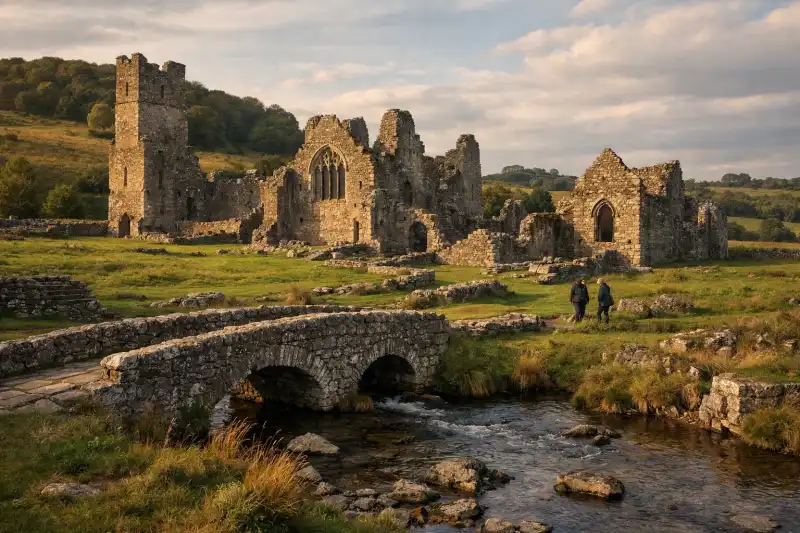
Fore Abbey in Ireland sits quietly in a green hollow of County Westmeath, where ruined arches, grassy enclosures, and the lingering memory of monastic life create one of the country’s most evocative historic landscapes. Unlike Ireland’s busiest heritage landmarks, Fore often feels wonderfully unhurried. You arrive not to crowds and ticket halls, but to a village setting where the abbey appears almost naturally from the fields, as though it has always belonged to the folds of the land. That first impression matters. Fore is not simply a ruin to be photographed; it is a place best understood slowly, by walking its perimeter walls, pausing beneath broken windows, and noticing how prayer, farming, hospitality, and legend once met here.
The abbey is linked to Saint Feichin, an early Irish saint whose monastic foundation made Fore an important religious center long before the surviving medieval buildings took shape. Over centuries, the community endured Viking attacks, political upheaval, and changing religious institutions, yet the site remained significant enough to be rebuilt and reshaped again and again. Today, visitors come for the atmosphere as much as the architecture. Fore Abbey offers a rare combination of documented history and local folklore, especially through the famous “Seven Wonders of Fore,” a set of marvels and sayings that give the site a strong sense of personality. In a country rich with monastic ruins, Fore stands out for its intimacy, its layered past, and the powerful stillness that settles over the stones.
History
Early foundation and Saint Feichin
The story of Fore Abbey begins in the 7th century, when Saint Feichin established a monastery here. Feichin was one of the important monastic founders of early Christian Ireland, a time when monasteries were not only centers of worship but also hubs of learning, craft production, hospitality, and local administration. Fore’s location, sheltered yet connected to surrounding routes, suited that role well. It offered seclusion for religious life while remaining accessible enough to attract followers, pilgrims, and patrons.
Early Irish monasteries were often built largely from timber and earth, so very little of the first foundation survives above ground in clearly recognizable form. Yet the spiritual importance of the site long predated the later stone ruins visitors see today. Fore grew into a respected religious center, associated with sanctity, healing traditions, and the memory of its founding saint. In the Irish monastic world, the reputation of a saint could shape a site’s fortunes for generations, and Fore benefited from that enduring connection.
Raids, destruction, and persistence
Like many wealthy and influential monastic settlements in medieval Ireland, Fore suffered repeated attacks. Historical sources record Viking raids as well as later destructions by rival forces and political enemies. Monasteries were tempting targets because they stored valuables, manuscripts, metalwork, livestock, and food supplies. Their wealth and status made them vulnerable in unsettled times.
Yet Fore was not abandoned after each disaster. Instead, it was rebuilt and restored, a pattern common in Irish ecclesiastical history. This persistence tells us something important: the site mattered deeply to the surrounding community and to wider church networks. Monastic settlements were rarely just isolated religious compounds. They anchored local identity and economy. To restore Fore after damage was to reassert continuity, memory, and sacred legitimacy.
By the high medieval period, Ireland’s church structure was changing. Earlier monastic traditions increasingly intersected with reforms that brought Irish religious houses into closer alignment with continental models of church organization. Fore adapted within that shifting landscape, and the architectural remains visible now belong mostly to this later medieval story.
Medieval rebuilding and Benedictine phase
Much of what visitors encounter today dates from the 13th to 15th centuries, when Fore became associated with a Benedictine community. This phase gave the abbey many of its surviving stone features, including church remains, cloistered areas, and defensive or enclosing walls. The architecture reflects a working monastic complex designed not only for prayer but for daily administration, residence, hospitality, and agricultural oversight.
The medieval abbey stood within a wider precinct that helped define sacred and practical space. Gates, boundary walls, and ancillary structures marked the distinction between the religious heart of the site and the surrounding village and farmland. The church itself would have formed the liturgical center, while adjacent ranges served communal life. Such monasteries needed kitchens, storage, sleeping quarters, workshops, and guest accommodations. Although much has been lost, Fore still preserves enough to convey the scale and ambition of the establishment.
Its setting also mattered politically. As lordship, landholding, and ecclesiastical patronage evolved in medieval Ireland, religious houses depended on support from local elites. Fore’s rebuilding reflects those networks of protection and influence, even as it retained its older saintly associations.
Dissolution, decline, and survival as a ruin
The great transformation came in the 16th century, when the dissolution of monasteries under Tudor rule disrupted religious communities across Ireland. Like many abbeys, Fore lost its original monastic function. Buildings that had once been carefully maintained entered a long period of decline. Roofs failed, stone was reused elsewhere, and the rhythms of daily religious life ceased.
Even so, the site never vanished from memory. Fore remained embedded in local tradition, not only as a ruin but as a place of wonder. The “Seven Wonders of Fore” preserved its fame in oral culture, blending sacred association with marvel and proverb. This is one reason Fore feels different from some more anonymous ruins. Its afterlife in folklore kept it emotionally present.
In more recent centuries, antiquarians, historians, and heritage visitors have appreciated Fore for both its architecture and atmosphere. Today it survives as one of Ireland’s most memorable monastic ruins: not fully intact, but sufficiently preserved to reveal its long life from saintly foundation to medieval abbey to storied historic site.
Key Features
Fore Abbey’s strongest feature is its overall setting. The ruins do not stand in isolation on a bare archaeological platform; they sit within a lived landscape of lanes, grass, trees, and gentle slopes. This gives the site a rare sense of continuity. Even before you focus on individual architectural fragments, the broader environment communicates why a monastic community could flourish here. The terrain feels sheltered, reflective, and fertile, ideal for a religious house that depended on both contemplation and practical self-sufficiency.
The abbey church remains the emotional and visual center of the site. Though roofless, it still conveys height and dignity through surviving walls, pointed openings, and traces of the building’s internal divisions. Looking through the empty window spaces, visitors can imagine the medieval interplay of light, incense, chant, and seasonal weather. The church was not simply a structure but the focus of monastic time, where the hours of prayer organized daily life. Even in ruin, that liturgical importance is easy to sense.
Nearby structural remains suggest the larger monastic complex that once extended around the church. Portions of walls and connected spaces hint at cloistered circulation, domestic quarters, and service areas. These are especially interesting because they remind visitors that monasteries were working institutions. Fore was a place of routine as much as devotion: meals prepared, guests received, accounts managed, land supervised. The surviving masonry captures this blend of sacred and practical design.
One of the most striking elements at Fore is the enclosing wall and gatehouse character of the precinct. In many medieval monasteries, walls symbolized both protection and spiritual separation. At Fore, these boundaries still shape the visitor’s experience. Entering the site feels like crossing from the ordinary countryside into a quieter historical enclosure. This transition is subtle but powerful, helping explain how monastic communities organized space and identity.
Fore is also inseparable from its legends, especially the Seven Wonders of Fore. These wonders vary slightly in phrasing depending on local tradition, but they include memorable expressions such as the water that flows uphill, the tree that will not burn, and the mill without a race. Whether understood literally, symbolically, or as a playful blend of observation and folklore, they give Fore an unusually rich interpretive layer. Many ancient sites are historic; fewer are also woven into a living imaginative map of marvels. At Fore, legend invites you to look more closely at the landscape itself, noticing spring water, stonework, topography, and old stories as part of one connected whole.
Another important feature is the human scale of the visit. Fore does not overwhelm with monumental size. Instead, it rewards careful wandering. Small details emerge gradually: a carved stone, a change in wall texture, the alignment of an opening, the way grass now fills spaces once occupied by processions or work. This intimacy is one of its greatest strengths. Visitors often leave feeling they have discovered something rather than merely checked off a famous stop.
The surrounding village setting adds to this effect. Fore Abbey is part of a historic settlement rather than a detached museum object. Nearby roads, fields, and local features create a sense that the abbey belongs to a continuing place. For travelers interested in Ireland beyond headline landmarks, this is especially appealing. The site offers authenticity not because it is untouched by time, but because time remains visible in every layer, from saintly origins to medieval masonry to modern rural calm.
Getting There
Fore Abbey is in County Westmeath, in the province of Leinster, near the small town of Castlepollard. The easiest way to reach it is by car. From Dublin, the drive usually takes around 1 hour 45 minutes to 2 hours depending on traffic, using the M4 and regional roads. Fuel costs vary, but for a standard rental car, a round trip from Dublin might cost roughly €25 to €40 in fuel, excluding rental fees. Driving is the best option if you want flexibility, especially because public transport to Fore itself is limited.
If you prefer rail, you can take a train from Dublin Connolly to Mullingar. Standard fares often range from about €15 to €25 each way if booked in advance, though prices can vary. From Mullingar, you would typically continue by taxi to Fore Abbey, with fares often around €35 to €55 depending on timing and operator. Another route is to travel by bus toward Castlepollard or Mullingar and complete the final stretch by taxi, but schedules may be infrequent and are best checked carefully before departure.
Organized day trips directly to Fore Abbey are less common than tours to Ireland’s major headline sites, so independent travel is usually more practical. If you are already exploring the Irish Midlands, Fore combines well with other heritage stops such as Clonmacnoise or the Boyne Valley region, though these require additional driving time. Parking near the site is generally straightforward, and because Fore is in a rural setting, comfortable walking shoes are strongly recommended. Ground can be uneven, especially after rain.
When to Visit
Fore Abbey can be visited year-round, but late spring through early autumn offers the most comfortable conditions. From May to September, the surrounding grass is lush, daylight lasts longer, and the site’s rural beauty is especially vivid. Summer brings the warmest temperatures, usually mild by international standards, often around 15°C to 22°C. This is the best season for photography if you want bright greenery and softer evening light, though occasional rain remains likely.
Spring is an excellent compromise for many travelers. The landscape feels fresh, visitor numbers are still modest, and cooler temperatures make walking pleasant. Autumn can also be rewarding, especially on clear days when the abbey’s stonework contrasts beautifully with fading vegetation and low golden light. In both seasons, weather may change quickly, so a waterproof jacket is useful.
Winter visits have a different charm. The site can feel even more atmospheric when the trees are bare and the ruins stand stark against gray skies. However, daylight is shorter, paths may be wetter, and rural driving conditions can be less convenient in poor weather. If you visit in winter, plan to arrive earlier in the day and wear sturdy shoes.
The best time of day is usually morning or late afternoon, when the site is quiet and the light is softer. Fore’s appeal depends partly on stillness, so avoiding the middle of a busy holiday afternoon can make the experience more memorable. Whenever you go, allow time not just to look but to linger. Fore Abbey is at its best when approached slowly, with attention to atmosphere as well as history.
| Quick Facts | Details |
|---|---|
| Location | Fore, County Westmeath, Ireland |
| Province | Leinster |
| Nearest town | Castlepollard |
| Founded | 7th century CE |
| Founder | Saint Feichin |
| Main visible remains | Mostly 13th-15th century medieval abbey structures |
| Historical affiliation | Early Irish monastic foundation, later Benedictine |
| Best for | Medieval history, monastic archaeology, folklore, quiet rural visits |
| Typical visit length | 45 minutes to 1.5 hours |
| Entry fee | Usually free |
| Access | Best reached by car; limited public transport options nearby |
| Notable tradition | The Seven Wonders of Fore |
Fore Abbey rewards travelers who value atmosphere, historical depth, and places that still feel rooted in their landscape. It may not have the fame of Ireland’s largest monastic ruins, but that is part of its power. Here, the story is not delivered in a rush. It unfolds through weathered masonry, local memory, and the lingering outline of a community that once shaped religion and daily life in this quiet corner of Westmeath. For visitors willing to slow down, Fore offers something more enduring than spectacle: a close encounter with Ireland’s medieval and early Christian past in a setting that remains deeply human in scale.
Guided tours: worth it?
Most travelers can visit Fore Abbey independently. Compare a tour only if you want a tighter history-focused visit, easier logistics, or a guide who can answer questions on the spot.
Best for
- Short visits where a planned route saves time
When to go self-guided
Go independently if you prefer setting your own pace, reading as you go, and checking official hours or ticket rules directly before you arrive.
What I’d avoid
Skip paid tours that bundle unrelated stops you do not actually want. The best option should either save meaningful planning time or add historical context you would miss on your own.
Ireland Ancient Sites Tours
Useful when: you want to compare guided formats before deciding
Westmeath Day Trips
Useful when: transport or pickup logistics matter
Irish Monastic Sites Tours
Useful when: you want to compare guided formats before deciding
Some tour links are affiliate links, which may earn Ancient Travel a small commission at no extra cost to you. I try to surface options that make practical sense for the site—not just anything bookable.
Frequently Asked Questions
What is Fore Abbey famous for?
Fore Abbey is best known for its medieval monastic ruins, its association with Saint Feichin, and the local tradition of the Seven Wonders of Fore.
Is there an entrance fee for Fore Abbey?
Fore Abbey is generally free to visit, though visitors should check current local heritage information before traveling.
How long should I spend at Fore Abbey?
Most visitors spend 45 minutes to 1.5 hours exploring the main ruins, church remains, grounds, and nearby village setting.
Can you visit Fore Abbey from Dublin as a day trip?
Yes, Fore Abbey can be visited from Dublin in a day by rental car, organized tour, or a combination of train and taxi.
What are the Seven Wonders of Fore?
The Seven Wonders of Fore are a group of local legendary and landscape curiosities linked to the abbey, including features such as the water that flows uphill and the tree that will not burn.
Is Fore Abbey suitable for families?
Yes, the site is suitable for families, though care is needed around uneven ground, old stonework, and open areas.
Nearby Ancient Sites
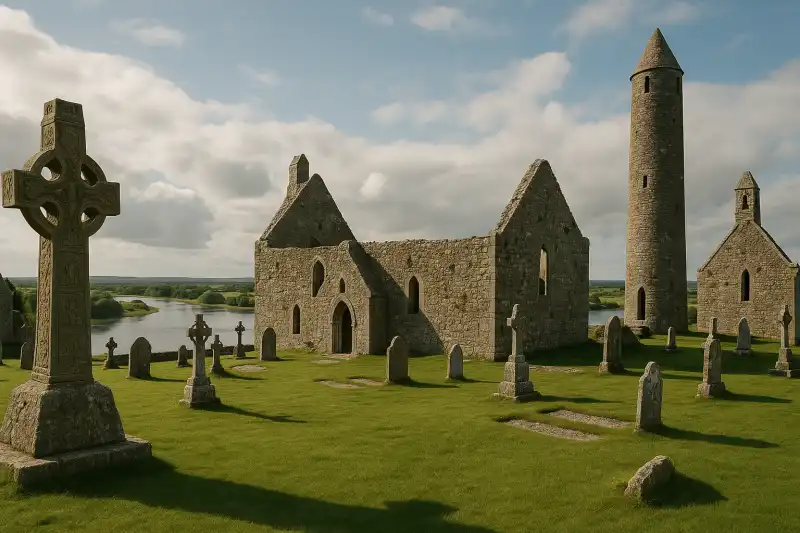
Clonmacnoise Travel Guide 2026: Monastic Ruins, High Crosses, and River Shannon Context
Early Medieval IrelandPlan a first visit to Clonmacnoise with practical timing, monastic-site context, and clear route adv...
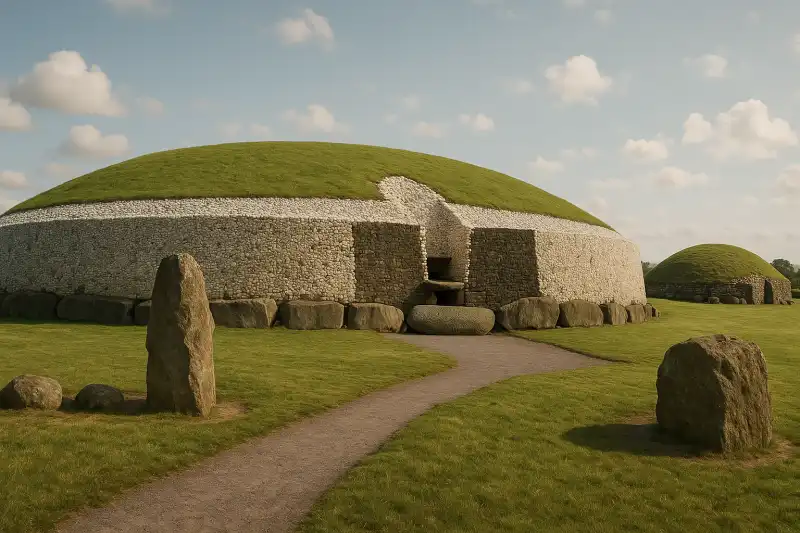
Boyne Valley Passage Tombs Travel Guide 2026: Newgrange, Knowth, and Dowth Visit Strategy
Neolithic IrelandPlan your first Boyne Valley passage tombs visit with practical timing, Brú na Bóinne access flow, a...
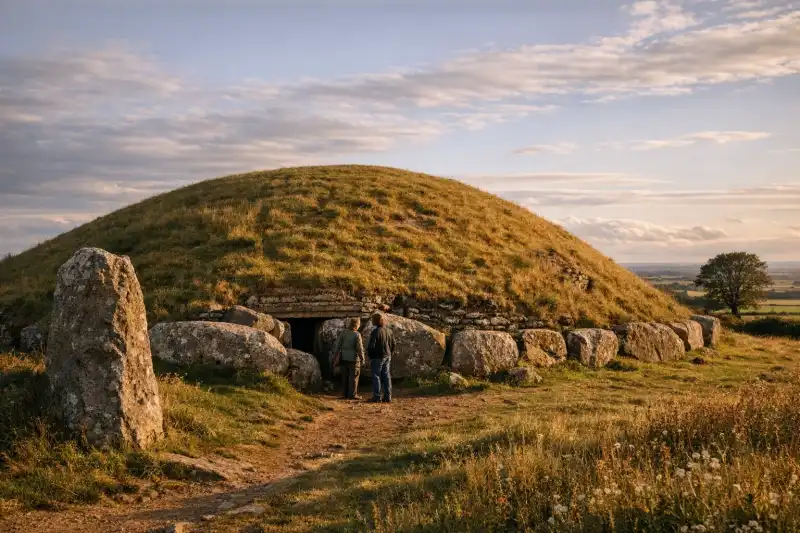
Dowth
Neolithic communities of Brú na BóinneAncient passage tomb in Ireland's Boyne Valley, famed for Neolithic art, winter light, and sweeping ...