Quick Info
Curated Experiences
Giza Pyramids and Sphinx Half-Day Tour from Cairo
Giza Pyramids, Sphinx and Solar Boat Museum Tour
Giza Sound and Light Show with Dinner
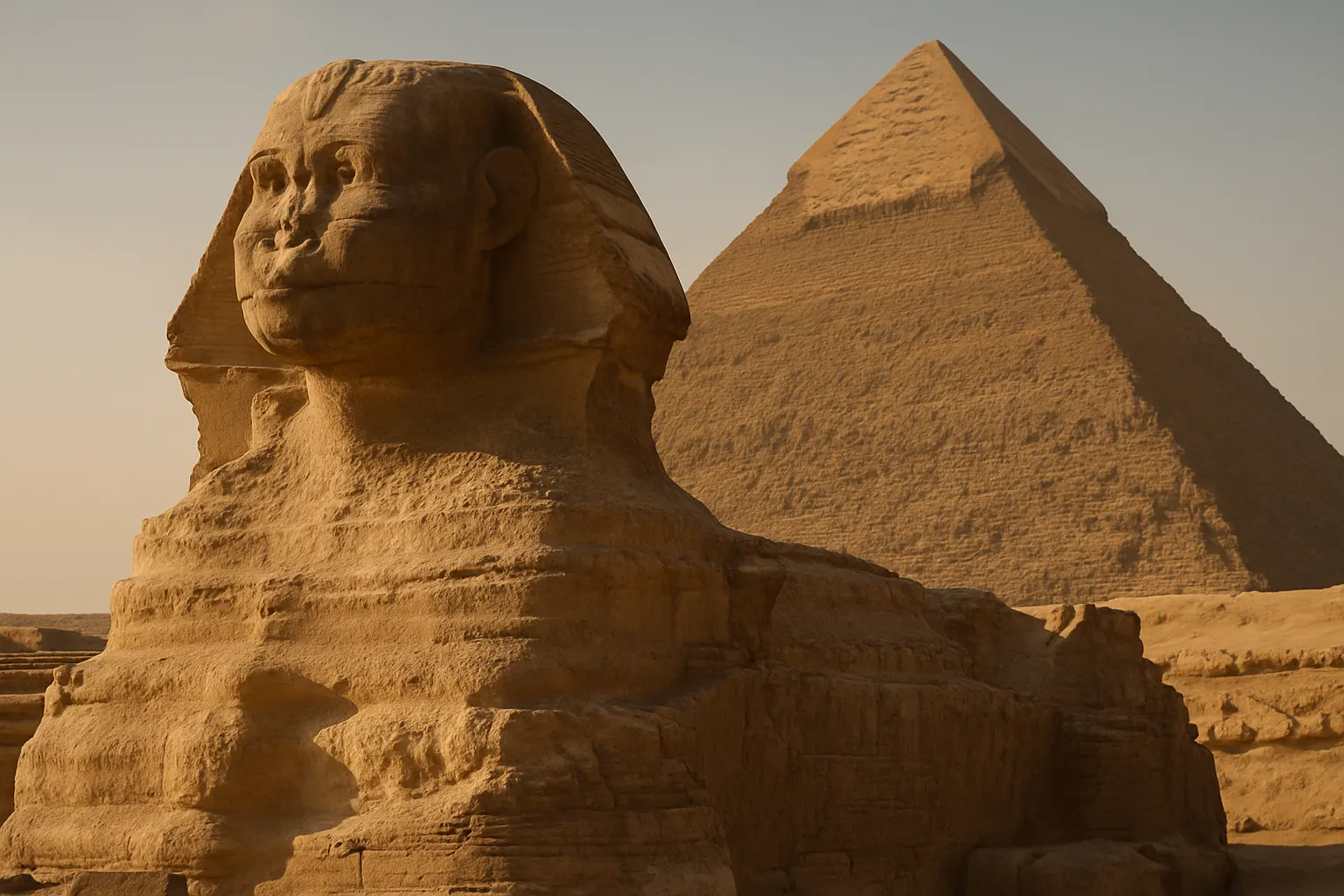
Most visitors give the Sphinx twenty minutes. They walk to the viewing platform, frame the head against Khafre’s pyramid, take a photograph that compresses 73 meters of lion body into a backdrop, and move on to the next item on the itinerary. This is understandable and regrettable in equal measure. The Great Sphinx of Giza is the oldest monumental sculpture on earth, a human-headed lion carved from the living bedrock of the plateau 4,500 years ago, and it has been misunderstood, half-buried, vandalized, worshipped, restored, and photographed more than almost any object in human history. It deserves more than a quick stop.
What photographs cannot convey is the physical mass of the thing. The body extends 73 meters from paw to tail. The monument rises 20 meters from base to crown. The face alone stands 5 meters tall, with eyes 2 meters high that have watched the eastern horizon through an uncountable succession of dawns. The enclosure carved around it reveals the raw geology of the plateau — layered limestone beds of varying hardness that the Sphinx’s builders worked with rather than against, accepting that the softer stone of the haunches would weather differently from the harder cranial limestone. Standing at the edge of the enclosure, you confront something larger and stranger than any image prepared you for.
Spend an hour here. Walk the full perimeter. Read the Dream Stela between the paws. Look at the weathering patterns on the enclosure walls that have fueled genuine scientific debate. The Sphinx is not a photograph opportunity. It is a portrait of a king who made himself into a god, crouching at the threshold between the living world and the dead.
Historical Context
The Sphinx was not built. It was revealed. When quarry workers extracted limestone blocks for Khafre’s pyramid and valley temple around 2500 BCE, they left behind a natural outcrop — an irregularly shaped protrusion of bedrock rising above the quarry floor. Rather than removing this inconvenient remnant, Khafre’s craftsmen recognized potential in its form and began to carve. The lion’s body emerged first, shaped from the protruding mass by removing stone from all sides. The head was carved from a harder, more elevated section of the same outcrop, which accounts for its vastly superior preservation compared to the heavily weathered body and haunches below.
The resulting monument contains no join between separately quarried blocks in its primary form. What you see is the plateau itself transformed — the desert floor given a face. The limestone blocks removed to free the Sphinx from the surrounding rock were carried directly to the adjacent construction site, where they became the walls of the Sphinx Temple. The same geological event produced both the monument and the structure built to worship it.
In ancient Egyptian tradition, a sphinx combined human intelligence with leonine strength. The lion guarded temple gates throughout the Nile Valley; its roar announced sunrise; its speed and ferocity were synonymous with royal power. The human face, wearing the nemes headdress and long ceremonial beard of kingship, identified the specific authority embodied here: Khafre, builder of the second pyramid. The Sphinx faces due east, aligned with the rising sun — not incidentally, but as a deliberate expression of its solar dimension. When New Kingdom pharaohs later named it Hor-em-akhet (“Horus of the Horizon”), they were reading an astronomical significance built into the design from the beginning.
The Sphinx formed the eastern anchor of Khafre’s complete mortuary complex, positioned between the valley temple and the causeway entrance to function as guardian and celestial marker for the pharaoh’s final processional route. Understanding the Sphinx means understanding this context: it was never meant to stand alone, and viewing it in isolation strips away the architectural logic that gave it purpose.
By the New Kingdom, roughly a millennium after its creation, drifting sand had buried the monument to its neck. The head alone protruded — a disembodied royal face available to be reimagined entirely. New Kingdom Egyptians understood it not as Khafre’s guardian but as an ancient solar deity of immense power, and successive pharaohs undertook restoration campaigns and left inscriptions between its paws.
What to See
The Sphinx Enclosure and Full Perimeter
The enclosure carved around the Sphinx during its creation is itself a significant archaeological feature. Its walls preserve weathering patterns that have generated genuine scientific controversy — some geologists argue the horizontal erosion channels suggest prolonged water damage from heavy rainfall, implying an origin predating the dynastic period by thousands of years. Mainstream Egyptology holds firmly to the Khafre attribution, but the debate remains open and fascinating.
The classic view — the Sphinx’s face with Khafre’s pyramid rising directly behind — is taken from the northeast corner. Secure this photograph on arrival before crowds build. But the monument rewards the full perimeter walk that most visitors skip. The profile view from the side reveals the enormous 73-meter length of the lion body, the relationship between the proportionally small head and the massive haunches, and the sheer volume of stone that frontal photographs compress into flatness. From the plateau above the enclosure, all three pyramids can be framed behind the Sphinx simultaneously — the composition that best captures its role as guardian of the complex.
The Dream Stela
Between the Sphinx’s outstretched paws, a granite stela erected by Pharaoh Thutmose IV around 1400 BCE records one of ancient Egypt’s most compelling stories. The young prince, not yet pharaoh and not the expected heir, fell asleep in the Sphinx’s shadow while hunting on the plateau. In the dream that followed, the Sphinx spoke to him, identifying itself as Hor-em-akhet, the great god of the horizon, and making a promise: clear the sand that was suffocating the monument, and the throne would be his. Thutmose excavated the Sphinx and became pharaoh.
Whether this was genuine divine communication or a carefully staged piece of political theater designed to legitimize a contested succession, the stone record of the agreement still stands where Thutmose placed it. The stela’s text is heavily weathered after 3,400 years, but enough survives to reveal how the New Kingdom understood the monument: not as Khafre’s creation but as an ancient god deserving of worship and restoration. The platform before the stela offers the most intimate view of the face available anywhere — close enough to read the stonecutters’ work and see the differential weathering across different limestone beds.
The Valley Temple of Khafre
Beside the Sphinx enclosure stands one of the most impressive Old Kingdom structures surviving in Egypt. Khafre’s valley temple was built from enormous monolithic granite blocks fitted without mortar, its walls and floors achieving an accuracy that modern stonecutters would find challenging. The T-shaped interior hall, paved with alabaster, originally held 23 diorite and alabaster statues of Khafre — now largely destroyed, though the magnificent seated statue of the king protected by the Horus falcon survived and resides in the Egyptian Museum in Cairo. The temple’s massive, undecorated granite surfaces give the space a primordial gravity that later, more elaborately decorated temples do not possess.
The Sphinx Temple
Directly in front of the Sphinx, the Sphinx Temple was built from the same limestone blocks removed to free the monument from the bedrock. Its massive, undecorated blocks share the austere architectural vocabulary of the valley temple. The absence of painted reliefs and carved inscriptions — which in later Egyptian temples covered every surface — gives the space a quality of elemental simplicity. Aligned with the rising and setting sun on the equinoxes, the temple confirms that Khafre’s architects designed the entire eastern complex as a unified solar monument.
The Missing Features: Nose, Beard, and Paint
The Sphinx as it stands today is not the Sphinx as Khafre intended. Traces of red ochre cling to the face; fragments of blue and yellow pigment survive on the nemes headdress. The monument was originally painted in vivid colors — the serene monochrome we see now is the product of millennia of weathering, not artistic choice. The nose was broken away sometime between the 3rd and 14th centuries CE. The popular story blaming Napoleon’s artillery is false; European travelers sketched the noseless Sphinx decades before Napoleon was born. Medieval Arabic sources record the vandalism of Muhammad Sa’im al-Dahr, a Sufi Muslim reportedly executed in 1378 CE for damaging the monument because locals were making offerings to it. The ceremonial beard fell through erosion; its fragments are divided between the British Museum and the Egyptian Museum in Cairo.
Timing and Seasons
The Sphinx sits within the broader Giza plateau, sharing its opening hours and seasonal patterns. October through April offers the most comfortable conditions — sunny days of 20 to 28 degrees Celsius with cool mornings ideal for photography. This is high season, so expect crowds from mid-morning onward, particularly in the Sphinx enclosure where viewing space is more constrained than on the open plateau.
May through September brings extreme heat of 35 to 45 degrees Celsius. If visiting in summer, arrive at the 7 AM opening and plan to complete your Sphinx visit by 9 AM before conditions become punishing. The enclosure offers virtually no shade.
Within any given day, sunrise to 9 AM provides golden directional light that illuminates the east-facing Sphinx head directly — the classic photograph with warm stone glowing against the pyramids behind. Late afternoon from 4 PM provides warm colors and long shadows that emphasize the body’s contours as crowds thin. The Sphinx faces east, so morning light is the superior choice for facial detail, while afternoon light better reveals the body’s full length from the side.
The Sound and Light Show, held after dark, uses the Sphinx as its primary focal point with narration projected across the monument and colored illuminations on the pyramids behind. Tickets cost approximately 300 EGP ($10 USD). The narration is theatrical, but illuminated ancient stone against a desert sky carries real atmosphere.
Tickets, Logistics and Getting There
The Sphinx is included in the general Giza plateau admission of 200 EGP (approximately $6.50 USD). No separate ticket is required. You cannot enter the Sphinx itself — the enclosure walk and viewing platforms are the entirety of the experience, but they are substantial enough to warrant 45 minutes to an hour.
The Giza plateau lies 15 kilometers southwest of central Cairo, roughly 30 to 45 minutes by taxi or Uber at 50 to 100 EGP ($1.50 to $3 USD). Organized half-day tours running $35 to $55 include transport, a licensed guide, and entrance fees. Guided commentary transforms the Sphinx from a remarkable sculpture into a comprehensible piece of a larger historical story. Public transport via Metro Line 1 to Giza station with a microbus transfer is cheaper but genuinely confusing without Arabic.
The plateau is open 7 AM to 7 PM in summer and 8 AM to 5 PM in winter. The Sphinx enclosure can be accessed from either the main plateau entrance (north) or through the valley temple area (east). Arriving at the main entrance at opening and walking directly to the Sphinx enclosure before heading to the pyramids is an efficient strategy that secures both the best light and the least crowded viewing conditions.
Practical Tips
- The Sphinx enclosure is more spatially constrained than the open plateau around the pyramids. Crowds concentrate here between 9 AM and 2 PM, particularly when tour bus groups arrive. Early morning or late afternoon avoids the worst congestion.
- Bring at least two liters of water regardless of season. The enclosure offers no shade and no refreshment vendors.
- Sun protection — hat, sunglasses, SPF 50+ sunscreen — is essential. The reflected heat from the limestone enclosure walls intensifies the effect.
- Wear closed shoes with grip. The enclosure floor is uneven stone and sand, with steps at various viewpoints.
- Carry cash for tips and any purchases. Card payment infrastructure on the Giza plateau is minimal.
- A firm “la, shukran” (no, thank you) handles most vendor approaches. Do not accept items offered as gifts. Staying within the Sphinx enclosure itself significantly reduces unsolicited encounters compared to the open plateau.
- If combining with the pyramids (and you should), allow 4 to 5 hours total for the full plateau visit.
Suggested Itinerary
7:00 AM — Enter the Giza plateau at opening. Walk directly to the Sphinx enclosure before the tour buses arrive.
7:10 AM — Secure the classic northeast angle photograph: Sphinx face with Khafre’s pyramid behind, in golden morning light.
7:20 AM — Walk the full perimeter of the enclosure. Observe the weathering patterns on the enclosure walls. Take the profile photograph from the southern side to capture the full 73-meter body length.
7:40 AM — Examine the Dream Stela between the paws from the closest viewing platform. Note the remains of the ancient offering table.
7:50 AM — Visit the Valley Temple of Khafre beside the enclosure. Walk the granite interior halls and examine the monolithic construction.
8:10 AM — Explore the Sphinx Temple directly in front of the monument. Note the equinox alignment of its chambers.
8:30 AM — Continue to the pyramids for the remainder of your Giza visit, starting with the Great Pyramid while morning temperatures remain comfortable.
Total Sphinx visit time: approximately 1.5 hours.
Nearby Sites
Pyramids of Giza — The three great pyramids share the same plateau and the same general admission ticket. The Great Pyramid’s interior, the desert panorama point, and the Solar Boat Museum all warrant extended exploration. Allow 3 to 4 additional hours beyond your Sphinx visit.
Karnak Temple Complex — Egypt’s greatest temple complex sits 700 kilometers south in Luxor. Flights from Cairo take one hour; the overnight sleeper train offers a more atmospheric journey. Where the Sphinx represents the austere grandeur of the Old Kingdom, Karnak showcases two millennia of New Kingdom ambition.
Luxor Temple — Connected to Karnak by the restored Avenue of Sphinxes, Luxor Temple is best visited in the evening when floodlights transform the colonnade into one of Egypt’s most beautiful sights. Combine with Karnak for a complete east bank day.
Valley of the Kings — The painted royal tombs on Luxor’s west bank represent the next chapter in Egyptian burial tradition, after the pharaohs abandoned pyramid construction for hidden underground chambers. A natural companion to the Giza experience.
The Eternal Watcher
The Sphinx has been looking east for forty-five centuries, watching the sun rise over the Nile floodplain through every dynasty, every conquest, every age of neglect and restoration. Sand buried it to its neck. Vandals broke its nose. Armies camped in its shadow. Scholars measured it, argued about it, and continue to disagree about details of its origin. Through all of this, the limestone face has maintained an expression that registers differently depending on the light, the hour, and what the viewer brings to the encounter — serene from one angle, watchful from another, faintly melancholy in the last light of afternoon when the tourists have gone and the enclosure falls quiet.
It is the oldest face you will ever look at, and it is looking back. Give it the time it deserves.
Discover More Ancient Wonders
- Pyramids of Giza: The Great Pyramid and its neighbors on the same plateau
- Karnak Temple Complex: Egypt’s greatest temple complex at Luxor
- Valley of the Kings: Royal tombs painted with the journey through the underworld
- Luxor Temple: The elegant temple on the east bank, stunning at night
For practical preparation, see our beginner’s guide to visiting ancient sites and our advice on photographing ruins.
Quick Facts
| Attribute | Details |
|---|---|
| Location | Giza Plateau, 15 km southwest of Cairo, Egypt |
| Country | Egypt |
| Region | Giza |
| Ancient Name | Hor-em-akhet (Horus of the Horizon) in New Kingdom |
| Civilization | Ancient Egyptian |
| Historical Period | c. 2500 BCE (Old Kingdom) |
| Established | c. 2500 BCE |
| UNESCO Status | World Heritage Site (1979, as part of Memphis and its Necropolis) |
| Coordinates | 29.9753, 31.1376 |
| Dimensions | 73 m long, 20 m high, 19 m wide |
| Distance from Cairo | 15 km (9 miles); 30—45 minutes by taxi |
| Best Time | October—April; arrive at opening for light and fewer crowds |
| Entry Fee | 200 EGP (~$6.50 USD) for Giza plateau (Sphinx included) |
| Hours | Summer 7 AM—7 PM; Winter 8 AM—5 PM |
| Suggested Stay | 1—1.5 hours for Sphinx and enclosure; half day combined with pyramids |
Frequently Asked Questions
Who built the Great Sphinx and when?
Most Egyptologists attribute the Sphinx to Pharaoh Khafre (c. 2520-2494 BCE), who also built the second pyramid at Giza. The monument was carved from a single mass of limestone remaining after quarrying for pyramid construction. The Sphinx's face likely represents Khafre himself, and its lion body symbolized royal power.
Why is the Sphinx missing its nose?
Contrary to popular myths about Napoleon's troops shooting it off, the nose was likely broken between the 3rd and 10th centuries CE. Muhammad Sa'im al-Dahr, a Sufi Muslim, was reportedly executed for vandalizing the Sphinx in 1378 CE because locals were making offerings to it. The beard, now in the British Museum and Cairo Museum, fell off due to erosion.
How do I get to the Sphinx from Cairo?
The Giza plateau is 15 km southwest of central Cairo. Taxis/Uber cost 50-100 EGP ($1.50-3 USD). Organized tours ($35-55) include transport and guide. Public buses run from central Cairo but are crowded and confusing for tourists. Most visitors combine the Sphinx with the pyramids as a half-day trip.
Can you go inside the Sphinx?
No, the interior is not open to the public. However, you can walk around the entire monument within the Sphinx enclosure and see it from multiple angles. The best views are from the side and from the observation platform near the Valley Temple.
What is the Dream Stela?
The Dream Stela is a stone tablet between the Sphinx's paws erected by Pharaoh Thutmose IV (c. 1400 BCE). It recounts a dream in which the Sphinx, buried in sand up to its neck, promised Thutmose the throne if he cleared the sand away. Whether this was genuine divine intervention or political propaganda, Thutmose did become pharaoh and restored the monument.
What is the best time to photograph the Sphinx?
Early morning (7-9 AM) offers golden light illuminating the Sphinx's face with pyramids in the background. Late afternoon (4-6 PM) creates dramatic shadows and warm colors. Midday produces harsh light and crowds. The Sphinx faces east, so sunrise creates silhouette effects while sunset illuminates the face directly.
Nearby Ancient Sites
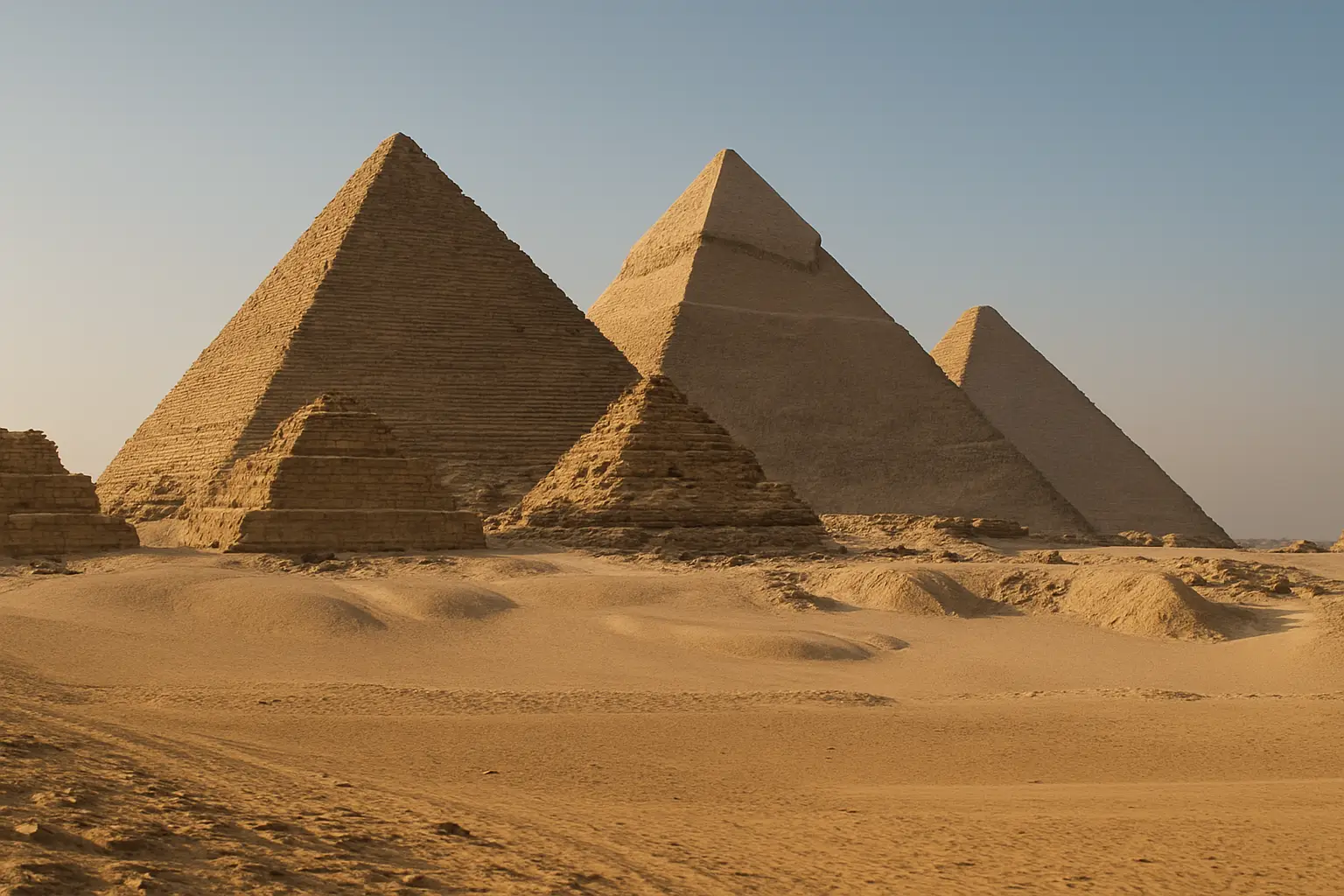
Pyramids of Giza Egypt Travel Guide 2026: Egypt's Iconic Monuments
Ancient EgyptianVisit the Great Pyramid of Khufu, the last surviving Ancient Wonder. Our guide covers all three Giza...
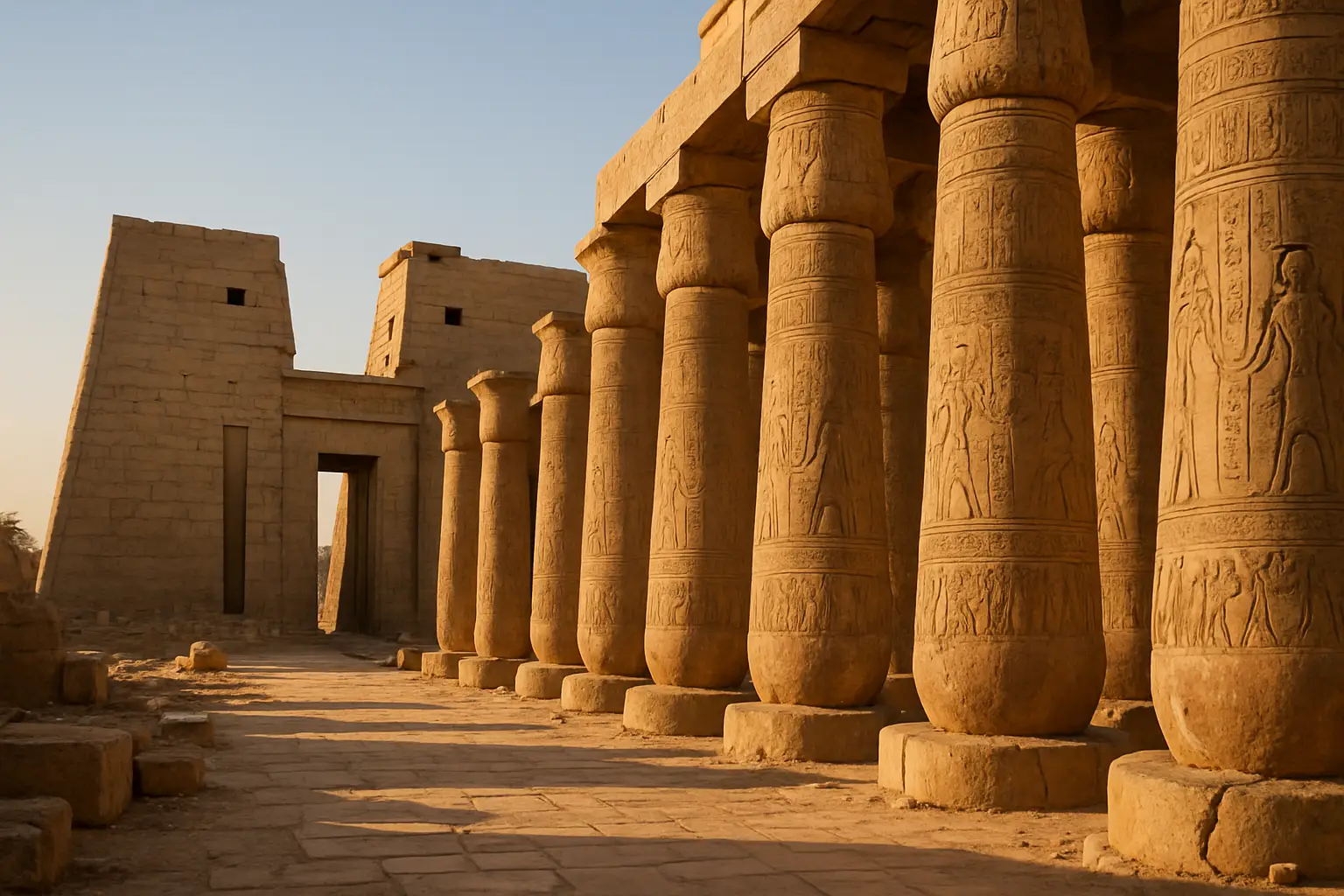
Karnak Temple Complex Egypt Travel Guide 2026: Egypt's Greatest Temple
Ancient EgyptianExplore Karnak, the world's largest ancient religious complex. Discover the Hypostyle Hall, Sacred L...
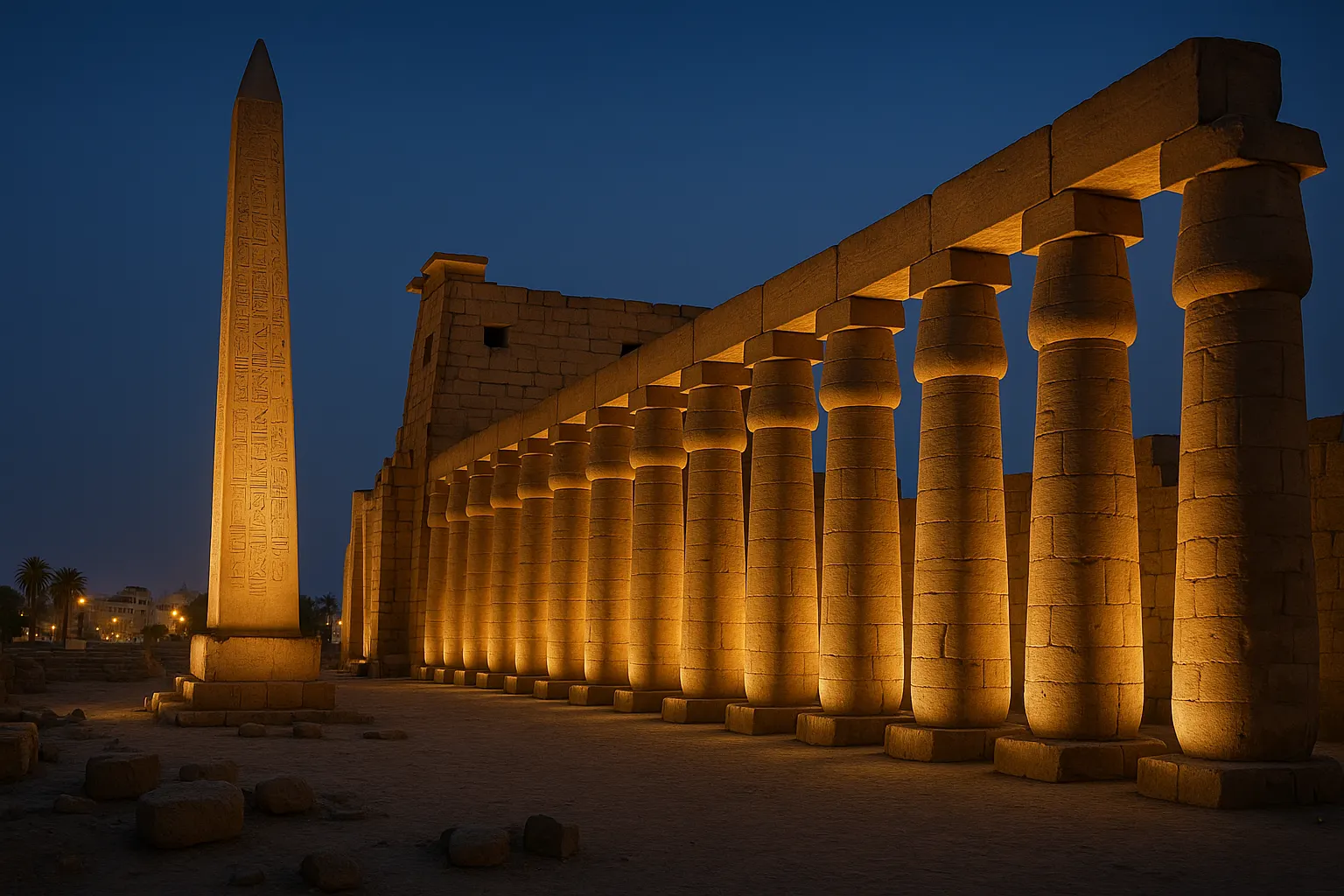
Luxor Temple Egypt Travel Guide 2026: The Elegant Temple of Luxor
Ancient EgyptianVisit Luxor Temple, the most elegant temple in Egypt. Discover the Avenue of Sphinxes, Colonnade of ...