Quick Info
Curated Experiences
Mutianyu Great Wall Day Trip from Beijing
Great Wall Small-Group Tour with Cable Car
Private Great Wall Mutianyu Tour from Beijing
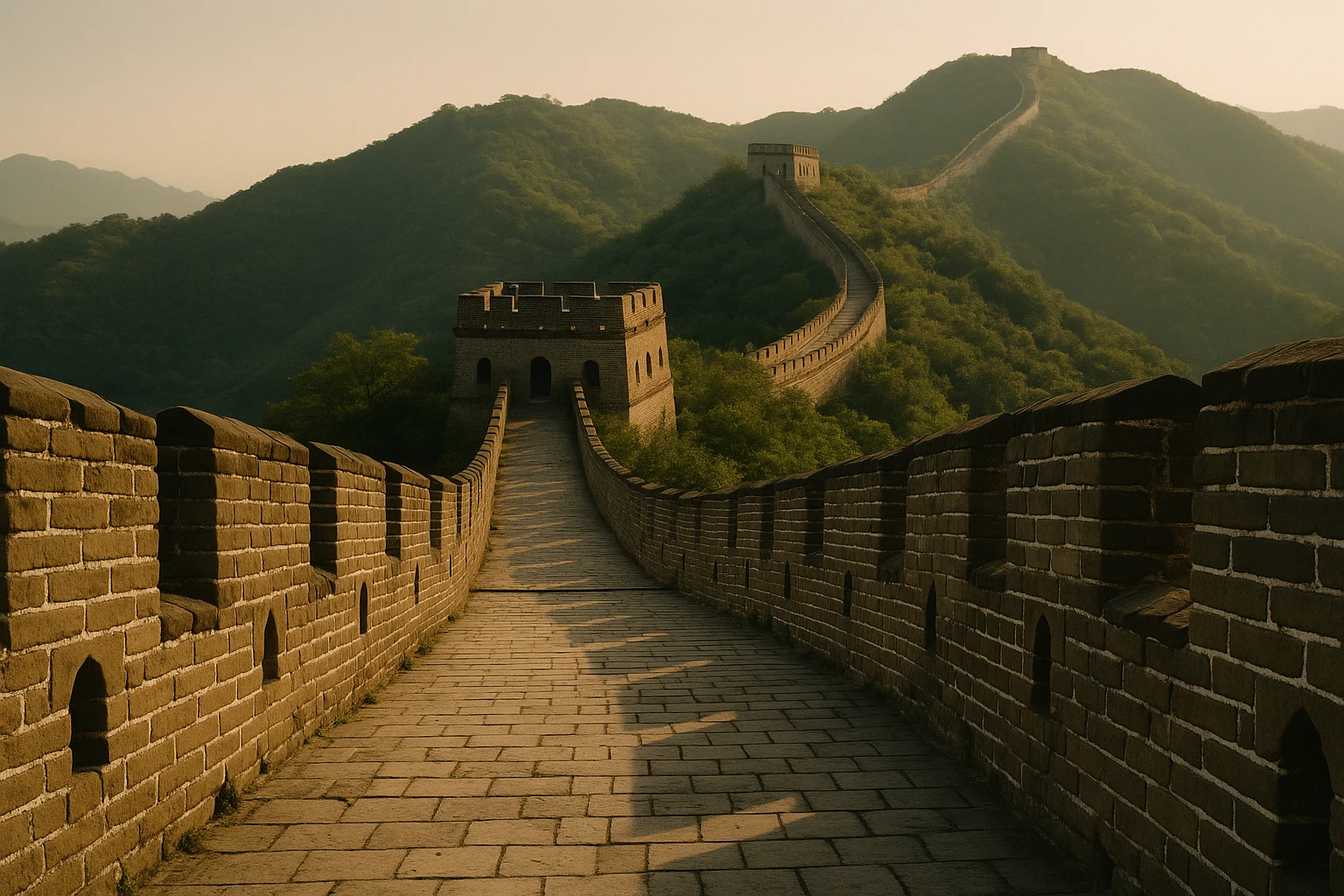
Seventy-three kilometres north of Beijing, where the Yanshan Mountains gather into steep, thickly wooded ridges, the Great Wall of China does something it rarely does elsewhere: it becomes beautiful in the way a landscape painter would demand. The Mutianyu section crests a dramatic spine of rock, its battlements rising and falling over a series of ridgelines dense with oak, pine, and sumac. Twenty-two watchtowers march along 2.25 kilometres of immaculately restored walkway. On a clear autumn morning, with mist hanging in the valleys below and the maples burning orange and red, the sight from Tower Eight can stop a visitor mid-stride, silent, reaching for whatever language makes sense of something this old and this vast.
Mutianyu is the Great Wall at its most accessible and, some would argue, its most honest. Unlike Badaling — the closest section to Beijing and by far the most visited — Mutianyu draws a smaller crowd, sits inside genuine wilderness, and presents a wall that feels like it belongs to the mountain rather than to a theme park. The restoration here was done with unusual care, and it shows. Come expecting engineering on a scale that reshapes how you think about human ambition, and you will not be disappointed.
A Wall Built Across Fifteen Hundred Years
The ridge on which Mutianyu’s wall stands was first fortified in the late Northern Qi Dynasty, around the sixth century CE, when the rulers of a fragmented China were desperately trying to hold back nomadic incursions from the steppes. That early barrier was a simpler affair — earthen ramparts and timber palisades rather than the stone-and-brick monument visible today — but it established the strategic logic that every subsequent dynasty would reuse. The ridge commanded sightlines over multiple valleys and funnelled any attacking force into a predictable chokepoint.
The wall visitors walk today is largely a Ming Dynasty achievement. When the Hongwu Emperor reunified China in 1368 and founded the Ming, one of his first acts was to throw resources at the northern frontier. Over the following century and a half, Ming engineers oversaw the most ambitious construction project in human history: the systematic rebuilding and linking of older walls into a single, coherent defensive system stretching roughly 8,850 kilometres across northern China. The Mutianyu section was reconstructed between 1368 and 1505 under a succession of Ming commanders who transformed the older earthworks into a wide stone-and-brick causeway with hollow watchtowers, crenellated parapets on both sides of the walkway, and sophisticated drainage channels that still function after five hundred years.
A distinctive feature at Mutianyu, rare along the wall as a whole, is the presence of battlements on the inner (southern) face as well as the outer (northern) face. Military historians believe this reflected the paranoia of a late-Ming command structure more worried about internal rebellion than external invasion — an architectural clue to the political anxieties of a dynasty in slow decline. The wall here also sits at an unusually high elevation relative to the valleys around it, which makes the views extraordinary but also made construction logistically punishing. Tens of thousands of soldiers and conscripted labourers carried every cut stone up those slopes.
After the Qing Dynasty replaced the Ming in 1644 and extended Chinese sovereignty well beyond the wall’s northern edge, Mutianyu was effectively abandoned. For three centuries it crumbled quietly under the weight of frost, vegetation, and occasional stone-robbing by local villagers building houses. Serious restoration began only in 1986 and was completed by 1992. The work was guided by the principle of preserving original materials wherever possible and was overseen with an attention to craft that set a benchmark for Great Wall conservation. The result is a section that feels genuinely ancient because, in almost every stone, it is.
What You Will Find at Mutianyu
The main access area sits at the centre of the restored section, and from here the wall climbs steeply in both directions — east toward Tower One and west toward Tower Twenty-Three. Most visitors spend their time between Towers Four and Fourteen, a stretch that offers the grandest views and the most photogenic curves in the wall.
The Watchtowers are the architectural heart of Mutianyu. Mutianyu’s twenty-two towers are among the best-preserved on any section open to visitors. Each tower served multiple functions: a defensive platform from which archers and crossbowmen could rake attacking forces, a barracks for the garrison troops who lived on rotation here, a signal station where beacon fires could be lit to relay messages along the wall within hours, and a storage depot for weapons, fuel, and provisions. Inside, the lower chambers still show the stone sleeping platforms, niched walls, and ventilation shafts the soldiers used. The towers vary in size — some rise two full storeys above the walkway — and each has its own slightly different silhouette against the sky.
The Walkway runs 2.25 kilometres end to end. It is between four and five metres wide, paved with large irregular granite slabs fitted together without mortar in the Ming manner, and edged on both sides by a low inner wall. The paving is uneven in the most satisfying way: worn smooth in the middle by centuries of boots and slick when wet, but never treacherous if you watch your footing. The walkway is steep in places — particularly between Towers Fourteen and Twenty at the western end, where staircase sections climb at gradients approaching forty-five degrees. If you have any difficulty with stairs, the central towers between Six and Fourteen provide a fully accessible experience.
The Cable Car, Chair Lift, and Toboggan are the three mechanical ascents available. The cable car (gondola) lifts visitors from a valley station to Tower Fourteen in about six minutes and is the easiest option for families and anyone with limited mobility. The chair lift, departing from a slightly different valley point, delivers you to Tower Six and offers open-air views of the forested slopes as you rise. The toboggan — a steel channel slide running 1,580 metres down the mountain — is the descent option that most visitors under forty seem to choose, and it is significantly more fun than its modest appearance suggests. Walking up and taking the toboggan down is a popular combination.
The Forest Setting sets Mutianyu apart from all other sections. The mountains here are covered in mixed deciduous woodland — principally oak, chestnut, and sumac — that turns spectacular colours between late September and early November. The trees grow right up to the base of the wall on both sides, and in summer the battlements are framed in deep green. The sense of wildness, of a human structure consumed and then released back into nature over centuries, is everywhere.
Getting to Mutianyu
From Beijing, visitors have several practical options. The most straightforward independent route is tourist Bus 867, which departs from Dongzhimen Transport Hub (a major subway interchange) from April through October. The journey takes approximately ninety minutes each way and drops passengers at the Mutianyu scenic area car park. Buses run several times in the morning and return in the afternoon — check the schedule in advance, as last buses are early.
Year-round, taxis and DiDi (China’s main ride-hailing app) are available from anywhere in Beijing. A direct journey from the city centre costs approximately 200–300 RMB each way depending on traffic and departure point. Traffic on the G101 highway north of the city can be significant on weekends and public holidays; departing before 8 a.m. avoids the worst of it.
Organised tours from Beijing are plentiful and range from large bus excursions to small-group and fully private options. A private car with English-speaking guide and driver, departing after 8 a.m. and returning mid-afternoon, is the most flexible approach for travellers who want control over timing and pace. Most operators in Beijing’s tourist district offer this service at competitive rates, and Viator listings provide vetted options with traveller reviews.
Once at the scenic area, the cable car and chair-lift lower stations are a short walk from the entrance gates. The walkway access points are clearly signposted. Admission fees are charged separately for the scenic area entrance and for each mechanical lift. Budget roughly 200–250 RMB per person for all-inclusive access including cable car up and toboggan down.
When to Visit
Autumn (late September to early November) is the season most photographers and repeat visitors name as definitive. The mixed deciduous forest turns amber, rust, and gold, the air is sharp and clear, and the angled autumn light makes the stone glow. October temperatures are comfortable for walking — typically 10–20°C by day. The first week of October (National Golden Week) is an exception: visitor numbers spike sharply and even Mutianyu feels crowded. Aim for the second or third week of October if possible.
Spring (April and May) offers fresh green hillsides and reliable weather. Cherry and apricot trees in the valleys bloom in early April. May is perhaps the best month for mild temperatures and manageable crowds, with comfortable walking conditions and good visibility.
Summer (June to August) is warm to hot and humid, with temperatures regularly reaching 30°C or above. The forest is lush and the wall photogenic, but afternoon thunderstorms are common. Early-morning visits are strongly recommended in summer.
Winter (December to February) brings cold, sometimes snow, and dramatically reduced crowds. The snow-covered wall against bare dark trees is a genuinely striking image, and the silence of an almost-empty Mutianyu is remarkable. Some facilities are reduced in winter, and ice on the walkway demands care.
Combining Mutianyu With Other Beijing Sites
Mutianyu pairs naturally with the Ming Tombs (Shisanling), the burial complex of thirteen Ming emperors located between Mutianyu and Beijing on the G110 highway. A car-based itinerary can cover the Spirit Way and the fully excavated Dingling tomb in the morning before continuing north to Mutianyu for the afternoon. This combination gives visitors a full Ming Dynasty day and contextualises the wall within the broader achievement of that period.
The Forbidden City and Temple of Heaven, both within Beijing proper, are best saved for separate days. The Forbidden City alone merits a full morning at minimum, and combining it with a ninety-minute drive to Mutianyu in the same day is tiring. Most travellers find two days in Beijing optimal: one for the city-centre sites and one entirely dedicated to Mutianyu.
The Summer Palace, northwest of central Beijing, is closer to the Mutianyu route than most city-centre sites and can be a reasonable half-day addition on the return from the wall if energy permits, though a tired post-wall afternoon visit rarely does the Summer Palace justice.
Why the Great Wall Still Matters
The Great Wall is often described simply as a military fortification, and at a practical level that is accurate. But the wall is also something rarer: a physical index of the anxiety, ambition, and extraordinary administrative capacity of successive Chinese states across fifteen centuries. To walk the Mutianyu section is to move through a place where the relationship between a civilization and its perceived frontier was written in stone at a scale that has no parallel anywhere on earth.
UNESCO inscribed the Great Wall as a World Heritage Site in 1987, recognising it not just as an engineering feat but as a cultural landscape of outstanding universal value. The inscription covers the entire wall system across its historical range, and the committee’s citation notes the wall’s role as a symbol of national identity that has shaped Chinese self-understanding for two millennia. Mutianyu’s particular importance within that larger inscription lies in the quality of its preservation, the integrity of its setting, and its role as one of the few sections where the relationship between wall and landscape remains essentially as the Ming engineers intended.
For a visitor arriving with even a modest grasp of Chinese history, the experience of standing on a Mutianyu watchtower and looking north into the mountains is one of those rare encounters with a past that resists easy summary. The wall does not explain itself. It simply stands there, impossibly large, and waits.
Quick Facts
| Detail | Information |
|---|---|
| Location | Huairou District, Beijing Municipality, China |
| Coordinates | 40.4318° N, 116.5649° E |
| Distance from Beijing | ~73 km northeast of central Beijing |
| Dynasty | Northern Qi (6th century CE); Ming (1368–1644) |
| Section Length | 2.25 km restored walkway |
| Watchtowers | 22 intact towers |
| UNESCO Status | World Heritage Site (1987) — Great Wall of China |
| Opening Hours | 7:30 a.m. – 6:00 p.m. (summer); 8:00 a.m. – 5:00 p.m. (winter) |
| Admission | ~45 RMB entrance; additional fees for cable car, chair lift, toboggan |
| Best Seasons | Late September–November; April–May |
| Nearest City | Beijing (90-min drive) |
| Visitor Facilities | Cable car, chair lift, toboggan, restaurants, restrooms, souvenir shops |
| Accessibility | Moderate; central towers accessible via cable car, handrails throughout |
Explore More
The Great Wall at Mutianyu is part of China’s extraordinary concentration of UNESCO World Heritage Sites. To extend your understanding of imperial China, the Ming Tombs reveal the ceremonial and religious world of the same dynasty that built this section of wall. The Forbidden City in central Beijing places the Ming court in its urban context. For a change of scale and pace, the Summer Palace offers a lakeside landscape garden that represents the imperial ideal of heaven on earth.
Visitors drawn to monumental fortifications built across difficult terrain will find rich comparison in the hilltop citadels of Jordan, the Byzantine walls of Istanbul, and the Inca terracing of the Peruvian Andes — all sites that, like Mutianyu, use topography as a collaborator rather than an obstacle. The Great Wall remains without close parallel, but its ambition echoes across the ancient world in the walls, ramparts, and watchtowers that every major civilization eventually felt compelled to build.
Frequently Asked Questions
Is Mutianyu better than Badaling for visiting the Great Wall?
Mutianyu is widely preferred by independent travellers. It has fewer crowds than Badaling, a longer restored section, spectacular forested mountain scenery, and excellent visitor facilities including a cable car, chair lift, and toboggan slide.
How do I get to Mutianyu from Beijing?
The most convenient option is tourist Bus 867 from Dongzhimen Transport Hub, running April through October. Year-round, taxis, ride-hailing apps (DiDi), and private transfers take roughly 90 minutes from central Beijing. Many tour operators also run daily minibus services.
How long do you need at Mutianyu Great Wall?
Allow at least three to four hours on site. That gives you time for a cable car or chair-lift ascent, a walk of several towers in each direction, and a toboggan descent if desired. A full day allows more leisurely exploration and lunch in the village.
What is the best time of year to visit Mutianyu?
Late September through early November brings vivid autumn foliage draped against ancient stone — the most photographed combination. April and May offer fresh green hillsides and mild temperatures. Avoid National Golden Week (first week of October) when even Mutianyu becomes crowded.
Is the Great Wall at Mutianyu fully restored?
Yes. The 2.25-kilometre Mutianyu section was carefully restored between 1986 and 1992. All 22 watchtowers are intact, the walkway is paved, and handrails are present throughout, making it one of the most accessible sections of the wall.
Can you stay overnight near Mutianyu?
Yes. Several guesthouses and boutique hotels operate in Mutianyu village and the surrounding Huairou countryside. Staying overnight lets you walk the wall at sunrise well before day-trip crowds arrive — one of the most rewarding experiences available at any UNESCO site in China.
Nearby Ancient Sites
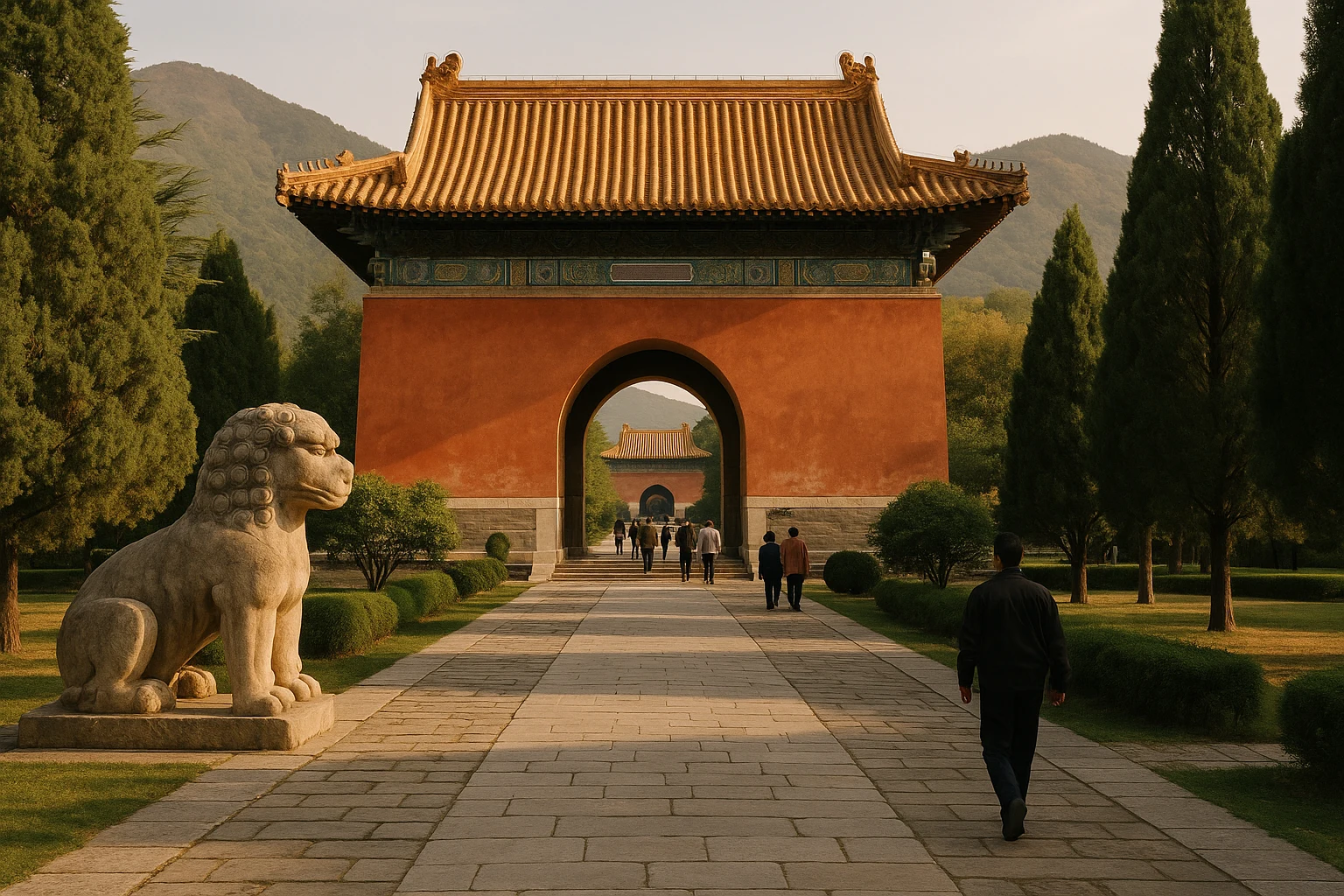
Ming Tombs
Explore the Ming Tombs near Beijing — thirteen imperial mausoleums of China's Ming dynasty, guarded ...
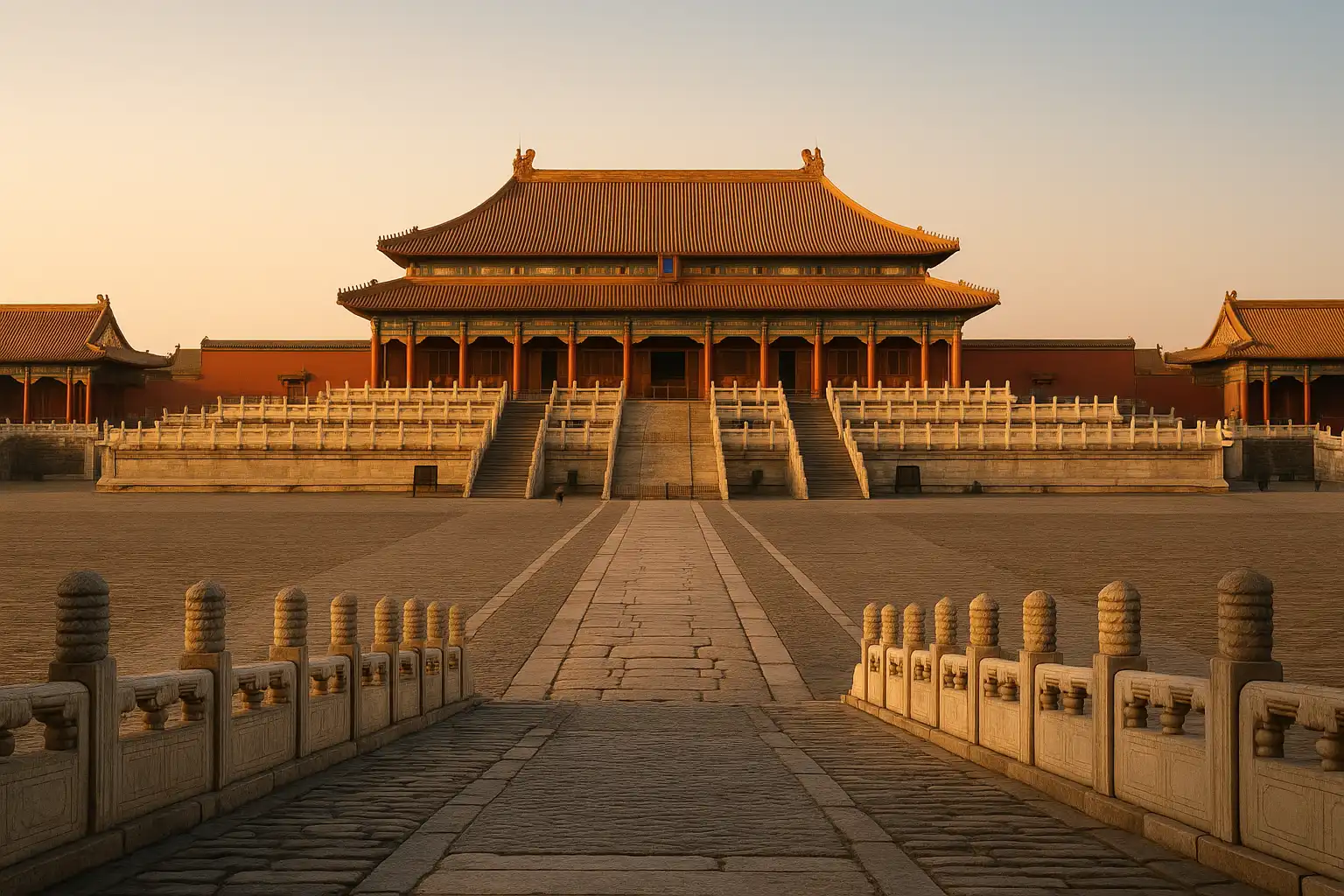
Forbidden City China Travel Guide 2026: Imperial Palace of Beijing
Chinese ImperialExplore the Forbidden City, China's imperial palace for 500 years. Discover the Hall of Supreme Harm...
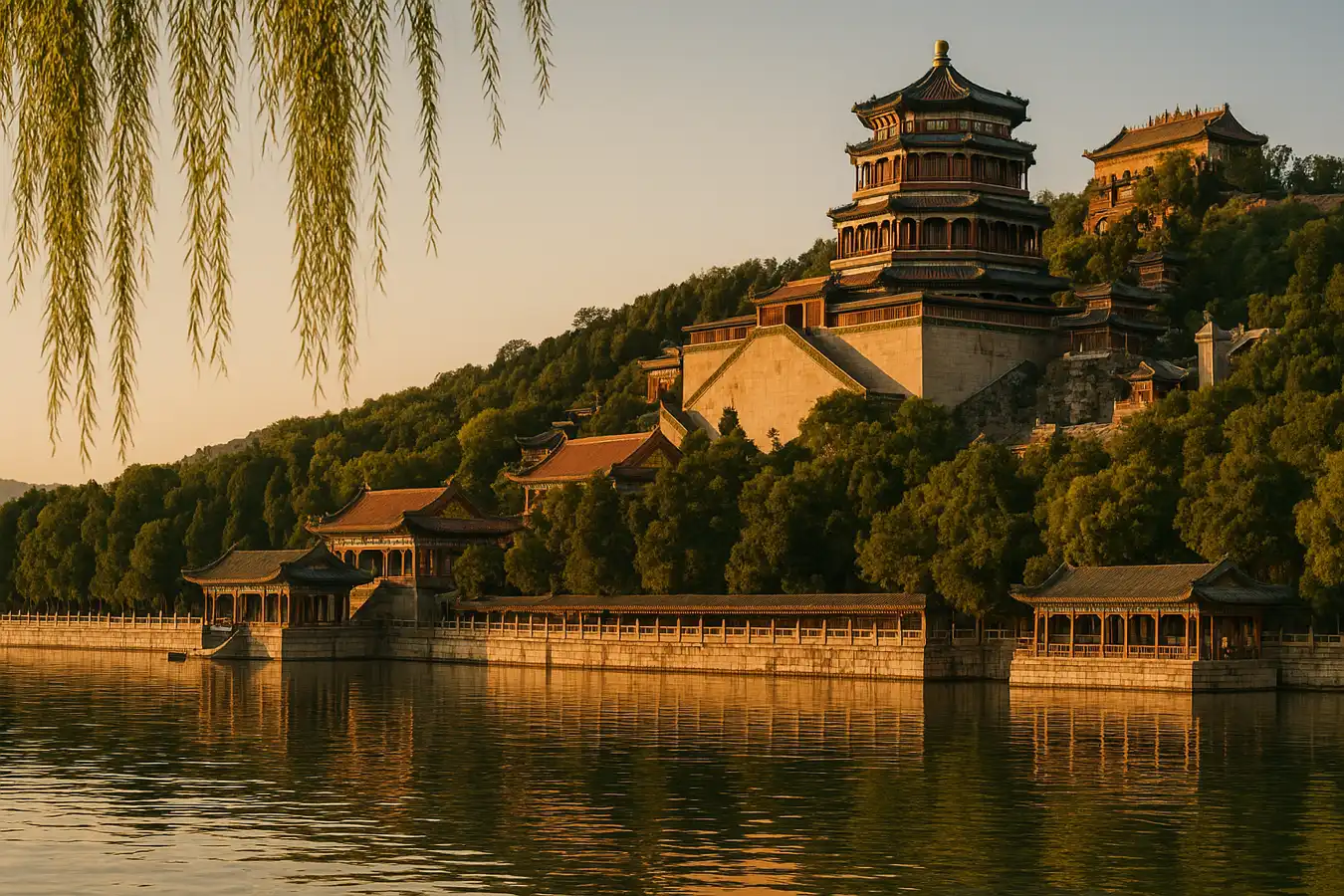
Summer Palace China Travel Guide 2026: Imperial Gardens of Beijing
Chinese ImperialExplore the Summer Palace, China's masterpiece of imperial garden design. Discover Kunming Lake, Lon...
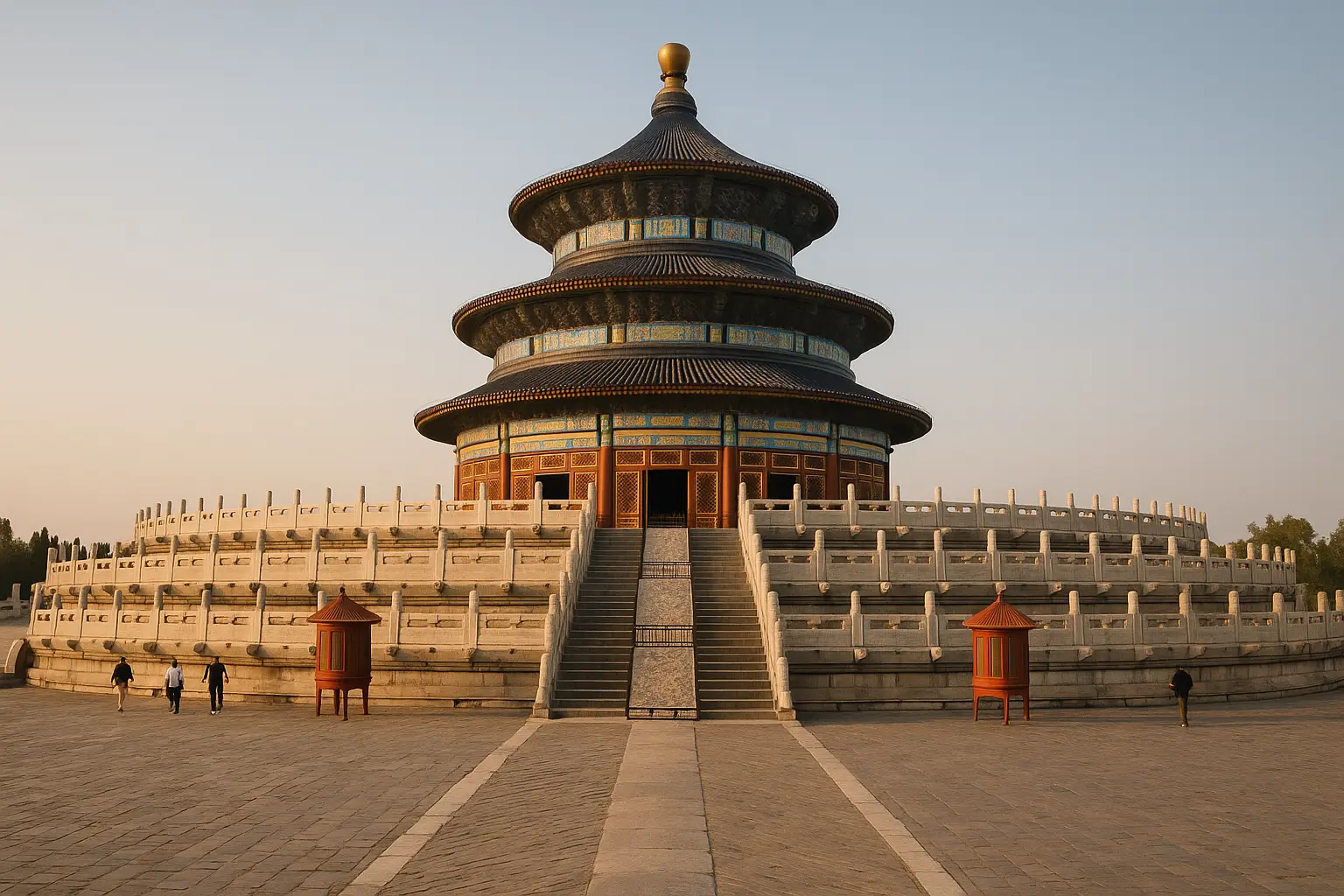
Temple of Heaven China Travel Guide 2026: Where Emperors Prayed
Chinese ImperialVisit the Temple of Heaven where Ming and Qing emperors prayed for good harvests. Explore the Hall o...