Quick Info
Curated Experiences
Himeji Castle and Kokoen Garden Day Trip from Osaka
Himeji Castle Private Walking Tour
Himeji Castle and Mount Shosha Ropeway Tour
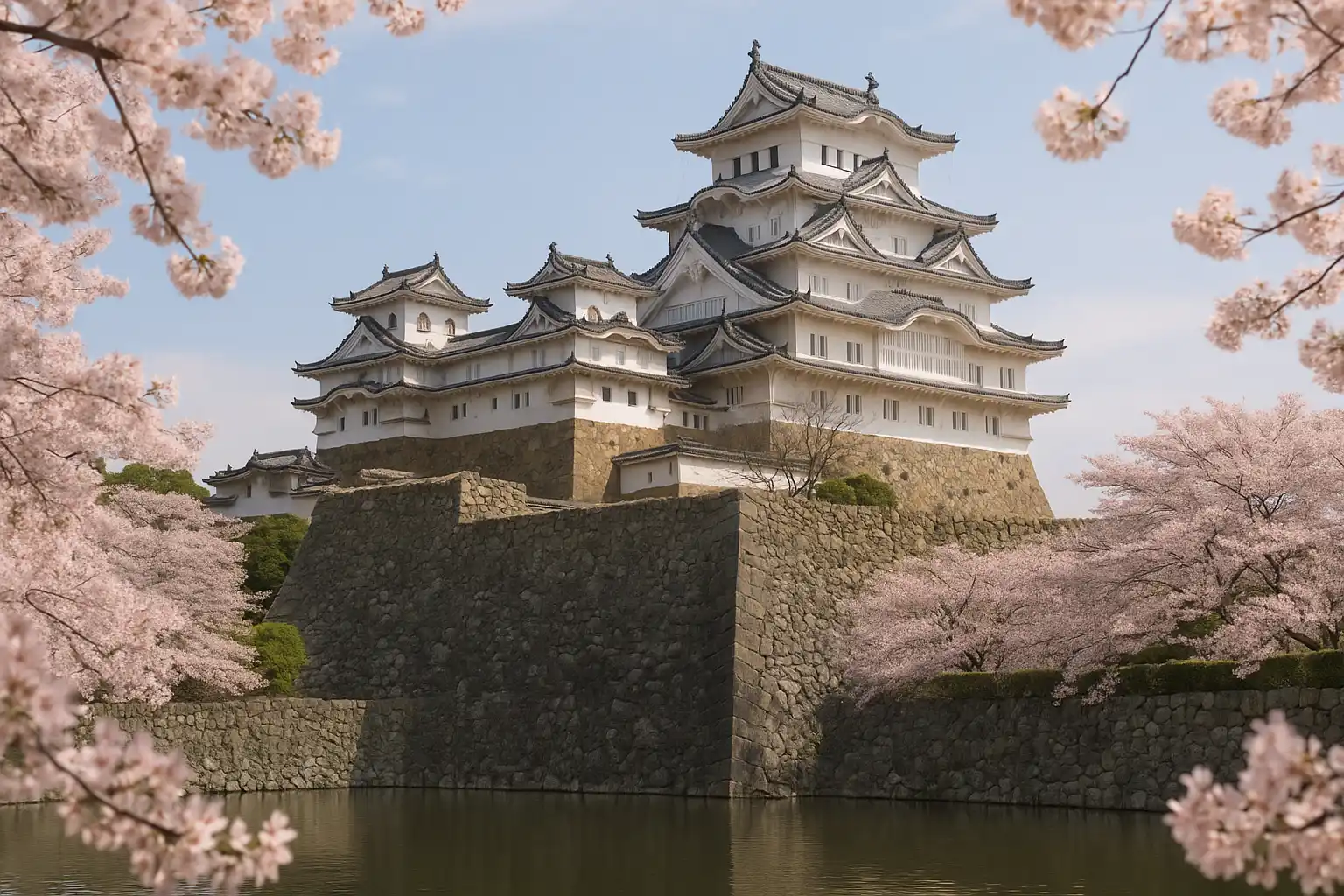
You see it before you understand it. Stepping out of Himeji Station’s north exit, the white keep rises at the end of a straight boulevard like a ship’s prow breaking through fog, its layered rooflines stacked five stories against the sky. Most Japanese castles are concrete reconstructions built in the 1960s. This one is real. The wood, the plaster, the stone foundations, the iron fittings on the gates — all original, all placed here between 1601 and 1609 by thousands of laborers working under a lord who had just helped win the battle that unified Japan.
Himeji Castle is the only feudal-era castle in Japan bearing both UNESCO World Heritage status and its original construction intact. Twelve castles across the country retain their pre-modern keeps, but none approach Himeji in scale, complexity, or visual impact. The brilliant white plaster that earns it the name Shirasagijo — White Heron Castle — covers a defensive system so sophisticated that the castle was never successfully attacked in over four centuries. Walking through its maze of walls and gates, climbing its steep interior stairs, and standing at the top where samurai once watched for approaching armies is the closest thing to time travel that Japanese architecture offers.
The keep sits at the center of an 83-building complex sprawling across an entire hilltop, and the experience rewards a full half-day. Bring the adjacent Kokoen Garden into the itinerary and you have one of the finest single-destination days available in western Japan.
Historical Context
The site’s military history begins in 1333, when the warlord Akamatsu Norimura fortified Himeyama hill to control the approaches to the Harima plain. His son formalized the position with a proper stone castle in 1346. For two centuries the fortress changed hands among competing feudal lords, each recognizing what the terrain made obvious: whoever held this hilltop commanded the corridor between Kyoto and the western provinces.
Toyotomi Hideyoshi, ascending toward unification of Japan, chose Himeji as a base in 1580 and built a three-story keep. The investment signaled that Himeji had graduated from regional stronghold to a castle worthy of national ambitions. But the castle visitors see today is almost entirely the work of Ikeda Terumasa, who received the domain as a reward for loyalty after the Battle of Sekigahara in 1600. Between 1601 and 1609, Terumasa transformed Himeji into the sprawling complex that survives, adding the main keep, three subsidiary keeps, and the labyrinthine network of walls, gates, and moats that turned the entire hillside into a defensive instrument. Honda Tadamasa extended the west bailey between 1617 and 1631, completing the footprint.
The castle’s survival across four centuries is itself a story worth knowing. When the Meiji government dismantled feudal institutions in the 1870s, Himeji was saved from demolition only by the intervention of an army colonel who argued for its preservation. Allied bombing raids in 1945 reduced the surrounding city to rubble, but incendiary bombs reportedly failed to ignite near the keep. UNESCO inscribed the castle in 1993 as Japan’s first World Heritage castle. A five-year restoration from 2010 to 2015 returned the plaster to its original brilliant white, startling visitors who had known only the faded grey version.
The castle’s four centuries of continuous structural integrity make it the single most authoritative example of Japanese feudal military architecture. Nothing else in the country — not Matsumoto, not Matsue, not Hikone — approaches Himeji’s combination of scale, originality, and preservation.
What to See
The Main Keep (Tenshu)
The main keep rises 46.4 meters from its stone foundation to the roof ridge, presenting five exterior stories while concealing six interior floors — a deliberate deception meant to mislead attackers about the number of fighting platforms inside. The structure is built entirely of post-and-beam timber, sheathed in the white plaster that defines the castle’s character. This coating is functional engineering, not decoration: multiple layers of fire-resistant plaster cover every exposed surface including window shutters, creating a fireproofing system that proved its worth across centuries of conflict.
Inside, visitors remove shoes at the entrance and climb progressively steeper wooden stairs through six floors of displayed weapons, armor, and construction models. The stairs grow deliberately more vertical with each floor, a defensive feature designed to slow invaders and force them into vulnerable postures. The top floor opens onto 360-degree panoramic views of the city, the Harima plain, and on clear days the Inland Sea. A small shrine to the castle’s protective deity occupies one corner, maintained continuously since the 1600s. Allow 45 minutes to an hour for the interior. Carry your shoes in the bags provided and wear socks — the wooden floors are cold in winter and rough on bare feet.
The Defensive Maze
Himeji’s genius lies in the integrated system of walls, gates, and passages that transforms the entire hillside into a trap. The approach from the main gate winds through a deliberately confusing sequence of right-angle turns and dead ends designed to disorient attackers and expose their right sides — the sword hand — to defenders above. Three concentric moats force approaching armies along specific routes where they can be engaged from multiple angles simultaneously. Stone walls built using the fan-sloping technique (ogi-kobai) curve outward at the base, making scaling nearly impossible.
Throughout the walls, rows of sama — loopholes cut in specific geometric shapes — allowed defenders to drop stones, pour boiling water, or fire arrows onto anyone below. The system incorporates 21 gates, each positioned to funnel attackers into killzones, along with hidden passages for counterattacks. Plan to walk at least the main approach route, which takes 20 to 30 minutes and reveals the defensive logic more clearly than any diagram.
Kokoen Garden
Adjacent to the western moat, Kokoen comprises nine separate traditional Japanese gardens occupying the former samurai residential quarters. Opened in 1992, each garden represents a distinct style: pine gardens, bamboo gardens, a tea ceremony garden with a functioning tea house serving matcha and sweets for 500 JPY, and a central pond garden that frames the castle keep in classic compositions. The combined castle and garden ticket at 1,040 JPY is the recommended purchase. Kokoen is at its finest in autumn when the maples turn against grey stone walls, but it earns its visit in any season.
The Subsidiary Keeps and Connecting Corridors
Three smaller keeps — the West Keep (Nishi-kotenshu), the Inui Keep to the northwest, and the Bizen Keep to the west — connect to the main tower via covered corridors, creating interlocking fields of defense. The corridors are open to visitors and offer views of the main keep from angles unavailable elsewhere on the grounds. The West Keep in particular rewards a visit for its quieter atmosphere and its perspective on the main keep’s western face, which catches afternoon light beautifully.
Timing and Seasons
Cherry blossom season from late March through early April is Himeji’s most famous window. Over 1,000 cherry trees fill the grounds, and the combination of pale pink blossoms against brilliant white walls is one of the most reproduced images in Japanese travel photography. Nishinomaru Garden charges a special admission during peak bloom for its classic viewing position. Temperatures during cherry season average 50 to 65°F (10 to 18°C), comfortable for extended walking.
Spring from April through May brings azaleas and fresh greenery. Summer turns hot and humid, with temperatures reaching 90°F (32°C) or higher — the castle remains striking, but climbing six wooden floors becomes sweaty, and crowds thin noticeably. Autumn from October through November is the second-best season: Kokoen’s maples peak in vivid red and gold, temperatures settle to a comfortable 50 to 68°F (10 to 20°C), and afternoon light falls warmly on the castle’s western face. Winter brings the fewest visitors and the clearest air at 35 to 50°F (2 to 10°C); occasional snowfall creates extraordinary white-on-white scenes, though the top floor can be bitterly cold.
Whatever the season, arrive at the 9:00 AM opening. Tour buses begin arriving around 9:30 AM, and by 11:00 AM the keep interior becomes congested. Weekday mornings are substantially calmer than weekends. Late afternoon, from 3:00 to 4:00 PM, offers a second window of thinner crowds with warm western light on the castle walls.
Tickets, Logistics and Getting There
Adult admission to the castle is 1,000 JPY (approximately $7 USD). High school students and younger pay 300 JPY; young children enter free. The combined castle and Kokoen Garden ticket costs 1,040 JPY — effectively adding the garden for 40 JPY. Kokoen alone is 310 JPY. The castle opens at 9:00 AM daily, closing at 5:00 PM (last entry 4:00 PM) from September through March, and at 6:00 PM (last entry 5:00 PM) from April through August. Closed December 29 and 30.
Himeji Station sits on the JR Tokaido/Sanyo Shinkansen line. From Osaka, the Hikari or Kodama shinkansen reaches Himeji in 30 minutes for 1,500 to 3,000 JPY; the JR Special Rapid train takes about an hour at lower cost and is covered by the JR Pass. From Kyoto, the shinkansen runs 45 minutes for 2,000 to 4,000 JPY. From Tokyo, the Nozomi shinkansen covers the journey in roughly three hours for around 15,000 JPY. From the station’s north exit, the castle is visible at the end of a straight boulevard. The walk takes 15 to 20 minutes through pleasant shops. Shinki Bus runs the same route for 100 JPY; taxis take five minutes and cost 700 to 800 JPY. Day tours from Osaka ($85 to $120) include transport and a guide who explains the defensive logic of the layout.
Practical Tips
- Wear shoes that slip on and off easily. You remove them at the keep entrance and carry them in provided bags. Socks are strongly recommended for the wooden floors.
- The top floor is exposed to wind regardless of season. Bring a layer even in summer.
- Water is available outside the keep but not inside. Carry a bottle.
- The steepest stairs approach near-vertical angles. Descending backward on these sections is both wise and common. Visitors with knee problems should consider whether six floors of steep stairs are manageable.
- There is no elevator in the keep. A virtual reality experience showing the interior is available for visitors unable to climb.
- The castle grounds are wheelchair accessible; the keep is not.
- Restaurants and convenience stores line the boulevard between the station and the castle. The Miyuki-dori shopping street is worth a stop for lunch — try the local specialty, Himeji oden (a simmered stew with ginger soy broth).
Suggested Itinerary
9:00 AM — Arrive at the castle gates at opening. Head directly to the main keep to climb the interior before crowds build. Allow 45 to 60 minutes inside.
10:00 AM — Descend and walk the defensive maze route, tracing the approach that attackers would have faced. Spend 30 minutes reading the walls, gates, and loopholes.
10:30 AM — Explore the subsidiary keeps and connecting corridors. The West Keep offers the quietest atmosphere and strong views of the main tower. Allow 20 to 30 minutes.
11:00 AM — Walk to Kokoen Garden through the western gate. Take your time through all nine gardens, stopping at the tea house for matcha and wagashi. Allow 60 to 75 minutes.
12:15 PM — Return to the castle grounds for photos. Midday light is less forgiving, but the grounds are worth a second pass from different angles.
12:45 PM — Walk back along the boulevard toward the station for lunch. Total visit time: approximately 4 hours.
Nearby Sites
Itsukushima Shrine — The floating torii gate on Miyajima Island is roughly 90 minutes west by shinkansen to Hiroshima plus a train and ferry connection. Combining Himeji and Miyajima makes a strong two-day western Japan itinerary.
Kinkakuji Temple — Kyoto’s Golden Pavilion is 45 minutes east by shinkansen. Himeji works well as a day trip from a Kyoto base.
Kiyomizudera Temple — Kyoto’s wooden-stage temple pairs naturally with Kinkakuji on a Kyoto day, bookending a Himeji visit the following morning.
Mount Shosha (Engyoji Temple) — A mountain temple complex 30 minutes north of the castle by bus and ropeway. The forested trails and austere wooden halls provided the filming location for The Last Samurai. The combined Himeji Castle and Mount Shosha itinerary fills a satisfying full day.
The Castle That Outlasted Everything
Himeji Castle has survived siege, earthquake, firebombing, demolition orders, and the slow erosion of four centuries. It has outlasted the feudal system that built it, the wars that should have destroyed it, and the modernization campaigns that leveled hundreds of castles across Japan. Standing on the top floor in the early morning, with the city spread below and the Inland Sea glinting in the distance, you are occupying the exact vantage point that samurai used to scan for approaching armies. The wood under your feet is the same wood they stood on. The view has changed; the floor has not. That continuity — physical, tangible, inarguable — is what makes Himeji the single essential castle visit in Japan.
Discover More Ancient Wonders
- Itsukushima Shrine — The floating torii gate on Miyajima Island, a sacred Shinto site in the Inland Sea
- Kinkakuji Temple — Kyoto’s Golden Pavilion reflected in Mirror Pond
- Kiyomizudera Temple — The wooden stage temple overlooking Kyoto from the eastern hills
- Explore our beginner’s guide to visiting ancient sites for trip planning fundamentals
- See our guide to photographing ruins for tips on capturing castle architecture
Quick Facts
| Attribute | Details |
|---|---|
| Location | Himeji, Hyogo Prefecture, Japan |
| Country | Japan |
| Region | Hyogo |
| Civilization | Japanese Feudal |
| Historical Period | 1333–1609 CE |
| Established | 1333 CE |
| Nickname | Shirasagijo (White Heron Castle) |
| UNESCO Status | World Heritage Site (1993) |
| Original Construction | 1601–1609 CE (current form) |
| Entry Fee | 1,000 JPY adults (~$7 USD); 300 JPY students |
| Hours | 9:00 AM–5:00 PM (to 6:00 PM Apr–Aug) |
| Best Time | Late March–early April (cherry blossoms); October–November |
| Distance from Osaka | 50 km; 30 min by shinkansen |
| Distance from Kyoto | 80 km; 45 min by shinkansen |
| Suggested Stay | Half day (2–3 hours castle + 1 hour garden) |
| Coordinates | 34.8394, 134.6939 |
Frequently Asked Questions
How do I get to Himeji Castle from Osaka or Kyoto?
Take the JR Tokaido/Sanyo Shinkansen to Himeji Station (30 minutes from Osaka, 45 minutes from Kyoto). The castle is a 15-minute walk or 5-minute bus ride from the station. Local JR trains also serve Himeji (1 hour from Osaka). The castle is impossible to miss—it's visible from the station and dominates the skyline. Organized day trips ($85-120) include transport and guide.
Can you go inside Himeji Castle?
Yes, the main keep (tenshu) is open to visitors. You climb six floors via steep wooden stairs (shoes off required). Each floor displays weapons, armor, and exhibits on castle construction. The top floor offers panoramic views of Himeji city and the Inland Sea. The climb is steep and requires moderate mobility—there's no elevator. The experience is authentic and highly recommended.
Why is Himeji Castle called the White Heron Castle?
The castle's white-plastered walls and elegant, curved rooflines resemble a white heron (shirasagi) in flight. The bright white color comes from the traditional plaster coating that protects the wooden structure and serves fireproofing. Unlike most Japanese castles that are concrete reconstructions, Himeji is original 17th-century construction, retaining its authentic appearance through 400 years of war, earthquake, and neglect.
How much time do I need at Himeji Castle?
Plan 2-3 hours for the castle itself including the keep interior, grounds, and defensive walls. Add 1 hour for the adjacent Kokoen Garden (worthwhile). A half-day (4-5 hours total) allows a relaxed visit. Many visitors combine Himeji with other destinations like Kobe or Okayama for a full day. Serious castle enthusiasts might spend a full day exploring all details and nearby attractions like Mount Shosha.
When is the best time to visit Himeji Castle?
Cherry blossom season (late March–early April) is magical—the castle surrounded by 1,000+ cherry trees is iconic. Autumn (November) offers beautiful fall foliage. Spring (April–May) and autumn (October–November) provide pleasant weather. Summer is hot and humid; winter can be cold but offers clear views. The castle is stunning year-round due to its white walls. Arrive at 9 AM opening to avoid crowds.
Is Himeji Castle wheelchair accessible?
The castle grounds and outer areas are accessible, but the main keep is not wheelchair accessible. The climb requires navigating steep wooden stairs (nearly vertical in sections) with no elevator alternative. Visitors with mobility limitations can enjoy the exterior, grounds, and adjacent Kokoen Garden. There's a virtual reality experience showing the interior for those unable to climb. Contact the castle in advance for specific accessibility information.
Nearby Ancient Sites
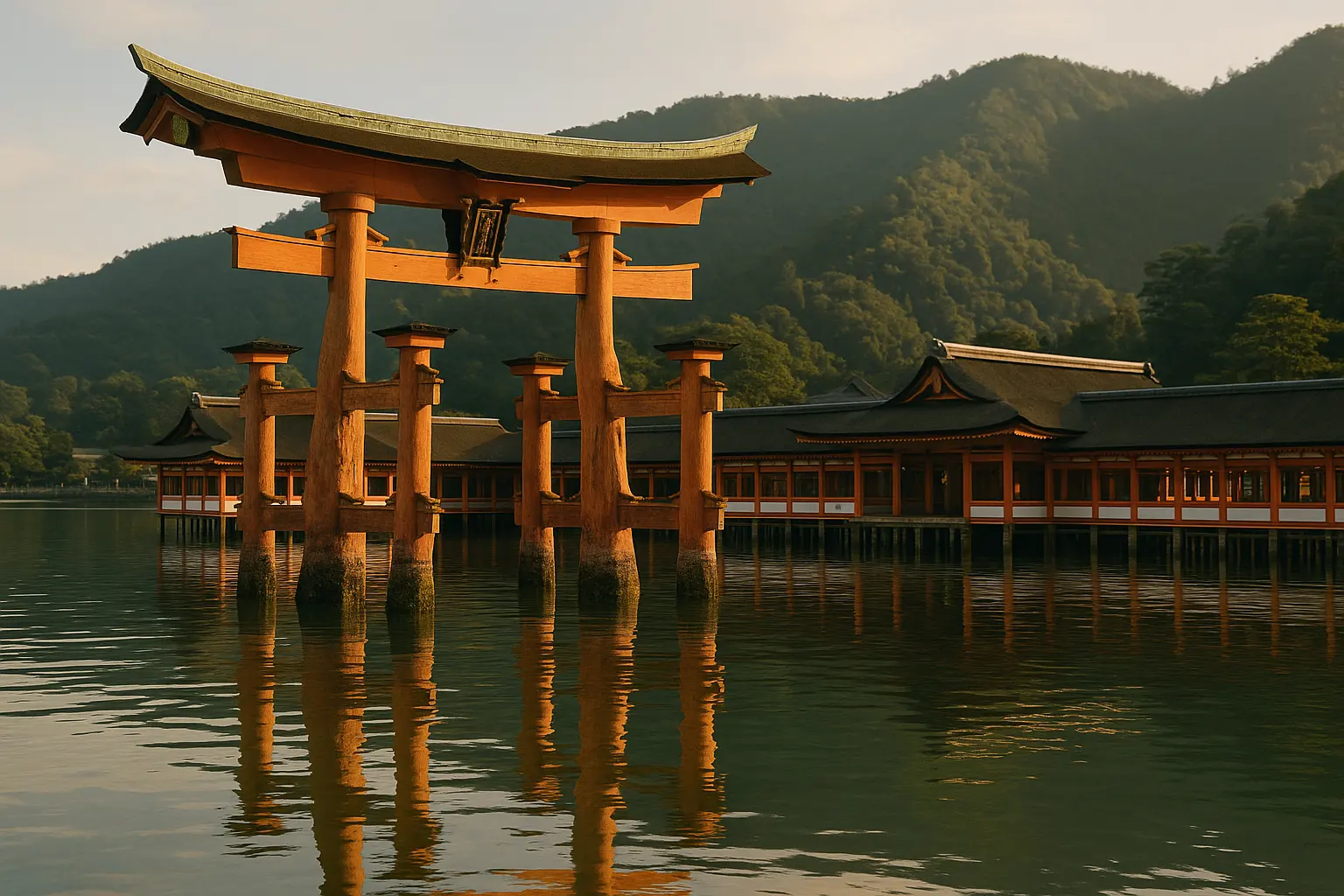
Itsukushima Shrine Japan Travel Guide 2026: The Floating Torii Gate
Japanese ShintoVisit Itsukushima Shrine on Miyajima Island, famous for its floating torii gate. Discover the shrine...
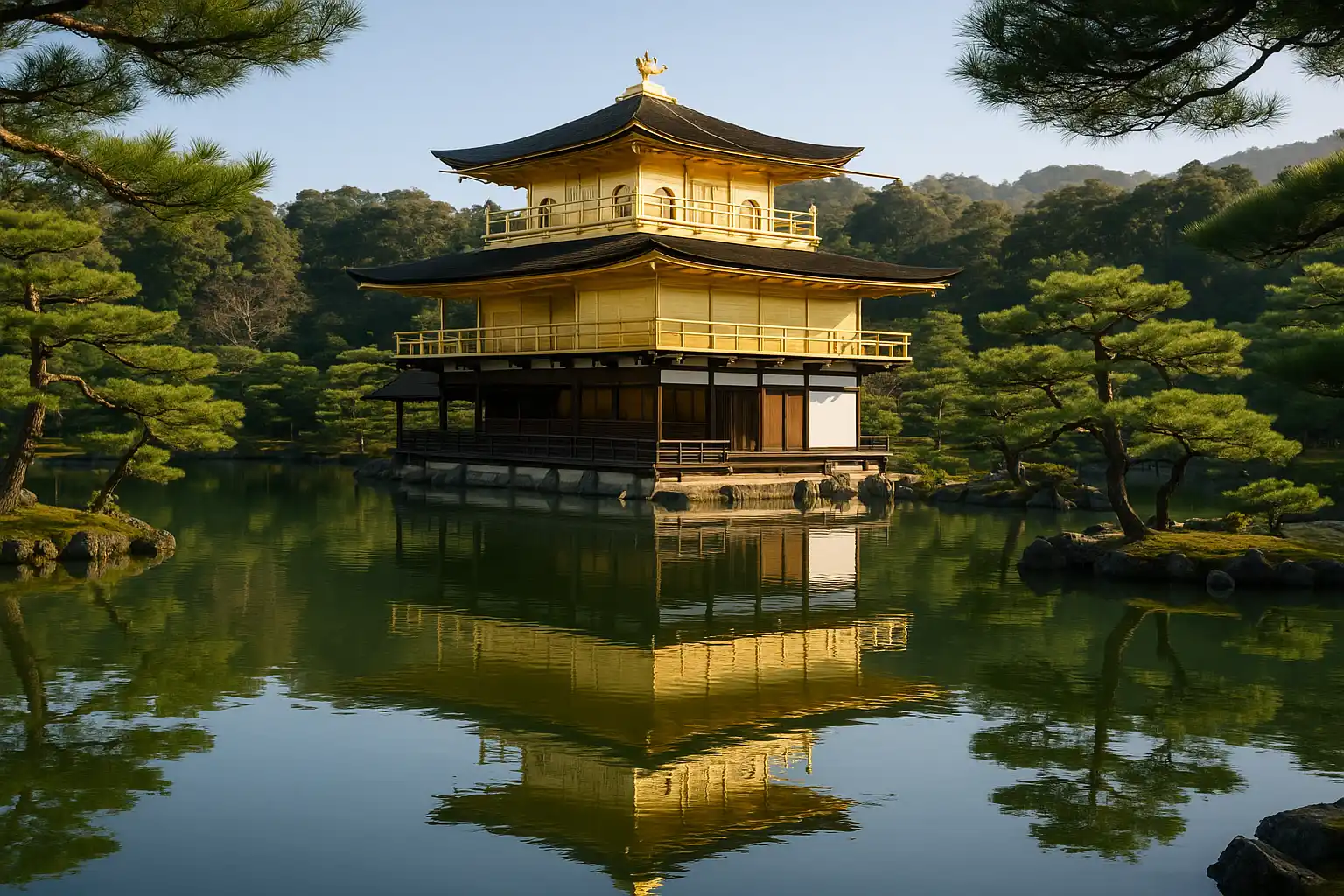
Kinkakuji Temple Japan Travel Guide 2026: Kyoto's Golden Pavilion
Japanese Zen BuddhistVisit Kinkakuji, the Golden Pavilion, Kyoto's most iconic Zen temple. Discover the gold-leaf covered...
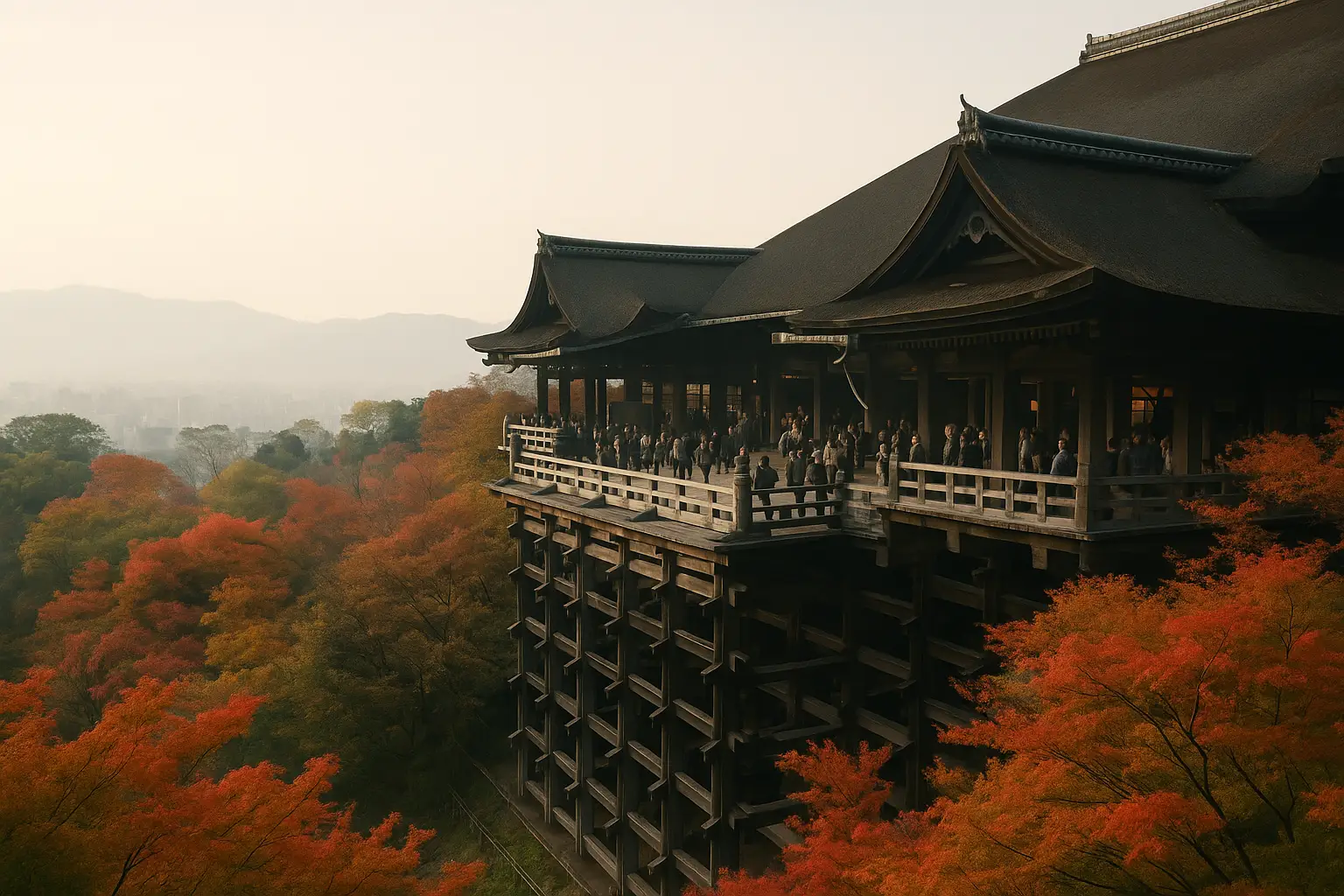
Kiyomizudera Temple Japan Travel Guide 2026: Kyoto's Wooden Stage
Japanese Buddhist (Kita-Hosso)Visit Kiyomizudera, the Pure Water Temple with its famous wooden stage overlooking Kyoto. Explore th...