Quick Info
Curated Experiences
Miyajima Island Full-Day Tour from Hiroshima
Hiroshima and Miyajima Island Day Tour
Miyajima Island Private Photography Tour
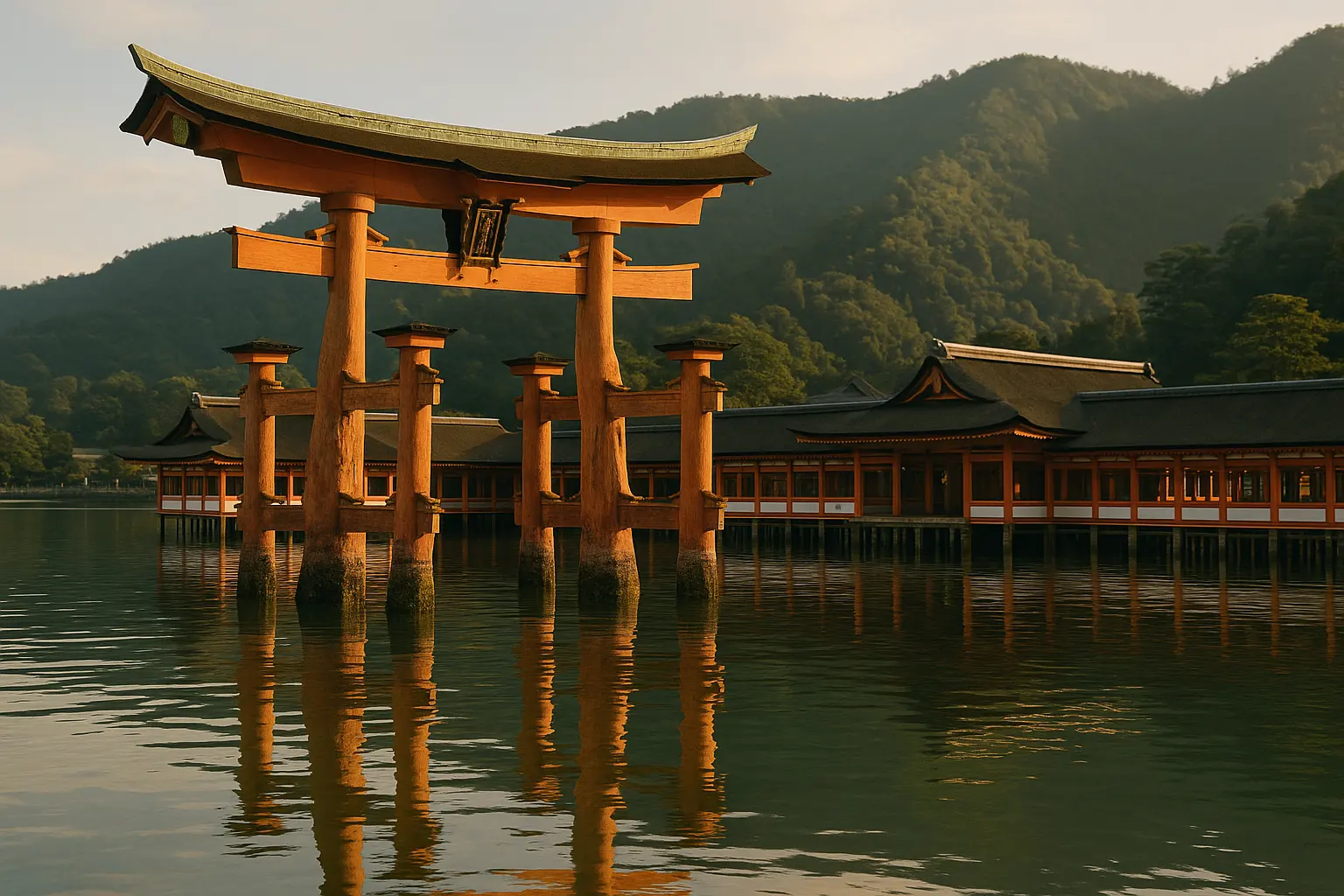
The torii gate stands 200 meters offshore in the tidal shallows, 16 meters of vermilion camphor wood rising from water that swallows and releases its base twice each day. At high tide it floats — or appears to, its twin pillars reflected in the incoming sea as if the gate exists simultaneously above and below the surface. At low tide the water retreats, the mud flats appear, and visitors walk out to stand at its base, touching wood worn smooth by salt air and the hands of fourteen centuries of pilgrims. Both versions are worth seeing. The floating gate is the famous image; the exposed gate offers a different kind of intimacy, the chance to understand this as a physical object, massive and carefully made, placed in the sea by human hands.
Itsukushima Shrine on Miyajima Island has been a place of Shinto worship since at least 593 CE, and the current shrine complex — buildings raised on wooden piers above the tidal flats, connected by vermilion galleries that appear to hover over the incoming sea — dates to the 12th century. The island itself was considered too sacred for ordinary human birth or death; the shrine was built above the water because the ground was too holy to support construction. That theological conviction produced one of the most poetic confluences of architecture and nature in the world: a shrine that breathes with the tides, transforming its character every six hours, rewarding visitors who understand that sacred places are not static monuments but living systems responding to forces far older than anything built to honor them.
The experience extends well beyond the shrine. Miyajima Island offers a 535-meter mountain summit with views across the Inland Sea, a Buddhist temple complex of genuine beauty, a shopping street with exceptional local food, and approximately 1,000 sacred deer who roam the grounds with the confidence of animals who have never been hunted. A half day is the minimum; a full day or overnight stay reveals the island that day-trippers never see.
Historical Context
The founding of Itsukushima Shrine is traditionally dated to 593 CE, when Saeki Kuramoto established a place of worship to honor the three daughters of Susanoo, the Shinto god of storms. The island had likely been considered sacred long before that — its dramatic silhouette rising from the inland sea, its ancient forests of camphor and cedar, its undisturbed wildlife all suggest a landscape that compelled reverence before any shrine existed to formalize it.
The transformation into one of Japan’s most magnificent religious complexes came in 1168 CE, when Taira no Kiyomori, the most powerful warlord of his era and effective ruler of Japan, rebuilt and expanded the shrine in the spectacular form that survives today. Kiyomori’s patronage was both pious and strategic: Itsukushima was the tutelary shrine of the Taira clan, and his investment in its grandeur demonstrated devotion to the kami while asserting temporal authority. The aesthetic choices he imposed — vermilion lacquer, buildings extended over water, the great torii planted in the tidal shallows — created an architectural language of sacred spectacle that has proved enduringly powerful.
The shrine’s importance only deepened after the Taira clan’s defeat in the Genpei War. Successive rulers across six centuries — Kamakura shoguns, Sengoku warlords, Edo merchants — all found reasons to visit, donate, and seek favor from the island’s deities. The shrine accumulated stone lanterns, swords, Noh masks, and ritual vessels across the centuries, building an archive of devotion that now fills the Treasure Hall. UNESCO designated Itsukushima Shrine a World Heritage Site in 1996, recognizing it as a “holy place representative of Japan.”
What to See
The Great Torii Gate
The current gate, built in 1875, is the ninth reconstruction of a structure that has occupied this position since at least the 12th century. Constructed from camphor wood, it rises 16 meters (52 feet) above the tidal flats and weighs approximately 60 tons. The vermilion pigment is not paint but a natural mineral believed to ward off evil, chosen to harmonize with the shrine buildings visible behind it. The gate’s placement in water rather than on land extends the torii’s traditional function — marking the boundary between secular and sacred — to the sea itself: the entire cove becomes sacred space, the incoming tide a twice-daily ritual of purification. Both high tide (gate floating above its reflection) and low tide (walking out to the base to feel the weathered wood) reward a visit. Time your day to experience both if possible.
The Shrine Complex
The buildings extend across the tidal flats on wooden piers, allowing the sea to flow freely beneath them. At high tide the shrine appears to float, with verandas over water and waves audible beneath the floorboards. The complex follows the standard Shinto sequence: Haraiden (Purification Hall), Haiden (Offering Hall), and Honden (innermost sanctuary housing the kami). Construction is primarily unpainted hinoki cypress, its natural warmth providing counterpoint to the vermilion galleries and railings. The shrine’s Noh stage, among the oldest in Japan, sits over the water on its own pier system. Noh performed here during high tide — with the sea visible through the stage boards and the torii floating in the background — is one of the most extraordinary theatrical experiences available anywhere. Performance schedules are irregular; check with the shrine office.
Mount Misen
Rising to 535 meters at the island’s southern end, Mount Misen provides the panoramic counterpart to the shrine’s intimate, water-level experience. On clear days the view extends across hundreds of islands in the Seto Inland Sea, with Hiroshima visible in the distance and the mountains of Shikoku emerging from the haze. The summit has been sacred since at least the 9th century, when the monk Kobo Daishi is said to have conducted 100 days of austere practice here. A flame he lit during those austerities is claimed to have burned continuously for over 1,200 years at the Reikado Hall near the summit. Three hiking trails ascend through ancient forest: the Momijidani Course (1.5 hours), the Daisho-in Course (2 hours), and the Omoto Course (2 hours). A two-stage ropeway runs from town to Shishiiwa Station (1,800 JPY roundtrip, 1,000 JPY one-way), from which a 30-minute walk leads to the actual summit.
Daisho-in Temple and the Deer
Daisho-in Temple, founded by Kobo Daishi in 806 CE, occupies forested slopes below Mount Misen and provides an illuminating Buddhist counterpoint to the Shinto shrine. Its gardens hold 500 rakan (disciple) statues, each carved with a distinct expression. Prayer wheels along the approach accumulate merit as you turn them. Entry is free. The approximately 1,000 sika deer who roam Miyajima are considered sacred messengers of the gods and wander through town, shrine grounds, and mountain trails with complete equanimity. They will approach — too closely, if you carry food or paper maps. Feeding is officially prohibited. They are, despite appearances, wild animals.
Timing and Seasons
Tides matter more than season at Itsukushima. Tide times shift approximately 50 minutes later each day, so check tide tables before your visit. The classic floating-gate photograph requires water surrounding the torii’s base, which occurs within roughly two hours of high tide. Low tide allows walking out to the gate. A morning high tide followed by a low-tide walk, or the reverse, makes the most satisfying sequence. The shrine is illuminated from sunset until 11:00 PM, and a high evening tide transforms the complex into something otherworldly.
Spring from late March through May brings cherry blossoms and mild temperatures of 55 to 70°F (13 to 21°C). Autumn from September through November offers the maple color of Momijidani Valley — peak color in late November is spectacular — with temperatures of 50 to 72°F (10 to 22°C). Summer is hot and humid at 80 to 90°F (27 to 32°C) but sea breezes provide some relief. Winter offers the clearest visibility and fewest crowds at 40 to 52°F (4 to 11°C), though it can be cold and windy.
The shrine opens at 6:30 AM, and early mornings before day-trip crowds arrive from Hiroshima offer the quality of quiet that this place deserves. Sunrise on the island, accessible only to overnight guests, is extraordinary. Avoid Golden Week, Obon, and New Year holidays when crowds are extreme.
Tickets, Logistics and Getting There
The shrine grounds are free to explore. Entry to the main shrine buildings costs 300 JPY ($2 USD) for adults, 150 JPY for students. The Treasure Hall is an additional 300 JPY, or 500 JPY combined with the shrine. The Mount Misen ropeway is 1,800 JPY roundtrip. Budget 3,000 to 4,000 JPY ($20 to $28 USD) per person for a full visit including transport from Hiroshima, shrine entry, and ropeway.
The JR Sanyo Line runs from Hiroshima to Miyajimaguchi Station in 25 minutes (410 JPY), connecting directly to the JR Ferry terminal. The ferry crosses to Miyajima in 10 minutes, departing every 15 to 20 minutes; the 180 JPY fare is waived for JR Pass holders. From the Miyajima ferry terminal, the shrine is a 10-minute walk following signs and deer. Direct boats from Hiroshima’s Peace Memorial Park (45 minutes, 2,000 JPY one-way) offer a scenic but pricier alternative. Organized day tours from Hiroshima ($95 to $110) include transport, guide, and shrine entry.
No private cars are permitted on Miyajima. A ropeway bus connects the town center to the lower ropeway station for 100 JPY. Otherwise the island is navigated on foot.
Practical Tips
- Check tide tables before your visit. This single piece of planning has more impact on your experience than any other factor.
- Stay overnight on the island if your schedule allows. A ryokan or traditional inn reveals a Miyajima the day-trippers never see: crowds gone, deer settling in empty lanes, the torii illuminated against the darkening sea.
- Secure anything edible or paper before disembarking the ferry. The deer have developed effective techniques for obtaining food regardless of official prohibition.
- Wear shoes suitable for walking on wet tidal mud if you plan to approach the gate at low tide.
- The Omotesando shopping street between the ferry terminal and the shrine offers momiji manju (maple leaf cakes, the island’s signature confection) and grilled Miyajima oysters — some of western Japan’s best shellfish.
- Drones are prohibited on the island.
- A small flashlight is useful for evening shrine viewing if you are walking back in the dark.
Suggested Itinerary
8:30 AM — Arrive at Miyajimaguchi Station. Board the JR Ferry (10 minutes). Walk from the ferry terminal to the shrine (10 minutes).
9:00 AM — Explore the shrine complex at whatever tide state you find. If high tide, photograph the floating torii and the shrine buildings over water. If low tide, walk out to the gate base.
10:00 AM — Visit the Treasure Hall (300 JPY, 20 to 30 minutes) for the accumulated devotional artifacts of fourteen centuries.
10:30 AM — Walk to Daisho-in Temple (free, 30 minutes).
11:00 AM — Take the ropeway to Shishiiwa Station (1,800 JPY roundtrip), then walk 30 minutes to the Mount Misen summit. Allow 45 to 60 minutes at the top for views and the eternal flame at Reikado Hall.
12:30 PM — Descend by ropeway or on foot (Momijidani Course, 1.5 hours).
1:30 PM — Lunch on Omotesando street: grilled oysters and momiji manju.
2:30 PM — Return to the shrine to see the opposite tide state from your morning visit. The full tidal cycle takes roughly 12 hours, so a morning-to-afternoon visit captures meaningful change.
3:30 PM — Catch the ferry back to Miyajimaguchi. Total visit time: approximately 7 hours.
Nearby Sites
Himeji Castle — Japan’s finest original feudal castle is roughly 90 minutes east by shinkansen from Hiroshima. Combining Miyajima and Himeji makes a strong two-day western Japan itinerary.
Kinkakuji Temple — Kyoto’s Golden Pavilion connects thematically as another site where architecture and water fuse into a single composition. Hiroshima to Kyoto is approximately 1.5 hours by shinkansen.
Kiyomizudera Temple — Kyoto’s wooden-stage temple represents a completely different approach to Japanese sacred architecture and pairs naturally with Kinkakuji on a Kyoto day.
Hiroshima Peace Memorial Park — On the mainland, 35 minutes from Miyajimaguchi. Many visitors pair Miyajima and the Peace Memorial in a single powerful day, with the shrine’s ancient beauty providing counterweight to the memorial’s 20th-century gravity.
The Sacred Island at the Edge of Things
Miyajima Island sits at the edge of several thresholds. Between the sacred and the ordinary, which the torii gate marks with its vermilion columns. Between land and water, which the tide renegotiates twice daily. Between human architecture and the natural forces that surround, support, and periodically threaten it. The shrine was built to honor these thresholds rather than resolve them, and the result is a place that never settles into a single version of itself. The floating gate and the exposed gate are the same gate. The shrine over water and the shrine over mud are the same shrine. What changes is the sea, and the light, and the angle of your attention. Itsukushima asks only that you show up at the right moment, and then that you stay long enough to see it change.
Discover More Ancient Wonders
- Himeji Castle — Japan’s most beautiful original castle, 90 minutes by shinkansen from Hiroshima
- Kinkakuji Temple — The Golden Pavilion reflected in Kyoto’s Mirror Pond
- Kiyomizudera Temple — Kyoto’s wooden stage temple overlooking the eastern hills
- Plan your island visit with our beginner’s guide to visiting ancient sites
- Capture the torii with our guide to photographing ruins
Quick Facts
| Attribute | Details |
|---|---|
| Location | Miyajima Island, Hiroshima Prefecture, Japan |
| Country | Japan |
| Region | Hiroshima |
| Civilization | Japanese Shinto |
| Historical Period | 1168 CE–present |
| Established | 593 CE (current form 1168 CE) |
| Ancient Name | Itsukushima (“island where the gods dwell”) |
| UNESCO Status | World Heritage Site (1996) |
| Torii Gate | 16 m tall, ~60 tons, camphor wood (current gate 1875) |
| Entry Fee | 300 JPY shrine buildings; grounds free |
| Ferry | 180 JPY from Miyajimaguchi (free with JR Pass) |
| Best Time | Spring (March–May); Autumn (Sept–Nov); check tide tables |
| Distance from Hiroshima | ~30 km; 35 min by train + ferry |
| Suggested Stay | Half day minimum; full day recommended; overnight for sunrise |
| Coordinates | 34.297, 132.3198 |
Frequently Asked Questions
How do I get to Itsukushima Shrine from Hiroshima?
Take the JR Sanyo Line from Hiroshima to Miyajimaguchi Station (25 minutes), then the JR ferry to Miyajima Island (10 minutes, included with JR Pass). Alternatively, direct boats run from Hiroshima Peace Memorial Park (45 minutes, 2,000 JPY). The shrine is a 10-minute walk from the Miyajima ferry terminal—follow the crowd and deer. Organized tours ($95-110) include transport and guide. Plan for a half-day or full-day visit.
When is high tide at Itsukushima Shrine?
The torii gate appears to float at high tide when water surrounds its base. Tide times change daily (roughly 50-minute shifts). Check tide tables online before visiting—high tide offers the classic 'floating gate' photo. Low tide allows walking to the gate base. Many visitors time their visit to see both states. The shrine buildings also appear to float during high tide, creating magical atmosphere.
What is there to do on Miyajima besides the shrine?
Mt. Misen offers excellent hiking and ropeway with panoramic views over the Seto Inland Sea. The island has traditional shopping streets (Omotesando), momiji manju (maple leaf cakes), and tame deer roaming freely. The Miyajima Aquarium, Treasure Hall, and Daisho-in Temple provide additional attractions. Many visitors stay for sunset when the illuminated torii gate creates spectacular evening views. Plan 4-6 hours for a comprehensive visit.
Are the deer on Miyajima friendly?
The sika deer are accustomed to humans and roam freely throughout the island, including the town and shrine grounds. They're generally tame but will approach looking for food (despite signs asking visitors not to feed them). They may nibble clothing, paper, or bags—keep food secured. The deer are considered sacred messengers of the gods in Shinto tradition. Treat them with respect but caution; they're still wild animals.
How much does it cost to visit Itsukushima Shrine?
The shrine complex grounds are free to explore. Entry to the main shrine buildings costs 300 JPY ($2 USD) for adults, 150 JPY for students. The Mt. Misen ropeway is 1,800 JPY ($12 USD) roundtrip. Ferry from Miyajimaguchi is 180 JPY ($1.25 USD) each way, free with JR Pass. Budget approximately 3,000-4,000 JPY ($20-28 USD) per person including transport from Hiroshima, shrine entry, and ropeway.
When is the best time to visit Itsukushima Shrine?
Sunrise and sunset offer magical lighting on the torii gate. Spring (March-May) and autumn (September-November) provide pleasant weather and fall colors. Summer is hot and humid but offers sea breezes. Winter can be cold but provides clear views. Check tide schedules—high tide is essential for the floating gate effect. The shrine is illuminated from sunset to 11 PM daily, creating romantic evening atmosphere. Avoid Japanese holidays when crowds are extreme.
Nearby Ancient Sites
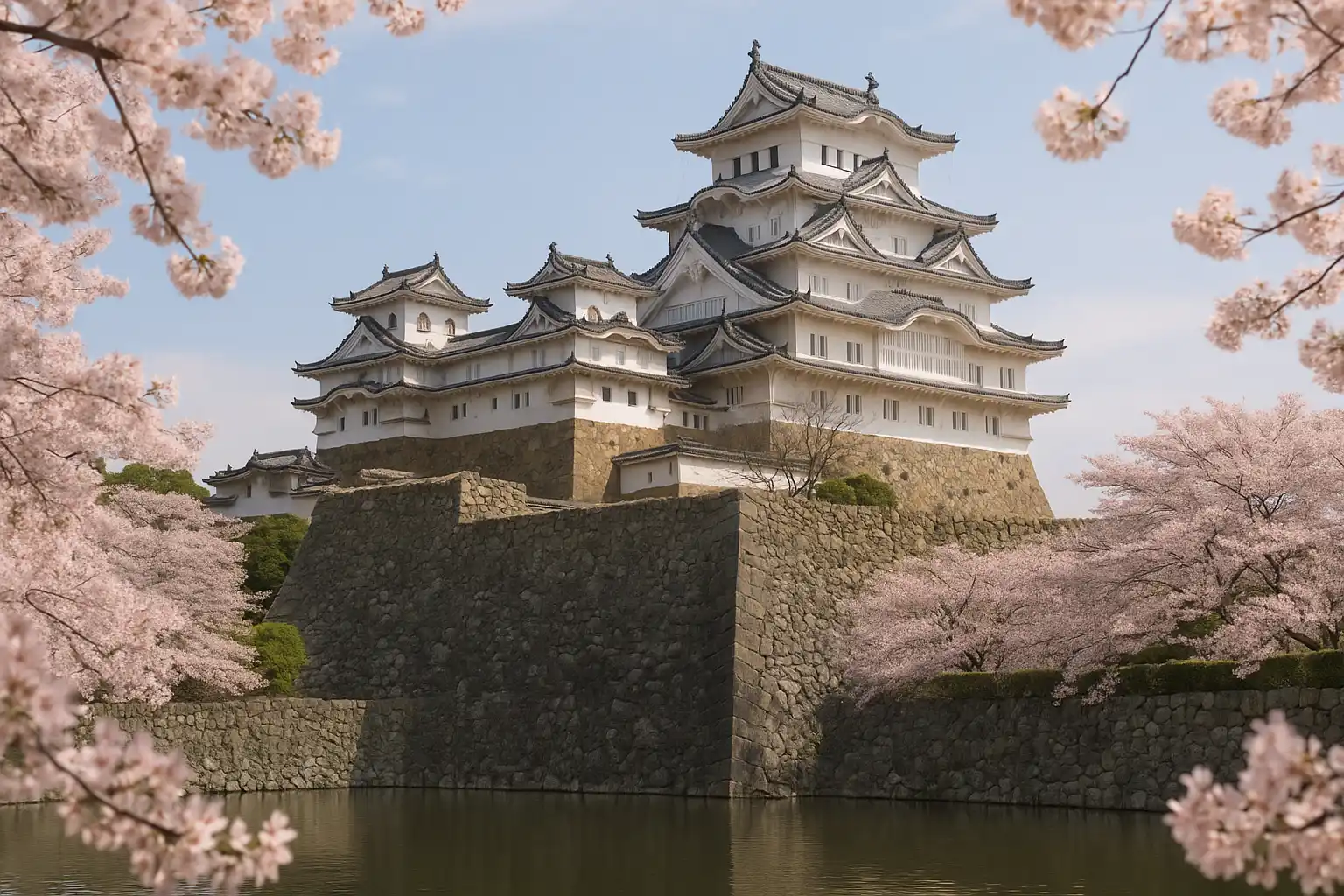
Himeji Castle Japan Travel Guide 2026: The White Heron Castle
Japanese FeudalVisit Himeji Castle, Japan's most beautiful original castle. Explore the White Heron keep, defensive...
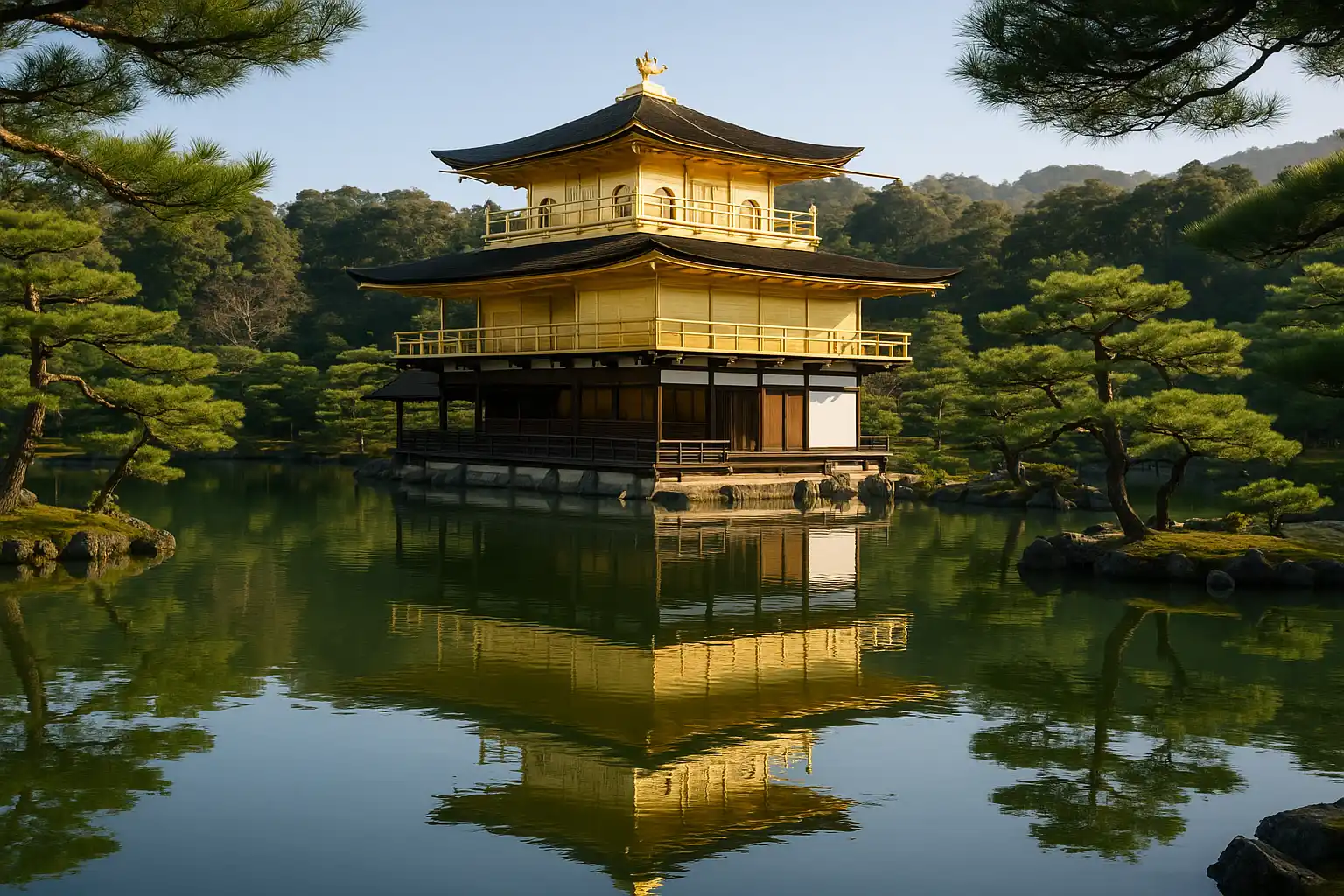
Kinkakuji Temple Japan Travel Guide 2026: Kyoto's Golden Pavilion
Japanese Zen BuddhistVisit Kinkakuji, the Golden Pavilion, Kyoto's most iconic Zen temple. Discover the gold-leaf covered...
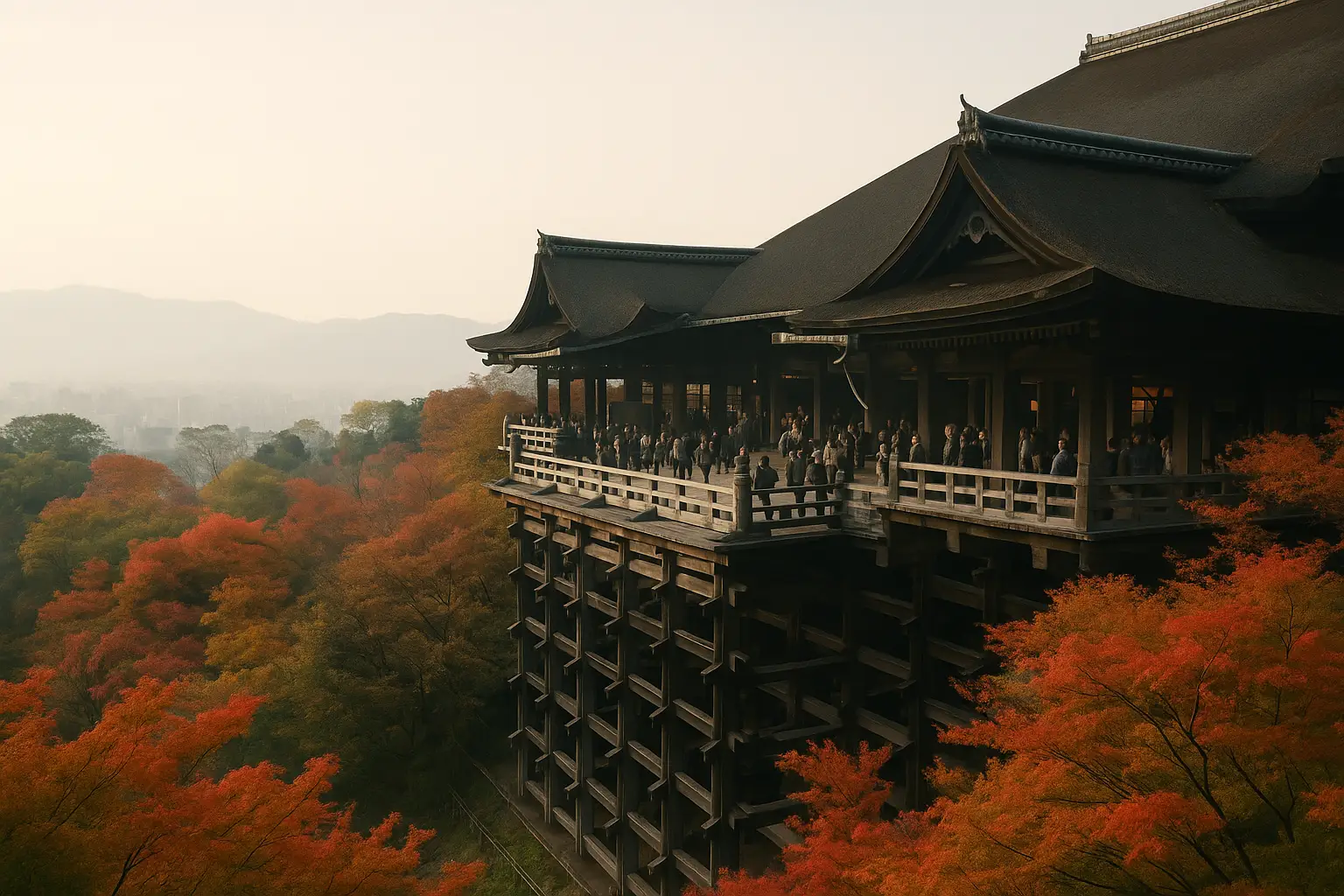
Kiyomizudera Temple Japan Travel Guide 2026: Kyoto's Wooden Stage
Japanese Buddhist (Kita-Hosso)Visit Kiyomizudera, the Pure Water Temple with its famous wooden stage overlooking Kyoto. Explore th...