Quick Info
Curated Experiences
Half Day Tour to Jerash from Amman
Jerash, Ajloun and Umm Qais Day Trip from Amman
Walking Through Rome’s Eastern Frontier
Rising from the fertile hills of northern Jordan, just 48 kilometers from Amman, lies one of the best-preserved Roman cities in the world—a place so complete that archaeologists call it the “Pompeii of the East.” This is Jerash, ancient Gerasa, a jewel of the Decapolis league that once represented the height of Roman civilization in the Middle East. Unlike Pompeii, Jerash wasn’t preserved by volcanic catastrophe; it was simply abandoned after earthquakes in the 8th century and left undisturbed for nearly a millennium. Today, visitors can walk cobblestone streets that once bustled with chariots, stand in temples where Roman emperors were worshipped, and watch gladiatorial reenactments in theaters that have hosted performances for 2,000 years. The sheer scale of preservation here exceeds almost any site in Italy—mile upon mile of colonnades, plazas, fountains, and temples spread across a landscape that feels suspended in time. Whether you’re exploring Jordan after Petra or seeking a day trip from Amman, Jerash delivers the most complete Roman city experience outside of Italy.
The Decapolis Legacy: Gerasa at its Peak
The Decapolis was a league of ten Hellenistic cities that formed a cultural and economic network across the Jordan Valley and Syrian frontier during the Roman period. Gerasa (modern Jerash) emerged as one of the most prosperous members of this confederation, strategically positioned at the intersection of trade routes connecting Damascus, Petra, and the Mediterranean coast. At its zenith in the 1st and 2nd centuries CE, the city boasted a population of approximately 20,000 inhabitants and showcased wealth that rivaled any provincial capital in the empire.
The city’s prosperity derived from its location amidst fertile agricultural land and its role as a commercial hub. Olive oil, wheat, and wine production flourished in the surrounding countryside, while local craftsmen gained renown for their metalwork and textiles. This wealth manifested in an ambitious building program that transformed Gerasa into one of the most architecturally impressive cities of the Roman East. The colonnaded street, temples, theaters, and public baths that visitors admire today represent the culmination of centuries of investment by wealthy citizens eager to demonstrate their loyalty to Rome and their commitment to civic life.
Getting to Jerash: Day Trip Logistics from Amman
Reaching Jerash from Jordan’s capital is straightforward, with multiple options catering to different travel styles and budgets. The most convenient approach for most visitors is an organized day tour, which typically departs from Amman hotels in the morning and includes transportation, entrance fees, and a knowledgeable guide who brings the ruins to life. These tours often combine Jerash with nearby attractions such as Ajloun Castle or the Dead Sea, offering excellent value for travelers with limited time.
For independent travelers, public buses depart from Amman’s North Bus Station (Tabarbour) throughout the day. The journey takes approximately 90 minutes and costs only a few Jordanian dinars, though schedules can be irregular and the experience requires some patience and flexibility. Rental cars provide the greatest freedom, with well-maintained highways connecting Amman to Jerash in under an hour. Parking is available at the site entrance, and the drive offers pleasant views of Jordan’s northern countryside.
Private taxis represent a middle-ground option, offering door-to-door convenience at a moderate cost. Negotiate the fare in advance—expect to pay between 40–60 JOD for a round trip including waiting time—or arrange a taxi through your hotel for added reliability. Whichever method you choose, aim to arrive when the site opens at 8 AM to avoid the midday heat and crowds that arrive from Amman later in the morning.
The Roman City: A Self-Guided Walking Tour
Exploring Jerash rewards those who take their time. The site covers an extensive area, and a thorough visit involves walking several kilometers on uneven ancient surfaces. Begin your visit at Hadrian’s Arch, the monumental gateway standing outside the main city walls, before proceeding through the South Gate into the heart of ancient Gerasa.
The logical route follows the ancient processional way: from the South Gate, pass the hippodrome on your left before entering the city proper. The Forum (Oval Plaza) provides a natural gathering point and orientation spot before you begin the long walk down the colonnaded street. Allow at least three hours for this main circuit, with additional time if you wish to climb to the Temple of Artemis or explore the northern neighborhoods in detail.
The Colonnaded Street: Heart of Ancient Gerasa
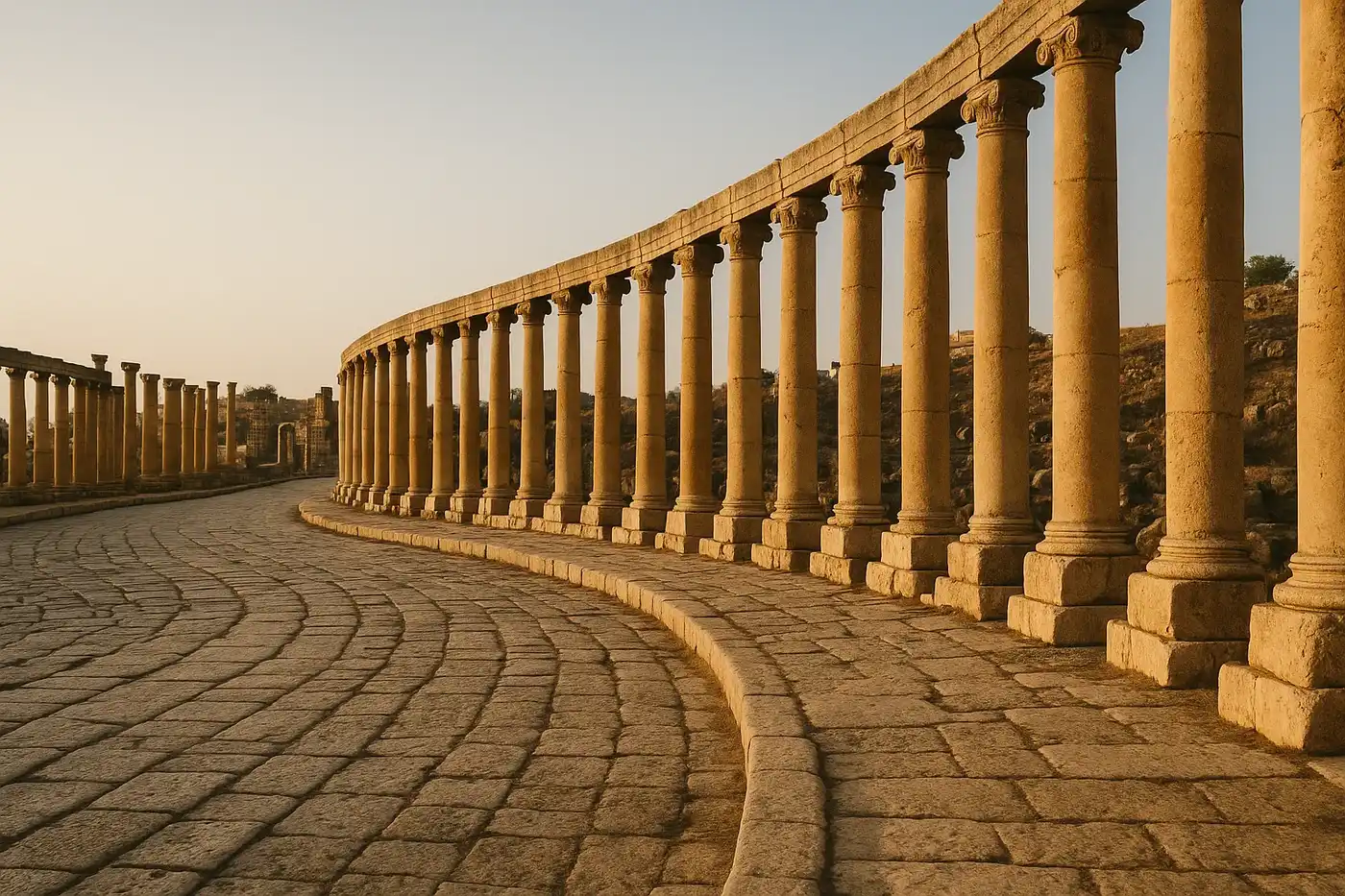
The Cardo Maximus, or colonnaded street, forms the spine of ancient Jerash and provides one of the most evocative walks in all of Roman archaeology. Stretching over 800 meters from the Forum to the North Gate, this marble-paved avenue was lined with more than 1,000 columns of Ionic and Corinthian design, creating a covered pedestrian walkway that protected shoppers and strollers from the intense Middle Eastern sun.
As you walk this ancient thoroughfare, look down at the deep ruts carved into the stone by centuries of chariot traffic. These grooves testify to the street’s constant use for commerce and transportation, while the porticoes on either side once housed shops, workshops, and public spaces where citizens conducted their daily business. The street’s gentle curve—not a straight line as in many Roman cities—follows the natural topography and creates visually interesting perspectives as you walk.
Notice the sophisticated engineering beneath your feet. The street was designed with a drainage system that channeled rainwater away from the pedestrian areas, while raised sidewalks kept foot traffic separated from wheeled vehicles. Side streets branch off at regular intervals, leading to residential quarters, temples, and public buildings that hint at the complexity of life in this prosperous provincial capital.
Hadrian’s Arch & the South Gate: Monumental Entrances
Hadrian’s Arch stands as perhaps the most impressive single monument at Jerash, a triumphal gateway built in 129 CE to honor Emperor Hadrian’s visit to the city. Rising 21 meters high, this freestanding structure was constructed outside the main city walls, suggesting that Jerash anticipated significant urban expansion during this prosperous period. The arch’s design features three vaulted passageways—the central one for wheeled traffic and smaller side passages for pedestrians—adorned with engaged columns and decorative pediments that showcase the refined architectural tastes of the era.
Passing through the South Gate brings you into the walled city proper. This massive limestone structure served as the primary entrance for most of ancient Gerasa’s history, with foundations dating back to the city’s earliest fortifications. The gate’s thick walls and defensive towers demonstrate the security concerns that persisted even during peacetime, while the monumental scale reflects the city’s pride and prosperity.
The Theaters: Where Roman Drama Echoes Still
Jerash preserves two remarkably intact theaters that continue to serve their original purpose after nearly two millennia. The South Theater, seating approximately 3,000 spectators, offers the more intimate experience and typically hosts the Jordanian Military Band performances that delight daily visitors. Climb to the top rows to experience the astonishing acoustics—a whisper from the stage carries clearly to the upper tiers, demonstrating the sophisticated engineering that Roman architects brought to their entertainment venues.
The North Theater, originally built in the 2nd century CE and later expanded to accommodate 5,000 viewers, served both dramatic performances and civic functions. Its elevated position at the edge of the city provides pleasant views of the surrounding countryside, while the carved seat numbers that remain visible testify to the organized nature of Roman public gatherings. The theater’s orchestra area and stage building are exceptionally well-preserved, allowing visitors to imagine the theatrical traditions that once animated this remote corner of the empire.
Temple of Artemis: Columns That Defy Earthquakes
The Temple of Artemis crowns a hill at the northern end of the colonnaded street and represents Jerash’s most important religious sanctuary. Eleven of the original twelve columns still stand, having survived numerous earthquakes that toppled lesser structures throughout the city. These columns soar to impressive heights, their Corinthian capitals intricately carved with acanthus leaves and architectural details that speak to the devotion and wealth of the temple’s patrons.
The temple was approached via a grand processional stairway that began at the colonnaded street and climbed the hillside in a series of dramatic stages. Pilgrims would have paused at terraces and smaller shrines along the way, building anticipation before reaching the sanctuary proper. While the temple’s interior has not survived, the remaining platform and columns provide sufficient evidence to reconstruct a once-magnificent structure that dominated the city’s religious life.
Archaeological evidence suggests that this site held religious significance even before the Roman period, with earlier shrines dedicated to local deities that were later syncretized with the Greek goddess Artemis. The temple’s prominent position and substantial construction indicate the importance of religious practice in maintaining civic identity and community cohesion in ancient Gerasa.
The Forum & Oval Plaza: Social Center of the Ancient World
The Oval Plaza (also called the Forum) presents one of the most distinctive urban spaces in Roman archaeology. Unlike the rectangular forums typical of Roman cities, Jerash’s central plaza takes an elliptical form, surrounded by 56 Ionic columns that create a graceful colonnade. This unique design may reflect local architectural traditions or practical considerations related to the site’s topography, but the result is a space of exceptional beauty and functionality.
The plaza served as the commercial and social heart of Gerasa, where merchants displayed their goods, citizens met to discuss politics and business, and religious processions assembled before proceeding up the colonnaded street. The stone paving has been restored in modern times, but the original foundations and column bases remain authentic, allowing visitors to stand where ancient crowds once gathered.
Look for the remains of an altar at the plaza’s center, which likely served religious functions connected to the civic cult. The surrounding colonnade provided shaded walkways where philosophers might discourse and friends could escape the midday heat. This space exemplifies the Roman ideal of public life, where commerce, politics, religion, and social interaction intertwined in settings designed for maximum accessibility and aesthetic pleasure.
Byzantine Churches: From Pagan Temples to Christian Worship
The Christianization of the Roman Empire left significant marks at Jerash, where numerous churches were constructed during the 5th and 6th centuries. Many of these sacred buildings reused materials from earlier pagan temples, reflecting both practical economy and symbolic appropriation of religious spaces. The Cathedral, built atop earlier temple foundations near the colonnaded street, represents the most significant of these Christian structures.
Mosaic floors discovered in several church complexes reveal elaborate geometric patterns and occasional figurative scenes that illuminate the artistic tastes of Byzantine Jerash. The Church of St. Theodore and the Church Complexes near the South Theater preserve particularly fine examples of this floor art, with multicolored tesserae creating intricate designs that have survived centuries of exposure.
These churches also attest to Jerash’s continued prosperity well into the Byzantine period, contradicting narratives of sudden decline following the empire’s Christianization. The investment required to construct and decorate these buildings indicates a community that maintained wealth and cultural connections even as the broader Roman world underwent profound transformation.
Jerash Festival: Ancient Ruins Alive with Performance
While Rome’s ruins remain silent, Jerash comes alive each summer during the Jerash Festival for Culture and Arts (typically July), transforming the ancient city into the Middle East’s most spectacular cultural venue. This is Jordan’s premier arts festival and the experience that distinguishes Jerash from every other Roman archaeological site in the world.
The Festival Experience:
- Venue: Performances held in the South Theater, North Theater, and the Forum
- Programming: Traditional Jordanian folk dance (dabke), classical Arabic music, international orchestras, ballet, opera, and poetry readings
- Atmosphere: Candlelit ruins; 2,000-year-old theaters hosting modern audiences; performers in traditional dress
- Scale: 10+ days of programming with performers from across the Arab world and beyond
Practical Details:
- Timing: Usually held in July (check current dates as they vary)
- Tickets: Range from 10–50 JOD depending on performance
- Accommodation: Book early—hotels in Jerash and Amman fill quickly
- Weather: Hot (30–35°C); evening performances more comfortable
Year-Round Alternative: Even without the festival, daily performances of the Jordanian Military Band and traditional dance troupes in the South Theater give visitors a taste of how the space functioned acoustically. The sound clarity in these 2,000-year-old theaters is astonishing—a whisper on stage carries to the top rows.
Practical Visitor Guide: Tickets, Timing & Tips
Essential Planning FAQs
How do I get to Jerash from Amman?
Multiple options: Tour bus (most convenient; includes guide; $40–70 with other sites), Public bus from Amman’s North Bus Station (Tabarbour; ~1.5 hours; very cheap but irregular), Rental car (easy drive north on Route 35; parking at site), or Private taxi ($40–60 each way). Most visitors opt for organized day tours that combine Jerash with Ajloun Castle or the Dead Sea.
How long should I spend at Jerash?
Minimum 3–4 hours to walk the main colonnaded street and key sites. History enthusiasts should plan a full day (6+ hours) to explore every theater, temple, and museum thoroughly. The site covers a large area—expect to walk 3–5 km on uneven cobblestones.
Is Jerash worth visiting if I’ve been to Roman ruins in Europe?
Absolutely. Jerash offers a scale of preservation rarely seen in Europe—complete streets, standing columns, and intact theaters. The Eastern Roman architectural style differs from Western sites, and the Decapolis context (Greek, Roman, and Nabataean influences) creates a unique cultural blend. Many visitors rank Jerash above better-known sites like Ephesus.
What should I wear and bring to Jerash?
Sturdy walking shoes (cobblestones are uneven and slippery), sun protection (minimal shade; hat essential), water (available at entrance but expensive inside), and layers (mornings can be cool, afternoons hot). Dress modestly if visiting during or after the Jerash Festival’s evening performances.
When is the best time to visit Jerash?
Spring (March–May) and autumn (September–November) offer ideal temperatures (20–28°C). Summer (June–August) is extremely hot (35–40°C) but coincides with the Jerash Festival. Winter is mild but occasional rain makes cobblestones slippery. Arrive early morning (8 AM opening) to avoid tour groups from Amman.
Quick Facts
| Attribute | Details |
|---|---|
| Location | Jerash Governorate, Jordan |
| Country | Jordan |
| Region | Jerash Governorate |
| Civilization | Roman / Nabataean |
| Historical Period | c. 1st century BCE – 7th century CE |
| Established | c. 63 BCE (Roman conquest) |
| Coordinates | 32.2768, 35.8911 |
Explore More Ancient Sites
- Petra: Jordan’s rose-red city carved from cliffs
- Ephesus: The magnificent Roman city on Turkey’s Aegean coast
- Baalbek: Rome’s most monumental temple complex in Lebanon
- Volubilis: Morocco’s best-preserved Roman ruins
Plan your complete Jordan adventure with our Jordan Ancient Sites Guide. Learn money-saving tips in our budget archaeological travel guide.
|-----------|---------| | Location | Jerash Governorate, northern Jordan | | Ancient Name | Gerasa (Greek: Γέρασα) | | UNESCO Status | Tentative List (not yet inscribed) | | Historical Period | 7500 BC (Neolithic) – 749 CE (earthquake) | | Roman Peak | 1st–3rd centuries CE (Decapolis league) | | Distance from Amman | 48 km (30 miles) north | | Site Area | Extensive walled city; plan for 3+ km walking | | Best Time | March–May, September–November | | Entry Fee | 10 JOD (included in Jordan Pass) | | Suggested Stay | Half day to full day |
Frequently Asked Questions
Why is Jerash called the Pompeii of the East?
Like Pompeii, Jerash was a thriving Roman city that survived largely intact. An earthquake in 749 CE sent it into decline and eventual abandonment, but unlike Pompeii it was never buried under ash—just forgotten. Its colonnaded main street (Cardo Maximus), two theaters, forums, and temples remain among the best-preserved examples of a provincial Roman city anywhere in the world.
How long do I need at Jerash?
Two to three hours covers the main sights at a comfortable pace. The South Theater, Oval Plaza, Cardo Maximus, Temple of Artemis, North Theater, and Arch of Hadrian are the highlights. Add time for the visitor center and museum. Jerash is easily done as a half-day trip from Amman (50 km, 45 minutes).
Is Jerash better than Petra?
They're completely different experiences. Petra is more spectacular and emotionally overwhelming, centered on the rose-red carved facades of Nabataean culture. Jerash offers a more complete picture of Roman urban life—you can walk the actual streets, visit functioning temples, and sit in a 3,000-seat theater. Both are essential Jordan; visit Petra for wonder and Jerash for Roman history.
What is the Jerash Festival?
The Jerash Festival of Culture and Arts, held annually in July-August, stages theatrical performances, concerts, and folk dance in the ancient Roman theater and Oval Plaza. Performances use Jerash's extraordinary acoustics—the 3,000-seat South Theater is still acoustically perfect. The festival dates back to 1981 and draws international performers.
Can I visit Jerash independently?
Easily. From Amman's JETT or South Bus Station, service taxis and minibuses run regularly to Jerash for under 2 JD. The site itself is well-signed. A combined visit with the Jordan Archaeological Museum in Amman makes for a full day of Roman history.
Nearby Ancient Sites
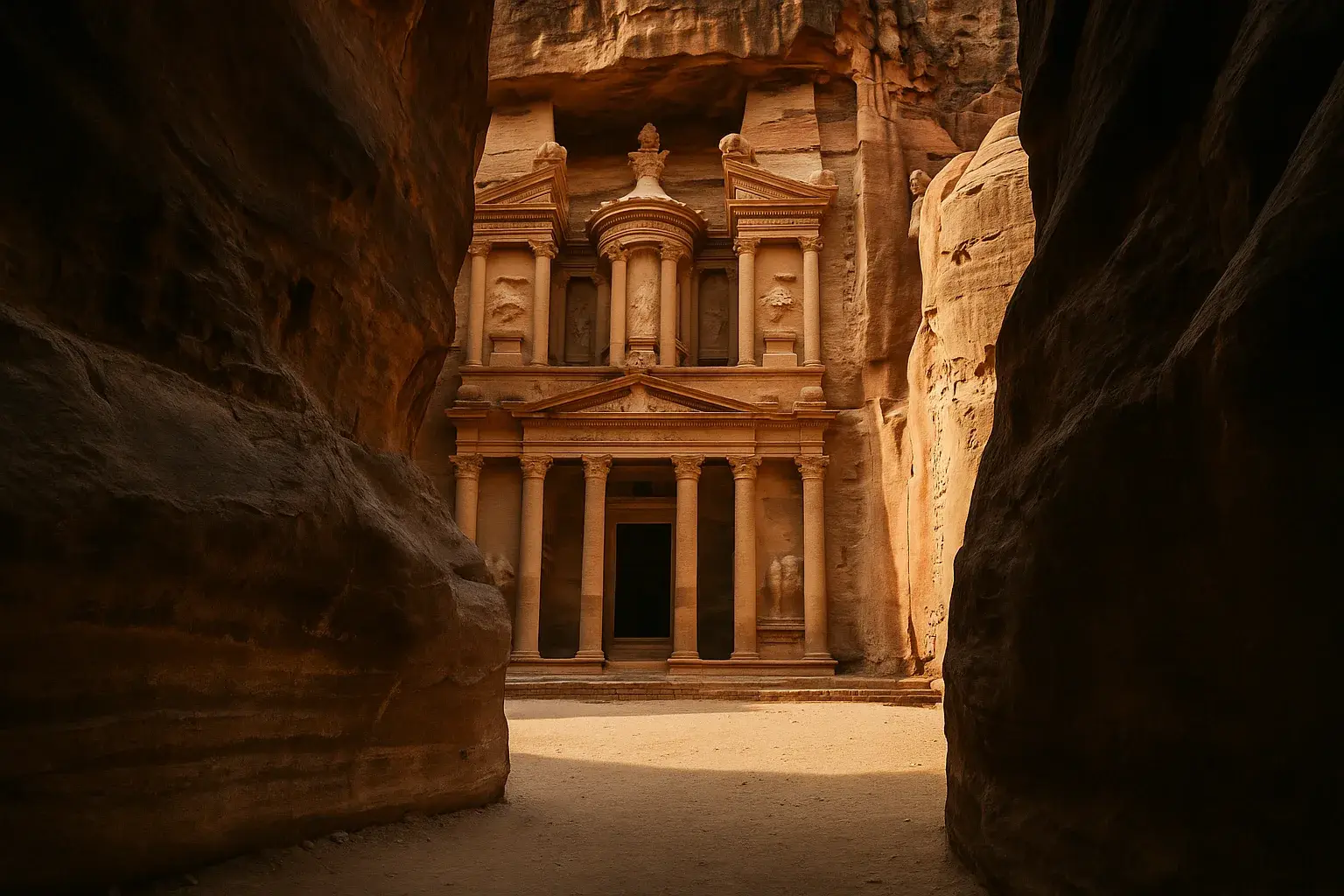
Petra Jordan Travel Guide: Treasury, Monastery & Best Hikes
NabataeanUnlock the secrets of Petra with our comprehensive guide. Walk the Siq to the Treasury, hike to the ...
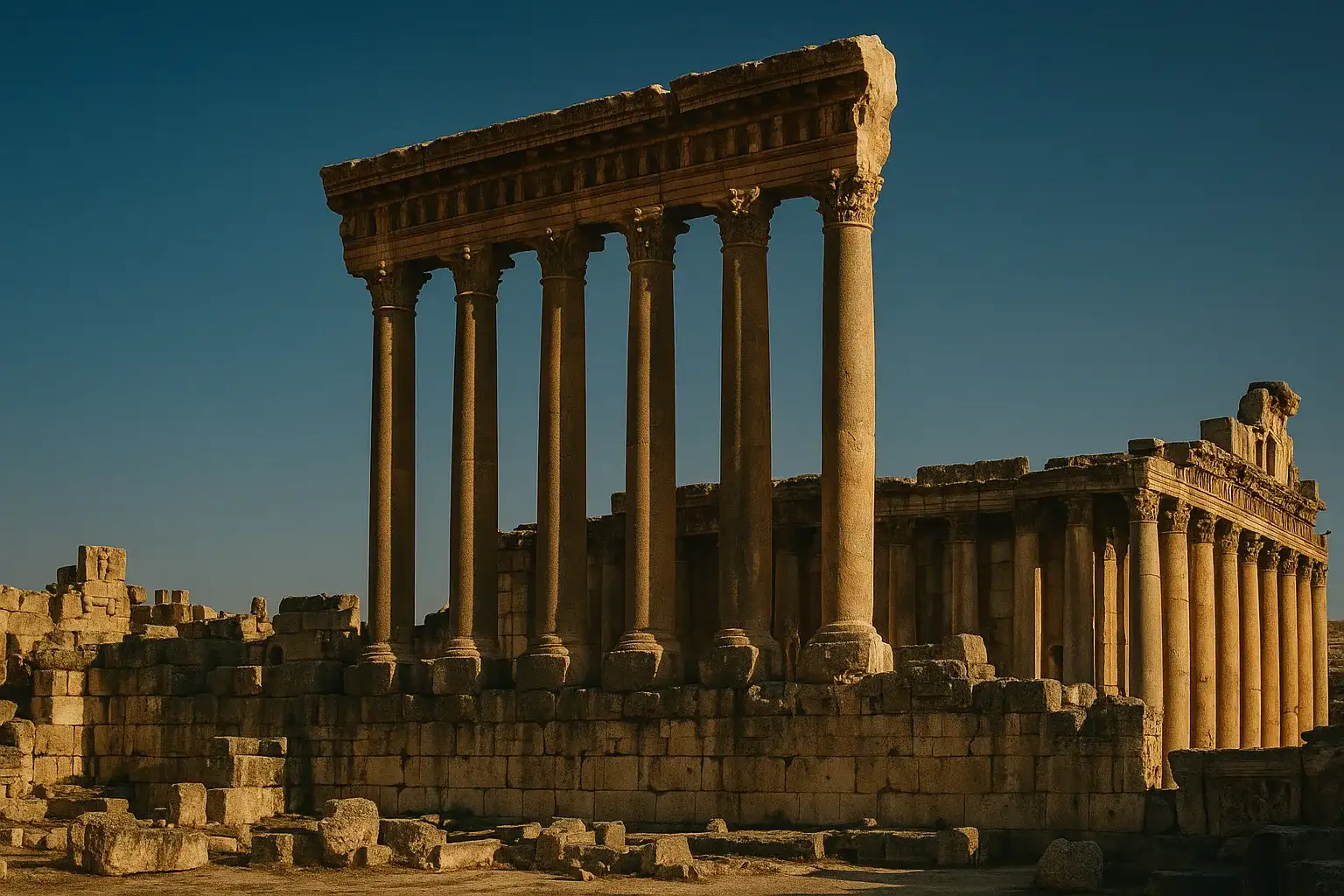
Baalbek: Rome's Mightiest Temple Complex in Lebanon's Beqaa
Roman / PhoenicianExplore Baalbek's colossal Roman temples, including the best-preserved Temple of Bacchus. Discover t...