Quick Info
Curated Experiences
Jiayuguan Fort Half-Day Tour
Silk Road Gansu Province Multi-Day Tour
Jiayuguan Great Wall and Overhanging Wall Tour
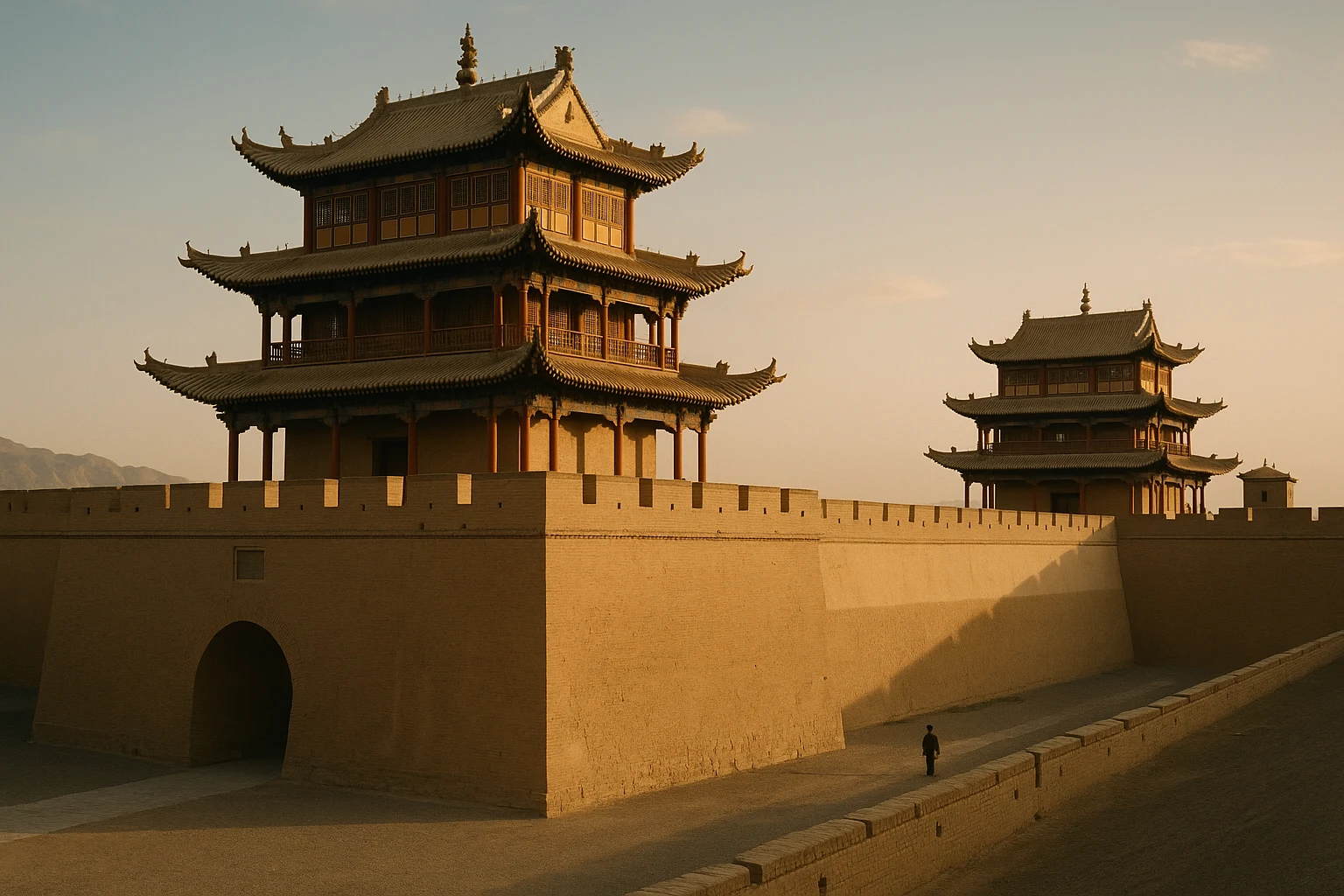
At the far western edge of Chinese civilization, where the fertile lands of the Hexi Corridor narrow to a strip of gravel between two mountain ranges, a fortress has stood guard for more than six hundred years. Jiayuguan Fort rises from the Gobi Desert in Gansu Province, China, its three-tiered gate tower the color of dried earth against an immense sky. The Chinese called it 天下第一雄关 — “The First and Greatest Pass Under Heaven” — and the title was earned. This was the formal boundary of the Ming Empire, the last outpost of order and civilization before the Silk Road dissolved into the unknown steppes of Central Asia. Travelers departing the pass carried letters and last farewells scratched on stone; those arriving brought silk, spices, horses, and news of worlds the court in Beijing had never seen. Standing on the battlements today, the fort still commands that same silence. The Qilian Mountains float above the southern horizon, perpetually snow-capped. To the north, the Black Mountain’s dark ridgeline closes off the corridor. In between, the desert is absolute. Nothing about the landscape has diminished the sense of standing at the edge of something — a civilization, an era, a choice between the known and the unknown. That psychological weight, as much as any architectural achievement, is what makes Jiayuguan Fort one of the most affecting ancient sites in China.
History
The Hexi Corridor and the Need for a Western Gate
Long before the Ming Dynasty raised its walls, the Hexi Corridor — the narrow strip of land running northwest through modern Gansu Province between the Tibetan Plateau and the Mongolian steppe — functioned as the only viable overland route linking China to Central Asia. Han Dynasty emperors understood its strategic value intimately: it was through this corridor that Zhang Qian traveled in 138 BCE to forge the alliances that seeded the Silk Road, and it was along this corridor that Chinese silk, porcelain, and tea flowed westward while horses, glassware, and Buddhism traveled east. Earlier walls and watchtowers had been built along the corridor during the Han period, but these were earthen ramps and signal beacons rather than integrated defensive systems. By the time the Han collapsed, centuries of neglect had reduced them to ghosts in the landscape.
Foundation Under the Ming
The fort that visitors see today was founded in 1372, just four years after Zhu Yuanzhang established the Ming Dynasty and began the most ambitious wall-building program in Chinese history. General Feng Sheng, commanding operations in the northwest, selected the site with care. The narrowest point of the Hexi Corridor, squeezed between Jiayuguan Mountain to the south and the Black Mountain to the north, left no way around a fortification built there. The first structure was relatively modest — a tamped-earth inner wall enclosing a rectangular space of roughly 2,500 square meters. Towers were raised at each corner, and a watchtower crowned the main west-facing gate. This initial construction reportedly took only 180 days, a pace that reflects both military urgency and the discipline of Ming engineering corps.
Expansion and Completion
For the next 168 years, the fort grew intermittently as border conditions demanded. In 1495, Supervisor Li Duan oversaw a significant expansion that added the outer wall circuit and extended the defensible perimeter. The most intensive phase of construction came between 1506 and 1540, when the complex took on essentially the form visible today: an inner city, an outer city, and a third earthen perimeter beyond that. The gate towers were rebuilt in fired brick and timber, rising to three stories with sweeping upturned eaves. Warehouses, temples, barracks, and a theater were added within the inner walls. The theater, built to keep morale high among the garrison, still stands and is one of the most striking reminders that this was not only a military installation but a small self-contained world.
The Fort in Operation
At its peak the garrison numbered several thousand soldiers, with cavalry units stationed in the outer enclosures and infantry manning the towers. The fort also functioned as a customs post: every caravan entering or leaving China required official documentation processed here. Merchants who could not produce the correct papers were turned back; those who received the fort’s seal could travel onward with the protection of the empire. This dual role — military barrier and administrative checkpoint — gave the fort an outsized influence on Silk Road commerce for nearly three centuries. With the decline of overland trade in favor of maritime routes from the mid-Ming period onward, the fort’s economic significance faded, though it remained garrisoned through the Qing Dynasty.
Modern Recognition
The twentieth century brought formal archaeological attention and eventually the UNESCO designation that recognized the fort as part of the Great Wall World Heritage Site. Restoration work, carried out with close attention to original materials and techniques, has preserved the principal structures without sanitizing them. The rammed-earth sections retain their weathered texture; the timber gate towers show honest repair rather than wholesale reconstruction. Today the site draws visitors from across China and around the world, many of them traveling the Silk Road by train along the same corridor that caravans once crossed on foot and horseback.
Key Features
The Inner City and Gate Towers
The heart of Jiayuguan Fort is its inner city, a rectangular enclosure measuring approximately 640 meters in circumference. The walls stand between nine and eleven meters high, with a wide fighting platform along the top accessible by sloped ramps rather than vertical ladders — a design that allowed armored soldiers to move quickly between ground level and the battlements. Two main gates pierce the inner walls: the Guanghua Gate on the east, facing the interior of China, and the Rouyuan Gate on the west, opening toward the desert and the unknown. Each gate is surmounted by a three-story wooden tower, its bracket sets and upturned eaves characteristic of Ming official architecture. The western tower in particular has the quality of a theatrical set — beautiful, slightly improbable in this landscape, and unmistakably the work of a civilization that built for permanence and message simultaneously.
A story attached to the fort illustrates the precision of its builders. When the supervising official asked the chief architect how many bricks would be needed to complete the construction, the architect gave an exact figure. At the project’s completion, a single brick remained. That brick was placed deliberately on a ledge above the west gate, where it can still be seen today, a symbol of perfect calculation. Whether the story is true or apocryphal, it captures something real about how the Chinese regarded this place: a monument to engineering mastery at the edge of chaos.
The Outer Wall and Desert Perimeter
Beyond the inner city lies a second circuit of walls creating a transitional zone — broad enough to shelter additional troops and horses during a siege — and beyond that a third earthen rampart marking the outer boundary of the defended complex. This layered system meant that any attacking force that breached the outer walls would face two further lines of defense before reaching the inner city. Walking this outer circuit today gives a clear sense of scale: the fort is considerably larger than it appears in photographs, and the expanse of the Gobi visible over the outermost wall is disorienting in its emptiness.
The Overhanging Great Wall
A short drive north of the main fort, the Xuanbi Changcheng — the Overhanging Great Wall — climbs a near-vertical ridge of the Black Mountain at an angle steep enough to require steps cut directly into the rock. This section, restored in the 1980s from the original Ming foundations, is visually dramatic in a way entirely different from the main fort: where the fort is horizontal, administrative, almost civic in its proportions, the Overhanging Wall is aggressive and pure. It exists solely to deny passage through the mountain gap, and its angle of ascent makes the defensive logic viscerally clear. Visitors who make the climb are rewarded with views extending far down the Hexi Corridor in both directions.
The First Pier of the Great Wall
In the opposite direction — south of the fort, at the edge of the Taolai River gorge — stands the Changcheng Di Yi Dun, the formal western terminus of the Ming Great Wall: a solitary square beacon tower eroding slowly at the lip of a cliff above a swift brown river. It is one of the most evocative spots in all of Gansu. There are no other structures nearby. The tower stands alone between the mountains and the gorge, and the wall that once stretched 6,259 kilometers east from this point has become invisible. Standing here, the Great Wall ceases to be an abstraction and becomes something personal — an enormous human effort beginning at this exact stone, in this exact desert, at the edge of a cliff above a river.
Getting There
Jiayuguan sits on the main Lanzhou–Xinjiang high-speed rail corridor, making the city far more accessible than its remote location might suggest. High-speed trains from Lanzhou reach Jiayuguan in approximately three and a half to four hours, with fares starting around 120–160 CNY for second class. From Zhangye, the nearest major Silk Road city to the east, journey times are roughly 40 minutes. Dunhuang, the other major Silk Road destination in Gansu, is accessible by transferring at Liuyuan or by taking a slower regional service; the trip takes around two to three hours by rail depending on connections.
Jiayuguan Airport (JGN) serves flights from Beijing, Xi’an, Lanzhou, Chengdu, and several other Chinese cities. Flight times from Beijing are approximately two and a half hours. Domestic fares vary considerably by season and booking window but can be competitive with high-speed rail for travelers coming from more distant cities.
From Jiayuguan city center to the fort, taxis charge 20–30 CNY for the 6-kilometer trip. Local bus routes also serve the site, though schedules can be infrequent outside peak tourist hours. Many visitors rent an electric scooter or bicycle to reach the fort independently, as the road is flat and direct. For visitors combining the main fort with the Overhanging Great Wall and First Pier, a hired car or taxi for a half-day circuit is the most convenient option, typically costing 150–200 CNY total.
When to Visit
The Hexi Corridor is a high-altitude desert environment and the weather reflects that fact without apology. The most comfortable months for visiting Jiayuguan Fort are late April through early June and September through mid-October. During these windows, daytime temperatures sit between 15°C and 25°C, the air is clear, and the Qilian Mountains are visible in their full snow-capped profile from the fort battlements. Early morning visits in spring and autumn reward photographers with long horizontal light that emphasizes the texture of the rammed-earth walls.
Summer — July and August — is warm to hot, with temperatures occasionally exceeding 30°C in the afternoon. The fort is exposed and offers little shade on the outer circuits; carry water, a hat, and sunscreen. Occasional dust storms can reduce visibility significantly during summer months, a reminder that this is still the Gobi.
Winter is extreme and genuinely cold, with temperatures dropping well below zero at night and rarely climbing above 5°C during the day. Snow on the battlements and frost on the gate tower eaves can make for extraordinary photographs, but the conditions demand proper cold-weather gear. Most visitors to the site are domestic tourists, and the fort sees its heaviest crowds during Chinese national holidays — Golden Week in early October and the Spring Festival in late January or February — when waits at gates can be significant.
| Quick Facts | |
|---|---|
| Location | Jiayuguan, Gansu Province, China |
| Coordinates | 39.7322° N, 98.2864° E |
| Founded | 1372 CE (Ming Dynasty) |
| UNESCO Status | Part of Great Wall World Heritage Site (1987) |
| Admission | ~120 CNY (~USD 17) |
| Opening Hours | 8:00 AM – 6:00 PM daily |
| Recommended Visit Time | 2–3 hours (fort only); 4–5 hours with companion sites |
| Nearest Airport | Jiayuguan Airport (JGN), ~15 km |
| Nearest Rail | Jiayuguan South Station, ~8 km |
| Best Months | April–June, September–October |
Frequently Asked Questions
Is Jiayuguan Fort a UNESCO World Heritage Site?
Yes. Jiayuguan Fort is part of the Great Wall of China, inscribed as a UNESCO World Heritage Site in 1987. The fort itself is recognized as one of the best-preserved and most architecturally complete examples of Ming Dynasty military construction along the entire wall.
How far is Jiayuguan Fort from the city center?
The fort is approximately 6 kilometers southwest of central Jiayuguan city. Taxis from the city center take around 15 minutes. Buses and dedicated tourist shuttles also run regularly from the main train station and downtown stops.
What are the opening hours and entry fee for Jiayuguan Fort?
The fort is typically open daily from 8:00 AM to 6:00 PM (last entry 5:30 PM). The standard admission ticket is around 120 CNY (approximately USD 17), which covers the fort complex and the adjacent First Pier of the Great Wall. Check locally before visiting as prices and hours are occasionally updated.
How long do you need to visit Jiayuguan Fort?
Most visitors spend two to three hours inside the main fort complex. If you plan to walk out to the Overhanging Great Wall (Xuanbi Changcheng) and the First Pier of the Great Wall as well, budget a full half-day of four to five hours in total.
What other Great Wall sites are near Jiayuguan?
Two important companion sites sit within a short drive: the Overhanging Great Wall (Xuanbi Changcheng), a dramatic section that climbs a steep ridge north of the fort, and the First Pier of the Great Wall (Changcheng Di Yi Dun), a solitary beacon tower that marks the wall's formal western end at the edge of the Taolai River gorge.
What is the best time of year to visit Jiayuguan Fort?
Late April through early June and September through mid-October are ideal. Temperatures are mild, skies are clear, and the fort's rammed-earth walls glow in the low desert light. July and August are hot and occasionally dusty. Winter is extremely cold but strikingly photogenic when snow caps the battlements against the Qilian Mountains.
Can you walk on top of the walls at Jiayuguan Fort?
Yes. The inner and outer wall circuits have restored walkways that allow visitors to walk along the battlements and enjoy panoramic views of the Gobi Desert, the snow-capped Qilian Mountains to the south, and the Black Mountain range to the north. The main watchtower platforms are also accessible.
Nearby Ancient Sites
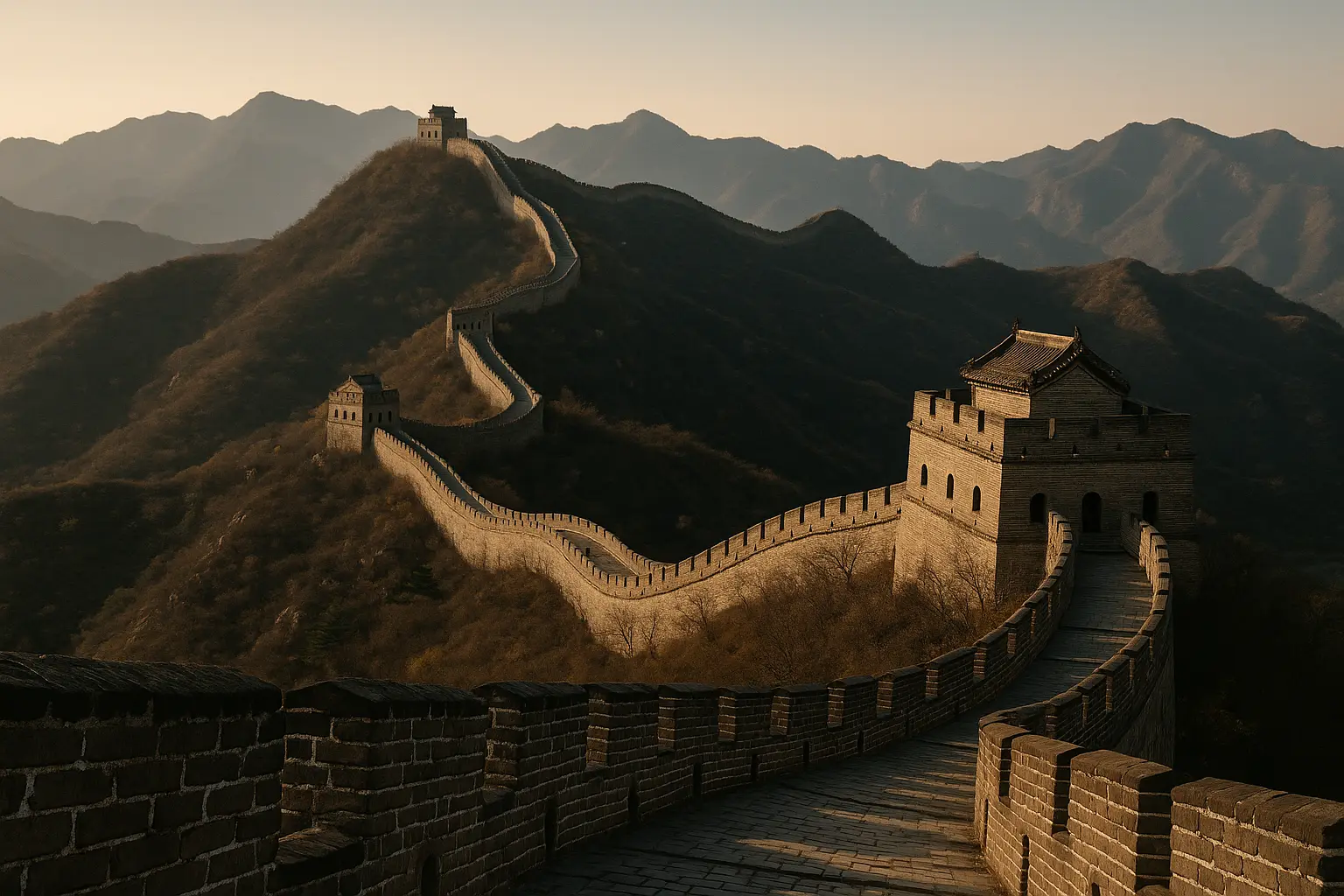
Great Wall of China Badaling Travel Guide 2026: Iconic Fortification
Chinese ImperialVisit Badaling, the most famous section of the Great Wall of China. Our guide covers tickets, cable ...
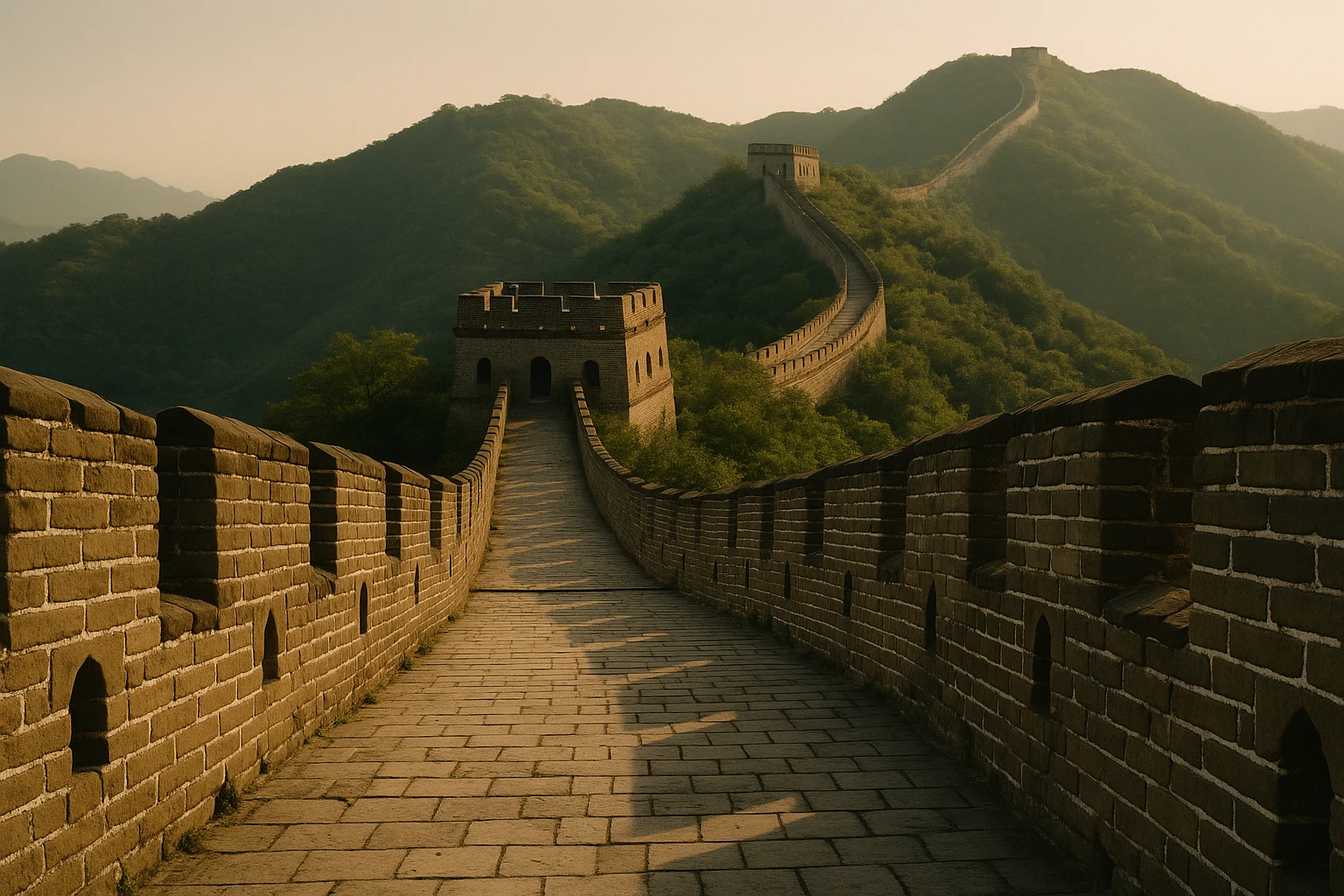
Great Wall of China (Mutianyu)
Explore Mutianyu — the Great Wall's most dramatic restored section, with 22 Ming-era watchtowers, mo...
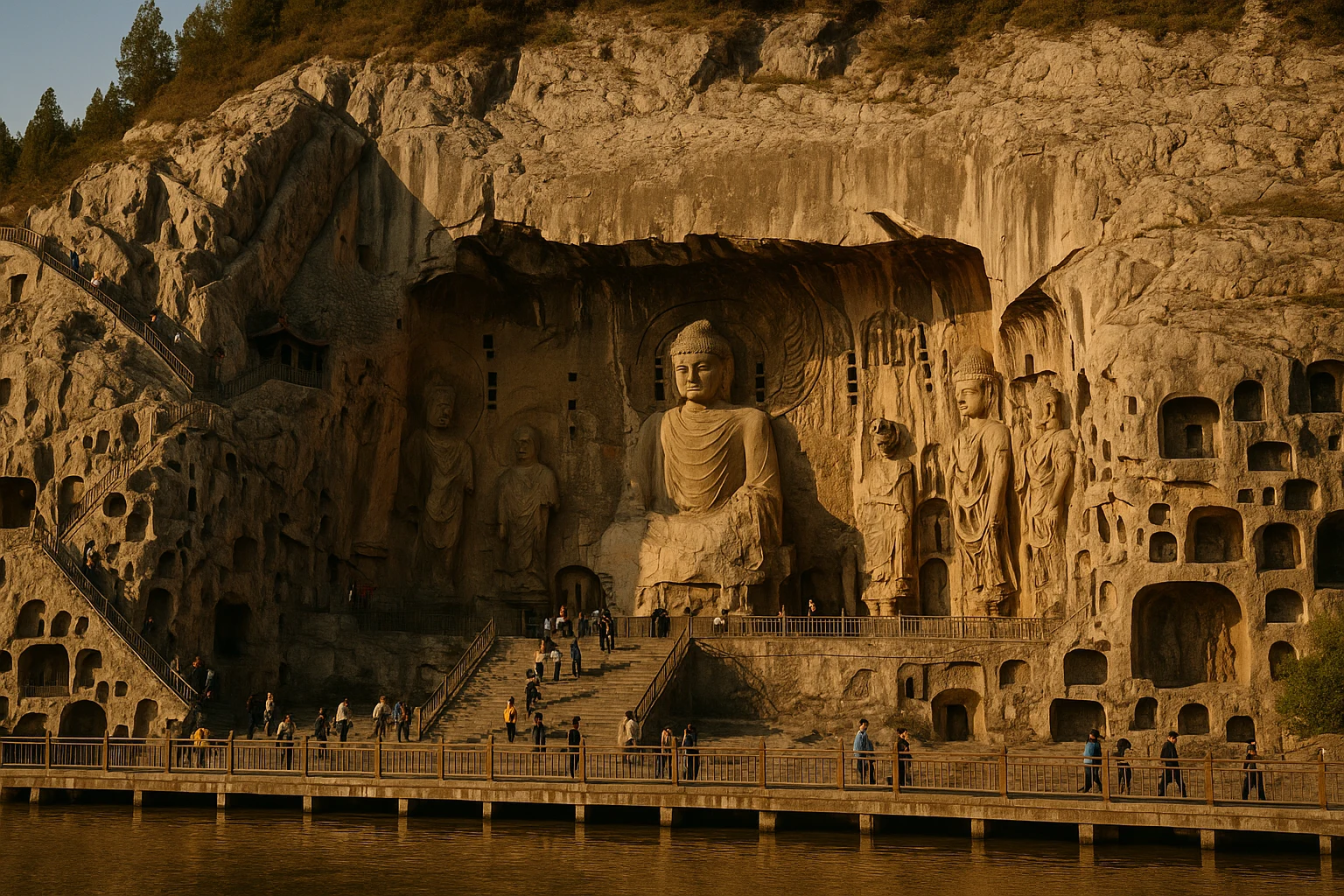
Longmen Grottoes
Chinese BuddhistA UNESCO World Heritage Site near Luoyang, China, featuring over 100,000 Buddhist carvings and statu...
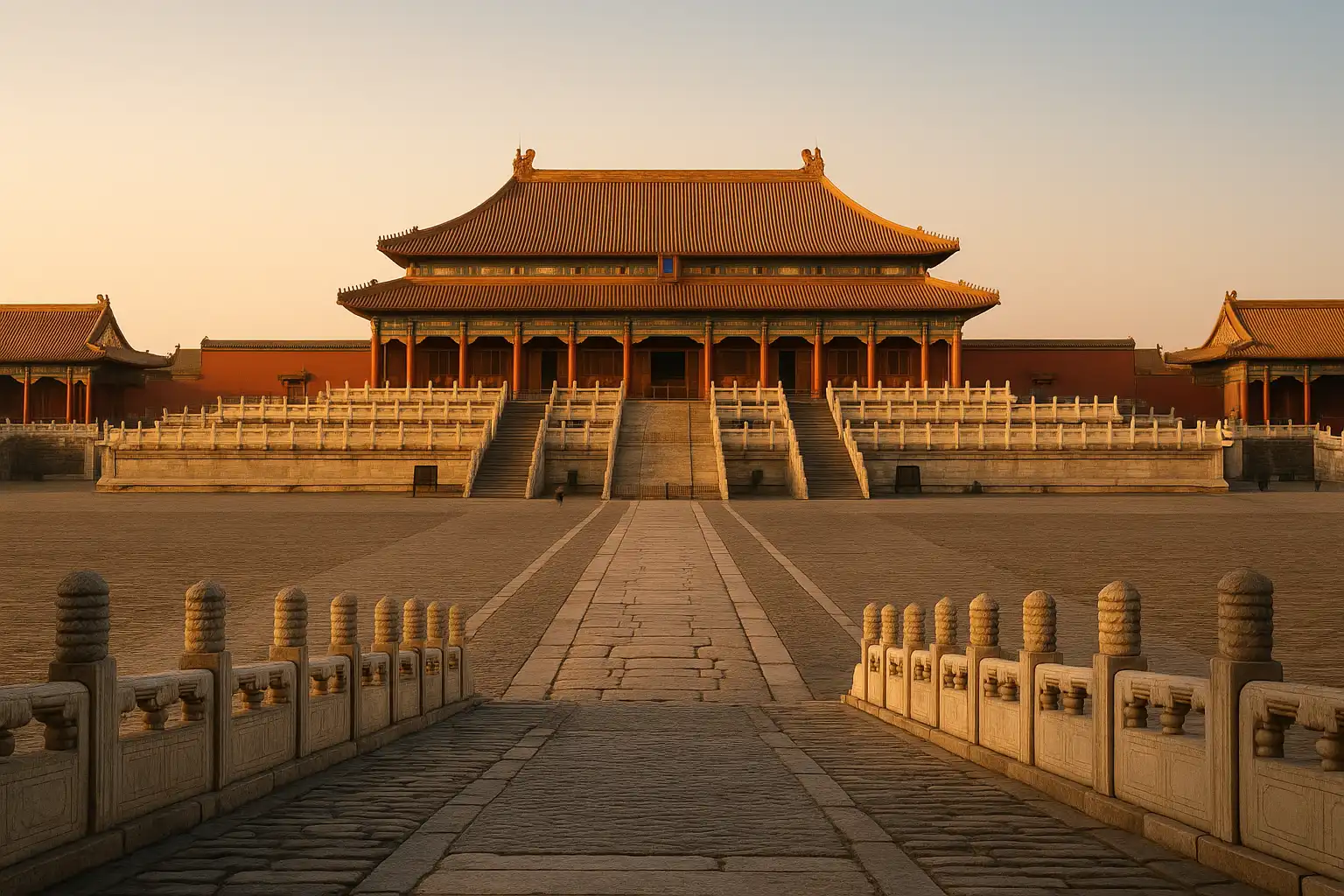
Forbidden City China Travel Guide 2026: Imperial Palace of Beijing
Chinese ImperialExplore the Forbidden City, China's imperial palace for 500 years. Discover the Hall of Supreme Harm...
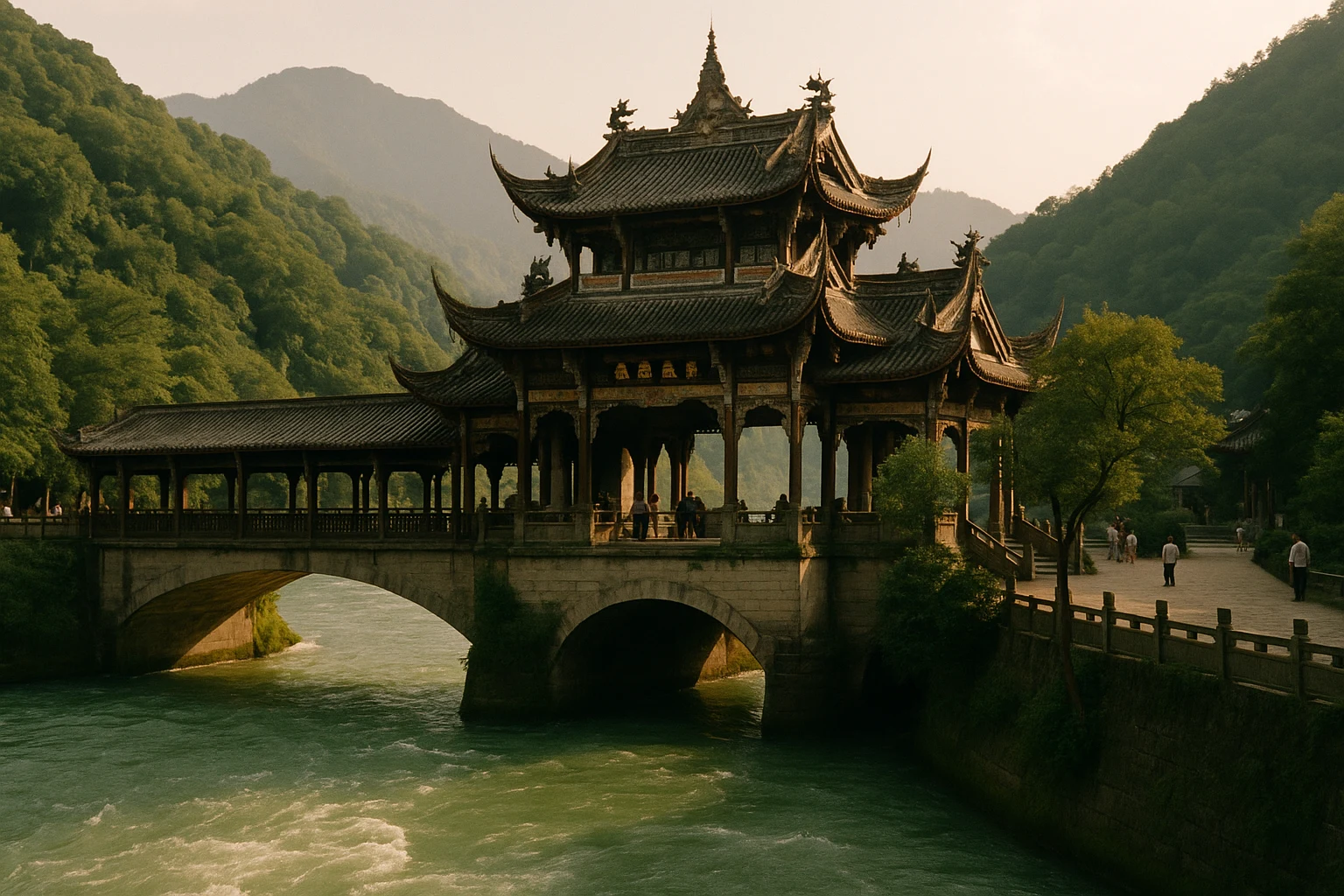
Dujiangyan Irrigation System
Explore Dujiangyan, the world's oldest functioning irrigation system, built in 256 BCE by engineer L...