Quick Info
Curated Experiences
Jinsha Site Museum Guided Tour in Chengdu
Chengdu Ancient History and Culture Day Tour
Sanxingdui and Jinsha Combined Museum Experience
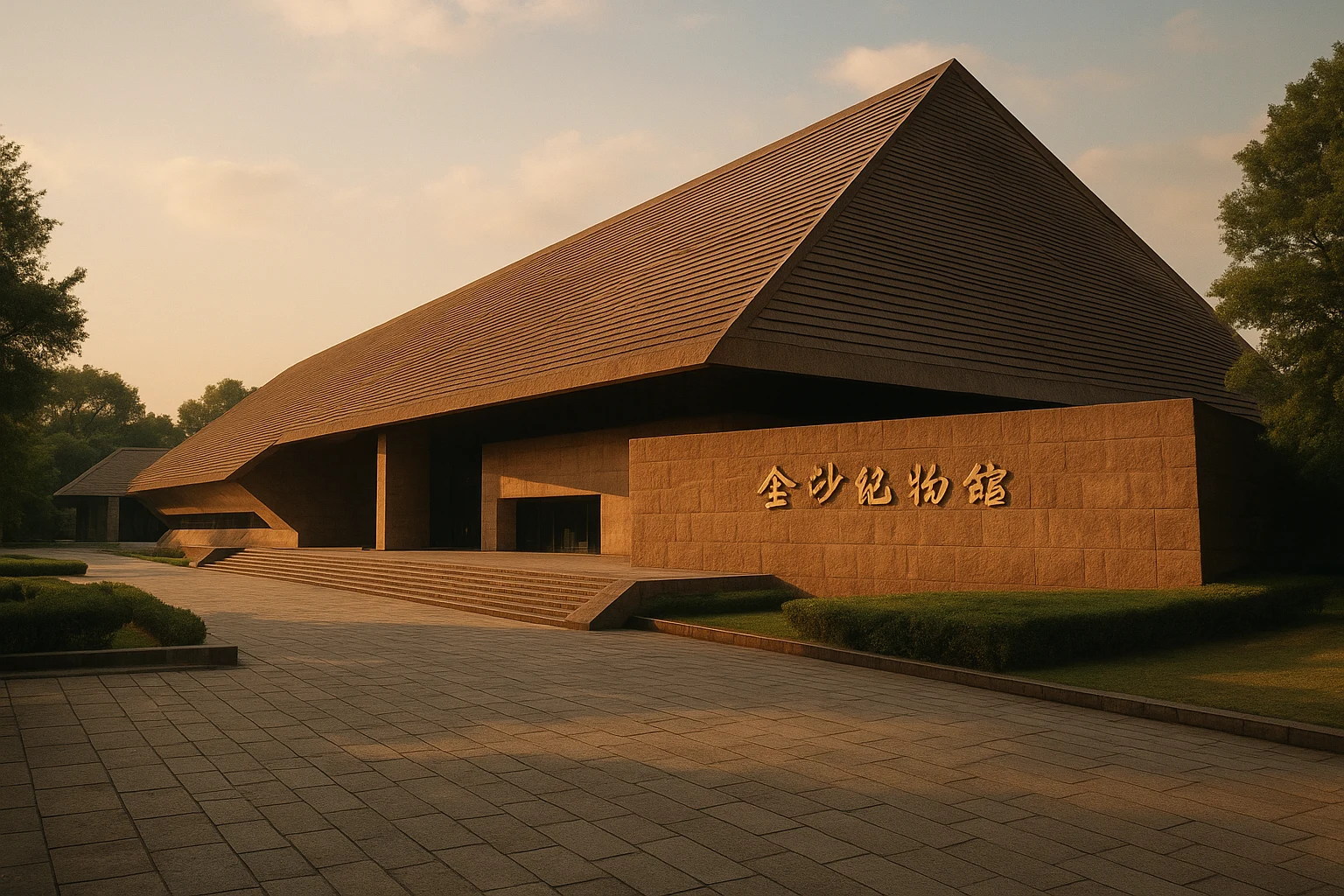
In the Qingyang district of Chengdu, Sichuan Province, a nondescript construction site became the epicentre of one of China’s most important archaeological discoveries of the twenty-first century. The Jinsha Site Museum now stands on that ground, protecting and interpreting the remains of an ancient Shu Kingdom settlement that flourished here between roughly 1200 and 650 BCE. Within two months of the February 2001 discovery, archaeologists had already unearthed thousands of ritual objects — gold crowns, bronze masks, jade discs, and an astounding quantity of elephant ivory — from a culture that had until then existed mainly in legend. Today the museum draws nearly two million visitors a year to its sleek exhibition halls built directly over the excavation trenches, inviting guests to peer down through glass floors at the same earth that workers exposed by accident more than two decades ago. For anyone with a serious interest in ancient civilisations, Jinsha delivers a jolt: here is proof that while Rome was building its first monarchy and the Zhou dynasty was establishing the foundations of classical Chinese culture, an entirely distinct Bronze Age society was conducting elaborate rituals on the Chengdu Plain, leaving behind artwork of breathtaking technical refinement.
History
The Ancient Shu Kingdom and the Chengdu Plain
The civilization centred at Jinsha belongs to a broader cultural tradition known as ancient Shu, whose origins remain partly enigmatic because the Shu left no decipherable written records. Chinese historical texts from the Han dynasty period onwards mention the Shu as a kingdom of the southwest, but their accounts are fragmentary and often mythologised. Archaeological work at nearby Sanxingdui in the 1980s and 1990s established that a sophisticated Bronze Age society had occupied the Chengdu Plain from at least 1700 BCE, producing bronze masks and figures unlike anything found elsewhere in China. The Jinsha site appears to represent the continuation of this tradition after Sanxingdui declined around 1200 BCE, with the centre of power shifting southward to what is now urban Chengdu.
Settlement, Ritual, and Political Life
During its peak occupation from roughly 1200 to 800 BCE, Jinsha was almost certainly the capital of the Shu Kingdom. Excavations have revealed the foundations of large wooden structures, storage pits containing agricultural produce, and an extensive sacrificial area where rituals were performed on a scale that implies considerable political and religious authority. The sheer volume and quality of objects recovered from the sacrificial zone — over ten thousand individual artefacts — suggests that Jinsha was not a peripheral settlement but the nerve centre of a state capable of marshalling substantial labour and wealth. Ivory from Asian elephants, which no longer inhabit Sichuan, was deposited here in such quantities that it indicates either intensive local hunting or a sophisticated long-distance trade network reaching deep into tropical Southeast Asia.
Discovery and Excavation
The story of how Jinsha came to light mirrors many of the world’s great accidental archaeological finds. On 8 February 2001, a mechanical excavator broke through a dense layer of ancient debris and the driver noticed unusual objects in the spoil. Within hours, the Chengdu Municipal Archaeological Institute had a team on site. Emergency excavations continued for months, with archaeologists working alongside construction crews to document and remove objects before the building schedule could advance. The initial response secured the most artefact-rich areas, and subsequent campaigns over the following years expanded the known extent of the site to approximately 5 square kilometres, of which only a fraction has been systematically excavated. The museum itself opened to the public in 2007, having been designed from the outset to incorporate active excavation areas as part of the visitor experience.
A Culture Without Successors
Around 650 BCE, Jinsha appears to have been deliberately abandoned or destroyed. No single cause has been identified, but theories include flooding from the Min River, political conquest by neighbouring states, or gradual ecological pressure from deforestation. By the time the state of Qin absorbed the Shu region in 316 BCE and founded Chengdu as an administrative centre, the memory of Jinsha seems to have faded entirely. The city grew up over the ruins without any recorded awareness of what lay beneath, preserving the site through two and a half millennia of urban development until that excavator blade struck ivory in 2001.
Key Features
The Sacrificial Area and Open Relic Pit
The centrepiece of the museum is the partially covered sacrificial zone, which visitors observe from a raised walkway inside a vast climate-controlled hall. Looking down through reinforced glass panels, you can see ivory tusks, stone bi discs, and bronze figurines lying precisely as they were found, with interpretive labels identifying object types and excavation grid coordinates. The deliberate decision to leave a significant portion of material in situ — rather than removing everything to storage — gives the experience a visceral immediacy that no display case can replicate. The visual effect of dozens of elephant tusks stacked in layers several metres below the viewing platform is difficult to overstate: it communicates the ritual scale of ancient Shu religion more powerfully than any text panel.
The Sun and Immortal Bird Gold Foil
Among the thousands of objects recovered from Jinsha, one has transcended the museum to become an icon of Chinese civilisation as a whole. The Sun and Immortal Bird gold foil is a nearly circular disc roughly 12.5 centimetres in diameter and just 0.2 millimetres thick, fashioned from gold of exceptional purity. Around a rotating inner sun of twelve rays, four stylised birds wheel in the same direction, their wings extended and their bodies forming a perfect compositional balance. The craftsmanship required to cut such fine lines into a sheet of gold this thin — without tearing it — implies tools and techniques that specialists still debate. In 2005 the State Administration of Cultural Heritage adopted this image as the emblem of China’s cultural heritage protection programme, and it has since appeared on passports, official documents, and countless products. Seeing the original in person, housed in a specially designed case with low, directional lighting that emphasises its surface detail, is a different order of experience from any reproduction.
Bronze, Jade, and the Ritual Material Culture
Beyond the gold foil, the museum’s permanent collection encompasses an extraordinary range of ritual objects that illuminate Shu religious practice. Bronze human heads with stylised features and exaggerated ears share display cases with large-eyed masks reminiscent of, but distinct from, the famous Sanxingdui bronzes. Jade zhang blades — long, ceremonially notched tools with no practical cutting function — were deposited in the sacrificial zone by the hundreds, suggesting they served as tokens of authority or offering. Turquoise inlay work on bronze vessels demonstrates command of materials that had to travel considerable distances to reach the Chengdu Plain. Taken together, the collection builds a picture of a society in which ritual production was a primary economic and political activity, consuming enormous resources in objects that were made to be buried rather than used.
The Archaeology Hall and Research Centre
The second major building on the museum campus shifts from exhibition to interpretation, housing thematic galleries that contextualise Jinsha within the broader history of the Chengdu Plain and ancient China. Interactive maps trace the trade routes that supplied Jinsha’s craftspeople with ivory, turquoise, and bronze ore. Scale reconstructions show how the wooden ritual platform at the centre of the sacrificial zone may have appeared when it was in use. A dedicated research wing is visible through glass partitions, where conservators work on new finds in view of the public — a transparency that reinforces the museum’s identity as a living research institution rather than a static repository.
Getting There
The Jinsha Site Museum sits at 227 Jinsha Yizhi Road in Chengdu’s Qingyang District, about 6 kilometres northwest of Tianfu Square in the city centre. It is one of the more accessible archaeological museums in western China, well integrated into Chengdu’s urban transit network.
Metro Line 4 provides the most convenient public transport connection: alight at Jinsha Museum Station, which deposits you directly at the museum’s east entrance after a short walk. The journey from Tianfu Square takes roughly 20 minutes and costs 3–4 RMB depending on distance travelled.
City buses also serve the museum, with routes 7, 27, and 82 stopping nearby. From the city centre, the bus journey takes 25 to 40 minutes depending on traffic. Taxis and Didi (China’s dominant ride-hailing platform) are widely available across Chengdu; the fare from the historic centre typically runs 20–30 RMB. Ensure you have the address saved in Chinese characters — 成都金沙遗址博物馆 — as many drivers will not recognise a romanised address.
Visitors combining Jinsha with the Dujiangyan Irrigation System (about 60 km northwest) should plan for a full day. Dujiangyan is accessible by Chengdu Metro Line 6 to Qingcheng Mountain Station. Leshan, home to the Giant Buddha, lies approximately 120 km to the south and is best reached by high-speed rail from Chengdu East or South stations, with the journey taking around 30 minutes.
When to Visit
Chengdu has a humid subtropical climate, and the Jinsha Site Museum’s partially outdoor campus means weather matters when planning your visit.
Spring, from March through May, is the most rewarding season. Temperatures sit between 15°C and 22°C, rainfall is moderate, and the garden areas between the museum buildings are in bloom. Humidity has not yet climbed to the uncomfortable levels of high summer, and crowd numbers are manageable outside of the Golden Week holiday in early May.
Summer, from June through August, brings Chengdu’s infamous heat and humidity, with temperatures regularly reaching 35°C and prolonged periods of overcast, drizzly weather. The indoor exhibition halls are air-conditioned and remain comfortable, but the outdoor relic pit area and garden paths become unpleasant to linger in. If visiting in summer, arrive at opening time and plan your outdoor exploration for early morning.
Autumn, September through November, offers conditions comparable to spring and is widely considered the second-best season. October’s National Day Golden Week (1–7 October) is extremely busy across all of Chengdu’s cultural sites, so if your schedule permits, the weeks immediately before or after the holiday are far more peaceful.
Winter, December through February, sees Chengdu’s famous grey skies and persistent light fog. Temperatures rarely drop below 5°C, so the cold is not prohibitive, and visitor numbers fall to their annual low. The museum is less crowded during these months, which makes for unhurried viewing of the most popular artefacts.
| Quick Facts | |
|---|---|
| Location | Qingyang District, Chengdu, Sichuan, China |
| Site Period | c. 1200–650 BCE (Late Bronze Age, ancient Shu Kingdom) |
| Museum Opened | 2007 |
| Site Area | Approximately 5 km² (partially excavated) |
| Admission | 80 RMB adults; reduced rates for students/seniors |
| Opening Hours | Tue–Sun 9:00 AM–5:00 PM; closed Mondays |
| Nearest Metro | Line 4, Jinsha Museum Station |
| Key Artefact | Sun and Immortal Bird gold foil (c. 1000 BCE) |
| Artefacts Recovered | Over 10,000 individual objects |
| UNESCO Status | Not listed (national-level protected site) |
Frequently Asked Questions
What is the Jinsha Site Museum most famous for?
The museum is best known for the Sun and Immortal Bird gold foil, a paper-thin disc of pure gold etched with stylized birds in flight around a rotating solar motif. Dating to roughly 1000 BCE, this extraordinary artifact has become the official symbol of China's cultural heritage and intangible cultural property protection.
How old is the Jinsha archaeological site?
The Jinsha site dates to approximately 1200–650 BCE, placing it squarely in the Bronze Age. It served as the political and religious capital of the ancient Shu Kingdom during this era, making it a direct successor culture to the slightly earlier Sanxingdui civilization discovered about 40 km to the north.
How was the Jinsha site discovered?
The site was found accidentally in February 2001 when construction workers excavating for a residential development in western Chengdu struck a cache of elephant ivory tusks and bronze objects. Archaeologists arrived immediately, halted construction, and began systematic excavations that have continued for over two decades.
How long does a visit to the Jinsha Site Museum take?
Most visitors spend two to three hours exploring the two main exhibition halls and the open archaeological relic pit viewing gallery. Budget an extra hour if you want to stroll through the outdoor garden that connects the buildings, where replicas and interpretive panels trace the site's excavation history.
What are the opening hours and admission prices?
The museum is open Tuesday through Sunday from 9:00 AM to 5:00 PM, with last entry at 4:00 PM. It is closed on Mondays. Admission is 80 RMB for adults. Discounts apply for students and seniors, and children under 1.2 metres in height enter free.
Can I visit Jinsha and Sanxingdui Museum on the same trip?
Yes, and it is strongly recommended. Sanxingdui Museum is about 40 km north of Chengdu near Guanghan and can be reached by bus or private car. Many visitors combine both sites in a single long day, departing Chengdu early to visit Sanxingdui first and returning to Jinsha in the afternoon.
Is photography allowed inside the museum?
Personal photography without flash is permitted in most areas, including the open relic pit gallery and the main permanent exhibition hall. Some temporary exhibition rooms restrict photography — watch for posted signs near each entrance. Tripods are generally not allowed inside the buildings.
Nearby Ancient Sites
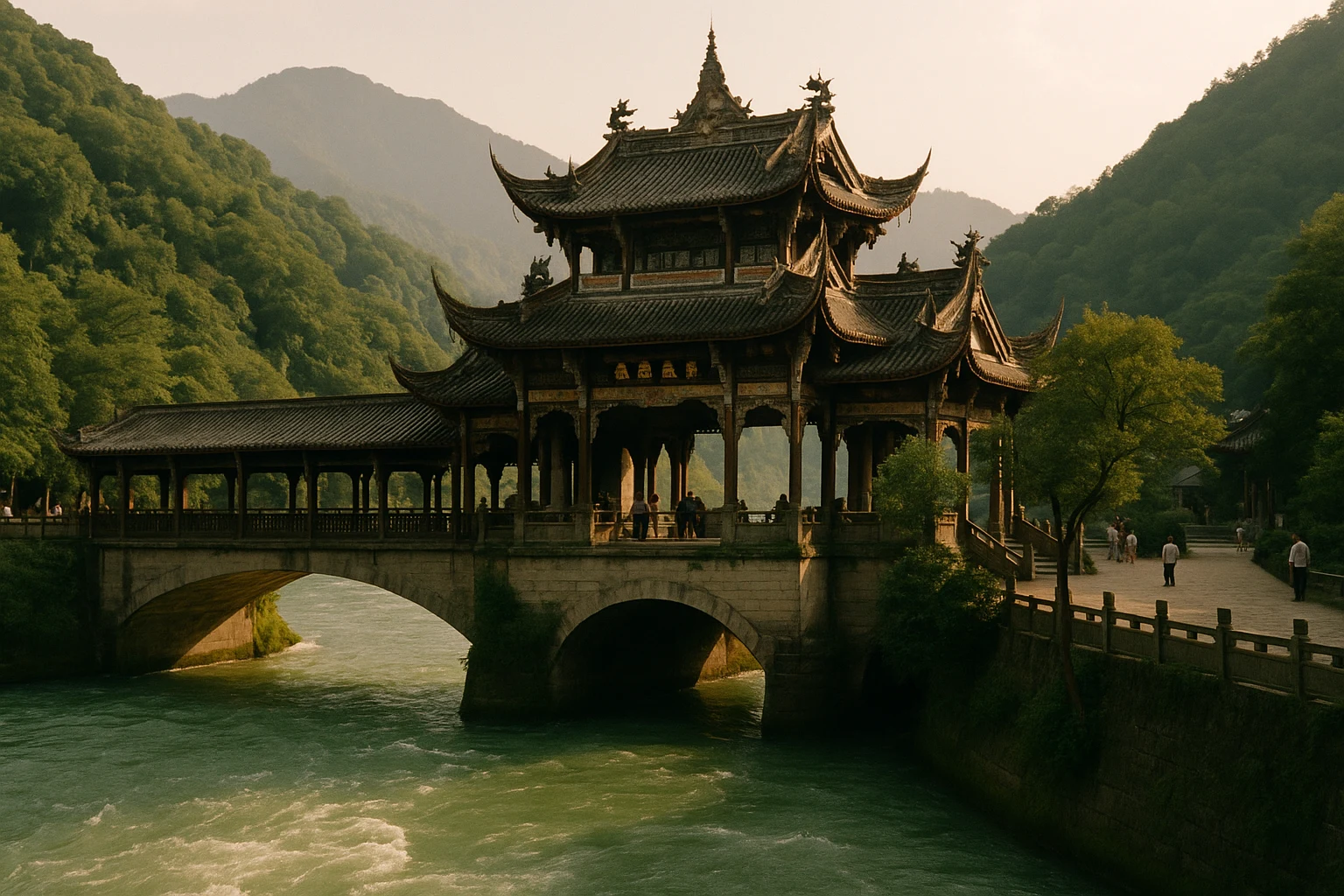
Dujiangyan Irrigation System
Explore Dujiangyan, the world's oldest functioning irrigation system, built in 256 BCE by engineer L...
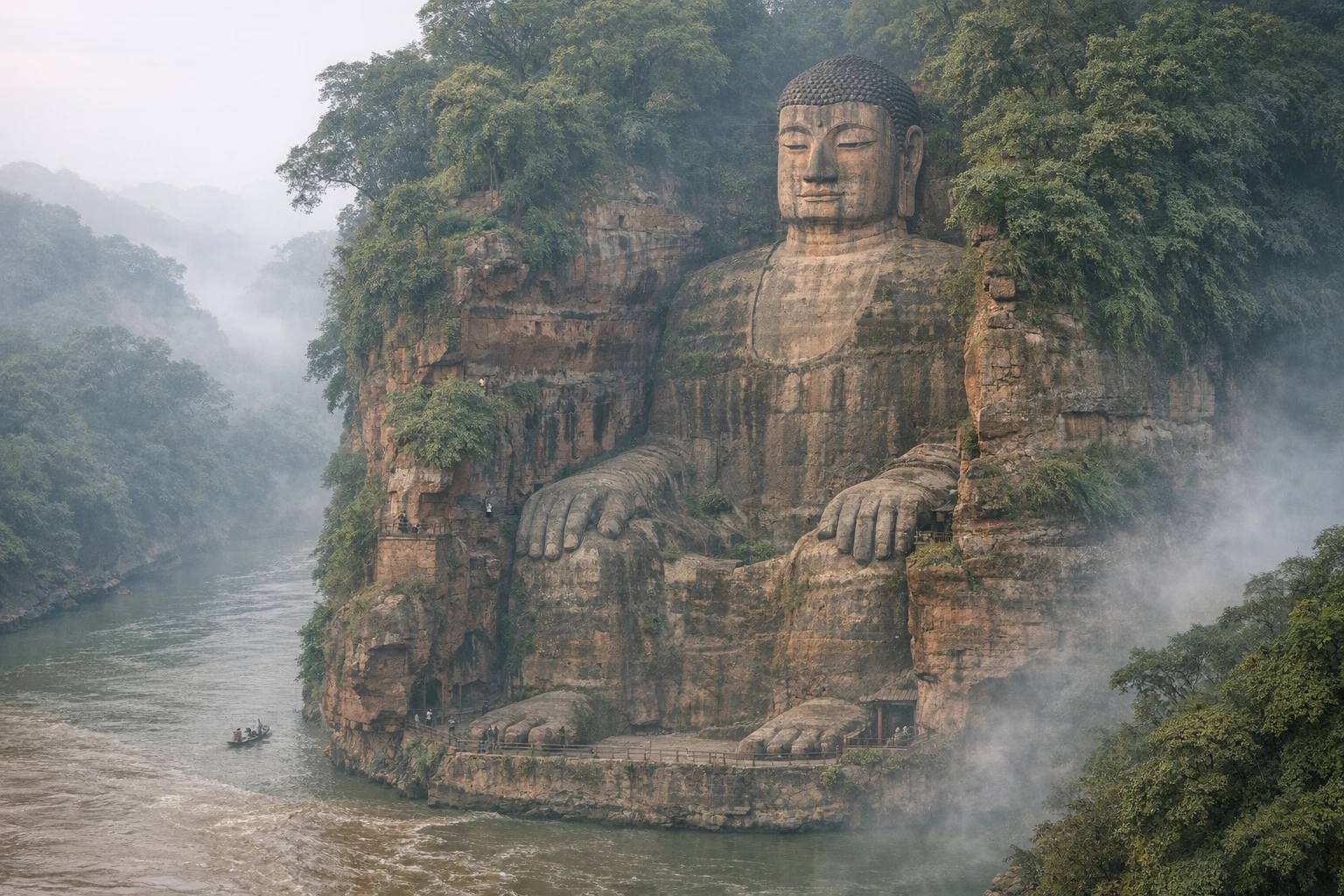
Leshan Giant Buddha
Tang Dynasty ChinaThe world's tallest pre-modern stone Buddha, carved into a clifftop in Sichuan, China, overlooking t...
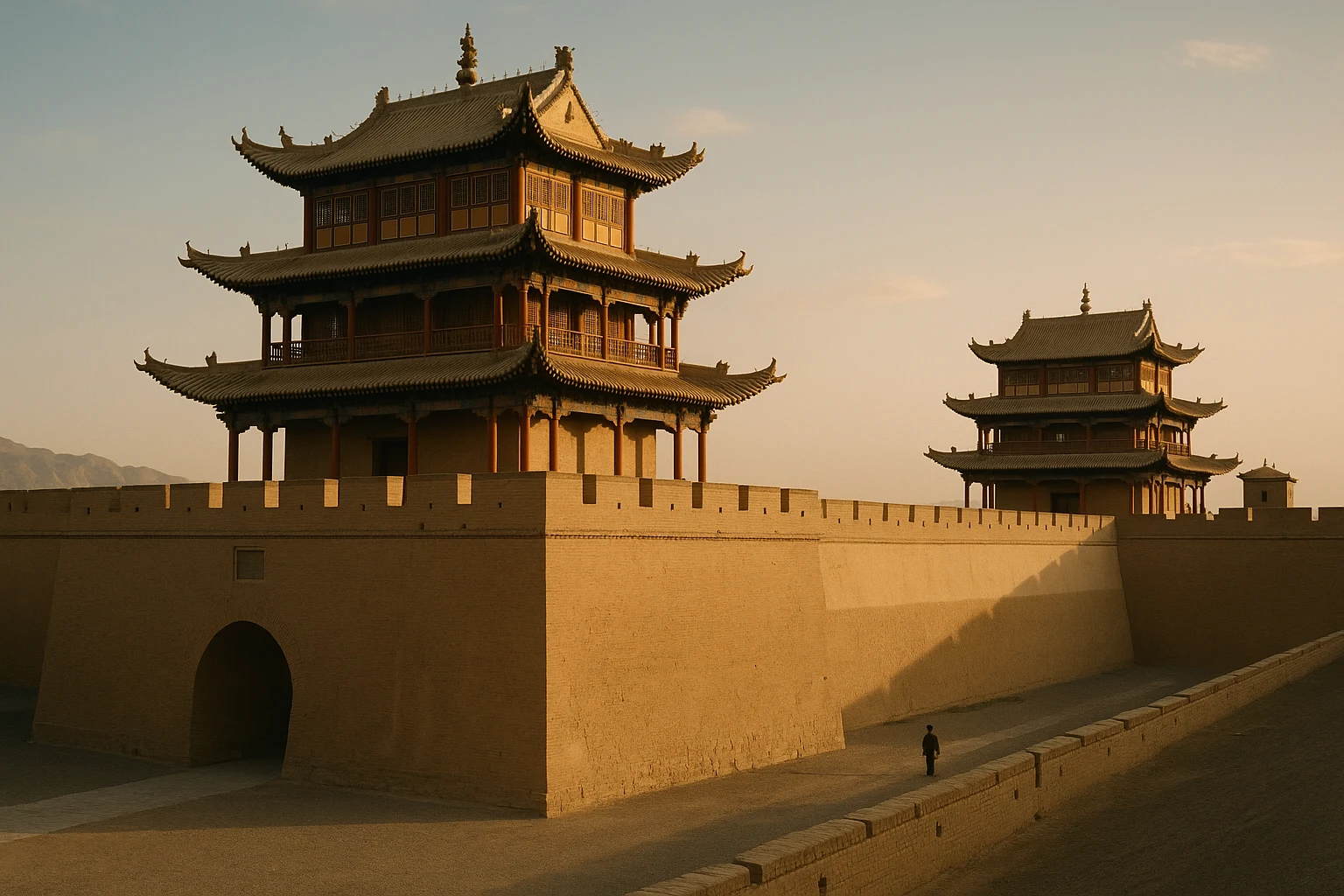
Jiayuguan Fort
Ming Dynasty ChinaJiayuguan Fort guards the western terminus of the Ming Great Wall in Gansu, China — the last strongh...