Quick Info
Curated Experiences
Kaiping Diaolou Day Tour from Guangzhou
Kaiping Diaolou and Villages Private Tour
Guangdong Heritage and Diaolou Watchtowers Tour
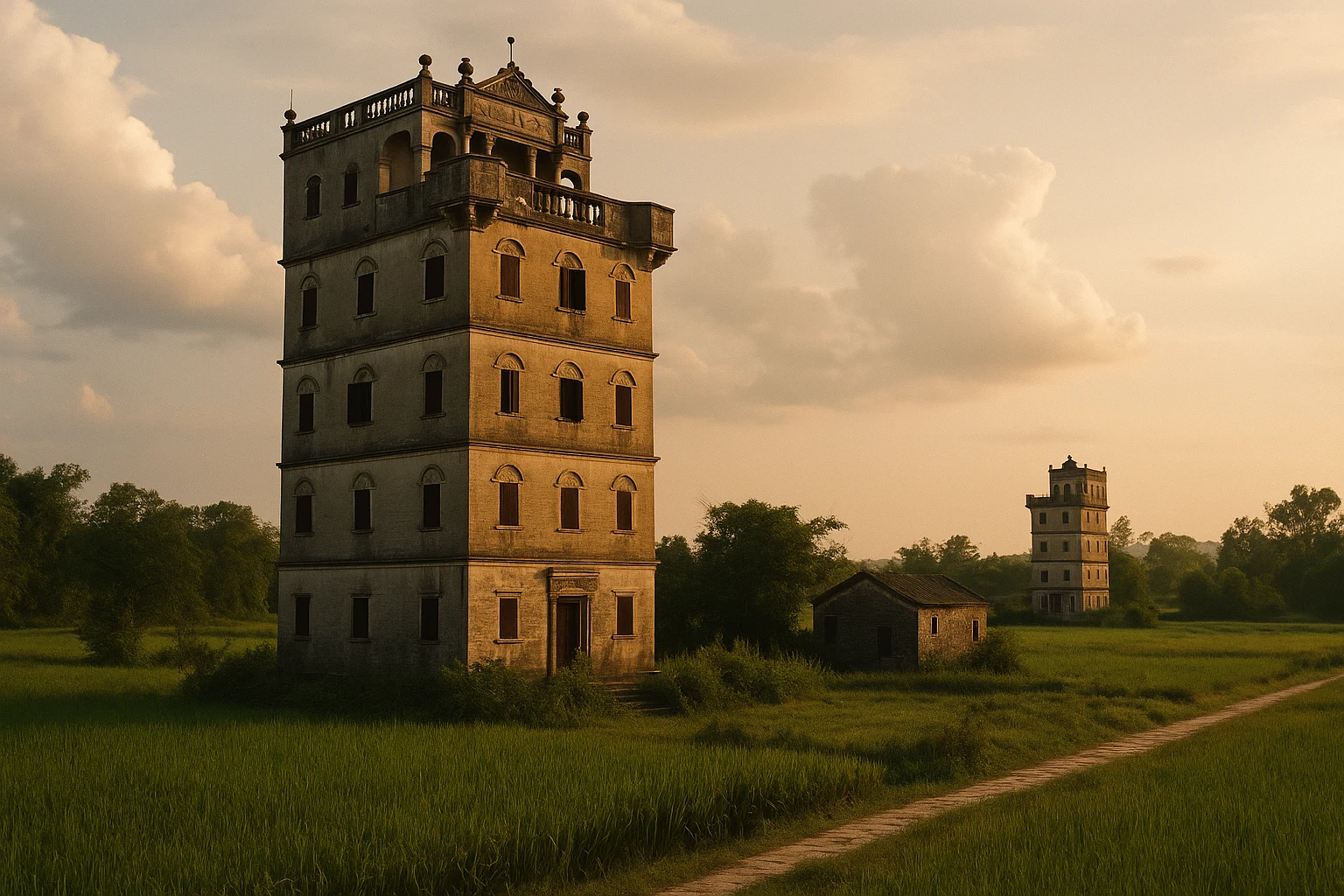
Rising improbably from the flatlands of the Pearl River Delta, the Kaiping Diaolou stand as one of China’s most visually arresting and culturally layered heritage landscapes. These fortified multi-storey watchtowers, scattered across rice paddies and bamboo groves in Guangdong Province’s Kaiping County, look as though an architect with a library full of European pattern books had been asked to reimagine the Chinese farmhouse. Baroque balustrades crown Romanesque arches. Crenellated battlements borrowed from medieval Europe top walls built by Cantonese craftsmen. Islamic-inspired domes sit comfortably beside traditional upswept eaves. The effect is surprising, even disorienting — and then, the more you understand the story behind these towers, entirely logical. More than 1,800 diaolou survive across the countryside, each one a concrete letter sent home by a Chinese emigrant who made good abroad and wanted the village to know it. UNESCO agreed they were extraordinary enough to inscribe as a World Heritage Site in 2007, recognising in the diaolou a rare physical record of the global Chinese diaspora and of the bold, hybrid culture that emigration produced.
History
Roots of Emigration and Insecurity
Guangdong Province was among the first regions of China to feel the pull of emigration. From the mid-19th century onward, economic hardship, famine, and the social upheaval of the Taiping Rebellion drove tens of thousands of men from the Siyi (Four Counties) region — of which Kaiping was one — to seek their fortunes in California’s gold rush, on the transcontinental railroads of North America, and in the mines and plantations of Southeast Asia. They went as labourers, many intending to return. A significant number eventually did, carrying with them savings, new ideas, and a transformative ambition to rebuild their villages.
The countryside they came back to was dangerous. Kaiping and the surrounding counties had a long history of banditry, inter-clan feuding, and periodic flooding from the Tanjiang River. Local strongmen extorted farmers, and the late Qing state had neither the resources nor the reach to police the rural delta effectively. The diaolou — a term combining the character for a defensive tower with that for a multi-storey building — were not invented by the overseas Chinese. Fortified village towers had existed in the region for centuries, serving as places of refuge during raids. But the scale and ambition of the structures that emerged from the 1880s onward was something entirely new.
The Building Boom
The golden era of diaolou construction ran roughly from the 1900s through the 1930s. Remittances from North America, Australia, and Southeast Asia flooded into Kaiping. A single successful emigrant might fund the construction of a tower for his lineage, or a group of families would pool resources to build a communal refuge tower. The most spectacular examples, however, were private residential towers — statements in reinforced concrete and imported materials that announced a family’s prosperity to the whole county.
Builders hired local craftsmen who worked from sketches, photographs, and architectural pattern books their patrons had brought back or sent from abroad. The results were eclectic in the extreme. Elements of Italian Renaissance, Baroque, Gothic, Moorish, Byzantine, and Art Deco architecture appear on the same facades. Window grilles were cast in the United States and shipped to Guangdong. Ceramic tiles arrived from Europe. Yet underneath the exotic decoration, the towers retained a distinctly Chinese spatial logic: the ground floors were often used for storage or animals, the upper floors for habitation, and the roof-level watch rooms for defence. Iron doors and shuttered gun ports could be locked from within, and the towers were stocked with provisions that could sustain a family for weeks.
Decline and UNESCO Recognition
Japanese invasion during the Second Sino-Japanese War (1937–1945) brought the building era to an abrupt end. Many families fled or returned to emigration. The Communist victory in 1949 effectively severed overseas remittances and the social conditions that had motivated tower construction. Many diaolou fell into disuse; villagers moved into more practical modern housing while the towers were left to weeds and time. Several were partially demolished for building materials in subsequent decades.
International scholarly and tourism interest revived in the 1990s, driven partly by the descendants of Kaiping emigrants — particularly from Canada, the United States, and Australia — who began returning to research family histories. Local and provincial government investment in restoration and tourism infrastructure followed. The 2007 UNESCO inscription, covering five village clusters and 1,800 towers, secured the landscape’s future and placed it among the world’s most remarkable examples of architectural fusion and diaspora heritage.
Key Features
The Five UNESCO Village Clusters
UNESCO’s inscription focuses on five representative clusters that together capture the full range of diaolou typology. Zili Village (自力村) is the most photogenic and the most visited. Its fifteen towers of varying heights, surrounded by lotus ponds and framed by ancient banyan trees, present a tableau that appears almost too composed to be real. The towers here range from relatively modest four-storey affairs to grand eight-storey residential towers with elaborate roof decorations. The village also preserves the residential courtyard houses — called luofang — that the towers were built to protect, giving visitors a sense of the complete domestic landscape.
Jinjiangli is dominated by two towers of exceptional height — the Ruishi Lou and the Jingjiang Lou — which loom over the low-rise village houses in a way that makes the defensive intent unmistakable. Majianglong, reached along a narrow road through dense bamboo forest, is deliberately atmospheric: the towers emerge from the green tunnel of bamboo with a theatrical quality that photographers prize. Sanmenli and the Fangshi Denglou cluster complete the UNESCO zone, each offering further variations on the basic diaolou form.
Architectural Hybridity
The sheer variety of architectural references on display across the diaolou is staggering, and studying them in sequence becomes a kind of game. Look for the tower whose designer clearly loved Venetian Gothic loggias and placed one on every upper floor. Find the one that appears to have drawn on an Edwardian English country house, right down to the decorative chimney pots. Notice how smoothly Chinese decorative motifs — cloud patterns, bat symbols of luck, auspicious characters rendered in plaster — coexist with Roman pilasters and Corinthian capitals. This hybridity was not accidental or incoherent. It was the deliberate expression of a double identity, a pride in both Chinese roots and acquired cosmopolitan experience.
Structurally, most diaolou were built in reinforced concrete, a relatively modern material that the builders adopted with enthusiasm because it was fireproof, flood-resistant, and could be moulded to nearly any decorative shape. Some earlier towers used fired brick or rammed earth, and the contrast between materials in adjacent towers tells its own story of the changing financial fortunes of different emigrant generations.
Interior Life
Where towers have been restored and opened to visitors, the interiors reveal how fully functional these spaces were meant to be. Wooden staircases lead through floors furnished with period furniture, family photographs, imported clocks and porcelain, and faded remittance letters. The rooftop watch rooms, with their gun ports and lookout windows, offer panoramic views across the delta plain. A well, cistern, and larder on the lower floors completed the self-sufficiency of the larger residential towers. The effect is of a time capsule, sealed at some point in the 1930s or 1940s when the last family departed, and only recently reopened.
The Surrounding Landscape
The diaolou cannot be separated from the agricultural landscape that surrounds them. The flat, fertile delta plain, threaded with irrigation channels and patterned with rice paddies, creates long sight lines that make the towers visible from great distances — a quality that was part of their defensive function but today makes the landscape feel like a composition. Dawn and dusk light transforms the scene, turning the paddy water gold and deepening the colour of the weathered concrete.
Getting There
Kaiping is well connected to Guangzhou, which is itself a major international air hub with a high-speed rail link to Hong Kong (roughly 50 minutes from West Kowloon Station to Guangzhou South). From Guangzhou South Station, high-speed trains (G and D-class) reach Kaiping South Station in approximately 50 minutes, with tickets from around ¥55 for second class. Trains depart frequently throughout the day. From Kaiping South station, the village clusters are 15–40 kilometres away; the most practical option is to hire a taxi or arrange a day-tour package that includes transport between villages.
Alternatively, long-distance buses depart from Guangzhou’s Fangcun Bus Terminal and Tianhe Bus Terminal for Kaiping city bus station, taking 1.5–2 hours and costing ¥40–60. From Kaiping city, local buses serve some village clusters (around ¥5–10 per leg), but schedules are infrequent and connections between clusters require planning. Renting an electric scooter in Kaiping city (roughly ¥80–120 per day with a deposit) is a popular option for independent travellers who want flexibility.
Organised day tours from Guangzhou or Hong Kong (3–4 hours from Hong Kong by coach) are widely available and make logistical sense given the dispersed geography of the clusters. For visitors combining the diaolou with other Guangdong destinations, Kaiping serves as a base for day trips to the Chikan Old Town area and the surrounding water villages.
When to Visit
The ideal window for visiting the Kaiping Diaolou runs from October through early December. Temperatures drop to a comfortable 18–25 °C, humidity falls after the long wet season, and the paddies may still be green or freshly harvested, offering superb colour contrast with the towers. Visibility is at its best, and the risk of typhoon disruption — a real consideration for Guangdong in summer — is essentially zero.
Spring (March–April) brings a different kind of beauty. The lotus ponds around Zili Village begin to bloom, and morning mist rolls in from the delta, creating atmospheric conditions that photographers actively seek. Rain is more common in this period, and the humidity begins to build, but short clear spells between showers can be spectacular.
Summer (June–September) is the least comfortable season. Temperatures regularly exceed 35 °C and humidity approaches tropical levels. Typhoon season peaks between July and September, which can mean sudden heavy rain, flooding, and occasional transport disruptions. If summer is the only option, start as early as possible in the morning — by 10 a.m. the heat is intense — and carry abundant water.
Chinese public holidays, particularly Golden Week in early October and the Spring Festival period in late January or February, bring domestic tourist crowds that can overwhelm the smaller village clusters. Arriving on a weekday during shoulder season, or at opening time on a holiday weekend, makes a significant difference to the experience.
| Quick Facts | |
|---|---|
| UNESCO Inscription | 2007 |
| Location | Kaiping County, Guangdong Province, China |
| Coordinates | 22.37°N, 112.49°E |
| Number of Towers | Approx. 1,800 surviving |
| UNESCO Villages | Zili, Jinjiangli, Sanmenli, Fangshi Denglou, Majianglong |
| Main Building Period | c. 1880s – 1930s |
| Architectural Styles | Chinese, Baroque, Romanesque, Gothic, Moorish, Art Deco |
| Entrance Fee | ¥60–80 (Zili); combined pass ¥150–180 |
| Nearest City | Guangzhou (~90 min by rail/road) |
| Best Season | October–December |
| Language | Cantonese / Mandarin; English signage limited |
| Currency | Chinese Yuan (CNY / ¥) |
Frequently Asked Questions
What are the Kaiping Diaolou?
The Kaiping Diaolou are a collection of multi-storey fortified towers and associated villages in Kaiping County, Guangdong Province. Built between the late 19th and mid-20th centuries by overseas Chinese emigrants returning from North America and Southeast Asia, the towers blend Chinese architectural traditions with Western styles including Baroque, Roman, and Islamic motifs. UNESCO inscribed them as a World Heritage Site in 2007.
How many diaolou towers still exist?
Approximately 1,800 diaolou towers survive across Kaiping and neighbouring Taishan County, though only a portion are open to visitors. The UNESCO inscription focuses on five representative village clusters: Zili, Jinjiangli, Sanmenli, Fangshi Denglou, and Majianglong Bamboo Forest.
Why did overseas Chinese build such elaborate towers?
The towers served dual purposes. As defensive structures, they protected families from bandits and floodwaters during periods of social instability. As status symbols, they allowed emigrants who had made fortunes abroad to demonstrate their success back home. Remittances funded highly personalised designs that incorporated architectural fashions the builders had encountered in the United States, Canada, and Southeast Asia.
Which village is the best to visit?
Zili Village (自力村) is the most visited and arguably the most photogenic, with 15 diaolou set amid lotus ponds and banyan trees. Jinjiangli impresses with two extraordinarily tall towers, while Majianglong is praised for its atmospheric bamboo forests framing the towers. Most visitors combine two villages on a single day trip.
How do I get from Guangzhou to Kaiping Diaolou?
The fastest option is taking a high-speed train from Guangzhou South Station to Kaiping South (about 50 minutes, from ¥55). From Kaiping city, local buses or taxis reach the village clusters in 20–40 minutes. Alternatively, direct express buses run from Guangzhou's Fangcun or Tianhe bus terminals to Kaiping city in roughly 1.5–2 hours for around ¥40–60.
Is there an entrance fee for the diaolou villages?
Yes. Ticket prices vary by village cluster. Zili Village charges around ¥60–80 per person, while a combined pass covering multiple clusters costs approximately ¥150–180. Prices are subject to change, so check current rates at the gate or via the official Kaiping tourism website before visiting.
What is the best time of year to visit Kaiping Diaolou?
October through early December offers the most comfortable visiting conditions — cooler temperatures, lower humidity, and clearer skies ideal for photography. Spring (March–April) can be beautiful when lotus blossoms emerge, though morning fog is common. Avoid July and August if possible, as Guangdong's heat and humidity peak and typhoon season increases the chance of disruption.
Nearby Ancient Sites
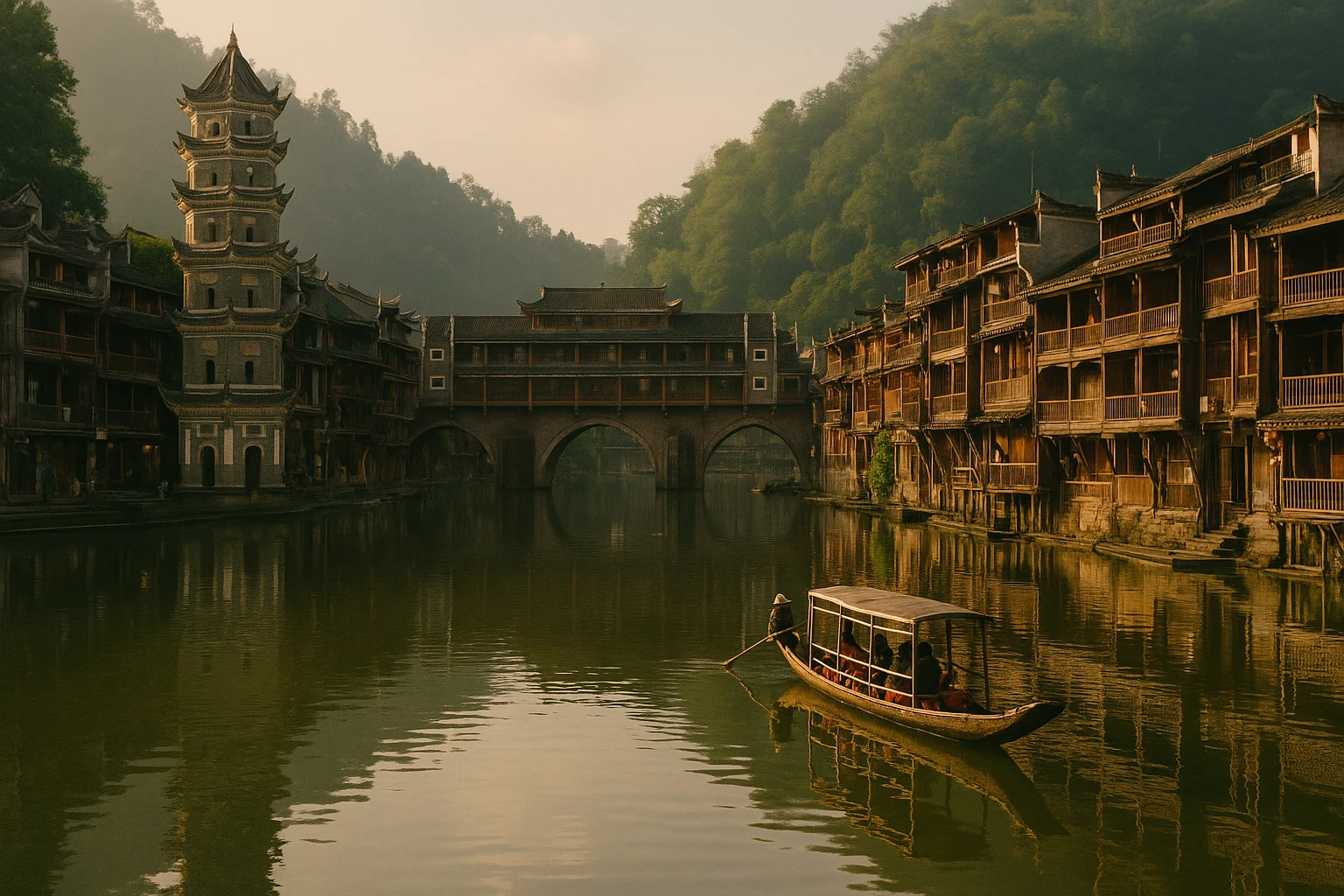
Fenghuang Ancient Town
Ming and Qing Dynasty ChinaFenghuang Ancient Town preserves Ming and Qing dynasty architecture along the Tuojiang River in west...
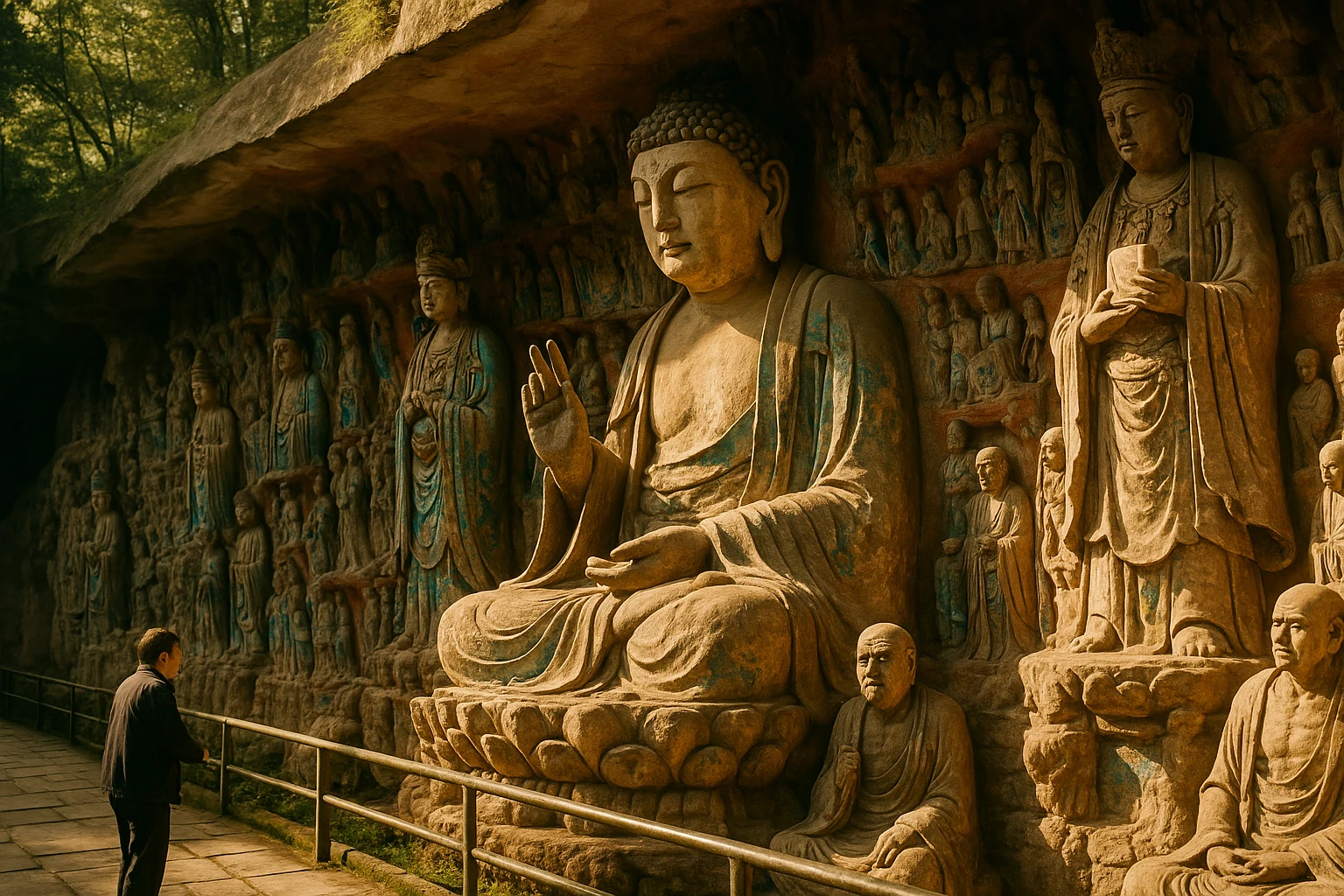
Dazu Rock Carvings
Tang and Song Dynasty ChinaAncient Buddhist, Taoist, and Confucian rock sculptures carved into cliffsides across Dazu District,...
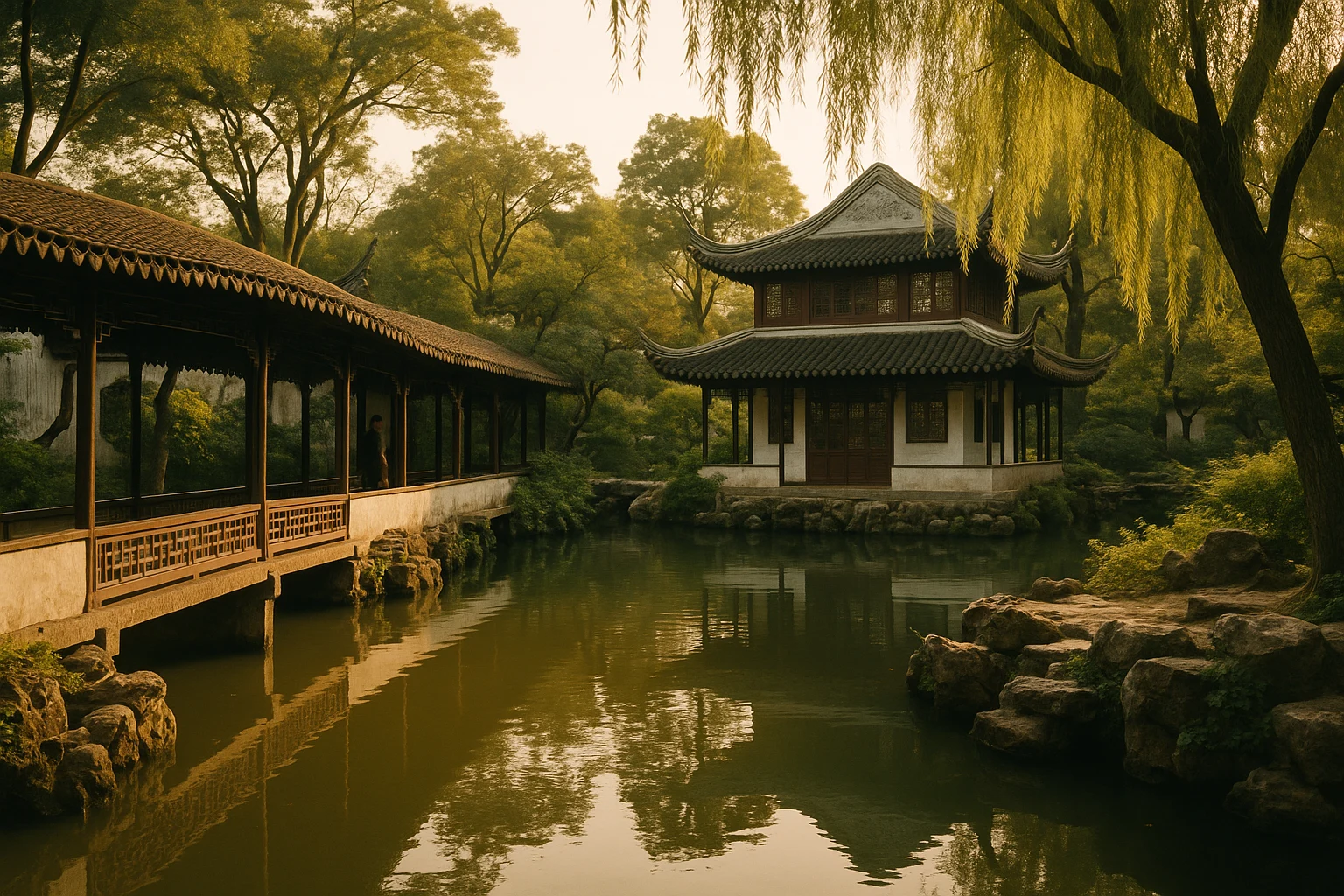
Humble Administrator's Garden
Chinese ImperialSuzhou's largest classical garden, a UNESCO World Heritage masterpiece of water, stone, and pavilion...
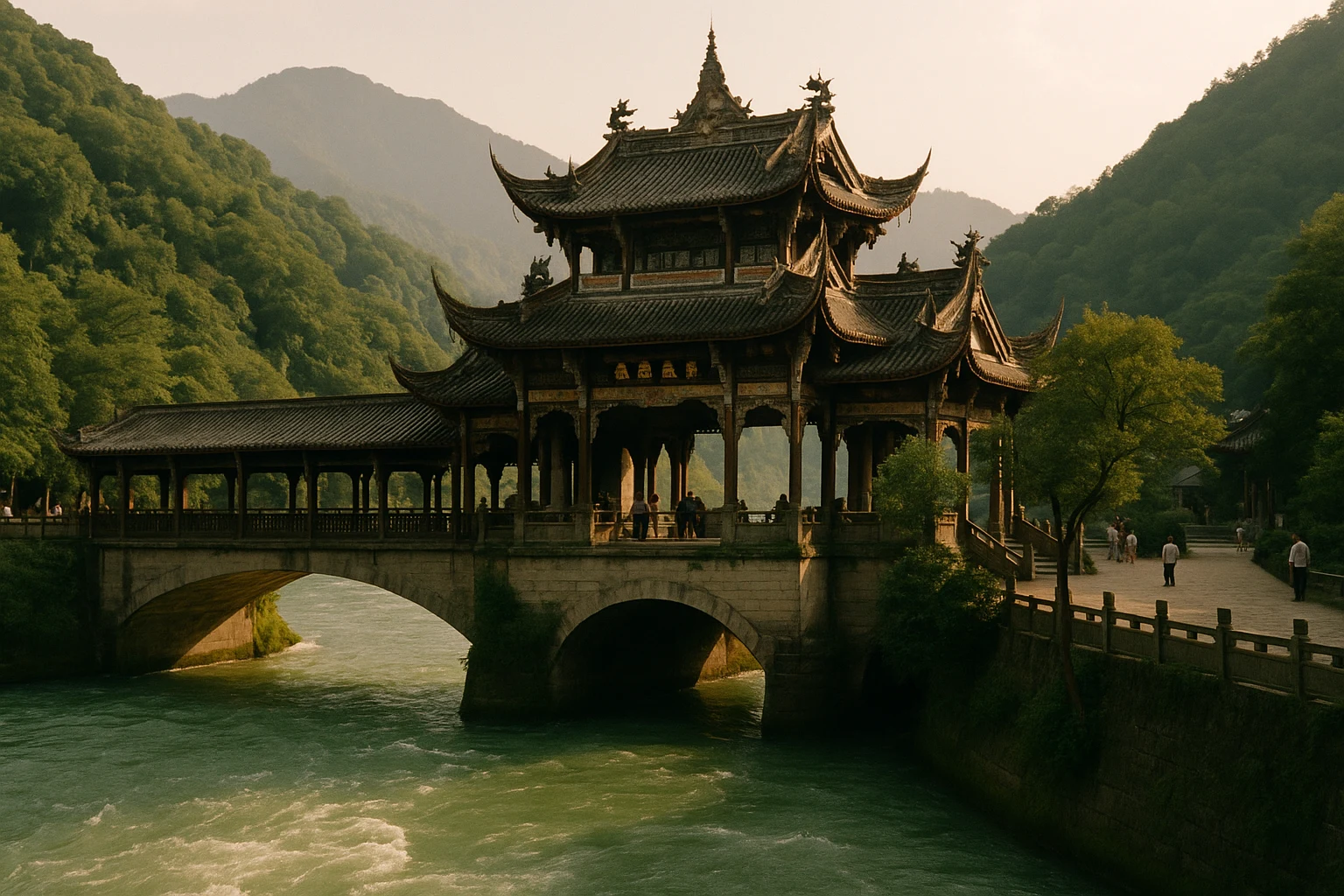
Dujiangyan Irrigation System
Explore Dujiangyan, the world's oldest functioning irrigation system, built in 256 BCE by engineer L...
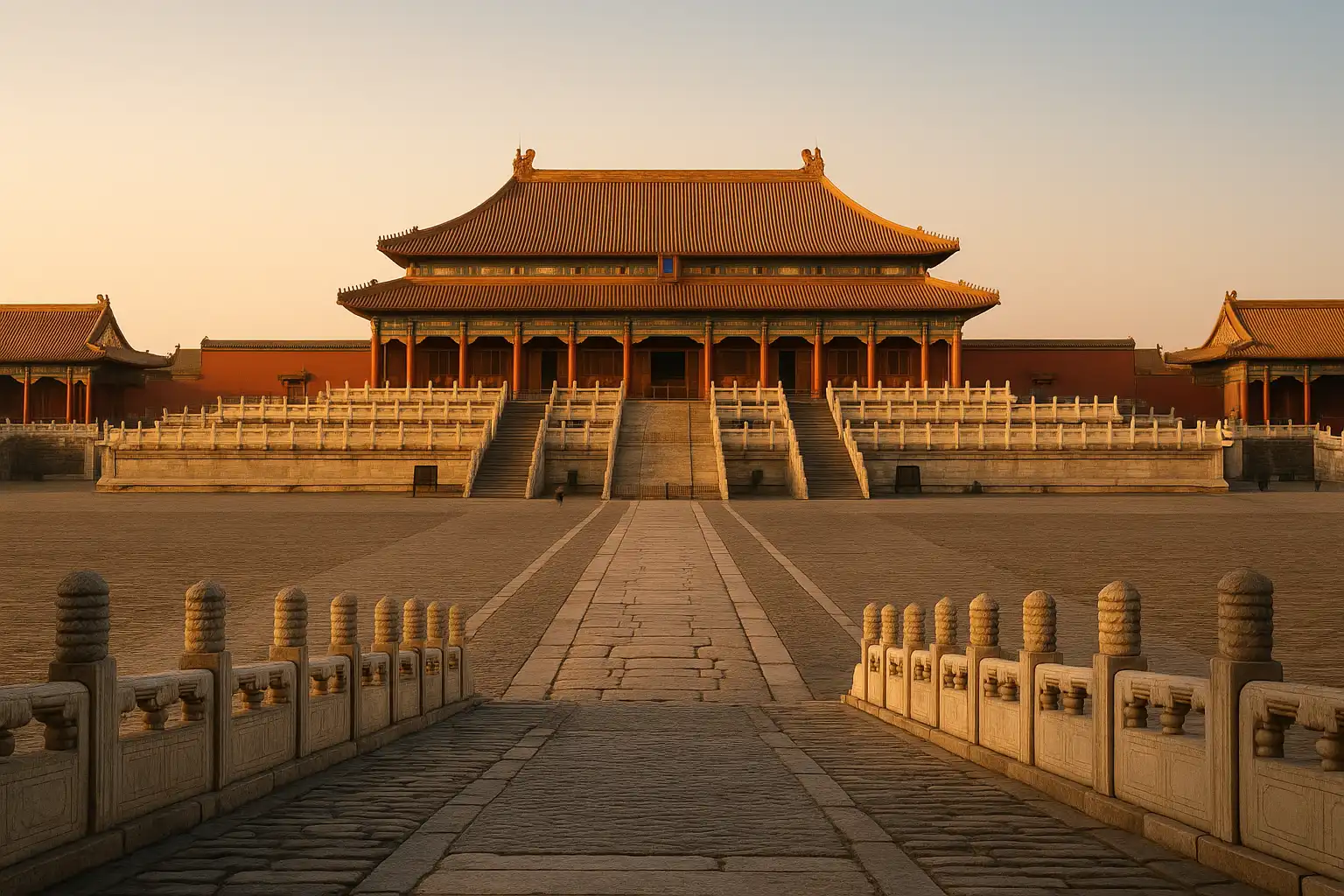
Forbidden City China Travel Guide 2026: Imperial Palace of Beijing
Chinese ImperialExplore the Forbidden City, China's imperial palace for 500 years. Discover the Hall of Supreme Harm...