Quick Info
At a glance
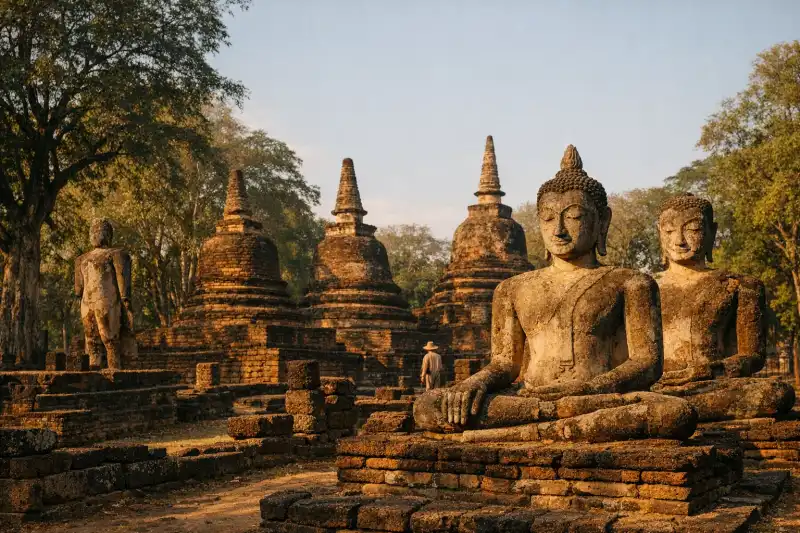
Kamphaeng Phet in Thailand is one of those historic places that reveals itself gradually. At first glance, it can seem quieter and less immediately famous than Sukhothai or Ayutthaya, but that calm is part of its appeal. Behind modern streets and the broad river plain lies an old frontier city of walls, moats, monasteries, and temple compounds built largely in dark laterite, the iron-rich stone that gives the ruins their distinctive weight and color. Some monuments stand within the former city, arranged in a clear urban pattern; others sit among trees where roots, shade, and broken towers create a landscape that feels closer to a memory than a museum.
Part of the UNESCO-listed ensemble of the Historic Town of Sukhothai and Associated Historic Towns, Kamphaeng Phet once formed a strategic southern stronghold of the Sukhothai kingdom. Its very name, often translated as “Diamond Wall,” hints at defense, resilience, and political importance. Yet the city was never only a military outpost. It was also a religious center where Buddhist art, royal patronage, and regional craftsmanship met in a distinctive architectural style. For travelers today, Kamphaeng Phet offers a rewarding mix of history and atmosphere. You come not only to check off monuments, but to walk through a quieter chapter of Thai history—one where ruined chedis rise from forest clearings, ancient walls still trace the shape of a city, and the past feels unusually close to the landscape around it.
History
Early settlement and regional context
Long before Kamphaeng Phet became an important fortified center, the Chao Phraya basin and the northern plains of what is now Thailand supported interconnected communities shaped by river trade, agriculture, and shifting political loyalties. The area around Kamphaeng Phet lay along important routes linking the northern polities with the central plains. Its geography mattered: fertile land supported settlement, while the Ping River connected the region to broader economic and political networks.
By the 13th century, the rise of the Sukhothai kingdom transformed this landscape. Sukhothai and its associated towns were not isolated cities but a constellation of centers with specialized functions. Kamphaeng Phet emerged within this system as a frontier and defensive city, helping secure access between the core of the kingdom and the southern territories. The location gave it strategic significance, but it also ensured investment in religious and civic architecture. The city developed not simply as a garrison, but as a regional capital with temples, monastic compounds, and administrative spaces.
Kamphaeng Phet under the Sukhothai kingdom
Kamphaeng Phet reached prominence during the 14th and 15th centuries, when Sukhothai’s political and cultural influence was at its height. Historical sources suggest that the city may have had dual urban zones: one associated with the western bank and another with the more formal walled city on the eastern side. What survives most clearly today is the monumental landscape of the historical park, where city walls, gates, moats, and temple ruins show deliberate planning.
The architecture of this period reveals both shared Sukhothai traditions and local variation. Characteristic lotus-bud chedis, viharns, mandapas, and Buddha images appeared here, but Kamphaeng Phet also developed a marked preference for laterite as a major building material. The result is a more rugged visual character than the brick-dominated monuments of some other Thai historic cities. Temples such as Wat Phra Kaeo, Wat Phra That, and Wat Chang Rop likely benefited from elite patronage and served not just devotional needs but also the political aim of expressing royal legitimacy.
The city’s defensive role remained central. Its walls and moats were not symbolic flourishes; they were practical features for a kingdom navigating regional competition. Kamphaeng Phet helped protect the southern approaches of Sukhothai and may have functioned as a refuge or military staging point during periods of conflict. In that sense, religion and defense were intertwined: temple building asserted merit and sacred order, while fortifications upheld earthly stability.
Incorporation into Ayutthaya and later decline
From the 15th century onward, the political balance in mainland Southeast Asia shifted. Ayutthaya expanded in strength and influence, and Sukhothai’s autonomy gradually diminished. Kamphaeng Phet, like other associated towns, was drawn into this changing world. The city remained important because of its strategic position, but its role evolved within the orbit of larger and more centralized powers.
As political priorities shifted, some monuments were maintained or modified while others fell into relative neglect. Urban centers in premodern Southeast Asia could contract, move, or be partially abandoned depending on warfare, river changes, trade patterns, and dynastic strategy. Kamphaeng Phet appears to have declined gradually rather than disappearing in a single catastrophic event. Its fortifications, monasteries, and sacred spaces remained as reminders of former importance even as active political power moved elsewhere.
By the early modern period, much of the old city had lost its original administrative function. Forest growth, weathering, and the reuse of building materials altered the site over centuries. Like many ancient cities in the region, Kamphaeng Phet entered a long afterlife in which ruins persisted in local memory before attracting modern archaeological attention.
Rediscovery, conservation, and UNESCO recognition
In the modern era, Kamphaeng Phet gained renewed significance through archaeological surveys, heritage protection, and national interest in Thailand’s historic kingdoms. Conservation efforts sought to stabilize monuments, define the historical park, and present the city as part of a broader Sukhothai cultural sphere. This process involved clearing vegetation in some areas, preserving walls and temple platforms, and interpreting the site for both domestic and international visitors.
UNESCO recognition reinforced Kamphaeng Phet’s status as a major heritage destination. Included with Sukhothai and Si Satchanalai under the designation of associated historic towns, it is now understood as essential to the story of early Thai state formation, Buddhist monumental art, and regional urban planning. Today, the site stands at an interesting balance point: protected enough to be legible, but still atmospheric enough to feel like a place discovered rather than overly staged. That combination is one of the reasons Kamphaeng Phet leaves such a lasting impression.
Key Features
Kamphaeng Phet’s most striking feature is the contrast between formal urban planning and the softer, more organic mood of its ruin fields. Within the old city, traces of walls and moats still define the settlement’s defensive logic. These earthworks and masonry remains give visitors a sense of scale: this was not a single temple complex, but a substantial fortified city. Walking or cycling through these zones helps make sense of how sacred compounds, roads, and protective boundaries once related to one another.
Among the principal monuments, Wat Phra Kaeo often serves as the architectural anchor of the central area. It was likely one of the city’s most important religious establishments, and even in ruin its layout conveys status. The surviving laterite bases, column lines, and chedi remains suggest a complex built to accommodate ritual activity on a significant scale. Nearby, Wat Phra That adds another layer to the religious landscape, with structures that reflect the Sukhothai tradition while also emphasizing the local use of robust stone materials.
One of the most memorable temples is Wat Chang Rop, famous for its elephant-surrounded chedi. Elephant figures, partially restored or surviving in fragmentary form, project from the base of the monument and create a vivid symbolic image of support, power, and sacred kingship. Even when weathered, these sculptures remain expressive. The temple’s setting also contributes to its impact. In Kamphaeng Phet, monuments are not isolated display pieces; they often appear in relationship with trees, open ground, and changing light, which makes photography especially rewarding in the early morning or late afternoon.
Another compelling aspect of the site is the difference between the inner city monuments and the Aranyik, or forest monastery zone. The latter feels more secluded and contemplative. Here, temple compounds emerge from wooded surroundings, suggesting a monastic landscape designed for retreat and meditation. Instead of a tightly urban religious environment, the visitor encounters a broader sacred terrain where architecture and nature have become deeply intertwined. This area is especially appealing to travelers who prefer slower exploration and a sense of discovery.
Materiality is central to Kamphaeng Phet’s identity. The laterite used in many structures gives the ruins a darker, denser character than the bright stuccoed appearance often associated with living Thai temples. Blocks of weathered stone, softened edges, and reddish-brown tones create a visual language that feels ancient in a very physical way. Even when decorative surfaces have disappeared, the mass of the surviving structures still communicates durability and intention.
Buddha images and sculptural fragments also deserve attention, though many original masterpieces are now protected in museums. On site, surviving pedestals, niches, and damaged forms remind visitors that these temple compounds were once filled with painted surfaces, polished stucco, banners, and ritual movement. What appears silent today was once vivid and active. Imagining that original color and ceremony can transform a walk through the ruins from a simple sightseeing circuit into a more layered historical experience.
Perhaps the greatest feature of Kamphaeng Phet, however, is its atmosphere. Unlike more crowded heritage destinations, it often feels spacious and unhurried. You may hear birds, leaves, and bicycle tires on the path more often than tour-group commentary. That quieter experience allows details to stand out: the profile of a lotus-bud chedi, the angle of a broken doorway, the way a moat reflects afternoon light, or the texture of laterite after rain. Kamphaeng Phet rewards attention. It is not only a place to see ruins, but a place to notice how an ancient city still inhabits its landscape.
Getting There
Kamphaeng Phet is most easily reached by road. From Bangkok, long-distance buses to Kamphaeng Phet typically depart from the northern bus terminals and take around 5 to 6 hours depending on traffic and service type. Standard fares often range from about THB 250 to THB 450 one way. This is usually the most practical public transport option for independent travelers. Once in town, local songthaews, tuk-tuks, and motorcycle taxis can take you to the historical park, which is not far from the modern center. A short ride within town often costs around THB 40 to THB 100 depending on distance and negotiation.
Driving from Bangkok is straightforward and can take roughly 4.5 to 5.5 hours via major highways, making a self-drive trip convenient if you want flexibility to combine Kamphaeng Phet with Sukhothai or Si Satchanalai. Rental cars in Thailand vary widely, but budget rates often start around THB 900 to THB 1,500 per day before fuel and insurance. Parking near the historical park is generally easier than at busier heritage sites.
There is no major commercial airport in Kamphaeng Phet itself, so travelers arriving by air usually fly to a nearby city such as Sukhothai or Phitsanulok and continue by road. From Phitsanulok, onward bus or private transfer costs can range from roughly THB 150 on public transport to THB 1,500 or more for a private car. Train travelers should note that Kamphaeng Phet is not on a main rail line; rail journeys require additional road transfers from stations in neighboring provinces.
Once at the site, renting a bicycle can be a smart choice, usually costing around THB 50 to THB 100 per day. It is an inexpensive and pleasant way to move between the spread-out ruins, especially in cooler months.
When to Visit
The best time to visit Kamphaeng Phet is generally from November to February, when northern and central Thailand experience cooler, drier weather. Daytime temperatures are still warm, but they are much more manageable for walking or cycling through exposed archaeological zones. Early mornings can be especially pleasant, with softer light on the laterite ruins and fewer visitors on the paths. This is the ideal season if your priority is comfort, photography, and spending several hours exploring both the central monuments and forest monastery areas.
March to May is the hottest period of the year, and Kamphaeng Phet can feel intense by late morning. Temperatures often climb above 35°C, and the stone structures radiate heat. If you visit during these months, aim for sunrise or late afternoon, carry plenty of water, and plan a break during the middle of the day. The upside is that the site can feel very quiet, and clear skies are common.
The rainy season, usually from about June to October, changes the mood of the park considerably. Showers can be heavy, but the surrounding vegetation becomes lush and the ruins take on a richer, more dramatic appearance. Moats and ponds look fuller, and the forested zones feel especially atmospheric. Paths can be slippery, however, and sudden downpours may interrupt sightseeing. For some travelers, this season offers the most evocative experience, but it requires flexibility and good footwear.
If possible, avoid arriving at the hottest time of day regardless of season. Kamphaeng Phet rewards slow exploration, and the best conditions are usually early morning and the final two hours before sunset. Those times also bring out the textures of the stone and the calm that makes the site memorable.
| Quick Facts | Details |
|---|---|
| Location | Kamphaeng Phet Province, Thailand |
| Historic significance | Southern stronghold and associated town of the Sukhothai kingdom |
| UNESCO status | Part of the Historic Town of Sukhothai and Associated Historic Towns |
| Main materials | Laterite, brick, stucco |
| Best known for | Walled ancient city, forest monasteries, elephant-surrounded chedi |
| Ideal visit length | Half day minimum; full day recommended |
| Best way to explore | Bicycle, walking, or short local rides between zones |
| Best season | November to February |
| Typical access | Bus or car from Bangkok; road transfer from nearby airports |
| Atmosphere | Quiet, spacious, and highly scenic compared with busier Thai heritage sites |
Kamphaeng Phet is often overshadowed by Thailand’s more famous ancient capitals, but that is precisely what makes it rewarding. It offers major historical significance without losing a sense of stillness. Here, walls still outline a defensive city, temples stand in dignified ruin, and the surrounding trees soften the boundary between archaeology and landscape. For travelers interested in the Sukhothai world, Kamphaeng Phet is not a side note. It is one of the best places to understand how power, religion, and geography worked together in an early Thai kingdom.
What lingers after a visit is not only the memory of individual monuments, but the feeling of moving through a place that remains coherent even in fragments. The old city’s structure is still readable, the religious complexes still feel purposeful, and the setting still carries a sense of retreat and resilience. If you value ancient sites that invite patience rather than hurry, Kamphaeng Phet is one of Thailand’s most quietly impressive destinations.
Guided tours: worth it?
Self-guided works here, but a guide can add real value if you want the ruins explained as a living place rather than just a sequence of monuments.
Best for
- First-time visitors who want context, not just photos
- Short visits where a planned route saves time
When to go self-guided
Go independently if you prefer setting your own pace, reading as you go, and checking official hours or ticket rules directly before you arrive.
What I’d avoid
Skip paid tours that bundle unrelated stops you do not actually want. The best option should either save meaningful planning time or add historical context you would miss on your own.
Kamphaeng Phet Historical Park tours
Useful when: you want to compare guided formats before deciding
Sukhothai and Kamphaeng Phet heritage tours
Useful when: you want to compare guided formats before deciding
Kamphaeng Phet day trips from Bangkok
Useful when: transport or pickup logistics matter
Some tour links are affiliate links, which may earn Ancient Travel a small commission at no extra cost to you. I try to surface options that make practical sense for the site—not just anything bookable.
Frequently Asked Questions
What is Kamphaeng Phet best known for?
Kamphaeng Phet is best known for its Historical Park, where laterite temples, city walls, moats, and forest-set ruins reflect its importance during the Sukhothai period.
Is Kamphaeng Phet a UNESCO World Heritage Site?
Yes. Kamphaeng Phet Historical Park is part of the UNESCO World Heritage listing 'Historic Town of Sukhothai and Associated Historic Towns.'
How much time do I need to visit Kamphaeng Phet?
Most travelers need at least half a day for the central zone, but a full day is better if you want to explore both the inner city ruins and the larger forested areas.
Can you cycle around Kamphaeng Phet Historical Park?
Yes. Cycling is one of the easiest and most pleasant ways to explore the park, especially in the dry season when paths are easier to navigate.
When is the best time to visit Kamphaeng Phet?
The coolest and most comfortable months are generally from November to February, when temperatures are lower and walking among the ruins is more enjoyable.
How do you get to Kamphaeng Phet from Bangkok?
You can reach Kamphaeng Phet from Bangkok by long-distance bus, private car, or by combining train travel to nearby cities with a bus or taxi onward.
Nearby Ancient Sites
Sukhothai
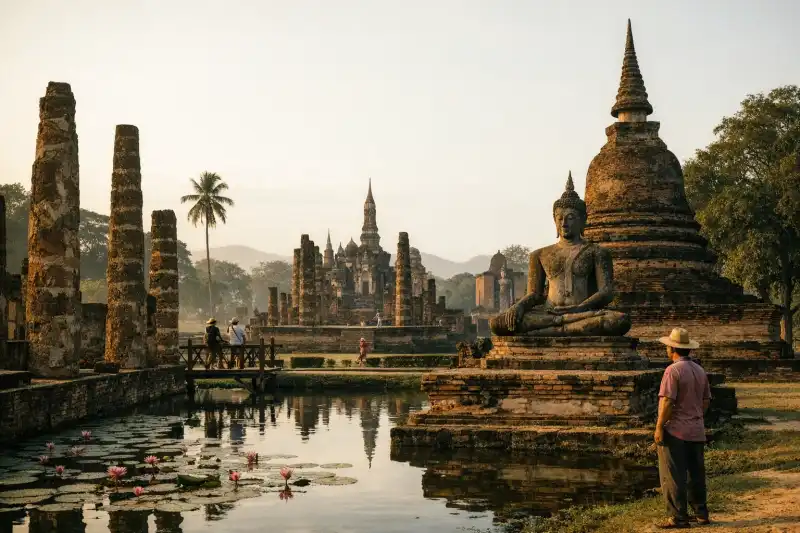
Sukhothai, in northern Thailand's Sukhothai Province, is famed as the cradle of Thai civilization an...
Si Satchanalai
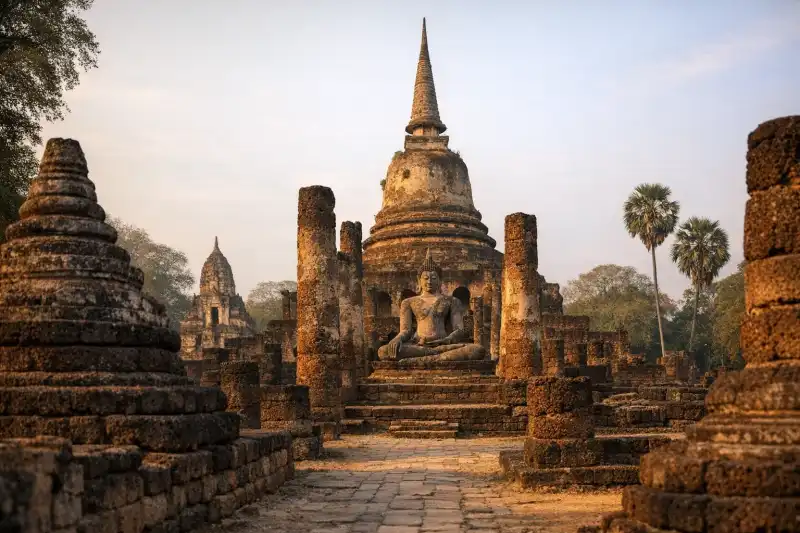
Sukhothai KingdomExplore Si Satchanalai, a serene UNESCO-listed ancient city in Thailand known for elegant temples, k...
Ayutthaya Travel Guide 2026: Temple Ruins, Day Trip Planning, and What to Prioritize
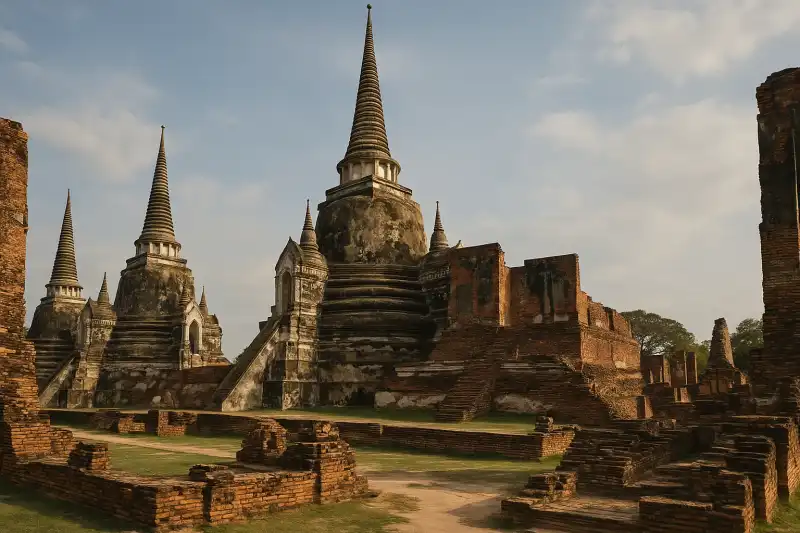
Ayutthaya KingdomPlan a focused Ayutthaya visit with practical temple routing, timing, and transport guidance from Ba...