Quick Info
Curated Experiences
Karnak Temple and Open Air Museum Guided Tour
Luxor East Bank Tour with Karnak Open Air Museum
Private Karnak Complex and Open Air Museum Tour
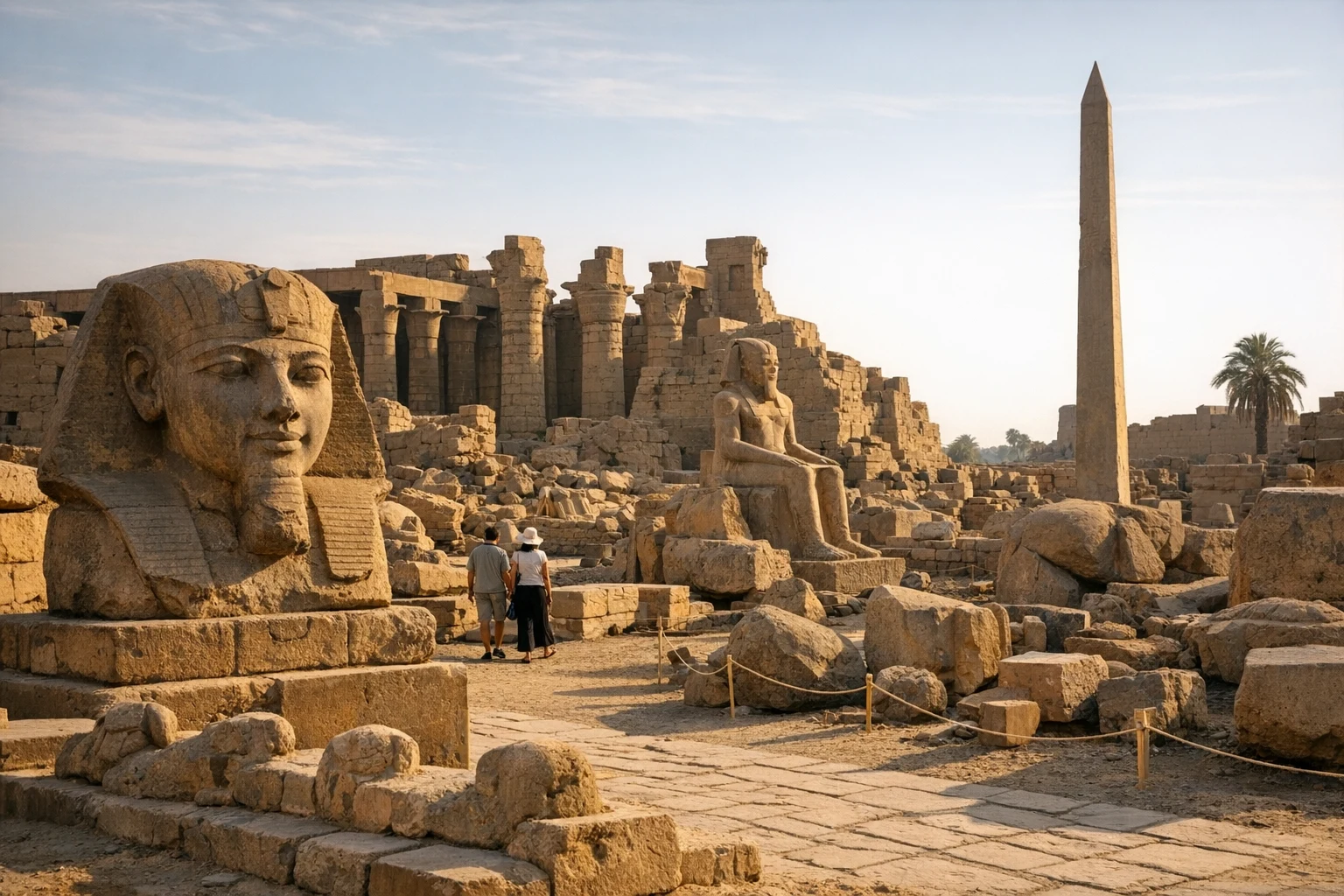
Karnak Open Air Museum in Egypt is one of those places that many travelers walk past without realizing it contains some of the most revealing architecture in Luxor. Inside the vast Karnak Temple Complex on the east bank of the Nile, the museum feels quieter and more deliberate than the better-known avenues, pylons, and colossal halls around it. Instead of overwhelming you with raw scale, it rewards slow looking. Here, reconstructed chapels, dismantled blocks, reused reliefs, and carefully reassembled shrines show how ancient Egyptian monuments were built, dismantled, recycled, buried, and rediscovered across centuries. If the main body of Karnak feels like imperial grandeur in its most expansive form, the open air museum feels like archaeology teaching you how that grandeur was actually put together.
That shift in perspective is what makes the site special. The museum holds monuments that were once broken apart and reused as fill inside later pylons or walls, then painstakingly reconstructed by archaeologists from hundreds of scattered blocks. Some of the finest examples of Middle Kingdom and early New Kingdom temple art now stand here in forms close to their original appearance. The White Chapel of Senusret I, with its crisp relief carving and balanced proportions, is one of the most elegant structures in all of Luxor. Nearby, the Red Chapel of Hatshepsut restores a queen’s ritual presence inside a temple complex long dominated in the popular imagination by male pharaohs. Visiting the Karnak Open Air Museum is therefore not just an add-on to Karnak. It is one of the best places in Egypt to understand how ancient monuments survive, how kings rewrote earlier landscapes, and how modern archaeology can bring buried histories back into view.
History
Karnak Before the Museum
To understand the Karnak Open Air Museum, it helps to start with Karnak itself. The temple complex at ancient Thebes, now Luxor, developed over roughly two thousand years as one of the greatest religious centers in Egypt. Successive pharaohs added pylons, courts, obelisks, sanctuaries, shrines, and processional routes dedicated primarily to Amun-Ra, though other deities were honored there as well. Karnak was not built once. It was constantly revised. Kings inserted themselves into the sacred topography by building new monuments, decorating older ones, or dismantling earlier structures to make way for their own statements of legitimacy.
That last habit is crucial. Egyptian rulers did not always preserve the monuments of their predecessors in place. They often usurped inscriptions, buried older shrines within new masonry, or broke structures into blocks for use as internal fill in pylons and walls. What looked like destruction from a modern preservation perspective could also be a form of appropriation, political editing, or architectural pragmatism. Over centuries, this process turned Karnak into a layered archive in which earlier monuments sometimes vanished from sight but did not disappear entirely. They remained hidden inside later construction, waiting to be found.
Reused Blocks and Archaeological Discovery
Modern excavation at Karnak revealed just how much of the site’s history had been physically recycled into itself. When archaeologists began studying and clearing different areas of the complex in the nineteenth and twentieth centuries, they encountered vast numbers of decorated blocks reused within later monuments, especially in pylons. These reused stone blocks, often called talatat or spolia depending on period and form, came from shrines, chapels, kiosks, and other structures dismantled in antiquity. Some bore inscriptions and reliefs from rulers whose monuments no longer stood independently.
The recognition that many of these fragments could be matched and reconstructed transformed the study of Karnak. Instead of seeing the temple only as it stood in its latest surviving phases, archaeologists began recovering earlier architectural layers that had been absorbed into later construction. This work required painstaking recording, sorting, comparison, and structural reconstruction. A single chapel might need hundreds of blocks to be identified, aligned, and placed correctly. The process was slow, but the rewards were enormous. Lost monuments of great artistic and historical importance started to re-emerge.
Formation of the Open Air Museum
The Karnak Open Air Museum took shape as a response to this archaeological success. Rather than leaving recovered blocks in storage yards or displaying them only as isolated fragments, conservators and Egyptologists created an area within Karnak where reconstructed monuments could stand in the open, allowing visitors and researchers alike to experience them spatially. This approach served two purposes at once. It preserved and interpreted the fragments, and it also demonstrated the long architectural history of Karnak beyond the better-known New Kingdom monumental core.
Among the most celebrated reconstructions was the White Chapel of Senusret I, a Middle Kingdom kiosk or bark shrine that had been dismantled and reused inside the Third Pylon. Its recovery showed the extraordinary quality of 12th Dynasty relief carving and restored a monument of major historical importance to visibility. Other reconstructions followed, including the Red Chapel associated with Hatshepsut, the calcite chapel of Amenhotep II, and additional gateways, chapels, and blocks that illuminate phases of Karnak otherwise difficult to grasp. The museum became, in effect, a lesson in both ancient Egyptian monumentality and modern archaeological method.
A New Way of Reading Karnak
Today the Karnak Open Air Museum has an importance that goes far beyond being a side display. It changes how the entire Karnak complex is read. Without it, many visitors encounter Karnak mainly as a sequence of huge late monuments: pylons, colossal statues, and the Hypostyle Hall. With the museum, the site becomes more layered and more intelligible. You begin to see how rulers built over earlier sacred spaces, how political memory was reshaped, and how archaeology can recover episodes that later kings tried to absorb or overwrite.
The museum also plays a quiet corrective role in Egyptian art history. Because some of its reconstructed monuments preserve reliefs and proportions from earlier periods in unusually fine condition, it gives visitors access to subtler forms of Egyptian beauty than the more overwhelming bulk of major temples sometimes allows. That balance of historical depth, artistic refinement, and archaeological reconstruction is what makes the open air museum one of Karnak’s most rewarding spaces for careful travelers.
Key Features
The White Chapel of Senusret I is the museum’s standout masterpiece and, for many visitors, its most memorable monument. Originally built in the Middle Kingdom, probably as a bark shrine used in festival processions, it is small compared with Karnak’s giant pylons, yet that very scale makes its elegance easier to appreciate. The reliefs are crisp, balanced, and confident, showing the king before deities in a style that feels refined rather than overwhelming. The proportions are superb, the inscriptions clear, and the structure’s airy design explains why it remains one of the finest surviving examples of Middle Kingdom royal architecture anywhere in Egypt. Standing beside it, you understand immediately why archaeologists devoted such care to its reconstruction.
The Red Chapel of Hatshepsut is equally important, though different in mood and meaning. Built from red quartzite and associated with the female pharaoh’s ceremonial presence at Karnak, it offers a striking reminder that the temple complex was not shaped only by the giant building programs of kings like Seti I and Ramses II. Hatshepsut’s chapel restores the ritual and political visibility of a ruler whose monuments were often altered or suppressed after her death. The reconstructed form allows visitors to read relief scenes of processions, divine encounters, and kingship claims in a more coherent way than scattered blocks ever could. It is one of the best places in Luxor to appreciate how architecture, ritual, and political legitimacy intersected during her reign.
The calcite chapel of Amenhotep II adds another layer to the museum’s appeal. Its pale stone gives it a noticeably different visual character from surrounding sandstone structures, and it demonstrates how specialized shrines within Karnak could embody distinct ritual roles and aesthetic choices. Seen together with the other reconstructed monuments, it helps communicate just how architecturally varied Karnak once was. The main temple complex often reads as a broad accumulation of similar stone masses to first-time visitors; the open air museum reveals that it was in fact a more diverse sacred environment with many smaller ceremonial buildings now otherwise lost.
Another of the museum’s strengths is its visible archaeology. This is not a polished gallery where everything has been stripped of context. You can still sense the process of recovery in the arrangement of blocks, reconstructed gateways, and explanatory displays. Some monuments feel complete enough to imagine their ancient ceremonial use, while others retain traces of fragmentary history that remind you how much labor went into bringing them back. That in-between quality is part of the appeal. The museum does not hide the fact that these structures were once dismantled, buried, and reassembled. It makes reconstruction itself part of the story.
The setting inside Karnak amplifies the experience. After the scale and crowd flow of the main temple route, the museum feels almost meditative. Visitors who make the short detour are usually more focused, and the reconstructed chapels invite slower observation than the grander but more crowded monumental spaces nearby. Reliefs can be studied at eye level, architectural forms can be circled, and subtler chronological differences become visible. For anyone interested in the mechanics of ancient architecture rather than only its spectacle, this is one of the most satisfying places in Luxor.
Getting There
The Karnak Open Air Museum is located within the Karnak Temple Complex on Luxor’s east bank, so getting there follows the same practical logic as visiting Karnak itself. From central Luxor, the easiest option is a taxi, rideshare, or horse carriage, though taxis are generally the simplest and most comfortable. A short ride from downtown or the Luxor Corniche usually costs around 80 to 200 EGP depending on negotiation, distance, and whether you are arranging a return wait. If you are staying on the east bank near the temples, the trip may be even cheaper, and some hotels can organize direct transport.
Many visitors arrive as part of an East Bank sightseeing circuit that includes Karnak Temple Complex and Luxor Temple. Organized tours often bundle transportation, guide services, and ticket handling, which can be helpful if you want the open air museum properly contextualized rather than missed in the rush of the main route. Private guides are especially useful here because many standard group visits focus heavily on the Great Hypostyle Hall and larger precincts, treating the museum as optional unless specifically requested.
Independent travelers should simply enter Karnak and make sure they allow time for the museum area rather than assuming the entire visit consists of the main ceremonial axis. Wear comfortable shoes, bring water, and expect little shade. Since the museum is part of the larger complex, transport costs are really just Karnak transport costs; the main planning issue is giving yourself enough time once you are inside.
When to Visit
The best time to visit the Karnak Open Air Museum is during Egypt’s cooler season, from October through April, when the outdoor conditions are much more comfortable for long archaeological visits. Because the museum is fully exposed, it benefits even more than some interior temple spaces from mild weather. Winter mornings are especially pleasant, with soft light that works beautifully on relief carving and reconstructed stone surfaces.
Early morning is the ideal time to go. Karnak as a whole is best approached before the strongest heat and the densest tour-bus traffic, and the open air museum especially rewards calm, attentive looking. In early light, the carved surfaces of the White Chapel and other monuments show more texture, and you are more likely to have space to move around them without being carried along by the main crowd flow. Late afternoon can also be lovely, but by then fatigue from the rest of Karnak may make careful viewing harder.
Summer visits are possible, but from May through September Luxor’s heat can be punishing. The museum has little shelter, and stone glare adds to the intensity. If you visit in summer, arrive as early as possible, carry plenty of water, and treat the open air museum as a focused stop rather than an afterthought at the end of a long temple day. Spring and autumn generally offer the best balance of weather, manageable crowds, and comfortable study conditions. If you care about relief detail and architecture, those shoulder seasons are ideal.
| Quick Facts | Details |
|---|---|
| Location | Inside Karnak Temple Complex, Luxor Governorate, Egypt |
| Best Known For | Reconstructed chapels and monuments recovered from reused temple blocks |
| Signature Monument | White Chapel of Senusret I |
| Other Major Highlights | Red Chapel of Hatshepsut and calcite chapel of Amenhotep II |
| Archaeological Importance | Shows how earlier monuments were dismantled, reused, and reconstructed |
| Setting | Outdoor museum area within the wider Karnak sacred precinct |
| Recommended Visit Length | 45 minutes to 1.5 hours in addition to Karnak |
| Best Time to Visit | October to April, ideally early morning |
| Nearby Base | Luxor |
| Practical Tip | Ask specifically for the museum area if using a guide, since many casual Karnak visits skip it |
Frequently Asked Questions
What is the Karnak Open Air Museum?
The Karnak Open Air Museum is a special section within the Karnak Temple Complex where reconstructed chapels, architectural fragments, and relief blocks are displayed in the open air.
Is the Karnak Open Air Museum included in a Karnak visit?
It is generally part of the wider Karnak archaeological zone, but many visitors miss it because they focus only on the main hypostyle halls and processional areas.
What is the museum best known for?
It is best known for reconstructed shrines such as the White Chapel of Senusret I, the Red Chapel of Hatshepsut, and other restored monuments assembled from reused blocks.
How much time should you spend at the Karnak Open Air Museum?
Most travelers should allow at least 45 minutes to 1.5 hours in addition to their main Karnak visit if they want to appreciate the restored monuments properly.
Do you need a guide for the Karnak Open Air Museum?
A guide is not required, but it is very helpful because the importance of the reconstructed chapels and reused blocks is much easier to understand with historical context.
When is the best time to visit the Karnak Open Air Museum?
Early morning and the cooler months from October to April are best, since the museum is outdoors and the stone surfaces are easier to study before the heat intensifies.
Nearby Ancient Sites
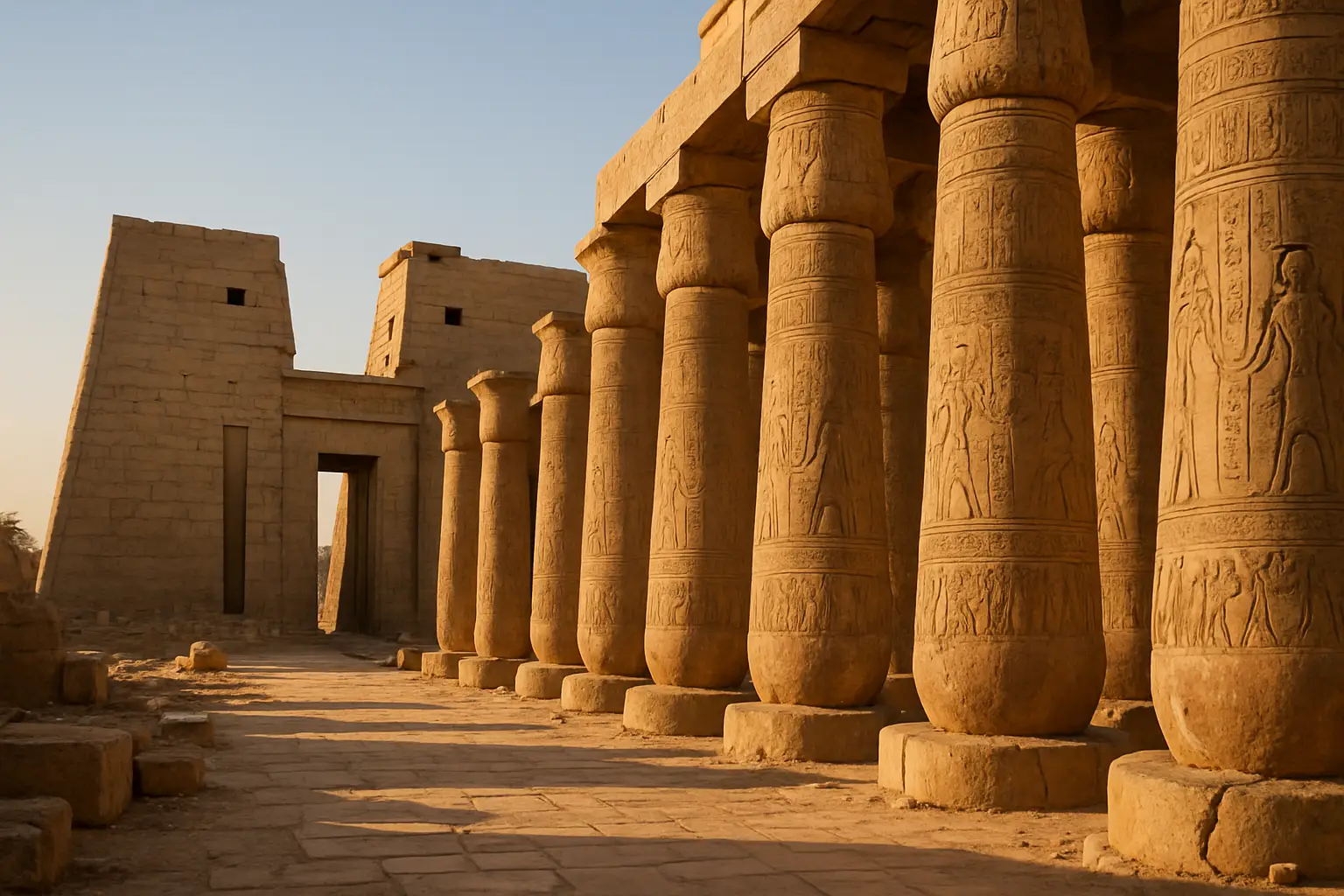
Karnak Temple Complex Egypt Travel Guide 2026: Egypt's Greatest Temple
Ancient EgyptianExplore Karnak, the world's largest ancient religious complex. Discover the Hypostyle Hall, Sacred L...
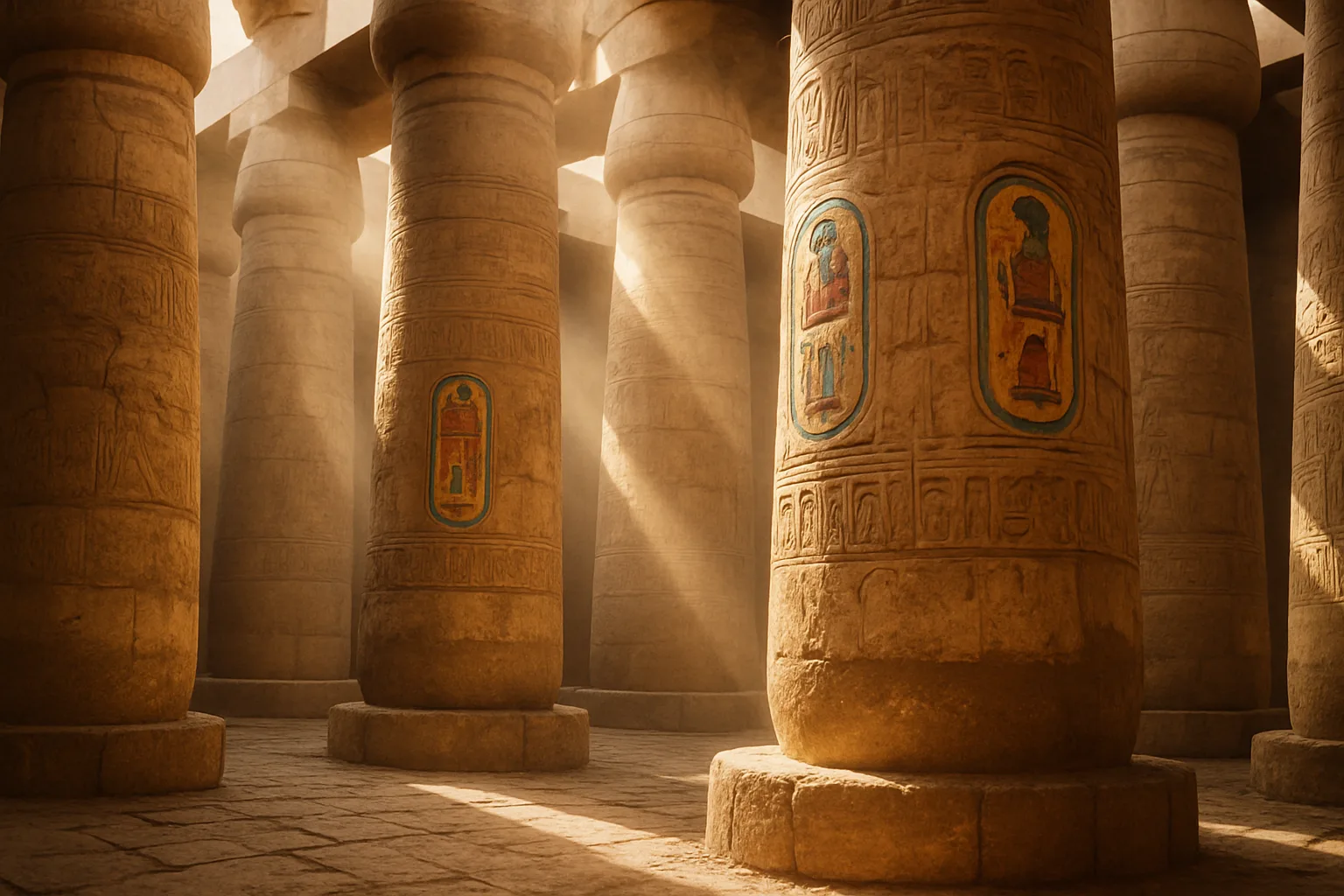
Luxor Egypt Travel Guide 2026: Valley of Kings, Karnak
Ancient Egyptian (New Kingdom)Luxor stands as the world's greatest open-air museum, spanning both banks of the Nile with temples, ...
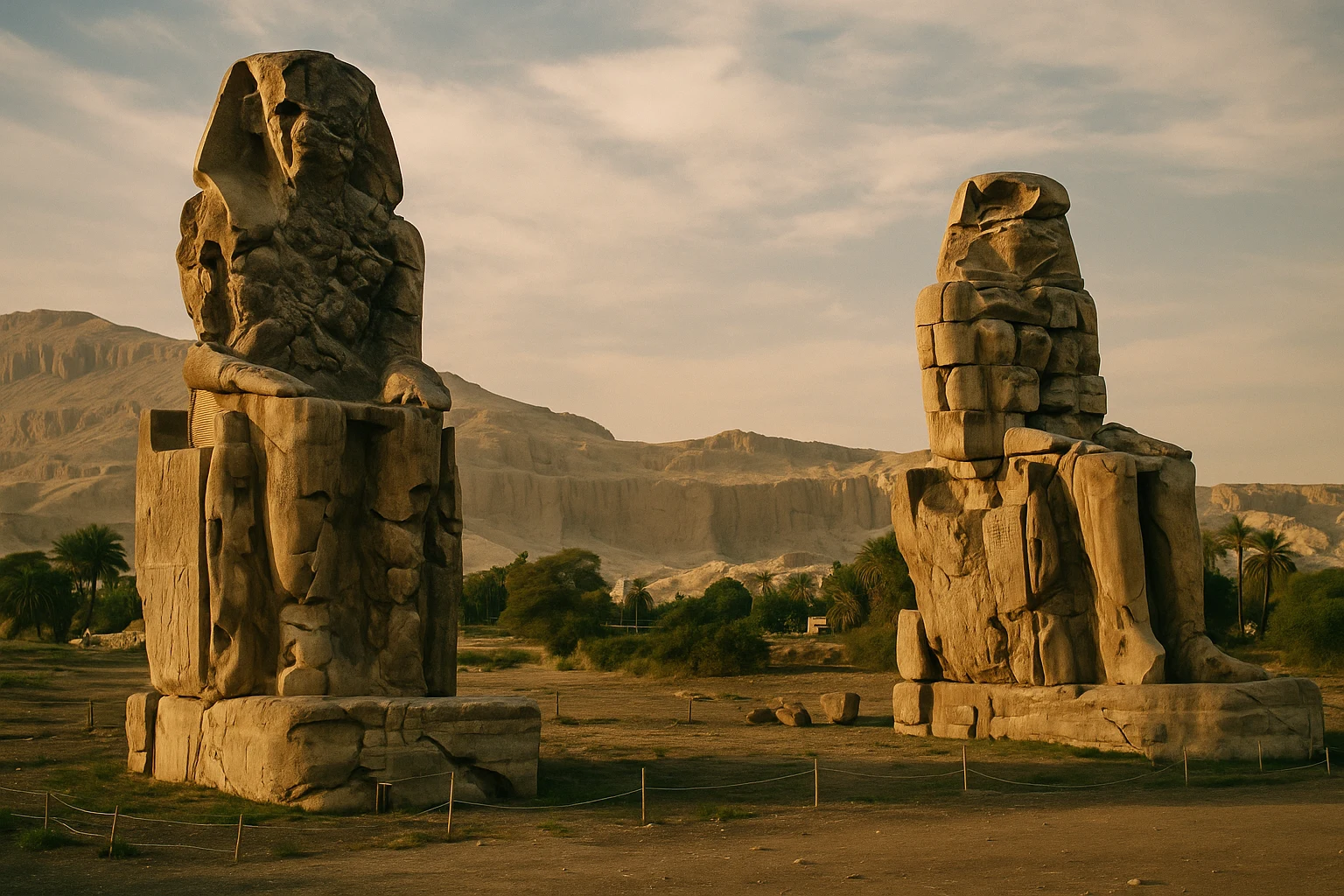
Colossi of Memnon
Ancient Egypt (New Kingdom)Twin colossal statues of Pharaoh Amenhotep III guarding the Theban necropolis on Luxor's West Bank, ...
Dendera Temple Complex Egypt Guide 2026: Temple of Hathor & Zodiac Ceiling
Ptolemaic-RomanExplore Dendera's magnificent Temple of Hathor near Luxor. Star-mapped zodiac ceiling, Ptolemaic arc...