Quick Info
Curated Experiences
Kasuga Taisha Shrine and Nara Highlights Day Tour
Nara Full-Day Tour from Kyoto with Todaiji and Kasuga Taisha
Nara Lantern Festival Evening Tour
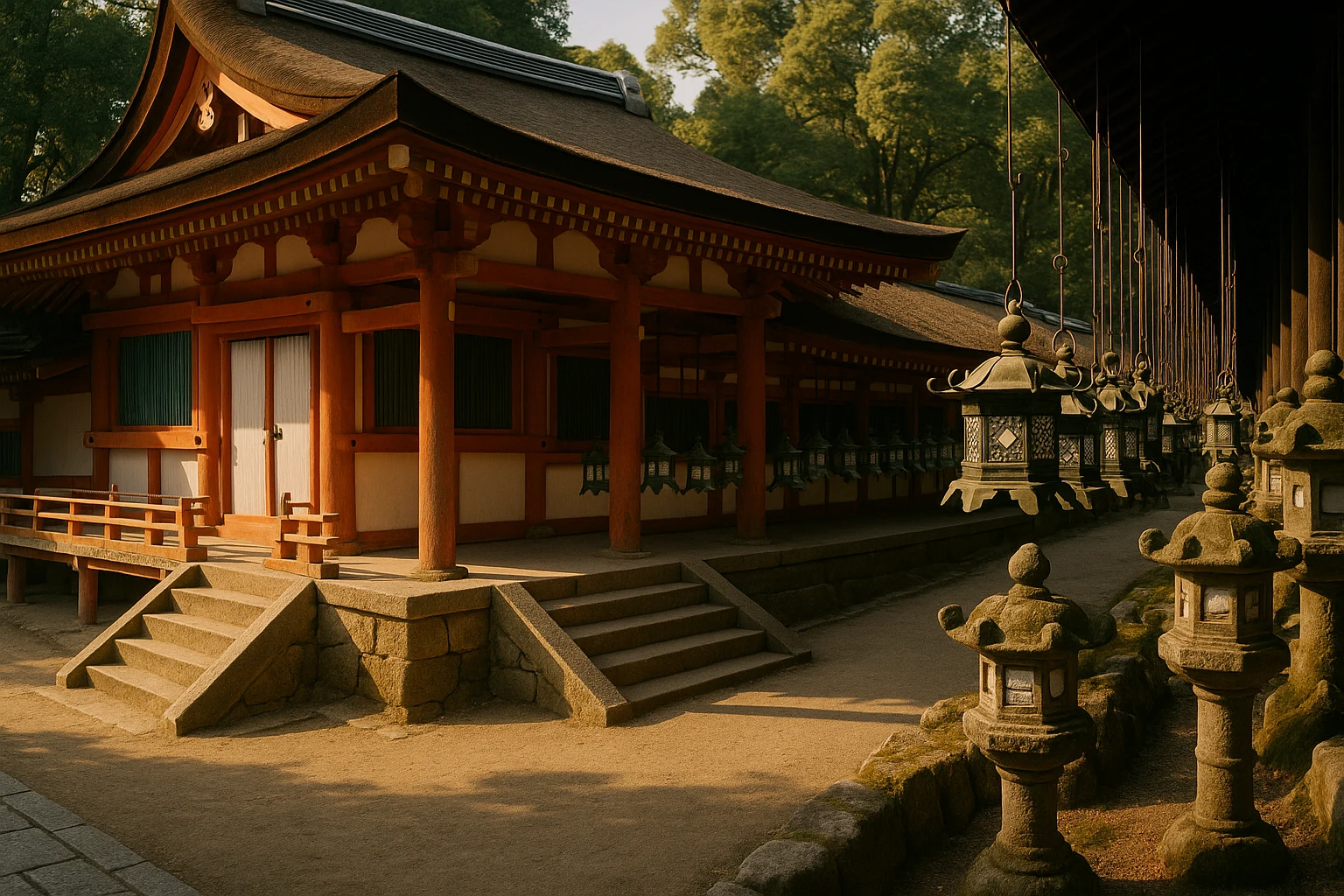
Deep in the primordial forest on the slopes of Mount Mikasa, in the ancient Japanese city of Nara, stands one of the most atmospheric Shinto shrines in all of Japan. Kasuga Taisha Shrine — founded in 768 CE and continuously operating for over twelve centuries — draws pilgrims, scholars, and travelers into a world where ancient forest, sacred deer, and thousands of moss-draped stone lanterns create an encounter unlike anything else in East Asia. The shrine sits at the heart of Nara Deer Park, its vermilion-painted corridors glowing against the dark cedar canopy, its bronze lanterns swaying gently in the mountain air. From the moment you step beneath the towering torii gateway and begin the long stone-paved approach lined with hundreds of moss-covered lanterns, Kasuga Taisha exerts a pull that is both aesthetic and genuinely spiritual. This is not merely a museum of Japanese antiquity but a living religious center — the tutelary shrine of the Fujiwara clan, once the most powerful aristocratic family in Japan, and still a site of active worship, seasonal festivals, and ceremonial rites observed with scrupulous fidelity to traditions first codified over a thousand years ago.
History
Origins and the Founding Vision
The story of Kasuga Taisha begins with the relocation of Japan’s imperial capital to Nara in 710 CE, an event that transformed a provincial landscape into the center of an emerging civilization heavily influenced by Chinese Tang dynasty culture. The Fujiwara family — whose patriarch Nakatomi no Kamatari had helped orchestrate the Taika Reform of 645 CE and thereby secured the clan’s political ascent — needed a divine protector for their new position near the imperial court. According to shrine tradition, in 768 CE a deity arrived from the distant province of Kashima, riding on a white deer, and settled on the slopes of Mount Mikasa. The shrine was established to enshrine this deity, Takemikazuchi-no-Mikoto, along with three additional kami: Futsunushi-no-Mikoto from Katori, Amenokoyane-no-Mikoto and his consort Himegami, both ancestral deities of the Nakatomi and Fujiwara lineages. The white deer that carried the god became sacred, and its descendants — Nara’s now-famous sika deer — have been protected by imperial decree for over a millennium.
The Fujiwara Era and Ritual Reconstruction
As the Fujiwara clan rose to dominate court politics through the Heian Period (794–1185 CE), Kasuga Taisha’s prestige grew in parallel. The family poured extraordinary resources into the shrine, building subsidiary shrines (massha) throughout the compound until the full complex numbered over fifty separate structures. One of the most remarkable ritual practices instituted during this era was the shikinen zosei — a ceremonial rebuilding of the shrine buildings every twenty years. First carried out in 841 CE, this practice mirrors the more famous reconstruction cycle at Ise Jingu and reflects a distinctly Japanese theological concept: that sacred structures must be periodically renewed to maintain their spiritual vitality. The buildings standing today are reconstructions following this ancient protocol, meaning that while the structures appear old, they represent an unbroken ritual continuity stretching back over a thousand years.
The Lantern Tradition
The famous lantern donations began in earnest during the Heian Period, when nobles, warriors, and wealthy merchants offered stone or bronze lanterns as acts of devotion. The practice accelerated over the following centuries. Each lantern is inscribed with the donor’s name and a dedicatory prayer, transforming the approaches and corridors into an accumulating record of Japanese piety across the ages. By the medieval period the shrine already possessed thousands of lanterns; today the count stands at approximately 3,000, making Kasuga Taisha arguably the greatest concentration of votive lanterns in Japan. The tradition of lighting all lanterns simultaneously during the Mantoro festivals dates to at least the Edo Period (1603–1868 CE) and today draws enormous crowds twice each year.
UNESCO Recognition and Modern Continuity
In 1998, Kasuga Taisha was inscribed as part of the UNESCO World Heritage Site designated “Historic Monuments of Ancient Nara,” a recognition of its exceptional universal value as a primary example of early Japanese religious architecture and urban planning. Today the shrine remains under the care of Shinto priests who perform daily rituals, seasonal ceremonies, and the ongoing cycle of shikinen zosei reconstructions. The surrounding kasugayama primeval forest — preserved for over a thousand years as sacred ground — has itself been designated a UNESCO component element, making Kasuga Taisha one of the few heritage sites in the world where both the built structures and the natural landscape receive simultaneous international protection.
Key Features
The Great Torii and Cedar-Lined Approach
The visitor’s first encounter with Kasuga Taisha unfolds gradually, beginning with the great torii gateway on the western edge of Nara Deer Park. Beyond it, the main approach — the Ichi-no-Torii road — stretches for nearly two kilometers through a forest of ancient Japanese cedars, their trunks so wide that two adults cannot link hands around them. Both sides of the path are lined with stone lanterns donated over the centuries, each one slightly different in height, shape, and degree of moss coverage, the oldest examples nearly invisible beneath centuries of accumulated green growth. Sika deer wander freely along the path, accustomed to human visitors and often pressing close enough to nudge pockets in search of the shika senbei (deer crackers) sold by vendors near the entrance. The approach creates a processional experience — a deliberate decompression from the noise of the city into a sacred realm — that architectural historians consider among the most skillfully designed in Japanese religious culture.
The Main Shrine Corridors and Inner Sanctuaries
At the end of the cedar avenue, the visitor passes through successive torii gateways into the roofed corridor (kairo) that encircles the inner sanctuary. Here the architectural language shifts dramatically: where the approach was all mossy stone and dark cedar, the corridors are painted in brilliant vermilion lacquer, their eaves hung with hundreds of bronze lanterns whose patina of verdigris creates a striking contrast against the vivid red. The main complex consists of four separate main sanctuaries (honden) built side by side in the kasuga-zukuri architectural style — a distinctive form with asymmetrical gabled roofs, gilded metal fittings, and floors raised on stilts above the forest ground. The style was so widely imitated across Japan that kasuga-zukuri is now recognized as a distinct building category in the taxonomy of Japanese shrine architecture.
The Treasure House
The Kasuga Taisha Treasure House (Homotsuden), set slightly apart from the main complex, contains one of the most important collections of early medieval Japanese artifacts in existence. The holdings include Heian and Kamakura period armor, swords, musical instruments, lacquerware, and painted screens donated by the Fujiwara nobility and successive generations of warriors who sought divine protection. Particularly notable are the sets of ancient ceremonial masks (gigaku-men and bugaku-men) used in the ritual dances still performed at the shrine today. The museum’s rotating exhibitions change several times per year, ensuring that even repeat visitors encounter new material.
The Sacred Deer of Kasuga
No account of Kasuga Taisha is complete without the deer. Nara’s approximately 1,200 wild sika deer are formally classified as natural monuments of Japan. According to shrine legend, they are the sacred messengers (shinroku) of the Kasuga deities, and for centuries harming one was punishable by death. Today they are merely legally protected and culturally revered, but the effect is the same: the deer move through the shrine complex, the park, and even the adjacent streets of central Nara with total calm, as comfortable in the presence of humans as domestic animals. Watching a deer pause beneath a stone lantern draped in moss, framed against the vermilion pillars of the shrine corridor, is one of those images that encapsulates something essential about Japan’s relationship with nature and the sacred.
Getting There
Nara is easily accessible from both Kyoto and Osaka, making Kasuga Taisha a natural addition to any Kansai itinerary. From Kyoto, the fastest option is the Kintetsu Kyoto Line express train to Kintetsu Nara Station, a journey of approximately 35 minutes costing around ¥680. JR Miyakoji Rapid trains from JR Kyoto Station to JR Nara Station take about 45 minutes for approximately ¥720. From Osaka, Kintetsu Osaka Namba Station to Kintetsu Nara Station takes around 40 minutes on the express for ¥680; JR from Osaka Station via the Yamatoji Line to JR Nara Station takes approximately 50 minutes for ¥820.
From either Nara train station, Kasuga Taisha is reachable on foot in 25–35 minutes through Nara Deer Park — a walk that is itself part of the experience. Nara City Loop Bus lines 2 and 9 run from both stations to the Kasuga Taisha Honden bus stop for ¥200 per ride, with buses running approximately every 15–20 minutes throughout the day. Taxis from Kintetsu Nara Station to the shrine take about 10 minutes and cost roughly ¥800–¥1,000. No direct Shinkansen service runs to Nara, but the city is well-connected to the broader Kinki/Kansai rail network. Nara is an easy day trip and holds sufficient sights — Kasuga Taisha, Todaiji, Kofukuji, and the deer park — to fill a full day.
When to Visit
Kasuga Taisha rewards visits in every season, though each period offers a different atmosphere. Spring (late March to mid-April) brings cherry blossoms to the deer park and the forested approaches, and the combination of pink blossoms, vermilion lacquer, and sacred deer draws very large crowds, particularly on weekends. If visiting in spring, arrive before 9:00 AM to experience the shrine before tour groups arrive.
Summer (June to August) is hot and humid in Nara, but the deep shade of the ancient cedar forest keeps the main approach significantly cooler than the open city streets. The mid-August Obon Mantoro lantern festival — when all 3,000 lanterns are lit after dark — is one of the most visually spectacular events in all of Japan, though accommodations in Nara and nearby Kyoto fill months in advance.
Autumn (October to November) is arguably the finest season for a visit. The Japanese maples on Mount Mikasa turn brilliant red and gold against the evergreen cedars, the air is crisp and clear, and crowds are somewhat smaller than in spring. The contrast between autumn foliage and the shrine’s vermilion architecture is extraordinary.
Winter (December to February) offers the most intimate experience of Kasuga Taisha. Visitor numbers are low, frost sometimes coats the stone lanterns and mossy forest floor, and occasional snowfall transforms the cedar avenue into a scene of profound stillness. The early February Setsubun Mantoro lantern festival occurs in winter and is far less crowded than its August counterpart, making it the preferred choice for visitors who want to experience the full lantern illumination without overwhelming crowds.
| Quick Facts | |
|---|---|
| Location | Nara, Nara Prefecture, Japan |
| Founded | 768 CE |
| Civilization | Japanese (Fujiwara Clan / Nara Period) |
| UNESCO Status | World Heritage Site (1998) — Historic Monuments of Ancient Nara |
| Coordinates | 34.6816° N, 135.8485° E |
| Opening Hours | 6:30 AM – 5:30 PM (Apr–Sep); 7:00 AM – 5:00 PM (Oct–Mar) |
| Admission | Outer grounds free; Inner sanctuary ¥500 adults, ¥200 children; Treasure House ¥500 |
| Best Season | Autumn (Oct–Nov) for foliage; August for Obon Mantoro lanterns |
| Nearest City | Nara (25-minute walk from Kintetsu Nara Station) |
| Key Festival | Mantoro (all lanterns lit): early February and mid-August |
Kasuga Taisha endures as one of Japan’s most significant religious sites not simply because of its age or its UNESCO designation, but because it remains genuinely alive. The priests still perform the daily rites prescribed in Heian-era ritual manuals. The deer still move through the cedar forest as their ancestors have for twelve centuries. The lanterns — each one a donor’s prayer frozen in bronze or stone — still glow twice each year with a collective light that connects the living to an incomprehensibly long chain of the devout. To stand in the lantern-hung corridor at dusk, the last light failing through the ancient cedars, is to understand something that no historical text can fully convey: that certain places carry the weight of accumulated human devotion in a way that becomes inseparable from the stones themselves.
Frequently Asked Questions
What is Kasuga Taisha Shrine famous for?
Kasuga Taisha is famous for its 3,000 lanterns — roughly 2,000 stone lanterns lining the forested approaches and 1,000 bronze lanterns hanging inside the covered corridors. The shrine is also celebrated as the tutelary shrine of the powerful Fujiwara clan and forms part of the UNESCO-listed Historic Monuments of Ancient Nara.
When is the best time to see the lanterns lit at Kasuga Taisha?
The lanterns are lit twice a year during the Mantoro lantern festivals: once in early February (Setsubun Mantoro, around February 3–4) and once in mid-August (Obon Mantoro, around August 14–15). During these festivals, all 3,000 lanterns are illuminated simultaneously after dark, creating an unforgettable atmosphere.
Is there an entrance fee for Kasuga Taisha Shrine?
The outer precincts and forested approaches are free to enter. The inner sanctuary (Honden) charges an admission fee of 500 yen for adults and 200 yen for children. The Treasure House (Homotsuden), which displays ancient artifacts and armor, has a separate admission of 500 yen.
How do I get to Kasuga Taisha Shrine from Nara Station?
From JR Nara Station or Kintetsu Nara Station, you can walk through Nara Deer Park to the shrine in about 25–30 minutes. Alternatively, city bus lines 2 and 9 stop at Kasuga Taisha Honden bus stop, with a short walk to the main entrance. Taxis are also readily available from both stations.
Are the deer at Nara free to roam near Kasuga Taisha?
Yes. Nara's famous sika deer roam freely throughout the park and the forested approaches to Kasuga Taisha. They are considered sacred messengers of the shrine's deities. Shika senbei (deer crackers) are sold nearby and feeding the deer is permitted, though visitors should take care as the deer can be persistent.
How much time should I allow for visiting Kasuga Taisha?
Plan for at least 1.5 to 2 hours to walk the cedar-lined approach, explore the main corridors, view the lanterns, and visit the Treasure House. Combining the shrine with a visit to nearby Todaiji Temple and a stroll through Nara Deer Park typically makes for a full half-day or more.
Is Kasuga Taisha a UNESCO World Heritage Site?
Yes. Kasuga Taisha is part of the 'Historic Monuments of Ancient Nara' UNESCO World Heritage Site, inscribed in 1998 alongside Todaiji Temple, Kofukuji Temple, Yakushiji Temple, the Nara Palace ruins, and other monuments that define Japan's first permanent imperial capital.
Nearby Ancient Sites
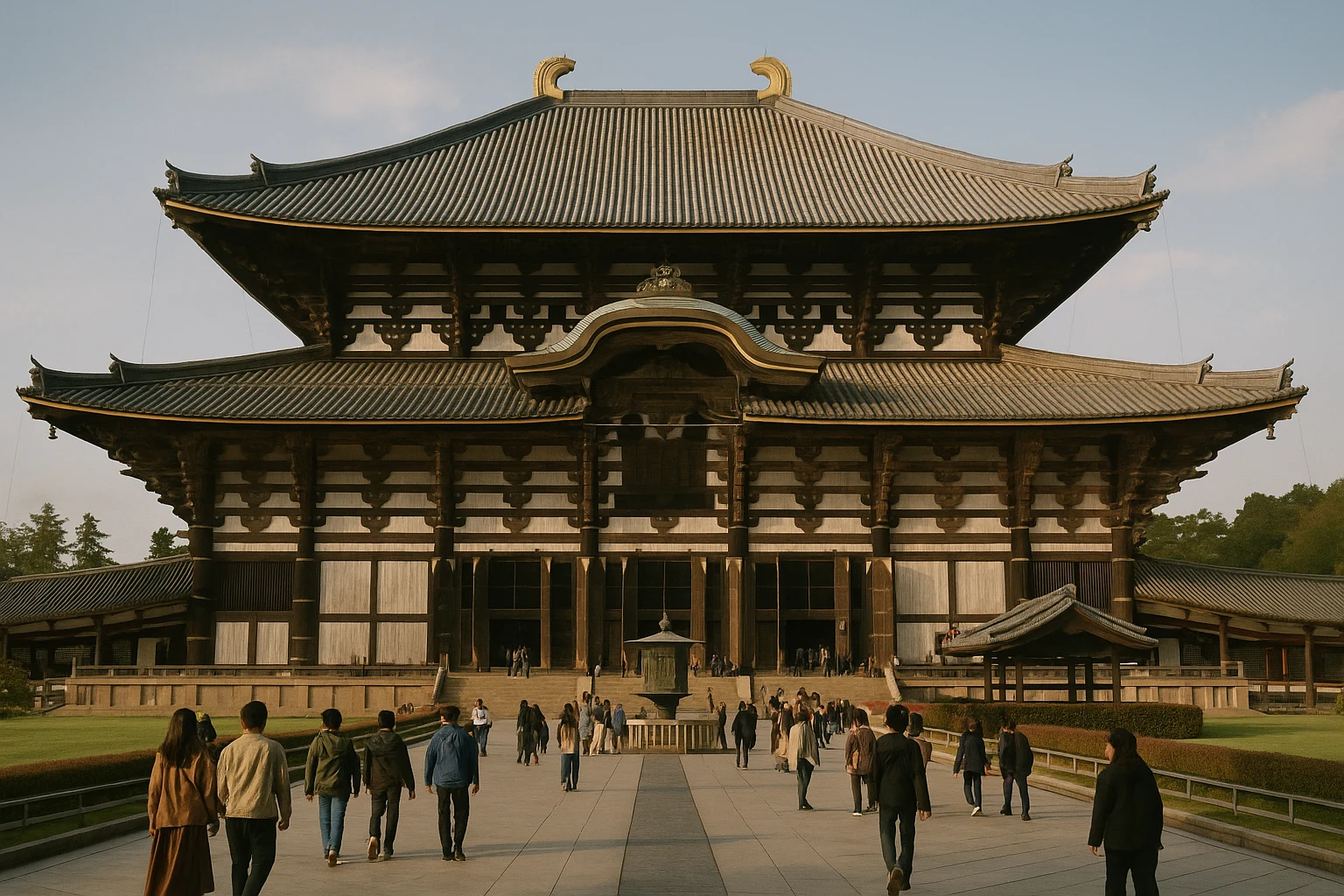
Todaiji Temple
Todaiji Temple in Nara houses the world's largest bronze Buddha and the largest wooden building on E...
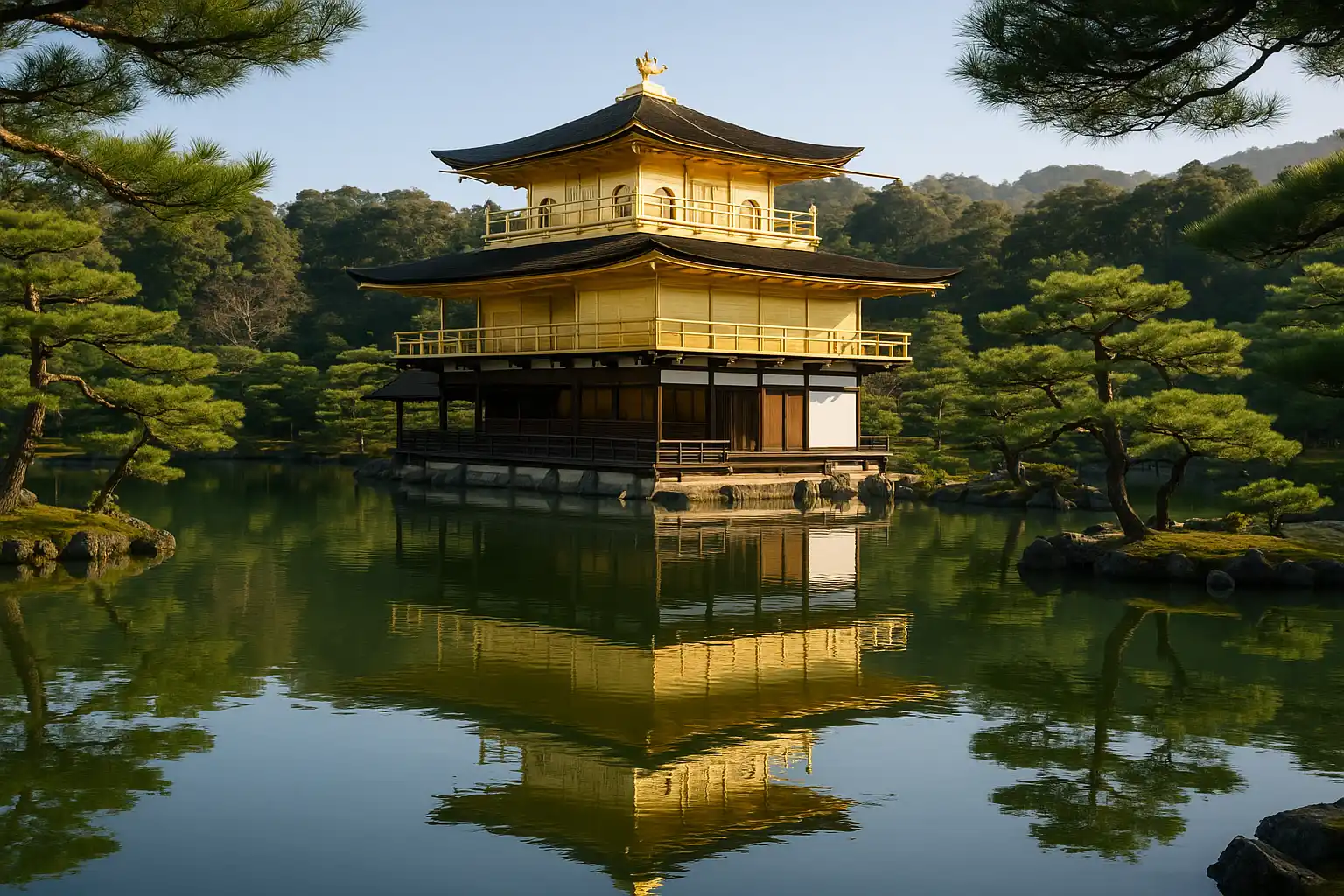
Kinkakuji Temple Japan Travel Guide 2026: Kyoto's Golden Pavilion
Japanese Zen BuddhistVisit Kinkakuji, the Golden Pavilion, Kyoto's most iconic Zen temple. Discover the gold-leaf covered...
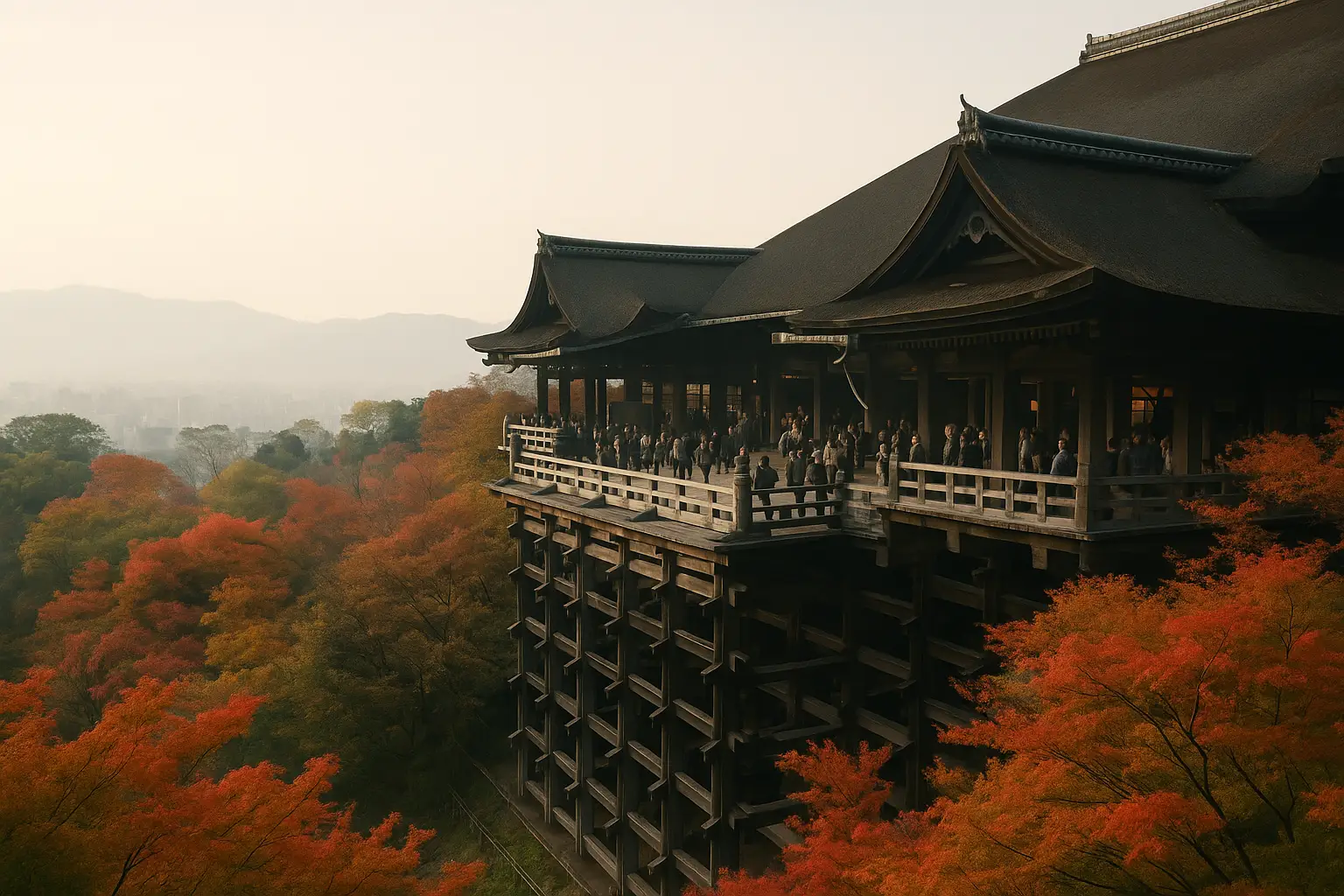
Kiyomizudera Temple Japan Travel Guide 2026: Kyoto's Wooden Stage
Japanese Buddhist (Kita-Hosso)Visit Kiyomizudera, the Pure Water Temple with its famous wooden stage overlooking Kyoto. Explore th...
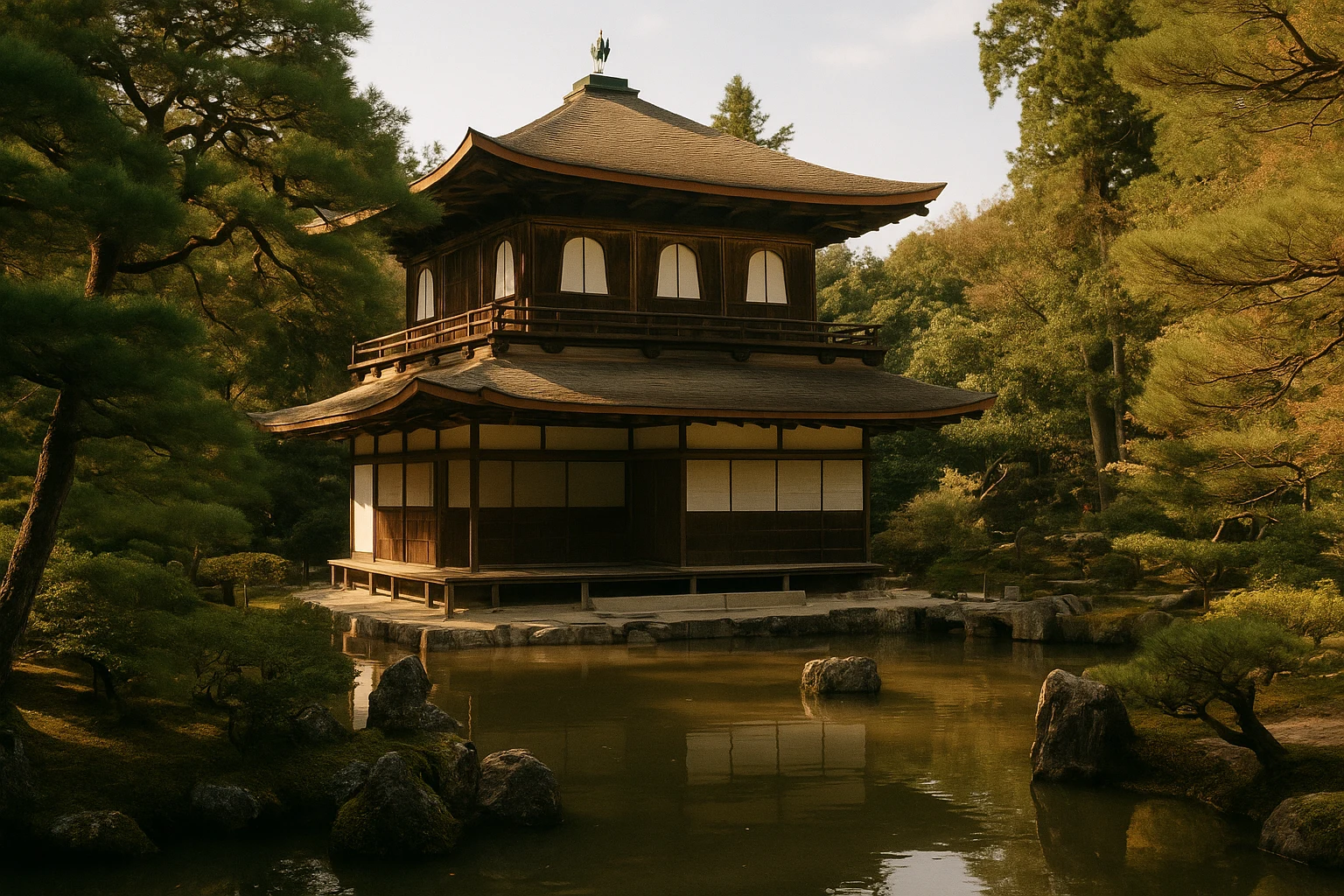
Ginkakuji Temple: Kyoto's Silver Pavilion and the Art of Wabi
Explore Ginkakuji Temple in Kyoto, Japan — the Silver Pavilion, sand gardens, and Ashikaga Yoshimasa...