Quick Info
At a glance
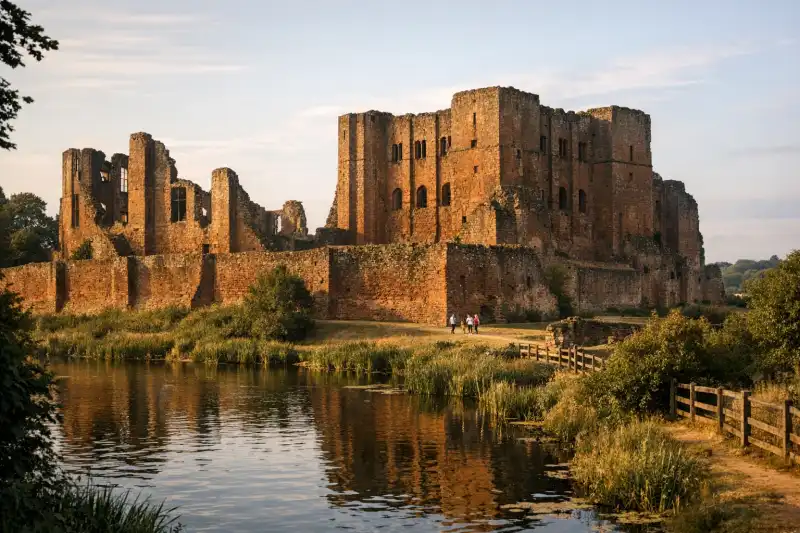
Kenilworth Castle in the United Kingdom rises from the Warwickshire landscape as one of England’s most atmospheric medieval ruins, a place where royal ambition, military engineering, and courtly spectacle all seem to linger in the stone. Even before you reach the main remains, the site feels unusually expansive. Water once defended it on a grand scale, towers once projected both strength and status, and generations of nobles reshaped it from fortress to palace without ever entirely erasing its martial edge. Today, visitors encounter not a single intact building but a dramatic composition of gatehouses, shattered halls, lofty walls, and garden spaces that together tell a long and layered story.
What makes Kenilworth especially memorable is the contrast it preserves. It was at once a stronghold and a residence, a site of siege warfare and a stage for refined entertainment. Here, kings worried about rebellion, magnates expressed power through architecture, and one of Tudor England’s most famous courtiers tried to impress Queen Elizabeth I on a scale that has become legendary. The result is a destination that rewards slow exploration. You are not simply looking at ruins; you are moving through centuries of political conflict, artistic reinvention, and personal ambition. For travelers interested in medieval England, royal history, or the lived texture of the past, Kenilworth Castle offers one of the richest and most evocative historic experiences in the country.
History
Norman origins and early growth
Kenilworth Castle began in the 12th century, most likely under Geoffrey de Clinton, chamberlain to King Henry I. Like many Norman foundations, it was conceived as a statement of control as much as a defensive position. The castle was strategically located in the English Midlands, a region of political importance and overland movement. Its earliest form would have been more compact than the sprawling complex visitors see today, but the site already possessed strong advantages. Water defenses could be developed here on a remarkable scale, and the surrounding terrain supported the creation of a formidable fortress.
Over the following decades, the castle passed through changing hands and political circumstances, gradually expanding in both significance and architecture. Stone replaced earlier materials, and the site grew into a major aristocratic residence. As royal authority and baronial power repeatedly collided in medieval England, castles like Kenilworth became focal points of national events rather than merely local strongholds.
The age of rebellion and the great siege
Kenilworth entered the national spotlight in the 13th century during the baronial conflicts linked to Simon de Montfort. After the Battle of Evesham in 1265, supporters of de Montfort held the castle against the forces of King Henry III. What followed was the famous Siege of Kenilworth in 1266, one of the longest sieges in medieval English history.
The castle’s water defenses and substantial fortifications made it extraordinarily difficult to capture. Royal forces brought siege engines and attempted multiple methods to break resistance, yet the defenders held out for months. The episode demonstrated just how advanced and resilient the fortress had become. Eventually, starvation and negotiation, rather than direct assault, ended the resistance. The subsequent Dictum of Kenilworth helped establish terms by which rebels could regain lands through fines, making the castle’s story central not only to warfare but also to political settlement.
The siege cemented Kenilworth’s reputation. It was no ordinary stronghold but one of the most formidable castles in England, capable of influencing the course of national politics.
Lancastrian magnificence and John of Gaunt
In the later medieval period, Kenilworth entered a new phase of prestige under the House of Lancaster. Its most celebrated medieval patron was John of Gaunt, duke of Lancaster and one of the most powerful men in 14th-century England. Under his ownership, the castle became a residence of exceptional scale and status.
John of Gaunt commissioned major additions, including the great hall and the imposing tower now known by his name. These works reflected both practical needs and aristocratic image-making. A great noble household required ceremonial space, accommodation, service buildings, and architecture that projected authority. Kenilworth increasingly operated as a palace-fortress: secure, imposing, and fit for elite living.
The architecture from this period remains some of the site’s most striking. Even in ruin, the surviving masonry conveys ambition and confidence. This was a residence designed to impress peers, host retainers, and reinforce dynastic importance.
Tudor transformation and Elizabethan spectacle
The most famous chapter in Kenilworth’s history came in the 16th century. Robert Dudley, earl of Leicester and favorite of Queen Elizabeth I, undertook extensive renovations to turn the castle into a setting worthy of royal visits. Dudley hoped not only to entertain the queen but perhaps to advance his long-rumored marriage ambitions.
To achieve this, he transformed parts of Kenilworth into a fashionable Tudor residence layered onto medieval foundations. New lodging ranges, decorative schemes, and elaborate garden spaces softened the older martial character. In 1575, Dudley hosted Elizabeth I at Kenilworth for a spectacular visit lasting nearly three weeks. Festivities included music, pageantry, hunting, fireworks, and entertainments designed to flatter the queen and advertise Dudley’s wealth, taste, and devotion.
Although Elizabeth never married Dudley, the visit became one of the most famous episodes of the English Renaissance court. Kenilworth’s identity was forever expanded: it was no longer remembered only for siege and defense, but also for romance, performance, and elite culture.
Decline, slighting, and survival as a ruin
The English Civil War in the 17th century marked the beginning of Kenilworth’s irreversible decline. After Parliamentary victory, the castle was slighted, meaning deliberately damaged to prevent future military use. Walls were breached, buildings were dismantled, and the once-mighty residence lost much of its structural integrity.
Yet destruction also created the form in which modern visitors now experience the site. Instead of later rebuilding erasing the past, Kenilworth remained a picturesque ruin. Antiquarians, artists, and travelers found beauty in its broken silhouettes. By the 18th and 19th centuries, ruined castles had become objects of historical fascination and romantic imagination, and Kenilworth was among the most admired.
Today the castle is conserved as a major heritage site. Its ruins, reconstructions, and exhibitions allow visitors to read multiple eras at once: Norman foundation, baronial war, Lancastrian prestige, Tudor luxury, Civil War damage, and modern preservation.
Key Features
Kenilworth Castle’s greatest strength as a visitor site is the sheer variety of spaces within its grounds. Rather than presenting a single monumental facade, it unfolds in stages. The outer approach, the gatehouse, the open courts, the towering masonry of John of Gaunt’s Great Hall and tower, and the reconstructed Elizabethan garden all create distinct moods. As you move through the site, the story shifts from military strength to noble comfort and then to courtly display.
One of the first major highlights is the gatehouse, which gives a strong sense of arrival and defense. Medieval gatehouses were never merely doors in walls; they were carefully designed barriers, watchpoints, and statements of authority. At Kenilworth, the surviving entrance structures help visitors imagine the psychological effect the castle must once have had on guests, petitioners, and enemies alike. Passing through them creates a transition from ordinary landscape into a controlled world of lordship.
John of Gaunt’s Great Hall is among the most impressive ruins on the site. Even roofless, it suggests the scale of elite medieval life. This was a place for feasting, ceremony, hospitality, and the management of household hierarchy. Great halls were social engines of castles, where status was performed through seating, serving, and spectacle. At Kenilworth, the surviving walls and window openings allow you to picture a grand interior animated by firelight, banners, and the routines of a major aristocratic court. Nearby, the tower associated with John of Gaunt reinforces that sense of high-status residence combined with defensive mass.
Leicester’s Building adds another layer. This Tudor addition speaks to comfort, fashion, and access to the queen rather than to siege resistance. The building was created to host Elizabeth I in surroundings that would have felt elegant and modern by 16th-century standards. Although much of it is ruined, the surviving structure still communicates its intent: this was architecture designed for proximity, prestige, and favor. It allows visitors to compare medieval and Tudor ideas of noble living in one compact area.
Another memorable feature is the site’s relationship to water. Kenilworth was once surrounded by an extensive artificial mere and defensive waterworks that made it exceptionally difficult to attack. While those defenses no longer survive in full medieval form, understanding them is essential to appreciating the castle’s power. Interpretation on site helps visitors imagine a fortress that seemed to rise from water, its walls and towers doubled in reflection and rendered more imposing by the difficulty of approach.
The reconstructed Elizabethan Garden offers a contrasting experience. After the raw stone and broken profiles of the ruins, the garden introduces color, order, and sensory richness. Based on historical research, it evokes the kind of pleasure ground Robert Dudley created to delight Elizabeth I. Here, symmetry and ornament replace military utility. The garden reminds visitors that castles could be places of leisure, flirtation, and cultivated display, not only war. It also softens the common misconception that all great medieval sites were perpetually grim or austere.
The castle’s elevated viewpoints are another major draw. Climbing surviving sections where access is permitted gives a broader sense of the castle’s footprint and the landscape it once dominated. Seeing the arrangement of courts, ranges, and surrounding terrain helps visitors understand how unusually large and complex Kenilworth was. It was not an isolated keep but a layered residence shaped over centuries.
Finally, the atmosphere of ruin is itself a feature. Kenilworth has enough surviving structure to feel legible, but enough loss to leave room for imagination. Broken stairways, empty windows, and fragmentary walls invite visitors to mentally reconstruct vanished chambers and ceremonies. Few castles balance readability and romance so effectively.
Getting There
Kenilworth Castle is located in Warwickshire, in central England, and is relatively easy to reach from several major cities. The nearest useful urban base is Coventry, though Warwick, Leamington Spa, Birmingham, and even London can all work for a day trip.
By train, Kenilworth has its own railway station with services linking into the regional network. From Coventry to Kenilworth, fares are often around £3 to £6 one way depending on time and ticket type, and the journey is typically about 8 to 12 minutes. From Birmingham, expect roughly £8 to £20 depending on route and advance booking, usually with a change. From London, most travelers take a train toward Coventry or Warwick/Leamington Spa and continue from there; fares can range widely, often from about £20 to £70 return depending on how early you book.
From Kenilworth station, the castle is around 1.5 miles away. You can walk in roughly 30 minutes, take a taxi for about £6 to £10, or use local bus services when available. Buses also connect Kenilworth with Coventry, Warwick, and Leamington Spa. Local bus fares are commonly in the £2 to £4 range for single journeys.
By car, the castle is straightforward to reach via the Midlands road network, especially from the A46. Driving from Coventry usually takes around 20 to 30 minutes, and from Birmingham around 45 minutes to 1 hour depending on traffic. Parking availability should be checked in advance through the official site, especially during school holidays and special events.
If you prefer organized sightseeing, guided day tours from nearby cities may combine Kenilworth with Warwick or Stratford-upon-Avon, though many independent travelers will find public transport perfectly manageable.
When to Visit
Kenilworth Castle can be rewarding year-round, but the best time for most visitors is from late spring through early autumn. Between May and September, longer daylight hours and milder weather make it easier to explore the extensive grounds, climb viewpoints, and enjoy the garden areas at their best. Summer is especially good if you want the fullest visual impact from the reconstructed Elizabethan Garden, when planting is vibrant and the contrast between flowers and weathered stone is most striking.
That said, summer also brings the largest crowds, especially on weekends, bank holidays, and school breaks. If you prefer a quieter visit, aim for a weekday morning in May, June, or September. These months often offer a good balance of decent weather and lighter footfall. Early autumn can be particularly atmospheric, as softer light and cooler temperatures suit the romantic character of the ruins.
Spring is excellent for visitors interested in landscape and photography. Fresh greenery around the stonework can be beautiful, and temperatures are usually comfortable for walking. Do be prepared for changeable British weather; waterproof layers and sturdy shoes are sensible in any season.
Winter visits have their own appeal. The ruins can feel more dramatic under grey skies, and lower visitor numbers make for a contemplative experience. However, gardens are less vivid, days are shorter, and wind or rain can make exposed areas less comfortable. Some seasonal programming and operating hours may also be reduced.
Whenever you go, try to allow enough time for both the architecture and the interpretation. Kenilworth is a site where atmosphere changes with the weather, so a partly cloudy day can be just as memorable as perfect sunshine.
| Quick Facts | Details |
|---|---|
| Location | Kenilworth, Warwickshire, England |
| Country | United Kingdom |
| Main period | Medieval to Tudor |
| Founded | 12th century |
| Famous for | Great siege of 1266, John of Gaunt, and Elizabeth I’s 1575 visit |
| Managed by | English Heritage |
| Nearest city | Coventry |
| Suggested visit length | 2–3 hours |
| Best season | Late spring to early autumn |
| Family-friendly | Yes, with some uneven historic surfaces |
Guided tours: worth it?
Self-guided works here, but a guide can add real value if you want the ruins explained as a living place rather than just a sequence of monuments.
Best for
- First-time visitors who want context, not just photos
- Short visits where a planned route saves time
When to go self-guided
Go independently if you prefer setting your own pace, reading as you go, and checking official hours or ticket rules directly before you arrive.
What I’d avoid
Skip paid tours that bundle unrelated stops you do not actually want. The best option should either save meaningful planning time or add historical context you would miss on your own.
Kenilworth Castle tours
Useful when: you want to compare guided formats before deciding
Warwickshire historical tours
Useful when: you want to compare guided formats before deciding
Coventry and Warwick day tours
Useful when: you want to compare guided formats before deciding
Some tour links are affiliate links, which may earn Ancient Travel a small commission at no extra cost to you. I try to surface options that make practical sense for the site—not just anything bookable.
Frequently Asked Questions
What is Kenilworth Castle famous for?
Kenilworth Castle is famous for its enormous medieval ruins, its association with Simon de Montfort and John of Gaunt, and the grand entertainments staged for Queen Elizabeth I by Robert Dudley.
How much time do you need at Kenilworth Castle?
Most visitors should allow at least two to three hours to explore the gatehouse, tower ruins, gardens, exhibitions, and wider grounds at a comfortable pace.
Is Kenilworth Castle suitable for families?
Yes. Families often enjoy the open grounds, dramatic ruins, interpretive displays, and seasonal activities, though some areas have uneven surfaces and historic stairways.
Can you visit Kenilworth Castle by public transport?
Yes. You can reach Kenilworth by train or bus from nearby cities such as Coventry, Warwick, and Leamington Spa, then continue on foot, by taxi, or local bus.
Are the Elizabethan gardens original?
The gardens seen today are modern reconstructions inspired by historical evidence, designed to evoke the elaborate pleasure gardens created for Robert Dudley in the 16th century.
Who owns Kenilworth Castle?
Kenilworth Castle is managed by English Heritage, which cares for the ruins, visitor facilities, exhibitions, and reconstructed garden spaces.
Nearby Ancient Sites
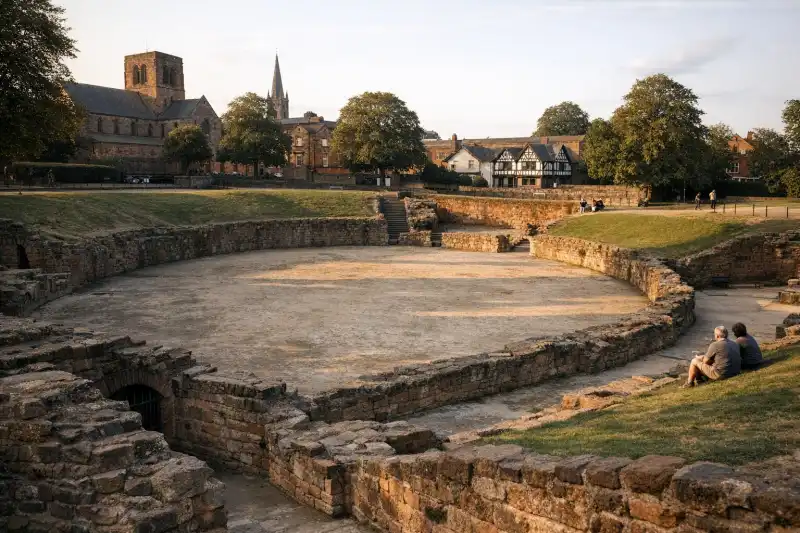
Chester Roman Amphitheater
Explore Chester Roman Amphitheater in the United Kingdom, the largest known Roman amphitheater in Br...
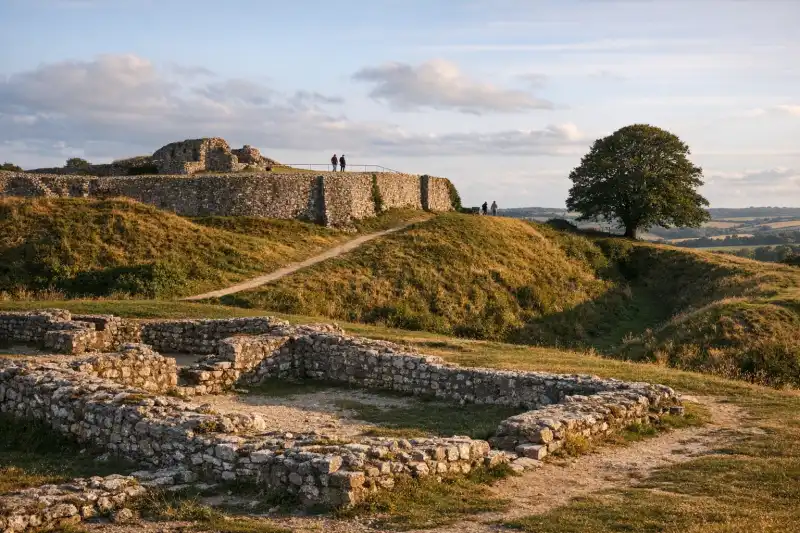
Old Sarum
Explore the storied ruins of Old Sarum, the ancient settlement and former city near Salisbury, Unite...
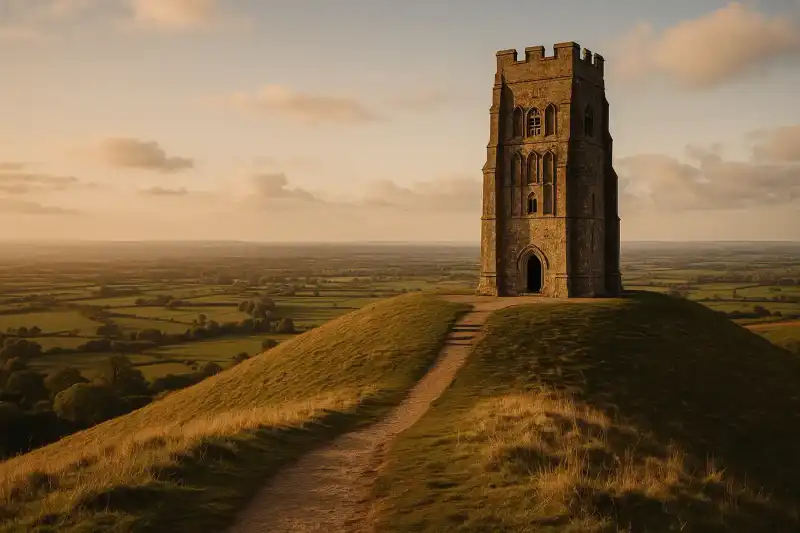
Glastonbury Tor Travel Guide 2026: Best Walk Times, History, and Visit Planning
Early Medieval EnglandPlan a smarter visit to Glastonbury Tor with practical climb timing, weather tips, and context on wh...