Quick Info
Curated Experiences
Kinkakuji and Fushimi Inari Shrine Full-Day Tour
Kyoto Golden Pavilion and Bamboo Grove Tour
Private Kyoto Golden Pavilion and Zen Garden Tour
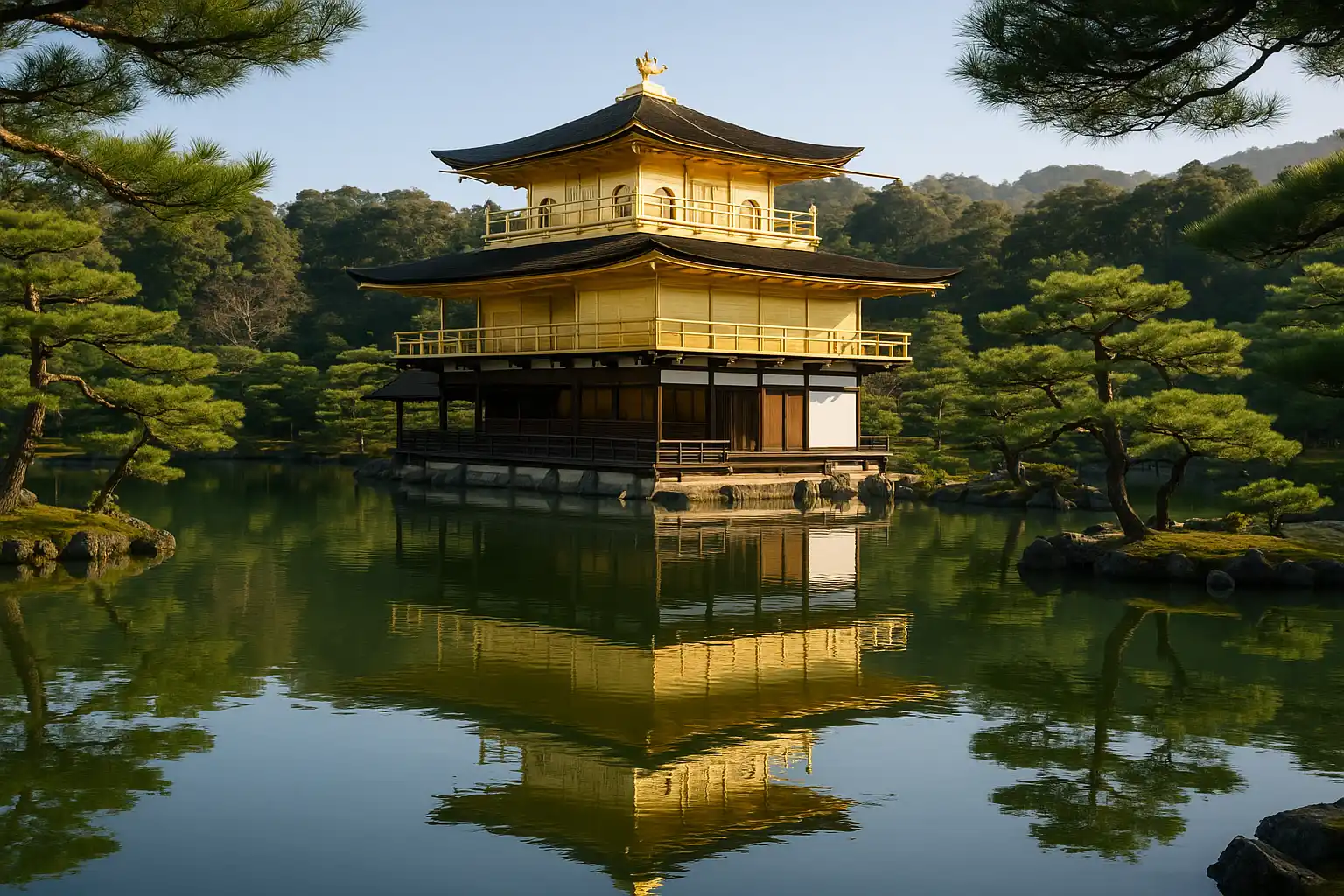
You round a gravel path through a stand of manicured pines and the pavilion appears without warning — three stories of gold leaf hovering above its own reflection in Mirror Pond, so precisely doubled in the water that for a disorienting moment you cannot tell which is the building and which is the image. Kinkakuji delivers one of those rare experiences where the reality exceeds every photograph you have seen beforehand. The gold is more vivid in person, the reflection more complete, the framing of pines and mountains more deliberately composed than any lens captures.
The Temple of the Golden Pavilion is not simply Kyoto’s most visited site. It is a philosophical argument made in architecture — a statement about the relationship between beauty, impermanence, and enlightenment that Ashikaga Yoshimitsu, the shogun who commissioned it in 1397, embedded in every detail from the gold leaf to the pond’s dimensions to the borrowed silhouette of the mountains beyond. The pavilion that stands today is a reconstruction, rebuilt in 1955 after a monk burned the original in 1950 in an act of obsessive destruction that Yukio Mishima turned into one of the great novels of postwar Japanese literature. Knowing that history changes nothing about the visual impact and deepens everything about the meaning.
Historical Context
Kinkakuji began not as a temple but as a retirement villa for Ashikaga Yoshimitsu, the third shogun of the Muromachi period, who abdicated at the height of his power in 1394 and retreated to the northern hills of Kyoto. Yoshimitsu was arguably the most culturally ambitious ruler of his era. He pursued a vision he called the Kitayama culture — named for these northern mountains — in which beauty, scholarship, and Zen contemplation represented the highest expressions of authority. His villa complex, Kitayamaden, was the physical embodiment of that ideology.
The golden pavilion stood at the heart of the complex, its three stories built in deliberately different architectural styles. The ground floor follows the aristocratic shinden-zukuri of Heian palace architecture, open and airy. The second floor shifts to buke-zukuri, the residential style of the samurai class, with lacquered shutters and gold-leaf panels. The third floor is fully enclosed in Chinese Zen kara-yo style, gold inside and out, with bell-shaped windows and a coffered ceiling housing sacred relics. The combination was intentional: Yoshimitsu was synthesizing Japan’s competing cultural traditions under a single golden roof, with himself as the unifying figure.
When Yoshimitsu died in 1408, his will specified that the villa become a Zen temple. It was renamed Rokuonji — the Deer Garden Temple, after the park in India where the Buddha first preached — and rededicated as an active Rinzai Zen monastery. For five and a half centuries the pavilion survived intact, weathering wars, earthquakes, and the periodic fires that consumed so much of Kyoto’s wooden architecture.
On July 2, 1950, a twenty-two-year-old novice monk named Hayashi Yoken set fire to the Golden Pavilion and attempted suicide on the hill behind it. The original Muromachi-period structure burned completely. Hayashi survived, was convicted of arson, and died in a tuberculosis ward in 1956. The reconstruction, completed in 1955, applied more gold leaf than the original — approximately 20 kilograms across 200,000 individual sheets — as if to restore not only the building but the idea of it, undiminished. UNESCO designated Kinkakuji a World Heritage Site in 1994 as part of the Historic Monuments of Ancient Kyoto.
What to See
The Pavilion and Mirror Pond
The primary viewing platform faces southwest across Mirror Pond (Kyoko-chi), and the pavilion appears in its entirety against the water and the forested hillside behind. The pond’s dimensions were calculated by Yoshimitsu’s designers to produce the maximum reflected image at this precise angle. Several small islands arranged in the water represent the Buddhist Pure Land archipelago, and the shoreline pines have been pruned to specific shapes over generations. The distant profile of Kinugasa Hill serves as shakkei — borrowed scenery — extending the garden’s spatial reach far beyond its physical boundary. Stand here longer than the crowd does. The composition is not accidental, and it reveals its details slowly: the phoenix finial at the ridge peak, the way the ground floor’s open veranda appears to hover above the water, the slight differences in gold tone between the second and third floors.
Anmintaku Pond and the Garden Path
The one-way circuit continues clockwise around the main pond. A second viewing point on the north shore offers a slightly elevated angle and a clearer view of the phoenix. Past Anmintaku Pond — a smaller secondary pool fed by a stone lantern — the path climbs gently through the garden. Ryumon Falls (Dragon’s Gate Falls) appears along this stretch: a low stone waterfall where a standing stone “carp” appears to leap upstream, evoking the Chinese legend of a carp transforming into a dragon through perseverance. Yoshimitsu identified with that legend and placed the stone deliberately.
The Sekka-tei Tea House
Perched on a wooded rise toward the end of the circuit, the Sekka-tei was built in the Edo period and serves matcha in shallow lacquered bowls with a seasonal wagashi sweet. At 500 JPY (approximately $3.50), this is one of the best-value tea experiences in Kyoto. The elevated position gives a different perspective on the pavilion below, and the 15 to 20 minutes spent here provide a natural pause in the visit. The tea house operates on a first-come basis with no reservation required.
Fudo-do Hall
Near the exit, this modest Shingon shrine houses a fire altar that predates Yoshimitsu’s villa. Monks occasionally conduct fire ceremonies here — if one is in progress, pause quietly. The hall provides a vivid contrast to the garden’s contemplative aesthetic and a reminder that Kinkakuji sits on ground that was sacred before it was beautiful.
Timing and Seasons
Kinkakuji opens at 9:00 AM daily and closes at 5:00 PM (last admission 4:30 PM) with no seasonal variation in hours. The 9:00 to 10:00 AM window is consistently best: crowds are manageable, the water in Mirror Pond is typically still before wind picks up, and southeastern morning light creates the strongest reflections and shadows. Tour buses arrive in force from around 9:30 AM; arriving at the gate at opening gives you 20 to 30 minutes ahead of the wave.
Late afternoon from 3:00 to 4:30 PM offers a different reward. The pavilion faces southwest, and the low western sun illuminates the gold leaf with a warm orange tone that photographs cannot fully capture. Crowds are lighter than midday but heavier than opening. Midday from 11:00 AM to 2:00 PM is peak crowd time with flat overhead light — avoid if possible.
Seasonally, late March cherry blossoms cluster a weeping cherry near the pond’s western edge. Fresh maple green in May fills the garden with vivid contrast against the gold. Crimson and amber maples in mid-November produce reflections that photographers travel specifically to capture. On the rare winter morning after snowfall, a white-dusted pavilion against pale sky is Kinkakuji at its most otherworldly — but Kyoto averages only two or three significant snowfalls per year, typically between late December and February. Temperatures range from 82°F (28°C) in peak summer to 37°F (3°C) in winter. Spring and autumn settle around 55 to 68°F (13 to 20°C), ideal for walking. Avoid weekends year-round, Golden Week (April 29 to May 5), and mid-November autumn peak.
Tickets, Logistics and Getting There
Admission is 400 JPY ($2.80 USD) for adults, 300 JPY ($2 USD) for elementary and junior high students. Children under elementary age enter free. Cash only — no credit cards, no IC cards at the gate or tea house. The nearest ATMs are at Lawson and 7-Eleven convenience stores on Kitaoji-dori, about 800 meters south of the entrance. Withdraw cash before heading north.
Kinkakuji sits in the Kita Ward of northern Kyoto, about 5 kilometers from Kyoto Station and not on a subway line. Kyoto City Bus 101 or 205 from Kyoto Station Bus Terminal to the Kinkakuji-michi stop takes approximately 40 minutes and costs 230 JPY. The 101 also passes Nijo Castle. For a faster approach during peak hours when buses crawl in traffic, take the Karasuma Subway Line to Kitaoji Station (15 minutes, 260 JPY), then board bus 101, 102, 204, or 205 for 10 minutes to Kinkakuji-michi. By taxi, expect 2,000 to 2,500 JPY ($14 to $18 USD) from central Kyoto, taking 20 to 30 minutes depending on traffic. For groups of three or four, splitting a taxi fare often beats the bus for convenience and time.
Practical Tips
- Cash is essential. Neither the entrance gate nor the tea house accepts cards of any kind.
- Dress comfortably for gravel and stone paths. The route is generally flat with gentle rises. Sturdy walking shoes are better than sandals.
- A cloakroom near the entrance stores larger bags, useful if you are arriving with luggage.
- The one-way circuit runs about 700 meters and offers no backtracking. Once you pass the main viewing platform, you will not return to it unless you exit and re-enter (which means paying again).
- For reflection photographs, visit on a calm morning. Wind on the pond surface destroys the mirror effect.
- A small travel tripod and an early arrival combine to produce the best long-exposure reflection shots.
- Restrooms are located near the entrance gate and near the Sekka-tei.
- Drones are prohibited.
- Photography is permitted throughout the gardens.
Suggested Itinerary
9:00 AM — Arrive at the entrance gate at opening. Purchase ticket (cash only, 400 JPY) and receive the traditional goshuin entry talisman.
9:05 AM — Follow the gravel path west to the first viewing platform. Stand here for at least 5 minutes. Study the reflection. Let the tour groups pass behind you.
9:15 AM — Continue clockwise around the pond. Pause at the northern viewing point for the elevated angle and phoenix view. Note the Ryumon Falls carp stone.
9:30 AM — Stop at the Sekka-tei tea house for matcha and wagashi (500 JPY, 15 to 20 minutes).
9:50 AM — Complete the circuit past Fudo-do Hall and exit through the gift shop area.
10:00 AM — Walk 15 minutes west along Kinugasa-dori to Ryoanji Temple and its famous dry-stone garden (500 JPY, 30 to 45 minutes).
10:45 AM — Walk 5 minutes south to Ninnaji Temple (free grounds, 800 JPY for palace interior, 30 to 45 minutes).
11:30 AM — Lunch on Ninnaji’s access road. Total morning: 3 temples in approximately 2.5 hours.
Nearby Sites
Himeji Castle — Japan’s most beautiful original castle is 45 minutes by shinkansen from Kyoto. A morning at Kinkakuji pairs with an afternoon at Himeji or vice versa, making a strong full-day itinerary.
Kiyomizudera Temple — Kyoto’s famous wooden-stage temple on the eastern hills represents a completely different architectural tradition from Kinkakuji’s Zen garden aesthetic. The two sites together provide a comprehensive Kyoto temple experience.
Itsukushima Shrine — The floating torii gate near Hiroshima is further afield but connects to Kinkakuji thematically as another site where architecture and water fuse into a single composition.
Ryoanji Temple — A 15-minute walk west, this Zen temple’s famous rock garden contains fifteen stones arranged so that no single viewpoint reveals all of them. Pair it with Kinkakuji for a morning that addresses two of Zen Buddhism’s central aesthetic propositions.
A Temple About Beauty Itself
Kinkakuji is the most visited site in Kyoto, and most visitors experience it as a conveyor belt: in through the gate, photograph across the pond, around the path, out through the gift shop. Forty-five minutes, box ticked. There is a more rewarding approach. Stand at the first viewing platform long enough to notice the deliberate geometry — the building and its reflection forming a single unified composition, architecture and water as one object. Watch how the gold changes as cloud cover shifts: aggressive under direct sun, softer and more luminous under thin cloud. The building was designed for the full range of Japanese light, not just the postcard version.
The fire of 1950 and Mishima’s novel transformed this temple into something beyond beautiful — into a site about the complicated human relationship with beauty itself. That a place this stunning was destroyed by someone too consumed by it to bear its continued existence adds a dimension to the gold that no photograph conveys. Knowing the history does not diminish the view. It deepens it.
Discover More Ancient Wonders
- Himeji Castle — Japan’s most beautiful original castle, a 45-minute shinkansen ride from Kyoto
- Itsukushima Shrine — The floating torii gate on Miyajima Island near Hiroshima
- Kiyomizudera Temple — Kyoto’s wooden stage temple on the eastern hills
- Plan your trip with our beginner’s guide to visiting ancient sites
- Capture the gold with our guide to photographing ruins
Quick Facts
| Attribute | Details |
|---|---|
| Location | Northwest Kyoto, Japan (Kita Ward) |
| Country | Japan |
| Region | Kyoto |
| Civilization | Japanese Zen Buddhist |
| Historical Period | 1397 CE–present |
| Established | 1397 CE |
| Japanese Name | Kinkaku-ji (official: Rokuon-ji) |
| UNESCO Status | Part of Historic Monuments of Ancient Kyoto (1994) |
| Entry Fee | 400 JPY adults (~$2.80 USD); 300 JPY students |
| Hours | 9:00 AM–5:00 PM daily (last entry 4:30 PM) |
| Best Time | Weekday 9:00–10:00 AM or late afternoon 3:00–4:30 PM |
| Distance from Kyoto Station | ~5 km; 40 min by bus, 25 min subway + bus |
| Recommended Visit Length | 45–75 min (2.5–4 hours with Ryoanji + Ninnaji) |
| Coordinates | 35.0394, 135.7292 |
Frequently Asked Questions
How do I get to Kinkakuji from Kyoto Station?
Take Kyoto City Bus 101 or 205 from Kyoto Station to the Kinkakuji-michi stop — about 40 minutes and 230 JPY ($1.60 USD). For a faster approach, take the Karasuma Subway Line to Kitaoji Station, then catch bus 101, 102, 204, or 205 (10 minutes) or walk 20 minutes south. Taxis run 2,000–2,500 JPY ($14–18 USD) from central Kyoto and drop you at the gate. The temple is in northern Kyoto, so factor in transport time; most visitors combine it with Ryoanji Temple (15-minute walk west) and Ninnaji Temple (5-minute walk) for a half-day northern circuit.
Is the gold on Kinkakuji real?
Yes — the second and third floors are sheathed in pure gold leaf, applied over a lacquered base. The current pavilion was rebuilt in 1955 after a novice monk, Hayashi Yoken, burned the original to the ground in July 1950 — an act of obsessive jealousy immortalized in Yukio Mishima's 1956 novel 'The Temple of the Golden Pavilion.' The reconstruction used approximately 20 kilograms of gold leaf in 200,000 individual sheets, applied more lavishly than the 1397 original. The gold is not purely decorative: in Zen Buddhist thought it represents the Pure Land of Amida Buddha, the enlightened realm toward which practice is directed.
How much time do I need at Kinkakuji?
Plan 45–60 minutes for the temple gardens. The one-way circuit leads from the entrance gate to the exit without any backtracking — you won't see the pavilion twice unless you pause deliberately at the secondary viewing points past Anmintaku Pond. Add 20–30 minutes if you stop at the Sekka-tei tea house for matcha and wagashi. Kinkakuji fits naturally into a northern Kyoto morning: arrive at 9 AM opening, walk to Ryoanji (15 minutes), and finish at Ninnaji (5 minutes from Ryoanji) by noon. Total time for all three sites: 3–4 hours.
What is the best time to visit Kinkakuji?
Arrive at 9 AM when the gates open — crowds are thinnest, the water in Mirror Pond is still, and the eastern morning light creates strong reflections. Strategically, the pavilion faces roughly southwest, so late afternoon (3–4 PM) bathes the gold in warm western sun for the most luminous color — but that window coincides with peak crowds. Seasonally, late March cherry blossoms frame the gold brilliantly, November maples turn the garden crimson, and a rare winter snowfall produces Kinkakuji's most dramatic image. Avoid weekends, Golden Week (late April–early May), and mid-November autumn peak if crowd-averse.
How much does it cost to visit Kinkakuji?
Admission is 400 JPY ($2.80 USD) for adults and 300 JPY ($2 USD) for elementary and junior high students; children under elementary age enter free. The Sekka-tei tea house charges 500 JPY ($3.50 USD) for matcha and a wagashi sweet — worth building into your budget. Total cost per adult with tea: roughly 900 JPY ($6 USD). The temple accepts cash only; the nearest ATMs are at Lawson or 7-Eleven convenience stores on Kitaoji-dori, about 800 meters south of the entrance.
Can you go inside Kinkakuji?
No — the pavilion's interior has never been open to the public and is not part of the standard visit. The experience at Kinkakuji is fundamentally visual: you view the three-story structure across Mirror Pond, follow the garden path around the water's edge, and appreciate the pavilion from multiple angles as the circuit unfolds. This is intentional rather than restrictive — in Zen garden design, the building exists to be contemplated from the outside, its reflection in the water as important as the structure itself.
Nearby Ancient Sites
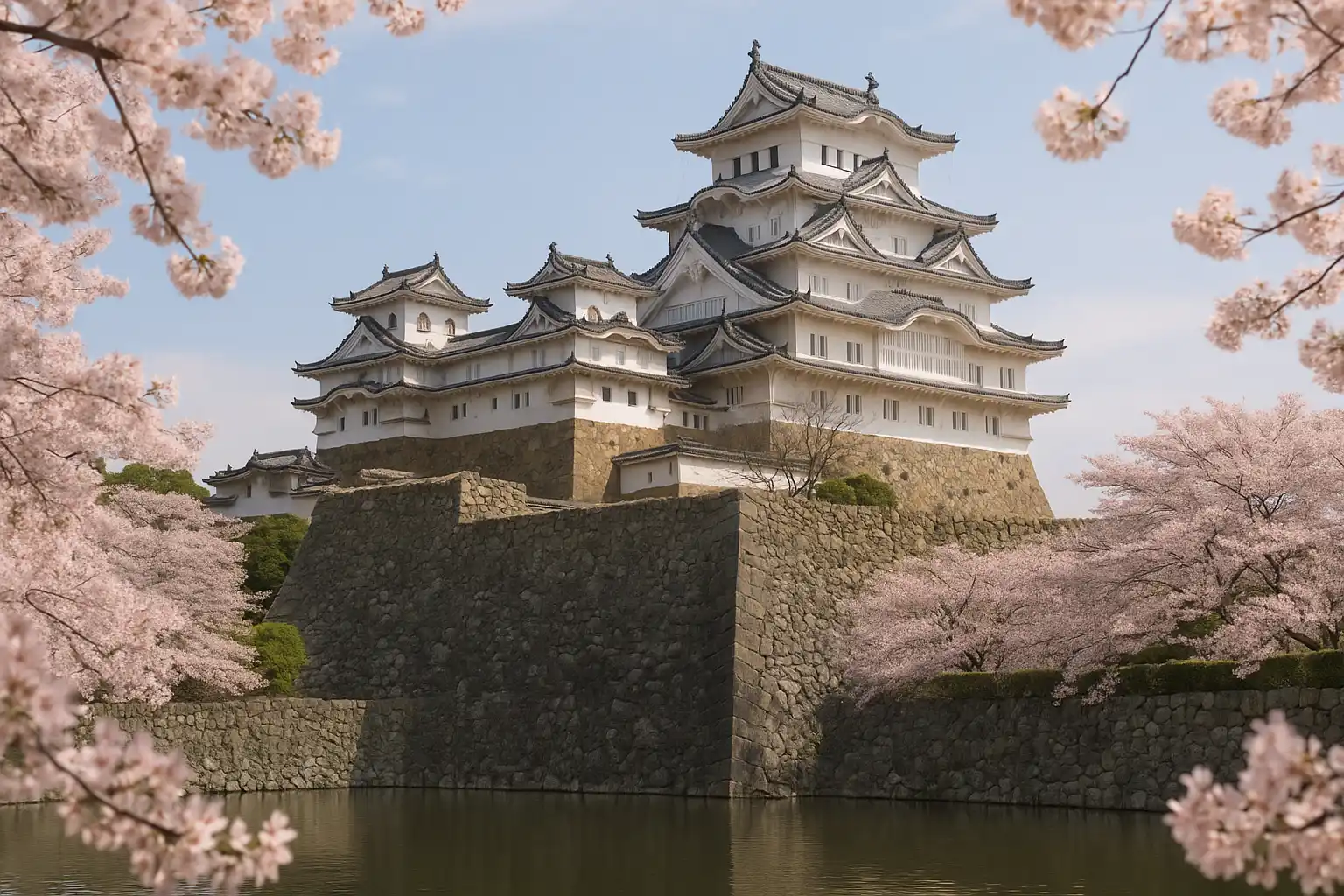
Himeji Castle Japan Travel Guide 2026: The White Heron Castle
Japanese FeudalVisit Himeji Castle, Japan's most beautiful original castle. Explore the White Heron keep, defensive...
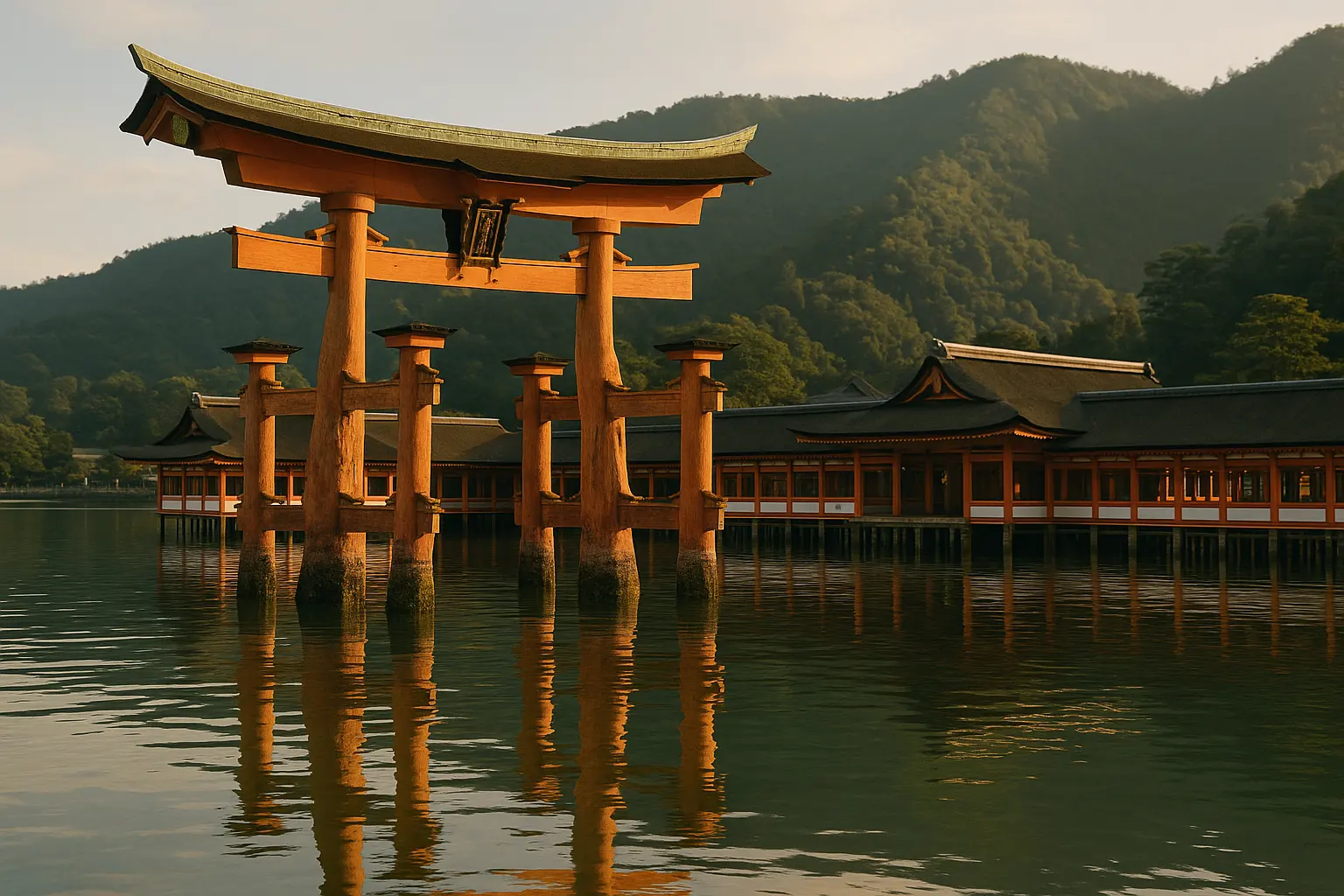
Itsukushima Shrine Japan Travel Guide 2026: The Floating Torii Gate
Japanese ShintoVisit Itsukushima Shrine on Miyajima Island, famous for its floating torii gate. Discover the shrine...
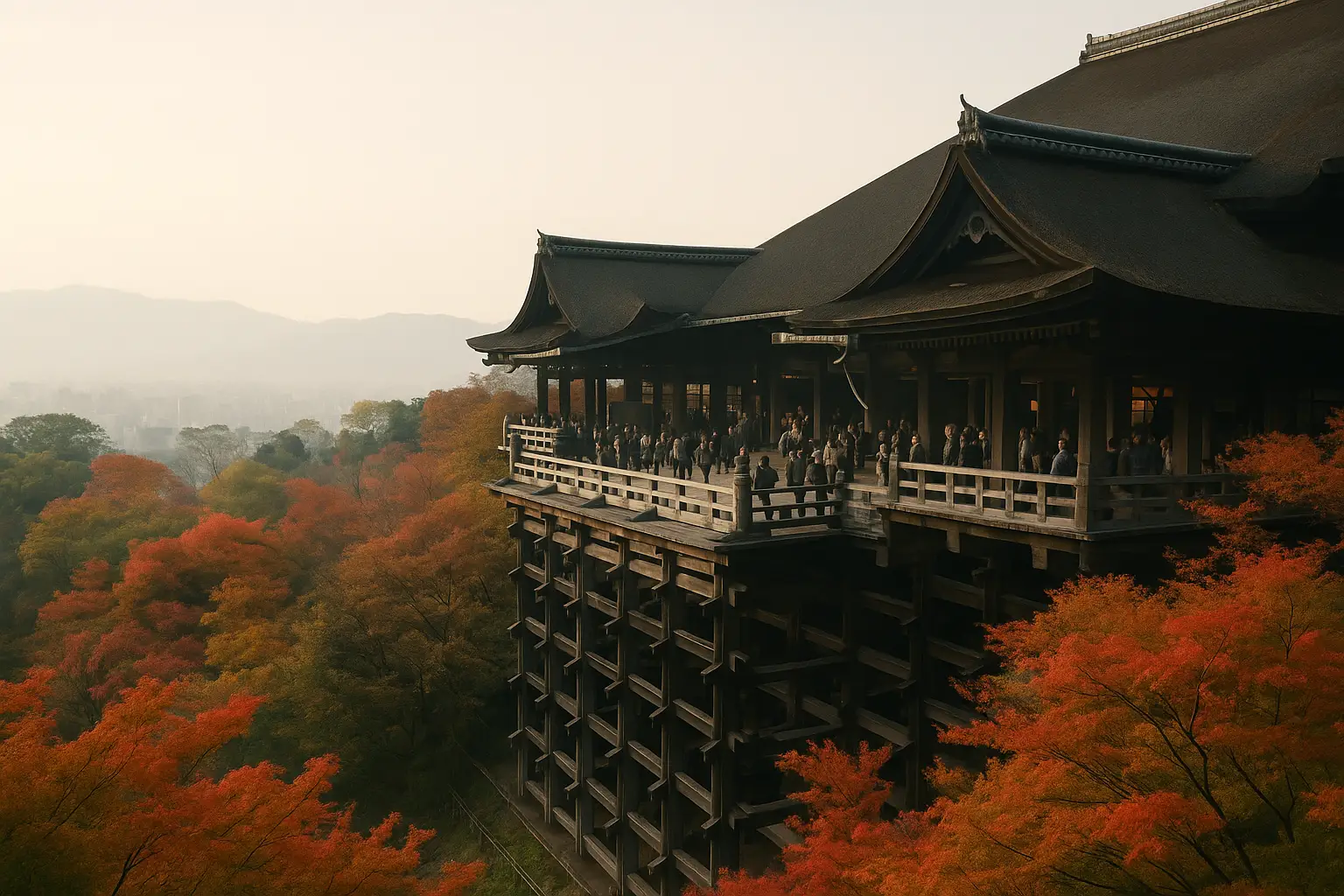
Kiyomizudera Temple Japan Travel Guide 2026: Kyoto's Wooden Stage
Japanese Buddhist (Kita-Hosso)Visit Kiyomizudera, the Pure Water Temple with its famous wooden stage overlooking Kyoto. Explore th...