Quick Info
Curated Experiences
Kizil Caves Day Tour from Kuqa
Private Silk Road Buddhist Art Tour to Kizil Caves
Kuqa Heritage Excursion Including Kizil Caves
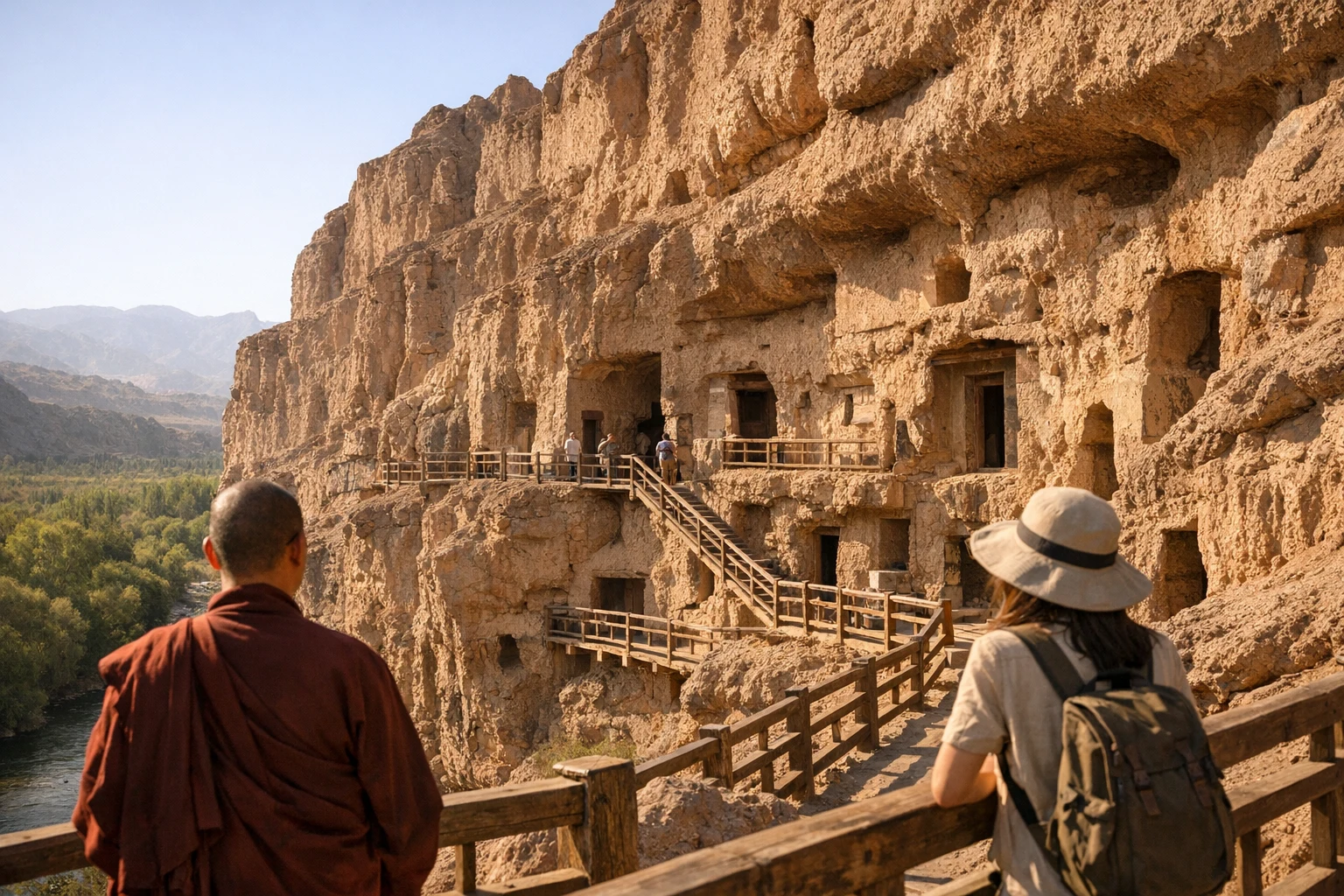
Kizil Caves in China occupy one of the most important yet still underappreciated places in the story of Buddhist art on the Silk Road. Set near Kuqa in Xinjiang, against a desert-edge landscape of cliffs, scrub, and harsh open light, the site preserves a cave-temple world that was already flourishing when many better-known Buddhist monuments elsewhere were still in earlier stages of development. The first impression is geographical: the caves are embedded in a dry, dramatic setting that feels shaped by distance and passage. Then the historical significance begins to register. These are not simply remote cliff shrines. They are among the earliest major Buddhist cave complexes in China, crucial for understanding how religious images, styles, and ideas moved across Central Asia and took form in the Tarim Basin.
What makes Kizil so compelling is that it records a period of artistic formation. The caves preserve mural traditions and architectural forms that reveal strong Indian, Iranian, Central Asian, and local influences before later Chinese cave temple art reached its more familiar mature phases. Inside, where access is allowed, painted fragments, vaults, niches, and iconographic programs still speak of monks, patrons, translators, and travelers moving through one of Eurasia’s great cultural corridors. The site is not as visually complete as some more heavily visited cave complexes, and many murals were damaged or removed in the modern era. Yet that fragmentary condition can sharpen its meaning rather than diminish it. Kizil feels like a place where the deep history of Buddhist transmission remains visible in process, in experiment, and in the surviving traces of a vividly interconnected world.
History
Kuqa and the Silk Road Setting
Kizil developed in the cultural orbit of ancient Kucha, one of the most important oasis kingdoms along the northern branch of the Silk Road in the Tarim Basin. Kucha was not a remote backwater but a major center of trade, religion, music, and translation, positioned between India, Iran, Central Asia, and China. Its strategic location meant that merchants, monks, diplomats, and texts passed through regularly, and Buddhism flourished there as part of a broad transregional network. The Kizil Caves emerged directly from this world of movement.
The Tarim Basin oasis kingdoms played a crucial role in transmitting Buddhism eastward. They were not passive corridors but active centers of reinterpretation and creativity. Kucha in particular became famous for scholarship and translation, and it produced influential Buddhist figures such as Kumārajīva, whose later importance in Chinese Buddhist thought cannot be overstated. Kizil should therefore be understood not as a marginal outpost, but as a key node in one of the great cultural transformations of Eurasian history.
Early Cave Development and Artistic Innovation
The earliest caves at Kizil are generally dated to around the 3rd century CE, making the site one of the oldest major Buddhist cave temple complexes in China. This early dating is one of the reasons the caves are so historically important. They preserve a phase of Buddhist architectural and pictorial development that predates the fully matured monumental traditions of later cave sites farther east. Many of the caves belong to a period when Buddhist imagery was still being localized, adapted, and reformulated in response to regional conditions and patrons.
Architecturally, Kizil is notable for cave forms such as the central pillar cave and barrel-vaulted chambers, which reflect patterns more closely associated with Indian and Central Asian precedents than with later Chinese developments. The murals are equally revealing. They show a remarkable blend of stylistic influences, including narrative scenes from the Buddha’s previous lives, seated Buddhas, donors, decorative bands, and celestial motifs. These paintings are not only religious illustrations. They are documents of artistic exchange and theological imagination in a frontier environment where many visual languages met.
Flourishing Under Regional Kingdoms
Kizil’s greatest artistic flourishing came during the centuries when the Kucha region remained a major Buddhist center under local rule and shifting broader political pressures. Patronage likely came from rulers, monks, local elites, and mercantile communities, all of whom had reasons to support cave sanctuaries as acts of devotion, prestige, and communal identity. The caves accumulated across generations rather than through one single founding project, creating a layered sacred landscape of remarkable complexity.
During these centuries, Kucha’s links to the wider Buddhist world remained strong. Texts, ideas, and visual motifs moved in from the west and also toward China proper. Kizil’s mural style, often featuring vivid colors, narrative sequencing, and highly expressive figures, stands apart from later Chinese cave painting in ways that make it especially valuable for art history. It captures a moment before some later regional styles became dominant, when the visual culture of Buddhism in this region was still strongly shaped by Central Asian and Indian traditions filtered through local adaptation.
Decline, Damage, and Modern Rediscovery
As political and religious conditions in the Tarim Basin changed, Buddhism in the Kuqa region gradually declined. Shifts in trade routes, state power, and religious affiliation altered the conditions that had sustained sites like Kizil. Over time, caves were abandoned, damaged, or exposed to environmental wear. The fragility of mural painting in desert-edge conditions ensured that survival would be uneven even without later human intervention.
Modern rediscovery and archaeological interest brought both knowledge and loss. In the late 19th and early 20th centuries, foreign expeditions visited Kizil and removed significant mural fragments, many of which ended up in museums abroad. This pattern, common to several Silk Road sites, preserved some paintings from total destruction but also dismembered the caves and altered their integrity. Additional damage occurred through time, instability, and local conditions. Today, Kizil survives as both a major archaeological treasure and a site marked by the wounds of extraction. That duality is part of its modern meaning. The caves teach not only about ancient Buddhism, but also about the complicated history of archaeology, collecting, and cultural preservation.
Key Features
The greatest feature of Kizil Caves is the mural tradition. Even in fragmentary form, the paintings remain among the most important early Buddhist murals in China. The surviving imagery reveals a world of intense color, disciplined composition, and multicultural iconography. Narrative scenes from jātaka tales, seated Buddhas arranged in repeated patterns, donor portraits, musicians, celestial beings, and decorative vault motifs all contribute to a visual culture that feels at once local and transregional. For specialists, Kizil’s murals are indispensable evidence of how Buddhist art developed along the Silk Road before later cave traditions farther east became dominant. For general visitors, they offer something equally valuable: the chance to see religious painting as a living meeting point of cultures.
The architecture of the caves is another major highlight. Kizil is particularly known for cave forms that differ from what many travelers expect from Chinese Buddhist grottoes. The central pillar cave type, in which a pillar or shrine mass organizes circumambulation and sacred focus, is especially important. Barrel-vaulted chambers and carefully planned niches show how the cave interiors were designed not merely as decorated rooms but as devotional environments structured by movement, sightline, and ritual logic. These forms help reveal the westward roots and Central Asian intermediaries of early Buddhist architecture in the region.
The setting along the cliff face also contributes strongly to the site’s character. Kizil is not hidden in lush forest or integrated into a modern urban area. It stands in a dry and exposed landscape that makes the caves feel all the more improbable. The contrast between the harsh exterior environment and the painted interior worlds is one of the site’s deepest pleasures. Entering a cave means crossing from heat, stone, and bright desert light into shadowed chambers where sacred imagery once transformed the walls into complete cosmologies. That shift remains powerful even where paintings are incomplete.
Another notable feature is the evidence of cultural exchange visible in the art itself. Kizil does not look purely “Chinese” in the conventional sense, nor does it simply replicate Indian models. It preserves a hybrid Silk Road visual language in which Iranian textiles, Indian iconography, Central Asian figural traditions, and local patronage all leave marks. This makes the site uniquely good for travelers interested in the Silk Road as a zone of artistic fusion rather than only as a trade route.
Finally, Kizil’s damaged condition is itself part of what visitors must understand. Missing mural sections, visible scars, and fragmentary interiors are not signs that the site is disappointing. They are part of the truth of its survival. Kizil is not a polished relic. It is an ancient artistic archive that endured abandonment, environmental stress, and the violence of removal, yet still preserves enough to remain one of the most significant Buddhist cave sites in Asia.
Getting There
Kizil Caves are typically reached from Kuqa in Xinjiang, which serves as the main access point for visitors. Kuqa is connected by rail, road, and air within Xinjiang, though most travelers will already be on a broader regional itinerary rather than arriving only for the caves. From Kuqa, the site is usually visited by private car, hired driver, or organized local tour. Travel time can vary depending on the exact route and road conditions, but it generally takes around 1 to 2 hours each way.
Private transport is the simplest option, especially because public transportation to the caves is limited and not always practical for independent international travelers. Hotel arrangements, local guides, or regional tour operators can usually help organize transport. Costs vary depending on vehicle type and whether you combine Kizil with other Kuqa-area Silk Road sites. Many visitors do exactly that, pairing the caves with other archaeological or cultural destinations in a full-day outing.
Because access conditions, security rules, and regional travel logistics in Xinjiang can change, it is wise to confirm current arrangements in advance rather than rely on old guidebook assumptions. Bring passport identification, water, sun protection, and a realistic sense that this is a heritage excursion in a desert-edge environment, not a quick urban stop.
When to Visit
The best time to visit Kizil Caves is generally spring or autumn, when temperatures in the Kuqa region are more manageable and the outdoor portions of the visit are more comfortable. April to June and September to October usually offer the best balance of clear weather and tolerable heat. These seasons are especially important because the site is exposed, and the approach areas can feel harsh under intense summer sun.
Summer is still possible, but the heat in this part of Xinjiang can be severe. If traveling in the hotter months, visit early in the day, carry plenty of water, and avoid underestimating how tiring even a relatively short site visit can become. Winter is quieter and can be visually striking in its starkness, but colder conditions and fewer services may complicate travel more broadly in the region.
The best light for appreciating the surrounding landscape often comes in the morning or late afternoon, when the cliffs have more depth and the site feels less flattened by glare. Since Kizil is not a place of instant one-angle spectacle, giving yourself enough time for the caves, the context, and the museum or interpretive material where available makes a major difference. This is a site that rewards concentration.
| Quick Facts | Details |
|---|---|
| Location | Near Kuqa, Xinjiang Uyghur Autonomous Region, China |
| Best Known For | Early Buddhist cave paintings and Silk Road artistic exchange |
| Cultural Context | Kucha oasis kingdom and the northern Silk Road |
| Main Period | 3rd to 8th century CE |
| Signature Feature | Early mural programs in central pillar and vaulted cave forms |
| Nearby Base | Kuqa |
| Recommended Visit Length | 2 to 4 hours on site, usually part of a full regional day |
| Best Season | Spring and autumn |
| Preservation Note | Many murals are fragmentary due to age, damage, and early removals |
| Practical Tip | Treat Kizil as a major art-historical site and allow time for context, not just a quick photo stop |
Frequently Asked Questions
What are the Kizil Caves best known for?
The Kizil Caves are best known for being among the earliest major Buddhist cave temples in China, with remarkable mural programs shaped by Silk Road artistic exchange.
Where are the Kizil Caves located?
The caves are located near Kuqa in Xinjiang, China, along the northern rim of the Tarim Basin in an important ancient Silk Road corridor.
Why are the Kizil Caves historically important?
They are historically important because they preserve early Buddhist cave architecture and painting that reveal strong Indian, Central Asian, and local influences before later Chinese cave traditions fully matured.
How much time should you spend at the Kizil Caves?
Most travelers should allow 2 to 4 hours on site, usually as part of a full day focused on Kuqa-area Silk Road heritage.
Are the murals at Kizil well preserved?
Some murals survive impressively, but many caves are fragmentary due to age, environmental damage, and the removal of paintings during early expeditions.
When is the best time to visit the Kizil Caves?
Spring and autumn are generally the best times, when temperatures are more comfortable and the desert-edge landscape is easier to explore.
Nearby Ancient Sites
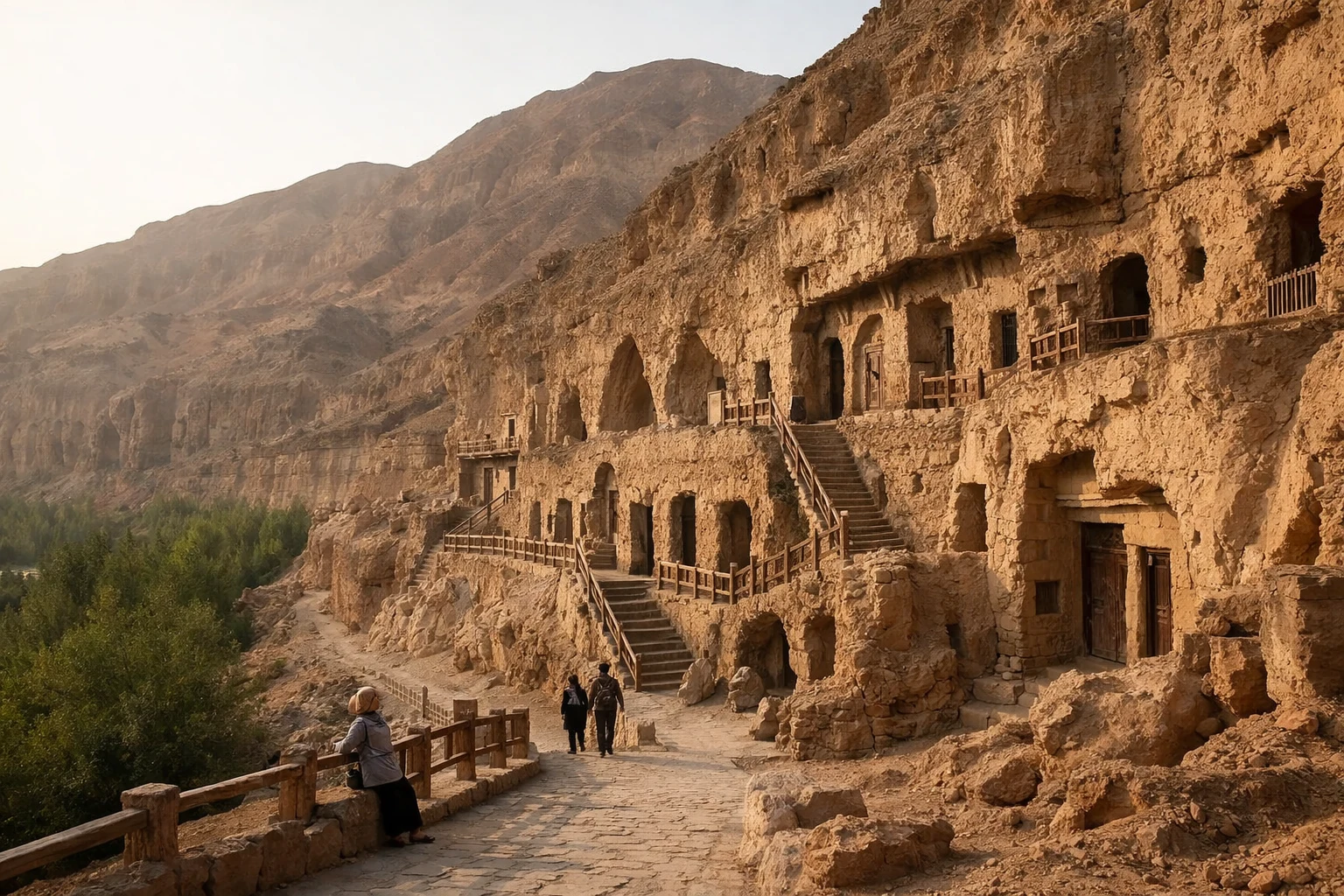
Bezeklik Thousand Buddha Caves
Silk Road BuddhistExplore China’s Bezeklik Thousand Buddha Caves, a dramatic Silk Road cave sanctuary of Buddhist mura...
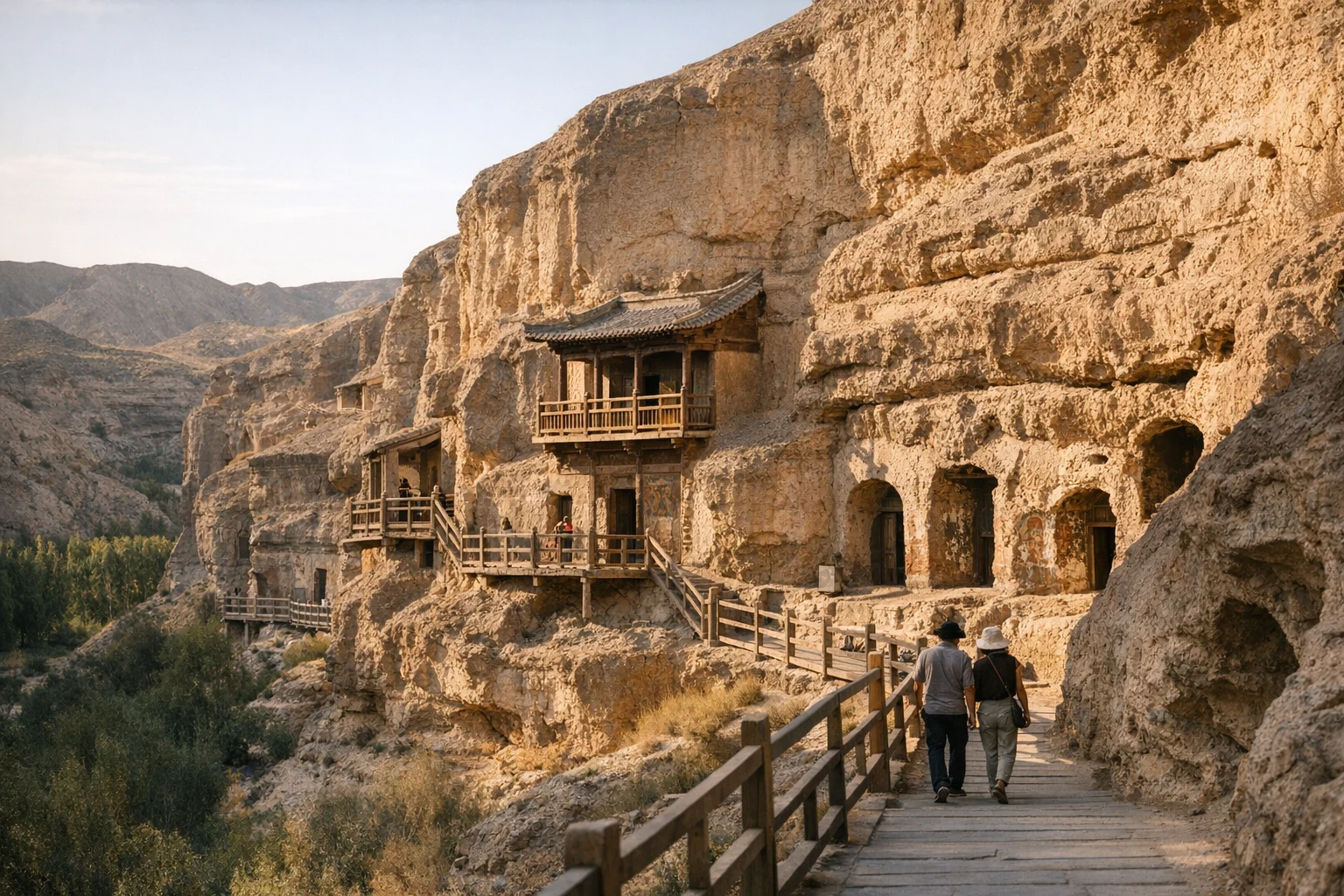
Dunhuang Yulin Caves
Chinese BuddhistExplore China’s Dunhuang Yulin Caves, a remote Silk Road sanctuary of Buddhist murals, sculptures, a...
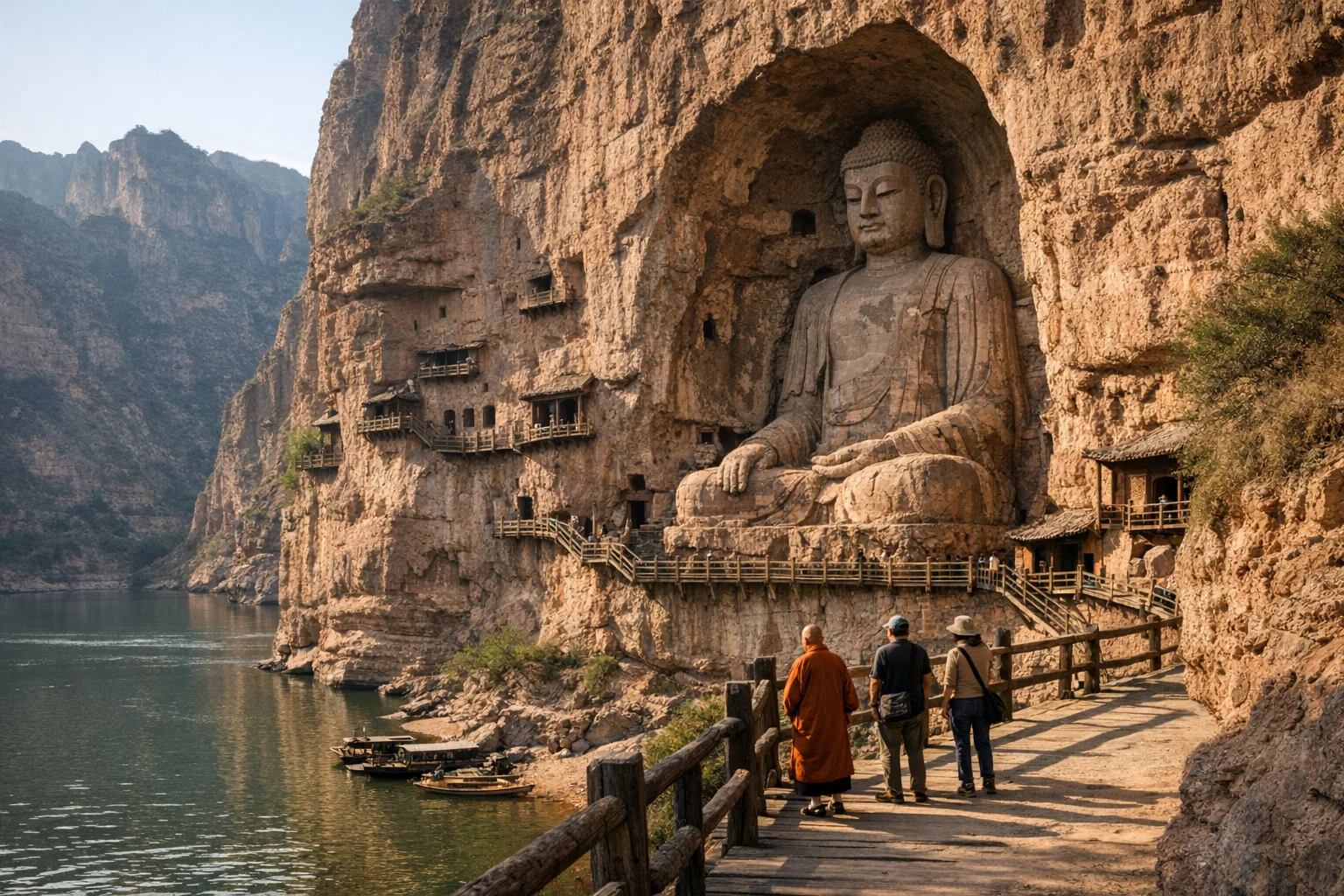
Bingling Temple Grottoes
Chinese BuddhistExplore China’s Bingling Temple Grottoes, a dramatic cliffside Buddhist cave complex of statues, mur...
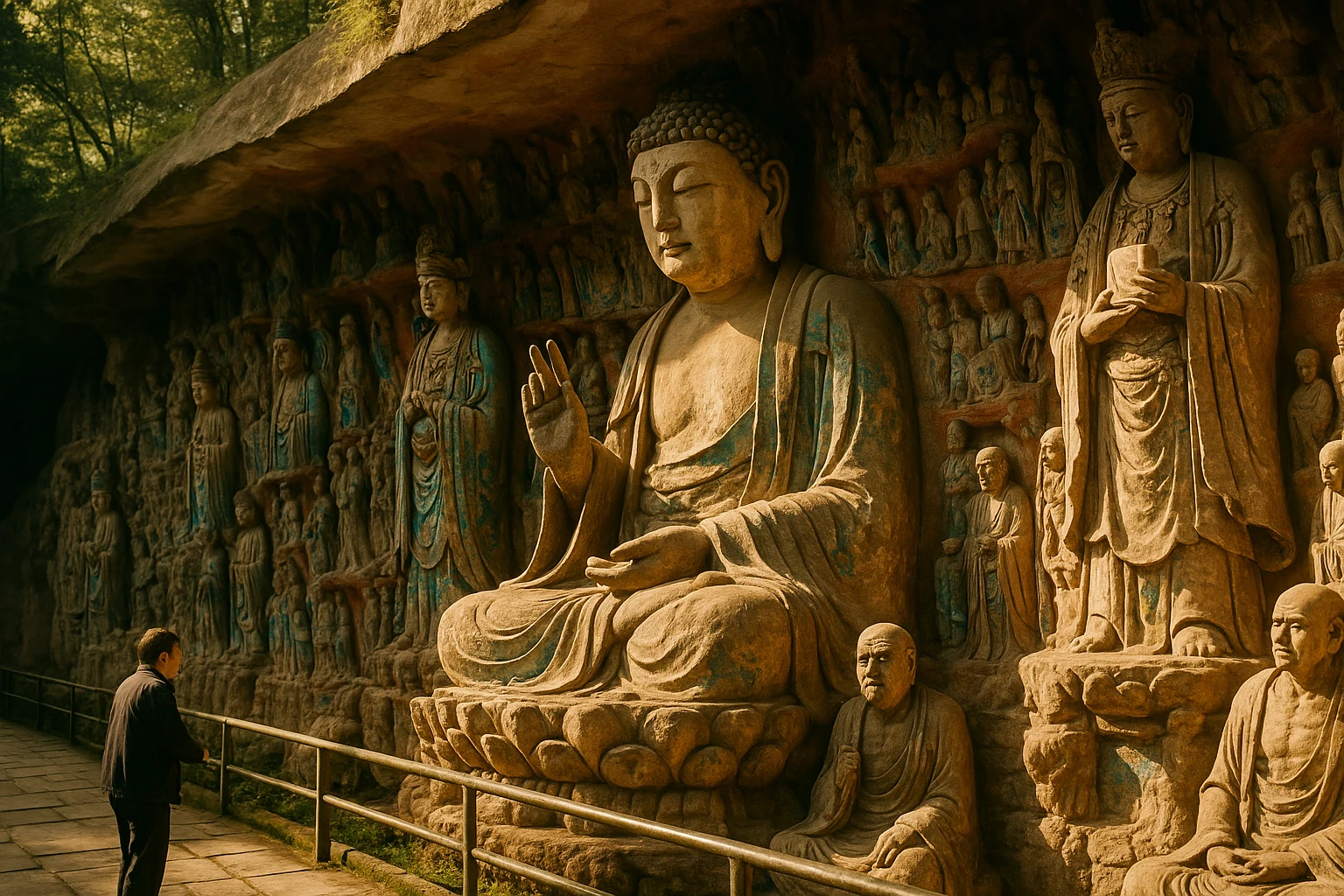
Dazu Rock Carvings
Tang and Song Dynasty ChinaAncient Buddhist, Taoist, and Confucian rock sculptures carved into cliffsides across Dazu District,...