Quick Info
Curated Experiences
Knidos ancient city tour hometown of Aphrodite
Private Datca and Knidos Heritage Tour
Bodrum to Knidos by Gulet: Ancient Ruins and Swimming Stops
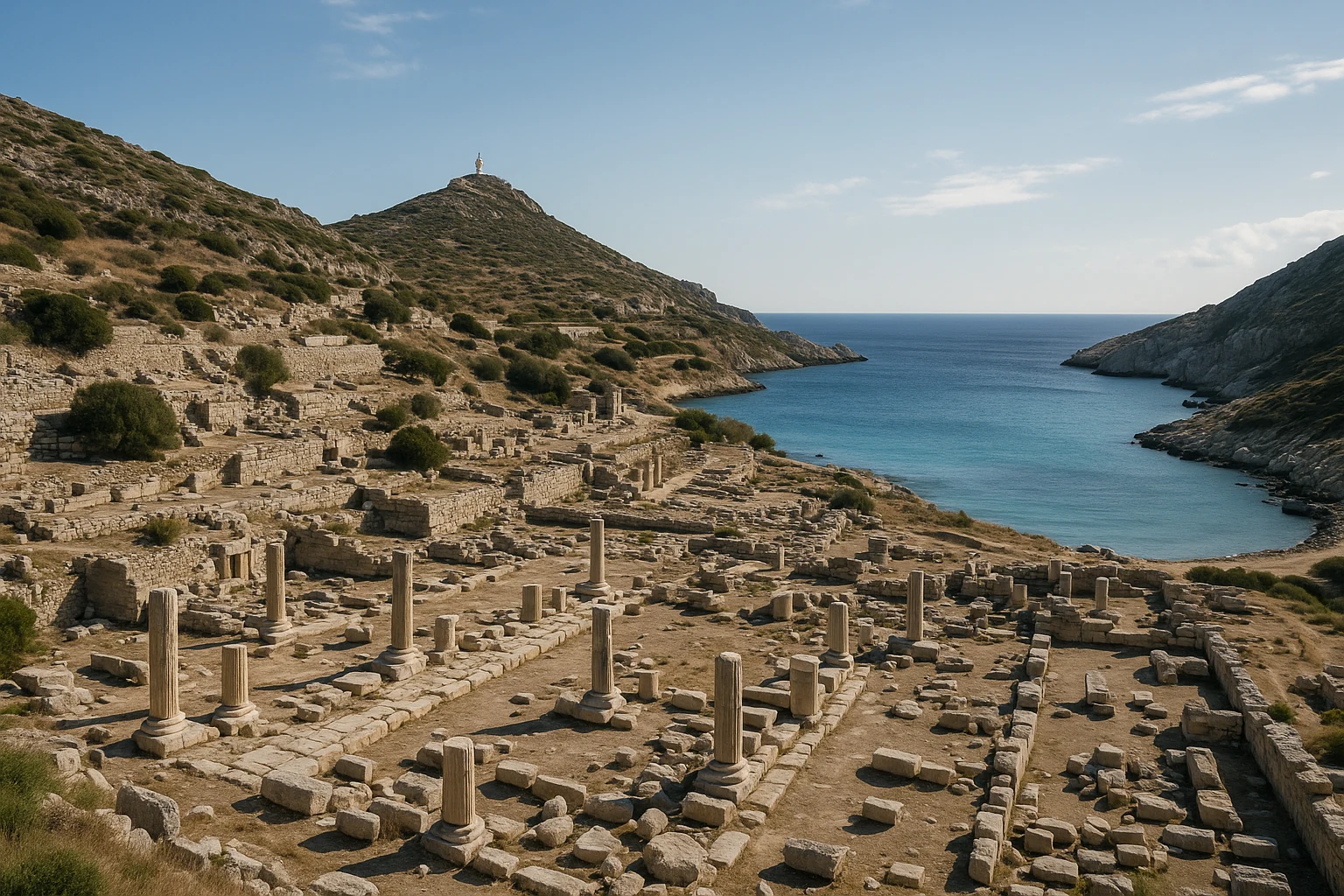
At the far western tip of the Datça Peninsula, where rocky ridges collapse into open water and the wind never seems to stop moving, Knidos, Turkey feels less like a ruin and more like a map of the ancient Mediterranean laid directly onto the sea. You arrive and immediately understand why this place mattered. There is no inland sheltering valley, no hidden acropolis tucked behind hills. Knidos stands exposed between two harbors, facing routes that once linked the Aegean, the Levant, and Egypt. In a single glance, you can read commerce, strategy, religion, and beauty.
This Knidos Turkey travel guide is for travelers who want more than a scenic stop at the end of a coastal road. Knidos was a Carian and Greek city of sailors, merchants, sculptors, astronomers, and diplomats, and its remains still preserve that complexity. You can walk from harbor quays to civic terraces, from a theatre cut into the slope to sanctuary zones associated with one of antiquity’s most famous statues, the Aphrodite of Knidos. Ancient Travels recommends Knidos as one of western Turkey’s most rewarding sites for visitors who value atmosphere as much as monumentality. This guide covers the site’s historical timeline, key monuments, transport logistics from Datça and Bodrum, practical admission advice, seasonal timing, and how to combine Knidos with nearby Aegean archaeology.
History: A Maritime City at the Edge of the Aegean
Carian roots and Dorian settlement (c. 7th century BCE-5th century BCE)
Knidos developed at a cultural crossroads where Carian traditions met incoming Dorian Greek settlement along southwestern Anatolia. Ancient sources and archaeological evidence suggest an early community tied to seafaring, fishing, and coastal exchange rather than inland agriculture. Its location at the edge of the peninsula gave it immediate maritime relevance: ships moving between island networks and Anatolian ports could not ignore this headland. By the Archaic period, Knidos had become a recognized city-state with minting activity, cult centers, and political links to wider Aegean alliances. From the beginning, Knidos was oriented outward, its identity shaped by sea lanes and international contact.
Classical prominence and artistic fame (5th century BCE-4th century BCE)
In the Classical era, Knidos gained a reputation for naval skill, trade wealth, and cultural sophistication. The city appears in regional power struggles but also in accounts of artistic patronage, especially in connection with Praxiteles’ Aphrodite of Knidos, one of the most celebrated sculptures of the ancient world. Though the original statue does not survive at the site, the sanctuary tradition around Aphrodite transformed Knidos into a destination in antiquity itself, drawing visitors who came for devotion, curiosity, and prestige. This period established the city’s dual personality: commercially hard-headed on the harbor front, but highly invested in symbolic architecture and public image.
Hellenistic adaptation and urban expansion (4th century BCE-1st century BCE)
After Alexander’s campaigns and the fragmentation of his empire, Knidos entered the Hellenistic world of shifting alliances, dynastic influence, and renewed urban investment. Harbor infrastructure, fortification logic, and sanctuary landscapes evolved to meet both economic and political needs. The city remained valuable because it offered both anchorage and visibility over regional maritime routes. Knidos did not become the biggest urban center in Anatolia, but it became one of the most strategically legible, a place where topography and civic planning worked together. Terraced construction in this era helped define the site profile visitors still walk today.
Roman continuity and civic infrastructure (1st century BCE-4th century CE)
Under Roman rule, Knidos retained relevance as a coastal city integrated into imperial trade and administration. Public buildings were maintained or refitted, and the city continued to function as a node in wider networks of goods, people, and ideas. You can still read this phase in surviving structural footprints: baths, stoas, circulation lines, and harbor installations that reflect long-term civic maintenance rather than one-time monumental gestures. Knidos in the Roman period was not an isolated archaeological postcard; it was a living city adjusting to imperial systems while preserving local memory.
Byzantine afterlife and archaeological rediscovery (5th century CE-present)
Like many coastal cities, Knidos changed dramatically in late antiquity and the Byzantine period as trade patterns shifted and political priorities moved. Some buildings were repurposed, others abandoned or dismantled, and population patterns likely contracted. Over centuries, earthquakes and weathering accelerated ruin. Modern rediscovery began through early travelers and later systematic archaeology, which clarified the city’s dual-harbor plan and long occupation sequence. Today’s visitor experience is the result of ongoing interpretation rather than full reconstruction: you encounter foundations, retaining walls, cut-stone fragments, and slope-based architecture that together reveal one of the Aegean’s most dramatic ancient urban landscapes.
The Key Monuments: What to See at Knidos
The twin harbors and maritime layout
The most important “monument” at Knidos is actually the city plan itself. Few ancient sites make their maritime logic so obvious. Knidos used two harbors, one more exposed and one comparatively sheltered, allowing flexibility for trade and naval movement under changing weather conditions. Standing between them, you can visualize why this location commanded attention: ships could be monitored, received, taxed, repaired, and provisioned within a compact coastal system. The surviving quays and shoreline traces are fragmentary, but the topographic design remains legible. For photographers, the best compositions come when you place harbor curves and hillside ruins in the same frame to show how urban planning followed the sea.
The theatre overlooking open water
The theatre of Knidos is one of the site’s most emotionally striking spaces. Cut into the slope and oriented toward sea light, it combines civic architecture with natural drama in a way few inland theatres can match. Built in the Hellenistic period and reused in later eras, it once hosted performances, announcements, and gatherings that tied city identity to shared spectacle. Today, seat rows and stage-zone remains are incomplete but readable, and the upper levels give sweeping views of coast and horizon. Spend time at different elevations; the perspective shift helps you understand capacity, acoustics, and processional movement. Late-afternoon light gives the stone tiers depth and brings the surrounding blue water into strong contrast.
The sanctuary zone of Aphrodite
Knidos is inseparable from the memory of Aphrodite of Knidos, the legendary cult statue by Praxiteles that became famous across the ancient world for both artistic innovation and devotional power. The original does not stand here now, but the sanctuary landscape still matters. Architectural remains and sacred-territory planning indicate that this was not a minor local shrine. It was a place with regional pull, where religion, prestige, and tourism intersected centuries before modern travel existed. Walking this area, you are tracing one of antiquity’s early examples of destination culture: people came not only to pray, but to witness the reputation of art made stone.
The Lion Terrace and necropolis slopes
The Lion Terrace area, associated with funerary monuments and sculptural markers, provides a different register of Knidos life: memory and death rather than spectacle and commerce. Carved blocks, tomb contexts, and slope-facing placements suggest deliberate visual communication between the living city and commemorative zones. The lion figures linked with Knidos have become symbolic of the site’s profile in Turkish archaeology, and even where originals are fragmented or relocated, the funerary landscape remains evocative. Visit in cooler hours; the terrain is sun-exposed and uneven, but the views are exceptional and help you understand how burial architecture was integrated into the wider city setting.
Civic terraces, stoas, and everyday urban fabric
Beyond headline monuments, Knidos rewards careful walkers with layers of civic infrastructure: terrace walls, colonnaded traces, circulation paths, and utility systems that supported ordinary urban life. This is where the city feels most human. You can imagine vendors at shaded edges, sailors negotiating cargo and credit, officials moving between civic and sacred spaces, and residents navigating the same slopes now crossed by visitors in hiking shoes. If you only photograph the theatre and leave, you miss half the point. Knidos is not a single-icon site; it is an urban organism in stone, preserved in partial outlines that still convey rhythm, hierarchy, and adaptation to difficult terrain.
Getting There: Transportation and Access
Knidos is remote compared with many Turkish archaeological sites, and that remoteness is part of its appeal. Plan transport carefully so the road does not consume your visit.
From Datça town
Datça is the practical base for independent visitors and offers the shortest overland approach.
- Taxi: 1,200-2,000 TRY ($35-58 USD) one way, typically 50-70 minutes depending on traffic and stops.
- Seasonal minibus/dolmuş: 120-220 TRY ($4-7 USD), usually slower and timetable-dependent; confirm return times before boarding.
- Rental car: Most flexible option for sunrise/sunset timing and peninsula photo stops; fuel before departure.
From Bodrum
Bodrum-based travelers can reach Knidos, but expect a full-day commitment and check ferry/sea conditions if using marine routes.
- Organized day tour: Usually 8-10 hours total, often 2,700-5,200 TRY ($79-149 USD) depending on inclusions.
- Private transfer and guide: Premium option with flexible pacing; often 6,000+ TRY ($175+ USD) for day use.
- Boat excursion (seasonal): Scenic and memorable, but weather-sensitive and sometimes shorter on-site dwell time.
From Marmaris and the wider Muğla coast
Knidos can be included from Marmaris or nearby resorts, though travel times are longer and best suited to private transport.
- Private car/taxi: Often 2.5 to 3.5 hours each way depending on origin and road conditions.
- Multi-stop guided circuit: Practical if combining Datça old town, viewpoints, and Knidos in one itinerary.
- Self-drive route: Feasible for confident drivers comfortable with winding peninsula roads.
Admission and Hours
Knidos generally follows seasonal hours with longer summer operation and shorter winter windows. Ticket prices can change year to year, so check official Turkish museum channels before travel and verify at the gate on arrival. As a practical range, many travelers should budget around 10-15 EUR equivalent in TRY (approximately 350-550 TRY, or $11-17 USD), with possible variation by season and policy updates. Card payment is often available at major sites, but carrying cash is still wise for transport and local services. Visit near opening or in the final two afternoon hours for cooler walking and better light.
When to Visit: Seasonal Considerations
Spring (March-May)
Spring is the best all-around season for most travelers, with typical daytime ranges around 16-26°C (61-79°F). Wildflowers can appear between stone terraces, sea visibility is often excellent, and crowds are manageable outside holiday spikes. Wind can be brisk at exposed points, so bring a light layer even on warm days.
Summer (June-August)
Summer is hot, bright, and heavily sun-exposed, often 30-36°C (86-97°F) by midday, sometimes higher during heat events. Shade is limited across the upper ruins and necropolis slopes, and long climbs feel significantly harder in afternoon heat. Start early, carry more water than usual, and avoid treating Knidos as a midday walk-up site.
Autumn (September-November)
Autumn is outstanding for archaeological pacing, usually 19-31°C (66-88°F) in early season and cooler by November. Sea and sky conditions remain photogenic, while crowd pressure drops compared with peak summer. Many experienced travelers consider October the ideal month for balancing comfort, color, and daylight.
Winter (December-February)
Winter is quieter and often atmospheric, with typical daytime temperatures around 10-17°C (50-63°F). Rain and strong coastal winds are possible, and some services on the peninsula run reduced schedules. In return, you get solitude, dramatic skies, and a contemplative site experience that suits slow historical reading.
Combining Knidos with Datça Peninsula
The best Knidos day starts early from Datça, leaving around 8:00 AM so you arrive before the late-morning heat and tour clusters. Enter the site around 9:00 AM, begin with the lower harbor zone, then climb toward the theatre while temperatures are still manageable. By 10:30 AM, continue to the sanctuary and upper terraces, where wider views help you map the whole city in relation to the sea. Pause at viewpoint edges rather than rushing between markers; Knidos rewards orientation as much as monument-hopping.
By 12:00 PM, finish your first full circuit and break for water and shade. If conditions are mild, spend another 30-45 minutes revisiting one or two zones for photography from different angles. Return toward Datça by 1:30 PM for a late lunch near the harbor, where seafood and meze restaurants offer the easiest reset after sun exposure. This half-day rhythm gives you depth at Knidos without exhaustion.
If you want a full-day peninsula route, continue after lunch to village stops and coastal viewpoints, then end with sunset back in Datça or at a designated lookout on the return road. For Bodrum-based travelers, keep expectations realistic: prioritize Knidos as the anchor and treat additional stops as optional. Trying to force too many monuments into one day usually reduces your time at the one place you came to see.
Practical Information
What to bring
- Sun protection: Hat, sunscreen, and sunglasses are essential due to exposed coastal terrain.
- Water: Carry at least 1.5 liters per person in warm months; more if hiking upper sectors.
- Footwear: Grippy walking shoes for uneven stones, loose gravel, and sloped paths.
- Phone/camera battery: Knidos invites panoramic shooting and long-distance framing.
- Cash and card: Card can work at many points, but cash helps for transport and local stops.
Dress code and etiquette
Knidos is an open archaeological landscape rather than an active religious complex, so dress is generally flexible. Practical modesty still helps for sun and local comfort, especially in towns before and after your visit. Respect roped-off areas, avoid climbing fragile masonry, and keep drones compliant with local regulations and heritage restrictions.
Accessibility
Knidos is challenging for visitors with significant mobility limits. Lower areas offer partial access, but many key viewpoints require walking on uneven surfaces with gradients and occasional steps. Travelers needing easier pacing can still have a meaningful visit by focusing on harbor-level zones and selected scenic points, ideally with private transport that minimizes extra walking outside the site.
Why Knidos Matters
Knidos matters because it reminds you that ancient cities were not abstract names in textbooks. They were living negotiations between geography and ambition. Here, on this wind-cut tip of Anatolia, people built a city that looked outward in every direction: toward trade, toward art, toward power, and toward the sea that made all three possible. The stones are broken, the famous statue is gone, and the harbors no longer host fleets, yet the urban logic still holds.
It also matters because Knidos preserves a rare kind of archaeological truth: beauty and practicality were never separate categories. The same city that engineered dual harbors also staged one of antiquity’s most celebrated cult images. The same slopes that held tombs and defenses framed performances and sea-bound commerce. When you stand above the theatre in late light and watch the horizon absorb the sun, Knidos feels less like a ruin and more like a memory engine, still teaching how civilizations build identity at the edge of uncertainty.
Quick Facts
| Attribute | Details |
|---|---|
| Location | Datça Peninsula, Muğla Province, Turkey |
| Ancient Name | Knidos (Cnidus) |
| UNESCO Status | Not currently inscribed as a standalone UNESCO World Heritage Site |
| Established | c. 7th century BCE Greek-Carian port city |
| Distance from nearest hub | ~35 km from Datça (about 50-70 minutes by road) |
| Entry Fee | Usually around 350-550 TRY ($11-17 USD), verify on arrival |
| Hours | Seasonal hours; longer in summer, shorter in winter |
| Best Time | Spring and autumn, especially early morning or late afternoon |
| Suggested Stay | 2-4 hours on site |
| Known For | Twin harbors, theatre views, and the Aphrodite of Knidos legacy |
Explore More Turkey
- Halicarnassus (Bodrum): Trace the legacy of the Mausoleum and layered coastal history in modern Bodrum.
- Didyma: Visit the Temple of Apollo, one of Anatolia’s most dramatic oracle sanctuaries.
- Miletus: Explore a major Ionian city of theatre architecture and early urban planning traditions.
Plan your wider route with our Turkey Ancient Sites Guide. For practical sequencing, see our Aegean archaeology itinerary guide.
Frequently Asked Questions
How much time should I plan at Knidos?
Plan 2 to 3 hours for the core ruins if you walk at a steady pace and stop at key viewpoints. If you like archaeology and photography, allow 4 hours so you can explore both harbors, the theatre area, and the upper sanctuary zones without rushing.
What is the best time of day to visit Knidos?
Early morning and late afternoon are best, especially from May through September. Late afternoon gives dramatic light over the Aegean and is ideal for panoramic photos, while mornings are cooler for climbing the upper terraces.
How do I get to Knidos from Datca?
From Datca town, the drive is roughly 35 kilometers and usually takes 50 to 70 minutes on a winding peninsula road. You can go by rental car, taxi, or seasonal boat excursion; independent visitors should fuel up and carry water before leaving Datca.
Can I visit Knidos from Bodrum in one day?
Yes, but it is a long day and works best on organized tours or private transfers, sometimes with a sea route depending on weather. Expect early departures and full-day timing if you want meaningful time on site rather than a quick stop.
What are the top highlights at Knidos?
The main highlights are the dual harbor layout, the theatre with sweeping sea views, the Lion Terrace tomb area, and the sanctuary zone once associated with the famous Aphrodite of Knidos. The setting itself, where architecture meets open water on three sides, is one of Turkey's most striking archaeological landscapes.
Is Knidos suitable for visitors with limited mobility?
Parts of lower Knidos are manageable, but many sections involve uneven stones, slopes, and sun-exposed walking. Visitors with limited mobility can still enjoy key coastal viewpoints and selected ruins, but should expect partial access rather than a complete circuit.
Nearby Ancient Sites
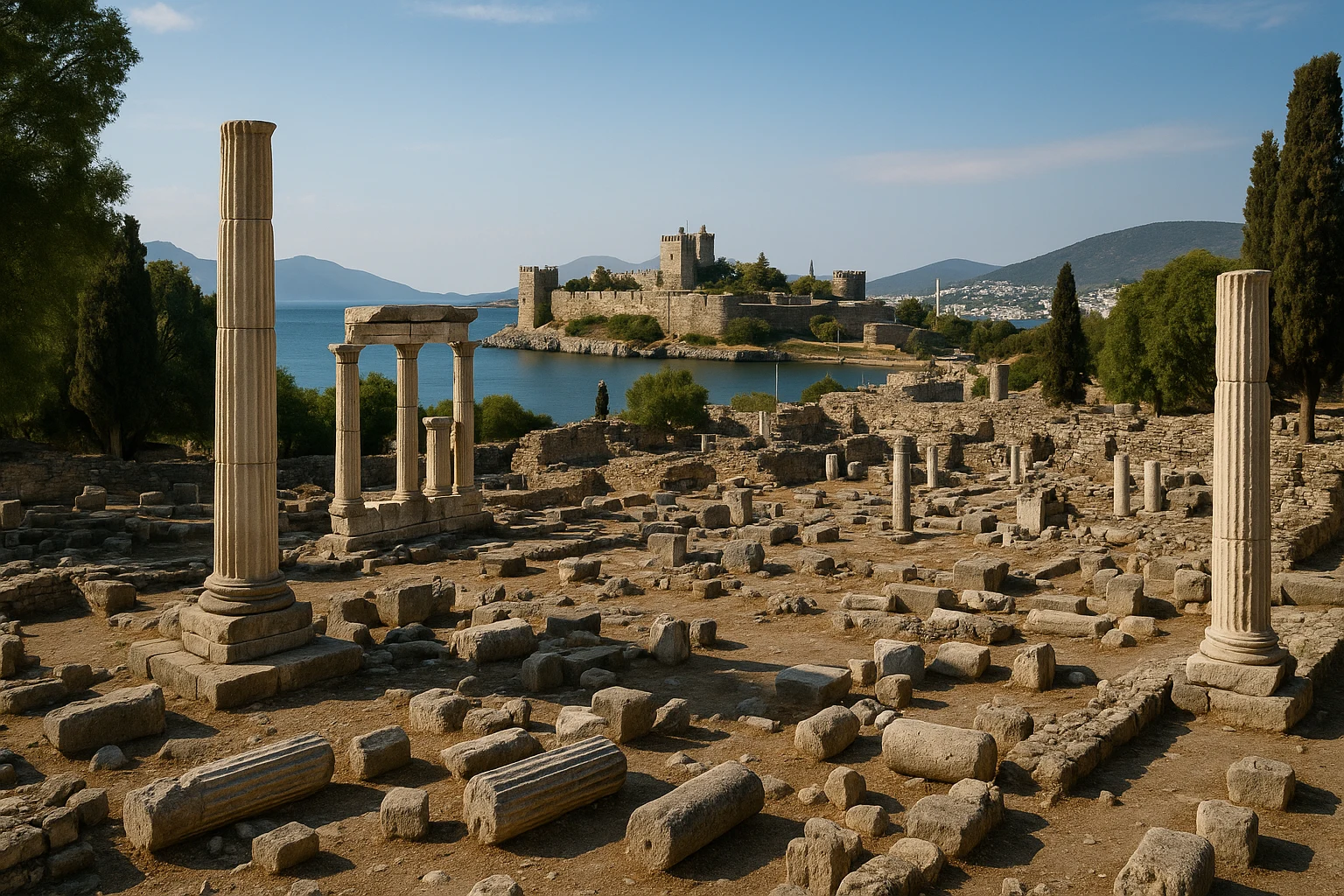
Halicarnassus Bodrum Turkey Guide 2026: Mausoleum & Myndos Gate
Carian-Persian-Hellenistic-Roman-Byzantine-OttomanVisit Halicarnassus in Bodrum, Turkey: see the Mausoleum ruins, Myndos Gate, and practical tips for ...
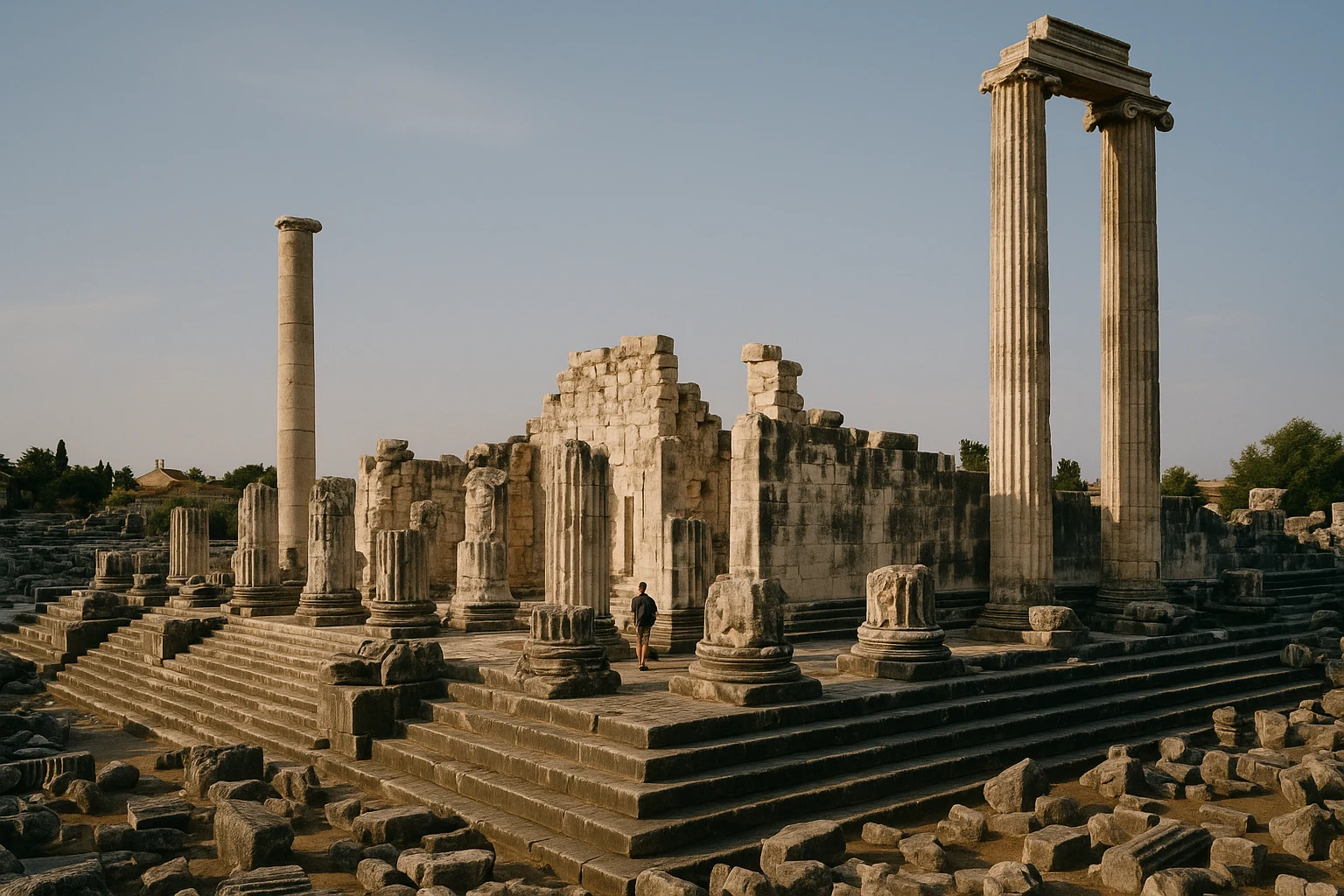
Didyma Turkey Guide 2026: Temple of Apollo & Sacred Way
Ionian-Hellenistic-Roman-ByzantinePlan your Didyma, Turkey visit with history, transport, tickets, and what to see at the vast Temple ...
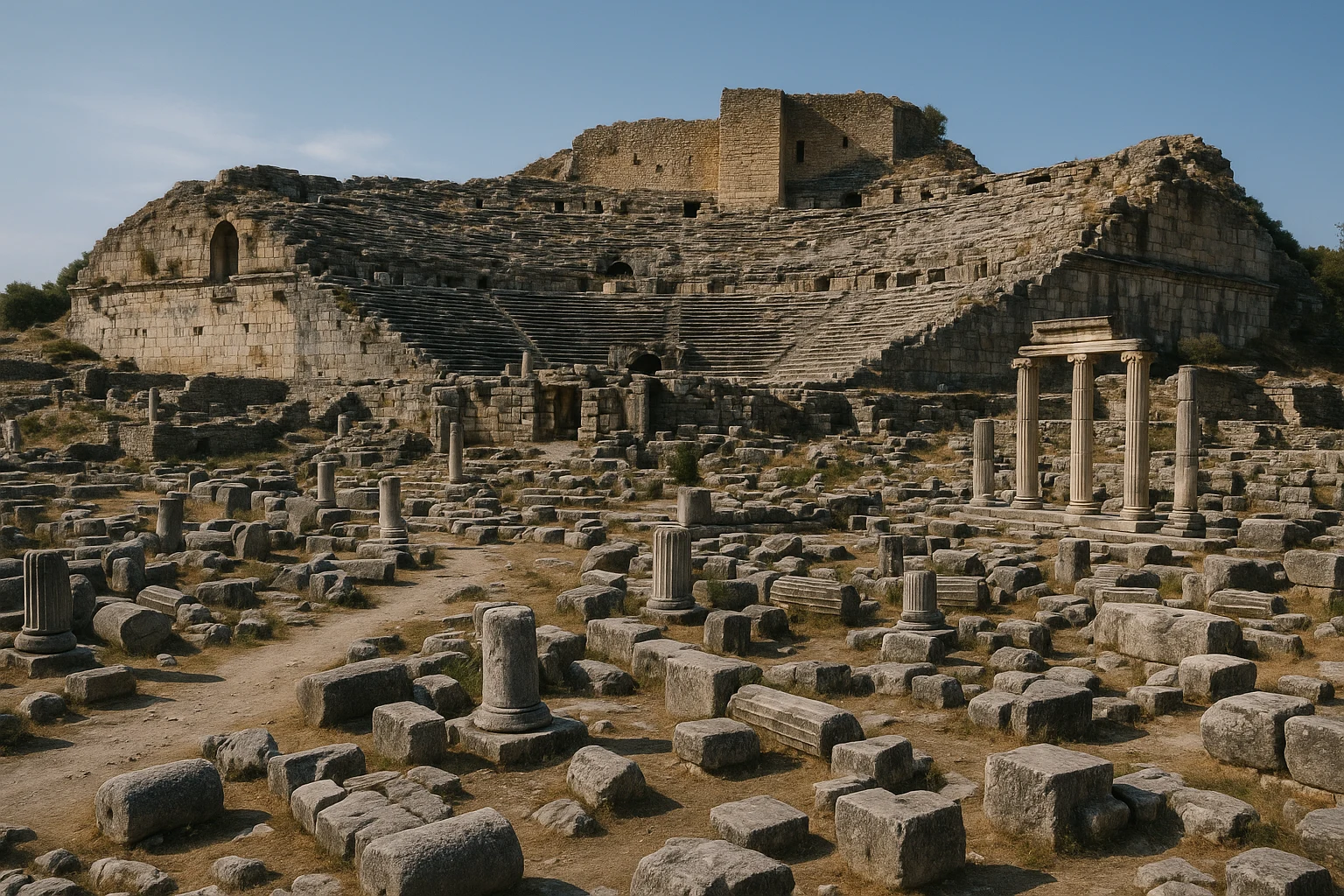
Miletus Turkey Guide 2026: Great Theater & Faustina Baths
Carian-Ionian-Persian-Hellenistic-Roman-ByzantineUse this Miletus, Turkey guide to explore its great theater, Roman baths, history, tickets, and tran...