Quick Info
Curated Experiences
Kutná Hora Day Trip from Prague
Private Kutná Hora Medieval Town Tour
Kutná Hora and Sedlec Heritage Guided Excursion
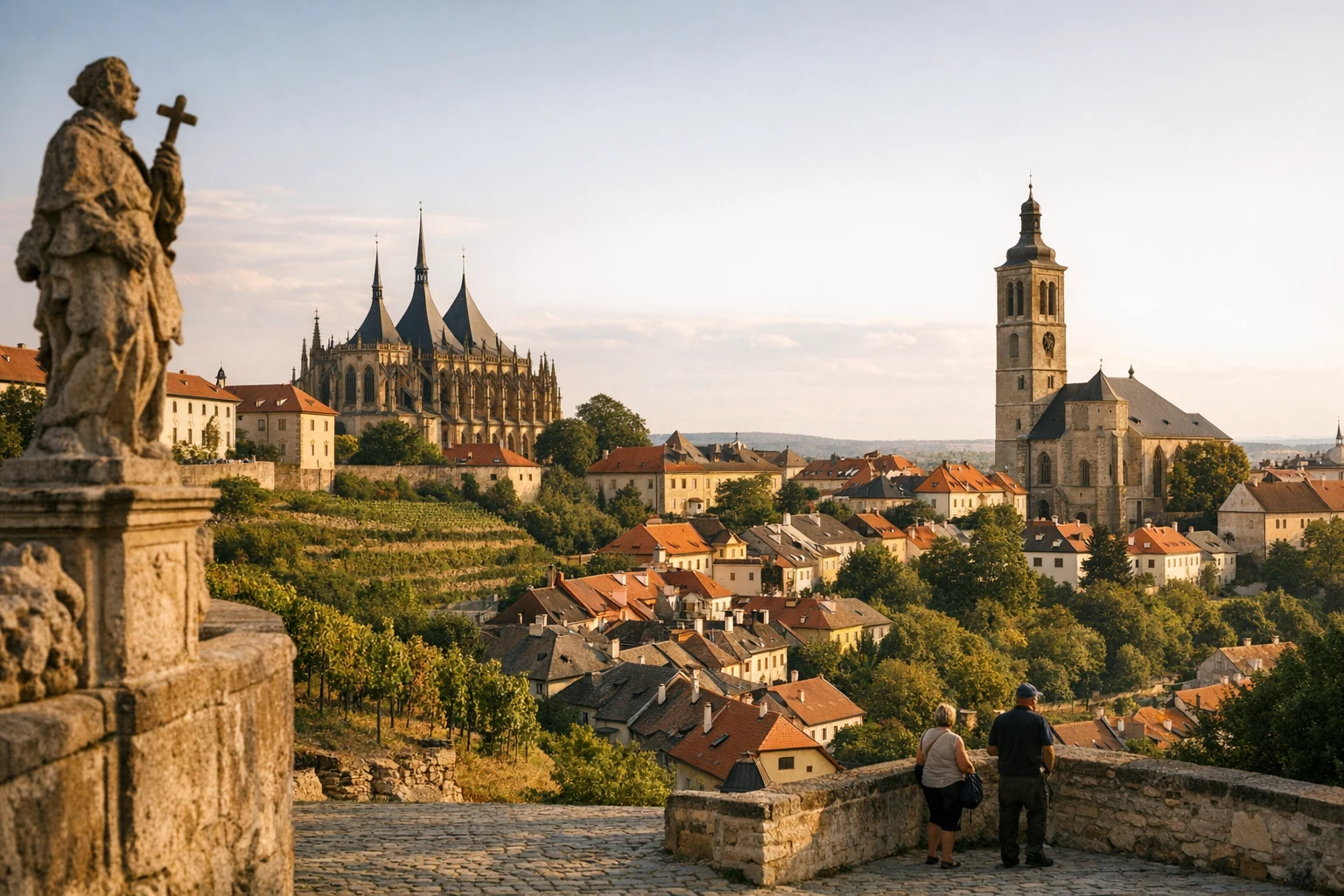
Kutná Hora in the Czech Republic is one of those medieval towns where prosperity can still be read directly in stone. About an hour east of Prague, the town rises through church spires, former patrician houses, sloping lanes, and civic monuments that all bear the mark of silver wealth. In the late Middle Ages, Kutná Hora was not a picturesque provincial settlement. It was one of the great engines of the Bohemian kingdom, a place where mining, minting, royal politics, ecclesiastical ambition, and urban culture came together with astonishing force. Today, the scale of that past remains visible in the town’s skyline, especially in the soaring forms of St Barbara’s Church and the layered fabric of the historic center.
What makes Kutná Hora especially rewarding is the way it combines monumental significance with walkable intimacy. This is a UNESCO city that can still be understood on foot in a day, yet what it offers is far more than a charming old-town stroll. The town’s churches, chapels, mint, streets, and nearby Sedlec complex all tell a story about the relationship between resources and power: how silver taken from the ground reshaped religion, urban planning, royal finance, and artistic patronage. That history gives Kutná Hora a depth that goes well beyond photogenic Gothic facades. It is a place where economic power became architecture, and where the fortunes of a kingdom can still be traced from mine to mint to cathedral vault.
History
Silver and the Making of a Medieval Powerhouse
Kutná Hora’s rise began with silver. In the 13th century, rich silver deposits discovered in the region transformed what might otherwise have remained a modest settlement into one of the most important urban and economic centers in medieval Bohemia. Mining attracted workers, merchants, royal administrators, ecclesiastical institutions, and skilled specialists, turning the area into a place of exceptional strategic value. Silver was not simply local wealth. It was a political resource. Whoever controlled it could support military power, royal authority, and coinage on a national scale.
This sudden importance reshaped the landscape quickly. Settlements expanded, urban structures emerged, and religious institutions established themselves in close relationship with the growing town. Medieval rulers understood the significance of Kutná Hora immediately. The Bohemian crown exercised strong interest in regulating mining rights and benefiting from the enormous revenue the region could produce. In time, the town became second only to Prague in importance within the kingdom.
Royal Finance and the Italian Court
Kutná Hora’s central role in royal finance reached a high point with the establishment of the royal mint in the Italian Court, or Vlašský dvůr. This complex became one of the most important institutions in the Bohemian economy. It was here that silver from the local mines was processed into coinage, most famously the Prague groschen, a currency of major regional influence. The Italian Court thus stood at the intersection of mining, administration, and state power. It was not merely an economic workshop. It was an instrument of monarchy.
The name “Italian Court” reflects the involvement of specialists from Italian city-states, whose financial and technical knowledge contributed to the organization of the mint. Their presence is a reminder that Kutná Hora was not economically isolated. It was embedded in wider European currents of expertise, commerce, and statecraft. This cosmopolitan dimension helped give the town an importance disproportionate to its size. Kutná Hora’s silver did not just enrich local elites; it strengthened the fiscal machinery of a kingdom.
Gothic Grandeur and Urban Prestige
As wealth accumulated, Kutná Hora invested in monumental architecture that reflected both civic confidence and spiritual ambition. St Barbara’s Church, dedicated to the patron saint of miners, is the clearest expression of this transformation. Begun in the late 14th century, the church is one of the great masterpieces of Central European Gothic architecture. Its very existence testifies to the town’s prosperity. Only a place of unusual wealth and self-conscious prestige could support a project of such scale and refinement.
The broader urban environment developed alongside it. Merchant houses, chapels, civic buildings, defensive structures, and ecclesiastical foundations expanded the town into a genuine medieval center rather than a single-industry mining camp. In Kutná Hora, silver financed piety, political influence, and visual magnificence all at once. The town became a place where wealth could be converted into stone in ways still visible today.
Decline, Persistence, and Heritage Survival
Kutná Hora’s fortunes shifted over time. Mining output declined, political and economic conditions changed, and the town no longer held the same unrivaled place in the kingdom. Yet it did not disappear. The urban and ecclesiastical monuments built during its great age ensured that Kutná Hora would remain significant long after its economic peak had passed. Buildings were altered, styles changed, and later centuries added new layers, but the medieval structure of the town remained strong.
The nearby Sedlec area adds another dimension to the town’s historical meaning. The monastery, cathedral, and later ossuary became deeply tied to Christian attitudes toward death, memory, and sacred burial in the aftermath of plague, pilgrimage, and social upheaval. Together with the mining town itself, these monuments helped create the heritage landscape recognized by UNESCO today. Kutná Hora survived because its economic base once gave it extraordinary power, and that power had already been translated into enduring urban form.
Key Features
The most famous feature of Kutná Hora is the Church of St Barbara, and it deserves that central place. This Gothic masterpiece rises above the town with a roofline and interior structure of exceptional elegance, and its dedication to the miners’ patron saint gives it a particularly local significance. The church is not simply beautiful in an abstract way. It is the architectural embodiment of a silver town’s religious confidence. Inside, vaulting, light, and later decorative layers create a space that feels both lofty and distinctly rooted in the social history of mining. In many ways, St Barbara’s is the clearest statement of Kutná Hora’s identity: wealthy, ambitious, and conscious of its own importance.
The Italian Court is another essential feature because it reveals the mechanism behind that wealth. Here the story becomes administrative and economic rather than purely ecclesiastical. The former royal mint and associated royal residence explain how silver became power. Walking through the complex, visitors can connect the mines of the surrounding region to coin production, royal policy, and broader Bohemian state formation. This gives Kutná Hora unusual coherence as a heritage destination. Its monuments are not random highlights. They are linked by a single historical engine.
The historic center itself is a feature worth treating as seriously as any individual building. Streets, houses, civic plots, and the overall topography of the town preserve a strong sense of medieval urban life. The sloping terrain, interlocking facades, and relationship between churches and domestic architecture make walking Kutná Hora unusually satisfying. It feels like a town shaped by real labor and wealth rather than one arranged purely for later tourism. This authenticity of urban texture is one of its strongest pleasures.
Then there is Sedlec, slightly apart from the main center but inseparable from the larger heritage story. The Cathedral of the Assumption of Our Lady and St John the Baptist adds monumental ecclesiastical depth, while the Sedlec Ossuary gives the wider Kutná Hora area one of the most unusual and memorable devotional monuments in Europe. Although the ossuary’s arrangement of human bones often draws popular attention first, its significance lies in a deeper medieval and early modern culture of death, sanctity, and remembrance. Together, Sedlec and the old mining town make Kutná Hora feel unusually complete: wealth, worship, mortality, and urban form all visible in one heritage landscape.
Getting There
Kutná Hora is one of the easiest major heritage destinations to reach from Prague, which makes it a very popular day trip. The town lies about 70 to 80 kilometers east of the capital and can be reached by train, bus, private car, or organized tour. Trains from Prague are usually the most straightforward option, with journeys often taking around 1 to 1.5 hours depending on route and connection. Train fares are generally affordable, and the service is convenient enough that independent travelers can manage the trip easily without special planning beyond checking departure times.
Buses and private transfers are also available, though trains are often simpler and more comfortable for most visitors. Guided day tours from Prague are common and can be useful if you want transport, historical context, and coordination between the town center and Sedlec without thinking about logistics. If you drive, parking is possible, but the appeal of Kutná Hora lies in walking, so a car is not necessary unless you are combining it with more remote regional stops.
Once in town, most of the major sites can be reached on foot, though the distance between the main center and Sedlec is far enough that some visitors prefer a short bus, taxi, or brisk walk. Comfortable shoes are worth it because the streets can be sloped and cobbled. Kutná Hora is at its best when explored slowly rather than rushed through as a checklist stop.
When to Visit
The best time to visit Kutná Hora is in spring or autumn, when temperatures are comfortable, walking conditions are pleasant, and the town’s architectural beauty can be appreciated without the fuller crowds of peak summer. April through June and September through October are especially attractive, with mild weather and enough daylight to explore both the main town and Sedlec at a relaxed pace. These seasons also suit the town’s atmosphere particularly well, since Kutná Hora is a place of stone, church interiors, and slow urban wandering rather than one driven by a specific festival calendar.
Summer is still a good time to go, especially for travelers already based in Prague, but it can be busier and more heavily structured around day-tour traffic. Arriving early or staying later into the afternoon helps restore a sense of calm. Winter has a different appeal. The town can feel strikingly atmospheric in cold weather, especially when the Gothic monuments and old streets take on a quieter mood. Christmas season adds its own charm, though naturally with a more seasonal rhythm.
Morning departures from Prague work best for day trippers, leaving enough time not only for the famous monuments but also for wandering. Kutná Hora is more rewarding when it feels like a town rather than a sequence of stops. Good weather and a little extra time make that much easier.
| Quick Facts | Details |
|---|---|
| Location | Central Bohemian Region, Czech Republic |
| Best Known For | Medieval silver wealth, St Barbara’s Church, Italian Court, and Sedlec heritage |
| Historical Importance | One of medieval Bohemia’s richest and most important towns |
| Main Economic Driver | Silver mining and minting |
| UNESCO Status | Historic town center with the Cathedral of St Barbara and the Cathedral of the Assumption in Sedlec |
| Signature Landmark | St Barbara’s Church |
| Recommended Visit Length | Full day minimum, overnight ideal |
| Best Nearby Base | Prague or Kutná Hora itself |
| Best Season | Spring and autumn |
| Practical Tip | Pair the historic center with Sedlec rather than treating them separately, since together they explain the full story of Kutná Hora’s wealth, faith, and memory |
Frequently Asked Questions
What is Kutná Hora best known for?
Kutná Hora is best known for its medieval silver-mining wealth, the Gothic Church of St Barbara, the former royal mint, and the Sedlec Ossuary nearby.
Is Kutná Hora worth visiting as a day trip from Prague?
Yes, it is one of the best day trips from Prague thanks to its manageable size, rich medieval history, and concentration of major monuments.
How much time should you spend in Kutná Hora?
Most visitors should allow a full day, though an overnight stay is better if you want to explore the historic center, churches, museum sites, and Sedlec without rushing.
Why is Kutná Hora historically important?
Kutná Hora was one of medieval Bohemia’s most important towns because its silver mines enriched the kingdom, supported the royal mint, and fueled major church and civic building projects.
What are the main attractions in Kutná Hora?
The main attractions include St Barbara’s Church, the Italian Court, the historic center, and the nearby Sedlec Ossuary and Cathedral of the Assumption.
When is the best time to visit Kutná Hora?
Spring and autumn are especially pleasant, with comfortable weather for walking and fewer crowds than the height of summer.
Nearby Ancient Sites
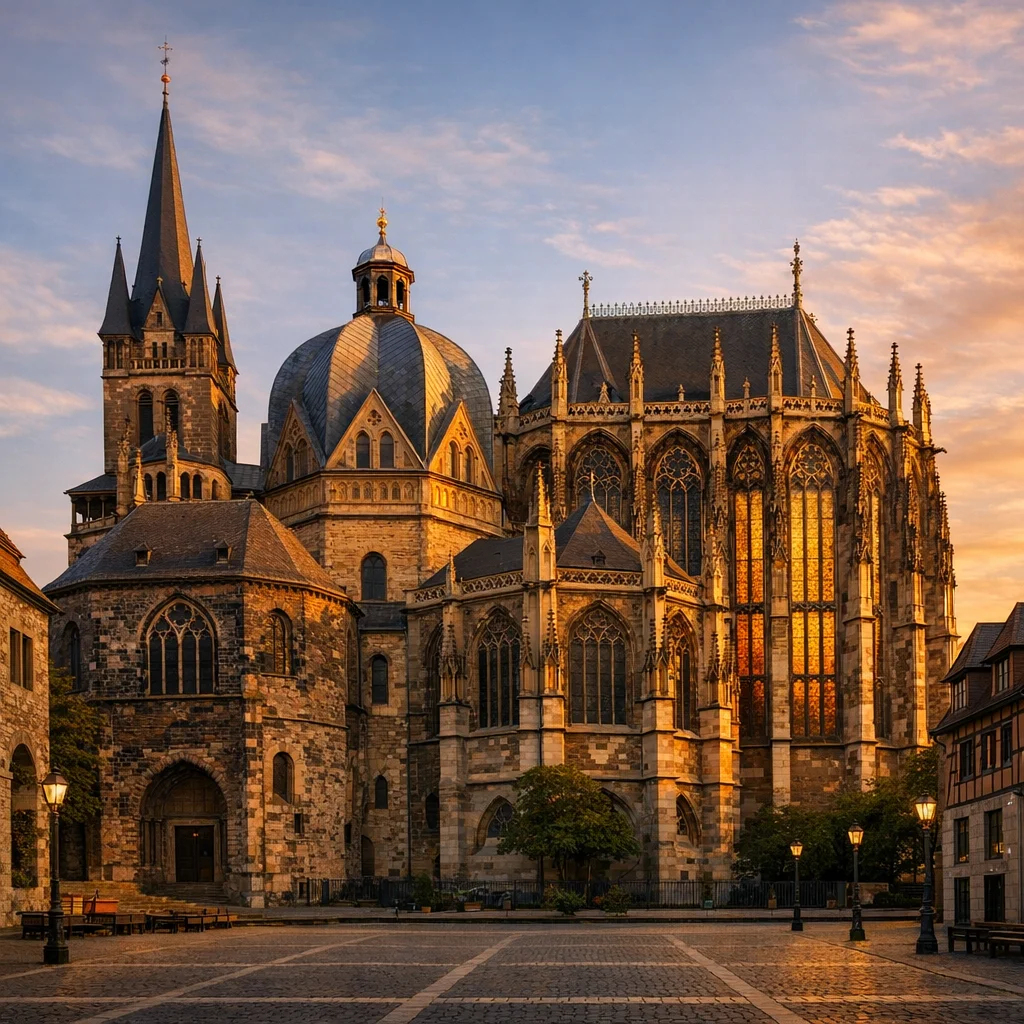
Aachen Cathedral
Carolingian, Holy Roman EmpireVisit Aachen Cathedral, Charlemagne's eighth-century palatine chapel and the first UNESCO World Heri...
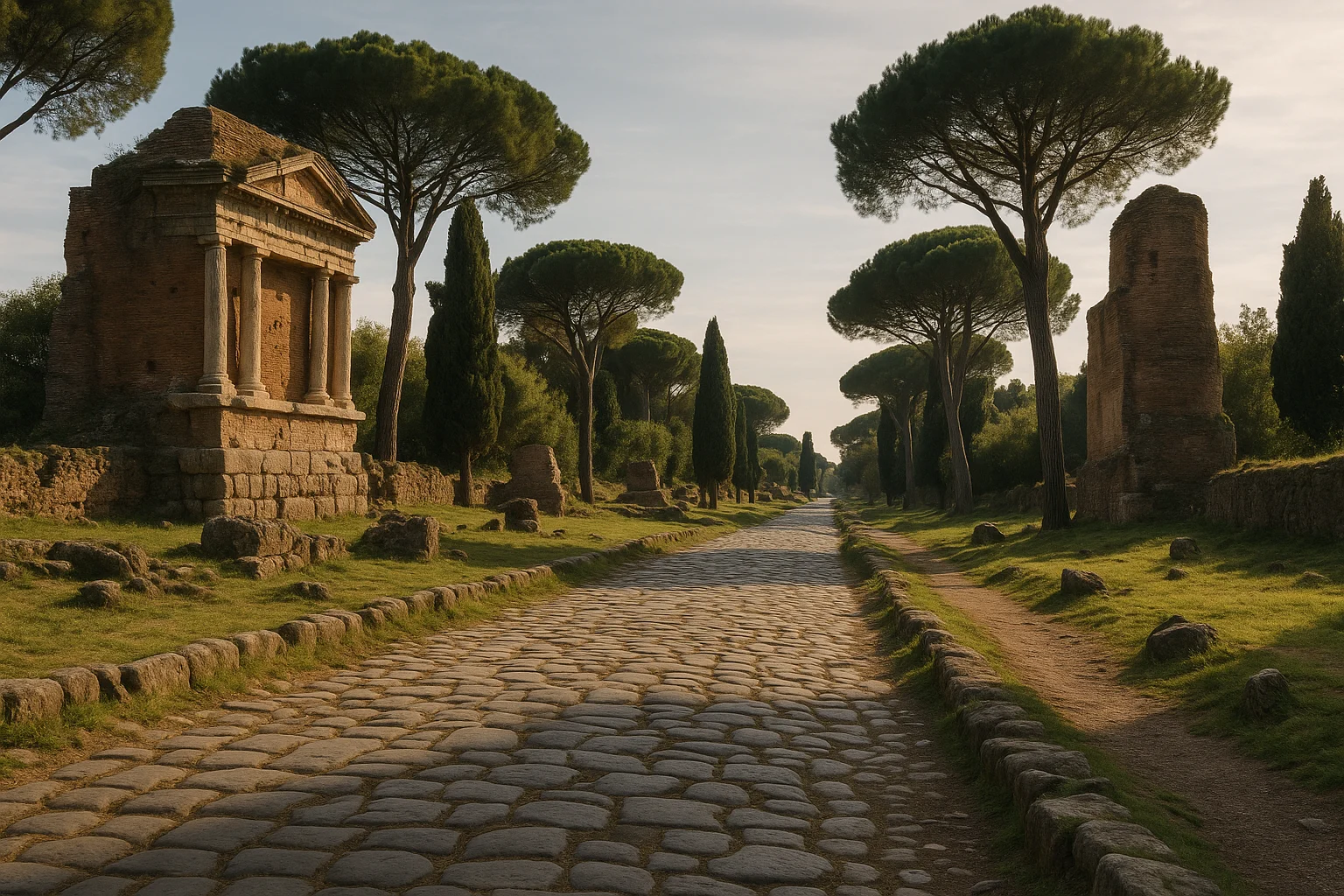
Appian Way Rome Guide 2026
RomanPlan a smart visit to the Appian Way with route choices, catacomb logistics, bike-vs-walk strategy, ...
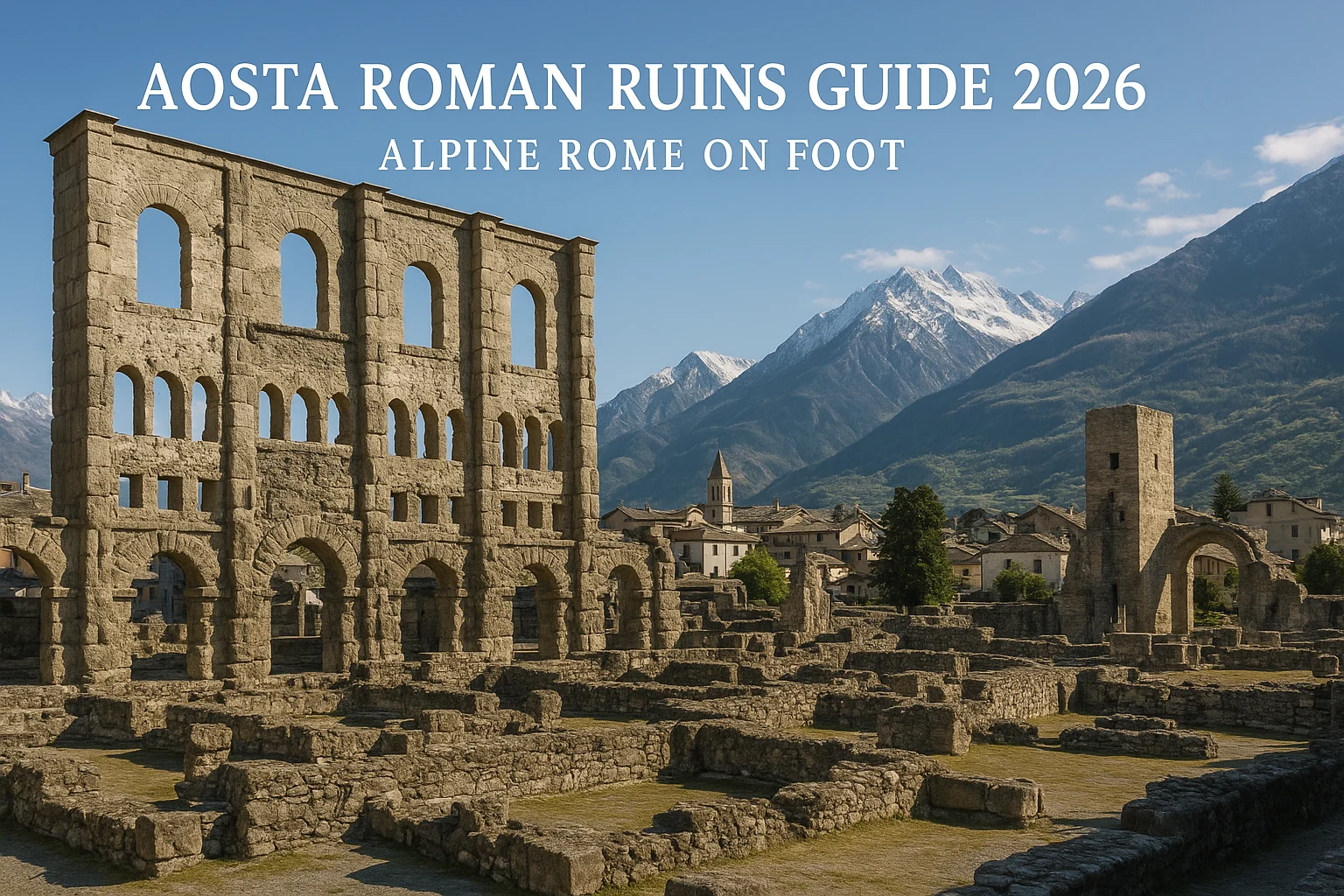
Aosta Roman Ruins Guide 2026: Alpine Rome on Foot
RomanPlan a practical visit to Aosta's Roman remains, including the Arch of Augustus, theater, city walls...