Quick Info
Curated Experiences
Connemara and Kylemore Abbey Day Tour from Galway
Private Connemara Heritage Tour with Kylemore Abbey
Wild Atlantic Way and Connemara Small-Group Tour
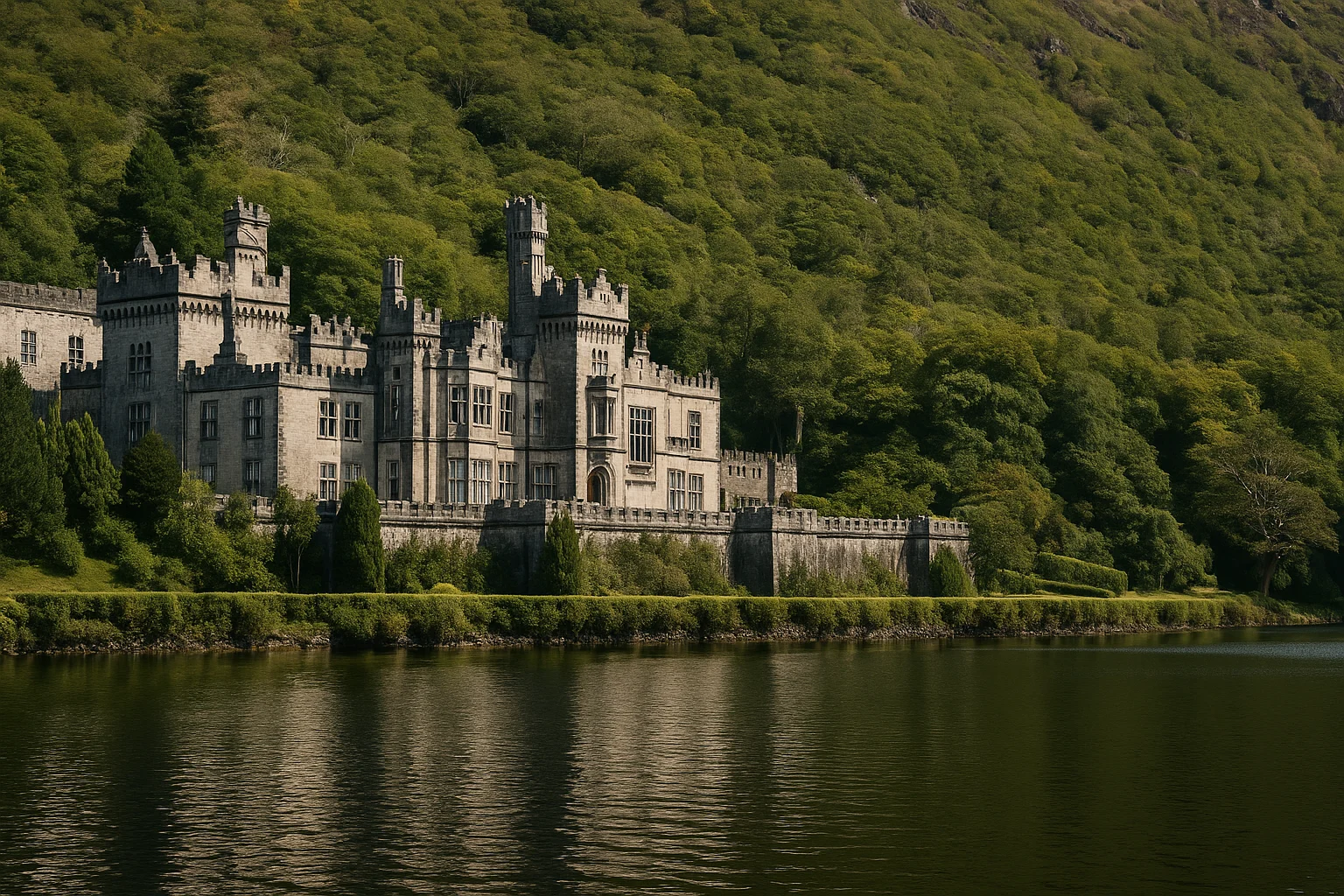
Kylemore Abbey sits at the edge of a dark Connemara lake, its castellated facade mirrored so perfectly in the still water that the first glimpse from the road feels staged. The mountains of the Twelve Bens rise behind it, bog and granite and cloud pressing in from every side, and the building holds its ground like something that has decided it belongs here even though everything about the landscape suggests otherwise. That tension — between Victorian ambition and Connemara wilderness — is what makes Kylemore worth far more than a roadside photograph.
The story begins with love, moves through grief, and ends with nuns. Mitchell Henry, a wealthy surgeon and politician, built this castle for his wife Margaret in the 1860s. When she died young, he built a cathedral in her memory. Decades later, Benedictine nuns fleeing war in Belgium took the property over and turned it into a working abbey and school that persisted for most of the 20th century. Every room and garden path at Kylemore carries a trace of these overlapping chapters.
Give the estate a proper half-day. Walk the abbey rooms, stand inside the memorial church, ride the shuttle to the walled garden, and let the landscape do the rest. Kylemore rewards pacing far more than any quick photo stop ever could.
Historical Context
Mitchell Henry was born in Manchester to Irish parents, made his fortune as a London surgeon, and in 1868 purchased 15,000 acres of Connemara wilderness. He had fallen in love with the region during a honeymoon visit with Margaret, and the estate he built over the following decade was staggering in its scope: a castellated main house with over 70 rooms, a model farm, formal gardens, a network of roads and paths, and supporting infrastructure for a community of workers and tenants. The cost, adjusted for inflation, ran into the tens of millions, and Henry funded much of it from his surgical practice and later from his role as a Member of Parliament.
Margaret Henry died of dysentery in 1874 during a family trip to Egypt. She was 45 years old. Her death transformed the estate. Henry commissioned a miniature Gothic church on the grounds as her memorial, modeled after Norwich Cathedral and lined with Irish and Connemara marble. He also built a mausoleum in the nearby woods where both Margaret and, later, Mitchell himself were interred. The church remains the emotional center of the estate, a building whose craftsmanship and intimacy are startlingly out of proportion with the remote bogland surrounding it.
Financial difficulties forced a sale in 1903, and the estate passed through the hands of the Duke of Manchester before the Irish Benedictine Dames of Ypres purchased it in 1920. The nuns had been displaced from their convent in Belgium during World War I, and Kylemore became their new permanent home. They established a boarding school for girls that operated until 2010, and during those nine decades they maintained the estate, expanded educational programs, and gradually opened sections of the property to visitors. The Benedictine community remains at Kylemore today, though in reduced numbers, and the abbey functions primarily as a heritage and cultural site.
For travelers, Kylemore occupies an unusual niche in the Irish landscape. Most heritage sites on the island are shaped by clan power, ecclesiastical authority, or colonial administration. Kylemore started as a private love story, became a refugee community, and endured as a religious house through a century of Irish independence. That layering makes it unlike anything else you will visit in Connemara or, for that matter, in Ireland.
What to See
Abbey Exhibition Rooms
Start inside the main building. The restored rooms and exhibition panels trace the full arc from Mitchell Henry’s construction campaign through the Benedictine era, providing the narrative backbone that makes the rest of the grounds feel connected rather than decorative. The rooms themselves — with their high ceilings, ornate plasterwork, and period furnishings — give you a physical sense of the domestic ambition that drove the original project. Pay close attention to the details of Margaret Henry’s story; it reframes everything else you will see on the estate.
Neo-Gothic Church
Henry’s memorial church is the emotional center of Kylemore and the single thing you should not skip under any circumstances. Modeled on Norwich Cathedral in miniature, it is lined with columns of Irish marble — green Connemara marble, red Cork marble, and other regional stones — beneath Caen stone carvings imported from France. The interior is intimate, the craftsmanship is serious, and the purpose is unmistakable. The church sits a short walk from the main abbey, screened by trees, and many visitors miss it because they assume it is a minor addition. It is not. Budget at least 15 minutes here.
Victorian Walled Garden
A shuttle bus (included in admission) runs from the main abbey to the six-acre walled garden, which has been painstakingly restored to something close to its original Victorian layout. The garden is organized into flower gardens, herbaceous borders, vegetable beds, a rock garden, and restored glasshouses that once heated tropical and subtropical plants through Connemara winters. It functions as a living record of how an estate of this ambition actually ran day to day. The head gardener’s cottage has been restored, and interpretive panels explain the garden’s history and horticultural techniques. Allow 45 minutes to an hour for a thorough visit.
Mausoleum and Woodland Walk
Beyond the church, a path leads into the woods to the Henry family mausoleum where both Mitchell and Margaret are buried. The walk is short, shaded, and quiet. Most tour groups skip it entirely, which means you are likely to have the space to yourself. The mausoleum is modest by Victorian standards, but its setting among moss-covered trees and ferns captures the private grief that runs beneath the estate’s grander public face.
Lakeside Viewpoint
The classic Kylemore photograph — the abbey reflected in the lake with mountains behind — is taken from a designated viewpoint along the entrance road. The view is genuinely spectacular, especially on still mornings when the reflection is unbroken, and is worth a few minutes even if you are not a photographer. The light is best before 11 AM and in the late afternoon.
Timing and Seasons
The best months to visit are May through June and September, when Connemara’s long daylight hours and intermittent sunshine produce the most photogenic conditions and the garden is at peak color. Temperatures in these months range from 50-60°F (10-16°C). Summer (July and August) is warmer, around 58-65°F (14-18°C), but midday hours get congested when coach tours from Galway arrive in clusters between 11 AM and 2 PM.
Connemara weather is famously changeable. Rain can arrive without warning on a blue-sky morning, and wind off the mountains adds a chill even in summer. A visit in any season requires a waterproof jacket and layers.
The quietest windows are early morning (arrive at opening, typically 9:30 or 10:00 AM) and late afternoon (after 3:00 PM). Winter visits are possible — the abbey is open year-round with reduced hours — but the walled garden may be closed and the shorter daylight limits what you can see outdoors. Winter temperatures sit around 38-48°F (3-9°C).
Tickets, Logistics, and Getting There
Adult admission is approximately $16 (EUR 14), which includes the abbey rooms, church, walled garden, and shuttle bus. Children’s and family tickets are available at reduced rates. Tickets can be purchased online in advance through the Kylemore Abbey website. The site typically opens at 9:30 or 10:00 AM and closes between 5:00 and 6:00 PM depending on season.
Kylemore Abbey is located on the N59 road in Connemara, roughly 80 kilometers (about 1.5 hours) northwest of Galway city. The drive through Connemara is scenic but narrow in stretches, particularly through the Inagh Valley and along Killary Harbour. Build in extra time and do not rush the road — it is part of the experience. There is no regular public bus service to Kylemore, so a rental car or organized tour is necessary. Organized day tours from Galway typically start around $62-78 per person and include transport, admission, and several Connemara scenic stops.
The estate has a large free car park. An on-site restaurant and craft shop operate near the main entrance.
For visitors without a car, several organized tours from Galway combine Kylemore with Connemara scenic stops. These tours typically depart Galway in the morning and return by late afternoon, with 1.5 to 2 hours allotted at the abbey. Private tours offer more flexibility and are worth considering if you want to see the walled garden at a leisurely pace.
Practical Tips
- Confirm the walled garden shuttle schedule when you arrive so you can plan your route around it. The shuttle runs at regular intervals but may have reduced frequency in shoulder seasons.
- Bring a proper waterproof jacket even on a blue-sky morning. Connemara weather is genuinely unpredictable and the estate is large enough that you can be caught far from shelter.
- The drive from Galway is scenic but demands attention. N59 road surfaces vary, and single-track sections with passing places slow travel. Budget 1.5 hours minimum each way.
- One additional Connemara stop per day is the right pace. Stacking Kylemore with three other attractions turns a good day into a stressful one.
- The on-site restaurant serves hot meals, soups, and baked goods. It is a reasonable lunch option and saves the drive to Clifden or Letterfrack.
- Photography is permitted in most areas. The church interior and lakeside reflection are the two strongest shots on the estate.
Suggested Itinerary
Arrive at opening time and start with the abbey exhibition rooms (30 to 40 minutes). Walk directly to the neo-Gothic church (15 to 20 minutes), then continue along the woodland path to the mausoleum (15 minutes round trip). Return to the main abbey and catch the shuttle to the walled garden (45 minutes to 1 hour in the garden). Ride the shuttle back and finish with the lakeside viewpoint.
Total visit time: 2.5 to 3.5 hours, which fits comfortably into a half-day Connemara itinerary. If you have a full day, continue to Clifden (20 minutes west) for lunch and a coastal walk along the Sky Road, or drive the Inagh Valley route back toward Galway.
Nearby Sites
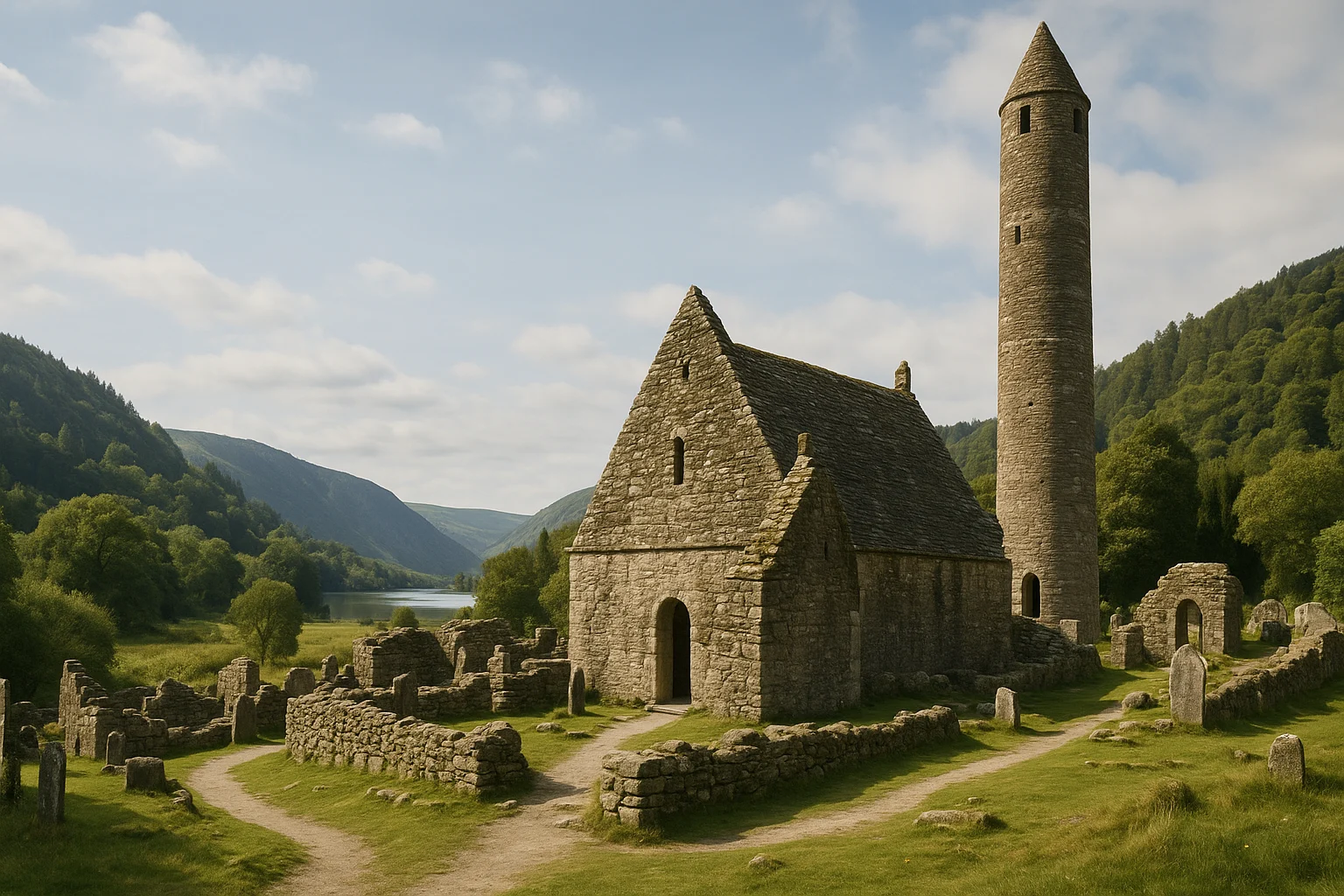
Glendalough in County Wicklow offers a fascinating comparison — early medieval monks shaping a valley settlement centuries before the Benedictines reached Connemara. The architectural and spiritual continuity between the two sites, separated by a thousand years, is one of the most instructive contrasts available on an Ireland itinerary. Glendalough is about 4 hours east by car.
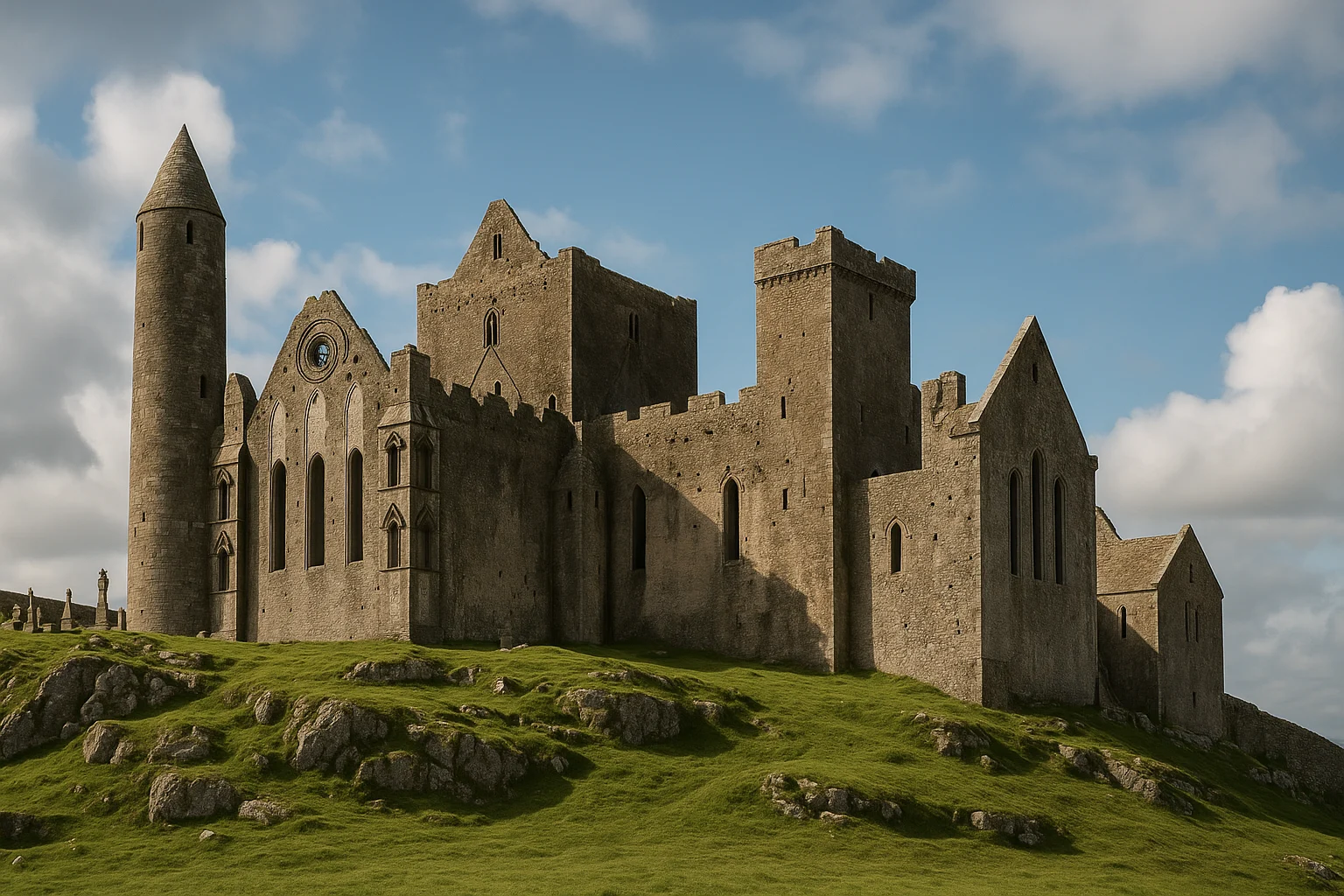
Rock of Cashel compares Victorian private ambition against medieval ecclesiastical power on a Tipperary hilltop. The contrast between Kylemore’s grief-driven domestic vision and Cashel’s assertion of royal-religious authority makes the two sites illuminating companions. Rock of Cashel is roughly 3.5 hours southeast.
Within Connemara itself, Clifden (20 minutes west) is the regional hub with restaurants, shops, and coastal walks. The abandoned Marconi wireless station on the Errislannan peninsula and the coral-strand beach at Dog’s Bay both make worthwhile short detours.
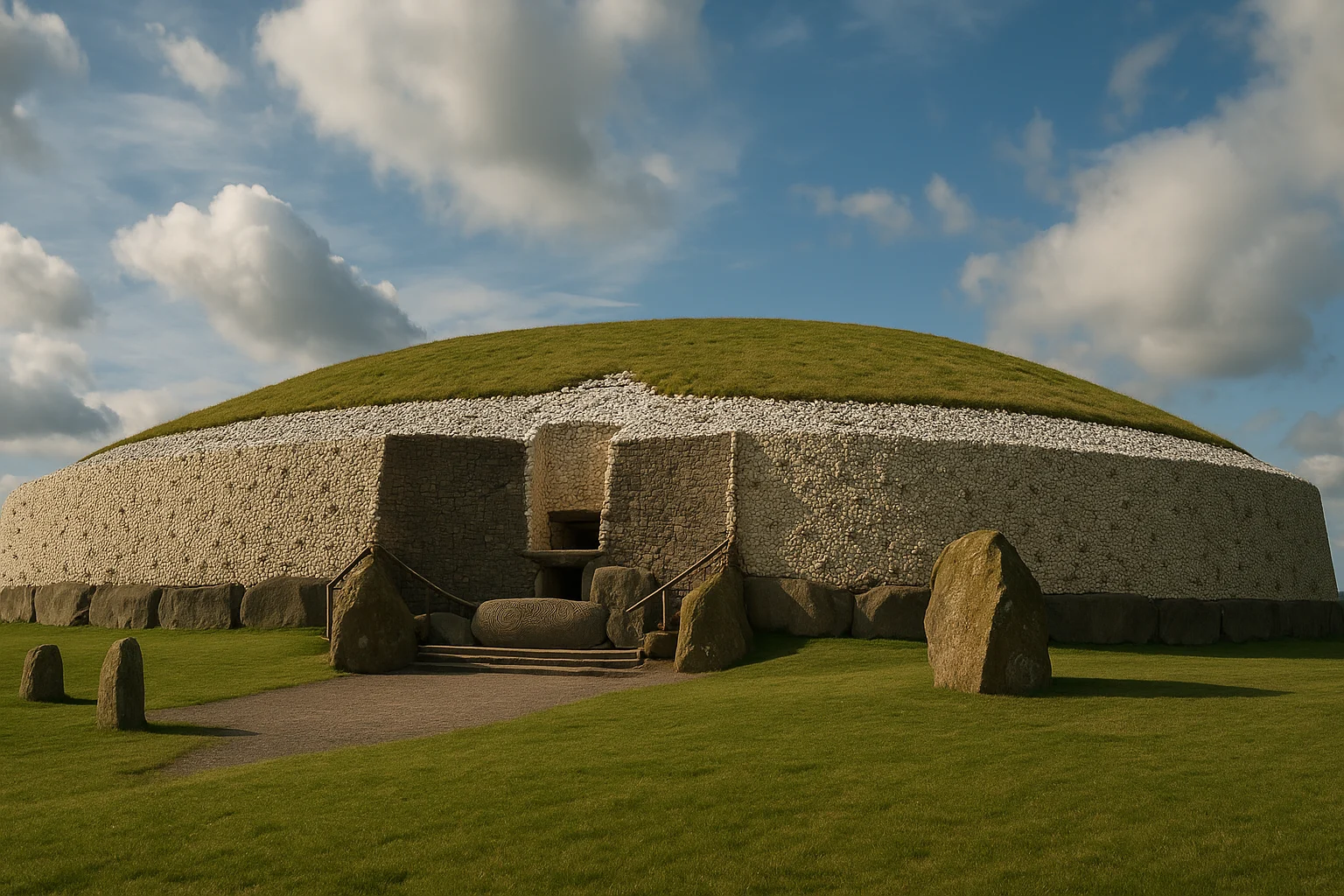
Newgrange stretches the same Ireland itinerary back 5,000 years into the Neolithic, adding a passage-tomb counterpoint to Kylemore’s 19th-century domesticity.
Discover More Ancient Wonders
- Glendalough — Early medieval monastic settlement in a Wicklow glacial valley
- Rock of Cashel — Medieval hilltop where kingship met cathedral architecture
- Newgrange — Neolithic passage tomb 5,000 years older than Kylemore
- Skellig Michael — Island monastery on a Kerry cliff, the extreme edge of Irish monasticism
- Our complete guide to Irish heritage destinations
Final Take
Kylemore Abbey is not a ruin, and it is not a museum in the conventional sense. It is a place where one man’s extraordinary love for his wife became an estate carved out of bog and granite, which then became a refugee community, which then became a living abbey that persisted for nearly a century. The layers matter. Walk the rooms, stand inside the church where the marble columns catch whatever light Connemara allows, cross the garden where Victorian horticulture still flowers against the mountains, and you will understand why this estate has outlasted the fortune that built it.
In a landscape full of ancient monuments and medieval ruins, Kylemore offers something different: proof that the impulse to build something permanent in an impermanent world did not end with the passage-tomb builders or the monastery founders. It carried right through to a Victorian surgeon who looked at a wild Connemara lake and decided to build a castle there for the woman he loved.
Quick Facts
| Attribute | Details |
|---|---|
| Location | Clifden, County Galway, Ireland |
| Country | Ireland |
| Region | County Galway |
| Civilization | Modern Ireland |
| Historical Period | 19th century CE — present |
| Established | 1868 CE |
| Admission | ~$16 (EUR 14) adults |
| Opening Hours | 9:30-10:00 AM; closing varies seasonally |
| Time Needed | 2.5-3.5 hours |
| Coordinates | 53.5617, -9.8893 |
Frequently Asked Questions
How much time should you spend at Kylemore Abbey?
Most first-time visitors should plan 2 to 3 hours on-site. That gives enough time for the abbey exhibitions, church, and either the Victorian Walled Garden shuttle or a short lakeside walk.
Is Kylemore Abbey worth visiting if you are already touring Connemara?
Yes. It is one of the most distinctive heritage stops in Connemara because it combines architecture, landscape, and social history in one compact estate.
Can you visit Kylemore Abbey as a day trip from Galway?
Absolutely. It is a common day-trip stop from Galway by guided tour or self-drive, often paired with other Connemara viewpoints along the same route.
Nearby Ancient Sites
Glendalough Travel Guide 2026: Monastic Ruins, Lakes, and Wicklow Day-Trip Plan
Early Medieval IrelandPlan a clear first visit to Glendalough with route advice, monastic-site context, and practical timi...
Rock of Cashel Travel Guide 2026: Cathedral Hill Timing, Access, and County Tipperary Plan
Medieval IrelandPlan your first visit to the Rock of Cashel with practical timing, hilltop route priorities, and eas...
Newgrange Travel Guide 2026: Passage Tomb Access, Solstice Context, and Boyne Valley Planning
Neolithic IrelandPlan a first visit to Newgrange with practical access logistics, what to expect inside the passage t...