Quick Info
Curated Experiences
Langzhong Ancient Town Walking Tour
Langzhong Day Trip from Chengdu
Sichuan Ancient Towns Heritage Discovery
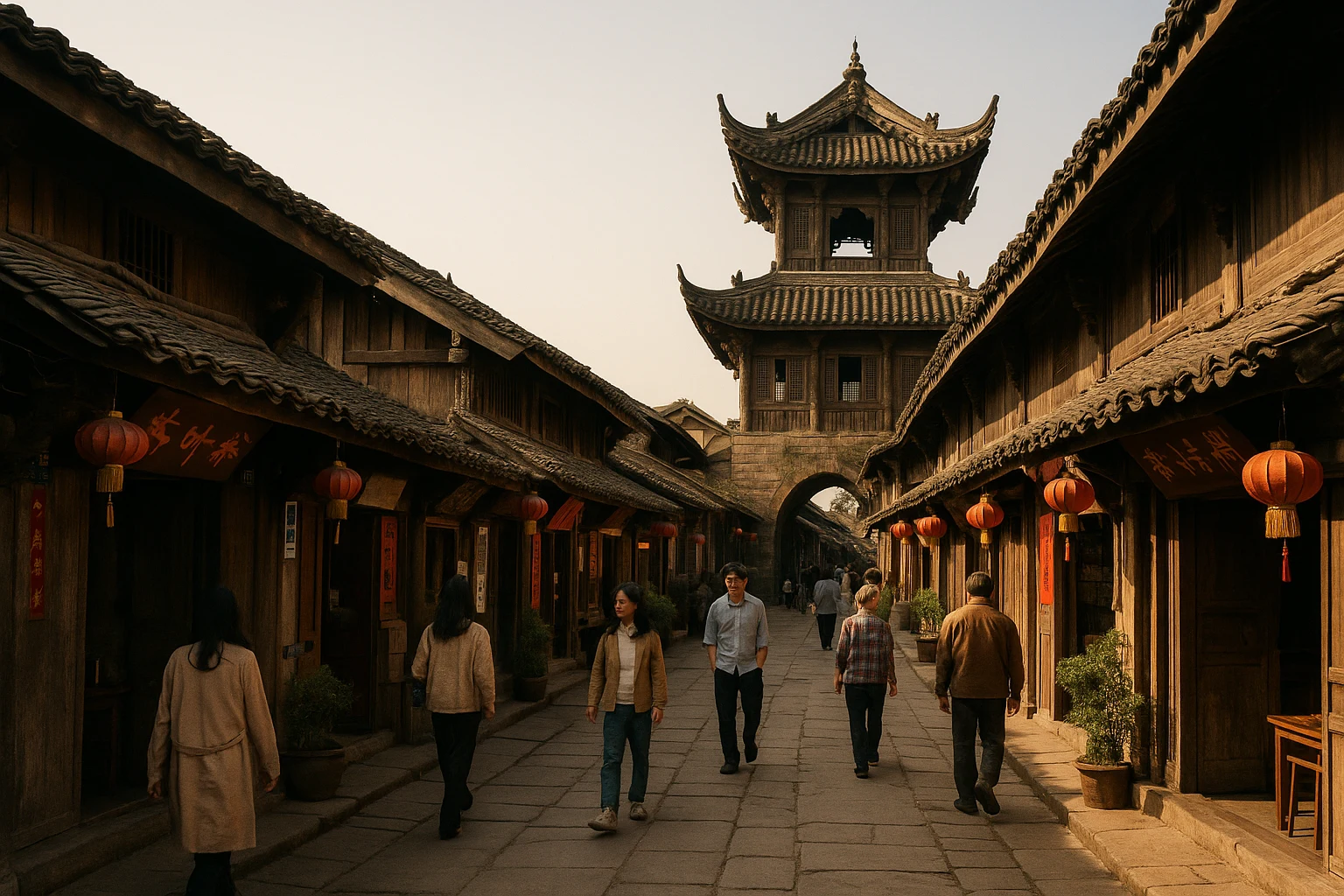
Standing at the junction of the Jialing River and two smaller tributaries in northern Sichuan Province, Langzhong Ancient Town is one of the most completely preserved historic urban centres in all of China. Within the first moments of stepping through its carved timber gates, visitors find themselves absorbed into a world of sweeping upturned eaves, narrow cobbled lanes, and courtyard residences that have changed little since the Tang and Song dynasties more than a thousand years ago. Langzhong Ancient Town — known in Chinese as Lángzhōng Gǔchéng — sits within Langzhong City, Nanchong Prefecture, roughly 300 kilometres north of Chengdu, and it rewards those who make the journey with an authenticity that far more famous heritage destinations can no longer provide.
Unlike many “ancient towns” across China that have been heavily reconstructed for the tourism economy, Langzhong retains the organic complexity of a genuinely living settlement. Its street grid, laid out according to classical feng shui principles, channels the surrounding mountains and rivers into a harmonious urban plan first devised by Chinese geomancers nearly two millennia ago. More than four hundred courtyard compounds from the Ming and Qing dynasties still stand in residential use. Incense drifts from temple forecourts into lanes where local vendors sell Zhang Fei beef — a centuries-old cured meat delicacy named after the town’s most celebrated historical resident. The Jialing River arcs around three sides of the old core, lending the settlement a natural moat that has protected it through dynastic upheavals, floods, and the long passage of time.
Declared a national historic and cultural city by the Chinese government and consistently cited alongside Lijiang, Pingyao, and Huizhou as one of China’s four best-preserved ancient towns, Langzhong offers travellers a rare chance to walk through more than two thousand years of unbroken Chinese urban history without the mediation of reconstruction or theme-park artifice.
History
Origins in the Warring States Period
Langzhong’s origins reach back to the 4th century BC, when the Ba people — one of the ancient tribal confederacies of the Sichuan Basin — established a settlement at this strategically advantageous bend in the Jialing River. The name itself, meaning roughly “in the midst of the lang mountains,” describes the ring of low hills that encloses the river plain on which the town sits, a configuration that classical Chinese geomancy would later codify as near-ideal. During the Warring States period, the state of Qin conquered the Ba kingdom and incorporated Langzhong into the expanding Qin administrative framework around 316 BC, establishing a county seat that would persist, under various names and administrative reorganisations, for more than two and a half millennia.
The Han Dynasty (206 BC – 220 AD) elevated Langzhong’s importance considerably. It served as a regional administrative hub along the northern Sichuan route connecting the Wei River valley to Chengdu, and Han-era records document a prosperous town with active river trade, silk production, and a reputation for astronomical scholarship. Several early Chinese calendar systems were refined here by scholars who found the town’s latitude and clear mountain air conducive to celestial observation, a fact that contributed to a long local tradition of geomantic and calendrical expertise.
The Three Kingdoms Era and Zhang Fei
No figure looms larger over Langzhong’s identity than Zhang Fei, one of the sworn brothers of the Shu Han kingdom’s founder Liu Bei and one of the most celebrated warriors in all of Chinese history. Following the collapse of the Han Dynasty and the fragmentation of China into the competing kingdoms of Wei, Wu, and Shu (220–280 AD), Zhang Fei was appointed military governor of Ba Commandery, with Langzhong as his base. He commanded the town’s defences for roughly seven years, overseeing its fortifications and administering the surrounding territory until his assassination in 221 AD.
Zhang Fei’s tenure transformed Langzhong from a regional administrative post into a place of enduring cultural significance. His temple, constructed shortly after his death and expanded across successive dynasties, stands at the northern edge of the old town and remains one of the most actively visited shrines in Sichuan. The cured beef that bears his name — said to have been prepared using a recipe he favoured — is still produced by local artisans following traditional techniques and sold throughout the ancient streets.
Tang and Song Flourishing
The Tang Dynasty (618–907 AD) ushered in Langzhong’s most architecturally fertile era. The imperial examination system, which required aspiring officials from across the empire to travel to designated regional centres for multi-day written tests, brought thousands of candidates through Langzhong each year. The town became a significant examination hub for Sichuan, and the prosperity generated by this steady flow of scholars, merchants, and supporting traders funded the construction of the courtyard compounds, temple complexes, and civic buildings whose bones still structure the town today. The street grid that modern visitors walk follows alignments established during the Tang period.
Song Dynasty Langzhong (960–1279 AD) continued this trajectory. River commerce intensified, bringing ceramics, silk, and medicinal herbs from the upper Jialing basin through the town toward the Yangtze. Merchant guilds constructed their own halls, and the town’s architecture diversified to include Huizhou-influenced whitewashed styles alongside the more indigenous Sichuan timber-and-tile vernacular, producing the layered aesthetic character still visible in the streetscape.
Provisional Capital of Sichuan under the Qing
When the Qing Dynasty (1644–1912 AD) conquered China, prolonged military campaigns across Sichuan left the provincial capital Chengdu badly damaged and temporarily uninhabitable. For approximately seventeen years, from 1644 to 1661, Langzhong served as the provisional capital of Sichuan Province — the seat of provincial government, military command, and examinations. This extraordinary period left the town with an unusually dense concentration of official architecture, including yamen (government office) compounds and an expanded Imperial Examination Academy, many of which survive intact. The building boom that accompanied this era of administrative pre-eminence defines much of the streetscape that visitors encounter today, and it accounts for the remarkable density of high-quality Qing-period construction within a relatively compact area.
Key Features
The Feng Shui Urban Plan
What immediately distinguishes Langzhong from almost any other surviving Chinese historic town is that its layout was deliberately designed according to feng shui — Chinese geomantic principles — rather than purely utilitarian or defensive logic. The town occupies a river meander that provides water on three sides, while a range of hills to the north shields it from cold winds: a configuration that Chinese geomancers regarded as nearly perfect. The street grid runs on a slight diagonal relative to the cardinal compass points, oriented to align specific visual corridors with surrounding peaks and water bodies. Walking the main commercial artery of Zhongtianjie Street, visitors can look directly down the lane and see, framed between the rooflines, the distant hilltop that the town’s planners deliberately targeted more than a thousand years ago. This is not a coincidence preserved by neglect — it reflects an intentional urban design philosophy that modern Langzhong residents and city planners have worked actively to maintain through careful regulation of new construction heights and building footprints within the protected zone.
Zhang Fei Temple
The Zhang Fei Temple anchors the northern edge of the ancient precinct, organised around a series of axial courtyards leading from an ornate entrance gate through progressively more intimate shrine halls. The current complex, largely dating from the Ming and Qing dynasties, houses a massive gilded statue of Zhang Fei in full armour as its centrepiece, his legendary black beard rendered in dramatic lacquerwork. Side halls document his military campaigns and display reproductions of calligraphy attributed to him. The complex is genuinely alive with worshippers; incense offerings, lit candles, and the sound of devotional chanting give the temple an atmosphere of continuous active use that distinguishes it from many Chinese heritage temples that have quietly become tourist attractions stripped of religious life. A small museum wing at the rear of the complex preserves Three Kingdoms-era artefacts excavated from the surrounding area.
The Imperial Examination Academy
The Gong Yuan, or Imperial Examination Academy, is one of the best-preserved examination complexes in China. During the Ming and Qing dynasties, candidates from across Sichuan Province gathered here to sit the provincial examinations that could determine the entire trajectory of a scholar’s career and family fortunes. The complex retains its original examination cells — rows of narrow brick cubicles barely large enough to contain a writing desk and a seated man — where candidates were locked for up to three days at a time to complete their essays on classical texts. Interpretive displays recreate the examination process in creditable detail, but the sheer physical austerity of the cells communicates something that no quantity of explanatory text quite manages to convey. The silence and compression of the space make viscerally clear why the imperial examination system generated such extreme anxiety and such desperate aspiration across Chinese society for over a millennium.
Huaguang Tower and the River Panorama
Huaguang Tower, a four-storey pavilion standing where the ancient town meets the Jialing River at its southern margin, serves as the visual anchor of Langzhong’s riverside. Built originally in the Tang Dynasty and reconstructed during the Ming, the tower rises above the surrounding rooflines to offer a panoramic view of the river’s sweeping curve, the receding sea of grey-tile roofs, and the green hills beyond. At dusk, when low light catches the glazed ridge tiles and the river takes on a copper tone, the view from Huaguang Tower’s upper gallery ranks among the most beautiful urban vistas in Sichuan. The tower’s ground-floor chambers house rotating exhibitions on Langzhong’s topographic and administrative history, and the carved wooden balustrades of the upper floors have been restored with close attention to their original profiles.
Living Courtyard Residences
Beyond the named monuments, Langzhong’s greatest asset is the residential fabric of the old town itself: more than four hundred Ming and Qing dynasty courtyard compounds, a significant number still inhabited by Langzhong families. Unlike the sanitised historic districts of better-known Chinese tourism towns, these courtyards are genuinely lived-in spaces. Washing hangs across inner courts, elderly residents play mahjong under carved eaves, and the smell of slow-braised meat drifts from kitchen windows on cool mornings. Several families have converted portions of their compounds into guesthouses, allowing visitors to sleep inside historic architecture that has been in continuous domestic occupation for three centuries. The persistence of this ordinary residential life within a monument-class historic precinct is unusual in China and constitutes the town’s most distinctive and irreplaceable quality.
Getting There
Langzhong is most commonly reached from Chengdu or from the regional hub of Nanchong. The most efficient approach from Chengdu is to take a high-speed train from Chengdu East Railway Station to Nanchong North Station, a journey of approximately 75–90 minutes costing between ¥55 and ¥90 depending on train class and seat type. From Nanchong North, express buses to Langzhong depart from the station forecourt roughly every half hour between 7:00 and 18:00, taking about 70 minutes and costing ¥25. A taxi from Nanchong North to Langzhong will run approximately ¥160–¥200 and takes a similar amount of time; ride-hailing apps including Didi are functional in Nanchong.
Direct long-distance buses from Chengdu’s Xinnanmen Bus Terminal run to Langzhong several times daily. Journey time is approximately 3.5–4.5 hours depending on traffic and routing, with fares around ¥80–¥100. This option is slower than the train-plus-bus combination but deposits passengers closer to the old town entrance.
Langzhong also has its own railway station, Langzhong Station, served by conventional (non-high-speed) trains connecting to Nanchong and to destinations further north toward Guangyuan. Check schedules carefully as service frequencies are lower than on the high-speed network.
Within Langzhong, the ancient town core is compact and best explored entirely on foot. From the main bus arrival area, it is a five-to-ten-minute walk to the historic gates. Electric tuk-tuks circulate around the perimeter for short hops at ¥5–¥10 per person. Bicycles are available for hire from several guesthouses within the old town at approximately ¥30–¥50 per day and are well-suited to exploring the quieter residential lanes away from the main tourist thoroughfares.
When to Visit
Langzhong’s climate follows the pattern of the Sichuan Basin: warm and humid in summer, mild but frequently overcast in winter, and most pleasant in the transitional seasons. Spring, from March through May, is the recommended window for most visitors. Temperatures climb into the low-to-mid twenties Celsius, spring flowers appear along the riverbanks, and the light is typically clear enough to appreciate the architectural details of the courtyard compounds without the enervating heat of high summer. Cherry blossoms and rapeseed flowers in the surrounding countryside peak in late March and make day walks along the river particularly rewarding.
Autumn, from September through November, is equally appealing and arguably offers better photographic conditions. The summer haze lifts, persimmon trees turn orange along the lanes, and the harvest atmosphere that infuses Langzhong’s food markets in October makes the town especially engaging for visitors with an interest in Sichuan culinary culture. The cured meats and pickled vegetables that Langzhong is famous for are prepared in greatest abundance during this season.
Summer (June–August) brings high heat and humidity, with temperatures regularly exceeding 35°C, along with the possibility of heavy rain. The town is busiest with domestic tourists during the National Day Golden Week holiday in early October and during Chinese New Year. The Lantern Festival, held on the fifteenth day of the first lunar month — typically late January or early February — is the town’s most spectacular annual event: the ancient streets are strung with thousands of traditional paper lanterns, temples hold processions, and artisans demonstrate traditional crafts including paper cutting, shadow puppetry, and embroidery. Crowds are substantial during this period and accommodation books out quickly; visitors planning to attend should make reservations at least several weeks in advance. For those seeking the old town at its most contemplative and uncrowded, midweek visits in April or October remain the optimal choice.
| Quick Facts | |
|---|---|
| Location | Langzhong City, Nanchong Prefecture, Sichuan Province, China |
| Coordinates | 31.5527°N, 105.9746°E |
| Founded | c. 4th century BC, Warring States period |
| Historic Period | Tang–Qing Dynasties (7th–20th century AD) |
| Historic Core Area | Approximately 2 sq km |
| Street Access | Free |
| Individual Site Admission | ¥30–¥60 per attraction |
| Opening Hours | Outdoor areas: always accessible; temples and museums: 8:00–18:00 |
| Best Months to Visit | March–May or September–November |
| Nearest Major City | Nanchong (approx. 70 km); Chengdu (approx. 300 km) |
| Designation | National Historic and Cultural City (China) |
| Primary Language | Mandarin Chinese (Sichuan dialect) |
Frequently Asked Questions
Where is Langzhong Ancient Town located?
Langzhong Ancient Town is situated in Langzhong City, Nanchong Prefecture, in northern Sichuan Province, China, approximately 300 kilometres north of Chengdu along the Jialing River.
How old is Langzhong Ancient Town?
Langzhong has a recorded history of over 2,300 years, with origins in the Warring States period around the 4th century BC, making it one of China's oldest continuously inhabited urban settlements.
What is Langzhong Ancient Town famous for?
Langzhong is renowned for its intact Tang and Song Dynasty street layouts, its feng shui-inspired urban planning, the Zhang Fei Temple dedicated to the Three Kingdoms general, and its role as Sichuan's provisional provincial capital during the early Qing Dynasty.
How do I get to Langzhong Ancient Town from Chengdu?
From Chengdu, take a high-speed train to Nanchong North Station (about 75–90 minutes, ¥55–¥90), then catch an express bus to Langzhong (about 70 minutes, ¥25). Direct long-distance buses from Chengdu's Xinnanmen Terminal also run several times daily and take roughly 3.5–4.5 hours.
Is there an entrance fee for Langzhong Ancient Town?
The main ancient town streets are free to walk. Individual attractions — including Zhang Fei Temple, the Imperial Examination Academy, and Huaguang Tower — charge separate admission fees typically ranging from ¥30 to ¥60 per site.
What is the best time of year to visit Langzhong?
Spring (March–May) and autumn (September–November) offer the most comfortable temperatures and clearest skies. The Lantern Festival in late January or early February is the town's most spectacular cultural event, though accommodation should be booked well in advance during this period.
Is Langzhong Ancient Town worth the trip?
Yes. Langzhong is consistently cited alongside Lijiang, Pingyao, and Huizhou as one of China's four best-preserved ancient towns. Its authentic living residential fabric, well-preserved Tang-era street grid, and relative lack of tourist overcrowding make it an exceptional destination for travellers interested in traditional Chinese urban culture.
Nearby Ancient Sites
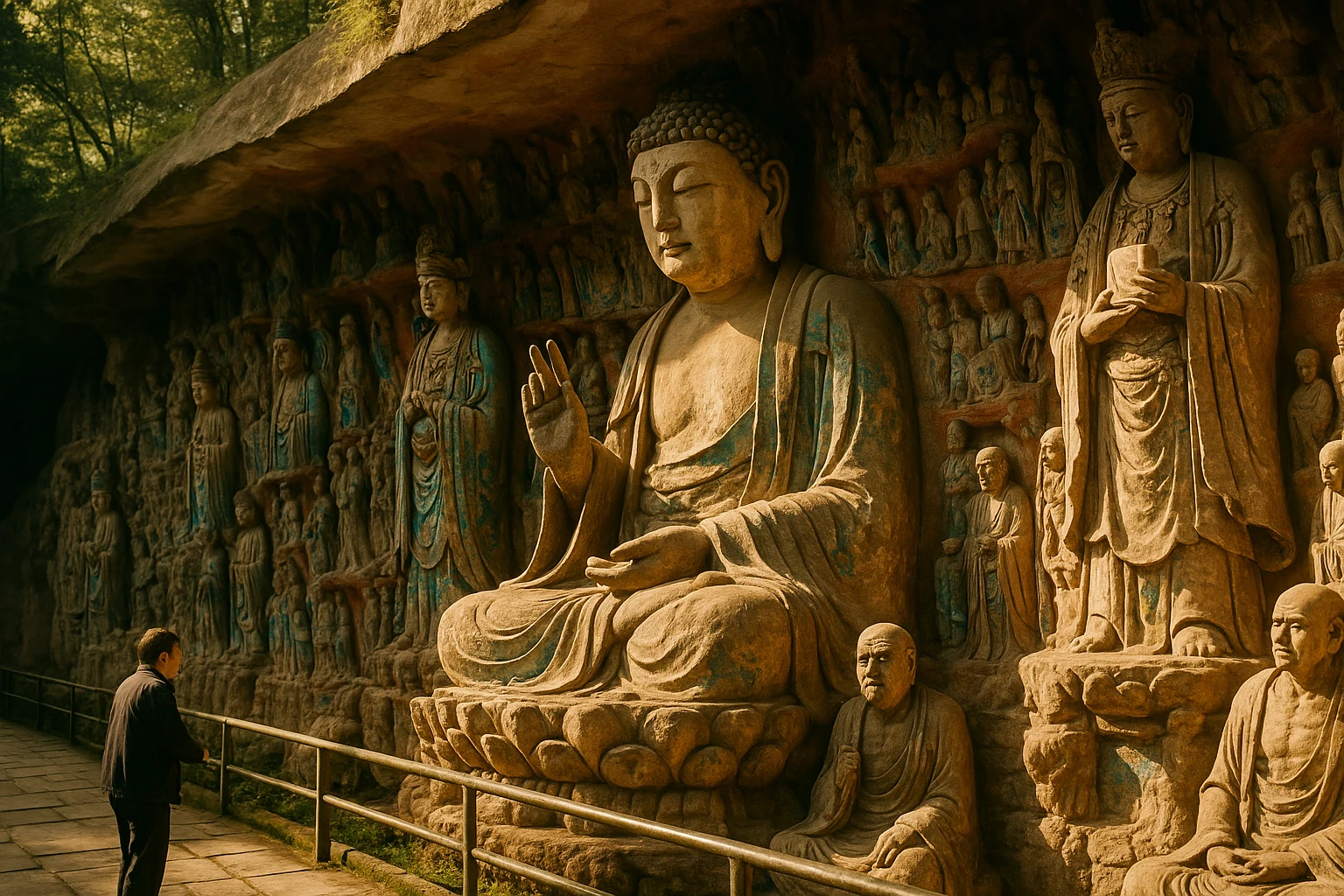
Dazu Rock Carvings
Tang and Song Dynasty ChinaAncient Buddhist, Taoist, and Confucian rock sculptures carved into cliffsides across Dazu District,...
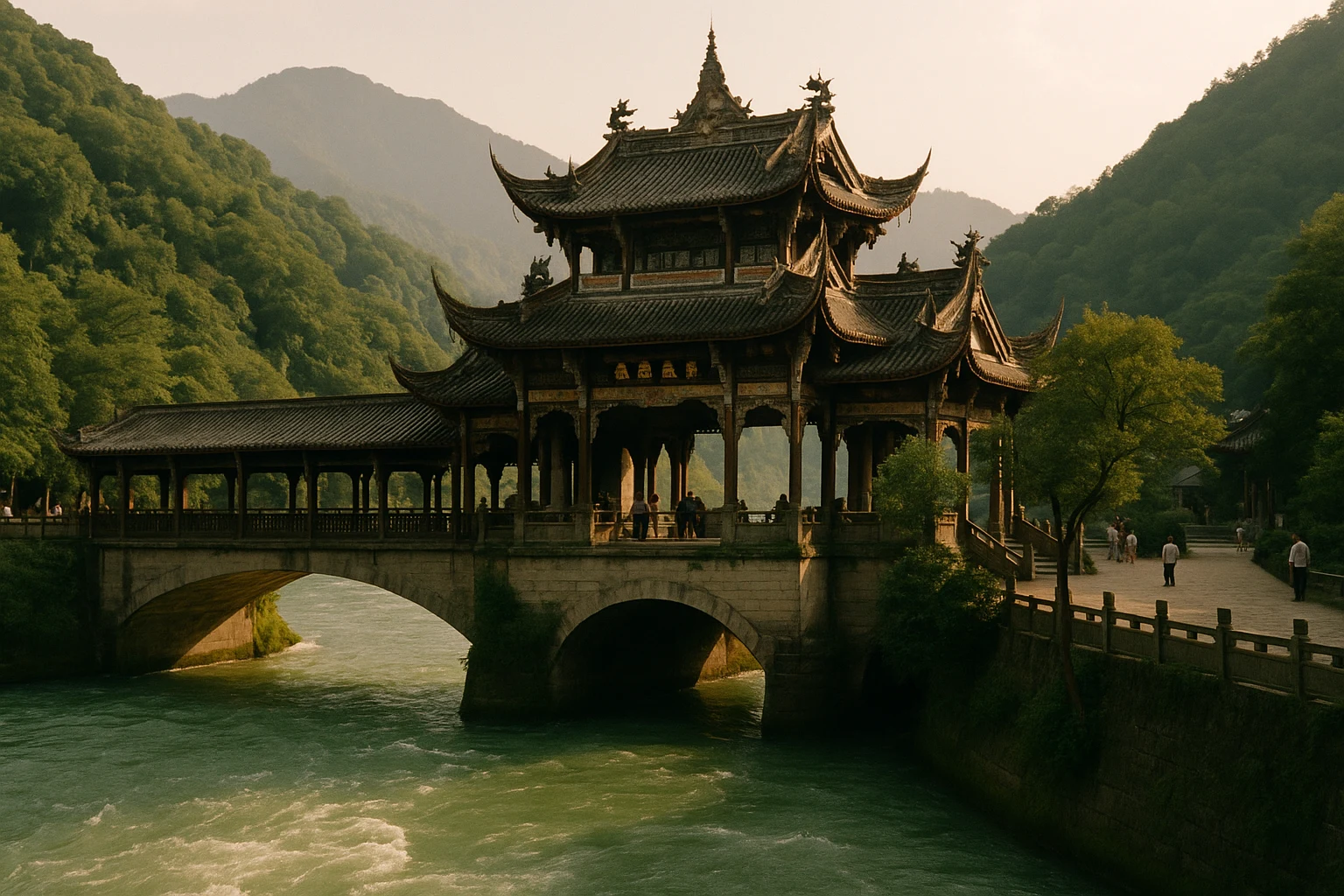
Dujiangyan Irrigation System
Explore Dujiangyan, the world's oldest functioning irrigation system, built in 256 BCE by engineer L...
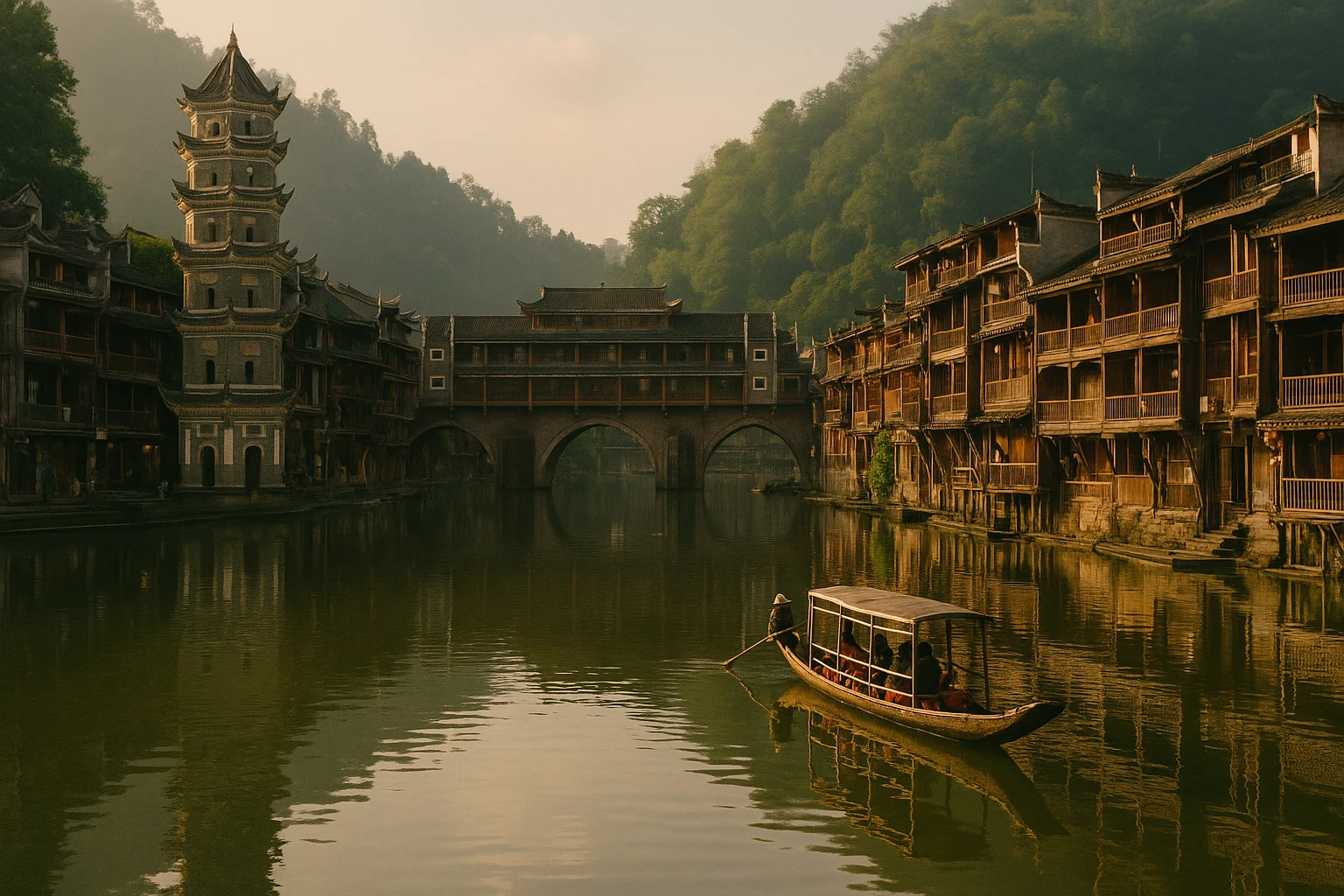
Fenghuang Ancient Town
Ming and Qing Dynasty ChinaFenghuang Ancient Town preserves Ming and Qing dynasty architecture along the Tuojiang River in west...