Quick Info
Curated Experiences
Lindos Acropolis Guided Tour from Rhodes Town
Rhodes Full-Day Tour Including Lindos
Lindos & East Coast of Rhodes Boat Tour
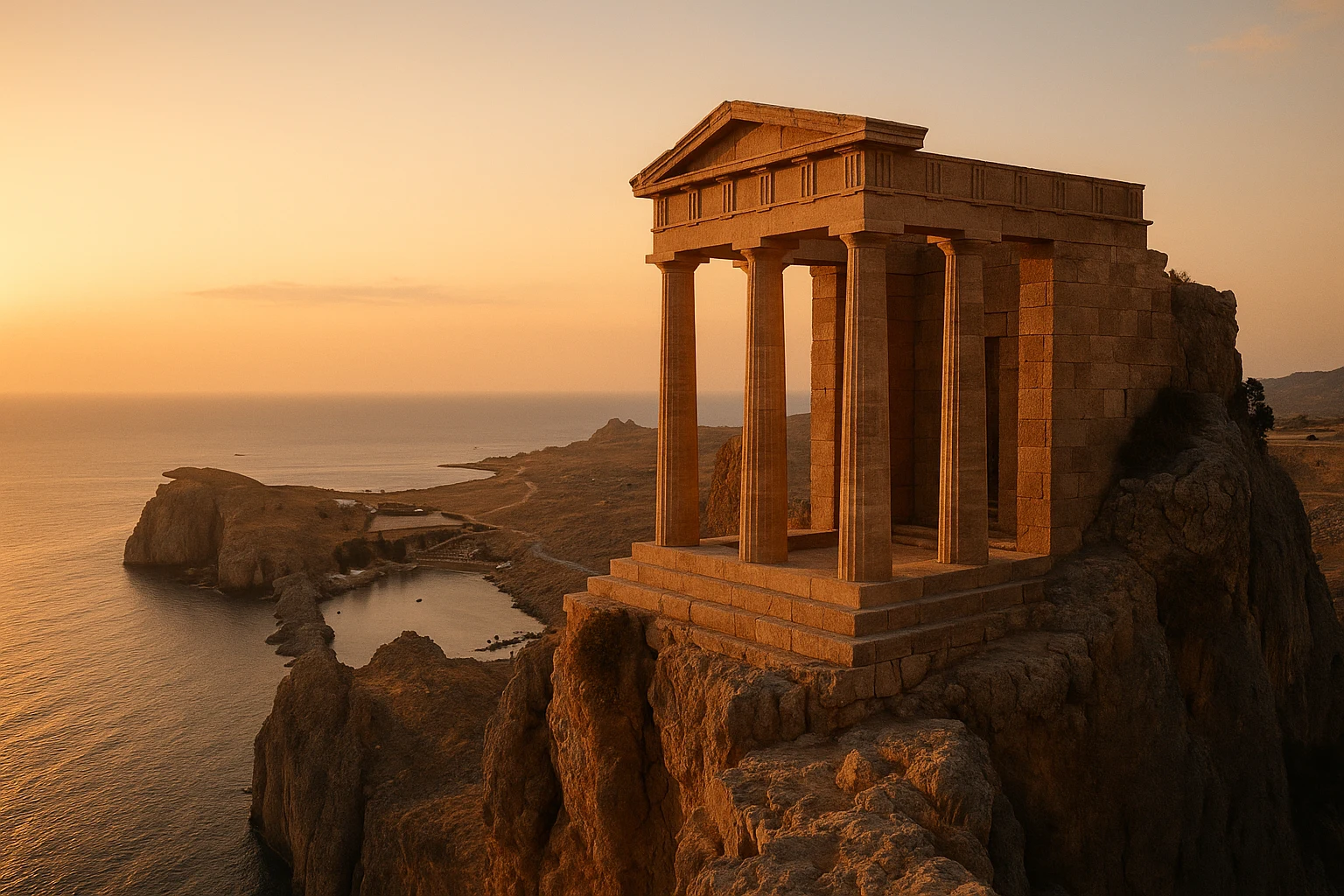
Few views in the Greek world hit quite like the first glimpse of Lindos from the coastal road: a bone-white acropolis perched on a sheer 116-metre headland, its Doric columns gleaming against the cobalt Aegean, the medieval walls of a Hospitaller castle wrapped around the ancient sanctuary beneath them. Below, the village cascades in geometric white geometry toward two perfect sheltered bays. It looks sculpted rather than built, and that impression is not entirely wrong — Lindos has been shaped and reshaped by more than 2,500 years of continuous human attention.
Why Lindos Rewards the Climb
Most visitors to Rhodes make Lindos at least a day trip, and rightly so. The acropolis of Lindos is arguably the most dramatically sited ancient monument in the Dodecanese, and one of the most photogenic in the entire Mediterranean. Unlike many Greek ruins scattered across flat fields, the sanctuary here is inseparable from its landscape: the limestone cliff, the twin bays of St Paul and the Grand Harbour, and the whitewashed Lindian houses below form a composition that has barely changed since the Hellenistic period.
But Lindos is more than scenery. It carries genuine historical weight — a city-state powerful enough to colonise parts of Sicily and the Black Sea coast, a sanctuary visited by Alexander the Great, a trading port that outlasted the classical world by many centuries. Walking up to the acropolis is walking through compressed time: Archaic foundations give way to Hellenistic marble, Byzantine chapels share the hilltop with medieval battlements, and Ottoman-era governors’ houses stand a few paces from Doric colonnades. Almost nowhere in the Aegean offers this density of layered history in a single climb.
Historical Context
Lindos was one of three major Dorian cities on Rhodes — the others being Ialysos and Kamiros — and was already a significant sanctuary and trading centre by the 7th century BC. The cult of Athena Lindia was established on this headland before recorded history; ancient sources credited the legendary craftsman Danaos with building the first sanctuary. By the Archaic period, Lindian ships were carrying goods and settlers across the Mediterranean, and the city’s wealth funded a series of increasingly ambitious building projects on the acropolis.
The classical period brought both prosperity and upheaval. In 408 BC, Rhodes, Lindos, Ialysos, and Kamiros merged to found a new capital, Rhodes City, on the island’s northern tip. Political power shifted north, but Lindos retained its religious prestige. The sanctuary of Athena Lindia continued to draw pilgrims and dedications for centuries; Philip of Macedon sent offerings, and according to one tradition — probably apocryphal but stubbornly repeated — Alexander the Great prayed here before sailing to Asia.
The Hellenistic period produced the grandest version of the acropolis we see today. A grand monumental staircase, a large propylaea (entrance gateway), and the colonnaded stoa that defines the skyline all date to the 3rd and 2nd centuries BC. The Temple of Athena Lindia at the summit was rebuilt in Doric order after a fire around 342 BC; its four surviving columns, re-erected by Italian archaeologists in the early 20th century, are the acropolis’s most iconic image.
Byzantine administrators fortified the headland, and the Knights of St John — the Hospitallers who controlled Rhodes from 1309 to 1522 — rebuilt the walls in their characteristic squared limestone, incorporating ancient blocks without ceremony. Their castle and chapel of St John stand within the acropolis precinct. The Ottomans took Rhodes in 1522 and held it until 1912, when Italy assumed control. Italian archaeologists excavated and partially restored the site between the 1910s and 1930s.
What to See
The Monumental Staircase and Propylaea. The approach to the acropolis is itself a choreographed experience. A broad Hellenistic staircase ascends to a propylaea that deliberately echoes the Athenian Propylaia, though on a smaller scale. The relief carving of a trireme (warship) cut into the cliff face beside the stairs — probably a base for a bronze sculpture of a naval commander — is easy to miss but worth pausing for.
The Stoa of Lindos. A long Doric colonnade stretches across the terrace just inside the gates, its reconstructed columns giving a sense of the space’s original grandeur. This was a gathering place for pilgrims and officials, sheltering them from the Aegean wind before proceeding to the sanctuary above.
The Temple of Athena Lindia. Four columns of the Doric temple survive at the summit, re-erected on the original platform. The scale is modest compared to the great temples of mainland Greece, but the location is unmatched: standing here, you look directly down 116 metres to the sea, with the curve of the harbour below and, on a clear day, the coast of Turkey visible across the channel. The interior naos once housed a chryselephantine (ivory and gold) cult statue.
The Castle of the Knights. The Hospitaller fortifications encircle the entire hilltop, their walls absorbing earlier Byzantine and even Hellenistic elements. The chapel of St John within the castle walls is largely intact and occasionally accessible. The views from the battlements north toward Rhodes Town and south toward the open sea are exceptional.
St Paul’s Bay. Just below the eastern side of the headland, a near-circular bay with emerald water is traditionally identified as the spot where St Paul sheltered during a storm on his way to Rome. Whether or not the tradition is accurate, it is one of the most beautiful swimming spots on the eastern Mediterranean and reachable on foot from the village in about 15 minutes.
Practical Tips
The climb begins at the village square in Lindos, where a signed path leads uphill through the narrow lanes. Arrive as early as the site opens — typically 8 a.m. — to beat both the midday heat and the tour-bus crowds that peak between 10 a.m. and 2 p.m. Wear closed-toe shoes with grip; the ancient limestone steps are worn smooth and can be treacherous when damp. Bring water, as there is nothing to buy inside the archaeological site itself.
The village streets are largely donkey lanes — no cars — which makes the lower town a pleasure to walk, but also means narrow passages packed with souvenir shops and restaurants. For lunch, push back into the quieter streets away from the main tourist drag; several tavernas serve honest Rhodian cooking without the premium markup of the front-row spots.
Photography is permitted throughout the site. The best light for shooting the acropolis from below is mid-morning when the sun illuminates the columns from the east; for the view from the summit looking out to sea, late afternoon is golden.
Pairing Lindos with Other Sites
Rhodes Old Town and the Palace of the Grand Masters. The medieval city of Rhodes Town is the other essential stop on the island: the Street of the Knights, the Palace of the Grand Masters, and the Archaeological Museum of Rhodes can comfortably fill a day. Many visitors split their time on Rhodes between a day in the capital and a day at Lindos.
Kamiros. The third great Dorian city of Rhodes, on the island’s western coast, is far less visited than Lindos and correspondingly peaceful. Kamiros preserves an unusually complete urban layout — residential terraces, cisterns, a temple precinct — spread across a hillside without later medieval overlay. It pairs naturally with a circuit of the western coast.
Delos, via ferry. For travellers treating the Dodecanese as part of a broader Aegean journey, Delos — the uninhabited sacred island accessible from Mykonos — completes the picture of Aegean sanctuary culture. Lindos represents the Dorian strand; Delos, the Ionian. Together they bracket the religious geography of the ancient Greek world.
Why Lindos Still Matters
Lindos survived antiquity, the Byzantine centuries, the Crusader occupation, and four hundred years of Ottoman administration without ever being abandoned or entirely forgotten. The Athena Lindia sanctuary was never buried by ash like Akrotiri, or left to the jungle like the Maya cities; it simply continued, adapted, and accumulated layers. That continuity is the site’s deepest lesson. The columns at the summit are Hellenistic, but the path you climb to reach them has been worn smooth by pilgrims, soldiers, merchants, and travellers for more than two millennia. Walking it, you are not observing history from outside — you are momentarily part of its longest conversation.
Practical details such as opening hours, admission prices, and ferry schedules change seasonally. Always verify current information with the Greek Ministry of Culture or official Rhodes tourism sources before your visit.
Frequently Asked Questions
How do I get from Rhodes Town to Lindos?
Public KTEL buses run regularly from Rhodes Town's eastern bus station to Lindos, taking about 1.5 hours. Taxis, rental cars, and organised tours are also common. The road is narrow and parking scarce, so the bus or a tour is easiest in summer.
Can you climb to the Lindos Acropolis on foot?
Yes — a steep paved path of roughly 300 steps leads from the village square to the acropolis entrance. Donkey rides are available for those who prefer not to walk, though many visitors find the climb manageable with sturdy shoes and an early start.
What is the best time to visit Lindos?
Late April through early June and September through October offer the best balance of warm weather, smaller crowds, and cooler temperatures for the climb. July and August are intensely hot and crowded; arrive before 9 a.m. if visiting in peak season.
Is there an entrance fee for the Lindos Acropolis?
Yes, there is a fee to enter the acropolis archaeological site. The village streets and lower viewpoints are free. Check the Greek Ministry of Culture website for current ticket prices, which may change seasonally.
How much time should I budget for Lindos?
Allow at least half a day: 1–1.5 hours for the acropolis, 30–45 minutes to wander the village, and extra time for lunch or a swim at St Paul's Bay. A full day lets you enjoy everything at a relaxed pace.
Is the Lindos Acropolis suitable for visitors with mobility limitations?
The climb involves uneven ancient steps and is not wheelchair-accessible. The whitewashed lanes of the village below are also hilly and cobbled. Visitors with limited mobility should consult site authorities in advance about any available assistance.
Nearby Ancient Sites
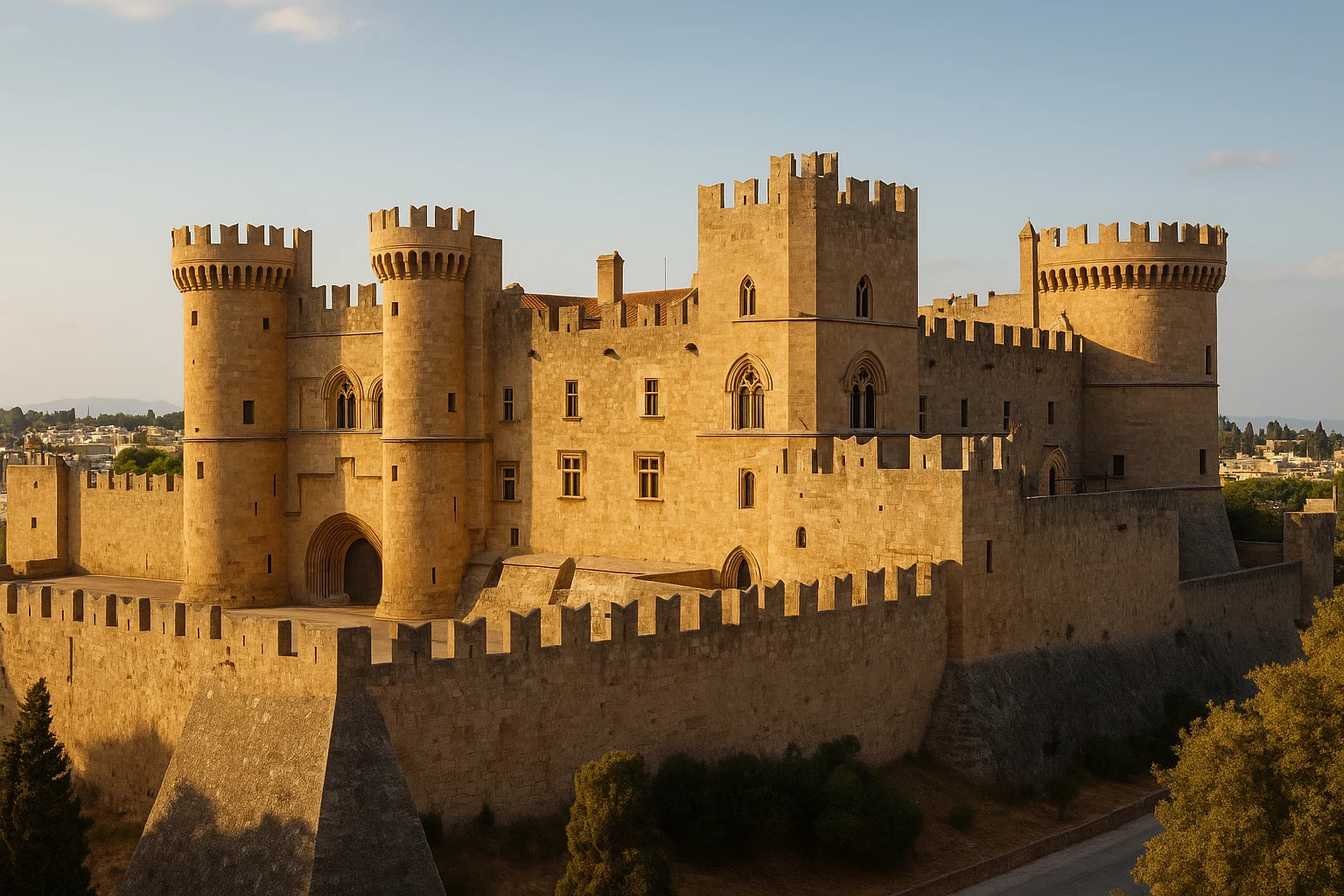
Palace of the Grand Master of the Knights of Rhodes
Knights Hospitaller / Byzantine / OttomanExplore the medieval fortress-palace that once commanded the eastern Mediterranean, home to the Knig...
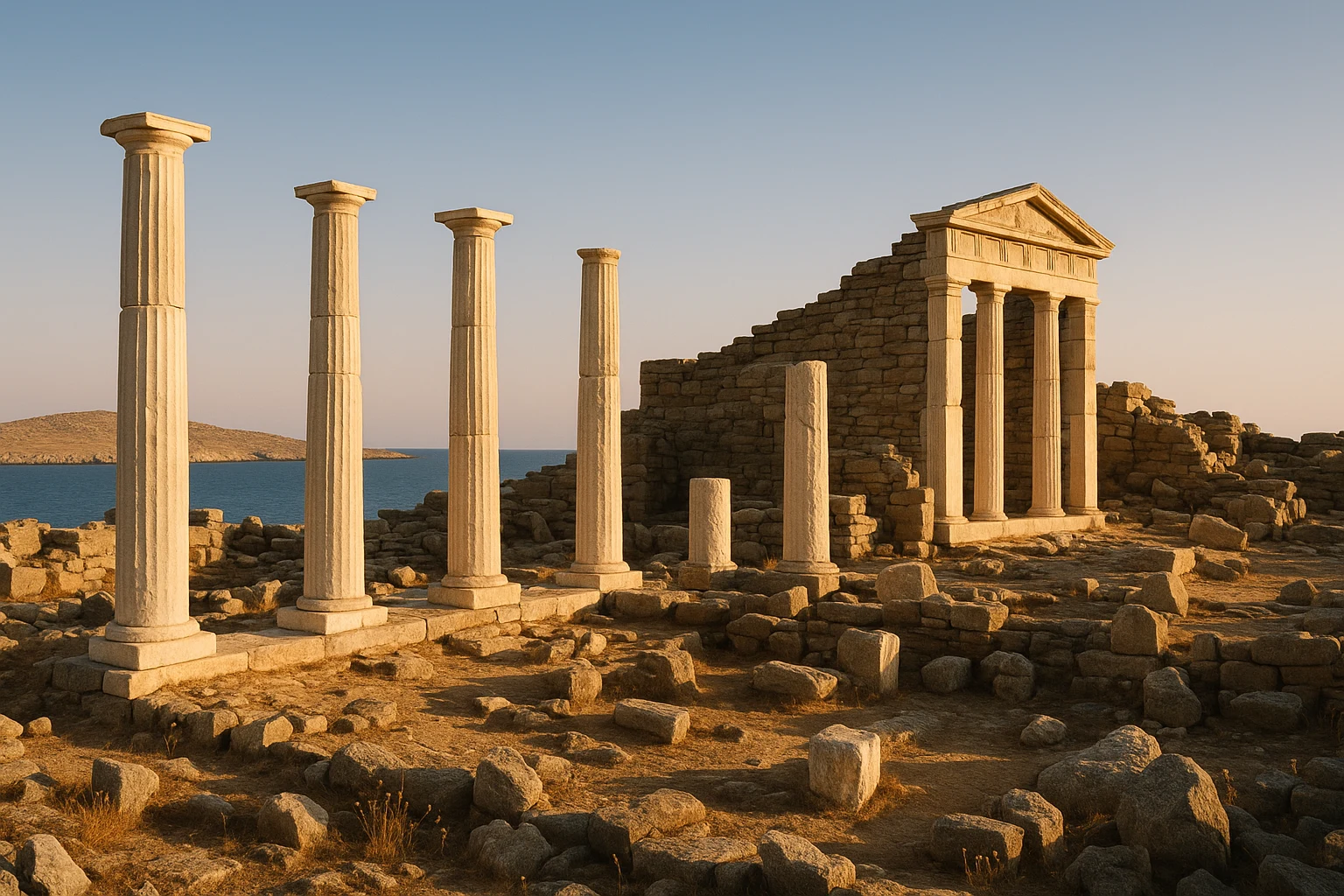
Delos: Sacred Island of Apollo at the Heart of the Aegean
Ancient GreekExplore Delos, the mythological birthplace of Apollo and Artemis, now an uninhabited open-air museum...