Quick Info
Curated Experiences
Angkor Temples Guided Tour Including Lolei
Rolous Group Exploration: Lolei, Preah Ko, & Bakong
Siem Reap: Remote Angkor Temples Small-Group Tour
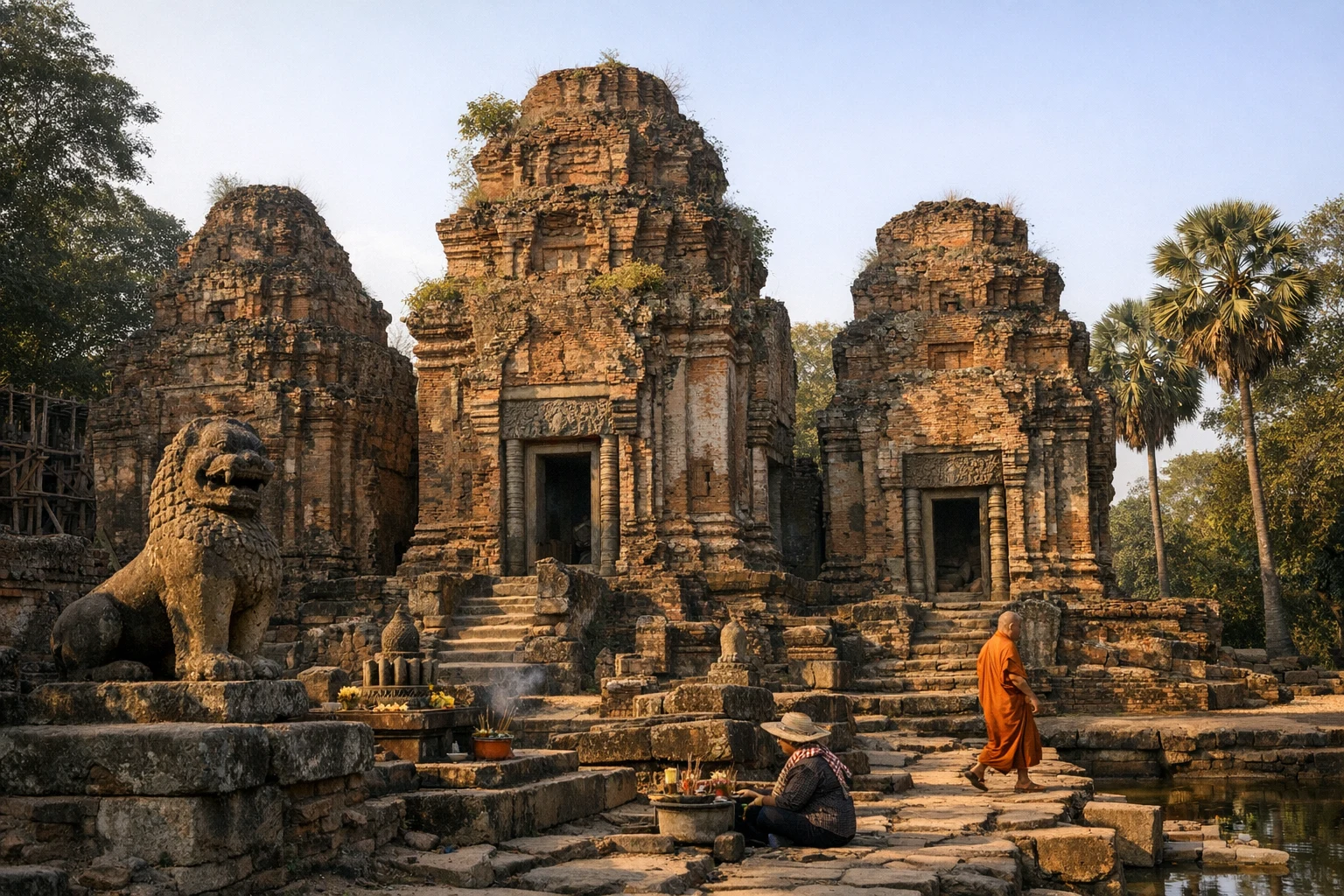
Set in the heart of Cambodia’s Siem Reap province, Lolei is a poignant testament to the grandeur of the ancient Khmer Empire. Tucked away in the tranquil landscapes that cradle the Roluos Group of temples, Lolei emanates an aura of serene solitude, far removed from the bustle that marks the more famous Angkor Wat complex. This temple complex is more than just a cluster of ancient shrines—it is a portal into a pivotal moment in Southeast Asian history, where architecture, religion, and royal ambition intertwined. Arriving at Lolei, visitors are greeted by four impressive brick towers rising gracefully from a grass-covered platform, their weathered surfaces adorned with elaborate carvings of gods, nagas, and mythic creatures. The sound of the wind rustling through the surrounding trees, the muted laughter from a nearby monastery, and the gentle hum of cicadas all add to the enchanting ambiance.
Lolei lies at the northern edge of what was once the Indratataka baray, a massive artificial reservoir that played a vital role in the agricultural and spiritual life of the Khmer capital. Surrounded by emerald rice fields and the soft rhythms of rural Cambodian life, this sacred site continues to captivate travelers with its blend of architectural beauty and historical mystique. While overshadowed in sheer scale by the formidable towers of Angkor, Lolei offers a uniquely intimate perspective on the artistry and beliefs of the early Khmer civilization. It is a place where the faded past is etched indelibly into every brick and carving, inviting you to linger, reflect, and immerse yourself in the unfolding story of Cambodia’s ancient heritage.
History
Foundations of the Roluos Group
The history of Lolei is closely tied to the dawn of the Khmer Empire and the founding of the Roluos Group—an assemblage of temples that marks one of the earliest capitals of the ancient Khmer civilization. The origins of Lolei are rooted in the reign of King Indravarman I, who ruled from 877 to 889 CE. Indravarman’s vision was transformative: he established Hariharalaya as his capital, commissioning monumental works such as the construction of the Preah Ko and Bakong temples, and the creation of the vast Indratataka baray. This era laid the foundation for the distinctive architectural and urban planning traditions that would reach their zenith at Angkor a century later.
Shortly after Indravarman’s death, his son Yasovarman I ascended the throne in 889 CE. Yasovarman was a visionary in his own right, and his decision to construct Lolei in 893 CE was both a religious offering and a personal tribute. He built Lolei on an island in the center of the Indratataka baray, symbolizing Mount Meru—the cosmic mountain at the center of Hindu and Buddhist cosmology. The temple itself was dedicated to Shiva and stood as a royal funerary monument honoring Yasovarman’s ancestors, including his father and mother, a practice reflecting deep filial piety and the merging of statecraft with spiritual devotion.
The Golden Age and Royal Dedication
Lolei’s founding coincided with a flourishing period in Khmer history. With the consolidation of political power and the expansion of agrarian wealth, rulers such as Yasovarman had the resources and authority to undertake grand architectural projects. The water infrastructure exemplified by the baray system, coupled with temple building, became the hallmark of the Khmer state’s prosperity. Temples were not only places of worship, but also statements of legitimacy and cosmic harmony—each stone and carving meticulously placed to reflect the greater order of the universe.
The naming of Lolei is believed by many scholars to be a modern derivation of “Hariharalaya,” the name of the ancient city that preceded Angkor. As the Khmer capital shifted away to Yashodharapura (the nucleus of present-day Angkor), Lolei and the Roluos Group were gradually absorbed into the rural landscape, their prominence giving way to the rise of monumental Angkorian wonders like Angkor Wat and Angkor Thom.
Endurance Through Time
Despite centuries of neglect, natural decay, and scavenging, the core sanctuaries of Lolei have retained their composure and a sense of timeless dignity. The temple’s association with either Hindu or Buddhist traditions waxed and waned with the cycles of Cambodia’s complex religious shifts. Initially dedicated to the Hindu god Shiva, over time Lolei, like many Cambodian temples, intertwined with Buddhist devotional practices, particularly as Theravada Buddhism rose to prominence in the region.
In recent centuries, a small modern monastery called Wat Lolei has been established beside the ancient ruins, a living testament to the lasting spiritual significance of the site. Today, Lolei serves both as a historical relic and an active locus of local worship—acknowledging its ancient grandeur yet breathing new life into its weathered stones. Ongoing conservation efforts, supported by local and international agencies, have ensured that Lolei remains accessible for generations to come, offering a window into both the architectural prowess and the enduring faith of the Khmer people.
Key Features
Stepping into the heart of Lolei, visitors are treated to a striking tableau of architectural ingenuity and artistry. The temple stands atop a raised sandstone terrace, which in ancient times would have been surrounded by the mighty waters of the Indratataka baray. Today, while the reservoir is largely dried up and the site is hemmed in by tranquil countryside, one can still sense the grandeur intended by its original designers.
At the center of the complex are four main towers, arranged in a square configuration, each corresponding to a cardinal direction. These brick towers were dedicated to members of Yasovarman I’s royal family. Though only two now retain much of their original detail, all four exemplify the sophisticated techniques of ancient Khmer brickwork, with sculpted lintels and fluted pilasters that reveal a masterful fusion of function and ornament. The entrances are framed by ornately carved sandstone doorways, many of which depict intricate scenes from Hindu mythology, such as devas and asuras in cosmic battle or elegant nagas winding their way across the stone surfaces.
The bases of these towers are studded with exquisite devotional inscriptions in ancient Sanskrit and Khmer, highlighting both the religious dedications behind their construction and the literary culture of the Khmer elite. These inscriptions, some remarkably well-preserved, provide invaluable insight into the historical and familial context of Lolei’s founding. Scholars studying these texts have unlocked details of royal genealogy, funereal rites, and the temple’s intended cosmological symbolism.
Another remarkable feature of Lolei is the remnants of original stucco work still visible upon the brick surfaces. This material, rare to survive the centuries, offered vibrant decorative flourishes that once covered the plain red bricks—traces of celestial dancers and sacred lotus motifs can still be discerned, their faded outlines a stirring reminder of the site’s former splendor.
Adjacent to the ancient complex stands the active Wat Lolei monastery. Visitors often catch glimpses of saffron-robed monks tending to their daily routines, their presence a living link to centuries of spiritual practice on this hallowed ground. The juxtaposition of ancient sanctuaries and modern religious life creates a palpable sense of continuity, where echoes of the past harmonize with the devotions of the present.
Despite its smaller footprint compared to Angkor’s grandest monuments, Lolei offers something special: a sense of unhurried intimacy and contemplative silence. There are often fewer visitors, allowing ample space to linger, appreciate the artistry of the temple’s carvings, and absorb the serenity of the countryside setting. The air is rich with the scent of incense, and at certain times, the sound of chanting drifts across the grass, reinforcing the sacredness that pervades this venerable site.
Getting There
Traveling to Lolei is a journey through the timeless landscapes of rural Cambodia, where emerald paddies and palm trees create a captivating backdrop. Located roughly 13 kilometers east of Siem Reap, Lolei is part of the Roluos Group of temples, making it an accessible and rewarding side trip from the city’s bustling center.
The most popular mode of transportation for visitors is the iconic Cambodian tuk-tuk. Tuk-tuk rides from central Siem Reap to Lolei generally take 25–30 minutes and cost approximately $15–$20 USD for a round trip, often with the option to include other Roluos Group temples such as Bakong and Preah Ko in a half-day excursion. Drivers are friendly and knowledgeable, and many offer insights or will wait for you as you explore each site.
Bicycles are another appealing option, especially for those looking to absorb the charm of the countryside at a slower pace. Numerous guesthouses and rental outlets in Siem Reap offer sturdy mountain bikes, with daily rates typically around $3–$5 USD. The relatively flat roads and well-signposted route make for an enjoyable and manageable ride, provided you are comfortable with the tropical heat.
Private car hire, with or without a licensed guide, is readily available through hotels, tour desks, or online platforms. A private car offers more comfort and the possibility of tailoring your itinerary, with round-trip fares from Siem Reap to the Roluos area in the range of $30–$40 USD. This is a great option for families, groups, or those wishing to explore multiple sites at a relaxed pace.
For travelers preferring structured itineraries, numerous group and private tours feature Lolei alongside other nearby temples. These tours often include pickup and drop-off, an English-speaking guide, and occasionally refreshments or lunch. Prices can range from $30 to $80 USD depending on the group size and inclusions.
Finally, for the truly adventurous, motorbike rentals are available in Siem Reap. However, Cambodian traffic conditions can be challenging, and appropriate licenses and travel insurance are recommended.
Lolei falls within the Angkor Archaeological Park, so a park ticket is required for entry. The standard single-day ticket costs $37 USD and covers entry to most major temples, including those in the Roluos Group.
When to Visit
Lolei, like much of Cambodia’s ancient heritage, can be visited year-round, but certain seasons offer more favorable conditions. Cambodia experiences a typical tropical climate with two major seasons: the dry season from November to late April, and the wet (monsoon) season from May to October.
The dry season, particularly the cooler months of November through February, is ideal for exploring ancient ruins. During these months, temperatures are generally mild for the region—daytime highs usually hover between 25°C to 30°C (77°F to 86°F). Skies are bright, humidity is lower, and the pleasant breezes from the countryside enhance the experience of lingering at Lolei’s ruins. These months also coincide with the high tourist season, so while Lolei is less crowded than Angkor Wat, you may encounter more visitors than in the off-peak months.
The shoulder period from March to May, though still dry, brings much hotter temperatures that frequently surpass 35°C (95°F). If visiting during these months, it is best to plan your temple explorations early in the day and bring plenty of water, sunscreen, and sun protection.
The wet season offers a different but equally mesmerizing perspective. While afternoon downpours are common, mornings are often clear, and the countryside comes alive with rich greenery and blooming lotus flowers. Lolei’s setting, once anchored on an artificial island, takes on a dreamlike quality when the nearby paddies and watercourses are full. Visitor numbers drop significantly during the wet season, creating an even quieter, almost meditative atmosphere. Trails and access points can be muddy, however, so sturdy footwear is recommended.
Regardless of the season, early morning or the late afternoon “golden hour” cast the ruins in beautiful light, perfect for photography and contemplative walks. Bringing a hat, comfortable walking shoes, and insect repellent will ensure a pleasant visit regardless of the time of year.
Quick Facts
| Attribute | Detail |
|---|---|
| Location | Roluos Group, Siem Reap Province, Cambodia |
| Established | 893 CE, by King Yasovarman I |
| Religious Affinity | Originally Hindu (Shaivism); later Buddhist influences |
| Notable Features | Four brick temple towers with intricate carvings, original stucco, ancient inscriptions |
| Access | Included in Angkor Archaeological Park ticket ($37 USD/day) |
| Nearby Sites | Bakong, Angkor Wat, Angkor Thom, Baksei Chamkrong, Baphuon |
| Best Time to Visit | November to March (dry season) |
| Facilities | Basic restrooms, small refreshment stalls, adjacent modern monastery |
| Visitor Tips | Dress modestly, bring water and sun protection, visit early or late in the day |
| Distance from Siem Reap | Approximately 13 km (25–30 min by tuk-tuk or car) |
In summary, Lolei stands as a jewel in Cambodia’s tapestry of ancient wonders—an oasis of architectural elegance, historical resonance, and living spirituality. Whether you are a history enthusiast, a lover of sacred architecture, or a seeker of tranquil beauty, a visit here offers a deeply rewarding glimpse into the Khmer Empire’s enduring legacy.
Frequently Asked Questions
Where is Lolei located?
Lolei is located in the Roluos Group of temples, about 13 kilometers east of Siem Reap, Cambodia, on the northern edge of the ancient Indratataka baray.
What is Lolei famous for?
Lolei is best known for its four brick temple towers adorned with intricate carvings, originally constructed in the late 9th century as a Hindu dedication.
Is there an entrance fee for Lolei?
Lolei is included in the Angkor Archaeological Park ticket, which costs approximately $37 for a single-day pass.
How can visitors get to Lolei from Siem Reap?
Tuk-tuks, taxis, bicycles, and guided tours are all popular options, with the journey from Siem Reap typically taking 25–30 minutes.
What should I wear when visiting Lolei?
Visitors should dress modestly with shoulders and knees covered, both for respect and to comply with Angkor Archaeological Park guidelines.
Are there guides available at Lolei?
Guides can be arranged in Siem Reap or hired as part of organized tours. On-site guides are less common at Lolei than at Angkor Wat.
Can you visit Lolei year-round?
Yes, Lolei can be visited throughout the year, but the dry season from November to March offers the most comfortable conditions.
Are there facilities at Lolei?
Basic restrooms and small refreshment stalls are found near the entrance, but amenities are far simpler than at major Angkor sites.
Is Lolei accessible for people with mobility issues?
Access at Lolei involves uneven ground and steps, and may not be suitable for all with mobility challenges.
How long should I plan to spend at Lolei?
Most visitors spend between 30 minutes to 1 hour exploring Lolei, often visiting it alongside other Roluos Group temples.
Nearby Ancient Sites
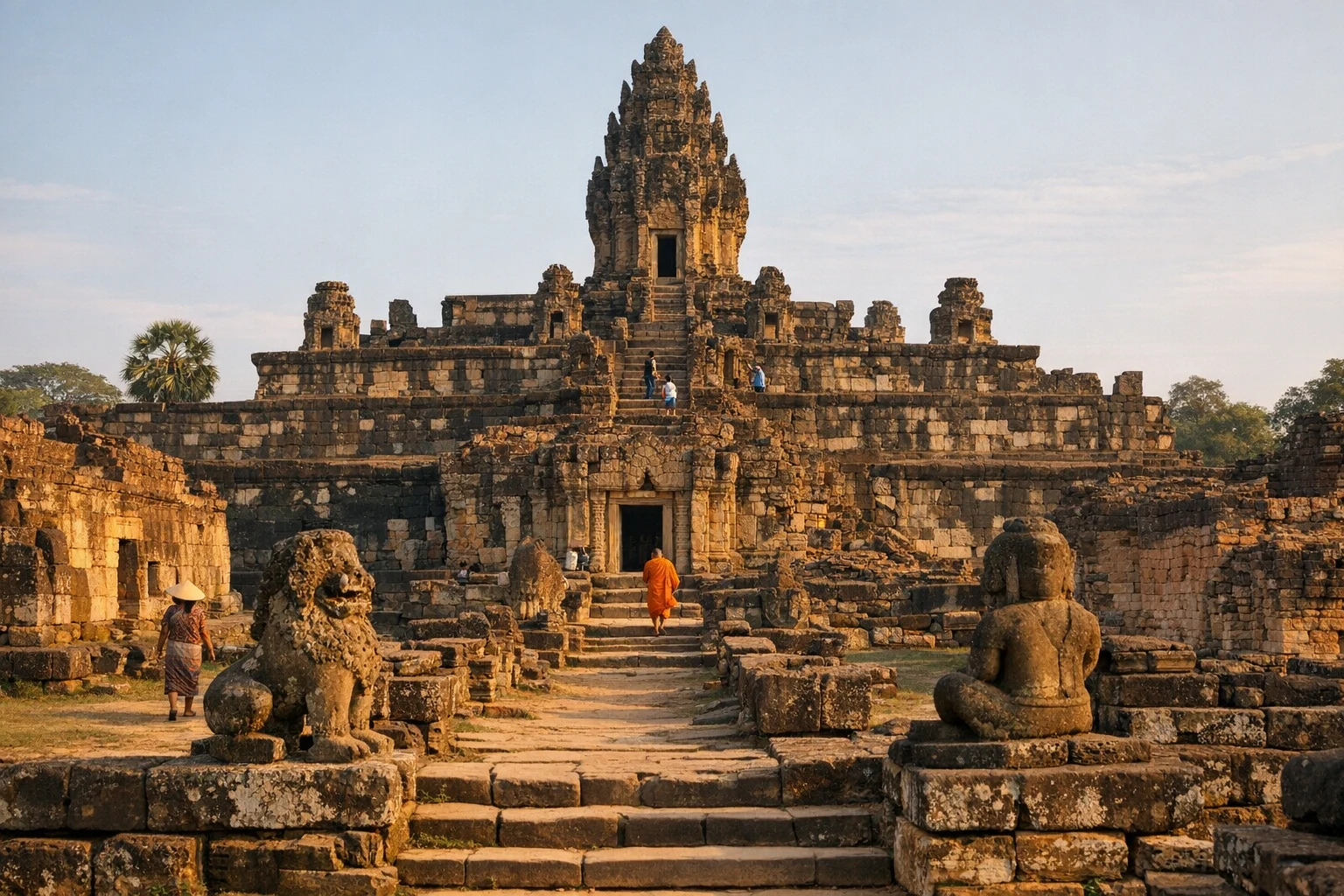
Bakong
Bakong is Cambodia's first major sandstone temple mountain, a stunning Khmer monument at the heart o...
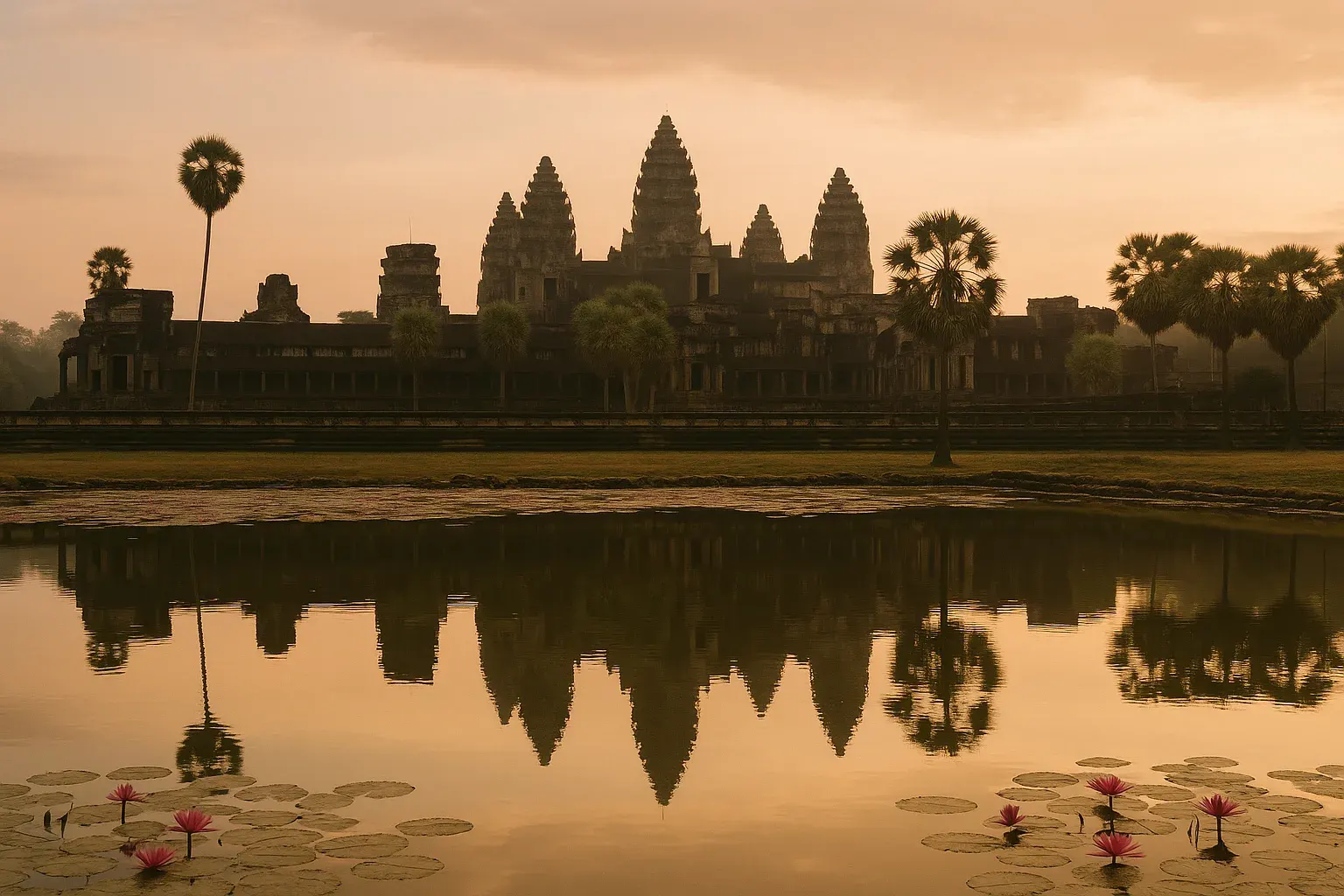
Angkor Wat Travel Guide 2026: Everything You Need to Know
KhmerAngkor Wat, the world's largest religious monument, spans over 400 acres in the heart of Cambodia. T...
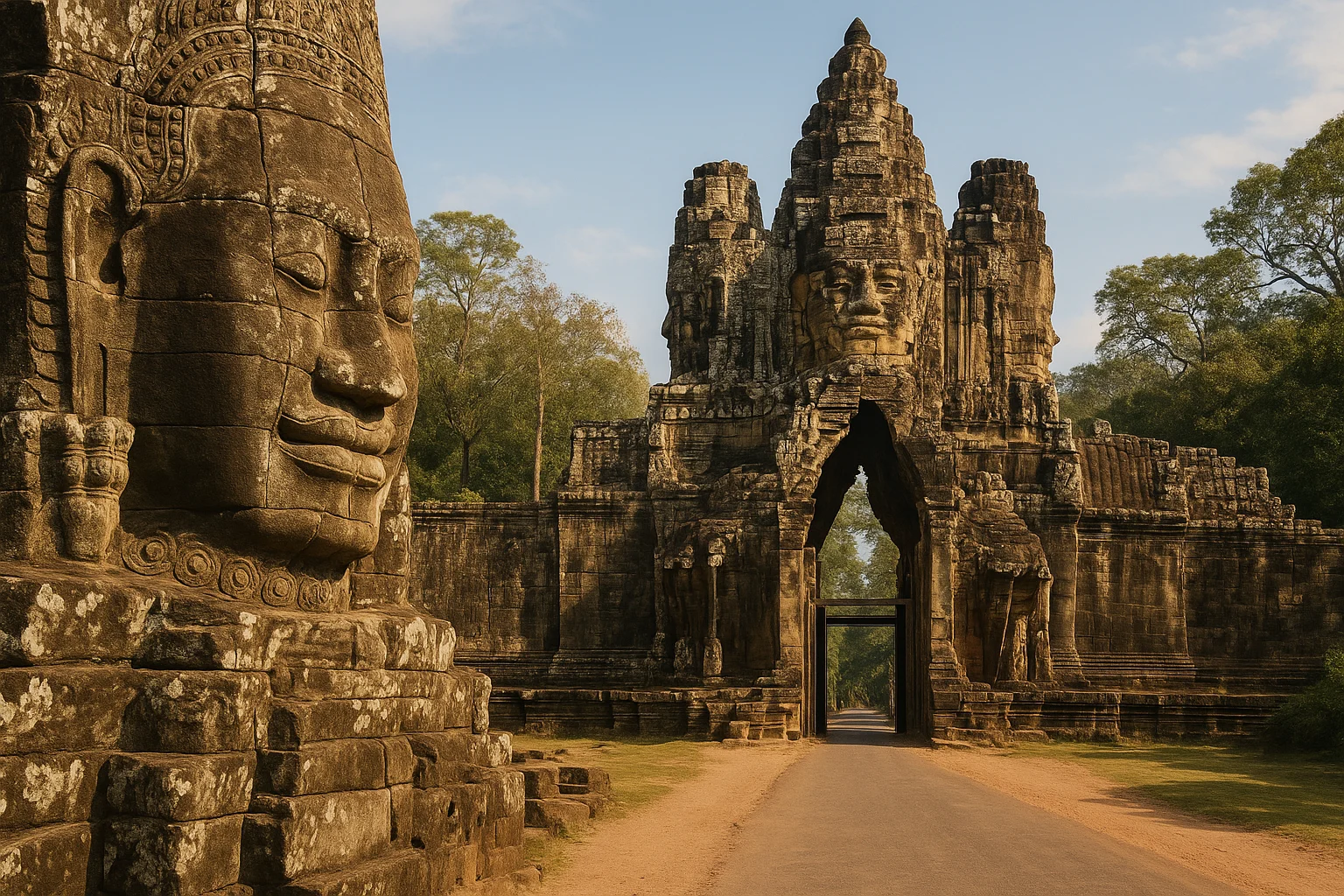
Angkor Thom Travel Guide 2026: Bayon Faces, Gates, and the Khmer Royal City
KhmerAngkor Thom was the last great capital of the Khmer Empire. This guide covers how to visit Bayon, th...
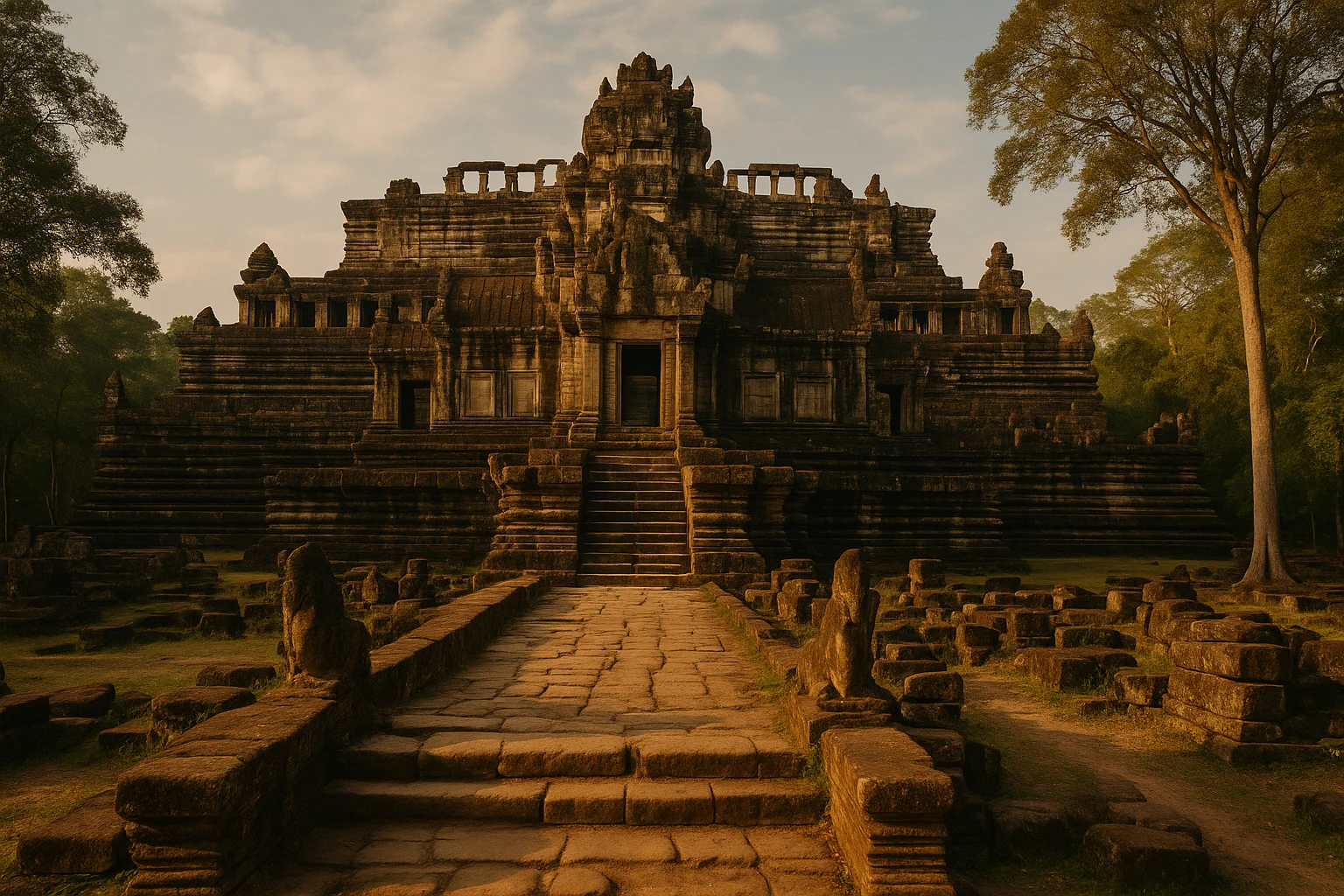
Baphuon
Khmer EmpireAn 11th-century sandstone temple mountain in Angkor Thom, Cambodia, renowned for its monumental recl...
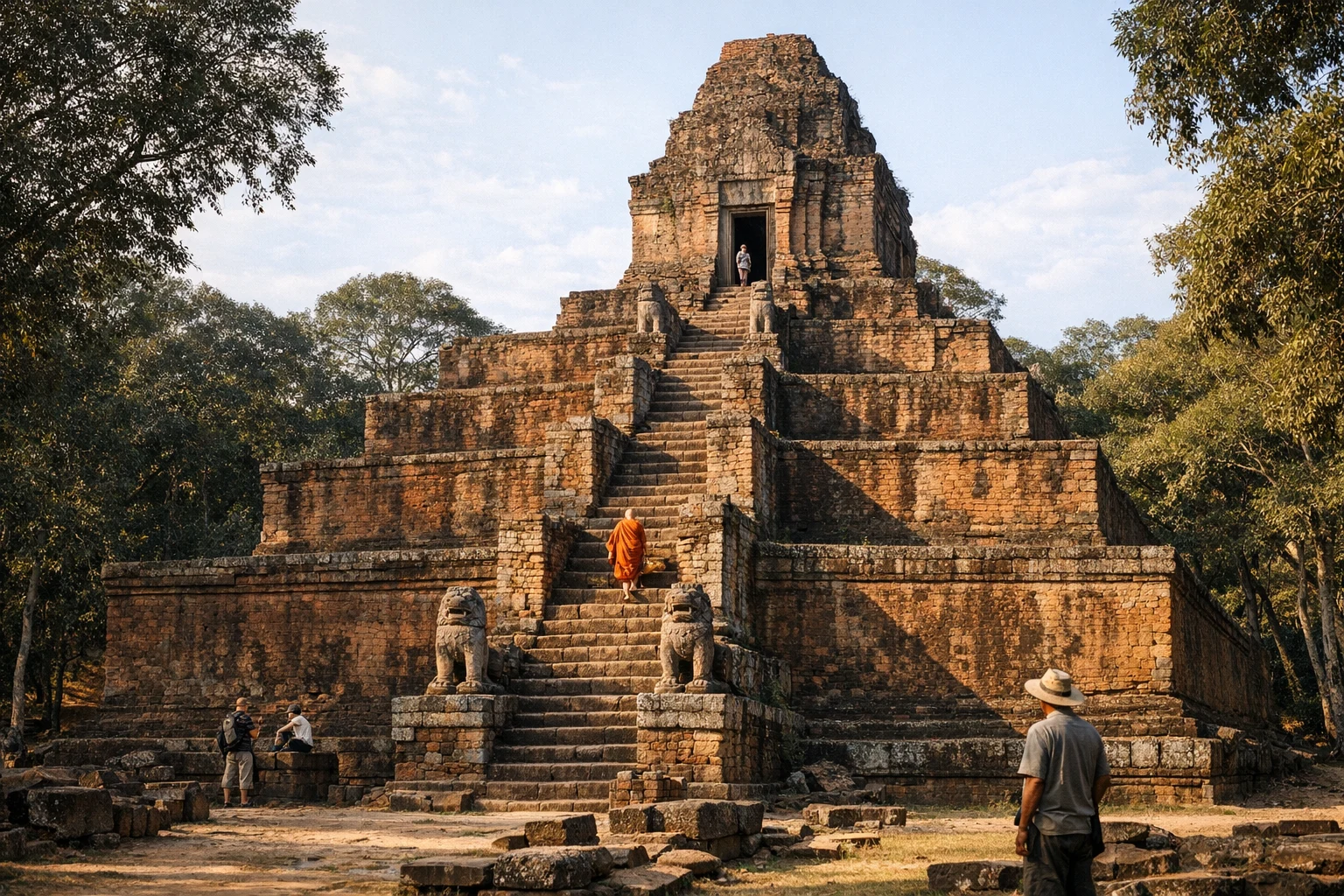
Baksei Chamkrong
Baksei Chamkrong is a 10th-century Hindu temple in Angkor, Cambodia, famed for its pyramid shape and...