Quick Info
Curated Experiences
Longmen Grottoes Guided Half-Day Tour from Luoyang
Luoyang Full-Day Tour: Longmen Grottoes and White Horse Temple
Private Longmen Grottoes Experience with Expert Guide
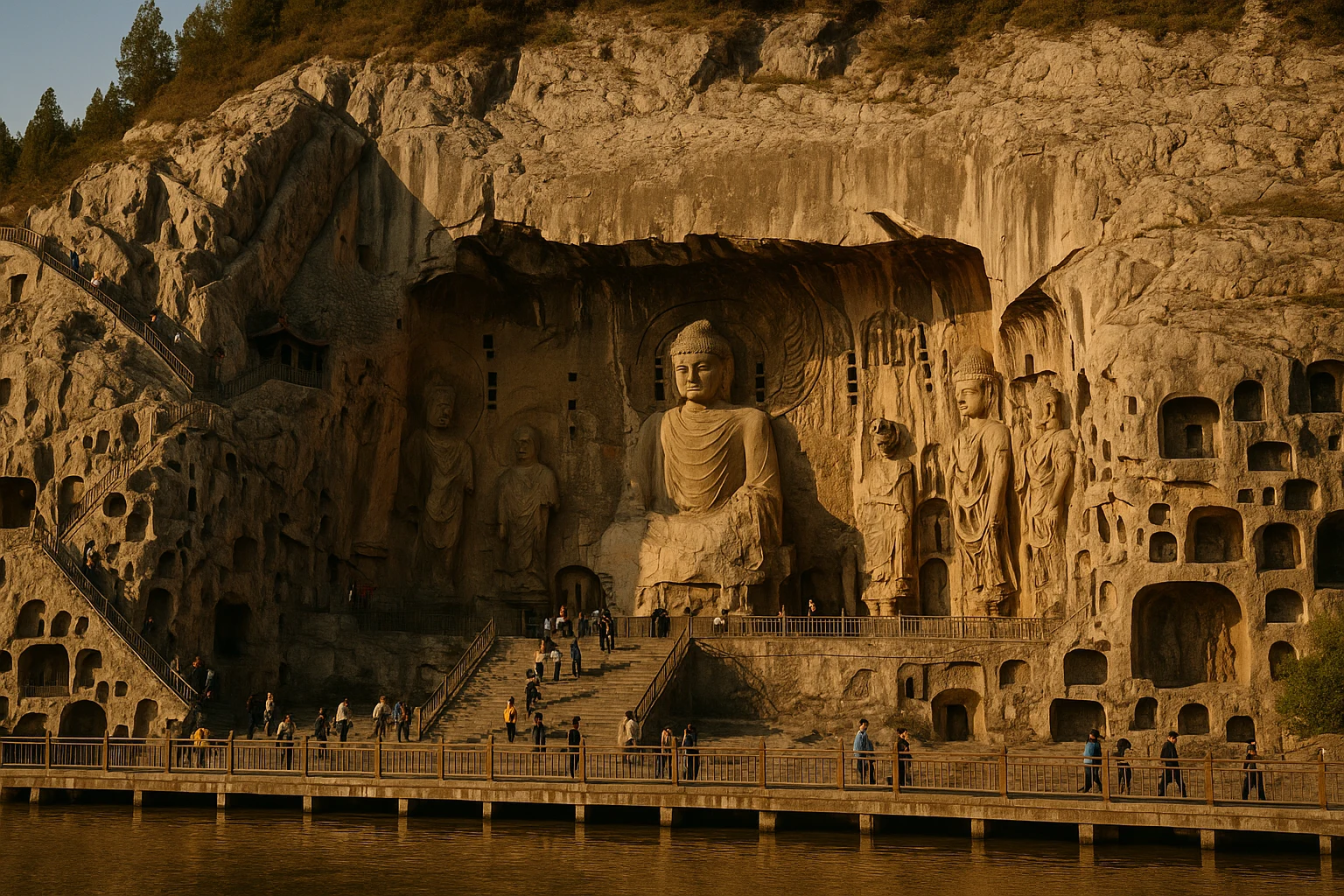
Standing at the edge of the Yi River on a clear morning, the scale of what human devotion accomplished at Longmen Grottoes becomes almost incomprehensible. From the opposite bank, the West Hill cliff face resembles a vast honeycomb of pale limestone, every cavity carved by hand over more than four centuries into a sanctuary of astonishing spiritual ambition. This UNESCO World Heritage Site near Luoyang in Henan Province, China, contains more than 110,000 individual Buddhist statues, ranging from figures barely two centimeters tall to the colossal seated Vairocana Buddha whose serene face rises over seventeen meters above the cave floor. Longmen — meaning “Dragon’s Gate,” a name derived from the gorge where the Yi River narrows between two opposing hills — was not built in a single act of royal piety. It accumulated, cave by cave and figure by figure, across the Northern Wei, Sui, and Tang dynasties, each era leaving its distinctive mark on the living rock. To walk the kilometer-long path along the cliffs is to move through five centuries of Chinese Buddhist art condensed into a single continuous canvas of stone.
History
The Northern Wei Foundation (493–534 CE)
The story of Longmen begins with a capital relocation. In 493 CE, Emperor Xiaowen of the Northern Wei dynasty moved his court southward from Datong to Luoyang, seeking to accelerate the sinicization of his Tuoba-Xianbei dynasty and position it more firmly within the traditions of Han Chinese civilization. The imperial family had already sponsored the creation of the Yungang Grottoes near Datong, and as the court settled into its new surroundings at Luoyang, the limestone gorge of Longmen presented an obvious continuation of that program. The Guyang Cave, one of the earliest at the site, was likely begun around 493–495 CE and contains hundreds of niches carved by nobles and officials eager to earn Buddhist merit by sponsoring images. Northern Wei carvings at Longmen share the stylistic qualities of Yungang — elongated, ethereal figures with archaic smiles, linear drapery, and a formal, frontal composure — though they are generally more refined, reflecting continued artistic development. The Binyang caves, three of the most elaborate Northern Wei projects at the site, were begun around 500 CE as imperial commissions and took nearly two decades to complete. Their central Buddha figures, flanked by bodhisattvas and celestial attendants in precisely arranged rows, illustrate the Northern Wei ideal of a Buddhist cosmos rendered in perfect symmetrical order.
The Tang Dynasty Flowering (618–907 CE)
After a period of reduced activity during the brief Sui dynasty and the early Tang, Longmen entered its greatest era of patronage under the Tang emperors and their court. Emperor Taizong and, most significantly, Empress Wu Zetian transformed the site from an important religious complex into the preeminent Buddhist monument in China. Wu Zetian, who ruled as emperor from 690 to 705 CE, identified herself with Maitreya, the future Buddha, and channeled extraordinary resources into Longmen as a statement of both spiritual authority and imperial legitimacy. The Fengxian Temple, carved between 672 and 675 CE, was the culmination of this imperial investment. Nine colossal figures occupy the open-air niche, centered on a seated Vairocana Buddha whose calm, idealized face is said to have been modeled partly on Wu Zetian herself. The Tang style visible throughout the later grottoes represents a decisive break from Northern Wei convention: figures are now fleshy and three-dimensional, with flowing robes that suggest the weight and texture of real fabric, and expressions that convey psychological warmth rather than ceremonial distance.
Decline, Damage, and UNESCO Recognition
Carving activity declined sharply after the Tang dynasty collapsed in 907 CE, and the subsequent centuries brought periodic neglect and deliberate damage. The most severe losses occurred during China’s chaotic twentieth century: foreign collectors and black-market dealers removed hundreds of carved heads and relief panels between the 1910s and 1940s, scattering them across private collections and museums in Europe, North America, and Japan. Conservation efforts accelerated after the founding of the People’s Republic in 1949, and in 2000 UNESCO inscribed Longmen Grottoes on the World Heritage List, citing its “outstanding testimony to human artistic creativity” and its importance as a record of the transformation of Buddhist religious art in China.
Key Features
The Fengxian Temple
No single monument at Longmen demands as much attention as the Fengxian Temple, and no other element prepares a visitor for the experience of standing before it. The niche is open to the sky — an unusual design that may have been necessitated by the enormous scale of the central figure — and the Vairocana Buddha sits in a state of composed omniscience that seems to transcend its physical medium. The face is extraordinarily refined: high cheekbones, a faint downward gaze, lips that carry a suggestion of compassion without sentimentality. Flanking the central Buddha are two disciples, Ananda and Kasyapa, whose contrasting expressions of youthful devotion and aged wisdom were carved with remarkable psychological sensitivity. Two bodhisattvas stand further to the sides, and at the far ends of the niche, two muscular heavenly guardians trample demonic figures beneath their feet — a visual argument for the Buddha’s power to protect his devotees. The entire ensemble was carved within three years, a pace that speaks to the scale of labor mobilized under imperial commission.
The Binyang Caves
The three Binyang caves represent the apex of Northern Wei imperial patronage at Longmen and offer some of the best-preserved examples of early sixth-century Chinese Buddhist relief carving anywhere in the world. The central Binyang cave, begun around 500 CE, is the most celebrated: its barrel-vaulted ceiling is decorated with an intricate lotus-and-apsara design, and the main Buddha figure occupies the back wall with a symmetrical arrangement of attendants on either side. The cave’s original relief panels depicting the imperial procession — showing Emperor Xuanwu and his empress approaching the Buddha in ceremonial cortege — were removed in the 1930s and are now divided between the Metropolitan Museum of Art in New York and the Nelson-Atkins Museum in Kansas City. Their absence is a wound in the cave’s narrative program that conservation authorities have documented carefully.
The Ten Thousand Buddha Cave
Carved in 680 CE, the Wanfo Cave (Ten Thousand Buddha Cave) takes its name from the approximately 15,000 miniature Buddha figures carved in neat rows across its side walls — each one barely four centimeters tall, their repetition creating an effect of dazzling, meditative abundance. The cave’s entrance is guarded by two fierce dvarapala figures carved in deep relief, and the main niche contains an Amitabha Buddha of exceptional quality, his hands arranged in the gesture of bestowing fearlessness. On the south wall, a carved figure of the bodhisattva Guanyin holding a lotus vase is widely regarded as one of the masterpieces of Tang sculpture: the figure’s gentle contrapposto stance, the fall of drapery across the hip, and the serene turn of the head all display a naturalism that feels startlingly modern.
The East Hill and the River View
Many visitors focus exclusively on the West Hill cliff face and miss the East Hill across the river, accessible by a bridge within the ticketed area. The East Hill contains a smaller concentration of caves, including the Kanjing Temple with its arresting gallery of eighteen luohan (arhat) figures carved in the eighth century — expressive, individualized portraits that stand apart from the idealized forms dominant elsewhere at the site. The East Hill’s primary reward, however, is the view it offers back across the Yi River to the West Hill: from this vantage, the full extent of the carved cliff becomes visible as a continuous panorama, and the relationship between the monument and its natural gorge setting can be fully appreciated. In late afternoon, when the sun moves behind the West Hill, the shadows that fall across the carved surfaces deepen every detail and give the cliff face a quality of drama that photographs rarely capture adequately.
Getting There
Longmen Grottoes lies approximately 13 kilometers south of central Luoyang, which is itself well connected to China’s high-speed rail network. From Beijing South Station, high-speed trains reach Luoyang Longmen Station in approximately two hours and fifteen minutes, with tickets costing between ¥180 and ¥350 depending on the class and train. From Xi’an North Station, the journey takes around one hour and forty minutes at similar prices. From Zhengzhou East, the trip is under an hour. Luoyang has two main stations — Luoyang Train Station (for older conventional services) and Luoyang Longmen Station (for high-speed trains) — and it is worth confirming which station your train uses when booking.
From Luoyang Train Station, city bus route 71 runs directly to the Longmen Grottoes entrance for ¥2 and takes approximately forty-five minutes. From Luoyang Longmen High-Speed Station, the dedicated K11 shuttle bus reaches the grottoes in about fifteen minutes for ¥2. Taxis from central Luoyang cost ¥25–40 and take 20–30 minutes depending on traffic. DiDi ride-hailing is reliable throughout the city. The site entrance is clearly signposted and the ticketing area is modern and well organized, with luggage storage and audio guide rental available near the main gate.
When to Visit
Henan Province experiences four distinct seasons, and each brings a different character to a visit to Longmen. Spring — particularly late March through May — is the most consistently rewarding time: temperatures range from 15°C to 22°C, wildflowers appear on the hillsides above the cliff face, and the crowds, while significant on weekends, are manageable on weekdays. The clarity of spring light is ideal for photographing the carved surfaces, as it picks out the relief without creating the harsh shadows of summer midday.
Summer (June through August) brings heat above 35°C and regular afternoon thunderstorms, but also the densest tourist traffic of the year. If visiting in summer, arrive at opening time (7:30 am) to experience the site before both the heat and the crowds intensify. Autumn, from mid-September through November, rivals spring for comfort and surpasses it for the color: the deciduous trees on both hillsides turn amber and rust, framing the pale limestone cliff in warm tones. Winter visits (December–February) are cold — temperatures can drop below freezing — but the site is dramatically quieter, and the oblique winter light creates deep shadows in the carved niches that reveal sculptural detail invisible at other times of year. The Chinese National Holiday (Golden Week, first week of October) and the Spring Festival period in late January or February should be avoided by those sensitive to crowds, as the site can see tens of thousands of visitors per day during these windows.
Quick Facts
| Detail | Information |
|---|---|
| Location | Luoyang, Henan Province, China |
| Coordinates | 34.5751° N, 112.4739° E |
| UNESCO Status | World Heritage Site (inscribed 2000) |
| Period of Construction | 493 CE – c. 900 CE |
| Primary Dynasties | Northern Wei, Tang |
| Number of Caves | Over 2,300 |
| Number of Statues | More than 110,000 |
| Largest Figure | Vairocana Buddha, 17.14 m tall (Fengxian Temple) |
| Admission | ¥100 standard; ¥120 combined ticket |
| Opening Hours | 7:30 am – 6:00 pm (summer); 8:00 am – 5:00 pm (winter) |
| Nearest City | Luoyang (13 km north) |
| Transport | Bus 71 from Luoyang Station; K11 from High-Speed Station |
Frequently Asked Questions
What are the Longmen Grottoes?
The Longmen Grottoes are a complex of thousands of Buddhist stone carvings and caves carved into the limestone cliffs along the Yi River near Luoyang, Henan Province, China. Designated a UNESCO World Heritage Site in 2000, the complex spans roughly one kilometer and contains more than 2,300 caves, 110,000 Buddhist statues, 60 stupas, and 2,800 inscriptions.
When were the Longmen Grottoes created?
Construction began in 493 CE during the Northern Wei dynasty after Emperor Xiaowen relocated the imperial capital to Luoyang. Carving continued under subsequent dynasties, with the most intensive period of activity occurring during the Tang dynasty (618–907 CE), when Empress Wu Zetian was a major patron of the site.
How do I get to Longmen Grottoes from Luoyang?
Longmen Grottoes is located about 13 kilometers south of central Luoyang. Bus route 71 runs directly from Luoyang Train Station to the site for approximately ¥2. Taxis cost around ¥25–40 and take 20–30 minutes. Ride-hailing apps like DiDi are also widely available.
How long does it take to visit Longmen Grottoes?
Most visitors spend 2–3 hours at the site to walk both the West Hill path (the main cliff face with the largest carvings) and the East Hill path across the river, which offers panoramic views of the West Hill. Combine with a visit to White Horse Temple nearby for a full day.
What is the admission fee for Longmen Grottoes?
The standard admission ticket is ¥100 (approximately US$14). Students with valid ID receive a 50% discount, and Chinese citizens over 60 and children under 1.2 meters enter free. A combined ticket including the Xiangshan Temple and Bai Juyi's tomb on the East Hill is available for ¥120.
What is the best time of year to visit?
Spring (April–May) and autumn (September–October) offer the most comfortable temperatures and the clearest visibility of the carvings. Summer brings larger crowds and heavy rain. Winter visits are quieter but cold, and the limestone surfaces show dramatic texture in low winter light.
Is the Fengxian Temple the most important cave at Longmen?
Yes. The Fengxian Temple, carved between 672 and 675 CE under the patronage of Empress Wu Zetian, is considered the artistic and spiritual centerpiece of the complex. Its colossal Vairocana Buddha stands 17.14 meters tall and is widely regarded as one of the finest examples of Tang-dynasty sculptural art anywhere in the world.
Nearby Ancient Sites
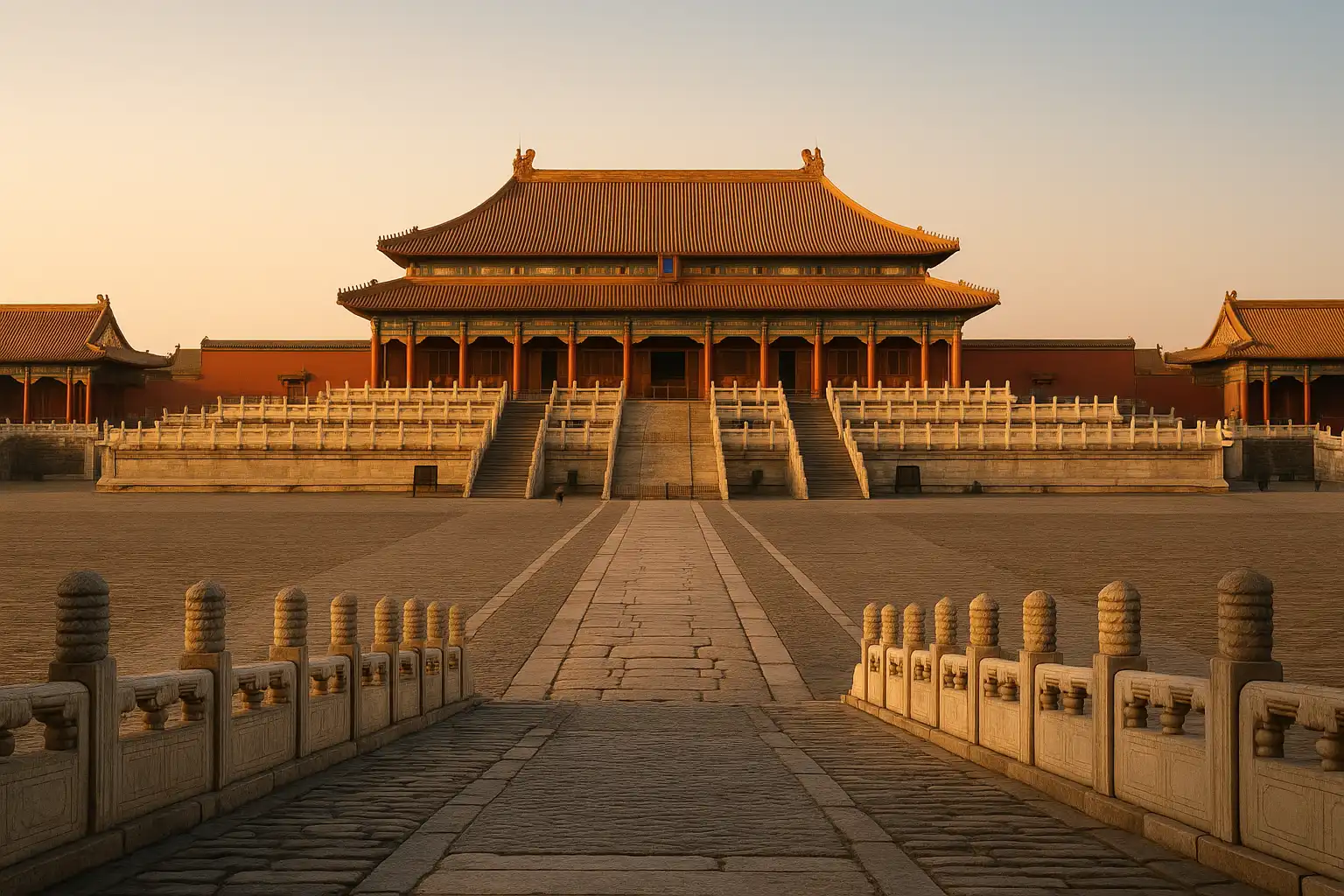
Forbidden City China Travel Guide 2026: Imperial Palace of Beijing
Chinese ImperialExplore the Forbidden City, China's imperial palace for 500 years. Discover the Hall of Supreme Harm...
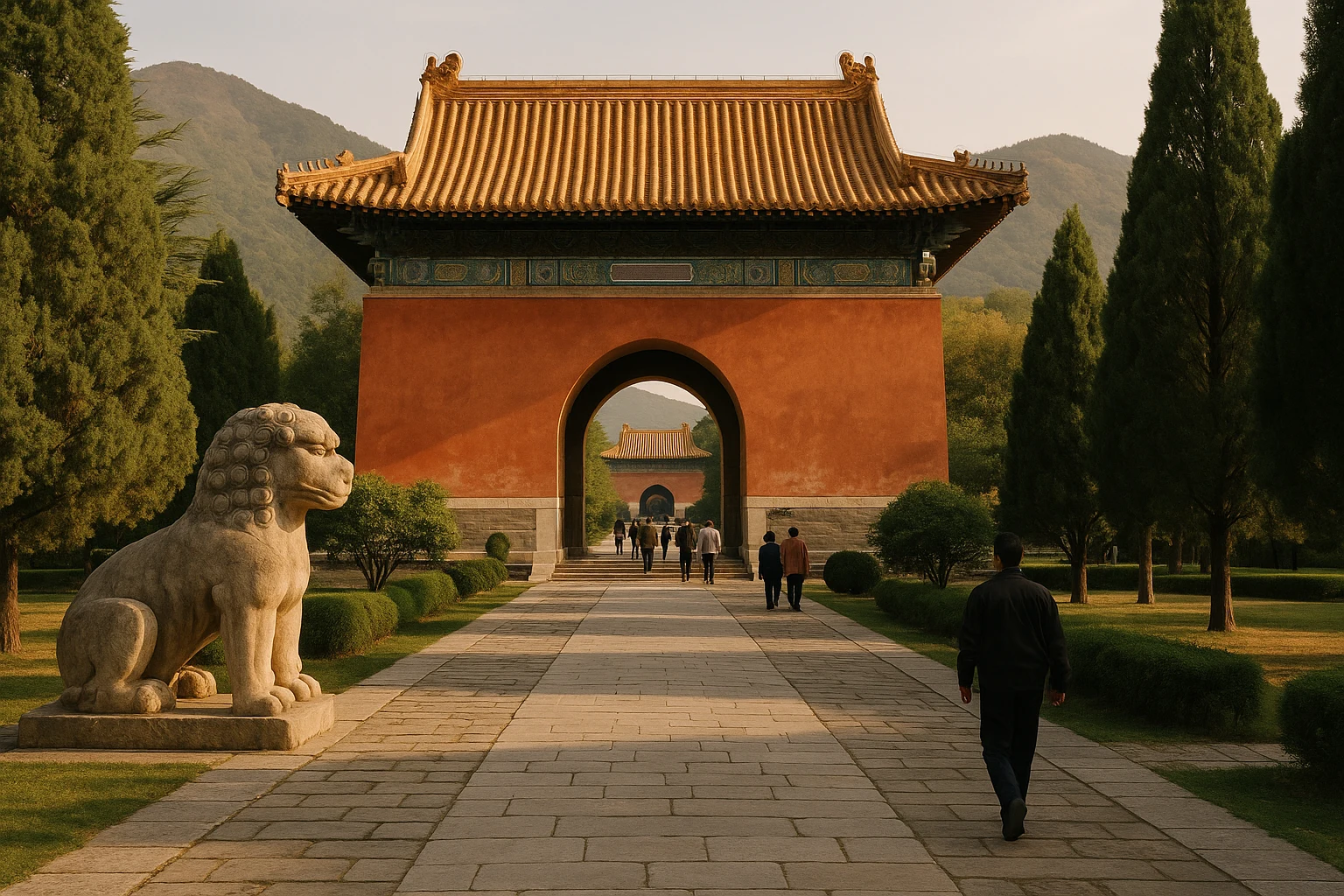
Ming Tombs
Explore the Ming Tombs near Beijing — thirteen imperial mausoleums of China's Ming dynasty, guarded ...
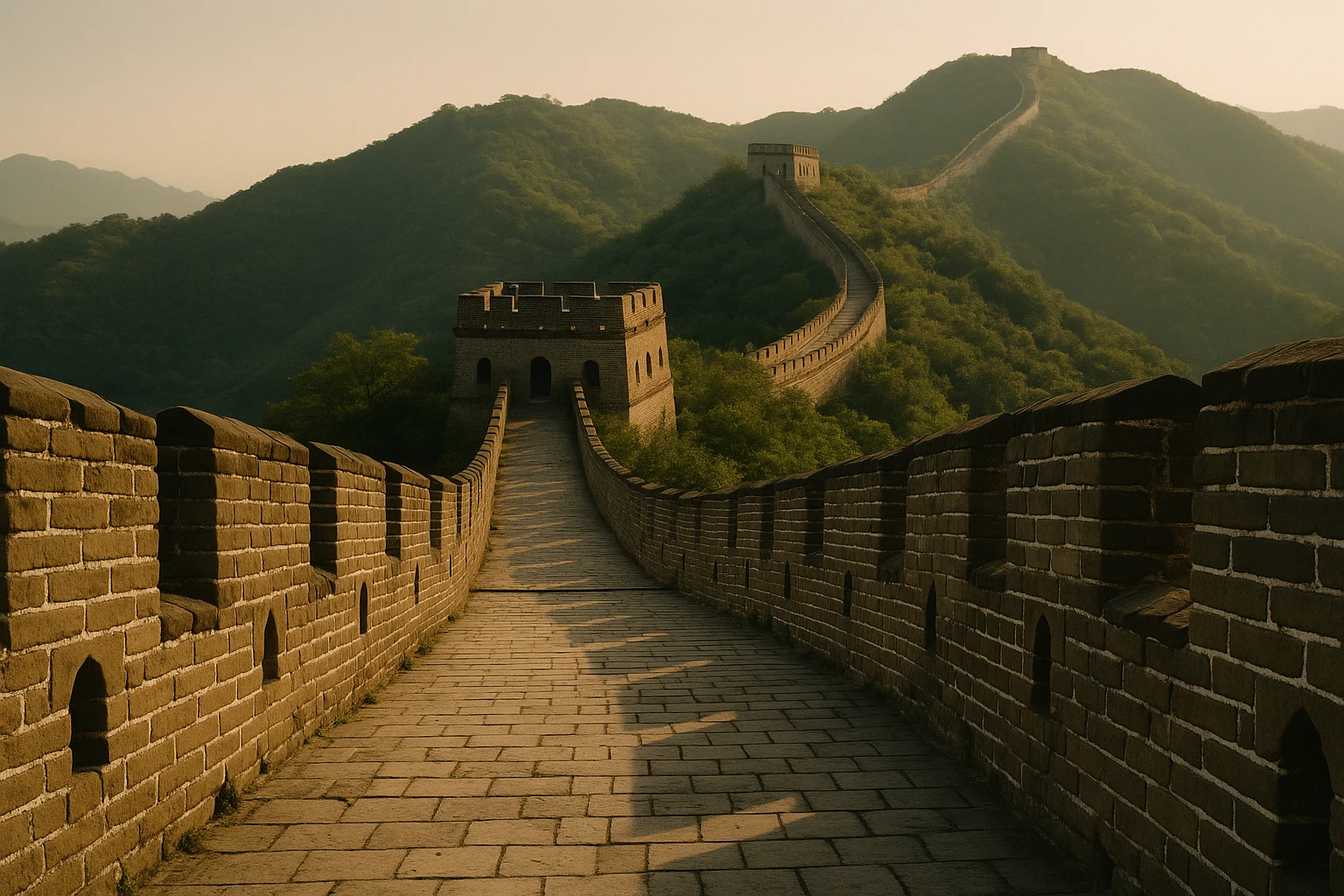
Great Wall of China (Mutianyu)
Explore Mutianyu — the Great Wall's most dramatic restored section, with 22 Ming-era watchtowers, mo...
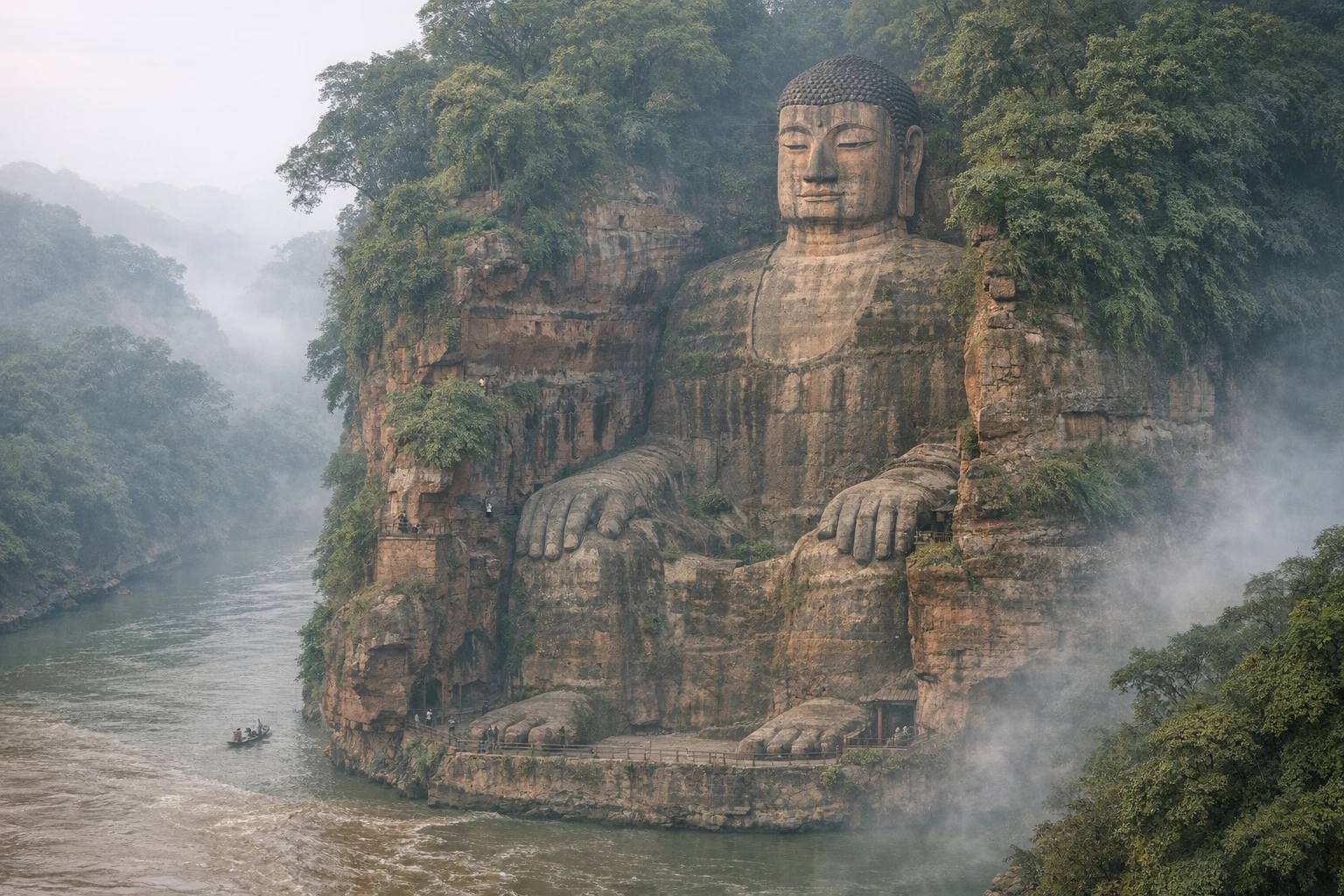
Leshan Giant Buddha
Tang Dynasty ChinaThe world's tallest pre-modern stone Buddha, carved into a clifftop in Sichuan, China, overlooking t...