Quick Info
Curated Experiences
Lumbini Full-Day Sacred Sites Tour from Pokhara
Lumbini Pilgrimage & Maya Devi Temple Guided Tour
Lumbini & Tilaurakot Siddhartha's Kingdom Day Trip
In the flat, haze-softened plains of southern Nepal, a few kilometers north of the Indian border, a single stone pillar rises above a grove of pipal trees. Erected more than two thousand years ago by the Mauryan emperor Ashoka, the pillar bears an inscription that still stops visitors mid-stride: “Here the Buddha, the Sage of the Shakyas, was born.” That claim — modest in its brevity, immense in its consequence — has made Lumbini one of the most visited and most venerated spots on earth. This is where, in the fifth or sixth century BCE, Queen Mayadevi gave birth to Siddhartha Gautama beneath a sal tree, setting in motion a tradition that would eventually shape the lives of more than five hundred million people. The site has been a place of pilgrimage since at least the third century BCE, fell into obscurity for centuries, was rediscovered by archaeologists in 1896, and is now a UNESCO World Heritage Site drawing scholars, monks, backpackers, and devout pilgrims from every corner of the Buddhist world. Visiting Lumbini is not simply a tick on a heritage itinerary. It is a walk through the deepest strata of human spiritual history.
History
The Birth of a Prince and a Tradition
The historical record of Lumbini begins, as most Buddhist accounts do, with the journey of Queen Mayadevi. Traveling from Kapilavastu to her parents’ home in Devadaha to give birth — as was customary — she stopped in the garden of Lumbini to rest. According to both Pali and Sanskrit traditions, she grasped the branch of a flowering sal tree and delivered her son while standing. The child who would become the Buddha was born into the Shakya clan of the Kshatriya caste around 563 BCE, though modern scholars debate the precise date within a range of roughly 560 to 480 BCE. The garden in which he entered the world was a pleasure grove maintained by the surrounding towns, already considered auspicious long before the birth that would make it sacred.
Ashoka’s Pilgrimage and the First Monument
The site’s transformation from local tradition into international pilgrimage destination began with Ashoka. In approximately 249 BCE, the Mauryan emperor undertook a sacred tour of Buddhist holy sites, arriving at Lumbini roughly twenty years into his reign. He had a stone pillar erected bearing a Brahmi inscription confirming his visit and recording the site’s significance, and he reportedly reduced the village’s tax burden in honor of the birthplace. Ashoka also commissioned a stone nativity sculpture depicting the birth scene — fragments of which survive — and built a temple enclosure around the spot where the queen gave birth. This early monument became the nucleus of what is now the Maya Devi Temple.
A Forgotten Garden
By the early centuries of the Common Era, Lumbini had become a functioning pilgrimage circuit. The Chinese Buddhist pilgrim Faxian visited around 403 CE and described monasteries, votive stupas, and a prosperous religious community. His compatriot Xuanzang arrived in 636 CE and left a more somber report: several monasteries in ruins, the population sparse, evidence of recent raids. The gradual decline of Buddhism in the Indian subcontinent, combined with repeated incursions from the plains, progressively emptied the site. By the medieval period, Lumbini had been largely swallowed by jungle. The Ashoka Pillar toppled — felled, it is thought, by lightning — and the location of the birthplace was effectively lost to the wider world for more than a millennium.
Rediscovery and UNESCO Recognition
The modern chapter opened in 1896 when a joint expedition led by German archaeologist Alois Anton Führer and a local official, Khadga Shumsher Rana, cleared the vegetation from a toppled stone pillar and deciphered Ashoka’s inscription. The identification of Lumbini as the Buddha’s birthplace was confirmed. Excavations throughout the twentieth century gradually revealed the successive layers of temple construction, culminating in discoveries by a UNESCO-led team in the 1990s that located the precise nativity stone beneath the medieval shrine — a slab of sandstone bearing the imprint of the birth event. Nepal and the international Buddhist community rallied around a comprehensive development plan, and in 1997 Lumbini was inscribed as a UNESCO World Heritage Site.
Key Features
The Maya Devi Temple
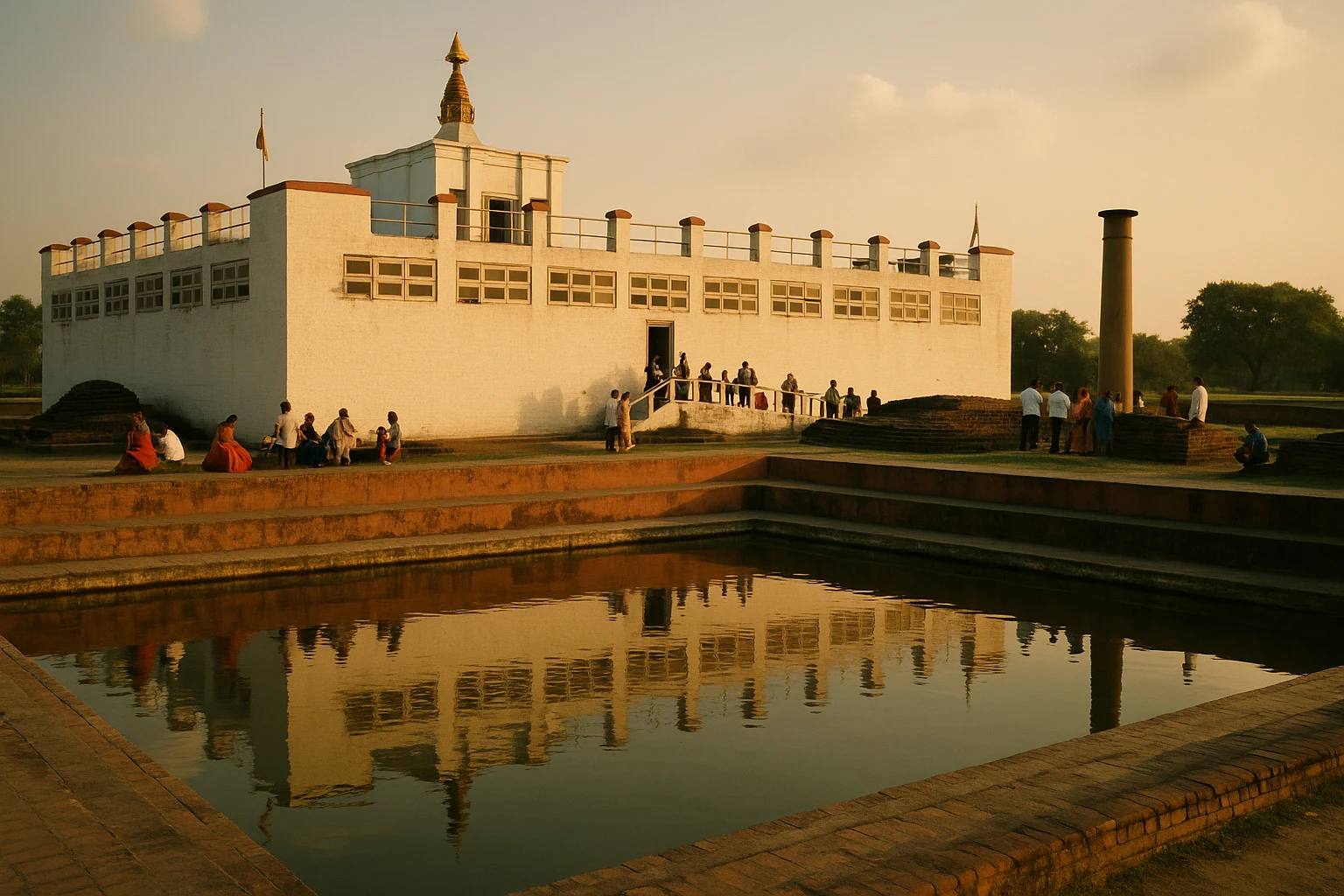
At the geographic and spiritual heart of Lumbini stands the Maya Devi Temple, built over and around the spot where the Buddha was born. The current structure is a low, modern enclosure of warm-toned stone designed to protect and display the archaeological strata beneath while allowing pilgrims to move through in a circuit of quiet reverence. The most important object inside is the Marker Stone — a carved sandstone panel, now protected behind glass, depicting the nativity scene with Mayadevi holding the sal tree branch and the infant standing on a lotus. Surrounding the stone are the foundations and floor plans of successive temples, each generation of worshippers having built upon and around the last. The site is managed without shoes, and the hush inside the darkened chamber, broken only by murmured prayers in a dozen languages, is difficult to forget.
The Ashoka Pillar and Sacred Pond
Just outside the Maya Devi Temple, the re-erected Ashoka Pillar stands at a height of roughly six meters — the upper section was never recovered — its surface worn smooth by centuries of weather. The Brahmi inscription, now shielded by a protective housing, records Ashoka’s exemption of the village from taxes and his personal act of homage. Adjacent to the pillar is the Puskarini, or Sacred Pond, a rectangular sacred bathing pool where Mayadevi is said to have bathed before the birth and where the infant Siddhartha received his first bath. The pool is reconstructed from ancient foundations, its still water reflecting the surrounding pipal trees. Pilgrims circle both the pillar and the pond as part of their pradakshina, the ritual clockwise circumambulation, and the area is often ringed with butter lamps and flower offerings by dawn.
The Monastic Zone
Radiating outward from the Sacred Garden, the Monastic Zone is one of the most architecturally eclectic religious landscapes in Asia. Planned in concentric rings with a central canal as its spine, the zone contains dozens of monasteries, temples, and meditation centers funded and designed by Buddhist communities and governments from around the world. A Sri Lankan temple of brilliant white plaster stands across from a pagoda-roofed Chinese monastery; a Tibetan gompa with painted exterior murals faces a minimalist Japanese center of brushed concrete and water gardens. The German Dharmakirti monastery, the International Meditation Centre, the Korean temple with its sweeping curved eaves — each reflects a distinct national tradition of Buddhist architecture while sharing the same sacred geography. Exploring the Monastic Zone by bicycle or slow electric rickshaw over several hours reveals a quiet world of incense, chanting, and national devotion that feels entirely removed from the modern city of Bhairahawa a short drive south.
The Eternal Peace Flame and Gardens
Near the entrance to the Sacred Garden, an Eternal Peace Flame has burned continuously since 1986, lit from flames brought from various Buddhist countries as a symbol of global unity. The surrounding gardens are carefully maintained, with meditation walks threading through manicured lawns and reflecting pools. Archaeological excavations continue in the surrounding fields, and active dig sites are occasionally visible behind fencing — a reminder that the known monument is only a fraction of what remains beneath the Terai soil. The World Peace Pagoda, a gleaming white stupa funded by the Japanese Nipponzan Myohoji order and visible from much of the development zone, punctuates the flat horizon and serves as a popular sunrise and sunset destination.
Getting There
Lumbini sits roughly 275 km southwest of Kathmandu in the Terai lowlands. The most convenient approach for international visitors is to fly from Kathmandu’s Tribhuvan International Airport to Gautam Buddha International Airport (BWA) in Bhairahawa, a flight that takes approximately 30–35 minutes and costs between USD 80 and 130 one-way depending on the airline and season. Carriers including Buddha Air and Yeti Airlines operate multiple daily services. From Bhairahawa airport, the Sacred Garden entrance is about 22 km west — taxis charge approximately NPR 800–1,200 (around USD 6–9) for the journey, and shared tuk-tuks and microbus services are available for less.
Travelers coming from Pokhara have the option of a scenic 4–5 hour drive or bus ride south through the foothills and onto the plains. Tourist buses from Pokhara’s main bus park charge approximately NPR 600–900. From Kathmandu overland, the journey is 6–8 hours; overnight buses depart from Gongabu Bus Terminal, with fares around NPR 700–1,200.
Lumbini is also accessible as a day trip from the Indian side of the border, with Gorakhpur the nearest Indian city of size — about 75 km south. Indian visitors frequently cross at Sunauli/Belahiya before proceeding north to the site.
Within the Lumbini Development Zone, bicycle rental near the main gate is the preferred mode of transport, with rates around NPR 200–300 per day. Electric rickshaws for hire and guided cycle tours are also readily available.
When to Visit
The most reliably comfortable window for visiting Lumbini is October through March. Temperatures in this period typically sit between 10 and 25 °C, skies are clear, and the flat Terai landscape — which offers no shade beyond the monastery groves — is traversable without the punishing heat of the pre-monsoon months. December and January are the coolest months and can bring early morning fog that lends the Sacred Garden an atmospheric quality, though temperatures occasionally drop to near 5 °C at night.
Buddha Jayanti — the full moon day of the Nepali month of Baisakh (usually falling in April or May) — is the holiest day in the Buddhist calendar and marks the birth, enlightenment, and death of the Buddha simultaneously. Lumbini fills with tens of thousands of pilgrims from Nepal, India, Sri Lanka, Myanmar, Thailand, and beyond. The experience is extraordinary but logistically demanding: accommodation must be booked months in advance, and the Sacred Garden can feel densely crowded.
April and May bring intense heat before the monsoon arrives in June, with temperatures reaching 38–40 °C on some days. The June to September monsoon season sees heavy, persistent rains and high humidity that make outdoor exploration genuinely uncomfortable, though the surrounding countryside turns brilliantly green and the site is much less crowded. Visitors who choose the monsoon months should pack waterproofs and expect some paths to be muddy or temporarily flooded.
| Quick Facts | |
|---|---|
| Location | Rupandehi District, Lumbini Province, Nepal |
| Coordinates | 27.4833° N, 83.2756° E |
| UNESCO Status | World Heritage Site (inscribed 1997) |
| Significance | Birthplace of Siddhartha Gautama (the Buddha) |
| Key Monument | Maya Devi Temple & Nativity Marker Stone |
| Nearest Airport | Gautam Buddha International Airport (BWA), Bhairahawa — 22 km |
| Entrance Fee | ~NPR 500–700 (approx. USD 4–5) for foreign visitors |
| Best Months | October–March |
| On-Site Transport | Bicycle rental, electric rickshaw |
| Site Size | 4.8 km² (Lumbini Development Zone) |
Lumbini does not demand the dramatic scenery of mountain heritage sites or the monumental scale of a Mesoamerican pyramid. Its power is quieter and stranger — a stone slab, a toppled pillar, and a pond beneath pipal trees, each marking a moment roughly 2,600 years ago from which an entire vision of human suffering, compassion, and liberation flows. Standing in the Maya Devi Temple with monks and farmers and architects and students from thirty countries all circling the same marked stone, it becomes clear why this flat corner of the Terai has drawn travelers across centuries and continents: not for spectacle, but for the gravity of what happened here, and the unbroken line of human meaning stretching from that birth in a garden to this moment.
Frequently Asked Questions
Why is Lumbini important?
Lumbini is revered as the birthplace of Siddhartha Gautama, the historical Buddha, making it one of the four holiest sites in Buddhism. The UNESCO-listed Sacred Garden contains the Maya Devi Temple, the Ashoka Pillar, and an ancient nativity sculpture that marks the precise spot of the Buddha's birth.
How do I get to Lumbini from Kathmandu?
The fastest option is a 30-minute flight from Kathmandu's Tribhuvan International Airport to Gautam Buddha Airport (BWA) in Bhairahawa, followed by a 20-minute taxi or tuk-tuk ride to the Sacred Garden. Alternatively, tourist buses and private cars cover the roughly 280 km overland route in 6–8 hours.
Do I need to pay an entrance fee to enter Lumbini?
Yes. Foreign visitors pay a fee at the main gate — currently around NPR 500–700 (approximately USD 4–5). The fee covers the Sacred Garden and the Maya Devi Temple complex. Separate donation boxes are common at individual monastery temples within the broader Lumbini zone.
What is the best time of year to visit Lumbini?
October to March offers the most comfortable conditions — dry, clear skies and temperatures in the 15–25 °C range. Buddha Jayanti (the full moon of April/May) is the most spiritually significant time to visit, drawing massive pilgrims crowds. Avoid the June–September monsoon if possible, as heavy rains and humidity make exploration uncomfortable.
What is the Lumbini Development Zone?
The Lumbini Development Zone is a master-planned 4.8 km² sacred landscape designed by Japanese architect Kenzo Tange in the 1970s. It is divided into three concentric areas: the Sacred Garden at the core (containing the Maya Devi Temple), the Monastic Zone surrounding it (with monasteries built by Buddhist nations worldwide), and the New Lumbini Village for services and accommodations.
Can non-Buddhists visit Lumbini?
Absolutely. Lumbini welcomes visitors of all faiths and none. The site is as much an archaeological park and UNESCO heritage landscape as a religious pilgrimage site. Respectful dress — covered shoulders and knees — is appreciated in and around the Maya Devi Temple, but there are no entry restrictions based on religion.
Is Lumbini worth a full day or just a few hours?
A full day is recommended to do the site justice. The Sacred Garden alone takes 2–3 hours, and the Monastic Zone — lined with dozens of architecturally distinct temples from Sri Lanka, Thailand, China, Japan, Germany, France, and many other countries — easily fills another 3–4 hours by bicycle or electric rickshaw.
Nearby Ancient Sites
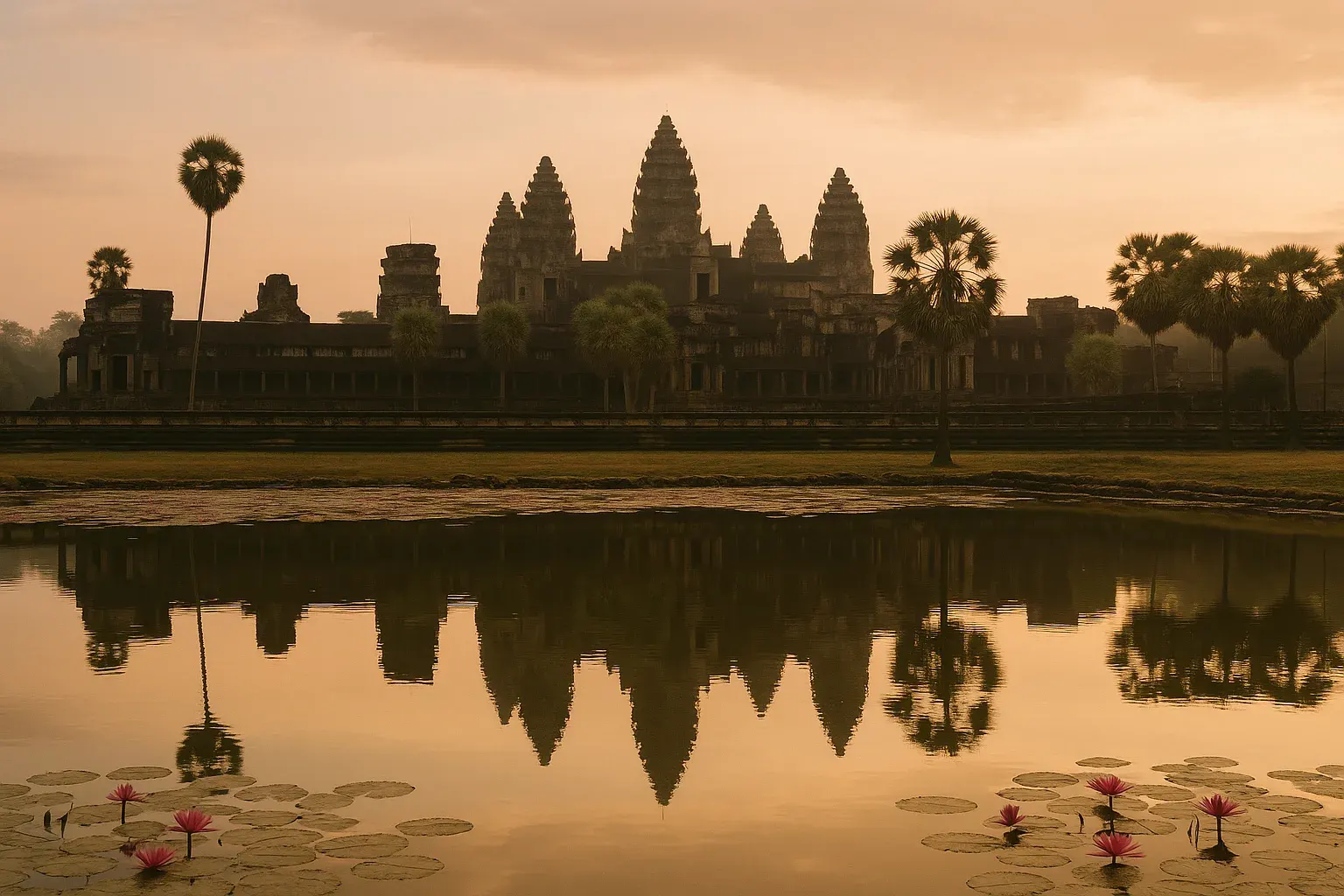
Angkor Wat Travel Guide 2026: Everything You Need to Know
KhmerAngkor Wat, the world's largest religious monument, spans over 400 acres in the heart of Cambodia. T...
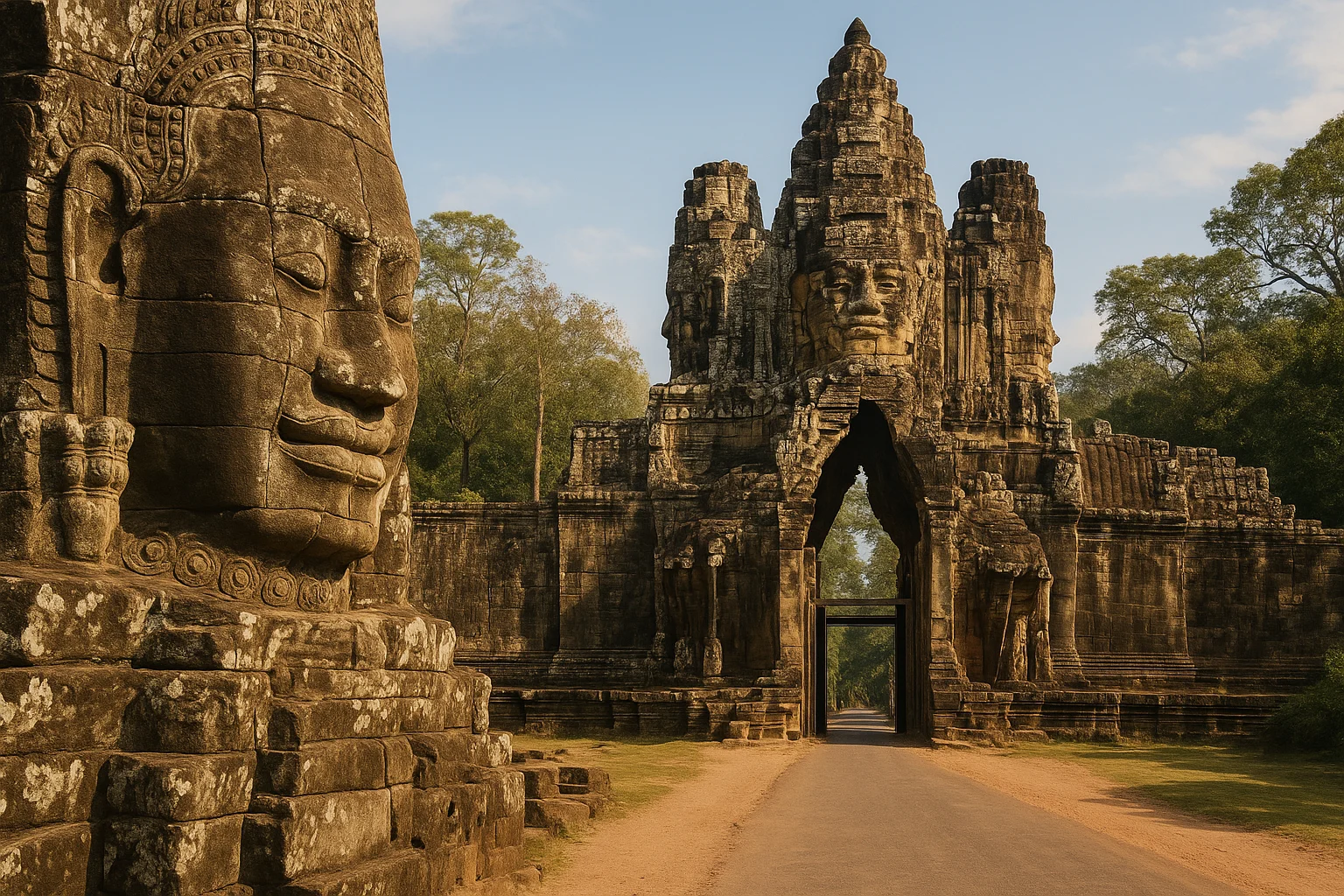
Angkor Thom Travel Guide 2026: Bayon Faces, Gates, and the Khmer Royal City
KhmerAngkor Thom was the last great capital of the Khmer Empire. This guide covers how to visit Bayon, th...
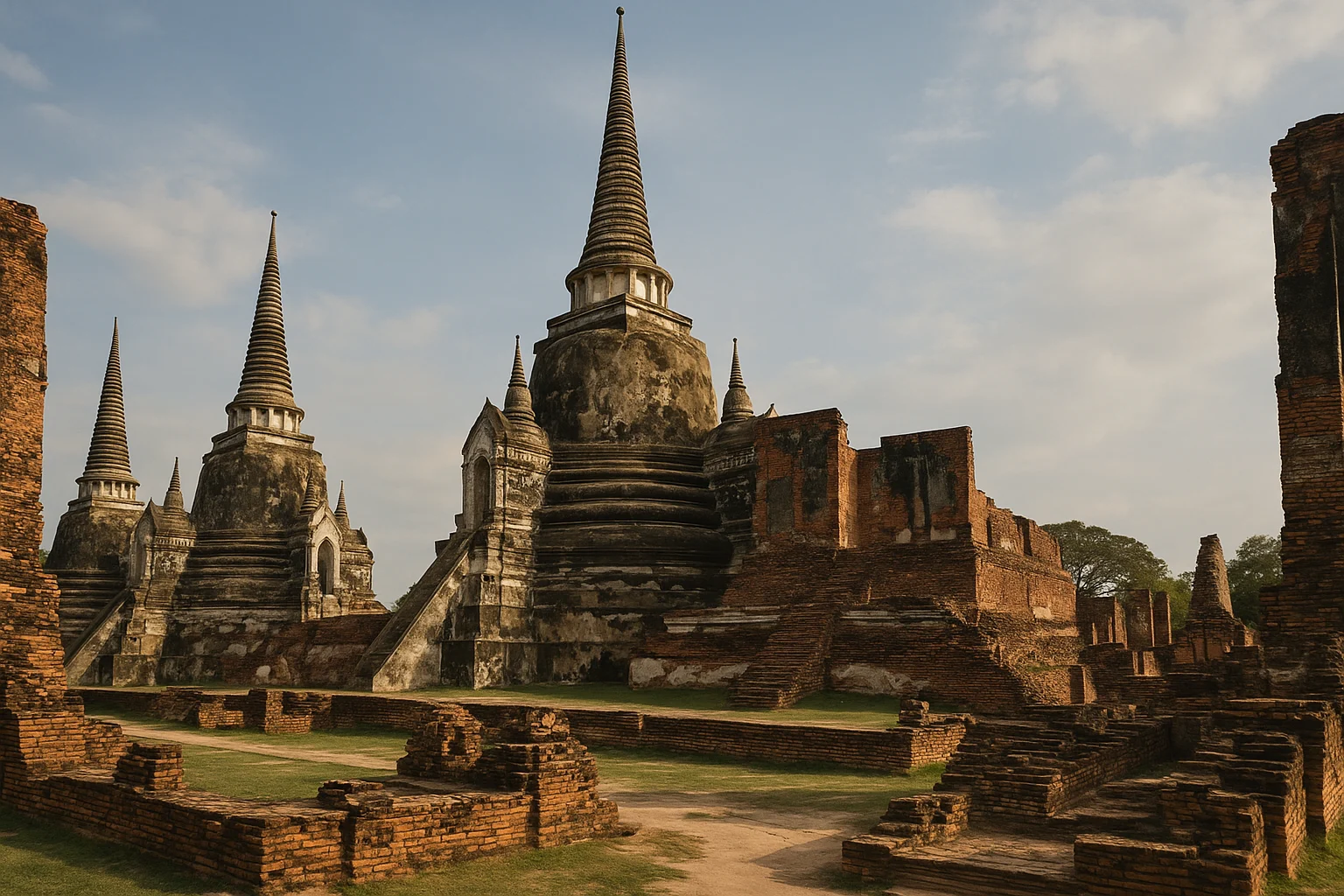
Ayutthaya Travel Guide 2026: Temple Ruins, Day Trip Planning, and What to Prioritize
Ayutthaya KingdomPlan a focused Ayutthaya visit with practical temple routing, timing, and transport guidance from Ba...