Quick Info
Curated Experiences
Hot Air Balloon Ride in Luxor Egypt with Transfers Included
Full Day Private Luxor Tour to East and West Banks of Luxor EGYPT
Private 2 Days The Best of Luxor
Walk through Luxor Temple’s entry pylons at sunset, and two worlds blur—the ancient and the utterly contemporary. To your left, magnificent columns carved 3,400 years ago support stone architraves covered in hieroglyphs. To your right, Egyptians sell sugarcane juice, scarab amulets, and negotiations echo in Arabic. The Sphinx Avenue stretches ahead, once connecting this temple to Karnak three kilometers north.
Luxor isn’t a museum city—it’s living archaeology. The “East Bank” holds the temples where priests conducted daily rituals. The “West Bank” contains the tombs where pharaohs prepared for eternity. Together, this vast complex represents the pinnacle of New Kingdom Egypt (1550-1077 BCE), when Egyptian civilization reached its territorial and artistic apex.
At Ancient Travels, we’ve guided countless explorers through Luxor’s complexities. This guide distills everything you need: how to split your time between banks, which tombs to prioritize, how to arrange the famous hot air balloon ride, and why Luxor rewards those who resist the package-tour approach.
East Bank Essentials: Karnak and Luxor Temple
Karnak: The Massive Complex
The world’s largest ancient religious complex consumed 2,000 years of construction—30 pharaohs contributed to its expansion. Covering 100 hectares, Karnak overwhelms first-time visitors. You cannot see everything effectively in one visit; prioritize these highlights:
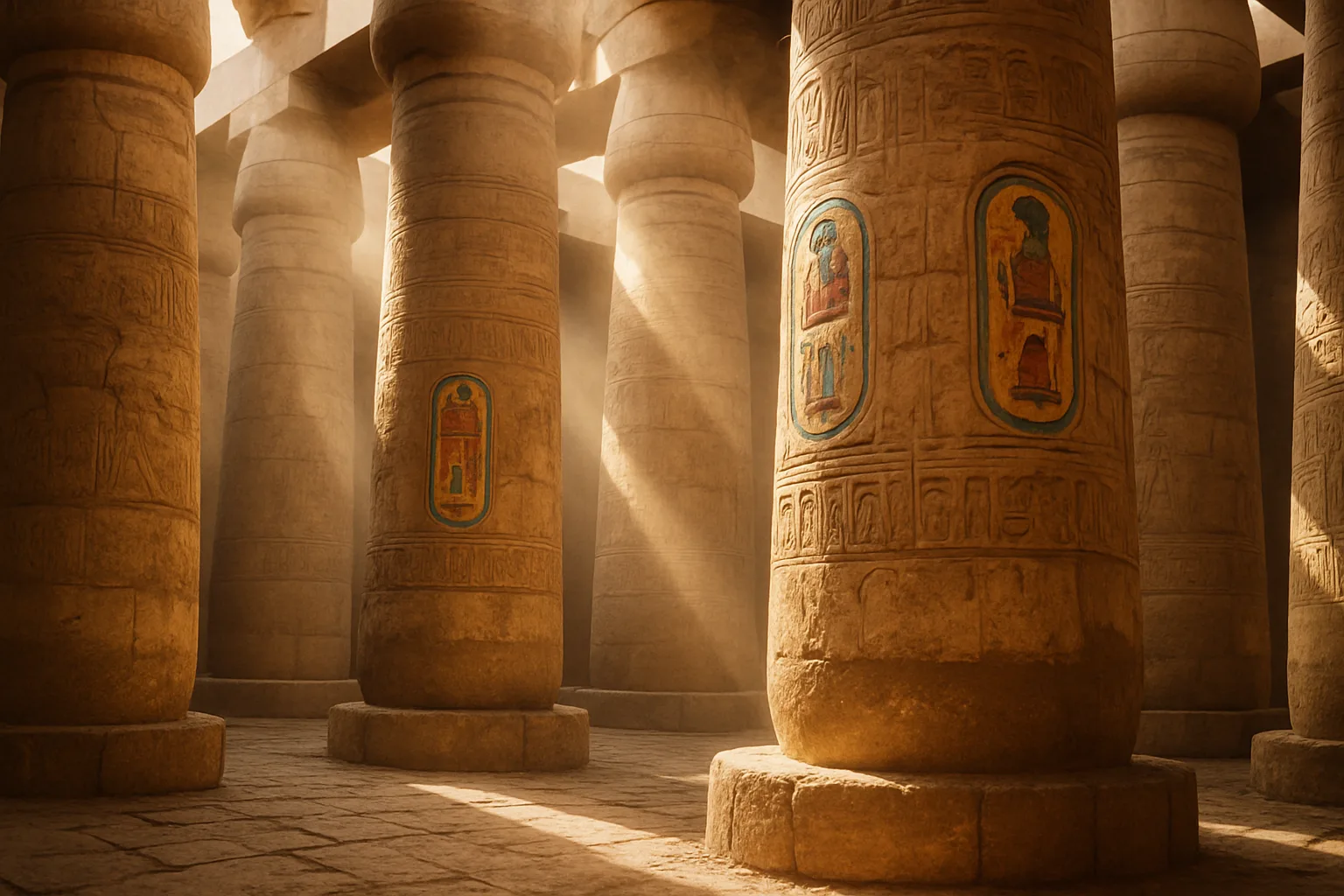
The Great Hypostyle Hall: 134 massive columns arranged in 16 rows, each towering 10 meters in circumference. Look up—the 12 central columns remain standing, their papyrus-bud capitals supporting massive lintels that still bear original paint traces after 3,300 years.
The Sacred Lake: Where priests purified themselves before rituals. Perfectly rectangular (250x150 meters), this man-made basin reflects Karnak’s remaining pylons in early morning light.
The Temple of Amun: The complex’s heart, where the god Amun-Ra resided during rituals. The scale exceeds any other Egyptian temple.
Competitive Edge: The Open-Air Museum
Most visitors miss the Karnak Open-Air Museum (separate ticket, ~$5), which contains reconstructed chapels and structures removed from the main complex for preservation. The White Chapel of Senusret I—overlain with exquisite reliefs—stands here reassembled from 900+ fragments. This quiet area offers shade, fewer visitors, and superior photography opportunities than the crowded main hypostyle.
Luxor Temple: Nighttime Magic
Unlike Karnak’s overwhelming scale, Luxor Temple rewards intimate exploration. Alexander the Great claimed to have been crowned pharaoh here. Roman legions carved graffiti into the walls. Islamic-era houses were built atop its sacred precincts (later cleared in the 19th century).
Visit Luxor Temple at night. The floodlighting transforms the columns into golden phantoms, and the cooler temperatures allow unhurried examination of the reliefs. The mosque of Abu Haggag, built into the temple complex, still operates—listen for the call to prayer echoing through millennia-old stones.
The temple’s alignment with Karnak defines Luxor’s geography—ancient processions walked this route during the annual Opet Festival, carrying Amun’s statue from Karnak to Luxor for “rejuvenation.” Modern tourism recreates this journey daily.
West Bank Wonders: Necropolis of the Pharaohs
Valley of the Kings: Tickets for 3 Tombs
Here, pharaohs of the New Kingdom (1550-1077 BCE) retreated from pyramid-building to hidden rock-cut tombs, hoping to foil tomb robbers. The strategy failed—nearly every tomb was looted in antiquity—but the decoration survived sublime.
General Admission (~$11) includes entry to three tombs of your choice from the “standard” collection. These rotate periodically for preservation, but currently include:
Recommended standard tombs:
- KV2 (Ramesses IV): Deep, well-preserved colors, astronomical ceiling
- KV6 (Ramesses IX): Vivid yellows and blues, accessible descent
- KV11 (Ramesses III): The “Harris” tomb with intact sarcophagus
Special Tickets ($60) are required for the three “premium” tombs:
- KV9 (Ramesses V/VI): The most elaborately decorated tomb in the valley—every surface bears intricate religious texts and astronomical imagery. Worth the premium price.
- KV62 (Tutankhamun): Contains the king’s mummy in the outer burial chamber. Smaller than royal tombs (Tut died young and unexpectedly), but historically essential.
- Sety I (KV17): Currently undergoing restoration and periodically closed. When open, this is Egypt’s finest painted tomb—if available, prioritize over Tutankhamun.
Competitive Edge: Strategic Tomb Selection
With only three tombs included in general admission, choose strategically:
The “Big Three” Standard Route:
- Ramesses III (KV11) for scale and intact sarcophagus
- Ramesses IV (KV2) for astronomical ceilings and colors
- Thutmose III (KV34)—if open, this deeper tomb requires climbing but rewards with unique artistic style
The Premium Splurge: Purchase the separate ticket for KV9 (Ramesses V/VI). Combined with two standard tombs, this gives you the valley’s absolute highlights without overwhelming your day.
Temple of Hatshepsut: The Terraces
Rising from the desert in three massive limestone terraces, Hatshepsut’s mortuary temple represents ancient Egyptian architecture at its most ambitious. The female pharaoh (one of the few women to rule Egypt as king) constructed this monument to legitimize her reign, with elaborate reliefs depicting her divine birth and trading expeditions to the Land of Punt.
Best time: Early morning, when the rising sun illuminates the colonnades. The site’s openness means brutal midday heat—schedule accordingly.
The Colossi of Memnon
These two massive statues originally guarded the entrance to Amenhotep III’s mortuary temple (now vanished). The northern statue famously “sang” at dawn—actually sound caused by temperature changes and cracks—drawing visitors throughout antiquity. The phenomenon stopped after Roman repairs, but the statues remain imposing at 18 meters tall.
No ticket required—these stand beside the main road and make an excellent brief stop en route to the Valley.
The Hot Air Balloon Experience
Luxor’s hot air balloon rides rank among Egypt’s most magical experiences. Floating silently over the West Bank at sunrise, watching golden light illuminate the temples and the Nile below, provides perspective impossible from ground level.
What to expect:
- Price: $80-$150 depending on season and booking channel
- Duration: 45-60 minutes flight time
- Pickup: 4:00-4:30 AM from your hotel
- Views: Valley of the Kings, Hatshepsut Temple, Colossi of Memnon, and the Nile at sunrise
Booking tips: Book through your hotel or reputable operators like Hod Hod Soliman. Avoid street touts offering suspiciously cheap rates—balloon safety matters.
Logistics: Getting Around Luxor
East Bank Navigation
Walking: The Corniche (riverfront promenade) connects Luxor Temple to the museum and ferry terminal. It’s a pleasant 20-minute stroll with constant Nile views.
Horse-drawn carriages (caleches): Ubiquitous and atmospheric, but negotiate prices firmly before boarding. Expect 20-50 EGP for short hops; overcharging tourists is standard practice.
Taxis: Uber and Careem operate in Luxor, offering fixed prices that eliminate haggling stress. Highly recommended.
Crossing to the West Bank
Public ferry: The simplest option—departs from near Luxor Temple every 10-15 minutes, costs ~5 EGP, and takes 5 minutes to cross. Ferries run until around 10 PM.
Tourist motorboats: Private crossings cost 50-100 EGP. Convenient if you’re timing-sensitive, but the public ferry is more authentic and reliable.
West Bank Transport
Tuk-tuks and taxis: Wait at the ferry terminal. Negotiate a day rate (300-500 EGP) if visiting multiple sites, or individual prices per destination.
Bicycle: The flat West Bank terrain suits cycling. Several shops near the ferry terminal rent bikes for 50-100 EGP/day. Bring water and sun protection—the route between sites has minimal shade.
Organized tour: Many travelers opt for a guide with vehicle for the West Bank. Expect $40-60 per person for small group tours including Valley of the Kings, Hatshepsut, and Colossi of Memnon.
Sample Itineraries
One Day: The Essentials
Morning: Hot air balloon pickup (if doing balloon), then West Bank—Valley of the Kings (3 tombs), Hatshepsut Temple, Colossi of Memnon.
Afternoon: Karnak Temple (2-3 hours minimum).
Evening: Luxor Temple after dark (magical lighting, cooler temperatures).
Two Days: Comprehensive
Day 1: West Bank—Valley of the Kings (with premium tomb), Hatshepsut, balloon ride at dawn. Ferry back for evening relaxation.
Day 2: East Bank—Karnak in morning (avoiding heat), lunch break, Luxor Temple late afternoon into evening.
Three Days: Deep Exploration
Add the Valley of the Queens (included in West Bank ticket, contains beautifully painted tombs of royal wives), Medinet Habu (Ramesses III’s mortuary temple—arguably the best preserved), and the Tombs of the Nobles (quieter, more intimate than royal tombs).
Luxor’s Timeless Allure
Luxor endures because it reveals Egyptian civilization at zenith. The Valley of the Kings demonstrates humanity’s preoccupation with eternity. Karnak’s columns dwarf mortal visitors, suggesting divine scale. Even the modern city—imperfect, chaotic, occasionally frustrating—breathes continuous life into spaces millennia old.
The “world’s greatest open-air museum” description undersells Luxor. Museums preserve dead things; Luxor remains emphatically alive. Horse-drawn carriages clatter past Ramesses II’s obelisk. The call to prayer echoes off Hatshepsut’s terraces. Modern Egyptians sell scarabs beside genuine antiquities, participating in a souvenir tradition stretching to Roman tourists.
Come prepared, arrive early, and Luxor rewards patience with transcendence. Standing alone in an empty tomb corridor, surrounded by texts deciphered only decades ago, you connect with something vast—human ambition, religious devotion, artistic achievement spanning centuries without interruption.
For more Egyptian exploration, see guides to Petra in Jordan and Göbekli Tepe in Turkey—two other extraordinary ancient sites in the region.
Quick Facts
| Attribute | Details |
|---|---|
| Location | Luxor, Luxor Governorate, Egypt |
| Country | Egypt |
| Region | Luxor Governorate |
| Civilization | Ancient Egyptian (New Kingdom) |
| Historical Period | c. 1550–1077 BCE |
| Established | c. 1400 BCE |
| Coordinates | 25.6872, 32.6396 |
Explore More Ancient Wonders
- Petra: Jordan’s rose-red city carved from cliffs
- Göbekli Tepe: The world’s oldest temple in Turkey
- Jerash: The best-preserved Roman city in Jordan
- Ephesus: The magnificent Roman city
For photography tips at ancient sites, see our guide to photographing ruins. Planning your first archaeological trip? Read our beginner’s guide.
Luxor asks only that you arrive early, respect the antiquities, and bring curiosity worthy of the pharaohs. The temples have waited 3,400 years—they’ll wait for you.
Frequently Asked Questions
How many days do I need in Luxor?
Two full days minimum covers the essentials: West Bank (Valley of the Kings, Hatshepsut, optional balloon) and East Bank (Karnak, Luxor Temple, museum). Add a third day for deeper exploration or day trips to Edfu, Esna, or Aswan.
What is the difference between Luxor Temple and Karnak?
Both are on the East Bank of Luxor, connected by the Avenue of Sphinxes (recently excavated). Karnak is the larger complex—the country's largest temple—featuring multiple sanctuaries, sacred lakes, and the Hypostyle Hall with 134 massive columns. Luxor Temple is smaller but more intimate, beautifully lit at night, with well-preserved pylons and statues. Visit both; together they represent 1,500 years of continuous religious construction.
How many tombs can I see in the Valley of the Kings?
The standard ticket covers three tombs from a rotating selection of open tombs. Additional tickets are required for Tutankhamun's tomb (sold separately), the tomb of Ramesses V/VI, and the Tomb of Seti I (one of the finest but expensive). Plan 2-3 hours for the Valley including travel; longer if you visit multiple tombs.
Is a hot air balloon over Luxor worth it?
A sunrise balloon over the West Bank is one of Egypt's most iconic experiences—watching the desert landscape, temples, and Nile come alive in morning light from above. Balloons launch just before sunrise and fly for 45-60 minutes. Prices vary significantly; book through a reputable operator (accidents have occurred with lower-end providers). Expect to pay $80-150 USD for a quality flight.
Should I cruise from Luxor to Aswan or vice versa?
Both directions work. Aswan to Luxor (northward) follows the ancient direction and allows you to end at Luxor's richer archaeological sites with full energy. Luxor to Aswan makes geographical sense if flying in and out of Luxor. Most 4-day/3-night cruises stop at Edfu (Temple of Horus), Kom Ombo (crocodile temple), and several smaller sites. Book well ahead for winter months (November-February) when cruises sell out.
Is Luxor safe for solo travelers?
Yes, with common-sense precautions. Women travelers should expect attention but rarely danger. Joining group tours for West Bank visits simplifies logistics for solo travelers. Book tours through established operators, bargain confidently on taxi fares, and keep copies of all documents.