Quick Info
Curated Experiences
Karnak and Luxor Temples Half-Day Tour
Luxor Temple by Night Private Tour
East and West Banks Full-Day Tour from Luxor
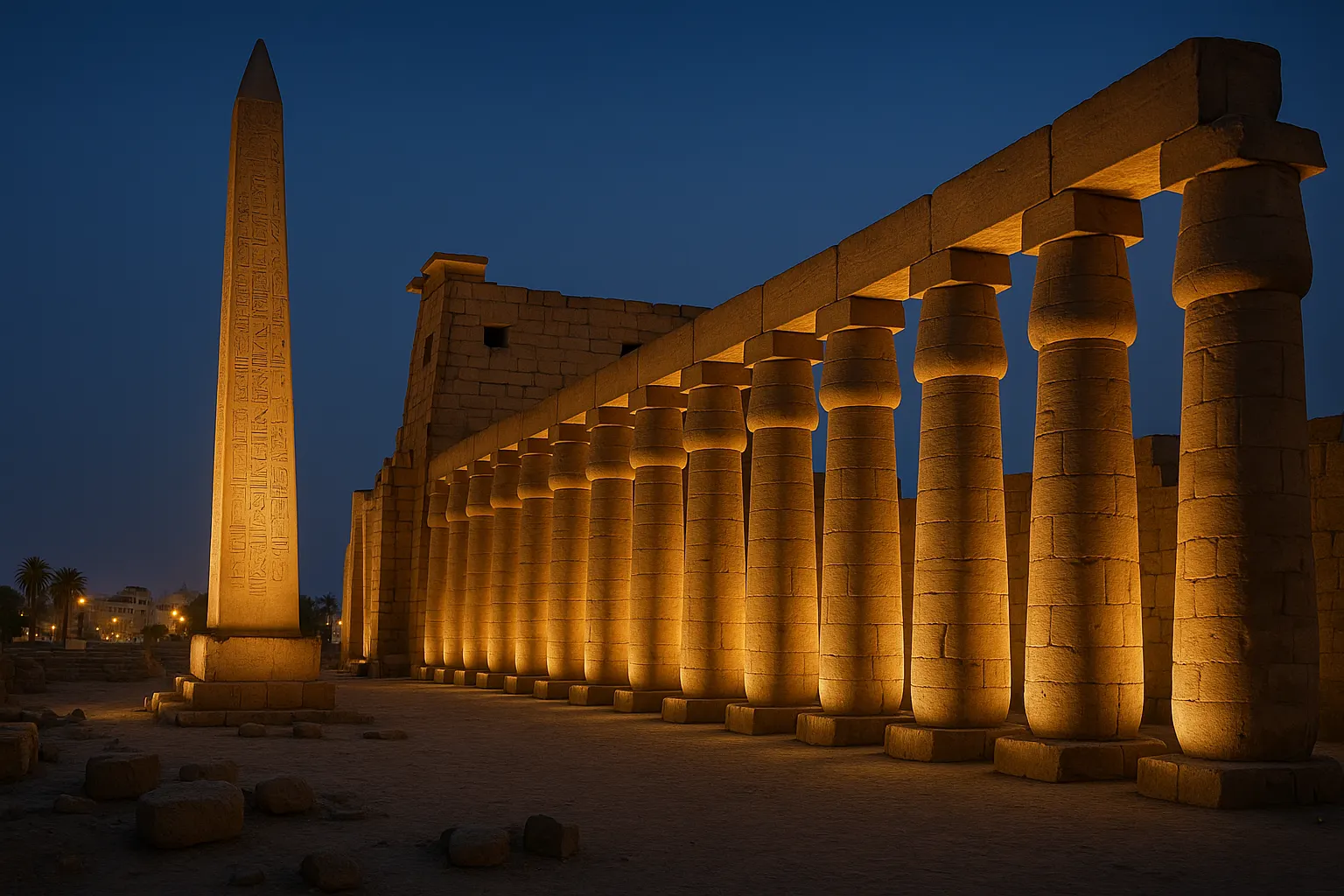
At night, Luxor Temple becomes the most beautiful ancient monument in Egypt. Amber floodlights wash the sandstone colonnade, turning fourteen towering papyrus columns into pillars of fire against the darkness. The colossal seated figures of Ramesses II glow at the entrance like sentinels who have been waiting 3,200 years for your arrival. The Nile is a hundred meters away, invisible but present, and the warm evening air carries the sound of horse carriages on the Corniche and the call to prayer from the medieval mosque that sits, improbably and magnificently, atop the temple’s northwestern corner. No other ancient site in Egypt offers this combination of intimacy, elegance, and atmospheric power.
What makes Luxor Temple exceptional is not any single feature but the layers of civilization compressed into a single enclosure. Egyptian priests conducted the Opet Festival here for over a millennium. Alexander the Great rebuilt the inner sanctuary and placed himself on its walls dressed as a pharaoh. Roman soldiers fortified the precinct and installed an imperial cult chapel. Byzantine Christians plastered over pharaonic reliefs and painted their saints. A medieval mosque was built atop the accumulated debris, its minaret rising above columns already two thousand years old. All of this is still visible, still accessible, still generating the particular cognitive vertigo that comes from standing in a space where the sacred has never stopped being sacred — it has simply changed the gods it serves.
If you can visit only one temple in Luxor at night, make it this one. If you can visit during the day as well, the detail in the reliefs and the logic of the architectural progression will reward a second trip entirely.
Historical Context
Luxor Temple’s architectural coherence begins with its origins. Where Karnak accumulated additions from dozens of pharaohs across two millennia, Luxor was conceived and substantially completed by two rulers whose reigns spanned roughly 130 years, giving the complex a unity of design that no monument built over a longer period can achieve.
Around 1380 BCE, Amenhotep III built the temple’s essential core during Egypt’s most prosperous era. His architects created the Colonnade’s fourteen towering papyrus columns, the elegant sun court surrounded by double rows of columns, and a hypostyle hall leading to the inner sanctuaries. The genius of Amenhotep III’s design lay in restraint — he understood that proportion and refinement could project divine power as effectively as sheer scale.
A century later, Ramesses II added his unmistakable signature to the temple’s northern approach. The massive pylon entrance — 65 meters wide and 24 meters high — bore carved reliefs of the Battle of Kadesh against the Hittites, depicted with the kind of creative license that rulers of all eras have applied to military records. Before the pylon, Ramesses placed six colossal statues of himself, of which two seated and two standing survive. He also installed two rose granite obelisks, each 25 meters tall and quarried at Aswan. One still stands at the temple entrance. Its twin was gifted to France in 1829 and now rises in Paris’s Place de la Concorde — an Egyptian monument that has spent most of its modern life in a European capital.
The temple’s ancient Egyptian name was Ipet-resyt, the “Southern Sanctuary,” marking it as the southern terminus of the sacred processional route from Karnak. Its primary purpose was the annual Opet Festival, during which Amun’s cult statue traveled from Karnak to Luxor Temple, renewing the pharaoh’s divine legitimacy and ensuring cosmic order for another year. The festival reliefs carved on the Colonnade walls depict this procession in extraordinary detail — musicians, dancers, priests bearing the golden barque, crowds pressing close.
After the pharaonic period, the temple continued to accumulate meaning. Alexander the Great rebuilt the inner sanctuary around 330 BCE, placing reliefs that show him in full pharaonic regalia making offerings to Amun. Roman soldiers converted part of the complex into a military camp and installed an imperial cult chapel. Byzantine Christians transformed sections into churches. And when medieval Luxor buried the lower temple under centuries of accumulated debris, a mosque was built atop the fill, its builders unaware of the columns beneath their feet. When 19th-century excavators cleared the debris, they left the mosque standing — a decision that created one of the most remarkable juxtapositions in world heritage.
What to See
The Great Pylon and Ramesses II’s Statues
The first thing visitors encounter is a cliff of sandstone 65 meters wide and 24 meters high, its surface crowded with carved scenes from the Battle of Kadesh — Ramesses in his chariot, enemies in disordered flight, a version of events that stretches the historical truth considerably (Kadesh was in reality a costly near-disaster ending in a negotiated treaty). The propaganda is executed with such confidence that it compels admiration regardless of accuracy.
The lone surviving obelisk at the pylon’s base deserves sustained attention. The rose granite shaft, quarried at Aswan and floated more than 200 kilometers downstream, weighs approximately 250 tons. When the French engineer Lebas removed its twin for transport to Paris in the 1820s, the operation required years of preparation and hydraulic equipment that tested the limits of 19th-century engineering. The ancient crews who moved both obelisks with copper tools and human muscle accomplished something the industrialized world found difficult to replicate.
The seated colossal statues of Ramesses II flanking the entrance stand approximately 15 meters tall, their faces preserving the idealized features of New Kingdom royal portraiture. At their feet, smaller figures represent members of the royal family.
The Colonnade of Amenhotep III
Beyond the Court of Ramesses II lies what most Egyptologists consider the finest architectural space in Egypt. Fourteen columns, each rising 16 meters with open papyrus capitals spread like blooming flowers at their crowns, march in two facing rows down a processional hall 52 meters long. The proportions — the spacing between columns, the ratio of height to diameter, the relationship between carved surfaces and the open sky above — represent a command of architectural geometry that was not exceeded in the ancient world.
The walls flanking the Colonnade bear the Opet Festival reliefs, showing the annual procession from Karnak in such specific detail that they constitute an irreplaceable documentary record of Egyptian religious practice. The reliefs were added during Tutankhamun’s reign and their quality is exceptional even by New Kingdom standards. Walking through this space at night, when the columns are bathed in amber light and their shadows stretch across the ancient paving stones, is one of the genuinely transcendent experiences available to travelers in Egypt.
The Court of Amenhotep III
A broad open court surrounded by double rows of elegant papyrus columns, this space represents Amenhotep III’s architectural vision at its most harmonious. The columns are shorter than those in the Colonnade but more numerous, creating a rhythm of light and shadow that changes throughout the day. At the court’s southern end, a hypostyle hall of 32 columns leads deeper into the temple toward the inner sanctuaries. The progression from open courtyard to enclosed hall to dark sanctuary recreates the Egyptian theological principle of moving from the human world toward the divine.
Alexander’s Sanctuary and the Roman Chapel
The innermost spaces reward visitors who push beyond the Colonnade and courts into the comparative darkness of the inner sanctuaries. Alexander the Great rebuilt the sanctuary around 330 BCE, and the wall reliefs are among the most historically remarkable images in Egypt: a Macedonian world-conqueror who had just defeated the Persian Empire, presenting himself in the complete visual language of Egyptian kingship — the double crown, the white kilt, traditional offerings to Amun. The granite naos that held Amun’s cult statue still stands at the sanctuary’s center, empty now but communicating the weight of divine presence.
Adjacent, the Birth Room presents relief scenes depicting the divine conception and birth of Amenhotep III, with Amun visiting his mother in the guise of the pharaoh — a theological argument for divine legitimacy carved in sandstone. At the temple’s far end, a Roman chapel inserted during the 3rd century CE converted sacred space into a room for the imperial cult, its paintings of Roman emperors layered directly over pharaonic reliefs.
The Mosque of Abu al-Haggag
A functioning 13th-century mosque perched atop the temple’s northwest corner, its minaret rising above columns that were ancient when Islam was founded. The mosque was built on accumulated debris that buried the temple for centuries. When excavations cleared the court, the mosque was left standing rather than demolished — both because it remained an active place of worship and because removing it would have destroyed another layer of a site defined by layers. Friday prayers are still conducted here, making this ground continuously sacred for more than 3,400 years. The juxtaposition of minaret against papyrus column is jarring at first, then illuminating: the people of medieval Luxor built their mosque here because something about this location had always demanded religious attention.
The Avenue of Sphinxes Approach
The 2.7-kilometer processional avenue of human-headed sphinxes connecting Luxor Temple to Karnak has been substantially excavated and restored. Walking it — even partially, with the sounds of modern Luxor surrounding you — gives the entrance a ceremonial weight that arriving any other way cannot provide. You walk the same route that pharaohs walked for a thousand years. The sphinxes are best viewed in the warm light of late afternoon.
Timing and Seasons
October through April offers the most comfortable conditions — daytime temperatures of 25 to 30 degrees Celsius with cool evenings ideal for the night visit. High season (December through February) brings more tourists, but the temple’s evening hours spread crowds effectively and the spaces never feel as congested as Karnak’s Hypostyle Hall at mid-morning.
May through September brings extreme heat of 40 to 48 degrees Celsius in peak summer. If visiting in these months, arrive at the 6 AM opening or wait until after 7 PM for the night visit. Midday summer visits to open-air temple sites in Upper Egypt are genuinely uncomfortable and potentially hazardous.
The temple stays open until 9 PM year-round with floodlighting until 10 PM. This late closing makes Luxor Temple the only major pharaonic monument you can comfortably visit after dark, and the evening experience is categorically different from the daytime one. The colonnade glows amber. Shadows gather between the columns. The minaret of the mosque is silhouetted against stars. If you can visit twice, come once in the early morning for detail and once in the evening for atmosphere.
Tickets, Logistics and Getting There
Luxor Temple sits in the heart of downtown Luxor on the east bank, making it the most accessible major temple in Egypt. Most downtown hotels are within 5 to 15 minutes on foot. From the west bank, take the public ferry (5 EGP, approximately $0.15 USD) and walk north along the Corniche. From Karnak, the temples are 3 kilometers apart — a taxi costs 20 to 40 EGP, or walk the restored sections of the Avenue of Sphinxes. At night, the temple is unmissable: it dominates the Luxor skyline in amber light and is visible from across the river.
Admission costs 160 EGP (approximately $5 USD) for foreign adults and 80 EGP for students with a valid ISIC card. The temple is open daily from 6 AM to 9 PM year-round. Photography requires no additional fee.
Organized half-day tours covering both Karnak and Luxor Temple start at $35 and are available from virtually every hotel in Luxor. Private evening tours with an Egyptologist guide ($55 and up) offer the most rewarding night visit experience, combining the floodlit atmosphere with expert commentary that explains the layers of history visible on every wall.
Practical Tips
- Visit at night. This is the single most important recommendation for Luxor Temple. The floodlit colonnade is among the most beautiful sights in Egypt, and the warm evening air makes lingering comfortable rather than punishing.
- If you also visit during the day, come in the first two hours after the 6 AM opening. Low-angle morning light rakes the relief surfaces, revealing carved detail that disappears in midday glare.
- Bring a light jacket or shawl for evening visits during winter months (November through February). Desert temperatures drop sharply after sunset and the temple’s open spaces amplify the chill.
- Carry cash for the entry ticket, tips, and any refreshments. Card payment is not reliably available at the temple booth.
- The Court of Ramesses II and the inner sanctuaries are less crowded than the colonnade and pylon area. Push deeper into the temple for quieter spaces and remarkable details most visitors miss.
- Combine Karnak and Luxor Temple on the same day: Karnak in the early morning, then Luxor Temple in the late afternoon or evening. This maximizes comfort and gives each temple its optimal light.
- Photography without flash is permitted throughout. A tripod helps enormously for night photography but is not essential with modern phone cameras.
- The Corniche promenade between the temple and the river is a pleasant post-visit walk, with views of the illuminated temple from across the road and feluccas on the Nile.
Suggested Itinerary
Daytime Visit (Optional but Recommended)
6:00 AM — Enter the temple at opening. Walk the Avenue of Sphinxes approach from the south for the ceremonial experience.
6:15 AM — Examine the Great Pylon reliefs and the surviving obelisk in detail. Study the Ramesses II statues.
6:30 AM — Walk through the Court of Ramesses II, noting the mosque of Abu al-Haggag perched above.
6:45 AM — Enter the Colonnade of Amenhotep III. Study the Opet Festival reliefs on the flanking walls in the raking morning light.
7:15 AM — Explore the Court of Amenhotep III and the inner hypostyle hall.
7:30 AM — Visit Alexander’s sanctuary, the Birth Room, and the Roman chapel at the temple’s deepest point.
8:00 AM — Exit. Total daytime visit: approximately 2 hours.
Evening Visit (Do Not Miss)
7:00 PM — Enter the temple as floodlights illuminate the colonnade. Walk slowly through the pylon gateway and let the amber light establish the atmosphere.
7:15 PM — Stand in the Colonnade of Amenhotep III. The columns are transformed at night — each one a vertical shaft of warm light with darkness pooled between them. This is the highlight of the visit.
7:45 PM — Explore the inner courts and sanctuaries, where the lighting creates intimate pockets of illuminated stone against deep shadow.
8:15 PM — Return to the pylon entrance for the view outward through the gateway toward the modern city lights. Photograph the obelisk and seated statues.
8:30 PM — Exit and walk the Corniche for views of the illuminated temple from the river side.
Total evening visit: approximately 1.5 hours.
Nearby Sites
Karnak Temple Complex — Egypt’s greatest temple complex, 3 kilometers north on the east bank, connected by the Avenue of Sphinxes. The natural pairing is Karnak in the morning and Luxor Temple in the evening. A taxi between the two costs 20 to 40 EGP.
Valley of the Kings — The royal necropolis on the west bank, a 20-minute ferry and taxi ride from downtown Luxor. Dedicate a full morning to the valley, combining it with the Temple of Hatshepsut and the Colossi of Memnon, and save the east bank temples for the following day.
Luxor Museum — A thoughtfully curated collection on the Corniche between Karnak and Luxor Temple, displaying artifacts from both temples and the Theban necropolis. The Luxor Cache Hall contains statues discovered buried at Karnak. Allow 1 to 2 hours; entry is 160 EGP ($5 USD).
Mummification Museum — A small, focused museum on the Corniche near the Winter Palace Hotel, explaining ancient Egyptian mummification techniques with actual mummies and artifacts. Allow 45 minutes to an hour; entry is 100 EGP ($3 USD). Combine with an evening Luxor Temple visit.
Sacred Ground That Never Stopped Being Sacred
There is something about this particular piece of ground that has compelled religious attention for more than three thousand years without interruption. Egyptian priests worshipped Amun here for a millennium. Greek conquerors entered the system and presented themselves as pharaohs. Roman soldiers installed their own gods. Byzantine Christians painted saints over pharaonic images. Muslim worshippers built a mosque atop the buried columns. And today, tourists from every country on earth come to stand in the colonnade and feel something they do not entirely know how to name.
Luxor Temple does not explain this continuity. It embodies it. The columns of Amenhotep III, the propaganda of Ramesses II, the sanctuary of Alexander, the chapel of Rome, the mosque of medieval Islam — all of it coexists in a single enclosure, each layer visible and legible, none erasing the others entirely. This is what makes Luxor Temple not merely beautiful but irreplaceable: it is the most complete physical record of how sacred space persists across civilizations. Visit at night. Stand in the colonnade. Let the light do the work that words cannot.
Discover More Ancient Wonders
- Karnak Temple Complex: Egypt’s greatest temple, 3 km north along the Avenue of Sphinxes
- Valley of the Kings: Royal tombs cut into the west bank cliffs
- Pyramids of Giza: Egypt’s most famous monuments, 700 km north
- Great Sphinx of Giza: The eternal guardian of the Old Kingdom necropolis
For practical preparation, see our beginner’s guide to visiting ancient sites and our Egypt travel planning guide.
Quick Facts
| Attribute | Details |
|---|---|
| Location | Downtown Luxor, east bank of the Nile, Upper Egypt |
| Country | Egypt |
| Region | Luxor |
| Ancient Name | Ipet-resyt (“Southern Sanctuary”) |
| Civilization | Ancient Egyptian |
| Historical Period | c. 1400 BCE—300 CE |
| Established | c. 1400 BCE |
| UNESCO Status | Part of Ancient Thebes World Heritage Site (1979) |
| Primary Builders | Amenhotep III (c. 1380 BCE), Ramesses II (c. 1250 BCE) |
| Period of Use | c. 1400 BCE—ongoing (mosque still active) |
| Coordinates | 25.6995, 32.6391 |
| Distance from Karnak | 3 km (1.9 miles); 30—40 minutes on foot |
| Best Time | October—April; evenings year-round |
| Entry Fee | 160 EGP (~$5 USD); students 80 EGP |
| Opening Hours | 6 AM—9 PM daily (illumination until 10 PM) |
| Suggested Stay | 2—3 hours; combine with Karnak for a half-day |
Frequently Asked Questions
How do I get to Luxor Temple from my hotel?
Luxor Temple sits in the heart of downtown Luxor on the east bank. Most downtown hotels are within walking distance (5-15 minutes). From west bank hotels, take the local ferry (5 EGP/$0.15 USD) or motorboat. Taxis from anywhere in Luxor cost 10-25 EGP ($0.35-0.80 USD). The temple is impossible to miss—it's the massive illuminated complex on the Corniche.
Should I visit Luxor Temple during the day or at night?
Both! Day visits allow detailed examination of reliefs and architecture. Night visits (when the temple is illuminated) create magical atmosphere—this is when the temple truly shines. If you can only visit once, choose evening for the dramatic lighting, but serious enthusiasts should experience both. The temple stays open until 9 PM.
How does Luxor Temple compare to Karnak?
Luxor Temple is smaller, more compact, and architecturally more unified than Karnak. While Karnak sprawls across 100 hectares with layers of construction, Luxor Temple was built primarily by Amenhotep III and Ramesses II, creating cohesive design. Many visitors find Luxor more elegant and manageable, while Karnak impresses with scale. Visit both for the complete experience.
What is the Opet Festival?
The Opet Festival was ancient Egypt's most important religious celebration, held annually during the Nile flood season. The festival brought Amun's statue from Karnak to Luxor Temple via the Avenue of Sphinxes, reaffirming the pharaoh's divine connection and ensuring cosmic order. Reliefs on Luxor's walls depict these elaborate processions with music, dancing, and offerings.
Can I see Luxor Temple and Karnak in one day?
Absolutely. The two temples are just 3 km apart and naturally combined. Plan 2-3 hours at Karnak in the morning, then visit Luxor Temple in late afternoon or evening. This allows you to experience Luxor's night illumination. Half-day tours ($35) cover both temples efficiently.
What are the must-see features at Luxor Temple?
Don't miss: the Avenue of Sphinxes approach, the massive Ramesses II statues and obelisk at the entrance, the Colonnade of Amenhotep III with its 14 massive columns, the Court of Ramesses II, the processional colonnade, and the Roman chapel built into the temple's sanctuary. The Abu al-Haggag Mosque built atop the ruins adds fascinating layers of history.
Nearby Ancient Sites
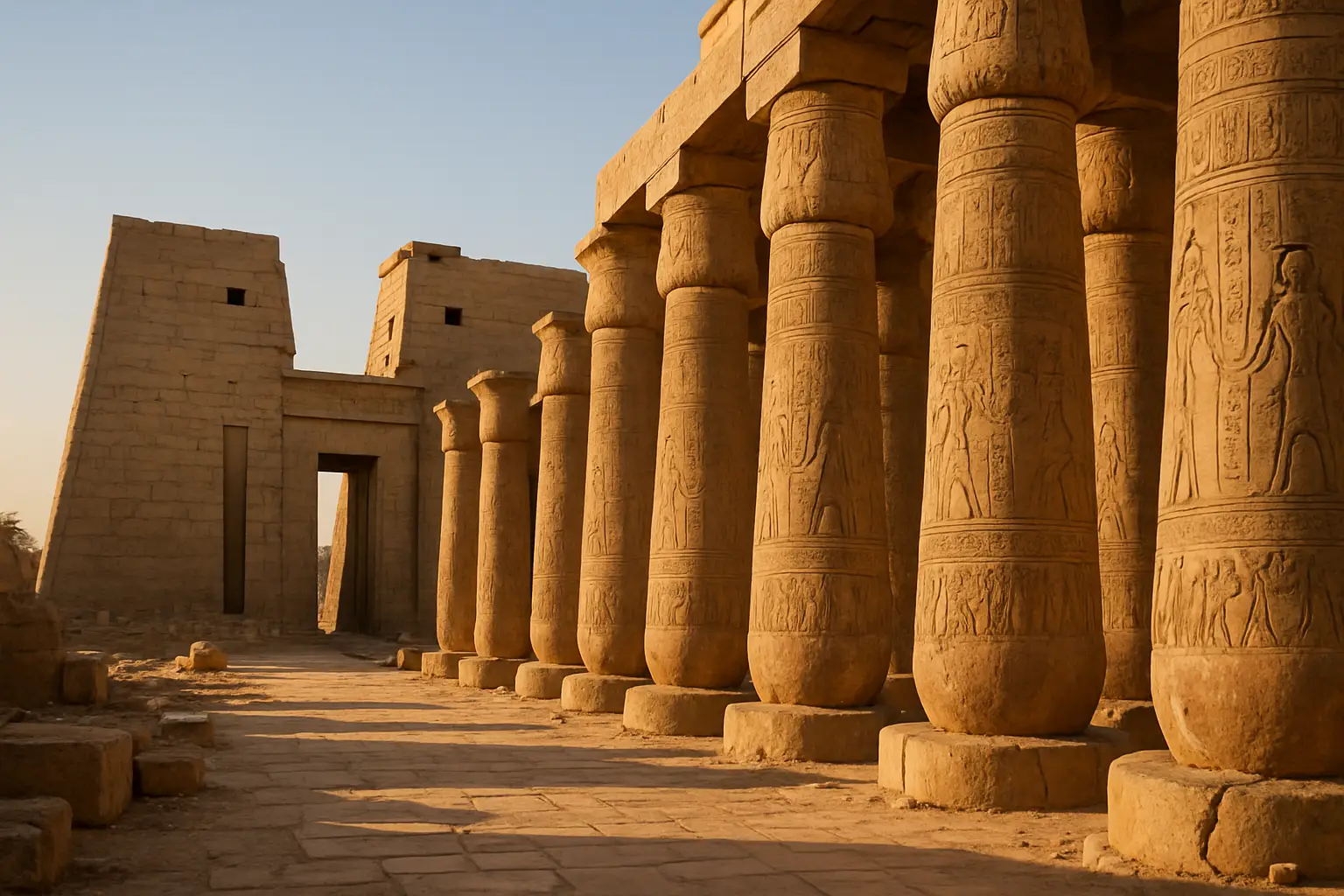
Karnak Temple Complex Egypt Travel Guide 2026: Egypt's Greatest Temple
Ancient EgyptianExplore Karnak, the world's largest ancient religious complex. Discover the Hypostyle Hall, Sacred L...
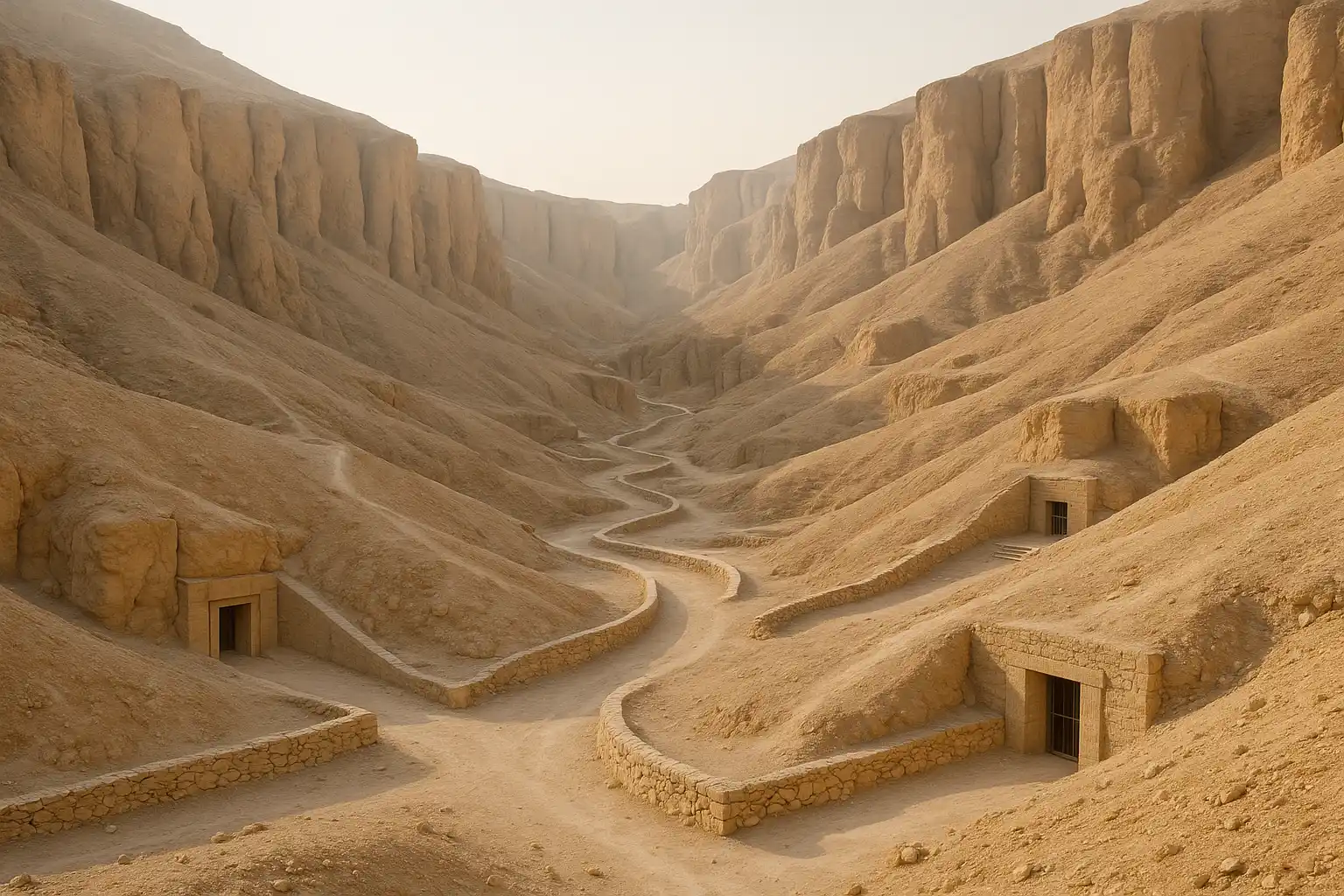
Valley of the Kings Egypt Travel Guide 2026: Royal Tombs of the Pharaohs
Ancient EgyptianExplore the Valley of the Kings where Tutankhamun and Ramesses were buried. Our guide covers tomb se...
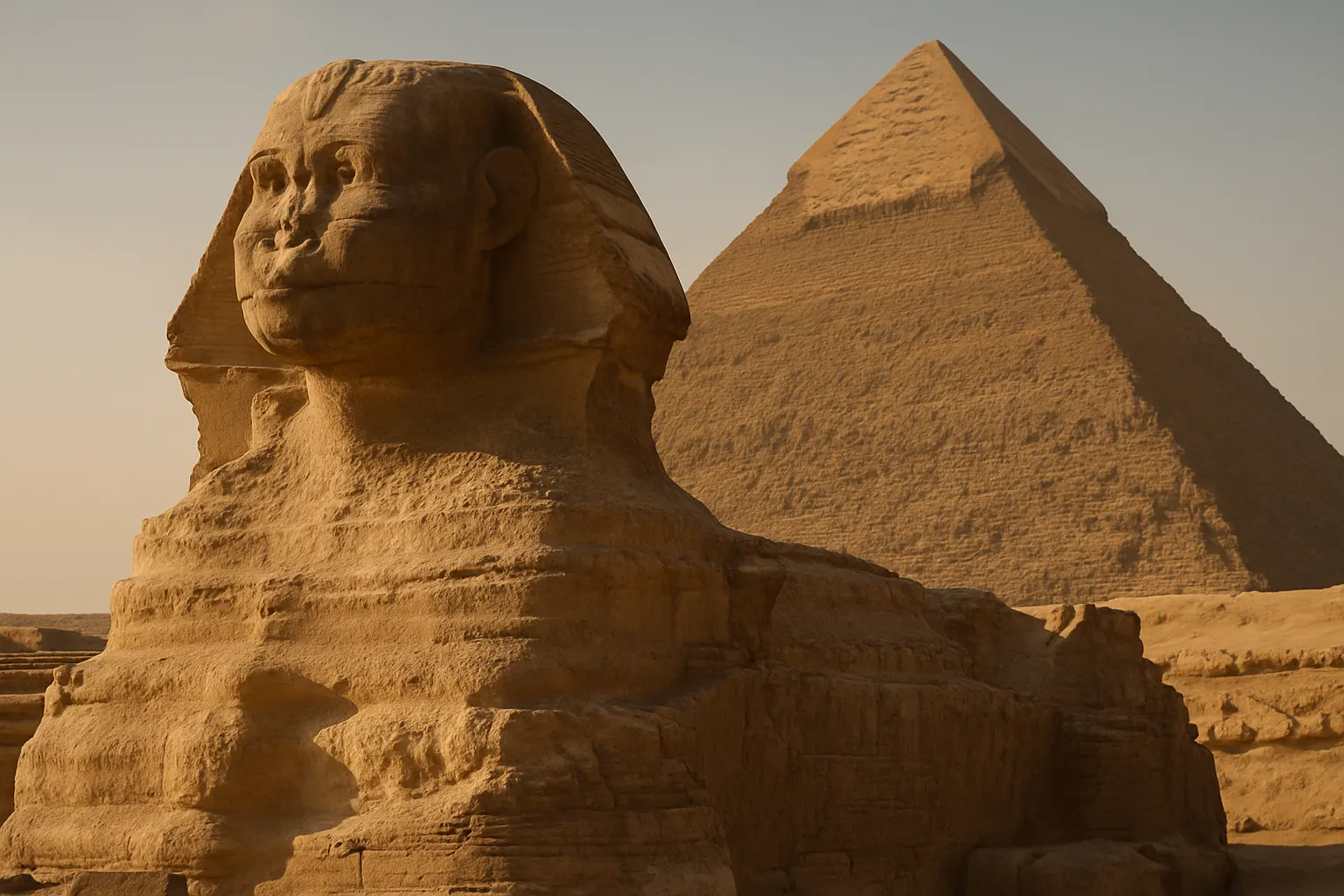
Great Sphinx of Giza Egypt Travel Guide 2026: Guardian of the Pyramids
Ancient EgyptianVisit the Great Sphinx, Egypt's enigmatic limestone guardian. Our guide covers the Sphinx's history,...