Quick Info
At a glance
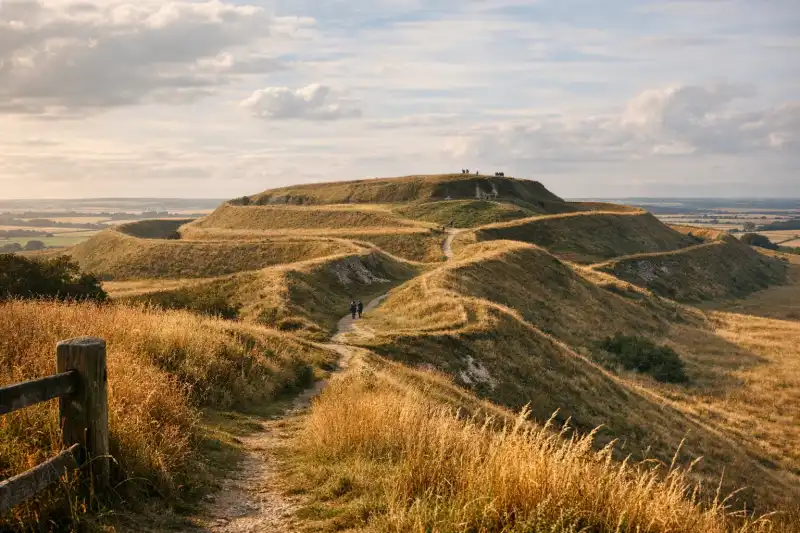
Maiden Castle in the United Kingdom rises from the Dorset countryside with a scale that still surprises even seasoned visitors to ancient places. Just southwest of Dorchester, this broad-backed hill is wrapped in immense banks and ditches that seem less like a ruin than a reshaped landscape, a place where human intention became part of the land itself. Walking toward the fort, you do not encounter a single monumental wall or temple façade. Instead, the site reveals itself in layers: curving ramparts, deep defensive lines, wide grassy interiors, and long views over fields that would once have supported the communities living here.
That gradual reveal is part of Maiden Castle’s power. It feels at once open and formidable, simple in materials yet astonishing in ambition. English hillforts are often impressive, but Maiden Castle is among the largest and most complex in Britain, and it has become one of the defining archaeological landscapes of prehistoric Europe. Visitors come for different reasons: some for Iron Age history, some for a walk with panoramic views, some for the fascination of standing inside defenses built more than two thousand years ago. Whatever brings you here, the experience is memorable because the site works on both the intellectual and the emotional level. It invites close attention to earth, contour, and silence, while also conjuring the people who planned, defended, farmed, traded, and adapted here across millennia.
History
Early activity on the hill
Although Maiden Castle is best known as an Iron Age hillfort, the story of the hill begins much earlier. Archaeological evidence suggests that people were active here in the Neolithic period, when parts of the landscape were already being marked and used for ceremonial or practical purposes. This deeper timeline matters because it reminds visitors that prominent hills often attracted repeated attention in prehistoric Britain. Such places became anchors in the memory of communities long before the great ramparts were constructed.
In the Bronze Age, the surrounding countryside would have been part of a settled and cultivated landscape. Tracks, field systems, burial monuments, and patterns of land use linked hills like this one to a wider world of farming and local movement. By the time the Iron Age began, Maiden Castle was not an isolated site waiting to be discovered. It was already embedded in a lived-in and meaningful region.
Construction of the Iron Age hillfort
The major transformation came during the Iron Age, when the hill was enclosed and remade into one of the most spectacular fortified sites in Britain. The earliest hillfort on the summit appears to have been relatively modest compared with what followed. Over time, however, the enclosure was massively enlarged and strengthened. Banks were heaped up, ditches were cut deeply into the chalk, and entrances were elaborated into intricate defensive passages designed to control movement and expose attackers.
This was not casual building. It required organization, labor, and a vision extending beyond immediate need. The communities responsible for Maiden Castle reshaped the hill on a monumental scale, creating a place that was practical, symbolic, and political at once. Hillforts in Iron Age Britain served many possible functions: they could be defended refuges, elite centers, market places, communal gathering points, and statements of territorial identity. At Maiden Castle, the sheer complexity of the earthworks suggests a site of regional importance.
Inside the enclosure, archaeologists have found evidence of roundhouses, storage areas, and everyday activity. This was not simply a defensive shell. It was a place where people lived and worked. The broad interior would once have contained domestic structures, livestock, craft activity, and the rhythms of daily life. The great surrounding banks may have projected strength, but they enclosed a community, not a purely military camp.
Conflict and Roman contact
One of the most famous chapters in Maiden Castle’s history concerns the Roman conquest of Britain in the 1st century CE. Early excavations in the 1930s, led by the archaeologist Mortimer Wheeler, captured public imagination by presenting the site as the scene of a dramatic Roman assault. Skeletons discovered at the site, some with signs of violent injury, were interpreted as evidence of a final battle in which native defenders were overwhelmed by Roman forces.
Modern archaeology has treated this narrative with more caution. The evidence for a single catastrophic last stand is less certain than once believed, and some of the burials may represent more complex episodes of violence or community life. Still, there is little doubt that Maiden Castle existed during a period of immense upheaval as Roman power expanded into southern Britain. Whether or not it fell in one climactic attack, the site was part of a world being transformed by conquest, shifting authority, and new political realities.
After the Roman arrival, a temple was established within the hillfort. This is one of the most intriguing signs of continuity and change. The fort’s military and communal significance may have altered, but the hill remained a place of importance. Roman religious use suggests that ancient landscapes could be reinterpreted rather than abandoned outright.
Excavation, interpretation, and legacy
In the modern era, Maiden Castle became central to the archaeology of Iron Age Britain. Wheeler’s excavations brought the site to public prominence and helped define how generations imagined prehistoric forts and Roman conquest. Later research refined, challenged, and expanded those early conclusions, showing how archaeological interpretation evolves over time.
Today Maiden Castle is valued not only for what it reveals about prehistoric and Roman Britain, but also for what it tells us about the history of archaeology itself. It is a site where ideas have been tested, revised, and debated. That makes a visit doubly rewarding: you encounter both an ancient monument and a landmark in the making of modern historical understanding.
Key Features
The most striking feature of Maiden Castle is its system of ramparts and ditches. From a distance, the hill looks folded and furrowed, as though shaped by geology alone. Up close, the scale of human engineering becomes unmistakable. The defenses run in multiple lines around parts of the hillfort, creating a layered barrier that is visually dramatic even now, after centuries of weathering. These banks are not built from stone blocks or brick; they are earthworks, which gives them a softer appearance but no less grandeur. In some lights, especially in early morning or late afternoon, the contours cast shadows that make the fort seem almost sculptural.
The eastern entrance is especially impressive. Here, the design channels movement through a carefully controlled approach, bending the route and exposing anyone entering to the defenders above. Even in ruin, the logic is clear. It is one of those rare archaeological features that can be understood immediately by a non-specialist while still offering rich detail for anyone interested in military architecture. Walking through the entrance is one of the most memorable parts of a visit because it turns abstract history into bodily experience. You feel the narrowing passage, the enclosing banks, and the strategic intelligence of the design.
Inside the enclosure, the space feels unexpectedly large. Many first-time visitors are surprised by the breadth of the interior. Rather than a crowded maze of visible ruins, the center is mostly open grassland, which requires a little imagination. Yet that openness is part of the site’s appeal. It allows the shape of the hill and the scale of the enclosure to dominate the experience. Archaeological traces of roundhouses and occupation are not always obvious on the surface, but knowing that a substantial community once lived here changes the way you read the ground. The hillfort becomes less an empty shell than the footprint of a lost settlement.
Another important feature is the panoramic view. Maiden Castle commands the surrounding Dorset landscape, with wide sightlines across rolling countryside toward Dorchester and beyond. This elevated position was practical, allowing surveillance of routes and territory, but it is also aesthetically powerful today. Visitors often find that the site’s atmosphere comes as much from the relationship between monument and landscape as from the earthworks themselves. The fort does not stand apart from its setting; it organizes the setting, framing the fields and ridges around it as part of a much older human geography.
The site also preserves evidence of later use, including the Roman temple area. While this is less visually dominant than the Iron Age defenses, it is historically significant because it shows that Maiden Castle did not simply vanish from importance after the Roman conquest. Layers of sacred, social, and strategic meaning continued to accumulate here.
Finally, one of Maiden Castle’s defining features is intangible: its ability to communicate scale through walking. This is not a site best appreciated from a single viewpoint or quick photograph. Its true character emerges as you climb the banks, follow the edges, cross the interior, and look back at what you have just traversed. The monument reveals itself through movement, and that physical engagement helps visitors understand why the site remains so compelling.
Getting There
Maiden Castle is located about 2.5 miles (4 km) southwest of Dorchester in Dorset, making Dorchester the main gateway for most travelers. If you are arriving by rail, Dorchester South and Dorchester West stations both connect to wider regional networks. Trains from London Waterloo to Dorchester South typically take around 2.5 to 3 hours, with advance one-way fares often starting around £20 to £45 depending on timing and demand. From Dorchester, a taxi to Maiden Castle usually costs about £10 to £15 each way.
If you are driving, the site is straightforward to reach from Dorchester via local roads, and there is usually parking near the hillfort. Car travel is the most convenient option if you are combining Maiden Castle with other Dorset sites or the Jurassic Coast. From Bournemouth, allow around 1 hour by car; from Exeter, roughly 1.5 hours. Parking arrangements can change, so check current local guidance before departure.
Public bus options may vary by season and route changes, but some services in the Dorchester area stop within a reasonable walking distance. If using buses, expect single fares in the range of £2 to £6 depending on route and operator. For confident walkers, it is also possible to reach Maiden Castle on foot from Dorchester, though the route takes around 1 to 1.5 hours and may involve country roads or footpaths. Good footwear is recommended, especially in wet weather, as the slopes and grass can become slippery.
When to Visit
Late spring through early autumn is the best time to visit Maiden Castle if you want the easiest walking conditions and the fullest visual impact. In May and June, the grass is green, wildflowers may be visible in the surrounding landscape, and the weather is often mild enough for a long circuit of the site without the heavy heat of midsummer. These months also offer extended daylight, which suits a monument best appreciated slowly and from multiple angles.
Summer brings the warmest conditions and the clearest odds of dry weather, but it also comes with some trade-offs. The site is open and exposed, so strong sun and wind can both be factors. Bring water, a hat, and layers even on seemingly fine days. Because the fort sits in open countryside, changing weather can be felt quickly. Early morning or late afternoon can be especially rewarding in summer, when lower light emphasizes the shape of the earthworks.
Autumn is another excellent season. The crowds are usually lighter, the countryside can be beautiful in softer colors, and cooler temperatures make climbing the banks more comfortable. The main caution is mud: after rain, the chalk and grass can be slippery underfoot.
Winter visits are entirely possible and can be atmospheric, especially when the site feels quiet and elemental under broad skies. However, shorter daylight hours, stronger winds, and muddy conditions can make the experience more demanding. If visiting in winter, choose a clear day, wear waterproof boots, and allow extra care on steeper sections. Whatever the season, a dry day with good visibility will give you the best overall experience.
| Quick Facts | Details |
|---|---|
| Location | Near Dorchester, Dorset, United Kingdom |
| Type | Iron Age hillfort |
| Best Known For | Massive multivallate earthworks and one of the largest hillforts in Britain |
| Main Period | Iron Age, with earlier prehistoric and later Roman activity |
| Approximate Visit Time | 1 to 2 hours |
| Entry Fee | Usually free |
| Nearest City | Dorchester |
| Best Season | Late spring to early autumn |
| Terrain | Grassy slopes, uneven ground, exposed hilltop |
| Managed By | English Heritage |
Maiden Castle rewards visitors who are willing to slow down and let the landscape speak. It does not rely on towering masonry, intact temples, or museum-style presentation. Its drama lies in topography, labor, and memory. Here, ancient Britain survives not in polished surfaces but in deep ditches, broad banks, and the shape of a hill transformed by communal ambition. That makes it one of the most evocative archaeological sites in the United Kingdom.
For travelers exploring Dorset, Maiden Castle also offers something broader than a single attraction. It provides a way into the prehistoric imagination of Britain: a sense of how communities organized space, displayed power, and anchored themselves in the land. You can read about hillforts in books, study excavation plans, and examine museum finds, but walking the perimeter of Maiden Castle adds a different kind of understanding. Distances become real. Defensive theory becomes physical. The landscape ceases to be background and becomes part of the monument itself.
Whether you come as an archaeology enthusiast, a history traveler, or simply someone seeking one of England’s great ancient landscapes, Maiden Castle leaves a lasting impression. It is a place to walk, to look, to question, and to imagine. Even after you leave the hill, the memory tends to stay with you: a vast green fortress in the Dorset light, still commanding attention after more than two millennia.
Guided tours: worth it?
Most travelers can visit Maiden Castle independently. Compare a tour only if you want a tighter history-focused visit, easier logistics, or a guide who can answer questions on the spot.
Best for
- Short visits where a planned route saves time
When to go self-guided
Go independently if you prefer setting your own pace, reading as you go, and checking official hours or ticket rules directly before you arrive.
What I’d avoid
Skip paid tours that bundle unrelated stops you do not actually want. The best option should either save meaningful planning time or add historical context you would miss on your own.
Dorset and Dorchester History Tours
Useful when: you want to compare guided formats before deciding
Jurassic Coast and Dorchester Day Tours
Useful when: you want to compare guided formats before deciding
South West England Private Heritage Tours
Useful when: you want flexible timing or a private guide
Some tour links are affiliate links, which may earn Ancient Travel a small commission at no extra cost to you. I try to surface options that make practical sense for the site—not just anything bookable.
Frequently Asked Questions
What is Maiden Castle?
Maiden Castle is a massive Iron Age hillfort near Dorchester in Dorset, England, known for its vast earthwork defenses and long prehistoric occupation.
Do you need a ticket to visit Maiden Castle?
No, Maiden Castle is generally free to visit. It is managed as an open archaeological landscape, so visitors can walk the site without an entry fee.
How long should I spend at Maiden Castle?
Most visitors spend 1 to 2 hours exploring the ramparts, interior enclosure, and viewpoints, though history enthusiasts may want longer.
Is Maiden Castle suitable for children?
Yes, families often enjoy the open space and dramatic banks and ditches, but uneven ground and steep slopes mean children should be supervised.
Can you reach Maiden Castle without a car?
Yes, but it is easier with a car. You can travel to Dorchester by train or bus and then take a taxi, local bus where available, or walk part of the way.
What is the best time of year to visit Maiden Castle?
Late spring through early autumn offers the best combination of longer daylight, greener landscapes, and more comfortable walking conditions.
Nearby Ancient Sites
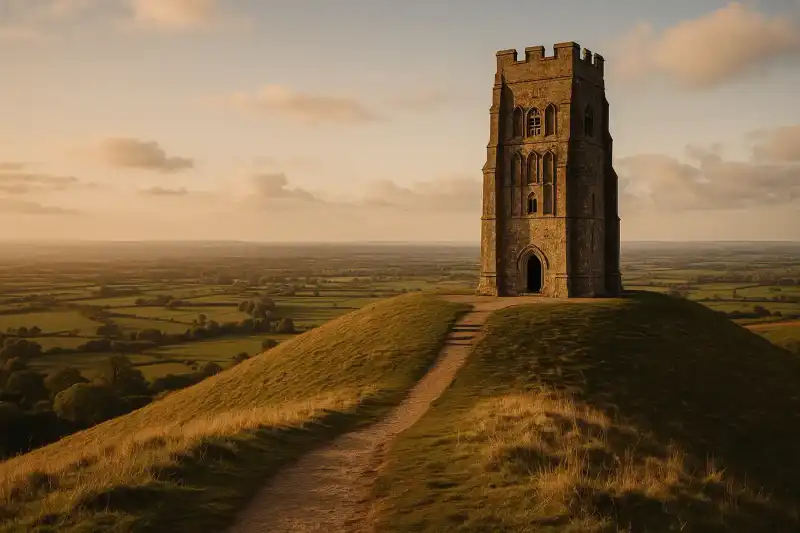
Glastonbury Tor Travel Guide 2026: Best Walk Times, History, and Visit Planning
Early Medieval EnglandPlan a smarter visit to Glastonbury Tor with practical climb timing, weather tips, and context on wh...
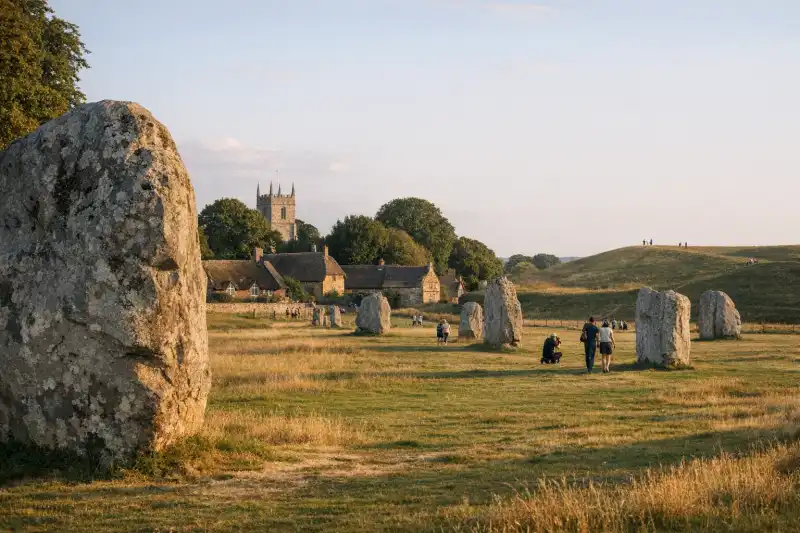
Avebury
Neolithic BritainExplore Avebury in the United Kingdom, a vast prehistoric stone circle and ritual landscape in the h...
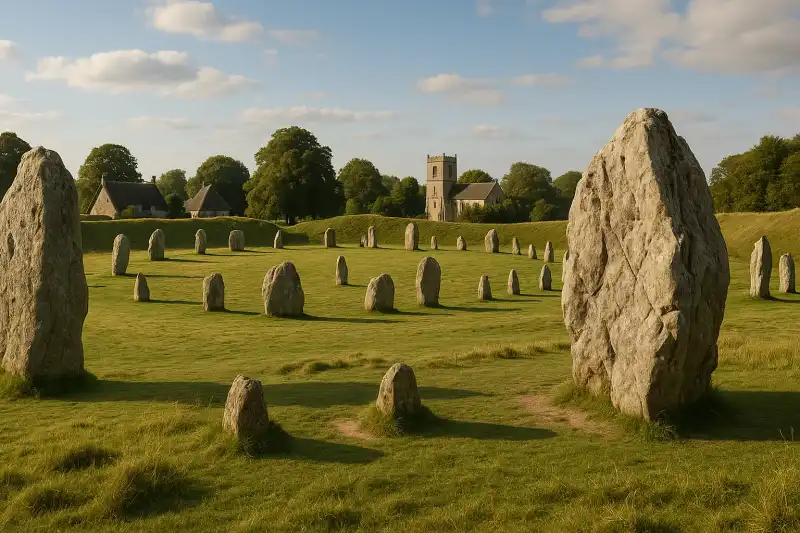
Avebury Stone Circle Travel Guide 2026: Best Walk Routes, History, and Visit Planning
Neolithic BritainPlan a stronger visit to Avebury Stone Circle with practical walking routes, landscape context, and ...