Quick Info
Curated Experiences
Maijishan Grottoes Day Tour from Tianshui
Silk Road Gansu Buddhist Grottoes Tour
Tianshui and Maijishan Private Guided Tour
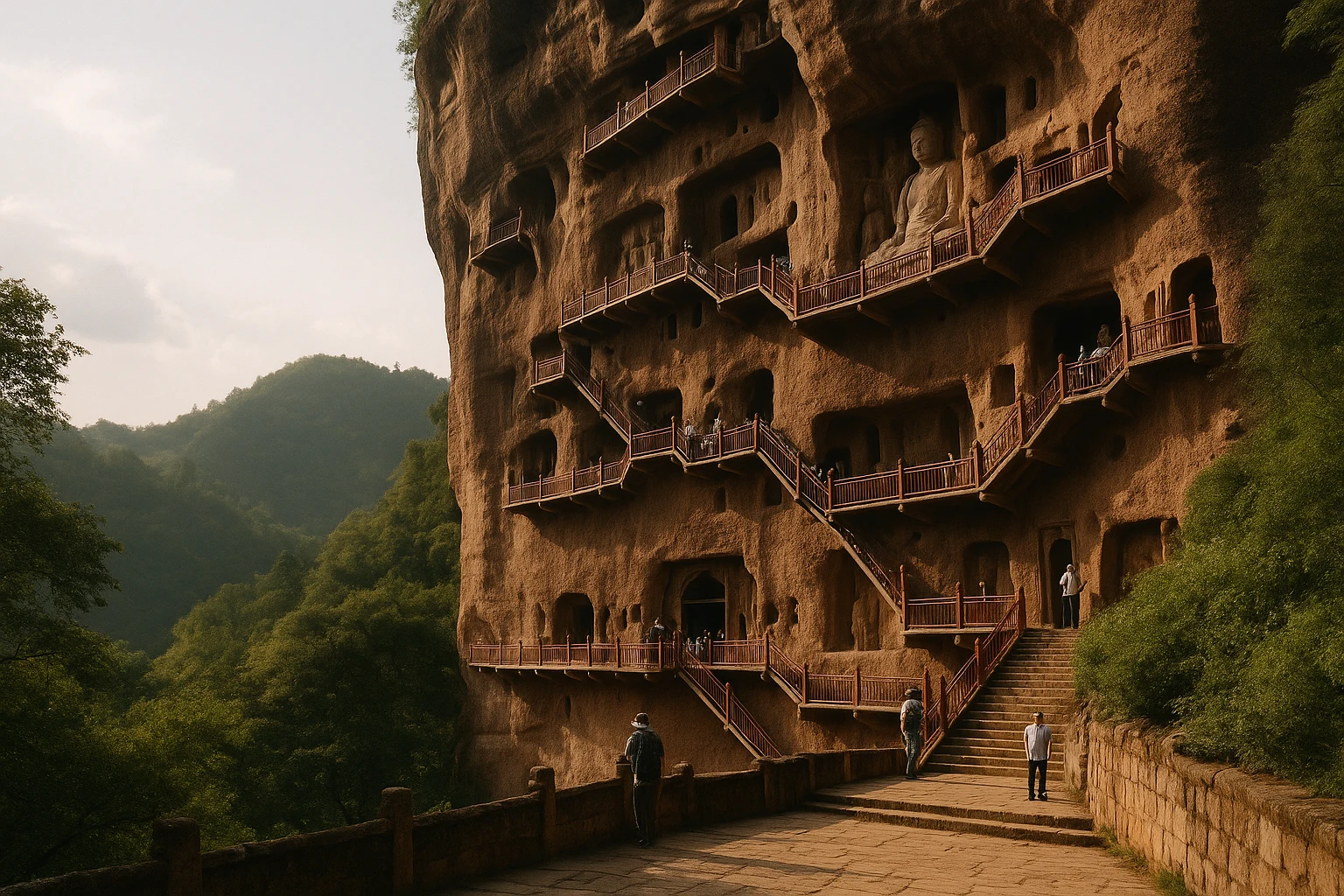
Clinging to the face of a sheer red-sandstone bluff that rises 142 metres from the pine-clad foothills of the Qinling Mountains, the Maijishan Grottoes rank among the most visually arresting sacred sites in all of China. The mountain’s name — literally “Wheat Stack Mountain” — comes from its uncanny resemblance to the rounded haystacks of the surrounding Gansu countryside, and it is into this stacked mass of rock that generations of Buddhist monks, royal patrons, and anonymous craftsmen carved 194 caves over a span of more than 1,600 years. Located in Gansu Province roughly 45 kilometres southeast of the city of Tianshui, Maijishan houses more than 7,200 sculptures in clay and stone, making it one of the richest repositories of Buddhist figurative art anywhere in Asia. Where other great Chinese grottoes built their reputations on the brilliance of their painted murals, Maijishan found its voice in three dimensions: its colossal standing Buddhas, expressive bodhisattvas, and tender devotional figures in painted clay represent a sculptural tradition with no close parallel in the ancient world. UNESCO recognised that singular importance in 2014 when it inscribed the site as part of the Silk Roads World Heritage corridor linking Chang’an with the Tianshan Range. To walk the narrow plank galleries bolted to the cliff face, peer through iron-grated doorways into candlelit niches, and look out across the forested valleys below is to experience one of antiquity’s great acts of devotion at close, sometimes vertiginous, range.
History
Origins in the Later Qin and Northern Wei Dynasties
The story of Maijishan begins in the turbulent post-Han era, when northern China fractured into a succession of short-lived kingdoms collectively known as the Sixteen States. Around 384–417 CE, during the reign of the Later Qin, monks affiliated with the prominent Buddhist teacher Tan Hong are believed to have begun excavating the first cells and meditation niches in the cliff. Buddhism had been filtering eastward along the Silk Road for several centuries by this point, and the Tianshui region sat astride one of its major overland arteries. What made Maijishan exceptional from the outset was its geology: the mountain’s soft red sandstone was poorly suited to the incised low-relief carving that characterised limestone-based grottos further east, so craftsmen developed a signature technique — building clay sculptures around wooden armatures anchored into the rock. That technical adaptation would define the site’s aesthetic for the next millennium and a half.
The Northern Wei dynasty (386–534 CE), which unified much of northern China and became Buddhism’s most ardent royal sponsor, transformed Maijishan from a modest monastic retreat into a major pilgrimage destination. Wei emperors funded large-scale campaigns of cave construction and commissioned the colossal figures that still dominate the upper cliff. The stylised, almost ethereal Wei aesthetic — elongated bodies, archaic smiles, flaring robes rendered in thin parallel lines — is visible across dozens of caves and marks some of the finest surviving examples of that distinctive court style anywhere in China.
The Sui, Tang, and Song Refinements
When the Sui dynasty reunified the empire at the close of the sixth century, royal patronage at Maijishan continued with fresh energy. Sui-era sculptors retained the monumental scale favoured by the Wei but softened the formal rigidity of earlier figures, introducing rounder faces and more naturalistic drapery that anticipate the confident Tang manner. The Tang period (618–907 CE) saw what many scholars consider the creative peak of Maijishan’s sculptural programme. Tang figures carry a palpable warmth and psychological presence: bodhisattvas tilt their heads with an almost conversational attentiveness, guardians swell with contained menace, and small donor figures — patrons who commissioned caves in exchange for spiritual merit — are rendered with portraiture-like individuality rare in earlier Buddhist art.
A catastrophic earthquake, probably in the late Tang or early Song period, split the mountain vertically and destroyed much of the central cliff section, permanently separating the eastern and western cave clusters and erasing an unknown number of works. The loss was immense, but the Song dynasty (960–1279) responded with extensive restoration campaigns and added new caves of its own, particularly in the eastern zone. Song craftsmen inherited a centuries-old clay-working tradition but inflected it with the period’s characteristic interest in narrative and lyrical detail.
Later Dynasties and Modern Rediscovery
The Ming and Qing dynasties added further works and maintained the wooden gallery infrastructure that made the upper caves accessible, though on a diminishing scale as Buddhism’s imperial sponsorship waned. Serious scholarly documentation of Maijishan began only in the 1940s, when a small team of researchers — working amid wartime disruption — produced the first systematic cave inventory. Large-scale conservation work commenced after 1949, stabilising sculptures, reinforcing gallery structures, and eventually enabling the limited public access that visitors experience today. In 2014, the site’s global significance was formally recognised through UNESCO inscription, bringing Maijishan into a world heritage corridor that stretches from the Tang capital of Chang’an (modern Xi’an) across Central Asia to the Tianshan foothills.
Key Features
The Cliff Face and Plank Walkways
The physical drama of Maijishan is inseparable from its architecture. The caves do not sit at ground level, approachable by a gentle path; they are punched into a near-vertical cliff at heights ranging from a few metres above the forested floor to over a hundred metres in the air. Access depends entirely on a system of wooden plank galleries — narrow, open-sided walkways cantilevered directly from the rock on timber and iron brackets — that zigzag across the face of the cliff in a pattern that appears, from a distance, almost like the rigging of an enormous ship. Walking these galleries is part of the Maijishan experience: the planks sway faintly underfoot, the drop to the tree canopy below is immediate and undeniable, and the sequence of cave openings — some grand enough to require ducking, others barely a fissure — unfolds around each corner as a series of intimate discoveries. The walkways divide broadly into an eastern zone and a western zone, separated by the earthquake-created gap, and most visitors complete a loop of both sections within two to three hours.
The Great Buddha Figures
Two colossal sculptures dominate Maijishan’s skyline and serve as its most recognisable emblems. The larger of the pair, a standing Buddha in the western cliff, rises approximately 16 metres and dates primarily to the Northern Wei period, though later dynasties repainted and partially remodelled the surface. Beside it stands a second monumental figure of comparable age. Both are worked in the characteristic Maijishan manner: a core of stacked stone and brick, packed with successive layers of coarse and fine clay, then painted with mineral pigments whose original brilliance has faded to warm ochres and earth tones. Seen from the valley floor at dusk, when the sandstone cliff glows amber and the upper caves fall into deep shadow, these figures acquire a presence that purely photographic reproduction cannot fully capture.
Clay Sculpture and the Painted Niche Tradition
If the cliff and its walkways provide the stage, Maijishan’s 7,200-plus sculptures are its substance. The range is extraordinary: from finger-length votive figurines tucked into rock-cut niches to seated Buddhas several metres tall, from stern military guardians bristling with painted armour to soft-featured celestial musicians caught mid-gesture. The clay-sculpture tradition developed here in response to the mountain’s unsuitable sandstone reached levels of technical and expressive sophistication that influenced Buddhist art across northwestern China. Particularly celebrated are the attendant bodhisattva figures of the Tang caves — works in which the clay medium’s capacity for subtle modelling is exploited to extraordinary effect in the rendering of sheer fabric, jewellery, and facial expression. The painted murals that line many cave walls, though less celebrated than Maijishan’s sculptures, add a further layer of iconographic richness: donors in period costume, celestial landscapes, and narrative scenes from the Jataka tales survive in varying states of preservation across the cave complex.
The Forest Setting and Surrounding Park
Maijishan does not rise from a desert or an open plain; it erupts from a dense temperate forest that fills the surrounding valleys with birdsong and, in spring, clouds of blossoming trees. The Maijishan Scenic Area encompasses roughly 215 square kilometres of protected mountain landscape, and many visitors extend their stay to walk trails through the forest, visit the smaller secondary grottoes scattered across the park, or simply sit in the shade below the main cliff and absorb a view that has drawn pilgrims and poets for sixteen centuries. The juxtaposition of sculptural grandeur and natural beauty gives Maijishan a quality distinct from any other major grottos site in China.
Getting There
Tianshui is the practical base for visiting Maijishan, and it is well connected to the wider Chinese rail network. High-speed trains (G and D series) link Tianshui South Station with Xi’an in roughly 1.5 to 2 hours (from around ¥100 second class) and with Lanzhou in about 1 hour (from around ¥70). From Beijing or Chengdu, travellers typically change in Xi’an or Lanzhou. Once in Tianshui, the most economical option to Maijishan is bus route 34, which departs from the North Bus Station (北站) and travels the 45-kilometre route to the scenic area entrance in approximately 60 to 90 minutes; fares run ¥10–15. Buses run from roughly 07:00 to 17:00 and frequency decreases in the afternoon, so an early start is advisable. Taxis or DiDi rideshares from Tianshui city complete the journey in around 50 minutes for approximately ¥80–100 one way. Organised day tours from Tianshui, bookable through hotels or online platforms, typically include transport and an English- or Chinese-speaking guide for ¥150–250 per person. There is no practical way to reach Maijishan directly from Xi’an without an overnight in Tianshui; the roundtrip distance makes a single-day excursion from Xi’an exhausting and inadvisable.
When to Visit
Maijishan’s forested mountain setting means its seasonal personality differs markedly from China’s desert grottos. Spring, roughly April through May, is widely regarded as the finest time to visit: temperatures in the Tianshui valleys range from 10°C to 22°C, the surrounding forest fills with flowering trees and fresh greenery, and tourist numbers remain moderate. The light in spring tends to be clear and directional, which is particularly valuable for photographing the cliff face and the sculptural detail visible through cave openings.
Summer (June through August) is warm to hot, with daytime temperatures reaching 28–32°C, and the forest is at its most lush. July and August bring higher rainfall — the Qinling foothills receive their heaviest precipitation at this time — and some days may see the cliff shrouded in low cloud or mist. While atmospheric, wet conditions make the plank walkways slick and reduce visibility for upper-cliff photography. Summer is also the peak domestic tourism season, meaning longer queues and more crowded galleries on weekends and national holidays.
Autumn, September through October, rivals spring as an ideal period. The forest turns amber and gold from mid-October, framing the red sandstone cliff in warm colour, and the light quality is excellent. Temperatures cool quickly after October, and by November the upper walkways can be chilly and damp. Winter sees few foreign visitors but offers serene quietude and occasionally spectacular frost-covered scenery; the caves remain open, though some upper-cliff sections may close during icy conditions. Whatever the season, a full visit to both the eastern and western cliff zones requires two to three hours of walking; add an hour or two for the surrounding forest trails if time allows.
| Quick Facts | |
|---|---|
| Location | Tianshui, Gansu Province, China |
| Coordinates | 34.37°N, 105.74°E |
| UNESCO Status | World Heritage Site (2014, Silk Roads serial inscription) |
| Caves | 194 numbered grottoes |
| Sculptures | More than 7,200 clay and stone figures |
| Murals | Approx. 1,300 sq m of painted wall surface |
| Height of cliff | ~142 metres |
| Founded | c. 384–417 CE (Later Qin dynasty) |
| Admission | ¥70–90 (standard); additional fee for guided restricted caves |
| Opening hours | 08:00–17:30 (last entry 17:00) |
| Nearest city | Tianshui (~45 km northwest) |
| Best months | April–May and September–October |
Frequently Asked Questions
Where are the Maijishan Grottoes located?
The Maijishan Grottoes sit about 45 kilometres southeast of Tianshui city in Gansu Province, northwestern China, within a forested mountain park.
How many caves and sculptures does Maijishan contain?
Maijishan holds 194 caves housing more than 7,200 clay and stone sculptures, together with approximately 1,300 square metres of painted murals spanning over a thousand years of Buddhist art.
When were the Maijishan Grottoes created?
Carving began during the Later Qin dynasty around 384–417 CE and continued through the Northern Wei, Western Wei, Northern Zhou, Sui, Tang, Song, Ming, and Qing periods — a creative tradition lasting more than 1,600 years.
Is Maijishan a UNESCO World Heritage Site?
Yes. The Maijishan Grottoes were inscribed in 2014 as part of the Silk Roads: the Routes Network of Chang'an–Tianshan Corridor, a serial UNESCO World Heritage Site.
How do you reach Maijishan from Tianshui?
From Tianshui's North Bus Station, bus route 34 runs directly to the Maijishan Scenic Area, a journey of roughly 60 to 90 minutes costing around ¥10–15. Taxis and rideshares take about 50 minutes for approximately ¥80–100.
Can visitors enter the caves themselves?
Visitors access the caves via a dramatic network of wooden plank walkways bolted directly to the cliff face. Some caves are open to walk through; others can be viewed through iron grates. A limited number require a separate guided permit available at the ticket office.
What makes Maijishan different from the Mogao Caves?
While Mogao at Dunhuang is celebrated for its flat-surface murals inside sand-carved chambers, Maijishan is renowned primarily for its three-dimensional clay sculpture tradition and its vertiginous setting on a steep forested mountain rather than a desert escarpment.
Nearby Ancient Sites
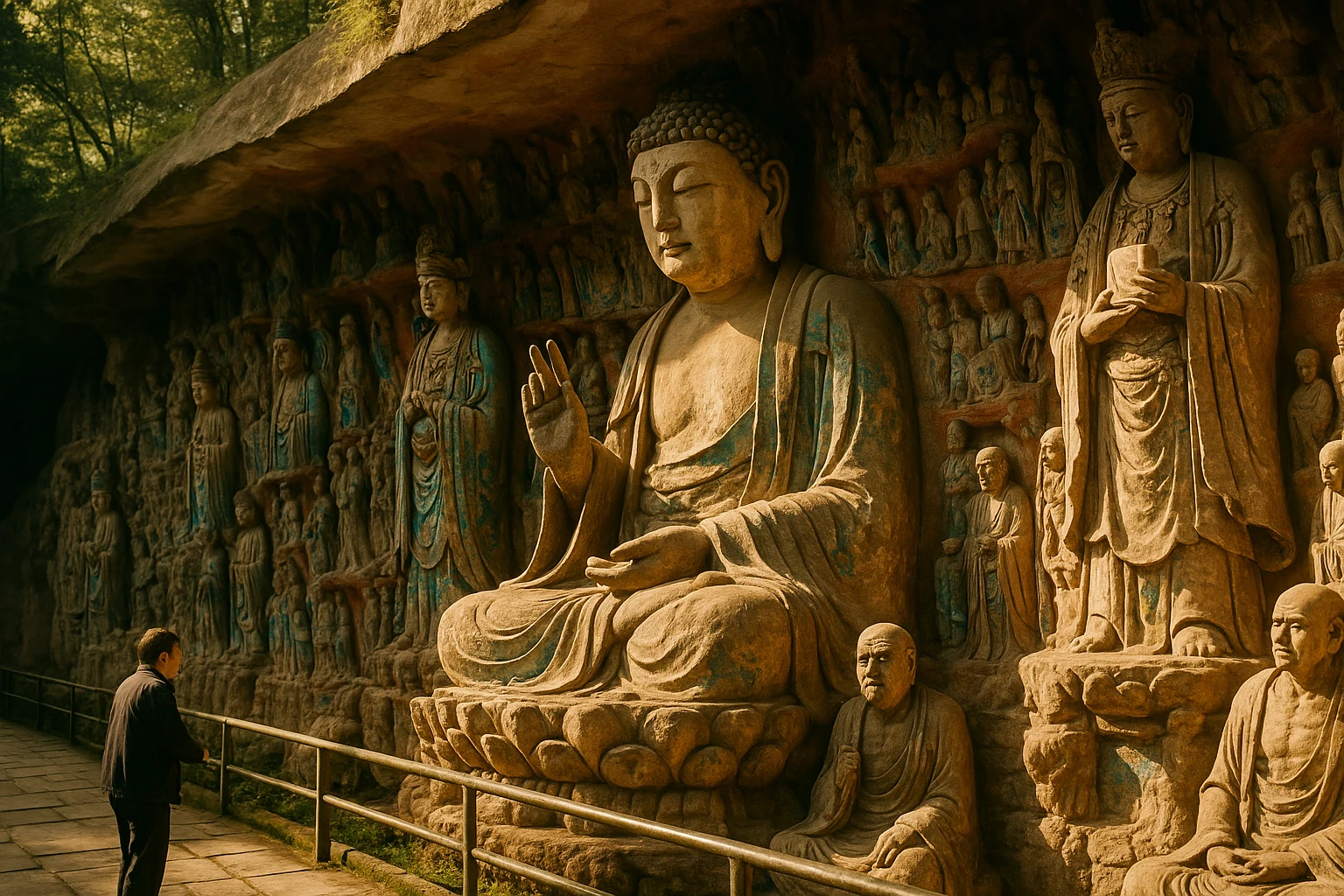
Dazu Rock Carvings
Tang and Song Dynasty ChinaAncient Buddhist, Taoist, and Confucian rock sculptures carved into cliffsides across Dazu District,...
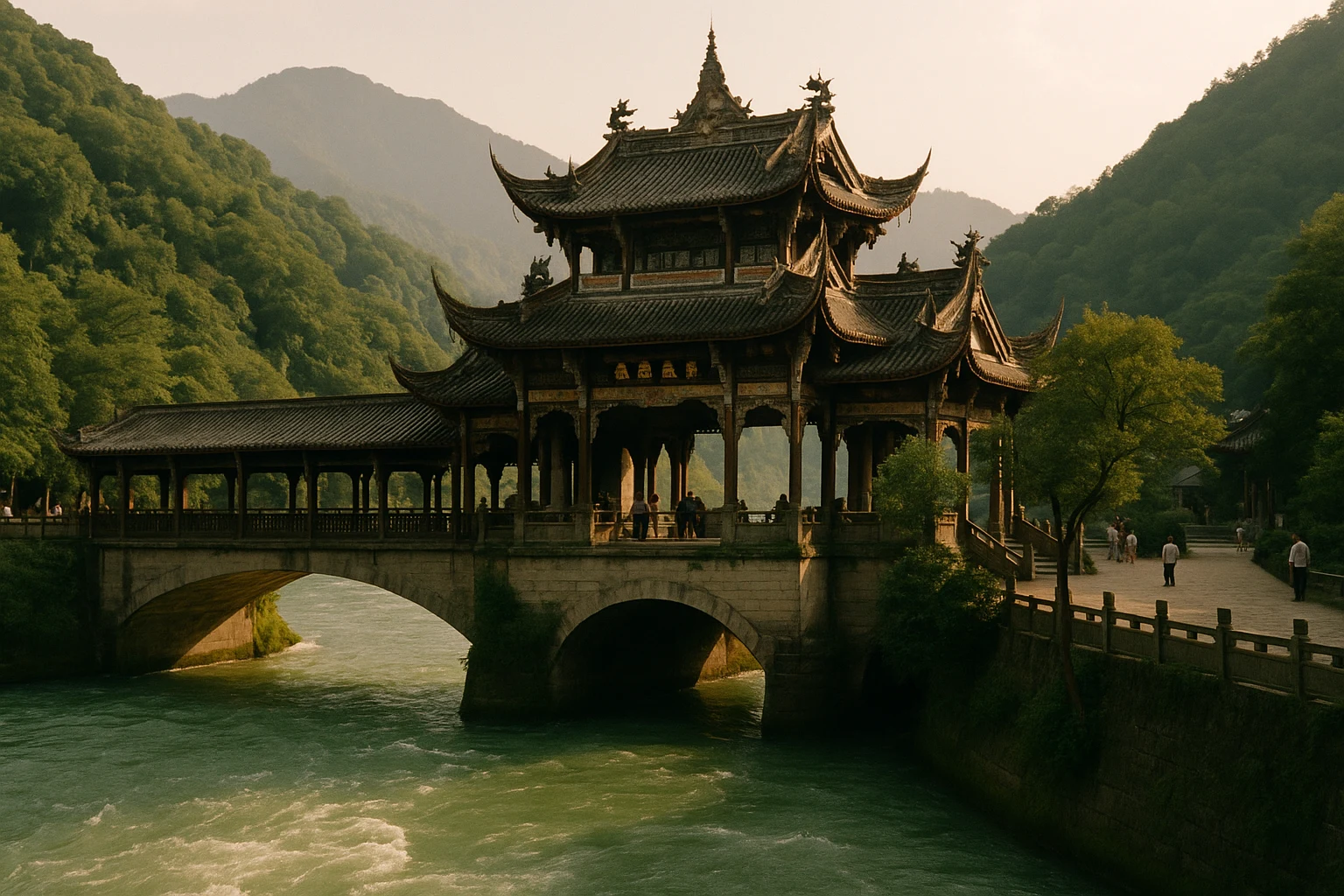
Dujiangyan Irrigation System
Explore Dujiangyan, the world's oldest functioning irrigation system, built in 256 BCE by engineer L...
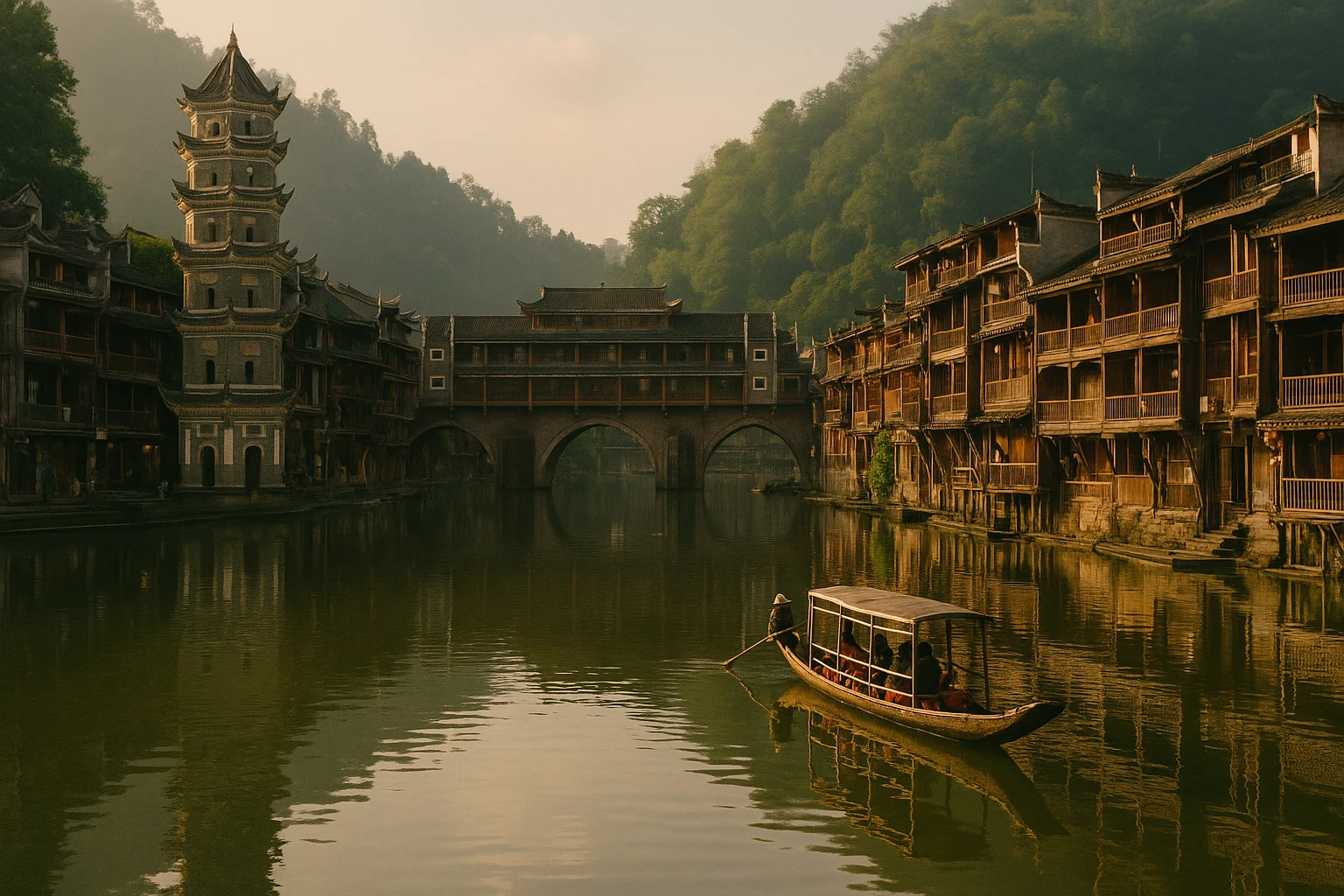
Fenghuang Ancient Town
Ming and Qing Dynasty ChinaFenghuang Ancient Town preserves Ming and Qing dynasty architecture along the Tuojiang River in west...
Great Wall of China Badaling Travel Guide 2026: Iconic Fortification
Chinese ImperialVisit Badaling, the most famous section of the Great Wall of China. Our guide covers tickets, cable ...