Quick Info
At a glance
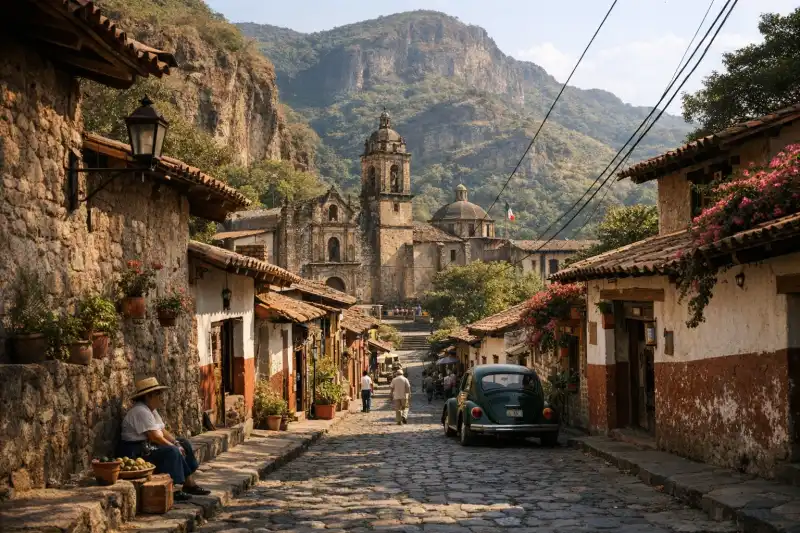
Malinalco, Mexico, is one of those places that feels layered in time from the first glimpse. Below the archaeological hill lies a town of tiled roofs, market streets, and colonial walls; above it rises a ceremonial complex cut into the mountain itself, where the Mexica shaped living stone into one of the most unusual sacred spaces in central Mexico. The setting is part of the experience. Valleys open between green ridges, the air often feels softer than in the capital, and the climb upward gradually separates you from everyday movement below.
For many travelers, Malinalco is a rewarding contrast to larger and more famous archaeological sites. It is smaller in scale, but more intimate in effect. Instead of vast avenues and towering pyramids, you find terraces, retaining walls, and a sanctuary carved directly from bedrock. The result is powerful because it feels inseparable from the mountain. This was not simply a city built on a hill; it was a place physically shaped out of the hill for ritual use.
The site also benefits from its broader cultural setting. A visit to Malinalco is rarely just about one monument. It often includes wandering the historic center, seeing the Augustinian convent with its remarkable murals, tasting local food, and pausing often to look back up at the rocky heights where the ancient ceremonial zone sits. That combination of archaeology, landscape, and living town makes Malinalco one of central Mexico’s most atmospheric destinations.
History
Early settlement in the valley
Long before the Mexica transformed the hill into a ceremonial center, the Malinalco valley was already inhabited. Its mild climate, defensible terrain, and access to water made it attractive for settlement over many centuries. Archaeological evidence from the broader region suggests occupation stretching back well before the Late Postclassic period, with agricultural communities and regional networks linking the valley to the wider highlands of central Mexico.
Like many places in Mesoamerica, Malinalco did not emerge in isolation. It was part of a changing political and cultural landscape in which towns, hill settlements, and ceremonial places developed according to local resources and regional rivalries. The valley’s location between highland and southern zones gave it strategic value, and that importance only increased as central Mexican powers expanded.
The name Malinalco is commonly linked to Malinalxochitl, a figure from Nahua tradition associated with magic and mythic migration stories. Whether understood through legend, political memory, or symbolic association, the name points to the deep cultural meaning attached to the place even before the surviving monumental remains were created.
Mexica conquest and sacred transformation
The best-known chapter in Malinalco’s history begins in the 15th century, during the era of Mexica expansion. As the Aztec Empire extended control across central Mexico, Malinalco became an important frontier and ceremonial center. The town’s incorporation into imperial networks likely had military, tributary, and religious dimensions. It sat in a region where control of routes and subject communities mattered, and it also offered a dramatic natural setting suitable for elite ritual architecture.
The most famous structure, usually called Temple I, is generally dated to the reign of the emperor Ahuizotl in the late 15th century. This monolithic sanctuary was carved directly from bedrock rather than assembled from separate masonry blocks. Its form and iconography have led many scholars to associate it with elite warrior orders, particularly the eagle and jaguar warriors. Inside, sculpted animal imagery and the circular arrangement of carved elements suggest ritual performances linked to initiation, status, sacrifice, or military symbolism.
Malinalco’s hilltop complex was therefore not merely local architecture. It expressed imperial ideology. The Mexica often reinforced power through sacred construction, creating places where conquest, religion, and political legitimacy merged. In Malinalco, the mountain itself became a stage for this transformation. Terraces, stairs, and ritual spaces reorganized the summit into a carefully controlled ceremonial environment.
Spanish arrival and colonial reshaping
The Spanish conquest of the early 16th century altered Malinalco profoundly, as it did much of Mesoamerica. Indigenous political structures were dismantled or reshaped, tribute systems redirected, and Christian institutions imposed. The hilltop ceremonial site lost its original ritual role, while the colonial town below gained new architectural and administrative importance.
One of the most important colonial monuments is the Augustinian convent, formally known as the Ex-Convento Divino Salvador. Built in the 16th century, it stands as a major example of early evangelization architecture in New Spain. Its murals, cloister spaces, and church reveal how missionaries sought to establish a new sacred order in places that already held deep indigenous significance. In Malinalco, the juxtaposition is especially striking: a rock-cut Mexica sanctuary above, a richly painted Christian convent below.
This was not a simple replacement of one culture by another. Indigenous labor, artistic traditions, and local memory continued to shape the town through the colonial period. Malinalco remained inhabited, cultivated, and ritually meaningful, even as official institutions changed.
Rediscovery, preservation, and modern tourism
In later centuries, antiquarians, scholars, and eventually archaeologists drew renewed attention to Malinalco’s pre-Hispanic remains. The hilltop structures, particularly the carved temple, stood out because they were so unlike standard pyramid forms elsewhere in central Mexico. Archaeological work helped document the terraces, stairways, platforms, and surviving sculpture, allowing the site to be interpreted more fully as a ceremonial complex rather than a single isolated monument.
Today Malinalco is both a protected archaeological zone and an active tourist destination. Visitors come for the famous temple, but many also appreciate the site’s manageable size and scenic setting. Preservation remains an ongoing concern, especially given erosion, weather exposure, and the impact of visitor traffic on a hilltop environment. Even so, Malinalco has retained much of the atmosphere that makes it special: the sense that ceremony, geology, and landscape were joined here in an unusually direct way.
Key Features
The defining feature of Malinalco is Temple I, one of the most extraordinary pieces of surviving Mexica architecture. Unlike a temple assembled stone by stone, this sanctuary was carved from the mountain itself. The façade, stair, and interior all feel bound to the rock mass from which they emerge. Its entrance resembles an open maw, often compared to an animal mouth, creating a threshold effect that is both architectural and symbolic. Crossing into the chamber is not like entering an ordinary room; it feels as though you are stepping into a sacred interior carved from the body of the earth.
Inside, the sculptural program is among the site’s greatest highlights. Carved seats and animal figures have long been linked to eagle and jaguar warrior imagery, suggesting that the chamber may have hosted rituals involving military elites. Even for visitors without specialist knowledge, the space communicates its purpose through form alone. It is enclosed, ceremonial, and deliberate. Light enters in controlled ways, surfaces curve around the visitor, and the carvings seem designed not simply to decorate but to organize ritual movement and status.
Around Temple I, the wider ceremonial zone reveals how carefully the hill was engineered. Retaining walls, platforms, and terraces reshape the mountain into a sequence of usable ritual spaces. The climb itself is part of the site’s design logic. As you ascend, the town drops away and the views open across the valley, reinforcing the separation between everyday life and elevated ceremony. Ancient builders took advantage of both natural slope and commanding sightlines, turning topography into architecture.
The viewpoints are another major feature, even if they are not ancient monuments in the strict sense. From the upper areas, visitors can look across the Malinalco valley toward cultivated land, houses, church towers, and surrounding mountains. These vistas help explain why the site mattered. It was not hidden or inward-looking. It occupied a visually strategic position from which landscape, authority, and sacred presence could be projected outward.
Although Temple I receives most of the attention, the surrounding remains matter because they provide context. Smaller platforms and structural traces show that Malinalco was a complex ceremonial environment, not just a single sculptural experiment. The arrangement suggests processions, controlled access, and differentiated ritual areas. This broader layout encourages a slower visit. Instead of seeing one famous monument and leaving, it is worth walking the site attentively and noticing how stairs, walls, and terraces guide the body through the hilltop setting.
Another important aspect of a visit is the relationship between the archaeological zone and the town below. Malinalco’s historic center complements the ancient site unusually well. The former Augustinian convent contains important mural painting and serves as a reminder that the valley’s sacred and artistic life continued after the fall of the Mexica Empire. Streets around the center are lined with shops, cafés, and small hotels, making the destination feel integrated rather than isolated. You can move in a single day from pre-Hispanic ritual architecture to colonial art to contemporary local life.
Finally, the atmosphere of Malinalco is one of its greatest features and one of the hardest to describe. The site does not overwhelm by scale. It works through position, texture, and concentration. The rock-cut temple, the upward path, the silence of the chamber, and the broad valley views create a memorable experience that lingers precisely because it feels so specific. There are larger archaeological sites in Mexico, and there are more famous ones, but very few combine mountain setting and carved architecture as effectively as Malinalco.
Getting There
Malinalco is most often reached from Mexico City, and the easiest option for most travelers is by car or private transfer. The drive usually takes around 2.5 to 3.5 hours depending on traffic, route, and departure point. Tolls and fuel can add up, but this remains the most flexible choice, especially if you want to leave early, stop in nearby towns, or return the same day. A private driver or organized day tour is more expensive but convenient, particularly for travelers who prefer not to navigate city traffic and mountain roads.
Public transportation is possible, though it usually requires more time and some patience. From Mexico City, travelers can take a bus toward Toluca or a regional hub and then connect onward by local bus or colectivo toward Malinalco. Prices vary by route and season, but budget travelers can generally expect to spend roughly MXN 180 to 350 total each way on combined bus and local transport. Travel time may stretch to 4 hours or more depending on connections.
From Toluca, regional buses and shared vans are usually the most practical public option, often costing roughly MXN 80 to 180 depending on service type. Once in town, many visitors walk to the base of the archaeological zone. From there, reaching the site involves an uphill approach and a stair climb, so comfortable shoes and water are essential.
Taxis within Malinalco are useful for short hops from hotels or the town center, and local fares are usually modest, often around MXN 50 to 120 depending on distance. If you are visiting independently, carrying some cash is wise for transport, snacks, and smaller businesses.
When to Visit
Malinalco can be visited year-round, but the best time for many travelers is during the dry season, roughly from November to April. During these months, skies are often clearer, the climb to the archaeological zone is more comfortable, and valley views are at their sharpest. Days can still become warm, especially around midday, so early morning is the ideal time to start your ascent. Arriving soon after opening gives you gentler temperatures and a quieter atmosphere at the temple.
The rainy season, usually from May to October, brings greener hillsides and a more lush landscape. This can be a beautiful time to visit, especially for photographers who want richer vegetation and dramatic cloud formations over the mountains. The trade-off is that afternoon showers are common, paths may be slippery, and humidity can make the climb feel more demanding. If you visit in these months, aim for a morning trip and pack rain protection.
Weekends and holidays tend to be busier because Malinalco is popular with domestic visitors making short escapes from Mexico City and Toluca. If your schedule allows, weekdays offer a calmer experience both in the archaeological zone and in town. This is especially helpful if you want to spend time absorbing the atmosphere of Temple I without as many people nearby.
Festival dates and religious celebrations can add cultural interest in the town, but they also increase accommodation demand and traffic. If you want a quieter archaeological visit paired with a relaxed stay, choose a weekday in the dry season and consider spending one night. That allows you to enjoy both the site and the town without rushing.
| Quick Facts | Details |
|---|---|
| Location | Malinalco, State of Mexico, Mexico |
| Main attraction | Rock-cut Mexica ceremonial temple on a hilltop |
| Cultural period | Late Postclassic |
| Best known structure | Temple I, often linked to eagle and jaguar warrior rituals |
| Typical visit length | 2 to 3 hours for the archaeological zone |
| Access difficulty | Moderate; uphill walk and stairs required |
| Best time to go | Dry season, especially November to April |
| Nearest major city | Toluca |
| Good base for visit | Malinalco town center or a day trip from Mexico City |
| Combined experience | Archaeological zone, colonial convent, valley views, local food |
Malinalco rewards travelers who appreciate places where setting and meaning are inseparable. Its carved sanctuary is impressive on its own, but the real impact comes from the whole experience of climbing above the town, entering a temple cut from living rock, and looking out over the valley that gave the site its importance. For visitors interested in Aztec history, sacred landscapes, or lesser-known archaeological destinations in Mexico, Malinalco offers something rare: a monument of imperial ambition that still feels rooted in the mountain from which it was made.
Guided tours: worth it?
Self-guided works here, but a guide can add real value if you want the ruins explained as a living place rather than just a sequence of monuments.
Best for
- First-time visitors who want context, not just photos
- Short visits where a planned route saves time
When to go self-guided
Go independently if you prefer setting your own pace, reading as you go, and checking official hours or ticket rules directly before you arrive.
What I’d avoid
Skip paid tours that bundle unrelated stops you do not actually want. The best option should either save meaningful planning time or add historical context you would miss on your own.
Malinalco Mexico tours
Useful when: you want to compare guided formats before deciding
Malinalco archaeological zone day trips
Useful when: transport or pickup logistics matter
Mexico City to Malinalco tours
Useful when: you want to compare guided formats before deciding
Some tour links are affiliate links, which may earn Ancient Travel a small commission at no extra cost to you. I try to surface options that make practical sense for the site—not just anything bookable.
Frequently Asked Questions
What is Malinalco known for?
Malinalco is best known for its hilltop Aztec ceremonial complex, especially Temple I, which was carved directly from living rock and likely used for elite military and ritual ceremonies.
Where is Malinalco located?
Malinalco is in the State of Mexico, southwest of Mexico City, in a mountain-ringed valley that has long been valued for its strategic and ceremonial setting.
How do you get to Malinalco from Mexico City?
Most visitors travel by car or private transfer from Mexico City in roughly 2.5 to 3.5 hours depending on traffic, though buses to nearby towns and regional connections are also possible.
Is Malinalco worth visiting?
Yes. Malinalco combines a rare monolithic temple, sweeping valley views, an appealing colonial town, and a manageable archaeological area that can be visited in half a day or paired with a longer cultural trip.
How much time do you need at Malinalco?
Allow around 2 to 3 hours for the archaeological zone itself, and longer if you want to explore the town, local museum, convent murals, or stay overnight.
Are there many stairs at Malinalco?
Yes. Reaching the archaeological zone involves a steep uphill walk and a stair climb, so comfortable shoes, water, and a moderate fitness level are recommended.
Nearby Ancient Sites
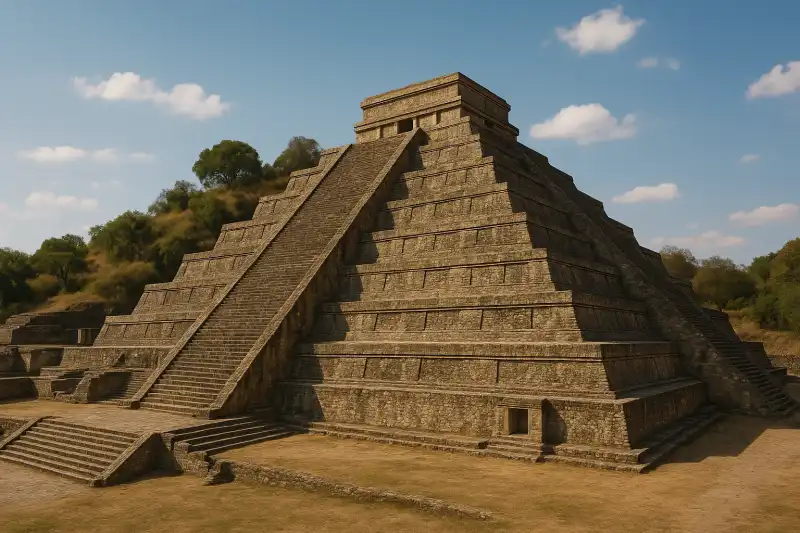
Great Pyramid of Cholula Travel Guide 2026: Tlachihualtepetl Essentials
Preclassic and Postclassic MesoamericanPlan a smart visit to the Great Pyramid of Cholula with key context, timing advice, and practical fi...
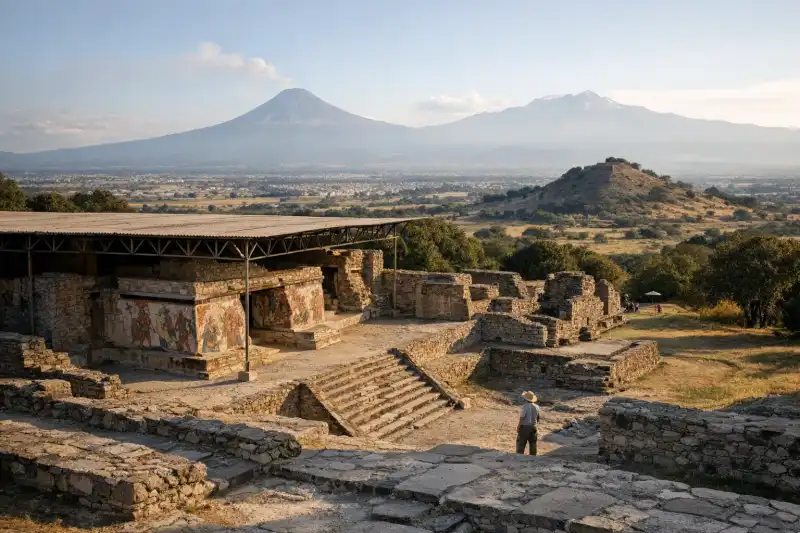
Cacaxtla
Olmeca-Xicalanca and broader Epiclassic Mesoamerican traditionsExplore Cacaxtla in Mexico, a hilltop archaeological site famed for vivid murals and Epiclassic hist...
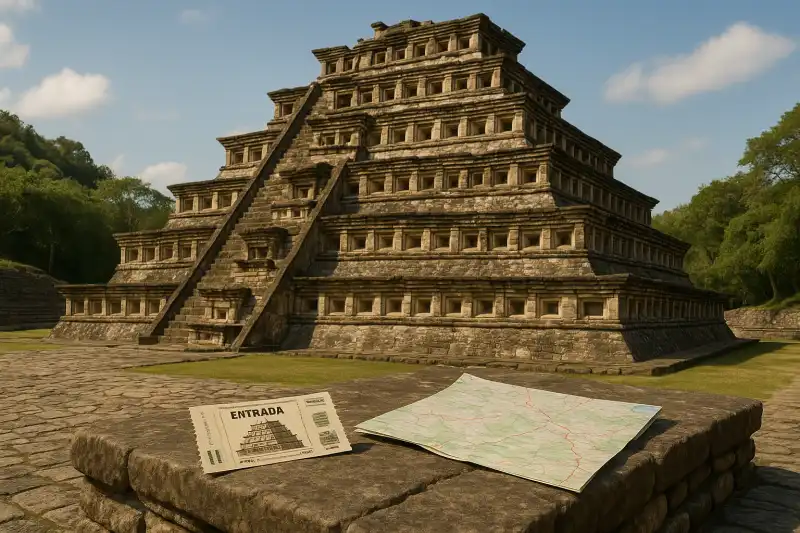
El Tajin Travel Guide 2026: Pyramid of the Niches, Tickets, and Route Planning
Classic VeracruzPlan a smoother El Tajin visit with practical transport timing, key structures to prioritize, and re...