Quick Info
Curated Experiences
Masada Sunrise & Dead Sea Day Trip from Jerusalem
Masada National Park Guided Tour
Masada, Ein Gedi & Dead Sea Full-Day Tour
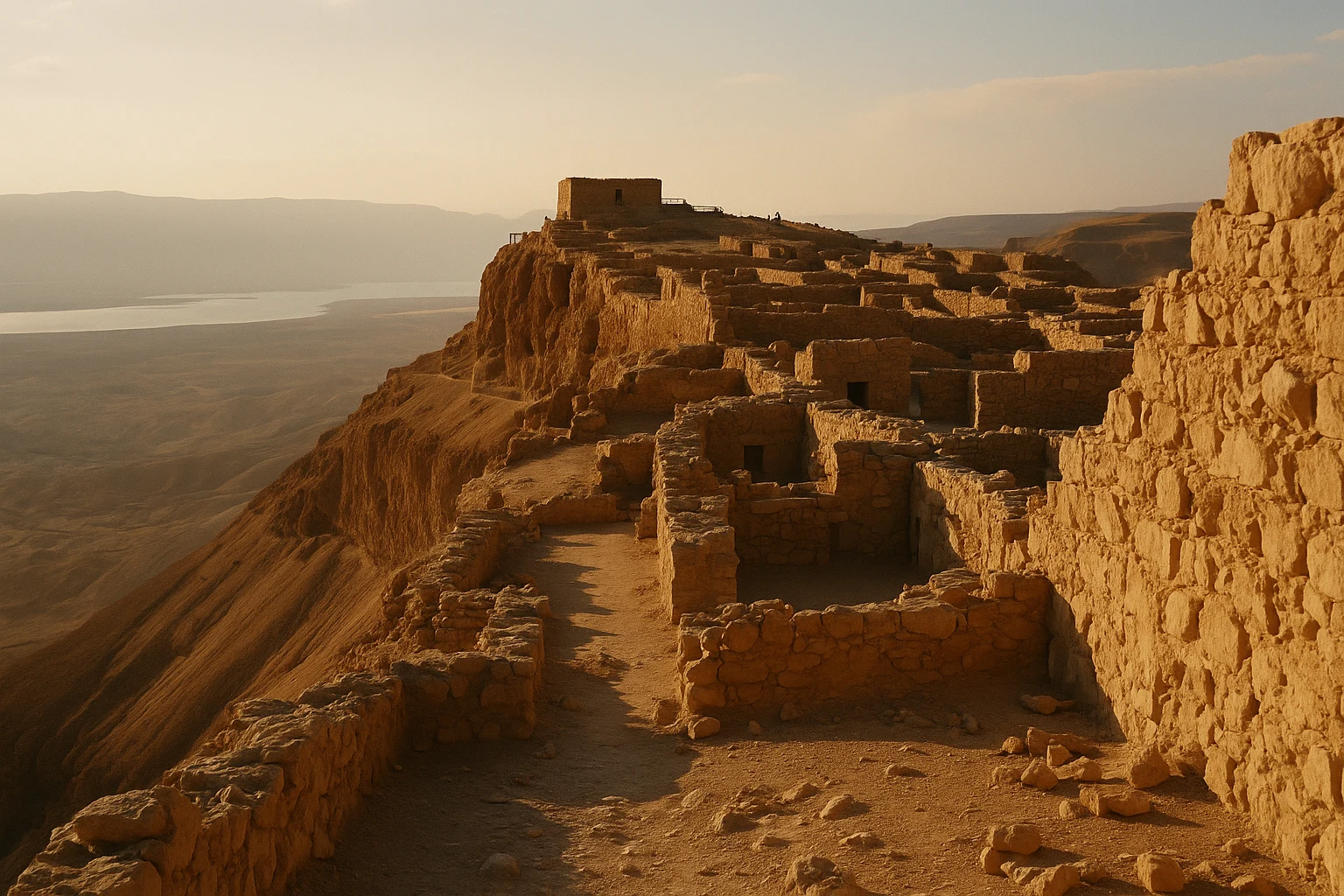
Rising nearly 450 metres above the shimmering expanse of the Dead Sea, Masada is one of the most viscerally powerful ancient sites on earth. The flat-topped mesa of dark Judean rock stands isolated in southern Israel’s desert wilderness, its vertical cliffs dropping away on every side like a natural altar lifted from the valley floor. From the plateau edge you see three countries at once — Israel to the west, Jordan’s reddish mountains across the water to the east, and the pale smear of Jordanian salt flats receding toward the south. Masada’s name likely derives from the Aramaic metzada, meaning “fortress,” and the landscape makes that etymology feel inevitable: there is nowhere on earth that looks more like a place someone chose to defend to the very end. The site encompasses Herod the Great’s extraordinary first-century BCE palace-fortress complex, preserved in remarkable detail by the hyper-arid climate, and it carries the weight of one of antiquity’s most debated final acts — the mass suicide, or mass murder, or heroic last resistance of nearly a thousand Jewish Sicarii rebels who refused to surrender to Rome. UNESCO inscribed Masada in 2001, recognizing both its architectural exceptionalism and its enduring symbolic power. For Israel, Masada is not merely a ruin; it is a cornerstone of national identity. For the rest of the world, it is simply one of the most arresting places in the ancient Mediterranean world, well worth the drive south from Jerusalem.
History
The Hasmonean Foundation
Masada’s story begins not with Herod but with the Hasmonean high priest Jonathan Maccabeus, who according to the first-century historian Flavius Josephus first built a stronghold on the plateau around 100 BCE. The site’s natural advantages were obvious: sheer cliffs on all sides, a summit large enough for cisterns and storage, and a commanding view of every approach through the Judean Desert. The Hasmoneans fortified it as a refuge of last resort, a place where the ruling dynasty could retreat if Jerusalem fell. It was used sporadically through the turbulent final decades of Hasmonean rule, when the family was locked in violent dynastic conflict and increasingly caught between the competing ambitions of Rome and Parthia.
Herod’s Palace-Fortress
The transformation of Masada into one of antiquity’s most remarkable architectural achievements belongs entirely to Herod the Great, client king of Judea under Rome from 37 to 4 BCE. Herod had personal reasons to value the site: years before becoming king, he had sheltered his family on Masada while fleeing his enemies, and the memory of that refuge stayed with him. Between roughly 37 and 31 BCE he undertook an almost incomprehensible building campaign on the plateau, constructing not merely a military installation but a royal estate of extraordinary luxury in the middle of a waterless desert.
The centerpiece was the Northern Palace, a three-tiered structure cantilevered down the northern cliff face in a series of terraces, each supported by massive retaining walls. The upper terrace contained the king’s private apartments; the middle terrace, accessible by a rock-cut staircase, held a circular pavilion with painted walls and mosaic floors; the lower terrace was a formal reception hall with columns, frescoes, and bathhouse facilities. Herod also built a large Western Palace that served as the primary administrative residence, a Roman-style bathhouse with a caldarium (hot room), tepidarium (warm room), and frigidarium (cold room), and storehouses capable of holding provisions for thousands of people for years. Most impressively, he engineered an elaborate rainwater collection and aqueduct system that filled twelve enormous cisterns hewn into the western rock, providing Masada with a water supply far exceeding what any desert fortress had any right to possess.
The Sicarii Rebellion and the Roman Siege
When the First Jewish-Roman War erupted in 66 CE, a group of Jewish rebels known as the Sicarii — named for the short curved daggers (sica) they carried — seized Masada from its Roman garrison and made it their base. While Jerusalem burned and the Temple fell in 70 CE, the Sicarii at Masada held out under their leader Eleazar ben Ya’ir, raiding nearby settlements for supplies and refusing to submit to Rome. In 73 CE (some scholars say 74 CE) the Roman governor Lucius Flavius Silva arrived with the Tenth Legion, perhaps fifteen thousand soldiers and support personnel, and constructed a complete circumvallation wall around the mesa — the remains of eight Roman siege camps and the connecting wall are still clearly visible from the plateau today.
The Romans then built an enormous earthen ramp against the western cliff, using Jewish prisoners as laborers — a choice that, according to Josephus, prevented the defenders from attacking the construction. When the ramp was complete and a battering ram had breached the casemate wall, Josephus records that Eleazar convened the defenders and persuaded them to choose death over enslavement. The men killed their families, then drew lots to determine who would kill the remaining men, and the last man killed himself. When Roman soldiers entered the following morning they found 960 bodies. Two women and five children who had hidden in the cisterns survived and told the story to the Romans, who told it to Josephus, who told it to the world.
Archaeological evidence for the mass suicide is ambiguous — excavations found only a few dozen skeletal remains — and historians debate whether Josephus’s account is accurate, embellished, or largely invented. The moral and historical complexity only deepens Masada’s power.
Key Features
The Northern Palace is the architectural marvel that justifies every step of the ascent. Standing on the upper terrace and looking down the three-tiered cascade of colonnaded platforms against sheer cliff face is an experience that defies easy description. Herod’s engineers embedded the lowest terrace into the rock at a point where the cliff becomes virtually vertical, and when you stand at the edge of the summit looking down at it — the columns, the frescoed walls still bearing traces of color, the bathhouse with its hypocaust heating system intact — you understand immediately that you are looking at the work of someone with enormous technical ambition and essentially unlimited resources.
The Roman bathhouse on the plateau summit is among the best-preserved examples of a Roman bath complex in the entire Middle East. The black-and-white mosaic floors of the cold room have survived largely intact, their geometric patterns still crisp after two millennia. The tile heating system beneath the caldarium floor — rows of terracotta pilasters supporting a raised floor through which hot air circulated — is fully exposed and comprehensible even to a non-specialist. The plastered walls of the hot room still bear the palm-leaf fresco designs applied during Herod’s construction, preserved by the desert’s absolute dryness in a way that would be impossible in a Mediterranean climate.
The Western Palace complex, the largest building on the plateau at roughly 4,000 square metres, functioned as the primary royal residence and administrative center. Its throne room retains a stunning polychrome mosaic floor — circles, rosettes, and geometric borders in terracotta, black, white, and yellow — that is exceptional for its period and survives in a condition that would embarrass many better-known Roman mosaic sites in Italy.
The synagogue at Masada is one of the oldest identified synagogue structures in the world. Built during Herod’s reign and modified by the Sicarii rebels, who added tiered benches and plastered the floor, it sits in the northwestern corner of the plateau. Inside the Sicarii concealed scrolls, including fragments of Ezekiel and the Songs of the Sabbath Sacrifice, which were discovered during Yigael Yadin’s excavations in the 1960s.
The casemate wall that runs the entire perimeter of the plateau — a double wall with rooms between the two skins — housed the Sicarii community during the siege years. Many of the rooms show evidence of domestic occupation: cooking hearths, storage vessels, loom weights, personal objects. One room yielded ostraca (pottery sherds used as writing surfaces) inscribed with individual names, including one that reads “ben Ya’ir,” possibly the very lot-drawing pottery described by Josephus.
The view from the plateau is itself a feature. The Dead Sea, the lowest body of water on earth, lies 400 metres below and several kilometres to the east, a mirror of cobalt and silver in a landscape entirely stripped of softness. Jordan’s mountains rise in shades of apricot and rose on the far shore. To the south and west the Judean Desert stretches away in folds of bare limestone, silent and immense.
Getting There
Masada lies roughly 90 kilometres south of Jerusalem via Route 1 (toward the Dead Sea) and then Route 90 south along the Dead Sea shore. By car the drive takes about 90 minutes from Jerusalem and 45 minutes from Ein Gedi. Parking at the eastern (cable car) base is free.
By public bus, Egged Bus 486 runs from Beersheba Central Bus Station to the Masada junction (approximately 1 hour, around ₪25); Bus 444 connects Jerusalem to the Dead Sea and stops at Masada en route (approximately 2 hours, around ₪40). From Tel Aviv, take a bus or train to Jerusalem and change for one of the above services. The last return buses depart in the late afternoon, so check current Egged timetables before visiting independently.
Organized day tours from Jerusalem and Tel Aviv are extremely well-developed and range from budget minibus options (around $60–80 USD per person) to premium guided experiences including sunrise access ($120–180 USD). Most combine Masada with Ein Gedi Nature Reserve and a float in the Dead Sea, which makes practical geographic sense.
The cable car on the eastern side runs from the visitor center to the plateau in approximately three minutes and costs around ₪80 return (check current pricing). The Snake Path hike on the eastern face takes 45–75 minutes upward depending on fitness. The Roman Ramp trail on the western side is significantly shorter — 20–30 minutes — and is reached via a dirt road from the western side of the site. The national park entrance fee is around ₪29 per person; cable car is an additional charge.
When to Visit
Masada is genuinely a year-round destination but the timing of your visit within each season matters considerably. The plateau sits in the Judean Desert rain shadow, one of the driest environments in Israel, and summer heat is extreme. July and August temperatures on the exposed summit regularly exceed 38–42°C (100–108°F) by mid-morning, and the cable car lines grow long. If visiting in summer, the pre-dawn sunrise tour is not just atmospheric — it is the only sensible way to experience the site without suffering. Organized sunrise tours typically arrive at the base by 5 AM and reach the summit in time for first light over the Jordanian mountains.
Spring (March through May) and autumn (October through November) are the most comfortable seasons for a full visit. Temperatures in the 20–28°C range allow you to explore the plateau unhurried, hike either trail, and linger at the palace terraces without wilting. Spring brings occasional desert wildflowers in the wadis below. Winter (December through February) is cold — sometimes below 10°C at the summit with wind — but the light is extraordinary for photography, the crowds are thin, and the Dead Sea is often dramatically misty. Rain is rare but not unknown; the roads are safe and the site remains open.
The sunrise experience deserves special emphasis regardless of season. Watching the sun clear the Jordanian plateau and flood the Dead Sea basin with copper light while standing on Herod’s terrace is among the great atmospheric moments available to any traveler in the Middle East. Book organized sunrise transport in advance from Jerusalem during spring and autumn, when demand is highest.
| Quick Facts | |
|---|---|
| Location | Southern District, Israel |
| Coordinates | 31.3156° N, 35.3535° E |
| Elevation | 61 m above sea level (plateau); ~450 m above Dead Sea |
| UNESCO Status | World Heritage Site (inscribed 2001) |
| Civilization | Hasmonean / Herodian / Roman |
| Period | c. 100 BCE – 73/74 CE |
| Built by | Herod the Great (primary construction, 37–31 BCE) |
| Key Event | Siege of Masada, Roman Tenth Legion (73/74 CE) |
| Site Size | ~1.8 km² plateau (approximately 600 m × 300 m) |
| Opening Hours | 8 AM – 5 PM (summer until 4 PM for entry) |
| Entrance Fee | ~₪29 (site); ~₪80 (cable car return) |
| Nearest City | Ein Gedi (~20 km north); Beersheba (~70 km southwest) |
| Getting There | Bus 444/486, organized tours, or self-drive Route 90 |
Frequently Asked Questions
How do you get to the top of Masada?
Visitors can ascend via cable car (takes about 3 minutes) or hike one of two trails. The Snake Path on the eastern side takes 45–75 minutes; the Roman Ramp on the western side is shorter at 20–30 minutes. The cable car operates daily and is the most popular option.
How long does a visit to Masada take?
Allow 2–3 hours minimum to explore the plateau thoroughly, plus travel time. If you hike up rather than take the cable car, add an hour each way. Most visitors combine Masada with a stop at the Dead Sea and Ein Gedi, making it a full day trip.
What is the best time of day to visit Masada?
Sunrise is the most popular time—arriving at dawn lets you watch the sun emerge over Jordan and the Dead Sea before the desert heat becomes intense. Guided sunrise tours depart from Jerusalem around 4–5 AM. Avoid midday visits in summer when plateau temperatures can exceed 40°C (104°F).
Is Masada a UNESCO World Heritage Site?
Yes. Masada was inscribed on the UNESCO World Heritage List in 2001, recognized for its outstanding universal value as a symbol of Jewish heroism and as a remarkably preserved example of Herodian palatial architecture in a desert landscape.
What is the 'Masada Complex' in Israeli culture?
The 'Masada Complex' (or Masada syndrome) is a term used in Israeli cultural and political discourse to describe a siege mentality—the psychological readiness to fight to the last rather than surrender or be captured. It derives from the Jewish Sicarii defenders' choice of death over Roman subjugation in 73–74 CE.
Are there facilities at Masada?
Yes. The Masada National Park visitor center at the base includes a museum, café, restrooms, and the cable car station. On the plateau itself there are shaded rest areas but no food or drink vendors, so bring water—at least two liters per person in summer.
Can you visit Masada independently without a tour?
Absolutely. Masada is served by Egged Bus 486 from Beersheba and Bus 444 from Jerusalem (via Ein Gedi). The national park entrance fee covers the cable car discount or trail access. Self-guided audio guides are available at the visitor center, and audio guide apps are downloadable in advance.
Nearby Ancient Sites
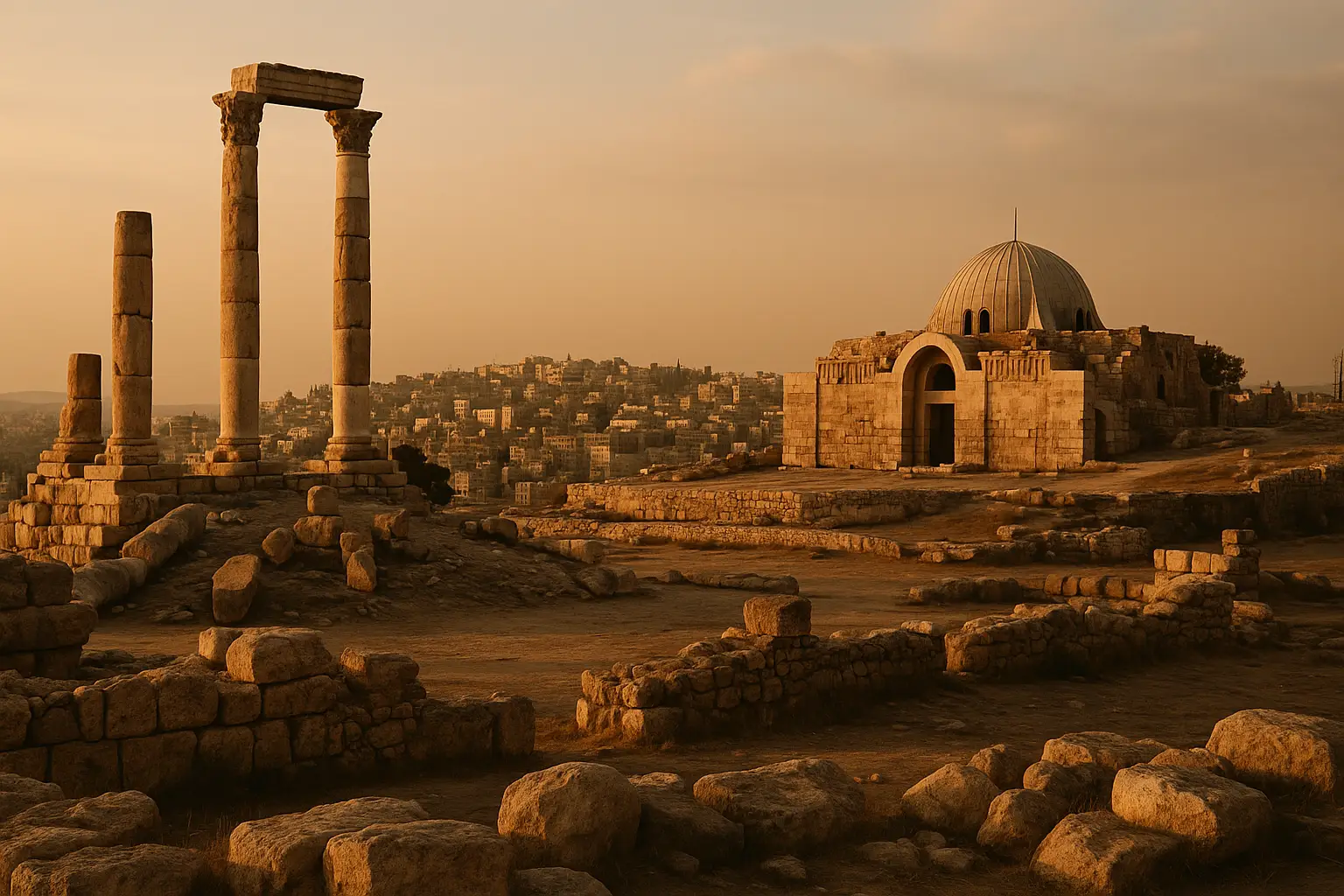
Amman Citadel Jordan Guide 2026: Temple of Hercules & Ancient Rabbah
Ammonite-Roman-UmayyadExplore Jordan's ancient citadel overlooking modern Amman. Discover the Temple of Hercules, Umayyad ...
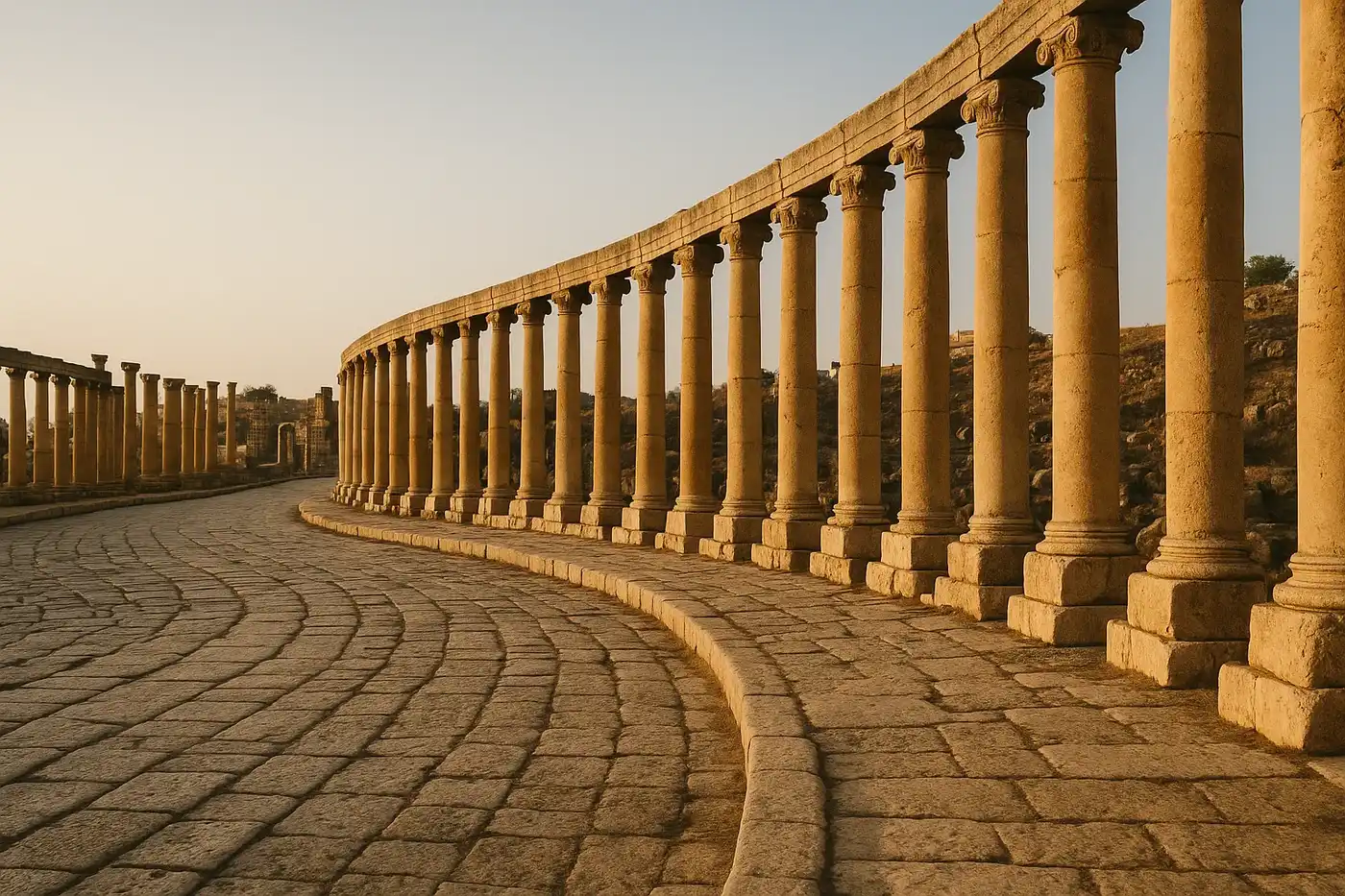
Jerash: The Pompeii of the East and Jordan's Best-Preserved
Roman / NabataeanDiscover Jerash, Jordan's remarkable Roman ruins. Walk the colonnaded streets of ancient Gerasa, exp...
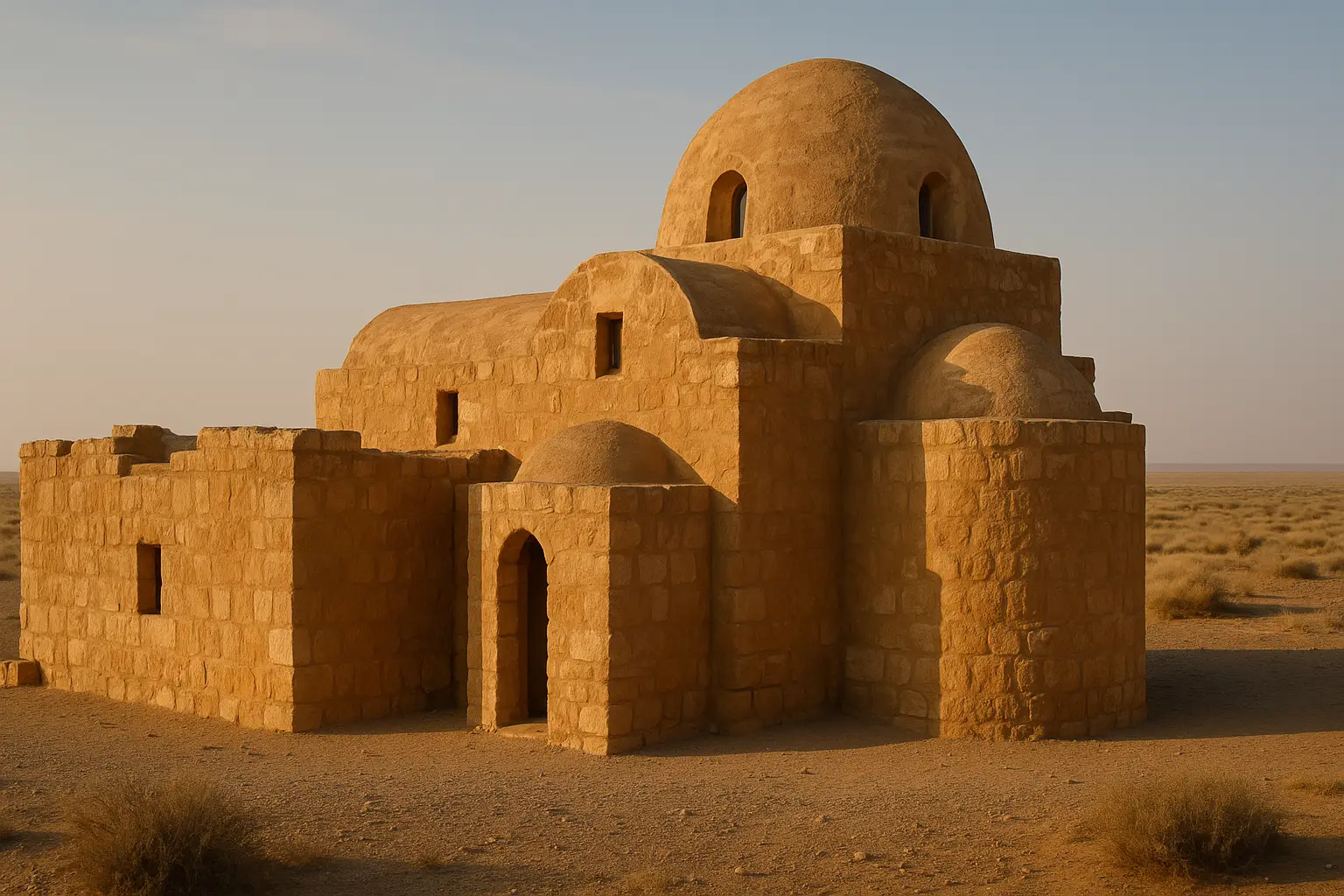
Qasr Amra Jordan Travel Guide 2026: Desert Castle Frescoes
UmayyadDiscover Qasr Amra's extraordinary 8th-century frescoes in Jordan's eastern desert. Our guide covers...
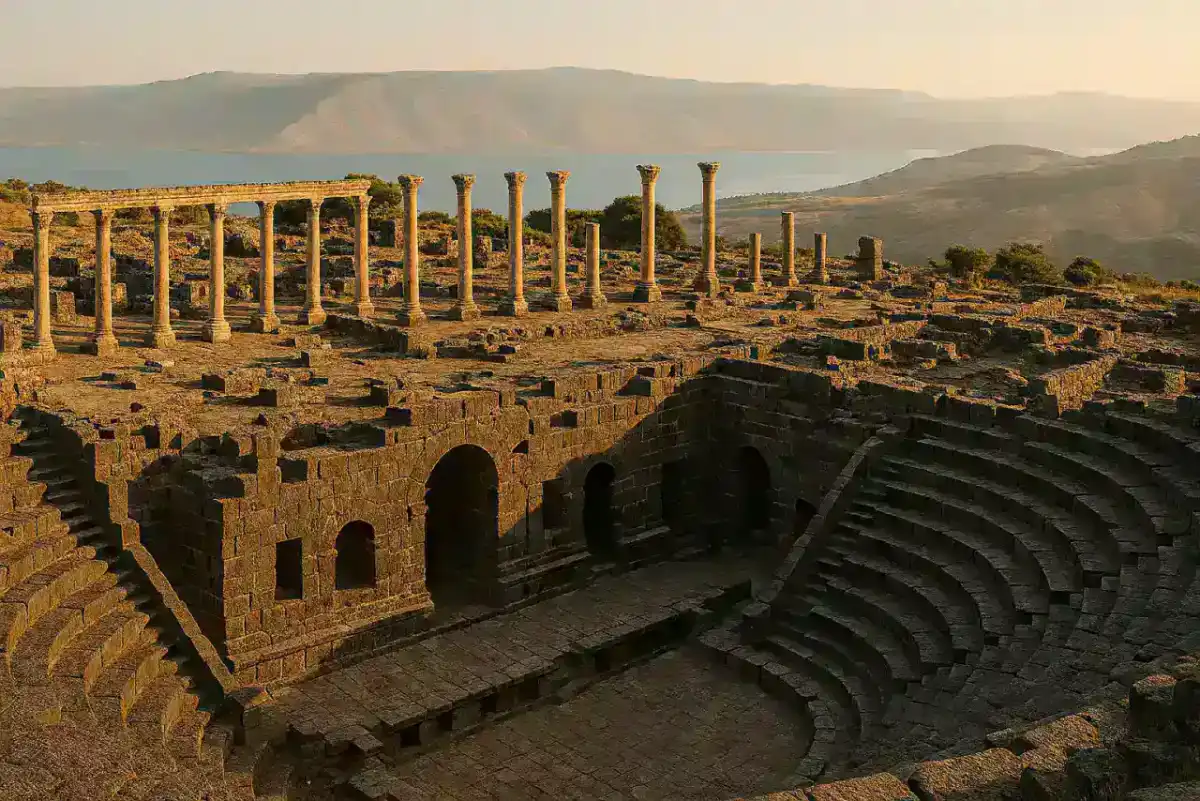
Umm Qais Jordan Travel Guide 2026: Gadara & Views to Galilee
Greco-Roman (Decapolis)Visit Umm Qais, ancient Gadara, for dramatic views over the Sea of Galilee, Golan Heights, and Jorda...