Quick Info
You hear the Sassi before you understand them. Somewhere below the lip of a modern street, voices bounce off tufa walls, a door opens into what looks like solid rock, and the geometry of the city drops away into a ravine carved by the Gravina stream. Matera does not present itself all at once. You descend into it, lane by lane, staircase by staircase, until you realize that the buildings, the churches, the cisterns, and the streets were all pulled from the same pale limestone geology over thousands of years of continuous habitation.
This is not an archaeological park with a ticket gate and a museum shop. The Sassi di Matera are a living UNESCO World Heritage landscape where people sleep in converted cave dwellings, eat in restaurants carved from bedrock, and walk routes that Neolithic settlers, Byzantine monks, and medieval peasants wore into the stone long before the first paving was laid. The ravine districts of Sasso Barisano and Sasso Caveoso together form one of the oldest continuously inhabited urban environments in Europe.
If you are building a southern Italy itinerary around deep history rather than imperial spectacle, Matera is essential. It is the place where settlement, geology, water engineering, and faith layer on top of each other in a way that no single-period ruin can match.
Historical Context
Human habitation in the Matera ravine system reaches back to the Paleolithic. Natural caves in the Gravina gorge provided shelter and defensible positions that attracted settlers long before anything resembling a town existed. By the Neolithic period, communities were shaping these cavities for storage and dwelling, creating the first chapter in what would become a remarkably long urban story.
The Byzantine period brought a wave of monastic settlement that left one of the Sassi’s most distinctive legacies: the rupestrian churches. Between roughly the 8th and 13th centuries, monks carved chapels, hermitages, and small congregational spaces directly into the rock, decorating many with frescoes in Greek-influenced styles. Over 150 rock churches have been identified in the broader Matera area, and their survival gives the landscape a sacred texture that complements the domestic cave architecture.
During the medieval and early modern periods, the Sassi evolved into dense urban districts. Families expanded natural caves by adding tufa-block facades, creating a distinctive architectural hybrid where the front of a house might look conventional while the rear rooms burrowed deep into the hillside. Water management became increasingly sophisticated, with cisterns, channels, and collection systems threading through the neighborhoods. The result was a self-regulating urban ecology where rainwater, gravity, ventilation, and shared walls all worked together.
By the mid-20th century, however, the Sassi had become a symbol of southern Italian poverty. Overcrowding, disease, and lack of sanitation led the Italian government to forcibly relocate thousands of residents in the 1950s and 1960s. The districts were largely abandoned and left to deteriorate. It was only in the 1980s and 1990s that restoration began in earnest, driven partly by the 1993 UNESCO World Heritage designation. Today, the Sassi are a fully revived cultural district with boutique hotels, galleries, restaurants, and cultural institutions occupying the same cave spaces that were once condemned as uninhabitable.
That arc from prehistoric cave to modern hotel room is what makes Matera unique. You are not visiting a ruin. You are visiting a city that has been continuously reinvented from the same raw material for at least 9,000 years.
What to See
Sasso Barisano
Sasso Barisano is the larger and more commercially developed of the two main districts, spreading north of the central ridge that separates the Sassi. Most visitors encounter it first, and it serves as an effective orientation zone. The facades here tend to be more refined, with medieval and later stonework layered over older cave openings. Restaurants, small hotels, and craft shops now fill many of the rehabilitated spaces, giving the district an alive-and-working quality that purely archaeological sites cannot replicate. Walk the main arteries first to get your bearings, then lose yourself in the narrow side lanes where the cave origins of the neighborhood become more visible. The best approach is to keep descending until you reach viewpoints overlooking the Gravina gorge, where the full vertical drama of the district reveals itself.
Practical tip: Start your walk from Via Fiorentini or Piazza Vittorio Veneto, where orientation signage helps you pick up the main circulation routes before the lanes narrow.
Sasso Caveoso
Sasso Caveoso occupies the southern face of the ravine and feels noticeably older and more raw than its neighbor. The terracing is steeper, the cave openings more prominent, and the sense of geological habitation more immediate. This is where Matera’s identity as a “cave city” hits hardest visually. The district steps down in dramatic tiers toward the gorge floor, and the afternoon light falling across these layered facades produces some of the most striking urban scenery in southern Europe. The churches of San Pietro Caveoso and Santa Maria de Idris anchor the lower sections, while residential lanes above them preserve the texture of pre-evacuation Matera.
Practical tip: Late afternoon light (roughly 4:00 to 6:00 PM in shoulder seasons) is best for photography in Sasso Caveoso. The southwest-facing terraces catch warm light that defines every surface and shadow.
Casa Grotta (Furnished Cave House Museums)
Visiting at least one casa grotta is essential for decoding what the Sassi looked like as working neighborhoods. These recreated cave dwellings show the full domestic arrangement: sleeping areas, cooking zones, animal pens, cistern access, and the ingenious ventilation strategies that kept subterranean rooms livable. The most visited casa grotta museums are located in Sasso Caveoso, with entrance fees typically running $3 to $5 USD. They take 20 to 30 minutes each and completely reframe how you read every doorway and alley for the rest of your walk.
Practical tip: Visit a casa grotta early in your day, before you have walked the full districts. The context it provides will make everything else you see more legible.
Rupestrian Churches (Chiese Rupestri)
The rock-cut churches are Matera’s sacred signature. Santa Maria de Idris, perched on a conical rock outcrop above Sasso Caveoso, offers both faded Byzantine frescoes and a dramatic exterior vantage point. Santa Lucia alle Malve, one of the oldest rupestrian sites in the city, preserves fragmentary frescoes from the 8th and 9th centuries. The Crypt of Original Sin, located in the Gravina gorge outside the city center, is sometimes called the “Sistine Chapel of rupestrian art” for its vivid 9th-century paintings, though it requires a separate booking and transport. Most rock churches charge small individual entry fees of $3 to $8 USD, and their cool, dim interiors provide welcome relief on hot days.
Practical tip: The Crypt of Original Sin requires advance reservation and is about a 15-minute drive from central Matera. Book at least a few days ahead in peak season.
Belvedere Viewpoints and the Gravina Gorge
No visit to Matera is complete without stepping back to see the Sassi from across the Gravina gorge. The Belvedere di Murgia Timone, accessible by footpath or car from the road to the Murgia Materana park, provides the classic panoramic view: both Sassi districts stacked against the ravine, the cathedral crowning the ridge between them, and the gorge dropping away to scrubby Mediterranean vegetation below. A second strong viewpoint is the Piazzetta Pascoli overlook on the city side, which gives a closer, more intimate perspective of Sasso Caveoso’s layered rooftops.
Practical tip: The Murgia Timone viewpoint is best at sunrise or sunset. If you are staying overnight, the sunrise walk is the single best experience Matera offers.
Timing and Seasons
Spring (April through June) and autumn (September through October) are the ideal windows for visiting Matera. Daytime temperatures range from 59 to 79°F (15 to 26°C), walking conditions are comfortable, and the light is excellent for photography. These months also avoid the worst of the summer tourist compression while keeping most restaurants and cultural venues on full seasonal schedules.
Summer (July and August) brings temperatures regularly above 90°F (32°C), and the exposed stone surfaces of the Sassi amplify the heat. Midday walking becomes genuinely unpleasant in the steepest sections. If you visit in summer, plan your walking for early morning and late afternoon, and retreat to shaded restaurants or cave interiors during the hottest hours. Evening exploration is a major reward in summer, when the Sassi are illuminated and temperatures drop to comfortable levels.
Winter (November through March) is quiet and atmospheric, with temperatures ranging from 39 to 54°F (4 to 12°C). Rain is possible and the stone lanes can become slick. Some smaller museums and restaurants reduce hours or close entirely. The upside is near-empty streets and a moody, dramatic quality to the ravine landscape.
For the best balance of weather, crowds, and light, target mid-April through May or late September through early October.
Tickets, Logistics, and Getting There
The Sassi districts themselves are open public neighborhoods with no entry fee for walking. Individual attractions charge their own admission. A casa grotta visit costs approximately $3 to $5 USD. Rock churches range from $3 to $8 USD each, or you can purchase a combined ticket covering several churches for roughly $10 to $13 USD. The MUSMA sculpture museum, housed in a dramatic cave palazzo in Sasso Caveoso, charges around $8 to $10 USD.
From Bari: The most common gateway. FAL regional trains connect Bari to Matera in approximately 90 minutes, with several departures daily. The fare runs about $5 to $7 USD each way. Buses (Flixbus and regional operators) offer similar travel times and pricing. By rental car, the drive takes about 60 to 70 minutes via the SS99.
From Naples: Direct buses run approximately 3.5 to 4 hours. By car, the drive is about 3 hours via the A3 and E847. Train connections require a change in either Bari or Potenza and can stretch to 4.5 to 5 hours.
From Puglia bases (Lecce, Alberobello): Matera pairs naturally with a Puglia road trip. Alberobello is about 60 to 75 minutes by car; Lecce is roughly 2.5 hours.
Once in Matera, all significant Sassi sites are within walking distance of each other, though “walking distance” in this context means significant vertical movement. There is no need for local transport within the districts.
Practical Tips
- Footwear is the most important gear decision. The Sassi involve hundreds of stone steps, uneven cobbles, and slick surfaces after rain. Sturdy, broken-in walking shoes with good grip are non-negotiable.
- Water is scarce along the walking routes. Carry at least a liter, more in summer. Refill at restaurants or your accommodation between loops.
- Travel light. A daypack is fine, but rolling luggage is a nightmare on Sassi lanes. If you are checking into a cave hotel, ask about luggage transfer or parking proximity.
- GPS and phone maps work well in the Sassi, but the vertical layering of streets can confuse navigation apps. When in doubt, keep descending toward the gorge and reorient from a viewpoint.
- Dining in the Sassi is a highlight. Look for restaurants serving Basilicata specialties like orecchiette with breadcrumbs, cruschi peppers, and local Aglianico wine. Cave-set restaurants add atmosphere, but check reviews for substance over setting.
- Early risers get the best Matera. By 10:00 AM in peak season, tour groups fill the main routes. Before 8:00 AM, you may have entire lanes to yourself.
Suggested Itinerary
Morning (8:00 AM - 12:00 PM): Begin at Piazza Vittorio Veneto for the first panoramic glimpse down into Sasso Barisano. Descend through the main lanes, pausing at a casa grotta museum within the first hour to set your interpretive baseline. Continue through connecting passages into Sasso Caveoso, visiting Santa Maria de Idris and at least one additional rupestrian church. Reach the lower Piazzetta Pascoli viewpoint by mid-morning. Allow roughly 4 hours for this loop at a moderate pace with photo stops.
Midday (12:00 - 2:00 PM): Lunch in a cave-set restaurant in either Sasso, or climb back to the Civita ridge for a meal with a view. Rest during the hottest hours if visiting in warm months.
Afternoon (3:00 - 5:30 PM): Revisit whichever district you connected with more, this time exploring side lanes and smaller details you missed in the morning. Visit the MUSMA museum if contemporary sculpture in cave spaces interests you, or walk up to the cathedral on the Civita for its Romanesque facade and elevated perspective.
Evening (6:00 PM onward): If staying overnight, walk to the Belvedere di Murgia Timone or the Piazzetta Pascoli for golden-hour and sunset views. Return to the Sassi after dark, when subtle illumination transforms the stone facades into a scene that justifies the overnight stay entirely.
Nearby Sites
Paestum sits about 2.5 to 3 hours west by car, across the Campania border. Its three monumental Doric temples form one of the finest Greek colonial ensembles in Italy and provide a powerful thematic contrast to Matera’s organic, geology-driven urbanism. The combination of Paestum and Matera on a southern Italy route is exceptional.
Pompeii is roughly 3 hours by car via Naples, or reachable by a combination of bus and train. As a preserved Roman city frozen by volcanic disaster, it offers a radically different mode of archaeological preservation compared to Matera’s continuous adaptation.
Herculaneum lies near Pompeii and adds a more intimate, better-preserved domestic counterpart. The combination of Herculaneum’s compact Roman interiors with Matera’s cave-based urbanism makes for a strong two-day pairing along the Naples-to-Basilicata corridor.
Ostia Antica is farther afield, near Rome, but for travelers on a longer Italian archaeology route, it provides the commercial and port-city complement to Matera’s inland settlement story.
Final Take
Matera does something that almost no other site in Italy can do. It makes you feel the full weight of human persistence, not through a single dramatic monument or a catastrophic preservation event, but through the accumulated evidence of thousands of years of people carving homes, churches, cisterns, and streets from the same pale stone. The Sassi are not ruins in any conventional sense. They are a city that refused to stop being a city, even when the government tried to shut it down.
Standing on the Murgia Timone overlook at dawn, watching the first light catch the terraced facades of Sasso Caveoso while the Gravina gorge fills with shadow, you understand why this place earned its UNESCO status. Matera is not beautiful in spite of its harshness. It is beautiful because of it, because every surface records a decision someone made about how to live in difficult terrain, and those decisions accumulated into one of the most extraordinary urban landscapes in Europe.
Discover More Ancient Wonders
- Paestum — Doric temples and Magna Graecia heritage on the Campania coast
- Pompeii — A full Roman city preserved by Vesuvius, the benchmark for urban archaeology
- Herculaneum — Intimate domestic preservation from the Vesuvian eruption zone
- Italy Ancient Sites Hub — Plan your full Italian archaeology route
- Budget Travel Guide — Stretch your travel budget across southern Italy
Quick Facts
| Attribute | Details |
|---|---|
| Location | Matera, Basilicata, Italy |
| Country | Italy |
| Region | Basilicata |
| UNESCO Status | World Heritage Site (1993) |
| Civilization | Prehistoric-Byzantine-Medieval |
| Historical Period | Prehistory to medieval/early modern continuity |
| Established | Settlement roots in deep antiquity; urban fabric consolidated medieval period |
| Typical Visit Length | 4-6 hours (better with overnight) |
| Terrain | Steep lanes, stairs, uneven stone paving |
| Best Time | Spring/autumn; early morning or sunset hours |
| Nearest Major Gateway | Bari (90 minutes by train) |
| Entry Fee | Districts free; individual sites $3-$13 USD |
| Coordinates | 40.6663, 16.6044 |
Frequently Asked Questions
How much time do I need in Matera's Sassi?
A focused visit takes 4 to 6 hours, but one overnight stay gives you the best experience because dawn and evening light transform the ravine and stone facades.
Is Matera mostly flat and easy to walk?
No. The Sassi districts involve frequent stairs, uneven paving, and steep gradients. Comfortable footwear and a slower pace are essential.
Do I need a ticket to walk through the Sassi?
The districts are open urban neighborhoods, so walking routes are free. Individual cave houses, museums, and some rock churches require paid entry.
Can I do Matera as a day trip from Bari?
Yes, many travelers do. Trains and buses make a day trip possible, but arriving early or staying overnight avoids a rushed experience.
Why is Matera important for history travelers?
Matera preserves a rare long-continuity landscape of cave habitation, rupestrian worship, and layered urban adaptation that spans from antiquity into modern Italy.
Nearby Ancient Sites
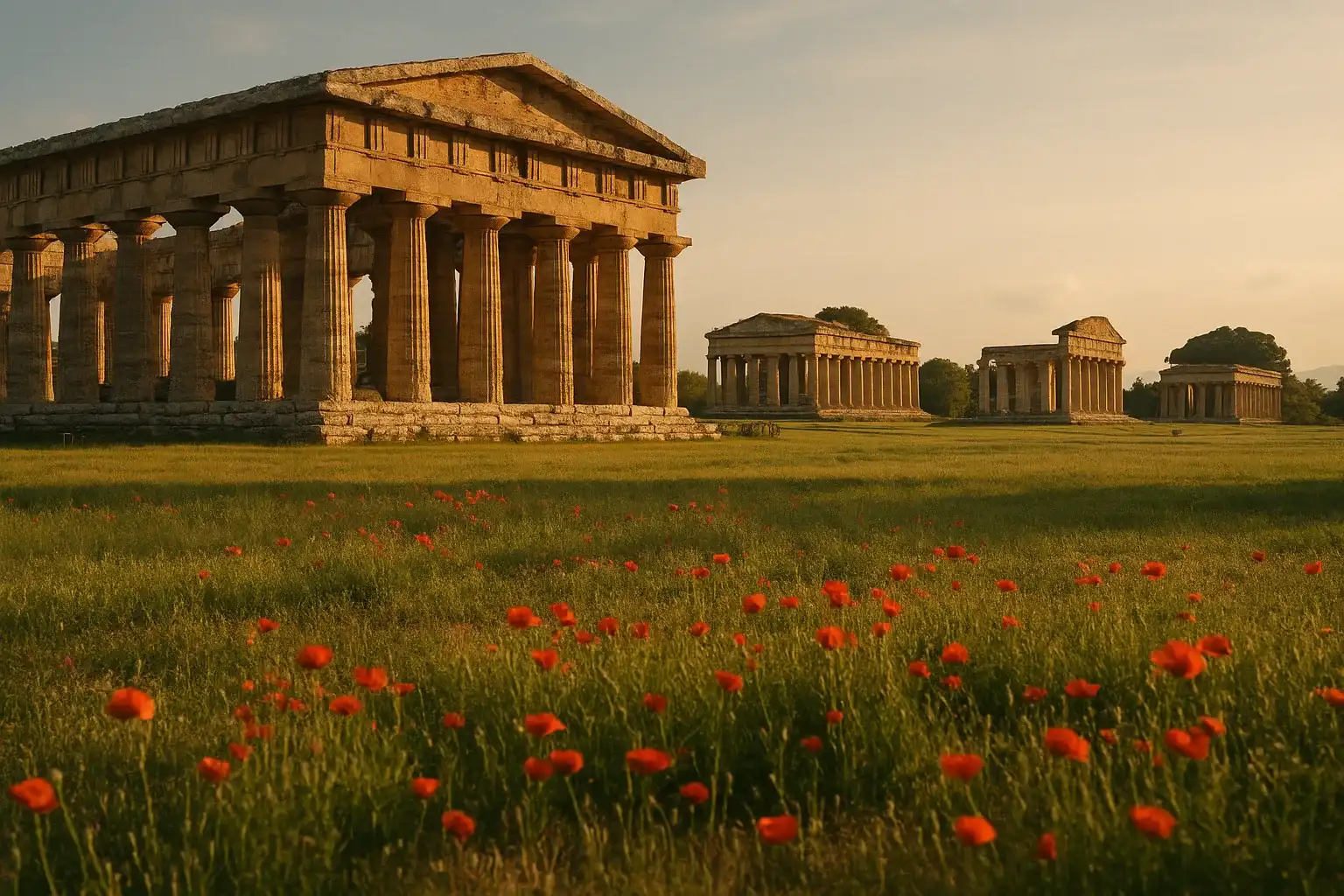
Paestum: Europe's Best-Preserved Greek Temples on Italy's
Ancient Greek / RomanDiscover Paestum's magnificent Greek temples, the Tomb of the Diver, and buffalo mozzarella farms on...
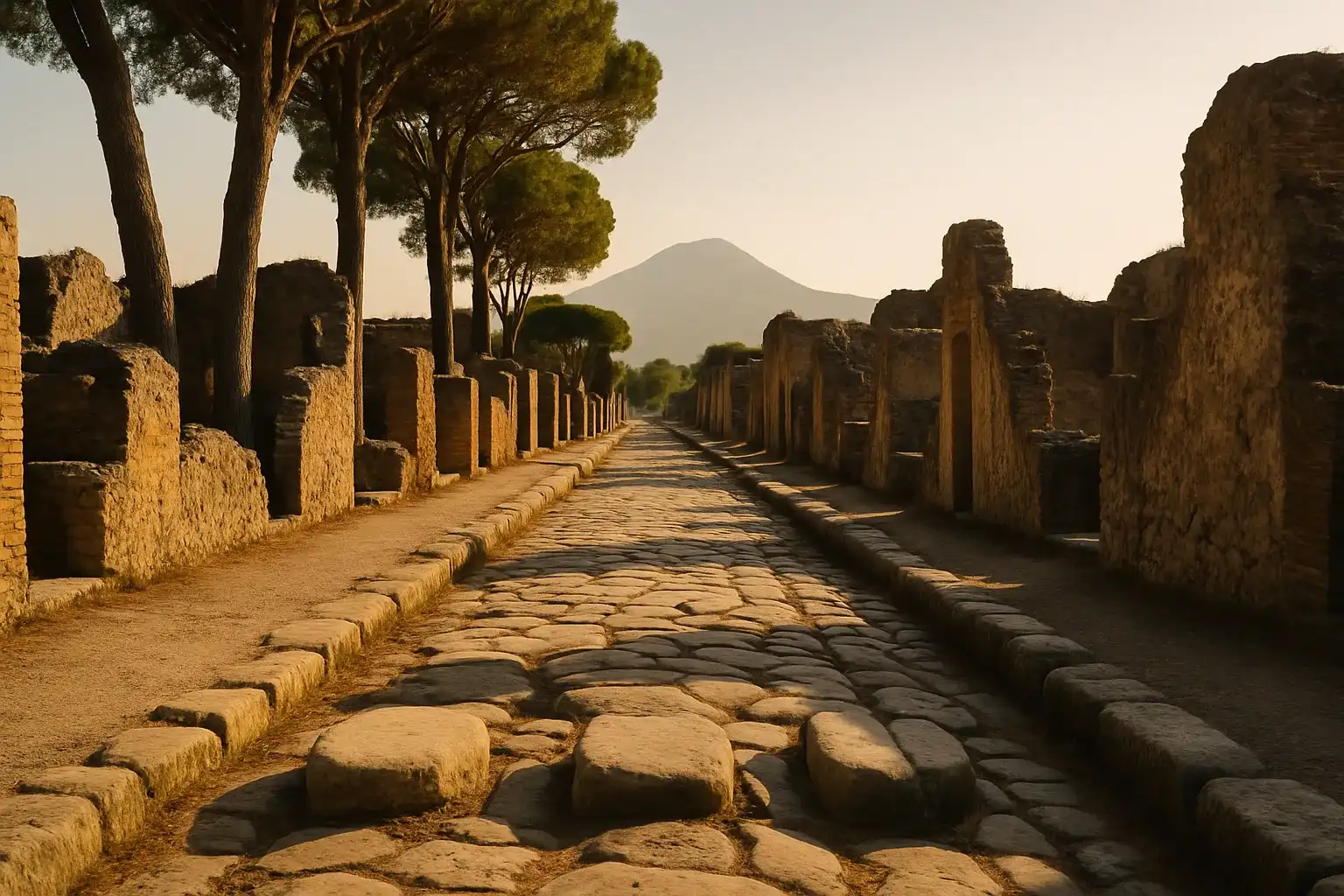
Pompeii Italy Travel Guide: Frozen in Time, Complete 2026
Roman EmpireWalk the streets of ancient Pompeii with our complete guide. Discover the best routes, must-see hous...
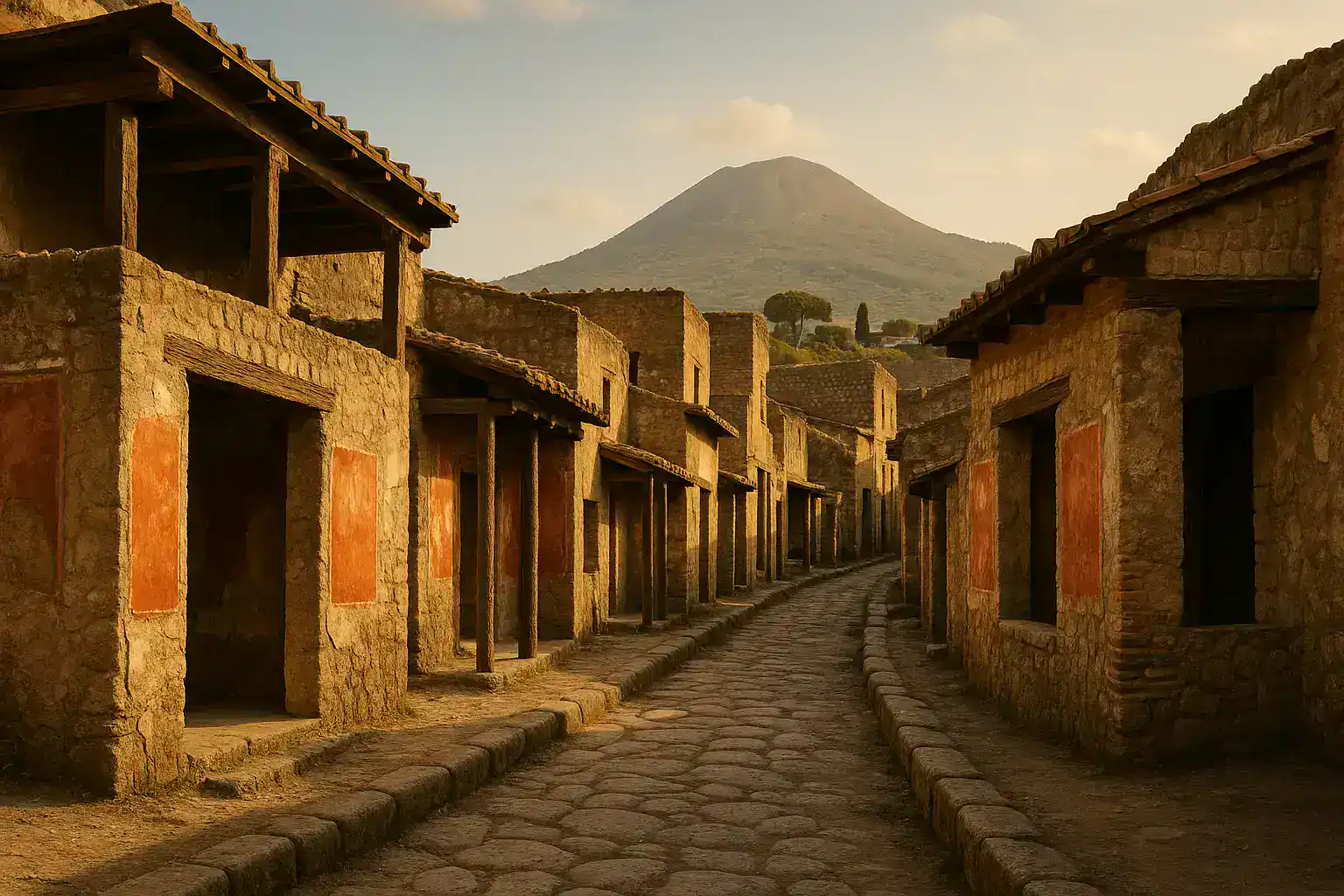
Herculaneum Italy Travel Guide 2026: Better Preserved Than Pompeii
Roman EmpireDiscover Herculaneum's extraordinary preservation of ancient Roman life. See carbonized wood, vivid ...
Ostia Antica Italy Travel Guide 2026: Rome's Ancient Port City
Roman EmpireExplore Ostia Antica, the best-preserved ancient Roman city after Pompeii. Walk intact streets, see ...