Quick Info
Curated Experiences
Mesa Verde National Park Cliff Dwellings Tour
Mesa Verde Archaeological Sites Guided Tour
Southwest Colorado Day Trip to Mesa Verde
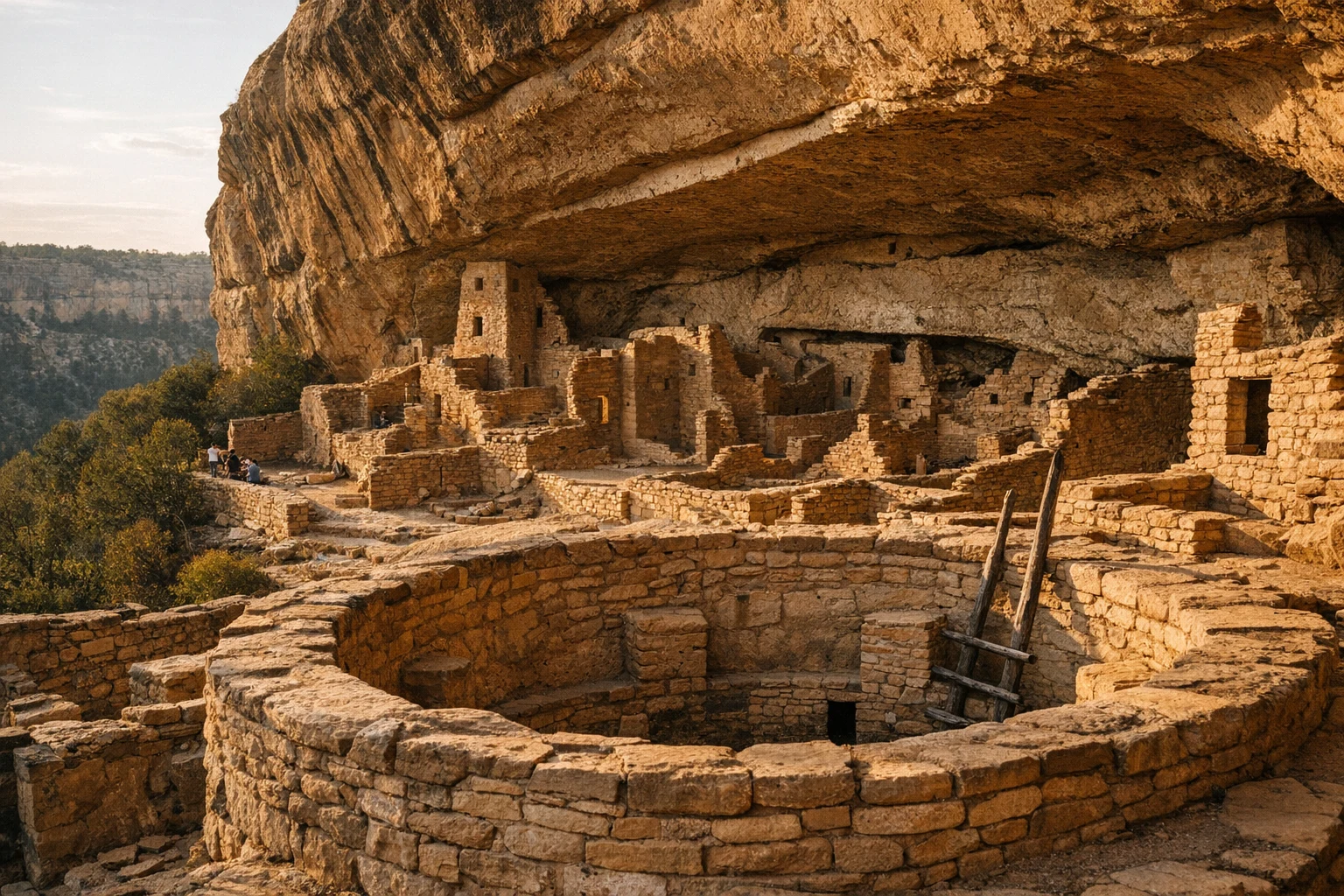
Mesa Verde in the United States rises from the high desert of southwestern Colorado as a place where architecture, landscape, and memory remain inseparable. Long before it became a national park or a UNESCO World Heritage Site, this broad tableland of canyons, piñon-juniper woodland, and sandstone alcoves was home to thriving Ancestral Pueblo communities who built villages on the mesa tops and, later, extraordinary settlements tucked into cliff recesses. For modern visitors, the first impression is often geographic rather than archaeological. The road climbs steadily, views widen, and the mesas begin to feel less like isolated landforms than a whole inhabited world. Then the cliff dwellings appear, not as ruins dropped onto a scenic backdrop, but as extensions of the rock itself: masonry towers, rooms, kivas, and storage spaces fitted into natural alcoves with startling precision.
What makes Mesa Verde so powerful is that it preserves both intimacy and scale. You can stand at an overlook and see a monumental settlement like Cliff Palace across a canyon wall, then descend on a tour route and notice hand-shaped sandstone, carefully plastered walls, soot-darkened ceilings, and the geometry of communal spaces. The site is often described as one of North America’s greatest archaeological treasures, and that is true, but it is also a cultural landscape that asks for more than admiration. Mesa Verde tells a story of adaptation, innovation, community life, environmental knowledge, and eventual migration. It is not a vanished mystery so much as a record of lived expertise and change. Visiting well means seeing beyond the drama of cliff architecture and understanding the deeper continuity between these places and the descendant Pueblo peoples who still maintain cultural ties to them.
History
Early Settlement on the Mesa
Human presence in the Mesa Verde region stretches back far before the famous cliff dwellings. For thousands of years, people moved through and lived in the broader Four Corners area, adapting to changing climates, plants, and seasonal rhythms. By around 600 CE, communities associated with what archaeologists often call the Basketmaker III period began establishing more settled agricultural life on the mesa tops. Maize cultivation, storage features, pit houses, and increasingly permanent settlement patterns marked a major shift. Families were no longer simply using the landscape episodically; they were building enduring relationships with it.
These early communities farmed the mesa tops and nearby slopes, making use of seasonal moisture, wild resources, and carefully accumulated local knowledge. Pit houses served as domestic spaces, but they also reflected emerging social and ceremonial structures. Over time, settlement became denser and more organized. The foundations of later Mesa Verde society were laid not in the cliffs, but on the open mesa, where communities developed farming systems, craft traditions, exchange networks, and forms of communal life that would continue to evolve for centuries.
Pueblo Development and Mesa-Top Villages
Between roughly 750 and 1100 CE, the people of Mesa Verde increasingly built above-ground masonry villages on the mesa tops. This period saw the growth of pithouse-to-pueblo transitions, larger communities, and more elaborate architecture. Rectangular room blocks, towers, storage spaces, and subterranean ceremonial structures known as kivas became defining features of village life. Pottery styles, trade connections, and regional interaction all expanded, placing Mesa Verde within a wider cultural world that stretched across the northern Southwest.
By the Pueblo II and Pueblo III periods, Mesa Verde supported numerous settlements spread across the mesa system. Farming remained the economic base, with corn, beans, and squash supported by hunting, gathering, and careful environmental management. Water control and adaptation to a difficult landscape were essential. The mesa was not easy country. Agricultural success depended on understanding soils, slope exposure, runoff, and local microclimates. The people who lived here were not isolated cliff romantics; they were skilled agriculturalists, builders, and community planners.
The mesa-top years are crucial because they show that the later cliff dwellings were not the beginning of settlement but a later stage in a long cultural sequence. By the time spectacular alcove communities emerged, Mesa Verde society already had centuries of architectural, social, and ceremonial experience behind it.
The Cliff Dwelling Era
The period for which Mesa Verde is most famous came mainly during the late 1100s and 1200s, when many communities began constructing elaborate dwellings within sandstone alcoves along canyon walls. Sites such as Cliff Palace, Balcony House, Long House, Spruce Tree House, and many smaller settlements date primarily to this era. Exactly why this shift occurred remains a subject of study, and there is unlikely to have been a single cause. Defensive concerns, environmental pressures, changing social organization, access to water, and ceremonial considerations may all have played roles.
What is clear is that the cliff dwellings were highly sophisticated communities rather than improvised refuges. Builders used shaped sandstone blocks, mortar, timbers, and plaster to create multistory room blocks, towers, kivas, and storage spaces fitted elegantly into the shelter of natural alcoves. These locations provided some protection from weather, solar exposure, and perhaps conflict, but they also created visually dramatic settlements with strong internal organization. The architecture reflects planning, labor coordination, and an advanced understanding of how to integrate built form with geology.
Mesa Verde’s cliff dwellings are especially remarkable because they preserve daily and ceremonial spaces together. Rooms for living and storage sit near kivas used for ritual and communal activity. The result is a rare architectural record of society in which practical survival and spiritual life were closely intertwined.
Migration, Rediscovery, and Protection
By the late 1200s, Mesa Verde’s population began leaving the region, and by around 1300 CE the major settlements had been abandoned. The reasons again appear multiple rather than singular. Archaeological evidence points to prolonged drought, environmental stress, social change, and regional instability. Migration was not disappearance. Descendant communities moved south and east into areas of present-day New Mexico and Arizona, where Pueblo peoples continue to live today. For this reason, Mesa Verde is best understood not as a lost civilization but as an ancestral homeland within a longer continuing story.
In the nineteenth century, Euro-American explorers, ranchers, and antiquarians brought Mesa Verde to wider public attention, often in ways that mixed fascination with damaging excavation and artifact removal. Preservation efforts eventually grew in response. Mesa Verde National Park was established in 1906, becoming the first U.S. national park created specifically to protect cultural heritage rather than scenic nature alone. That distinction matters. In 1978, Mesa Verde was designated a UNESCO World Heritage Site, further recognizing its global significance. Today, the park exists both as an archaeological preserve and as a place where descendant communities’ connections and perspectives increasingly shape interpretation.
Key Features
The most famous feature of Mesa Verde is Cliff Palace, and it earns that fame. Set dramatically within a sweeping sandstone alcove, it is the largest cliff dwelling in North America and one of the most visually arresting archaeological sites on the continent. From across the canyon, the settlement appears almost impossible, a compact city of masonry rooms, towers, and kivas tucked beneath an overhanging rock shelter. The harmony between architecture and geology is part of the wonder. Cliff Palace is not simply built near the cliff; it is built into the cliff, responding to the alcove’s depth, shape, and protective qualities. Seen up close, the settlement becomes even more impressive. Masonry courses, plaster remnants, doorways, ventilation strategies, and the arrangement of ceremonial and domestic spaces all show deliberate planning rather than picturesque accident.
Balcony House offers a different experience, one that emphasizes movement and access. Reaching it often involves ladders, tunnels, and narrow passages, which gives visitors a stronger physical sense of how these settlements were approached and defended. It is smaller than Cliff Palace but often more immediate because of the way the route invites bodily engagement with the site. Instead of standing only as an observer, you feel the constraints and protections of the alcove world. Long House, on Wetherill Mesa, expands the story again by showing another major cliff community with its own spatial logic and dramatic setting. Together, these sites make clear that Mesa Verde was not defined by a single spectacular dwelling, but by a network of communities adapted to canyon alcoves and mesa tops alike.
The mesa-top archaeological sites are just as important, even if they receive less attention from casual visitors. Places such as the Far View sites, pit house remains, towers, reservoirs, and kivas reveal the long developmental story behind the cliff dwellings. They show that Mesa Verde’s people had centuries of experience building, farming, and organizing communal life before the cliff era began. Without the mesa-top context, the cliff dwellings can seem like an isolated marvel. With it, they become the culminating expression of an evolving society.
Landscape is also a key feature of Mesa Verde. The park is not a single ruin cluster but a whole elevated terrain cut by deep canyons and covered in woodland, shrub, and open vistas. That geography shapes the experience at every step. Overlooks reveal how settlements were distributed and how architecture interacted with season, water, sun, and defensive concerns. The distance between sites matters because it reminds visitors that this was a lived-in region, not a museum display. Roads and trails trace only part of a much larger inhabited world.
The Chapin Mesa Archaeological Museum and interpretive infrastructure add depth to the visit. Exhibits on pottery, basketry, tools, architecture, and chronology help translate stone walls into human lives. Ranger programs and descendant-community-informed interpretation increasingly emphasize that Mesa Verde is not merely a ruin of a vanished people, but an ancestral place with living cultural relevance. This shift is one of the park’s most important modern features. It encourages visitors to see the cliff dwellings not as mysteries awaiting exotic explanation, but as the work of real communities whose descendants are still present in the Southwest.
Getting There
Mesa Verde is located in southwestern Colorado near the town of Cortez, and most visitors arrive by car. The park entrance sits roughly 10 miles east of Cortez, but reaching the major archaeological areas inside the park takes longer than many first-time visitors expect because the internal roads are winding and distances are significant. If you are driving from Durango, plan on about 1.5 hours to the entrance and additional time to reach Chapin Mesa or Wetherill Mesa areas. Rental cars are the easiest and most flexible option for most travelers.
The nearest major airport with the broadest flight choices is Albuquerque, though Durango-La Plata County Airport is closer for regional access. One-way car rentals and fuel costs vary, but travelers should budget for a full-day self-drive setup if coming from Durango or Cortez. Shuttle options are limited, and rideshare availability can be inconsistent in this part of Colorado. Some guided excursions from surrounding towns exist seasonally, and searching Viator or local operators may turn up archaeological day tours or Southwest heritage trips.
Within the park, certain cliff dwellings require separate timed tour tickets in season, often at modest additional cost beyond park entry. Expect to pay national park entrance fees, plus tour fees for ranger-led access where applicable. Bring water, snacks, and a full tank if possible. Services inside the park are limited by season, and distances are large enough that poor planning can eat into your visiting time fast.
When to Visit
The best time to visit Mesa Verde is usually from late spring through early fall, when the park’s main roads, services, and ranger-guided cliff dwelling tours are most consistently available. May, June, September, and early October are especially attractive because temperatures are often milder than high summer, and the light on the sandstone canyons is excellent. Autumn in particular offers a strong balance of clear weather, manageable crowds, and comfortable hiking conditions.
Summer is the busiest season, and for good reason. Most facilities operate fully, tour schedules are robust, and families travel then. But midday heat, thunderstorms, and heavier visitation can make the experience feel more demanding. Starting early is a good strategy in summer, especially if you want popular tour times or quieter overlooks. Afternoon weather can shift quickly, and higher-elevation sun is stronger than some visitors expect.
Winter offers a different kind of beauty, with quieter roads and occasional snow transforming the mesa landscape, but access can be limited and many services or tours may be reduced or unavailable. Spring can be windy and variable, while late fall may bring colder mornings and shorter days. In every season, layering helps. Mesa Verde’s elevation means temperatures can swing noticeably from morning to afternoon. If your priority is seeing the signature cliff dwellings on guided access, check seasonal schedules before planning your trip and aim for the main operating months.
| Quick Facts | Details |
|---|---|
| Location | Southwestern Colorado, United States |
| Best Known For | Ancestral Pueblo cliff dwellings, especially Cliff Palace |
| Cultural Affiliation | Ancestral Pueblo peoples and descendant Pueblo communities |
| UNESCO Status | World Heritage Site |
| National Park Status | Established in 1906 |
| Main Occupation Period | c. 600 CE to 1300 CE |
| Signature Sites | Cliff Palace, Balcony House, Long House, Far View sites |
| Recommended Visit Length | 1 full day minimum, 2 days ideal |
| Best Season | Late spring through early fall |
| Practical Tip | Reserve seasonal cliff dwelling tours early and expect longer drive times inside the park |
Frequently Asked Questions
What is Mesa Verde best known for?
Mesa Verde is best known for its remarkably preserved Ancestral Pueblo cliff dwellings, especially Cliff Palace, along with hundreds of mesa-top sites and ceremonial structures.
Do you need a tour to visit Mesa Verde cliff dwellings?
Some of the park’s signature cliff dwellings, including popular ranger-guided sites, require advance tickets or seasonal guided access, while overlooks and many other areas can be visited independently.
How much time should you spend at Mesa Verde?
Most visitors should allow a full day, though two days is better if you want to combine the main cliff dwellings, scenic drives, museums, and mesa-top archaeological sites.
When is the best time to visit Mesa Verde?
Late spring through early fall is best for most travelers because more areas and ranger-guided tours are open, though autumn often offers the best mix of weather and lighter crowds.
Is Mesa Verde suitable for children or older visitors?
Yes, but some cliff dwelling tours involve ladders, uneven steps, and tight passages, so travelers should choose routes that match their comfort and mobility levels.
Who built Mesa Verde?
Mesa Verde was built and inhabited by Ancestral Pueblo peoples, whose descendants include many modern Pueblo communities in the American Southwest.
Nearby Ancient Sites
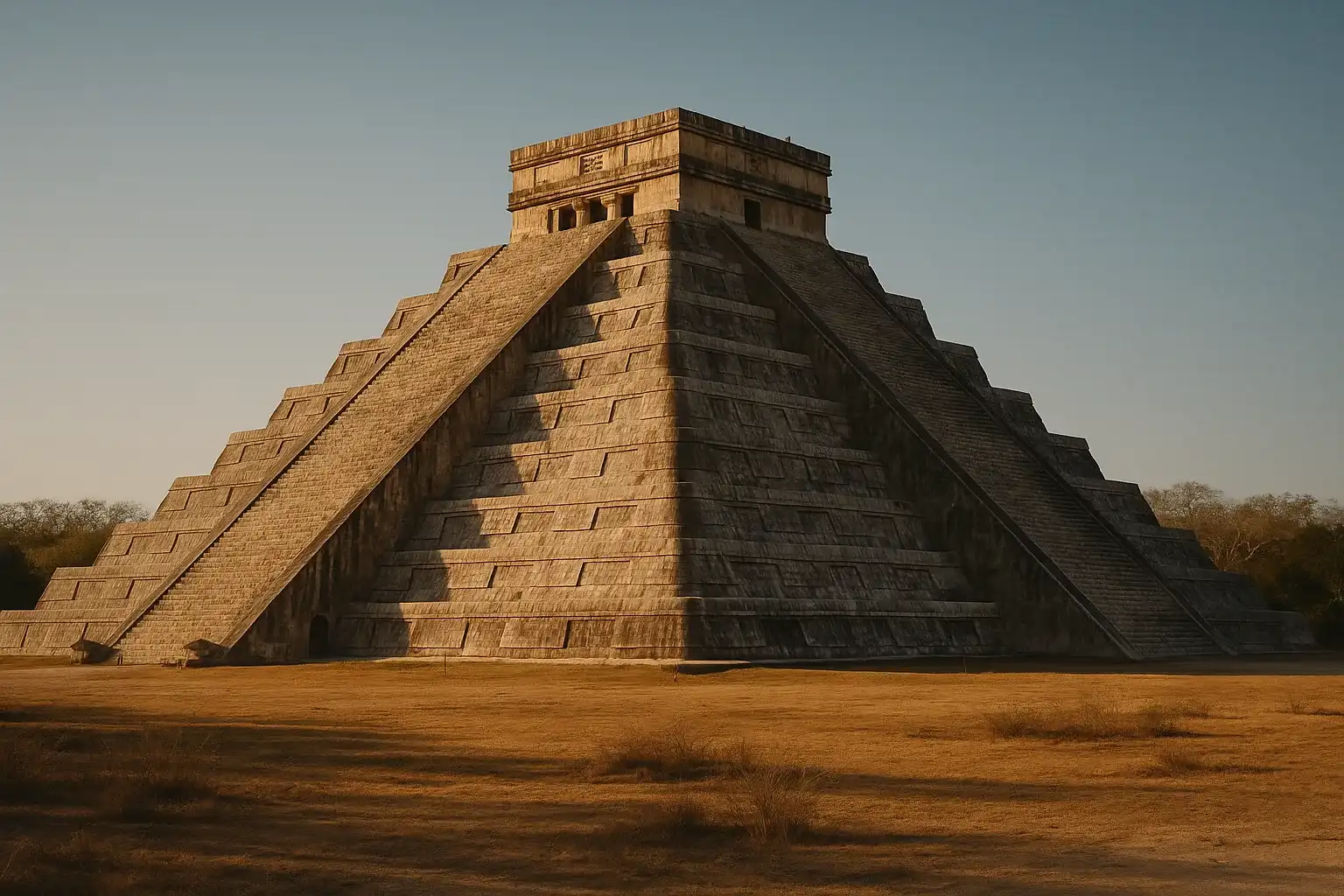
Chichen Itza Travel Guide 2026: Maya Secrets, Sacred Cenote, and Smart Timing
MayaChichen Itza stands as the most visited ancient site in Mexico, showcasing the architectural genius ...
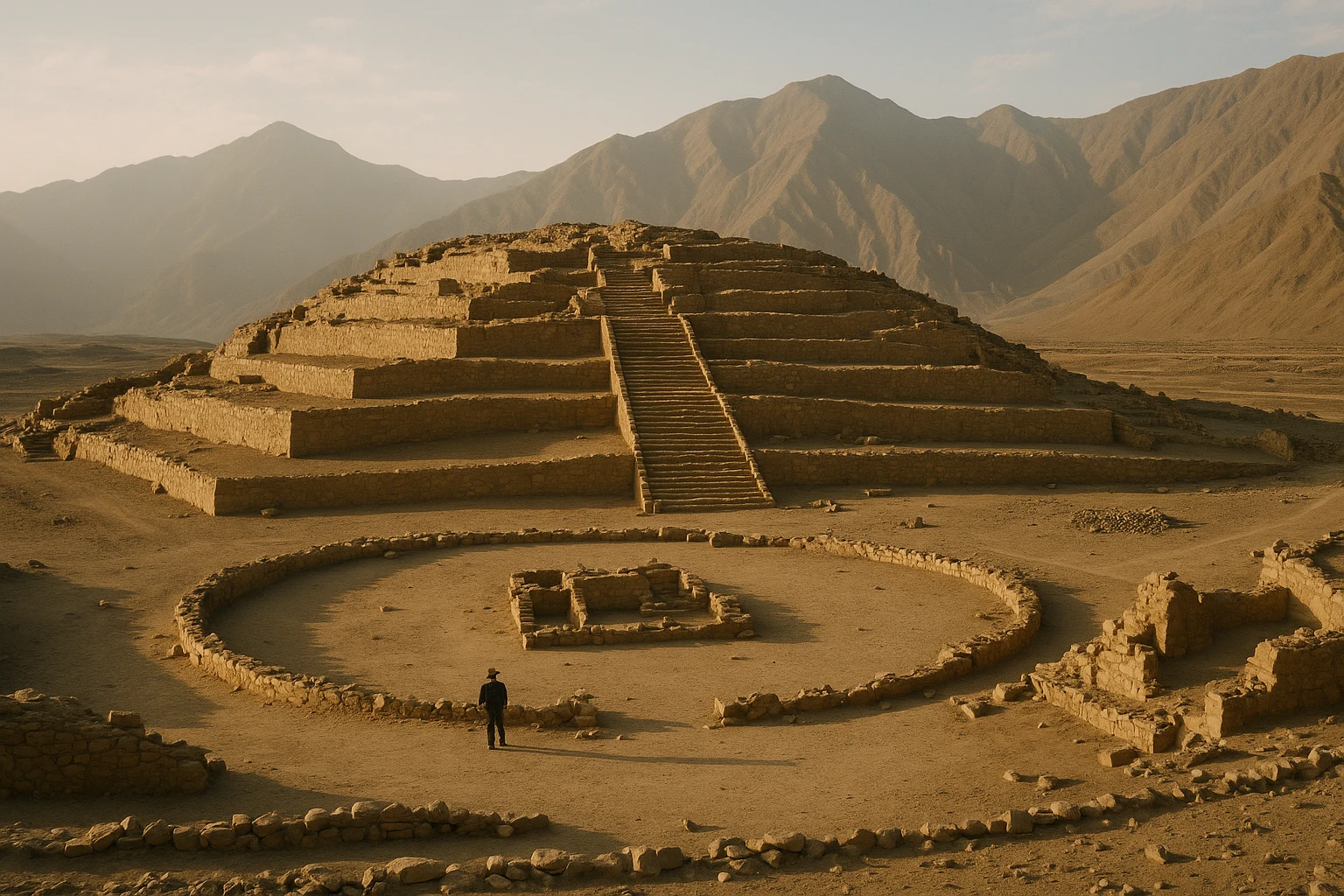
Caral-Supe Peru Guide 2026: Sacred Pyramids & the First Andean City
Norte-Chico-CaralVisit Caral-Supe in Peru, the oldest known city in the Americas, with practical transport from Lima,...
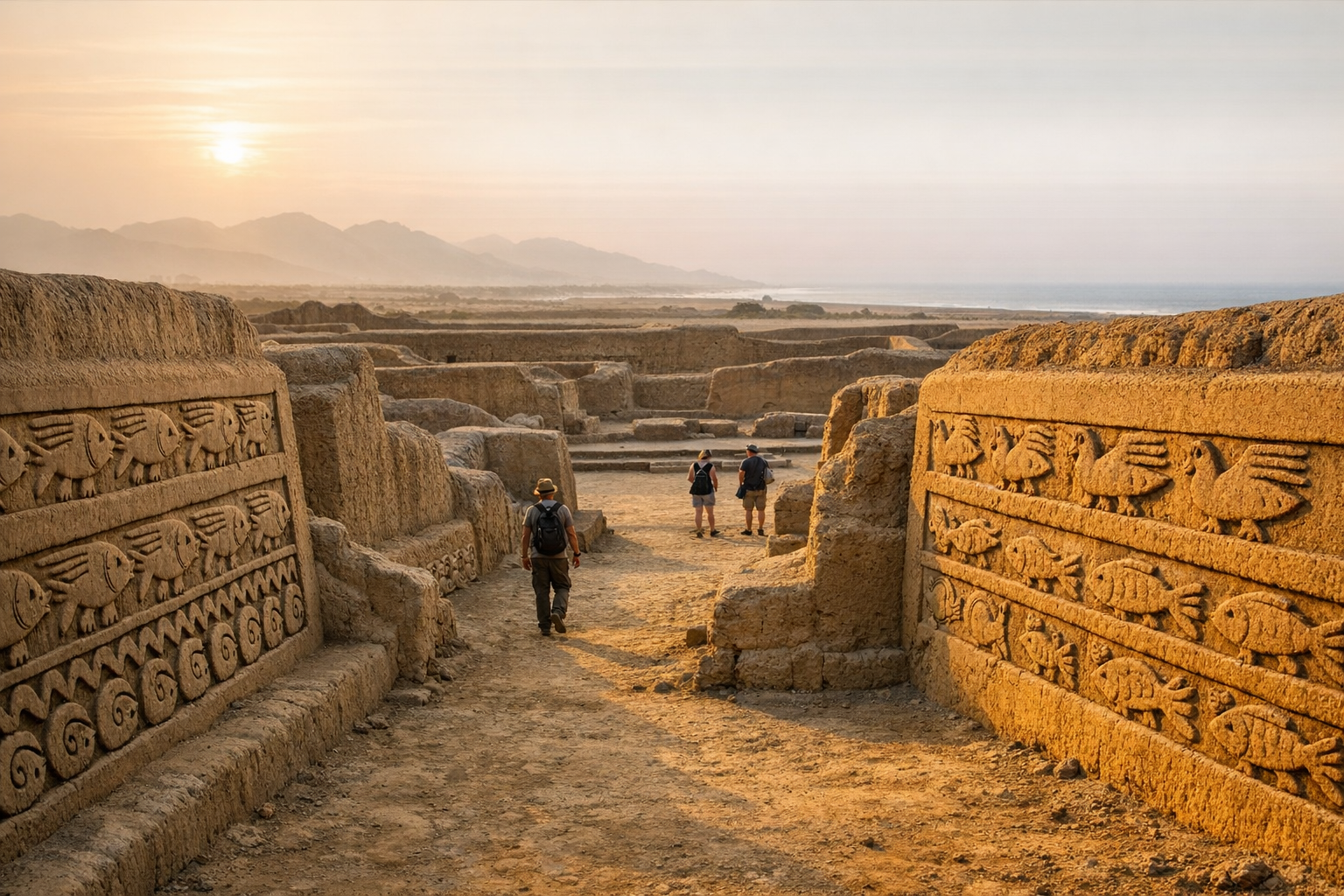
Chan Chan Peru Guide 2026: Chimu Capital & Adobe Citadels
ChimuExplore Chan Chan near Trujillo — the largest pre-Columbian city in the Americas. Discover the Chimu...