Quick Info
Curated Experiences
Private Ephesus Miletus Didyma Tour with Lunch
Private Priene Miletus Didyma Tour from Kusadasi
Biblical Ephesus Tour from Kusadasi Port
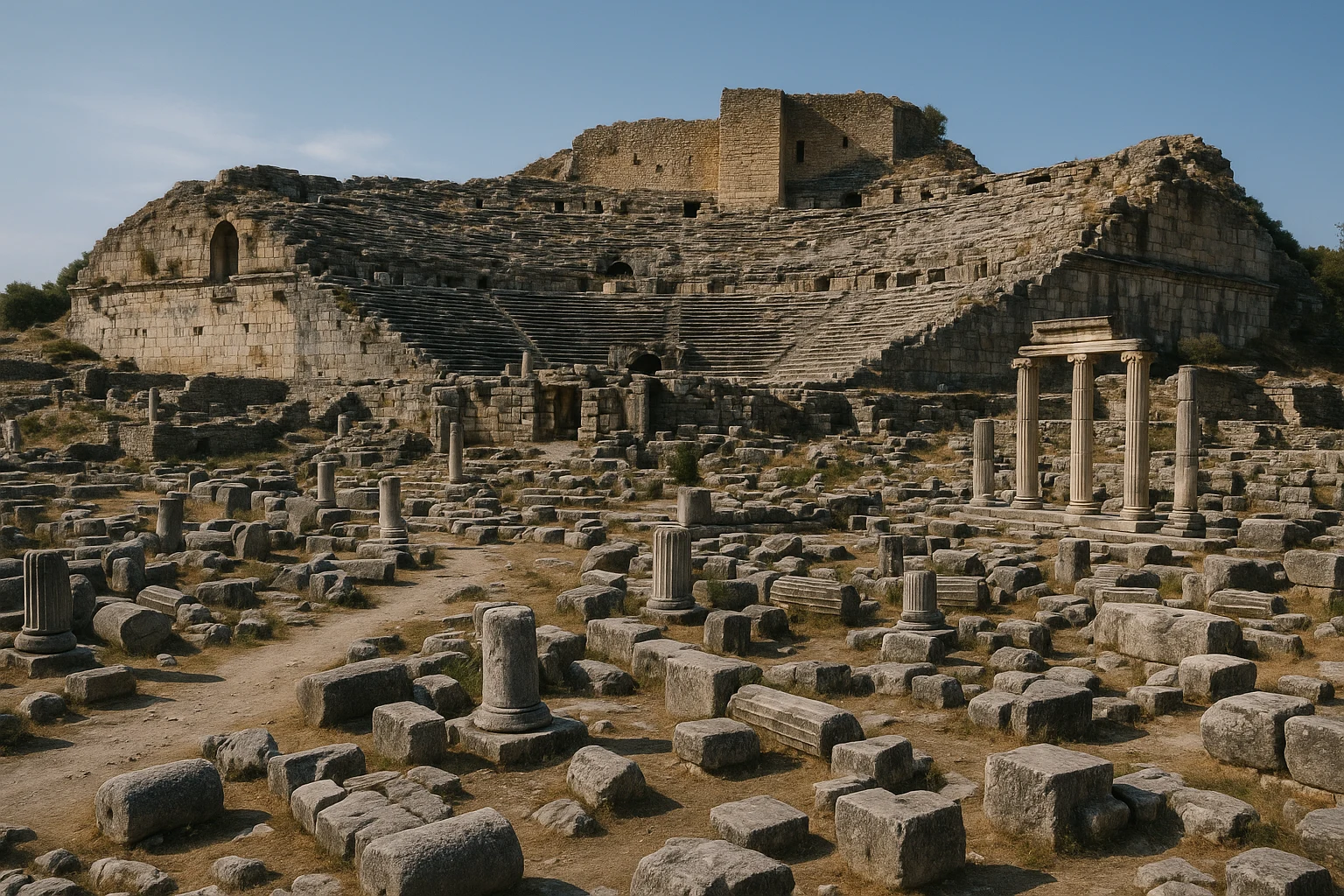
If you have ever wondered what happens to a great maritime city when the sea itself pulls away, Miletus gives you the answer in stone. This Miletus Turkey travel guide begins in a place that once launched ships and philosophers into the wider Mediterranean, but now sits inland among fields and low hills. At Miletus, Turkey, the scale still surprises you: a theater vast enough for tens of thousands, baths that advertised Roman civic ambition, and urban remains that whisper about one of antiquity’s most influential schools of thought.
Ancient Travels recommends Miletus as an anchor stop in western Anatolia because it rewards both first-time visitors and serious archaeology travelers. You can read the city in layers: early Carian and Ionian roots, Persian and Hellenistic turning points, Roman monumental upgrades, and Byzantine afterlives. You also feel geography as history here; harbor silting changed everything, and that environmental shift is visible in the site’s present setting. This guide covers Miletus’s timeline, the major monuments worth your time, transport options from Kusadasi, Selcuk, and Didim, practical ticket and seasonal advice, and how to combine Miletus with Didyma and nearby Aegean highlights in one coherent day.
History: Port Power, Philosophy, and a Vanishing Coastline
Early settlement and Ionian rise (c. 2nd millennium BCE-6th century BCE)
Miletus began as a coastal settlement with deep ties to the eastern Aegean world, then matured into one of the most important cities of Ionia. By the Archaic period, it was a maritime and colonial powerhouse, credited by ancient sources with founding numerous colonies around the Black Sea and beyond. Wealth flowed through harbors, markets, and ship networks, helping create the social conditions for intellectual experimentation. This is the city associated with early thinkers like Thales, Anaximander, and Anaximenes, figures later grouped under the Milesian school. Miletus was not merely rich; it was conceptually restless.
Persian conquest and political reordering (6th century BCE-4th century BCE)
Like many Ionian cities, Miletus was drawn into the expanding orbit of the Achaemenid Persian Empire. Tensions over autonomy and tribute eventually fed the Ionian Revolt, and Miletus paid heavily after its defeat in 494 BCE. Ancient narratives describe destruction, deportation, and social rupture, though urban life continued in altered form. Even under imperial pressure, Miletus remained strategically important because of its location and infrastructure. The city’s story in this period is not simple collapse; it is adaptation under domination, with civic institutions and local identities surviving amid larger geopolitical control.
Hellenistic planning and regional competition (4th century BCE-1st century BCE)
After Alexander’s campaigns, power shifted again, and Miletus entered the Hellenistic world of competing dynasties and civic patronage. Urban planning traditions linked to Hippodamian grid concepts are often discussed in relation to Milesian design logic, and while scholars debate details, the city clearly participated in a highly structured approach to public space. Sanctuaries, stoas, civic squares, and defensive works evolved through this era. Miletus remained connected to nearby sacred centers, especially Didyma, through political and ritual networks. The city had to negotiate new rulers repeatedly, but it retained enough status to attract sustained investment.
Roman monumentalization and civic spectacle (1st century BCE-4th century CE)
Under Roman rule, Miletus was re-scaled through architecture that emphasized order, welfare, and imperial presence. The huge theater took on its most dramatic form, baths and market areas expanded, and ceremonial routes linked civic zones. Buildings like the Faustina Baths signaled both practical service and political messaging: Rome could provide comfort, hygiene, and grandeur at once. Miletus was no longer the singular maritime giant of Archaic memory, yet it remained a meaningful urban center in the provincial system. What you see on site today is heavily shaped by this period of construction, reuse, and display.
Byzantine continuity, environmental decline, and modern archaeology (4th century CE-modern era)
Miletus did not vanish overnight. It persisted through late antiquity and Byzantine phases, but long-term silting of the Maeander delta gradually transformed its relationship to the sea. Harbors that once enabled long-distance trade became harder to use, and the economic logic of the city weakened. Populations shifted, monuments were reused or quarried, and political attention moved elsewhere. Modern archaeological work from the 19th century onward, especially by German teams, brought much of the city back into scholarly view. Excavations continue to refine chronology, urban phases, and environmental history, making Miletus one of the best places to study how ecology can redirect civilization.
The Key Monuments: What to See at Miletus
The great theater
The Great Theater of Miletus is the monument that recalibrates your sense of scale. Originally rooted in Hellenistic design and expanded under Rome, it rises in broad tiers that once held an enormous audience for drama, announcements, and civic ceremony. From below, the cavea reads like a stone hillside engineered into social order; from above, you can see how performance space and political space overlapped in ancient city life. The surviving stage-zone architecture is fragmentary but still legible enough to imagine a city gathered in one place. For photography, arrive early and shoot from the upper seating toward the plain, where morning light gives depth to every row.
Faustina Baths complex
The Faustina Baths reveal the Roman talent for making infrastructure feel ceremonial. Built with imperial-era patronage associations, the complex combined bathing, exercise, and social circulation, not unlike a civic club crossed with a public health facility. Today, walls and room outlines show the sequence from changing zones to heated rooms and communal spaces. Even in ruin form, you can read technological ambition in the thickness of walls, the heat-management design, and the scale of investment required to run such a complex. Spend a few extra minutes here tracing room transitions; this is where Roman daily life becomes easiest to visualize.
Delphinion sanctuary and sacred-civic interface
The Delphinion area, dedicated to Apollo Delphinios, illustrates how religion and administration interlocked in Miletus. This was not an isolated shrine on a remote hill. It sat within an urban matrix where legal and civic actions could occur in proximity to sacred authority. The surviving remains are lower-profile than the theater, but they matter for understanding how Milesian identity was enacted. Stone foundations and boundary logic reveal regulated space, processional movement, and ritual framing within city life. If you enjoy reading plans and site logic rather than only dramatic facades, this section is essential.
Market and street-grid remains
Miletus is a powerful site for people interested in urban form. Across the central zone, you can trace elements of market space, stoas, and street alignments that reflect long-term planning priorities. Even where elevations are modest, the logic of movement is clear: goods, bodies, and civic functions were routed intentionally. This is where discussions of Milesian planning traditions become tangible. You are not just looking at broken walls; you are walking through decisions about visibility, circulation, and hierarchy made over centuries. Late afternoon works well here because lower light makes foundation lines easier to read in relief.
Fortifications, harbor memory, and the wider landscape
Some of Miletus’s most meaningful evidence is topographic rather than vertical. Defensive traces and peripheral remains, combined with the modern inland setting, help you understand that this was once a port world. The sea has receded through delta formation, and that environmental shift is one of the key historical facts of the site. Standing at elevated points, imagine ships where farmland now lies. Miletus teaches that cities do not only rise and fall because of wars and empires; they also rise and fall because coastlines move. This wider landscape context is a core part of the monument.
Getting There: Transportation and Access
Miletus is best reached by road, and it is easiest to visit as part of a combined day with Didyma and, if your timing is disciplined, another nearby site.
From Kusadasi
Kusadasi is the most common base for international travelers and cruise passengers. The drive is straightforward, and private transport is usually the smoothest option.
- Taxi/private transfer: Around 60-75 minutes each way, typically 2,400-3,800 TRY ($75-120 USD) round trip with waiting time negotiated.
- Guided day tour: Usually 7-9 hours when combined with Didyma, often 2,400-4,500 TRY ($75-140 USD) per person depending on inclusions.
- Rental car: About 1 hour to 1 hour 15 minutes; best flexibility for pacing and photo stops.
From Selcuk
Selcuk works well for independent archaeology travelers, but public routes to Miletus can require transfers and patience.
- Intercity bus + local connection: Usually 2 to 2.5 hours total depending on connections, around 250-500 TRY ($8-16 USD).
- Taxi/private car: Roughly 75-95 minutes each way, typically 2,800-4,200 TRY ($88-132 USD) round trip.
- Rental car: About 1 hour 20 minutes, with simple routing for a multi-site day.
From Didim or Bodrum side
If you are staying near Didim, Miletus becomes an easy half-day outing. From Bodrum, it is longer but still realistic for committed site-hoppers.
- From Didim by taxi: Around 30-40 minutes, generally 700-1,200 TRY ($22-38 USD) one way.
- Local bus/dolmus combinations: Budget-friendly but schedule-dependent; roughly 80-180 TRY ($3-6 USD) total with transfers.
- From Bodrum by rental car: About 1.5 to 2 hours depending on traffic and season.
Admission and hours
Ticket prices and pass rules can change, so treat online numbers as guidance and verify at the official kiosk when you arrive. As a practical planning range, many travelers should expect something near 8-15 EUR equivalent in Turkish lira (roughly 280-520 TRY, or $9-16 USD) for standard entry. Türkiye museum pass products often include Miletus and may save money if you are visiting several major archaeological sites in the same week.
Opening windows are generally longer in summer and shorter in winter. Build your plan around early entry whenever possible, especially from June through September, when heat rises quickly by late morning. Card payment is increasingly common at major sites, but carry some cash for parking, small vendors, and local transit. If you only have one visit window, choose either opening time or the final two afternoon hours for cooler conditions and better light on the theater stone.
When to Visit: Seasonal Considerations
Spring (March-May)
Spring is the strongest all-around season for Miletus, with daytime ranges often around 16-27°C (61-81°F). Grasses and low blooms can add color to the ruins, and crowd levels are moderate outside holidays. Wind can pick up on some days, but conditions are usually comfortable for full-site walks. For most travelers, spring is the safest recommendation.
Summer (June-August)
Summer can be intense, commonly 30-38°C (86-100°F) by midday with very limited shade. Stone seating and exposed paths store heat, so hydration and sun protection become non-negotiable. Start at opening, prioritize major monuments early, and keep midday expectations realistic. Summer visits are absolutely possible, but only with disciplined timing.
Autumn (September-November)
Autumn is excellent for archaeology travel in western Turkey. Early autumn still feels warm, while October and November often bring more comfortable walking temperatures around 18-30°C (64-86°F) trending lower later in the season. Crowds usually ease compared with high summer, and transport remains reliable. Many repeat visitors consider autumn the ideal balance.
Winter (December-February)
Winter is quieter and often underrated, with typical daytime conditions around 8-16°C (46-61°F). Rainy spells are possible, and surfaces can be slick after showers, so good footwear matters. In exchange, you get space, softer pacing, and a more reflective atmosphere. If you prioritize low crowd pressure over beach weather, winter is rewarding.
Combining Miletus with Didyma and the Aegean Corridor
The most satisfying sequence starts with Miletus itself at 8:30 AM, when temperatures are still manageable and the theater is often nearly empty. Spend your first 90 minutes on the theater and baths, then walk the lower-profile civic remains before departure. By 10:30 AM, drive to Didyma and arrive in time to explore the Temple of Apollo before the hottest part of the day. This order works well because Miletus rewards cooler, longer walking circuits, while Didyma’s most dramatic views still read well in brighter light.
By 12:45 PM, shift into Didim for lunch. Look for a local lokanta rather than waterfront resort menus: grilled fish, olive oil vegetables, and simple meze keep the day light and efficient. After lunch, you have two strong options. A history-heavy option continues to a third site zone and stretches toward 5:30 PM. A softer option moves toward the coast for an early promenade and sunset dinner. Both make sense; choose based on energy and weather, not checklist pressure.
If you are based in Kusadasi and trying to include Ephesus on the same day, be realistic. A three-site day is possible only with very early departures, private transport, and short dwell times at each stop. Most travelers get a better experience by pairing Miletus and Didyma together, then dedicating a separate day to Ephesus. These two combinations preserve narrative clarity: one day for Ionian and oracle-linked landscapes, another for large-scale Roman urban preservation.
Practical Information
What to bring
- Sun protection: Hat, sunscreen, and light layers are essential because exposed stone areas have little shade.
- Water: Carry at least 1 to 1.5 liters per person in warm months.
- Footwear: Choose supportive shoes with grip for uneven paving and stepped sections.
- Camera or phone battery: The theater and landscape context reward wide shots and longer visits.
- Cash: Useful for parking, local vendors, and small transit links even when card payment is available.
Dress code and etiquette
Miletus is an open archaeological zone rather than an active mosque complex, so dress codes are generally relaxed. Still, respectful travel norms apply: avoid climbing fragile masonry, stay off restricted sections, and keep noise low where other visitors are engaging with guides. If you are combining with active religious sites on the same day, pack a light layer that can cover shoulders as needed.
Accessibility
Some flatter sectors are manageable with slower pacing, but Miletus is not fully barrier-free. Uneven stones, grade changes, and stepped features in major monuments can challenge wheelchairs and some mobility aids. Visitors with limited mobility can still enjoy selected viewpoints, especially around broader approach paths, but should plan extra time and avoid peak heat.
Why Miletus Matters
Miletus matters because it forces you to hold two truths at once: human ambition can build at extraordinary scale, and geography can still rewrite the script. This city gave the ancient world ships, colonies, and intellectual frameworks that helped shape early natural philosophy. It also built theaters, baths, and sacred institutions that made civic life visible in stone. Yet none of that guaranteed permanence once coastlines shifted and trade patterns changed.
That is exactly what makes a visit memorable. Miletus is not just a ruin of empire, and not just a textbook case of environmental change. It is a place where ideas, infrastructure, and landscape collide in plain view. You walk from monumental seating tiers to quieter foundation lines and realize the same city could be both globally connected and locally fragile. When the late light spreads across the theater and the plain beyond, Miletus feels less like a lost city and more like a precise lesson in how civilizations endure, adapt, and finally transform.
Quick Facts
| Attribute | Details |
|---|---|
| Location | Balat area, Aydin Province, Turkey |
| Ancient Name | Miletos (Latin: Miletus) |
| UNESCO Status | On Türkiye’s Tentative List with surrounding heritage landscape |
| Established | c. 2nd millennium BCE settlement |
| Distance from nearest hub | ~35 km from Didim (~35-40 min by road) |
| Entry Fee | Typically around 280-520 TRY ($9-16 USD), verify on arrival |
| Hours | Seasonal, generally morning to early evening |
| Best Time | Spring and autumn; early morning or late afternoon |
| Suggested Stay | 1.5-2.5 hours (full day when paired with Didyma) |
Explore More Turkey
- Didyma: Visit the monumental Temple of Apollo and one of the most important oracle sanctuaries in Anatolia.
- Ephesus: Walk through a remarkably preserved Roman city centered on the Library of Celsus.
- Halicarnassus (Bodrum): Explore the legacy of the Mausoleum, one of the Seven Wonders of the Ancient World.
Plan your wider route with our Turkey Ancient Sites Guide. For trip design ideas, read our Aegean archaeology itinerary guide.
Frequently Asked Questions
How much time should I plan at Miletus?
Plan 1.5 to 2.5 hours for the main circuit, including the theater, baths, and museum area. If you read signage carefully and enjoy photography, 3 hours is more comfortable. Most travelers combine Miletus with Didyma in a full-day itinerary.
Is Miletus included in Turkey museum passes?
Miletus is generally part of Türkiye's state-site pass system, but exact pass names and validity windows can change. If you are visiting multiple major ruins in western Turkey, a pass is usually better value than paying single-entry tickets each time. Confirm current terms at the ticket office before entry.
How do I get to Miletus from Kusadasi without a tour?
The simplest route is rental car, taking about 1 hour to 1 hour 15 minutes depending on traffic. Taxis and private drivers are also common and practical if you plan to continue to Didyma. Public transport is possible via bus connections toward Didim or Soke, but schedules are less convenient for tight itineraries.
What are the top things to see at Miletus?
Do not miss the massive Hellenistic-Roman theater, the Faustina Baths complex, and the remains of the Delphinion and market zones. The site also includes fortification traces and street-grid evidence tied to early urban planning traditions. Together they show Miletus as both a political port city and an intellectual center.
When is the best time of day to visit Miletus?
Early morning and late afternoon are best, especially from late spring through early autumn. Midday can be hot, with limited shade across exposed stone and seating tiers. Golden-hour light also improves depth and texture for photography in the theater.
Is Miletus suitable for visitors with limited mobility?
Some areas, including flatter paths near major ruins, are manageable at a slower pace, but uneven stones and stepped sections can be challenging. The theater seating itself requires climbing and careful footing. Supportive shoes, water, and extra time make the visit easier.
Nearby Ancient Sites
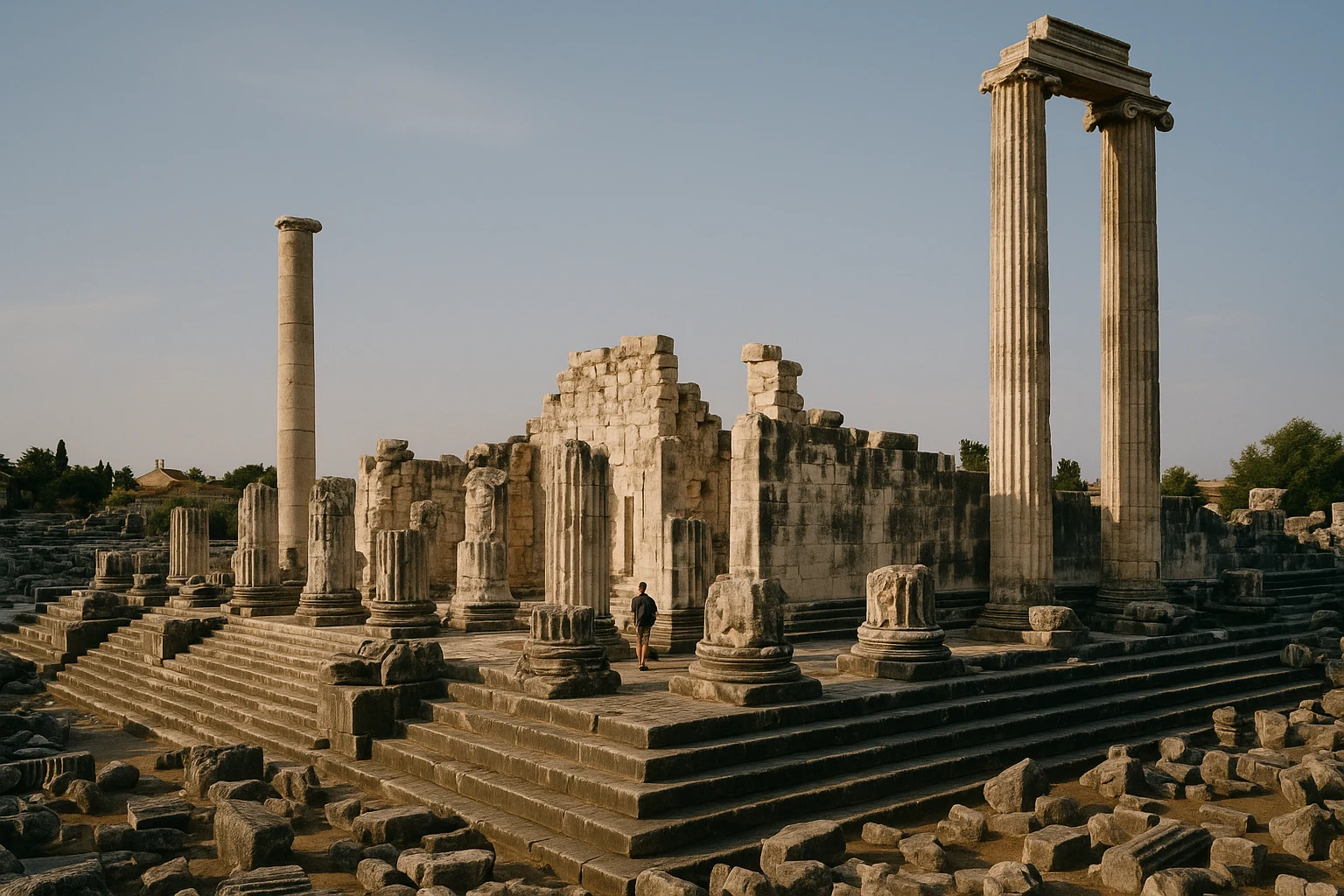
Didyma Turkey Guide 2026: Temple of Apollo & Sacred Way
Ionian-Hellenistic-Roman-ByzantinePlan your Didyma, Turkey visit with history, transport, tickets, and what to see at the vast Temple ...
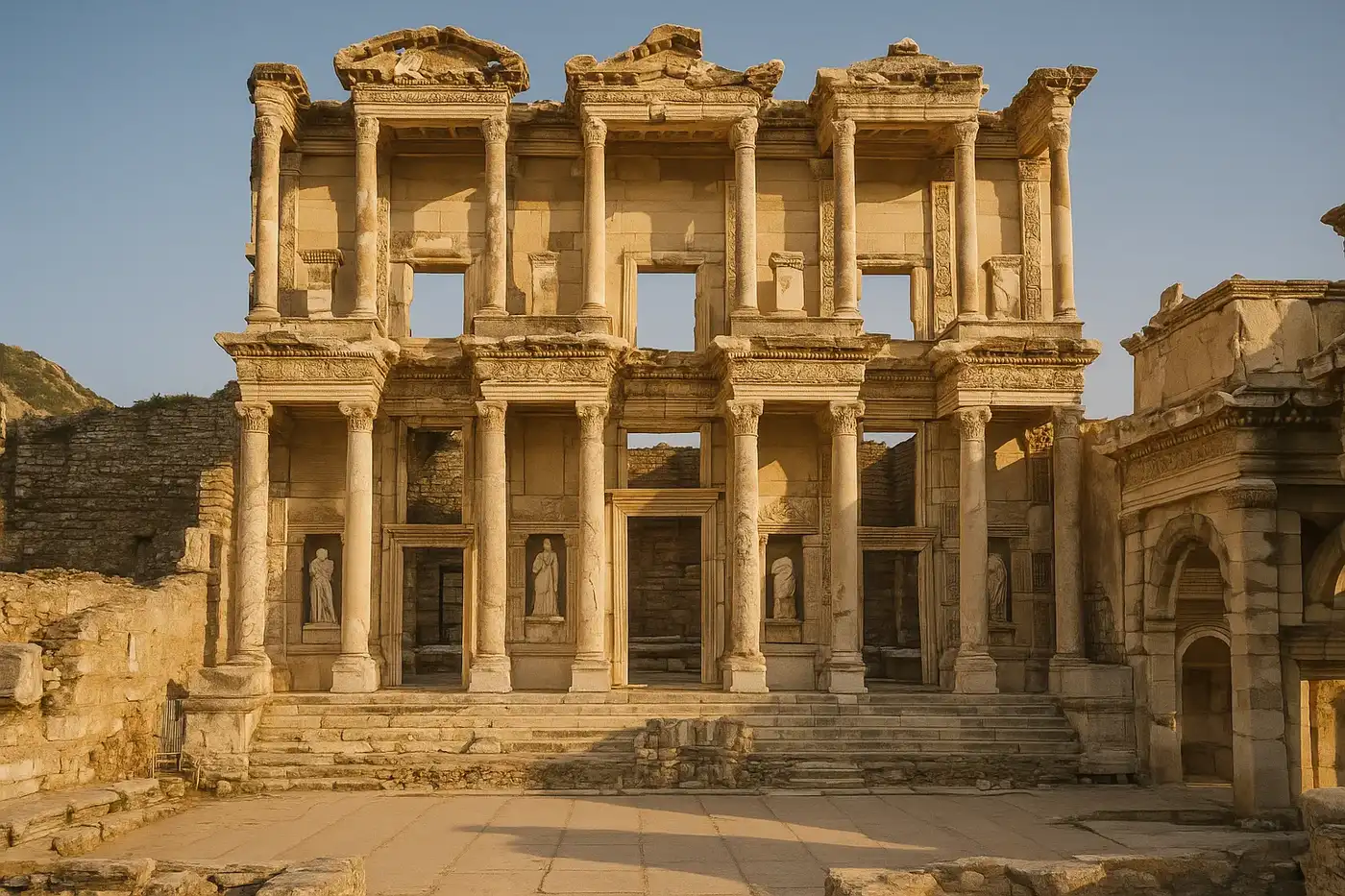
Ephesus Turkey Travel Guide: Library of Celsus & Terrace Houses
Greco-RomanDiscover Ephesus, the best-preserved ancient city in the Mediterranean. Our complete guide covers th...
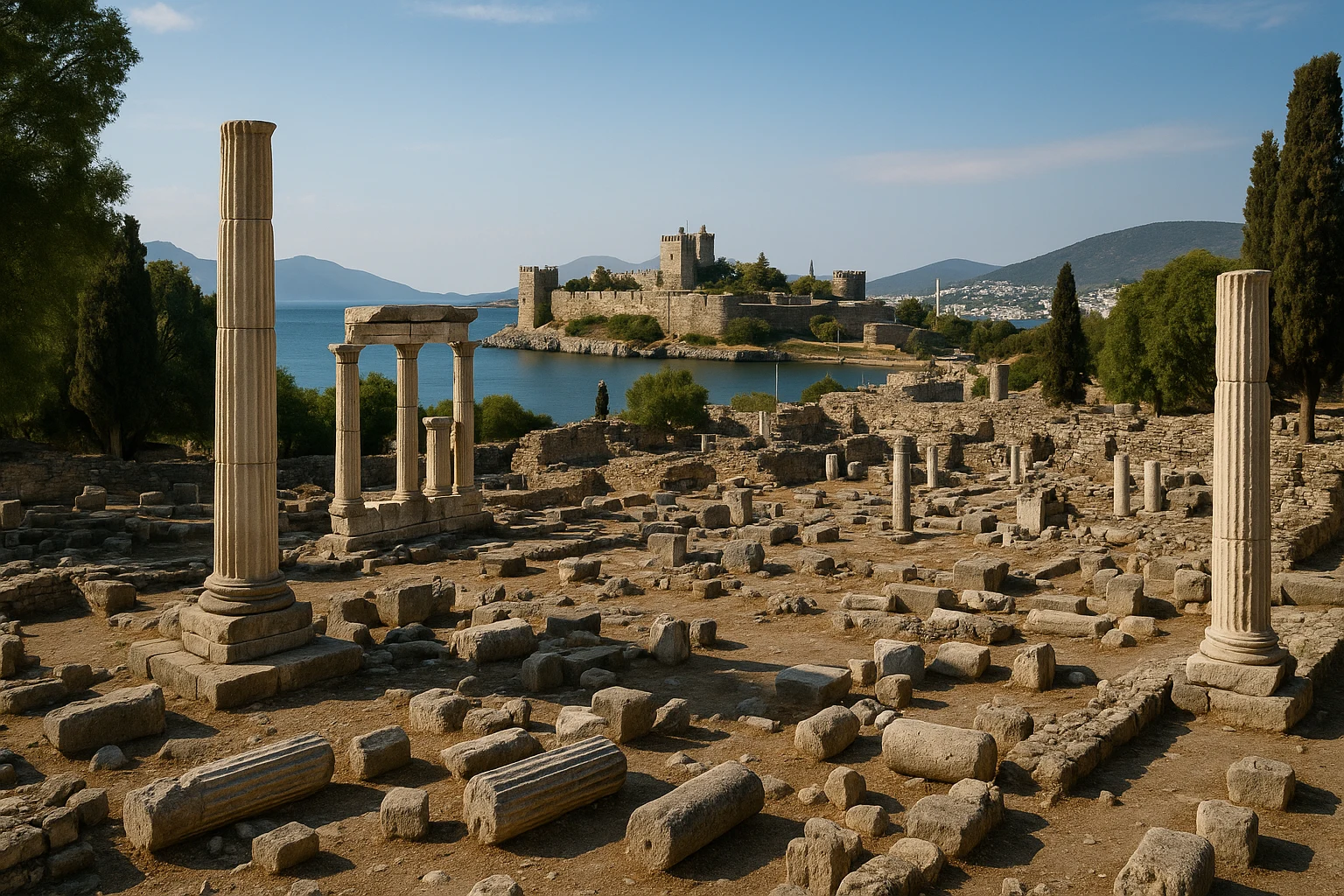
Halicarnassus Bodrum Turkey Guide 2026: Mausoleum & Myndos Gate
Carian-Persian-Hellenistic-Roman-Byzantine-OttomanVisit Halicarnassus in Bodrum, Turkey: see the Mausoleum ruins, Myndos Gate, and practical tips for ...