Quick Info
Curated Experiences
Mogao Caves Guided Tour from Dunhuang
Dunhuang Silk Road Full-Day Tour
Mogao Caves and Crescent Moon Lake Day Trip
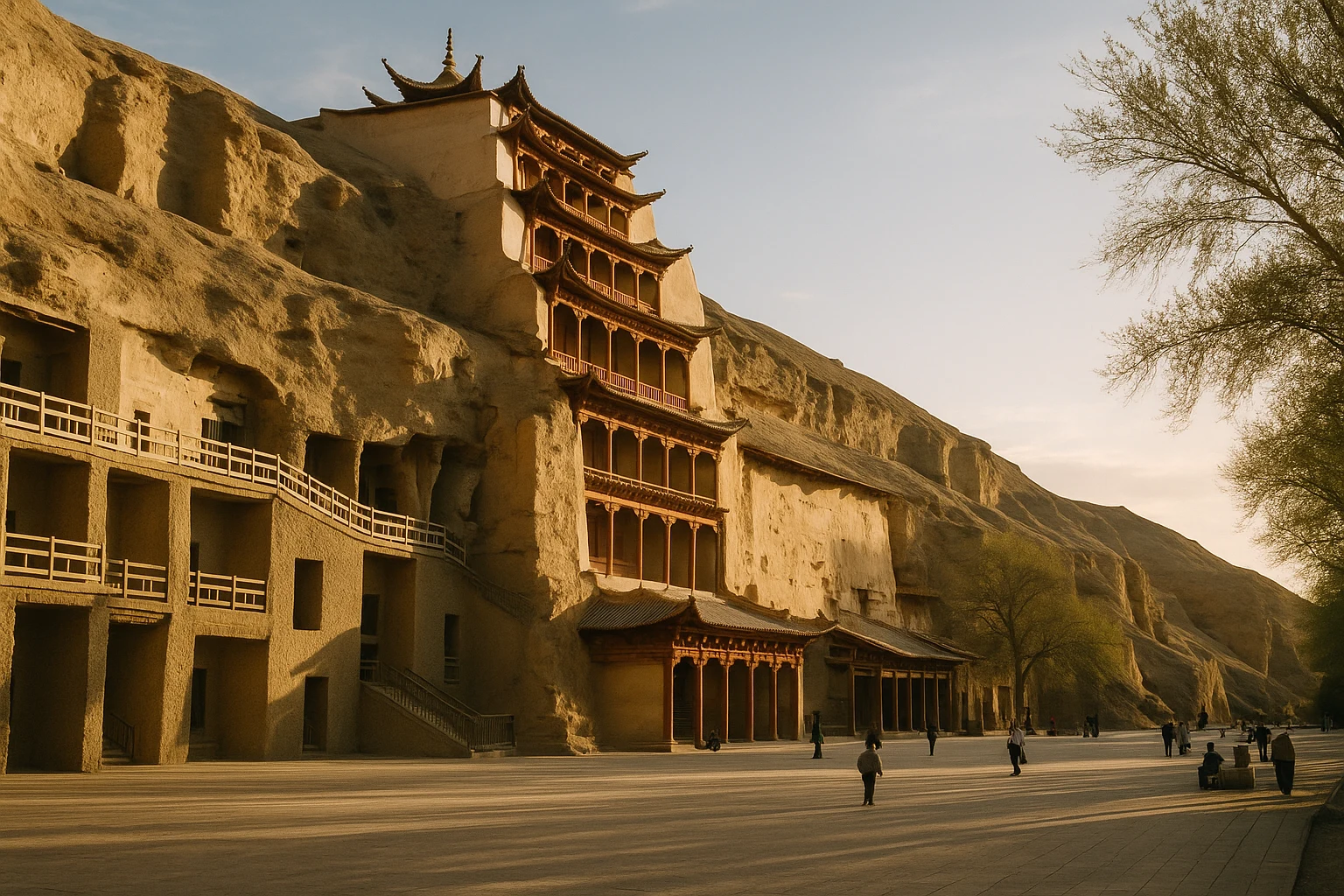
At the edge of the Gobi Desert, where the dunes of the Mingsha Mountains press against a crumbling sandstone cliff, one of humanity’s greatest artistic achievements is hidden inside the rock. The Mogao Caves, located 25 kilometres southeast of Dunhuang in China’s Gansu province, are a complex of 492 decorated Buddhist grottoes carved over nearly a thousand years, from the fourth century through the fourteenth. Inside those chambers — stacked in tiers up the cliff face, their wooden porticoes weathered to silver by centuries of desert wind — are roughly 45,000 square metres of wall paintings and more than 2,400 painted clay sculptures. No single site on earth presents such an unbroken record of Buddhist iconography or such a vivid portrait of life along the Silk Road. Merchants from Sogdia, pilgrims from India, diplomats from the Tang court, and nomadic warriors from the steppes all passed through Dunhuang, and the art they commissioned or encountered here reflects the cosmopolitan energy of a trading crossroads that connected China to Central Asia, Persia, and the Mediterranean world. To stand before a seventh-century mural of a bodhisattva whose robes show Persian textile patterns and whose face echoes Gandharan sculpture from modern-day Pakistan is to feel the full reach of that ancient exchange.
History
The First Cave and the Birth of a Sacred Site
By tradition, the Mogao Cave complex was founded in 366 CE by a Buddhist monk named Lezun, who is said to have experienced a vision of a thousand golden Buddhas radiating light from the cliff as the sun set behind the Mingsha dunes. Inspired by the vision, he excavated the first chamber, and a second monk named Faliang soon joined him. The story almost certainly contains legendary embellishment, but the archaeological evidence confirms that work began in earnest during the Northern Liang period, one of the Sixteen Kingdoms that divided China after the fall of the Han dynasty. The site was already well established by the time the Northern Wei dynasty unified much of northern China in the late fifth century, and patronage from the Wei court accelerated the excavation of new caves and the elaboration of existing ones.
Tang Dynasty Flowering
The golden age of Mogao coincided with the Tang dynasty (618–907 CE), when Dunhuang reached its greatest commercial and strategic importance as a waystation on the Silk Road. Tang emperors and wealthy merchants alike competed to sponsor ever-larger and more lavishly decorated caves. It was during this period that the colossal seated Buddha of Cave 96 was completed — a 34.5-metre statue that remains the tallest Tang-era clay Buddha in the world. The murals of the Tang period show an extraordinary confidence of line and a sophisticated use of perspective and foreshortening. Scenes of paradise, narrative jataka tales, and elaborate depictions of the bodhisattva Guanyin cover entire walls in paintings that combine Chinese figure-painting traditions with iconographic schemes imported from Central Asia and India. Tang Dunhuang was also a centre of manuscript culture: tens of thousands of sutras, administrative documents, calendars, and folk songs were copied here.
The Library Cave and Western Discovery
Around the end of the tenth century, as the Silk Road began to decline and Dunhuang shifted from Tang to a succession of local rulers, one of the grottoes — Cave 17, tucked behind a larger chamber — was sealed behind a plastered wall. Inside were approximately 50,000 documents and silk paintings, preserved in near-perfect condition by the arid desert climate. The cave remained sealed and forgotten for some nine hundred years. In 1900 a Taoist monk named Wang Yuanlu, who had appointed himself informal guardian of the site, noticed a crack in a wall and broke through to discover the library. Over the following decade, he sold large quantities of the manuscripts and silk paintings to Western explorers, including the British archaeologist Aurel Stein and the French Sinologist Paul Pelliot, whose acquisitions now form the core of collections in London, Paris, and other cities. The episode remains a source of controversy, with Chinese scholars and officials arguing that the manuscripts were effectively looted from a site that lacked the institutional means to protect them.
Conservation and UNESCO Recognition
The twentieth century brought both threats and protections. The establishment of the Dunhuang Research Academy in 1944 marked the beginning of systematic scholarly attention. UNESCO inscribed the Mogao Caves as a World Heritage Site in 1987, recognising their outstanding universal value as a convergence of Buddhist art, Silk Road history, and cross-cultural exchange. Today the Research Academy leads internationally collaborative conservation work, using climate monitoring, digital documentation, and strictly controlled visitor access to slow the deterioration of the murals caused by humidity, carbon dioxide, and salt crystallisation.
Key Features
The Murals
The wall paintings of Mogao are the site’s most celebrated achievement, and their sheer scale defies easy summary. Spanning nearly a millennium of changing dynasties, artistic fashions, and religious emphases, the murals document every significant development in Chinese Buddhist iconography while absorbing waves of influence from Central Asian, Indian, and Tibetan artistic traditions. Early caves from the Northern Wei period show a stiffer, more linear style with the elongated figures and flame-bordered aureoles of Gandharan-influenced iconography. By the Sui dynasty the figures become more rounded, the compositions denser. Tang-era murals achieve a fluid naturalism — the drapery of celestial musicians (apsaras) swirls with genuine kinetic energy, their faces radiant and individual rather than formulaic. Later caves from the Five Dynasties, Song, and Xi Xia periods add new iconographic programmes, particularly elaborate mandalas and esoteric Buddhist imagery reflecting Tibetan influence. Running through all of it are the narrative jataka scenes, which depict the previous lives of the Buddha and offer an incidental record of Tang and pre-Tang daily life: the cut of a merchant’s robe, the shape of a Central Asian lute, the posture of an ox pulling a plough.
The Sculptures
While the murals draw the eye first, the painted clay sculptures that occupy niches and altar platforms throughout the caves are equal in artistry and historical importance. Unlike the carved stone statuary of sites such as the Yungang Grottoes in Shanxi or the Longmen Grottoes in Henan, the Mogao figures were modelled over wooden armatures, which gave sculptors unusual freedom to achieve gentle curves and nuanced expressions. The largest — the 34.5-metre seated Maitreya (future Buddha) in Cave 96, housed within a seven-storey wooden tower — commands the northern end of the cliff. Cave 158 contains a 15.8-metre reclining Buddha depicting the moment of parinirvana, his serene face tilted slightly upward, attended by a procession of painted mourners on the surrounding walls. Smaller figures display extraordinary refinement of detail: the painted irises of bodhisattvas, the layered silk robes of donors, the individual feathers of guardian bird-kings.
The Library Cave (Cave 17)
Cave 17 is physically modest — little more than a side chamber off the larger Cave 16 — but its importance to scholarship is immeasurable. The roughly 50,000 items sealed inside at the end of the tenth century include Buddhist sutras, Confucian and Taoist texts, administrative records, calendars, medical manuscripts, musical scores, and popular ballads. They were written in at least seventeen languages: Chinese, Tibetan, Sanskrit, Sogdian, Uyghur, Syriac, Hebrew, and more. The collection offers an unparalleled window into the literate culture of the Silk Road corridor between the fourth and eleventh centuries. Most originals are now held in libraries in London, Paris, Beijing, and Saint Petersburg, but the Dunhuang Research Academy maintains a digital replica project that is gradually making the entire archive accessible online.
The Cliff Facade and Wooden Architecture
From the outside, the Mogao site presents a dramatic face of honey-coloured sandstone punctuated by hundreds of dark cave mouths linked by wooden walkways and staircases. Fourteen of the caves are fronted by surviving wooden antechambers and porticoes, the oldest dating to the Tang dynasty, making them among the oldest surviving wooden structures in China. The largest is the nine-storey tower housing Cave 96’s colossal Buddha — a building that has been rebuilt and restored multiple times but retains its Tang-dynasty proportions and silhouette. The interplay between the natural cliff and the human-made architecture, especially in the slanting light of late afternoon when the sandstone glows amber, is one of the most visually arresting sights in Chinese heritage travel.
Getting There
Dunhuang is the gateway to the Mogao Caves and is well connected to the rest of China by air and by the high-speed rail network. Dunhuang Mogao International Airport receives direct flights from Xi’an, Beijing, Chengdu, Lanzhou, and several other major cities; the flight from Xi’an takes roughly two hours and fares start around ¥400 one-way with domestic carriers. High-speed rail reaches Dunhuang North Station on the Lanzhou–Xinjiang corridor; the journey from Lanzhou takes approximately four hours on the fast train.
All visitors to the caves must begin at the Dunhuang Digital Exhibition Center on the western edge of the city, where tickets are checked and orientation films are screened before the shuttle bus departs for the cliff site. Admission to the standard tour is ¥238 per person and includes the shuttle. Taxis from Dunhuang city centre to the Exhibition Center cost around ¥30–¥50; the journey takes fifteen to twenty minutes. There is no convenient public bus route, so taxis or pre-arranged transfers from your hotel are the practical options for most travellers. Car rental is available in Dunhuang for those wishing to explore the surrounding desert landscapes independently.
Special cave tickets, which permit access to four additional caves not included in the standard tour, must be purchased separately and in advance directly from the Dunhuang Research Academy website; they are limited to 200 visitors per day and cost substantially more than the standard admission.
When to Visit
The Mogao Caves are open year-round, but the visitor experience varies sharply with the seasons. Spring — April through early June — is generally the best time to visit. Temperatures are warm but not extreme, typically between 15°C and 28°C during the day, and the desert light has a particular clarity that makes the exterior architecture look its best. Crowds are present but manageable, and accommodation in Dunhuang is easier to book than in midsummer.
July and August constitute peak season. The Gobi Desert heat can push afternoon temperatures above 38°C, and the daily visitor cap fills quickly. If you must visit in summer, book tickets as far in advance as possible — the online booking system opens sixty days ahead — and arrive at the Exhibition Center for the first morning session to avoid the worst of the heat and the largest crowds.
September and October offer conditions nearly as good as spring, with cooling temperatures and the golden light of autumn. The surrounding Mingsha dunes take on a particularly rich colour at this time of year, making day trips to Crescent Moon Lake especially rewarding.
Winter (November to March) is the quietest period, with very few tourists and sometimes exceptional photo opportunities in the snow-dusted desert landscape. However, some cave clusters may be closed for maintenance, the shuttle schedule is reduced, and Dunhuang’s hotel and restaurant scene operates on reduced hours. Temperatures can drop to -15°C overnight, so pack warm layers.
| Quick Facts | |
|---|---|
| Location | Dunhuang, Gansu Province, China |
| Coordinates | 40.04° N, 94.81° E |
| UNESCO Status | World Heritage Site (inscribed 1987) |
| Founded | 366 CE (traditional) |
| Active Period | Northern Liang to Yuan dynasty (4th–14th century CE) |
| Number of Caves | 492 decorated grottoes |
| Murals | ~45,000 sq m across all caves |
| Sculptures | More than 2,400 painted clay figures |
| Admission | ¥238 (standard); special caves extra |
| Hours | 8:00 AM – 6:00 PM (summer); reduced in winter |
| Nearest City | Dunhuang (25 km northwest) |
| Getting There | Fly or high-speed rail to Dunhuang; shuttle from Exhibition Center |
| Languages at Site | Mandarin tours standard; English audio guides available |
Frequently Asked Questions
Do I need to book Mogao Caves tickets in advance?
Yes, and it is strongly advised to book weeks ahead during peak season (July–August). Tickets are available through the official Dunhuang Research Academy website and sell out fast in summer. Daily visitor numbers are capped to protect the caves.
How many caves can visitors enter at Mogao?
Standard tickets grant access to 8 caves chosen by staff on the day of your visit, plus the Digital Exhibition Center. A premium 'special caves' ticket (significantly more expensive and very limited) adds entry to 4 additional caves with exceptionally rare artworks.
Is photography allowed inside the Mogao Caves?
Photography of any kind, including phone cameras and flash, is strictly prohibited inside all caves to protect the fragile pigments. You are free to photograph the exterior cliff facade and wooden walkways.
How do I get to Mogao Caves from Dunhuang?
The caves sit 25 km southeast of Dunhuang city. Visitors must first check in at the Dunhuang Digital Exhibition Center on the western outskirts of town, then board a shuttle bus to the cliff site (included in the ticket price). Taxis from central Dunhuang to the Exhibition Center cost around ¥30–¥50.
What is the best time of year to visit Mogao Caves?
April to June and September to October offer mild temperatures, manageable crowds, and clear desert skies. July and August bring peak tourist traffic and scorching heat. Winter visits (November–February) are quiet but some services may be reduced and temperatures drop well below freezing at night.
What language are the manuscripts from the library cave written in?
The roughly 50,000 documents found in Cave 17 span at least 17 languages, including Chinese, Tibetan, Sanskrit, Sogdian, Uyghur, Syriac, and Hebrew — a testament to Dunhuang's role as a crossroads of civilizations on the Silk Road.
Nearby Ancient Sites
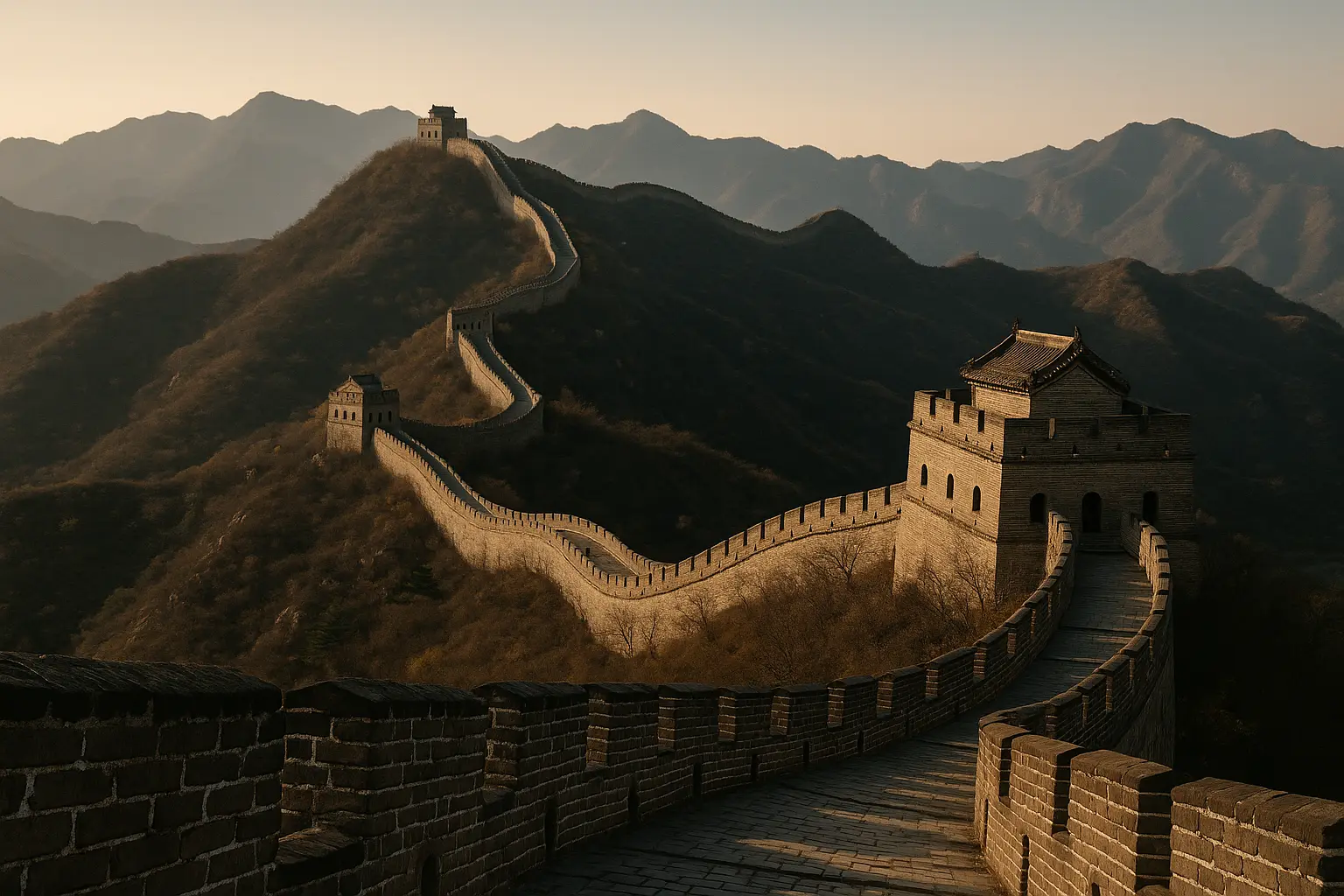
Great Wall of China Badaling Travel Guide 2026: Iconic Fortification
Chinese ImperialVisit Badaling, the most famous section of the Great Wall of China. Our guide covers tickets, cable ...
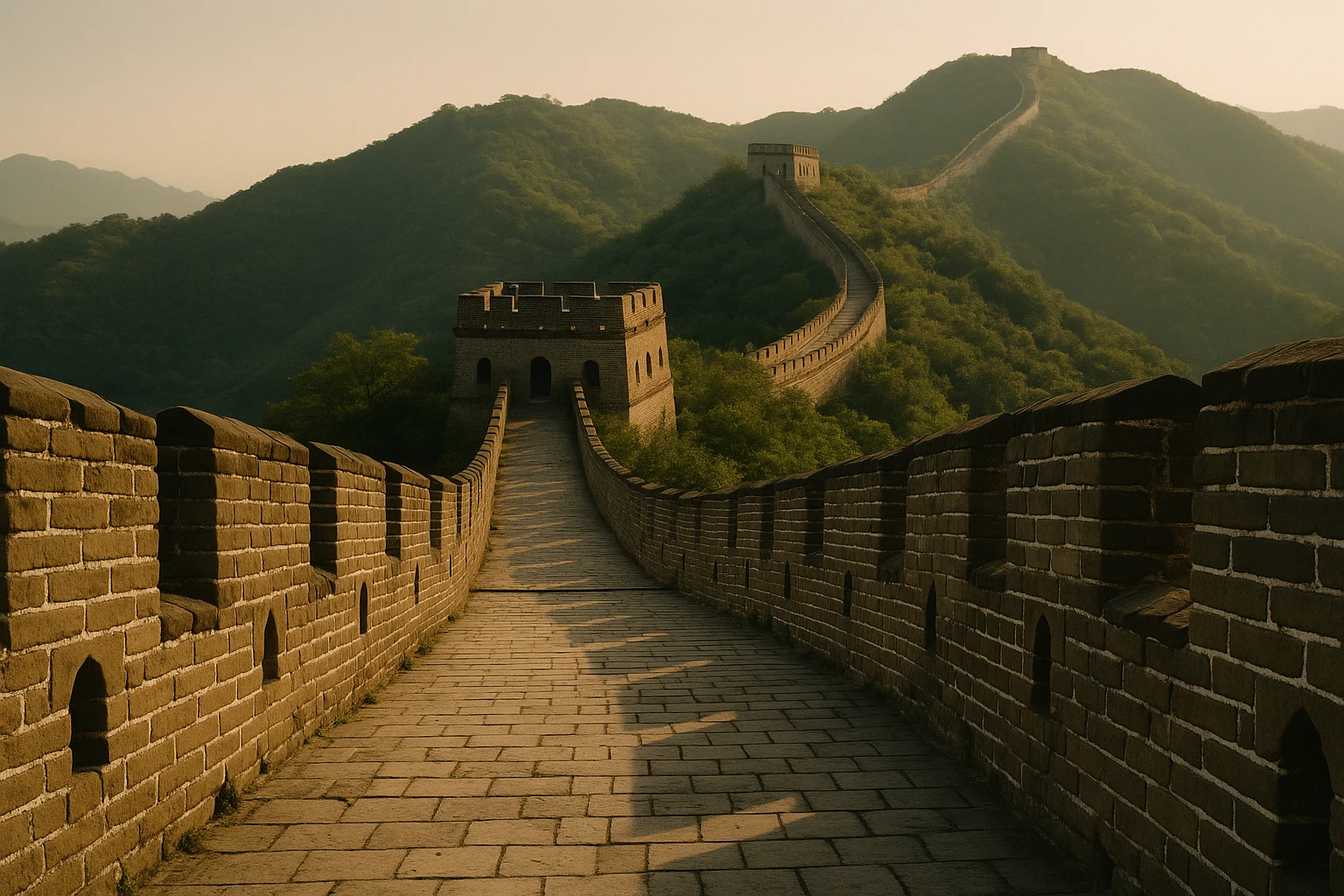
Great Wall of China (Mutianyu)
Explore Mutianyu — the Great Wall's most dramatic restored section, with 22 Ming-era watchtowers, mo...
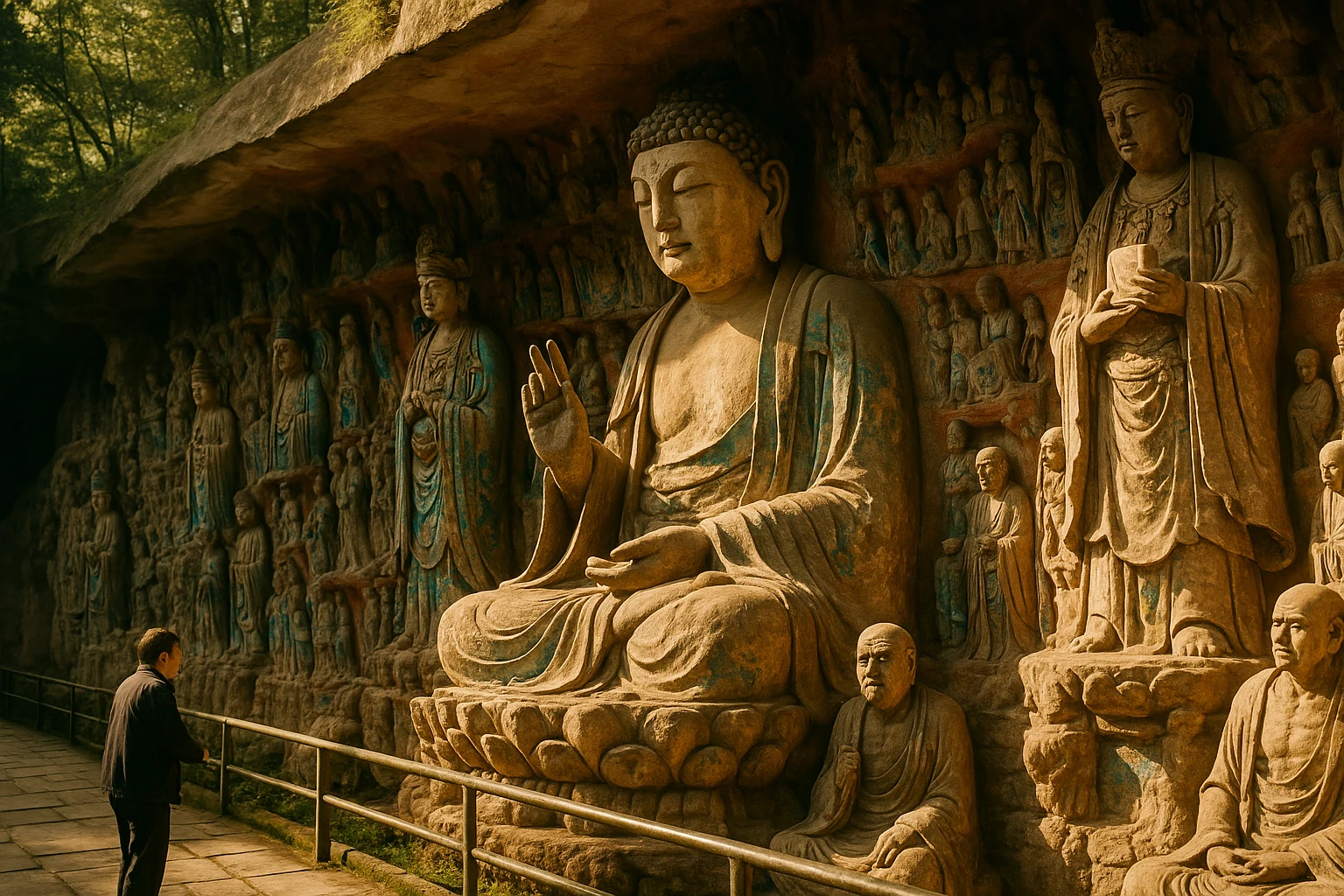
Dazu Rock Carvings
Tang and Song Dynasty ChinaAncient Buddhist, Taoist, and Confucian rock sculptures carved into cliffsides across Dazu District,...
Forbidden City China Travel Guide 2026: Imperial Palace of Beijing
Chinese ImperialExplore the Forbidden City, China's imperial palace for 500 years. Discover the Hall of Supreme Harm...