Quick Info
At a glance
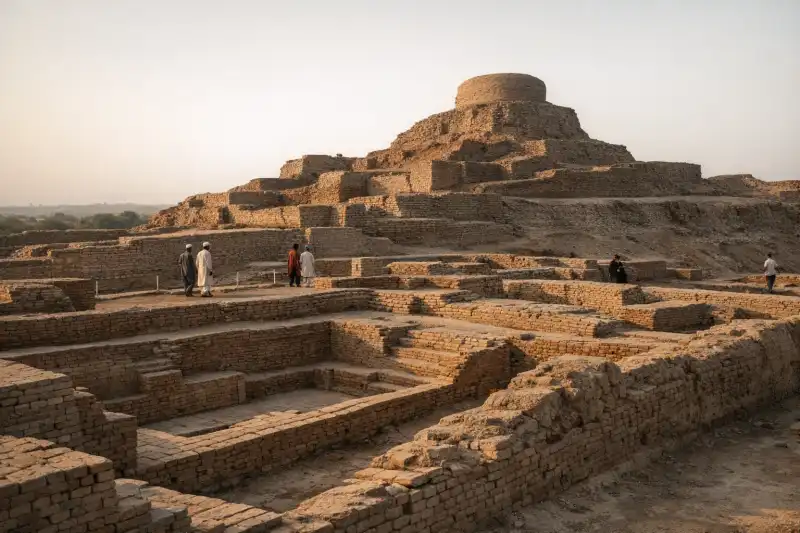
Mohenjo-daro in Pakistan rises from the plains of Sindh as one of the ancient world’s most compelling urban ruins, a place where fired bricks, broad streets, and careful civic design still hint at a remarkably organized Bronze Age society. Even before you step among the excavated walls, the site feels different from many ancient destinations. There are no towering classical columns or dramatic mountain citadels here. Instead, Mohenjo-daro reveals its greatness through planning, proportion, and the quiet sophistication of a city built more than four thousand years ago.
Set near the Indus River system, the site belonged to the Indus Valley Civilization, one of the great early urban cultures alongside ancient Egypt and Mesopotamia. Yet Mohenjo-daro often surprises first-time visitors because its achievements look strikingly modern. Streets were laid out on a grid. Houses were constructed with standardized bricks. Water management and drainage were not afterthoughts but essential parts of civic life. The result is a destination that rewards slow observation. What at first appears to be a low maze of mud-colored ruins gradually resolves into neighborhoods, platforms, wells, bathing spaces, and public structures that suggest a highly coordinated society.
Travelers who make the journey to Mohenjo-daro are not just visiting an archaeological site. They are entering one of the earliest great experiments in urban living, preserved in the heat and dust of southern Pakistan, where the silence of the ruins makes the scale of its ancient accomplishment even more impressive.
History
Early settlement and rise of the city
Mohenjo-daro was founded during the mature phase of the Indus Valley Civilization, most likely around 2500 BCE, though settlement activity in the broader region predates that flourishing. Its name, usually translated as “Mound of the Dead,” is modern; the original ancient name remains unknown. By the time the city reached its height, it had become one of the principal urban centers of a civilization stretching across parts of present-day Pakistan and northwestern India.
What makes Mohenjo-daro historically significant is not only its age but also the level of planning embedded in its layout. Archaeologists have identified carefully organized sectors, elevated mounds, major streets, and extensive use of kiln-fired bricks. This was not a village that expanded haphazardly over generations. It was a city with a recognizable civic order. Its inhabitants participated in long-distance trade, worked with metals and beads, produced ceramics, and used a still-undeciphered script found on seals and objects across the Indus world.
The city’s growth was likely tied to fertile agricultural lands, access to riverine networks, and its place within a larger web of exchange. Standardized weights and measures found across Indus sites suggest a shared commercial culture. Mohenjo-daro appears to have been an important administrative, economic, and perhaps ceremonial center within that system.
Urban achievement in the mature Indus period
Between roughly 2500 and 1900 BCE, Mohenjo-daro stood as one of the ancient world’s great cities. During this period, the site developed many of the features for which it is famous today. Residential quarters contained private bathing areas and drainage connections. Public architecture included large halls, raised platforms, and the celebrated Great Bath. Wells were numerous, indicating a sophisticated relationship with water access and urban infrastructure.
One of the most striking historical questions is how a city of this complexity was governed. Unlike ancient Egypt or Mesopotamia, Mohenjo-daro has not yielded obvious monumental palaces or royal tombs. This absence has fueled debate among scholars. Some argue that power may have been distributed differently here, perhaps through merchant elites, civic authorities, ritual specialists, or other forms of organization less focused on visibly glorifying rulers. While certainty remains elusive, the urban evidence suggests strong coordination in construction, sanitation, and planning.
The people of Mohenjo-daro left behind artifacts that speak of daily life as much as state structure: pottery, figurines, tools, beads, seals, and ornaments. These objects point to a society with skilled craftspeople and extensive connections. Indus seals have even been found far beyond the region, linking this civilization to wider Bronze Age trade networks.
Decline, abandonment, and burial beneath the landscape
After about 1900 BCE, the urban system of the Indus Valley Civilization began to change. Mohenjo-daro gradually declined, though the reasons remain debated. Older theories once emphasized invasion, but modern scholarship tends to favor more complex explanations involving shifting river systems, environmental stress, changes in trade, flooding, and social transformation. It is possible that a combination of factors weakened the urban order on which cities like Mohenjo-daro depended.
Repeated flooding may have played a role, as layers of rebuilding and elevation suggest continual efforts to cope with environmental pressures. Over time, the city was abandoned, and its structures eroded into mounds of earth and brick. For centuries, the remains lay mostly silent, known locally but not yet understood in their full antiquity.
Rediscovery and modern archaeology
Mohenjo-daro entered the modern historical record in the early 20th century, when archaeologists working under the Archaeological Survey of India began major investigations. Excavations in the 1920s revealed that the site belonged to a previously unrecognized Bronze Age civilization of extraordinary sophistication. This discovery transformed the understanding of South Asian history, demonstrating that the subcontinent was home to one of the earliest urban traditions in the world.
Since then, Mohenjo-daro has become central to the study of ancient cities, early technology, and Indus society. It was inscribed as a UNESCO World Heritage Site in 1980, reflecting its global importance. At the same time, the site faces ongoing conservation challenges. Exposure to heat, salinity, wind, and seasonal weather threatens the fragile brick architecture. Today, visiting Mohenjo-daro means encountering both the brilliance of an ancient civilization and the delicate work required to preserve it for the future.
Key Features
The most famous structure at Mohenjo-daro is the Great Bath, and standing near it, it is easy to understand why it has become the emblem of the site. Built from carefully fitted baked bricks and made watertight with bitumen, the rectangular tank sits within a larger architectural complex that includes surrounding rooms and access points. Its exact purpose remains uncertain, but many scholars believe it had ritual significance. Whatever its original use, the Great Bath shows the Indus people’s advanced understanding of engineering, waterproofing, and communal space. It also captures a broader truth about Mohenjo-daro: water was central to city life.
As you move through the excavated areas, the site’s urban logic becomes increasingly apparent. Streets intersect at ordered angles, and the ruins of houses reveal a concern with privacy and practicality. Many dwellings were built around internal courtyards, with rooms arranged to manage heat and circulation. Some houses had stairways suggesting upper stories, while others contained bathing platforms and access to drainage channels. These are not merely traces of shelter; they are remnants of a city where domestic comfort, cleanliness, and infrastructure were carefully integrated.
The drainage system is among Mohenjo-daro’s most remarkable features. Covered drains ran along streets, collecting wastewater from homes and bathing areas. Inspection points and soak pits indicate regular maintenance and technical forethought. For modern visitors, these features can be more astonishing than the city’s larger monuments because they suggest a practical, civic-minded urbanism. The people who built Mohenjo-daro invested not only in symbolic architecture but in the everyday systems that made dense urban life possible.
Another striking feature is the elevated mound often described as a “citadel,” though that term can be misleading if it implies a defensive fortress in the later historical sense. This raised area contains several major public buildings and was likely an important administrative or ceremonial zone. From here, visitors gain a better sense of the site’s overall organization and the relationship between monumental structures and lower residential quarters. The distinction between raised and lower sectors points to deliberate planning, even if many questions about social hierarchy remain unresolved.
Granary-like structures and pillared halls have also drawn attention, though their exact functions are still debated. Archaeology at Mohenjo-daro often resists simple labels. Buildings once confidently identified as granaries, assembly halls, or temples are now discussed more cautiously. That ambiguity is part of the site’s fascination. Without long royal inscriptions or deciphered historical texts, interpretation depends heavily on architecture, artifact patterns, and comparison with other Indus sites.
The bricks themselves deserve notice. Their standardized proportions appear across walls, drains, platforms, and wells, reinforcing the impression of regulated production and shared building norms. Wells are especially numerous, and some remain among the most visually distinctive elements of the site, their circular brick linings rising clearly from the excavated ground. They speak to a city where reliable water access was distributed through neighborhoods rather than concentrated solely in elite precincts.
Finally, the site museum, while modest compared with major urban museums, adds essential context. Objects associated with Mohenjo-daro include seals engraved with animals and script, terracotta figurines, tools, jewelry, and ceramics. These finds remind visitors that the city was not just a planned landscape of walls and drains but a living environment filled with trade, craft production, household routines, and symbolic life. The famous “Priest-King” sculpture and the bronze “Dancing Girl,” though iconic, are only part of a much wider material culture that continues to shape how we understand this enigmatic civilization.
Getting There
Mohenjo-daro is in Sindh province, near Dokri and within reach of Larkana, which serves as the usual base for most visitors. The simplest route is to travel first to Larkana by air, road, or rail connections through larger Pakistani cities such as Karachi, Sukkur, or Islamabad. Larkana Airport has limited service, so many travelers arrive via Sukkur or Karachi and continue overland.
From Larkana to Mohenjo-daro, the distance is roughly 30 kilometers, and the trip by car or hired taxi usually takes around 45 minutes to an hour depending on road conditions. A private taxi for a return trip with waiting time commonly costs about PKR 3,000 to 6,000, though rates can vary by season, negotiation, and vehicle type. Ride-hailing availability may be inconsistent, so arranging transport through a hotel or local driver is often more reliable.
If you are coming from Karachi, expect a long overland journey of around 7 to 9 hours by car, with private transfers often costing from PKR 20,000 upward. From Sukkur, road travel is shorter and generally takes 3 to 4 hours, with private car hire commonly in the PKR 10,000 to 15,000 range. Buses and shared vans to Larkana are cheaper, often under PKR 2,000 from nearby major cities, but they are less convenient for travelers on a tight schedule.
At the site itself, facilities are limited, so bring water, sun protection, and cash for tickets or local arrangements. Hiring a local guide, if available, can greatly improve the experience and usually costs a modest additional fee.
When to Visit
The best time to visit Mohenjo-daro is during the cooler months from November to February. At this time, daytime temperatures are significantly more manageable, making it easier to walk through the exposed ruins without the intense heat that dominates much of Sindh for the rest of the year. Mornings are particularly pleasant, with softer light that also helps photographers capture the texture of the brickwork and open landscape.
From March onward, temperatures begin to climb quickly. April, May, and June can be extremely hot, with daytime highs often becoming uncomfortable or even risky for extended outdoor sightseeing. Because the site offers little shade, visiting in peak heat requires serious precautions, including early starts, plenty of water, a hat, and frequent breaks. For many travelers, these months are best avoided unless there is no alternative.
The monsoon period, generally in July and August, can bring humidity and occasional rains, though Sindh’s rainfall patterns are variable. Weather-related conditions may affect comfort and site access, and the combination of heat and moisture can still be demanding. September and October are transitional months; while conditions may slowly improve, afternoons can remain very warm.
If your goal is a rewarding, unhurried visit, winter is ideal. This is also the season when combining Mohenjo-daro with other heritage stops in Pakistan is most practical. Try to arrive early in the day regardless of month, both to avoid heat and to enjoy the site before the strongest midday sun flattens the landscape visually. The ruins reveal their details best when the light is low and the atmosphere is calm.
| Quick Facts | Details |
|---|---|
| Location | Near Dokri, Larkana District, Sindh, Pakistan |
| Civilization | Indus Valley Civilization |
| Period | Bronze Age |
| Established | c. 2500 BCE |
| UNESCO Status | World Heritage Site |
| Best Known For | Great Bath, urban planning, drainage system, standardized brick architecture |
| Best Time to Visit | November to February |
| Suggested Visit Length | 2 to 4 hours |
| Nearest City Base | Larkana |
| Main Travel Consideration | Extreme heat and limited shade at the ruins |
Mohenjo-daro rewards travelers who appreciate archaeology not as spectacle alone but as evidence of how people once organized everyday life on a grand scale. Its bricks do not shout; they endure. In the quiet geometry of its streets and the practicality of its drainage lines, you encounter a civilization that solved urban problems with impressive intelligence more than four millennia ago. That sense of intimate sophistication is what makes Mohenjo-daro unforgettable. It is not merely one of Pakistan’s greatest ancient sites. It is one of humanity’s earliest and clearest statements that a city could be planned, serviced, and shared.
Guided tours: worth it?
A guide can be genuinely useful at Mohenjo-daro, especially if you want help with transport, timing, tickets, or understanding a large site without losing half the day to logistics.
Best for
- First-time visitors who want context, not just photos
- Travelers who want transport, timing, or entry logistics handled
- Short visits where a planned route saves time
When to go self-guided
Go independently if you already have transport and tickets sorted, enjoy moving at your own pace, and are comfortable checking the latest official rules before you arrive.
What I’d avoid
Skip paid tours that bundle unrelated stops you do not actually want. The best option should either save meaningful planning time or add historical context you would miss on your own.
Mohenjo-daro tours
Useful when: you want to compare guided formats before deciding
Sindh archaeology tours
Useful when: you want to compare guided formats before deciding
Pakistan heritage tours
Useful when: you want to compare guided formats before deciding
Some tour links are affiliate links, which may earn Ancient Travel a small commission at no extra cost to you. I try to surface options that make practical sense for the site—not just anything bookable.
Frequently Asked Questions
Where is Mohenjo-daro located?
Mohenjo-daro is in Sindh province, Pakistan, near the modern town of Dokri in the district of Larkana.
What is Mohenjo-daro famous for?
It is famous as one of the best-preserved cities of the Indus Valley Civilization, noted for advanced urban planning, brick architecture, drainage systems, and the Great Bath.
Can tourists visit Mohenjo-daro?
Yes, the archaeological site is open to visitors, though facilities are limited and conditions can be very hot for much of the year.
How much time should I spend at Mohenjo-daro?
Most travelers should allow two to four hours to walk the main ruins, visit the site museum, and take in the major architectural remains.
When is the best time to visit Mohenjo-daro?
The coolest and most comfortable months are generally from November to February, when daytime temperatures are far better for exploring the exposed ruins.
Is Mohenjo-daro a UNESCO World Heritage Site?
Yes, Mohenjo-daro is a UNESCO World Heritage Site recognized for its outstanding importance to the history of early urban civilization.
Nearby Ancient Sites
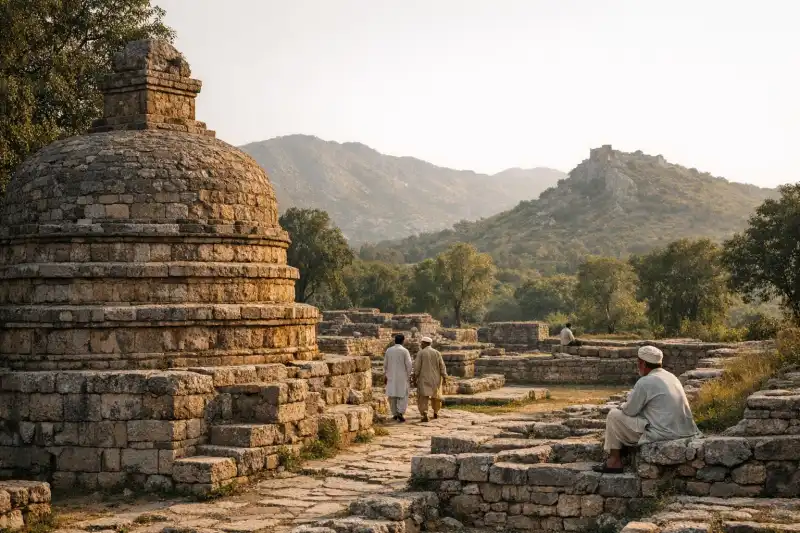
Taxila
Gandharan, Achaemenid, Indo-Greek, KushanExplore Taxila in Pakistan, an ancient crossroads of Gandharan culture, Buddhist monasteries, and In...
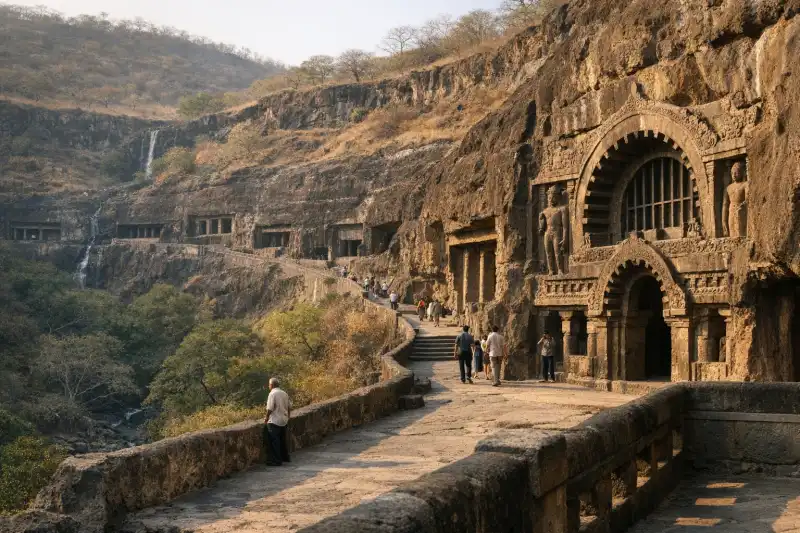
Ajanta Caves
Ancient Indian BuddhistExplore India’s Ajanta Caves, a masterpiece of Buddhist rock-cut art famed for murals, sculptures, a...
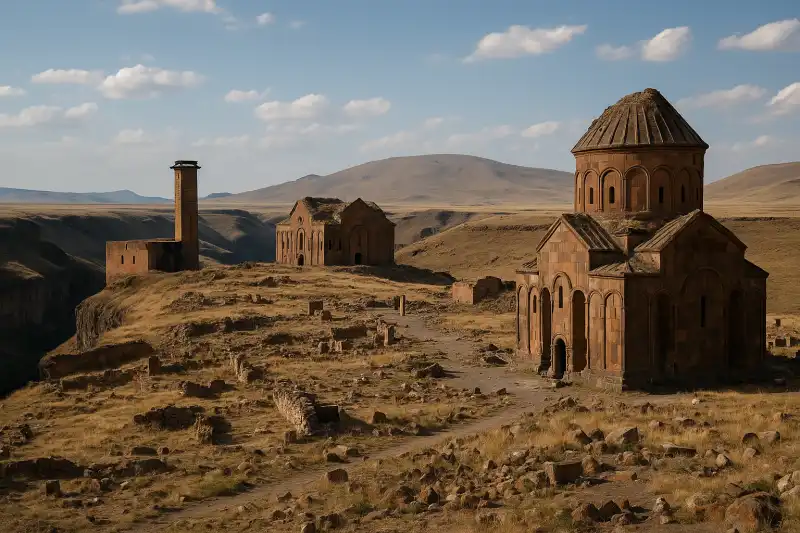
Ani Turkey Guide 2026: Cathedral of Ani & Lion Gate
Armenian-Bagratid-Byzantine-Seljuk-GeorgianPlan your visit to Ani in eastern Turkey: explore the Cathedral, churches, and Silk Road walls with ...