Quick Info
Curated Experiences
Monte Albán Day Trip from Oaxaca
Monte Albán, Arrazola and Cuilapam Full-Day Tour
Private Monte Albán Archaeological Tour
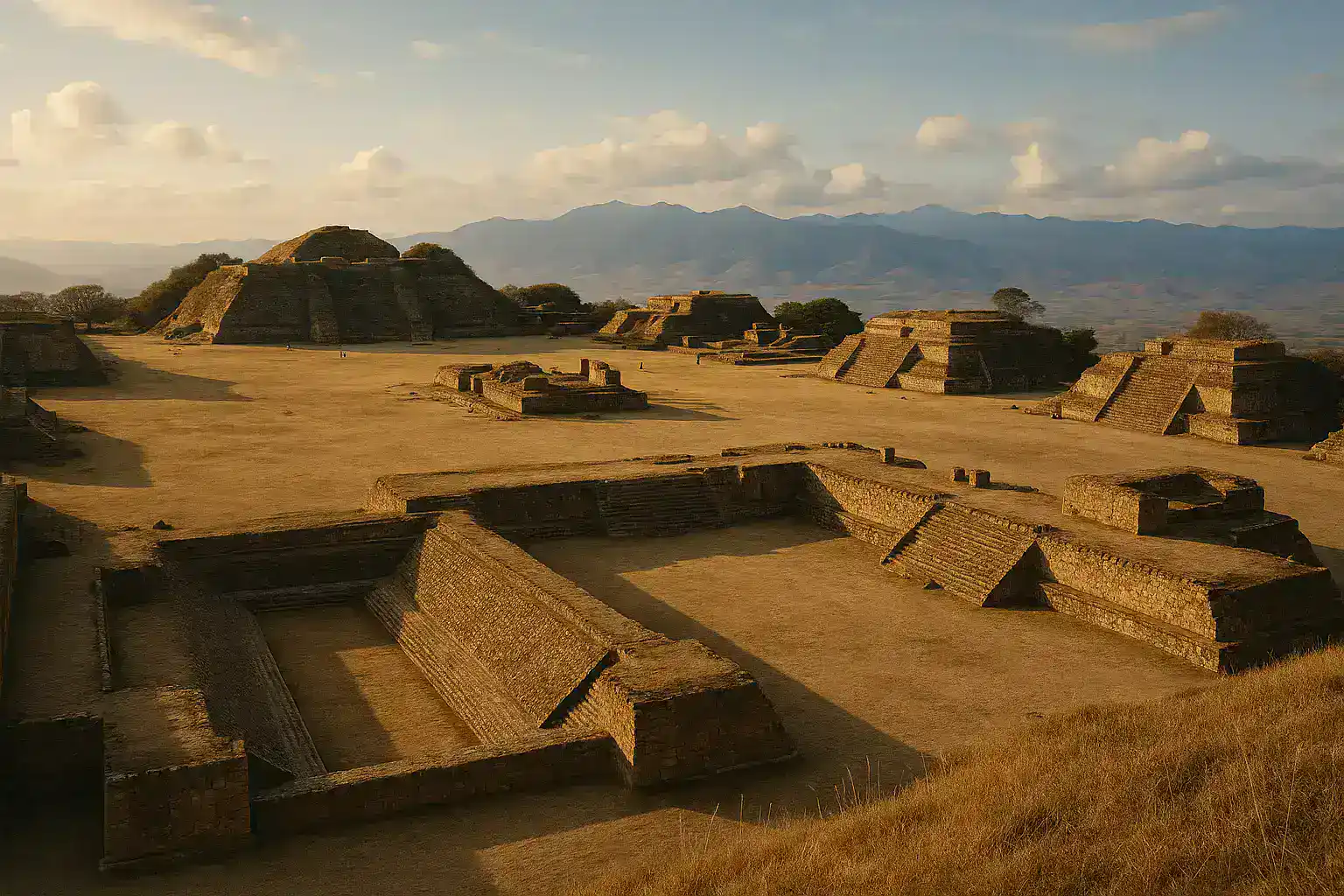
The Zapotecs did not build their capital in the fertile valley below. They chose instead to flatten the top of a mountain. Around 500 BCE, laborers moved an estimated 2.5 million cubic meters of rock without metal tools or wheeled carts, removing the mountain’s natural contours to create a broad artificial plateau 300 meters long and 200 meters wide, suspended nearly 400 meters above the Oaxaca Valley floor. The audacity of the decision still registers when you reach the summit and the Grand Plaza opens before you: a geometric expanse of stone ringed by stepped temple platforms, the valley spreading to every horizon below, and nothing above you but sky. This was not architecture placed on a landscape. It was a landscape remade into architecture.
Monte Alban is among the oldest urban centers in Mesoamerica, predating Teotihuacan by centuries and shaping the development of cities and statecraft across ancient Mexico. For over a thousand years, the Zapotec elite ruled from this manufactured summit, conducting astronomical observations, recording conquests in carved stone, and receiving tribute from across the valley system that fed their mountaintop city. The place demands something beyond sightseeing. The engineering alone — a city built in the sky, sustained for a millennium without natural springs — invites a reckoning with what pre-Columbian civilization was actually capable of.
The view from the North Platform’s summit takes in the same valley that Zapotec priests surveyed two and a half millennia ago, and the communities you see below are still inhabited by their cultural descendants. That continuity — between the carved stones at your feet and the living Zapotec towns in the valley — is not metaphorical. It is demographic, linguistic, and ongoing.
Historical Context
Construction began around 500 BCE, during a period when the Oaxaca Valley’s competing chiefdoms were consolidating into a single political entity. Monte Alban may have been founded as a neutral capital, placed deliberately between three sub-valleys to avoid favoring any one faction. The hilltop location reinforced the city’s neutrality with raw defensibility: anyone approaching from the valley below was visible for kilometers, and the steep slopes presented a formidable natural barrier.
By 200 BCE, Monte Alban had consolidated power across the entire Oaxaca Valley and established itself as the administrative, religious, and commercial center of an expanding Zapotec state. The city’s population reached 25,000 to 30,000 inhabitants, housed on residential terraces carved into the mountain’s slopes. Water, the critical vulnerability of any hilltop settlement, was managed through an elaborate system of cisterns and channels that captured seasonal rainfall and stored it for dry months. The logistical challenge of supplying a mountaintop city with food, water, and building materials was immense, and the fact that it was sustained for over a millennium speaks to the organizational capacity of the Zapotec state.
The Zapotecs developed one of Mesoamerica’s earliest writing systems, a sophisticated dual calendar (a 260-day ritual cycle interlocking with a 365-day solar count), and a tradition of monumental stone carving that expressed both religious belief and political dominion. Their influence extended far beyond Oaxaca — a distinct Zapotec neighborhood has been identified at Teotihuacan, 400 kilometers to the north, confirming that Monte Alban’s rulers maintained diplomatic and commercial relationships with the most powerful city in the Americas.
By approximately 800 CE, Monte Alban had been largely depopulated through a gradual decline whose causes remain debated. Environmental degradation, political fragmentation, and the growing importance of valley-floor centers like Mitla likely all contributed. The city was never violently destroyed. It simply emptied, its ceremonial functions migrating to successor sites as the political landscape fragmented. But even in abandonment, Monte Alban retained sacred significance. The Mixtec people, who succeeded the Zapotecs as the region’s dominant culture, reused the ancient tombs for their own elite burials centuries after the city had been abandoned. Tomb 7, discovered in 1932 by archaeologist Alfonso Caso, contained one of the most spectacular burial assemblages ever found in the Americas: over 500 objects of gold, silver, jade, turquoise, and carved bone, deposited by Mixtec rulers who sought to associate their dead with the sanctified ground of a city their predecessors had built.
What to See
The Grand Plaza
The central plaza is the defining experience of Monte Alban, and first impressions are immediate. The rectangular expanse — 300 by 200 meters — is bordered on all sides by stepped temple platforms that frame the sky and valley in equal measure. The spatial effect is deliberate: you stand in an enclosed world that seems to float above the landscape. The axial precision of the layout reflects sophisticated astronomical alignment, with structures positioned to track solar events across the year. Walk the full length of the plaza from south to north, stopping at the center to absorb the proportions. The Zapotecs designed this space to hold thousands of people during ceremonies, markets, and judicial proceedings, and the scale is calibrated to make every individual aware of the architecture’s authority.
The Danzantes
More than 300 stone slabs carved with human figures in contorted poses are incorporated into Building L on the plaza’s west side. Early observers called them dancers, but modern archaeology has arrived at a darker interpretation: these are almost certainly depictions of captured enemies, displayed in death after ritual sacrifice. Many figures show signs of mutilation. The poses now read as the involuntary positions of the dead. Most compellingly, the figures are individualized — each face carries distinct features and proportions that suggest portraiture rather than generic representation. These were specific people, carved so their defeat would be permanently recorded in stone. Some original slabs remain in Building L; additional examples are displayed in the site museum where the carving details can be examined more closely. The danzantes are among the earliest examples of large-scale political stone carving in Mesoamerica.
Building J
This arrowhead-shaped structure breaks dramatically from the rectangular geometry governing the rest of the plaza, oriented at an oblique angle that has led archaeologists to conclude it served astronomical observation functions. Narrow interior chambers and aligned doorways create sightlines toward specific rising or setting points on the horizon that do not correspond to the site’s cardinal alignment. Carved stone monuments bearing numerical symbols and calendar glyphs are built into its walls, consistent with its role in the calendrical calculations central to Zapotec religious and agricultural life. Building J is one of the most intellectually intriguing structures at the site — walk around its full perimeter and notice how its orientation deliberately contradicts every other building in the plaza.
The Ball Court
On the east side of the Grand Plaza, an I-shaped depression marks one of the oldest ball courts in Mesoamerica. The Mesoamerican ballgame was played with a heavy rubber ball propelled by hips, knees, and forearms in a contest saturated with cosmological meaning — a reenactment of cosmic struggles between day and night, life and death. The sloping stone sides concentrate sound in unusual ways, and the court’s alignment within the plaza confirms its integration with the ceremonial geography of the entire complex. Stand at one end and clap to hear the acoustic effect.
The North Platform
The massive complex at the plaza’s upper end contains multiple temples, altars, and elite residential areas built up across centuries of construction. Its summit, reached by a broad staircase, offers the site’s most complete panorama: the entire plaza below, the valley stretching to the horizon in every direction, and the distant mountains of Oaxaca as backdrop. This is the view that Zapotec priests climbed to every morning, and it remains the emotional summit of any visit. Budget 20 minutes here.
The Site Museum
Located near the entrance, the museum is included with admission and should not be skipped. It houses original danzantes slabs viewable at close range, ceremonial ceramics, jade ornaments, and reproductions of the Tomb 7 treasures (the originals are in Oaxaca City’s Regional Museum). The interpretive panels provide context that transforms the ruins from impressive stones into readable history. Visit before entering the site if you want the background, or after if you want the museum to answer questions the ruins raised.
Timing and Seasons
The site opens at 8:00 AM and closes at 5:00 PM daily, with last entry at 4:00 PM. Arrive at opening. The first two hours offer cooler temperatures, dramatic morning light raking across the valley, and the thinnest crowds. By 10:30 AM, tour buses from Oaxaca begin arriving in volume and the plaza fills noticeably. The exposed mountaintop becomes uncomfortable from roughly 11:00 AM to 2:00 PM, when UV exposure is intense and there is almost no shade.
Spring (March through May) and autumn (October through November) offer the most reliable weather, with clear skies and daytime temperatures between 70-82°F (21-28°C). The rainy season from June through August brings afternoon thunderstorms that keep the landscape vivid green and the morning hours clear. April and May can see daytime highs near 88°F (31°C) on the exposed plateau. Winter months (December through February) are drier and cooler, with morning temperatures occasionally dipping to 50°F (10°C) at the site’s 1,940-meter (6,360-foot) elevation — bring a light jacket for early arrivals.
Mexican nationals enter free on Sundays, which means significantly larger crowds. If you can choose your day, avoid Sunday.
Tickets, Logistics, and Getting There
Admission is 85 pesos (approximately $4.25 USD). A video camera permit costs 45 pesos. The site is open daily. Students with valid ID, children under 13, and seniors over 60 receive free admission. Parking costs 20 pesos.
Monte Alban lies 10 kilometers from central Oaxaca City, a 30-minute drive up a winding but well-paved mountain road. Colectivos (shared vans) depart from the corner of Calle Diaz Ordaz and Mina, two blocks north of the Zocalo, costing 25 pesos ($1.25 USD) each way and leaving when full, typically every 15-20 minutes between 8:00 AM and 3:00 PM. Return vans wait at the site parking area. Taxis from central Oaxaca cost 150-200 pesos ($7-10 USD) one way, or 400-500 pesos for a round trip with waiting time. Organized half-day tours from Oaxaca hotels cost $30-50 and include transport, entrance fees, and a guide. Private tours cost $100-120 and offer flexibility in timing and depth of coverage.
No food or water is sold inside the archaeological zone. A few vendor stalls outside the entrance sell snacks and bottled water, but selection is limited. Eat properly in Oaxaca before your visit.
Practical Tips
- Water is the most important thing you bring. The exposed mountaintop amplifies dehydration risk significantly. Carry at least one liter per person, more in warm weather.
- Sun protection — hat, sunglasses, SPF 50+ sunscreen — is not optional. The altitude amplifies UV exposure beyond what most visitors expect.
- Mornings are genuinely cool at this elevation even in summer. A light jacket is useful for the first hour if arriving at opening.
- Wear shoes with grip and ankle support. The stone surfaces are uneven, and the stairs on the North and South platforms are steep and without railings.
- The altitude at 1,940 meters (6,360 feet) affects some visitors arriving from sea level. Take the initial climb slowly and allow your pace to be guided by how you feel.
- After Monte Alban, visit the Regional Museum of Anthropology in Oaxaca City’s former Santo Domingo convent. It houses the original Tomb 7 gold collection, and seeing it completes the story that the mountaintop begins.
Suggested Itinerary
Half-day visit (2.5 to 3 hours):
Take the 8:00 AM colectivo from Oaxaca and arrive at the site by 8:30. Start with the site museum near the entrance (20 minutes) for context on the danzantes and Zapotec culture. Enter the Grand Plaza and walk its full length from south to north (30 minutes), stopping at Building J and the ball court. Examine the danzantes slabs at Building L (15 minutes). Climb the North Platform for the panoramic view (20 minutes). Explore the South Platform and any remaining structures (20 minutes). Exit by 11:30 and return to Oaxaca for lunch and the Santo Domingo museum.
Full-day combined visit (6 to 7 hours):
Follow the half-day route at Monte Alban with more time at each stop. After returning to Oaxaca, visit the Santo Domingo Cultural Center and Regional Museum to see the Tomb 7 gold treasures. Add the craft villages of Arrazola (painted wooden alebrije figures) and San Bartolo Coyotepec (black barro negro pottery) for a comprehensive Oaxaca Valley cultural day. Most organized full-day tours cover this combination for $50-70.
Nearby Sites
Monte Alban pairs naturally with Oaxaca City’s historic center, one of Mexico’s most culturally rich towns. But for longer itineraries, connect it with other major Mesoamerican sites that illuminate different facets of pre-Hispanic civilization.
Palenque in Chiapas offers the Maya counterpoint — a jungle city built around royal tombs and elaborate stucco sculpture, roughly 10 hours by road or reachable via a domestic flight from Oaxaca to Villahermosa. The contrast between Monte Alban’s exposed mountaintop geometry and Palenque’s forest-draped intimacy reveals the range of Mesoamerican urban design.
Uxmal in the Yucatan showcases the Puuc style of Maya architecture, with intricate stone mosaic facades that represent a fundamentally different approach to surface decoration than anything at Monte Alban.
Chichen Itza brings the Maya-Toltec synthesis — ballcourts, feathered serpents, and an architectural ambition that drew from multiple Mesoamerican traditions including, some scholars argue, the Zapotec.
Final Take
Monte Alban is not just a ruin on a hill. It is a hill that was made into a ruin — a mountain reshaped by human ambition into a platform between earth and sky. The Grand Plaza remains one of the most powerful architectural spaces in the Americas, not because of any single structure but because of the collective effect: stone platforms framing valley and sky, astronomical alignments encoding the passage of time, and carved figures recording the victories that paid for it all. Arrive at opening, climb the North Platform before the heat arrives, and take in the same view that Zapotec priests surveyed twenty-five centuries ago. The valley below has changed. The perspective from the summit has not.
Discover More Ancient Wonders
- Palenque: Maya jungle temples and the tomb of Pakal in Chiapas
- Uxmal: Puuc-style Maya ruins with intricate stone mosaics
- Chichen Itza: The iconic pyramid of Kukulkan and the great ball court
- Explore more destinations in our Mexico Ancient Sites Guide
Quick Facts
| Attribute | Details |
|---|---|
| Location | Oaxaca City, Oaxaca, Mexico |
| Country | Mexico |
| Region | Oaxaca |
| Civilization | Zapotec |
| Historical Period | c. 500 BCE-800 CE |
| Established | c. 500 BCE |
| UNESCO Status | World Heritage Site (1987) |
| Admission | 85 pesos (~$4.25 USD) |
| Hours | 8:00 AM - 5:00 PM daily |
| Time Needed | 2 - 3 hours |
| Elevation | 1,940 m (6,360 ft) |
| Coordinates | 17.0439, -96.7671 |
Frequently Asked Questions
How do I get to Monte Albán from Oaxaca City?
Take a colectivo (shared van) from the corner of Calle Díaz Ordaz and Mina near the Zócalo (25 pesos/$1.25 USD, 30 minutes). Taxis cost 150-200 pesos ($7-10 USD). Organized tours from Oaxaca hotels cost $30-50 including guide and transport. The site is 10 km from downtown Oaxaca.
How much time do I need at Monte Albán?
Plan 2-3 hours for a thorough visit of the main plaza, ball court, danzantes, and museum. The site is compact and well-organized. Combine with nearby artisan villages (Arrazola, San Bartolo Coyotepec) for a full-day Oaxaca experience.
What are the danzantes at Monte Albán?
The danzantes (dancers) are over 300 stone slabs carved with human figures in strange, contorted poses. Once interpreted as dancers, they're now believed to depict tortured, sacrificed captives from conquered peoples. Each figure has unique features suggesting individual portraiture of actual prisoners.
Is Monte Albán wheelchair accessible?
Limited. The main plaza area has relatively flat, compacted surfaces, but the site involves stairs, uneven stone, and sloped areas. The museum is accessible, but full site exploration requires walking capability. Contact the site in advance for specific accessibility needs.
What should I bring to Monte Albán?
Essential items: sun protection (hat, sunscreen, sunglasses), water (at least 1 liter), comfortable walking shoes, light jacket (altitude makes mornings cool at 1,940m/6,360ft). There's minimal shade and no water sold inside the site.
When is the best time to visit Monte Albán?
Arrive at the 8 AM opening for cooler temperatures and dramatic morning light over the Oaxaca Valley. Spring (March-May) offers ideal weather. Avoid midday heat in April-May. The site closes at 5 PM; sunset views are spectacular but verify closing time as it varies seasonally.
Nearby Ancient Sites
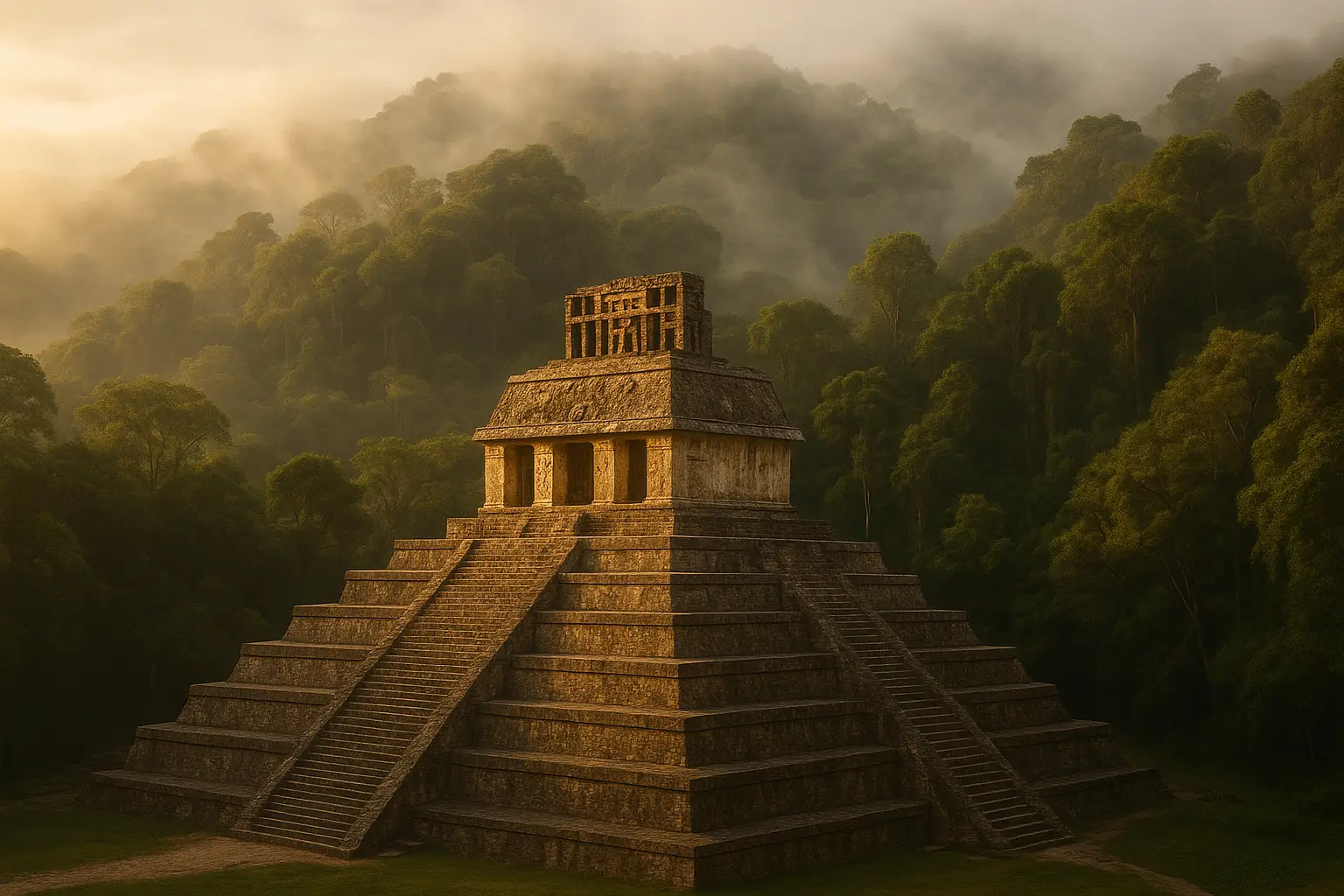
Palenque Mexico Travel Guide 2026: Jungle Maya Temples & Tombs
MayaExplore Palenque's rainforest-shrouded Maya temples with our complete guide. Discover Pakal's tomb, ...
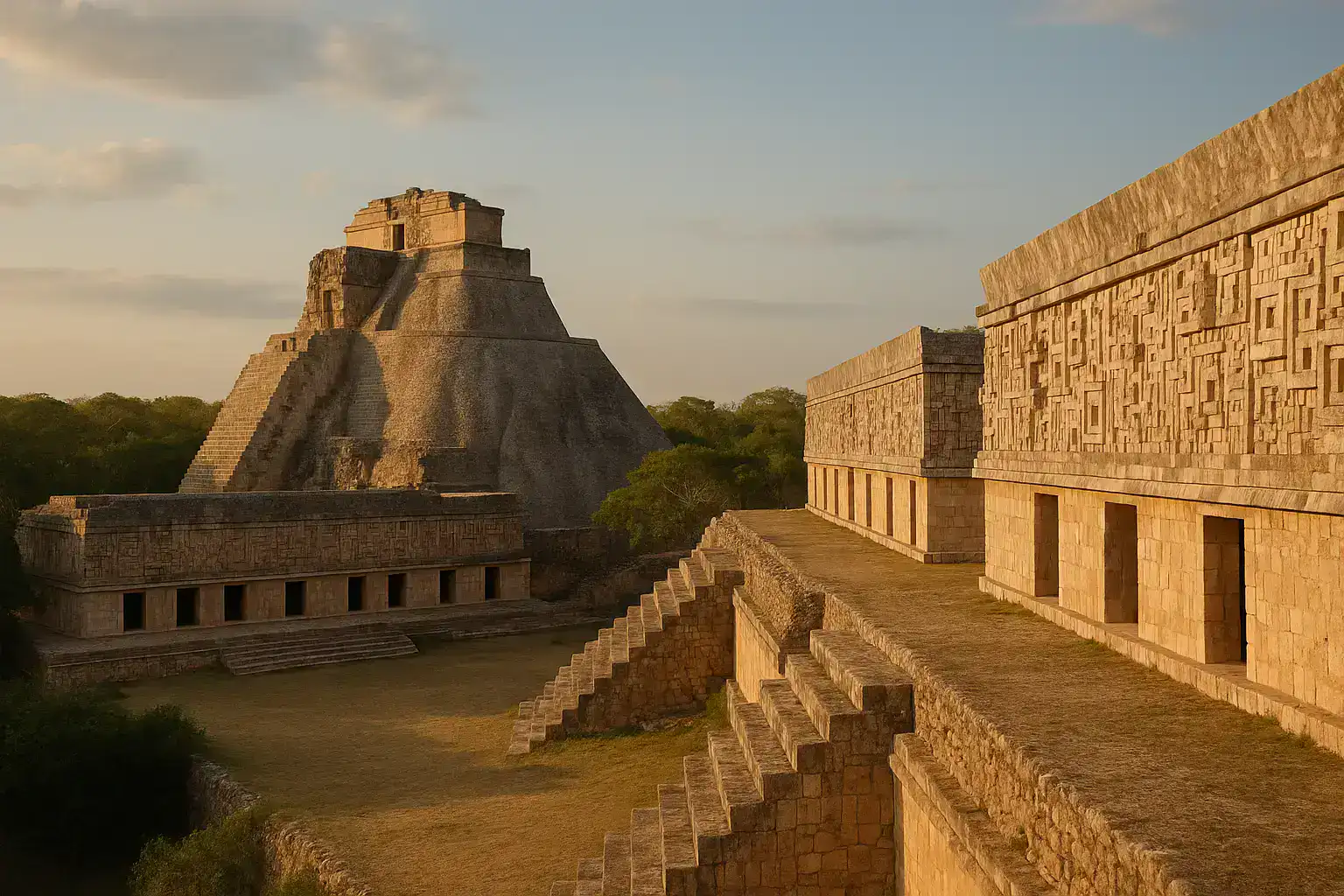
Uxmal Mexico Travel Guide 2026: Puuc Architecture & Stone Mosaics
MayaDiscover Uxmal's exquisite Puuc architecture with intricate stone mosaics. Explore the Pyramid of th...
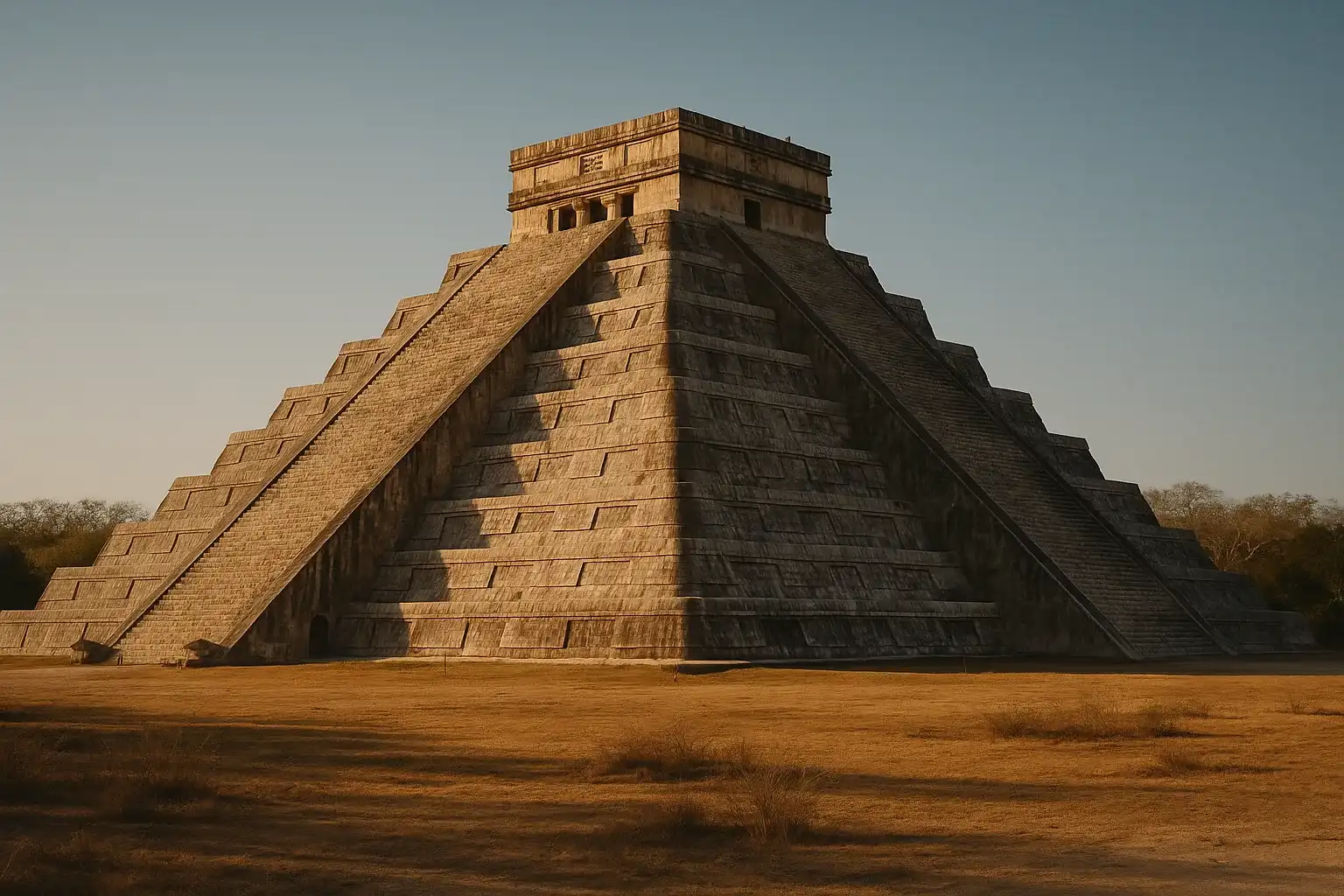
Chichen Itza Travel Guide 2026: Maya Secrets, Sacred Cenote, and Smart Timing
MayaChichen Itza stands as the most visited ancient site in Mexico, showcasing the architectural genius ...