Quick Info
Curated Experiences
Mount Nebo and Madaba Mosaic Tour from Amman
Full-Day Private Tour: Baptism Site, Mount Nebo, Dead Sea
Jordan: Private 1-Day Visit to Mount Nebo and Jerash
Perched atop the ancient hills just west of Madaba in Jordan, Mount Nebo is more than a picturesque lookout—it is a sacred destination layered with stories, legend, and breathtaking vistas. At 817 meters above sea level, it commands remarkable views across the Jordan Valley toward the Dead Sea, Jericho, and on especially clear days, even as far as Jerusalem. This revered mountain has drawn pilgrims for centuries, earning its hallowed status as the place where, according to the Hebrew Bible, Moses glimpsed the Promised Land before his death. In the tranquil silence of the summit, the sweep of the valley ignites the imagination, bridging biblical narrative and archaeological discovery.
Mount Nebo encapsulates both spiritual longing and historical curiosity. The rugged path up the mountain offers an evocative journey through olive groves, punctuated by ancient ruins and modern pilgrimage markers. For visitors of any faith or simply those entranced by humanity’s deep past, Mount Nebo offers a tangible connection to the ancient Near East. As sunlight bathes the Byzantine mosaics underfoot, and the famous serpentine cross sculpture reaches skyward, the experience seamlessly weaves spiritual reverence, artistic heritage, and the stark beauty of Jordan’s highlands. From the solemn interiors of the Moses Memorial Church to the wind-sculpted mountaintop, every step is a testament to a legacy reverberating across three millennia. For travelers seeking both awe and enlightenment, Mount Nebo stands as an unmissable waypoint in Jordan’s tapestry of ancient wonders.
History
Biblical Beginnings and Ancient Reverence
Mount Nebo’s story is rooted in the pages of sacred texts, most notably the Hebrew Bible. In the Book of Deuteronomy, Moses—prophet and lawgiver—ascends Mount Nebo after leading the Israelites through forty arduous years in the desert. From its summit, he beholds the lush expanse of the Promised Land that his people will inherit, yet, by divine decree, he himself is not permitted to enter. According to tradition, Moses dies on Mount Nebo and is buried in an unknown grave, heightening the site’s mystique and religious resonance for Jews, Christians, and Muslims alike.
As Christianity emerged and spread throughout the Roman Empire, Mount Nebo gained further prominence as a pilgrimage site. Early Christian devotees, compelled by the sacred geography, began visiting the mountain, often seeking relics or inspiration as they traced biblical footsteps through the region. By the 4th century CE, Byzantine Christians had established their presence on the site, transforming it into a major religious center.
Byzantine Flourishing
Under the Byzantine Empire, Mount Nebo flourished as both a destination for pious pilgrims and a thriving monastic community. Around the late 4th century, monks constructed a basilica atop the summit to commemorate the memory of Moses. This original church, modest in scale, rapidly grew in significance and became the focal point of ongoing religious activity. By the 6th century, the basilica was expanded into a grander structure, adorned with masterful mosaics that depicted biblical scenes, wildlife, and local daily life—a testament to the artistic and cultural currents of late antiquity.
The construction and embellishment of the church signaled more than mere reverence for Moses; they underscored the deep-rooted connection early Christians felt with the geography of the Holy Land. Communities throughout the Levant organized pilgrimages to Mount Nebo, and a network of monasteries and churches developed in the surrounding hills, supporting and sheltering travelers.
From Decline to Rediscovery
With the advent of the early Islamic Caliphates and shifting pilgrimage routes, Mount Nebo’s religious prominence slowly waned. The basilica, battered by earthquakes and centuries of neglect, gradually fell into ruin, and only a handful of intrepid travelers and local shepherds knew of its existence. Yet, the site retained its sacred aura—Islamic tradition also views Mount Nebo as a place of prophetic importance, further intertwining the destinies of Abrahamic faiths in these windswept hills.
Serious archaeological interest in Mount Nebo reawakened in the late 19th and early 20th centuries under European exploration. In 1933, the Franciscan Order, recognizing the site’s significance, undertook the first modern excavations. This marked the beginning of decades of restoration, preserving both the basilica’s evocative remains and its remarkable mosaic floors, which archeologists and conservators still consider among the most beautiful from the Byzantine era. Today, Mount Nebo receives visitors of all faiths and backgrounds, inviting them to walk where prophets and pilgrims have trod for thousands of years.
Key Features
Arriving at Mount Nebo, visitors are immediately struck by the stark contrasts between rocky outcrops and the timeless grandeur of the Jordanian landscape unfolding below. The centerpiece of the mountaintop site is the Moses Memorial Church, a modern structure ingeniously built over the remains of the Byzantine basilica. As one steps inside, a spiritual hush embraces the nave, where centuries-old mosaic floors stretch beneath glass walkways. These intricate artworks, uncovered and meticulously restored by archaeologists, showcase flora, fauna, and symbolic biblical scenes—silent witnesses to both spiritual devotion and ancient artistry.
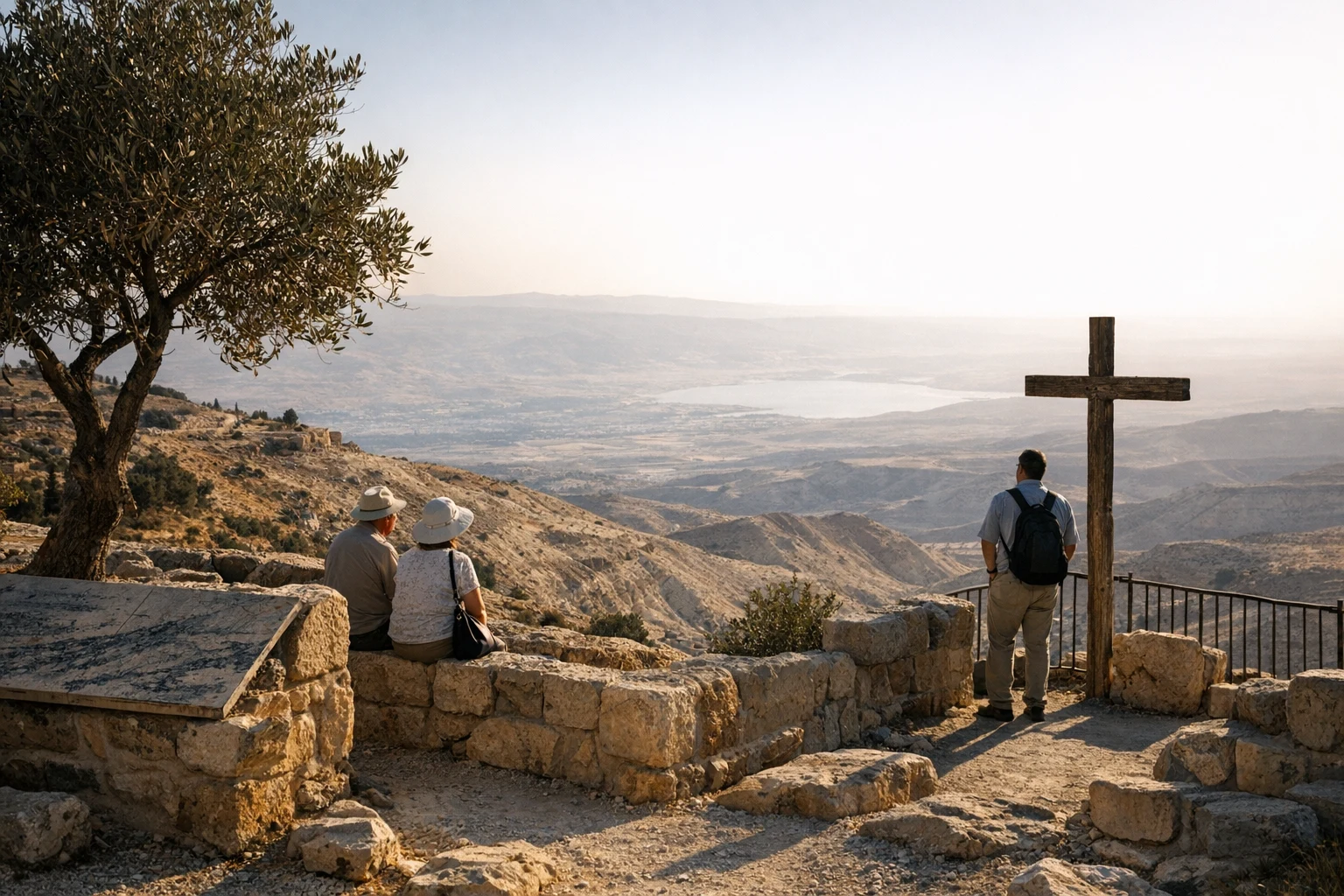
Beyond the church, attention is drawn to the imposing Brazen Serpent Monument, a striking sculpture by Italian artist Giovanni Fantoni. Crafted in the late 20th century, the twisting bronze serpent atop a cross commemorates the biblical story in which Moses raised a serpent on a staff to save his people from plague—a powerful convergence of Jewish and Christian symbolism. This iconic artwork stands just steps from the mountaintop’s panoramic viewing platform, where a stone map illustrates the major biblical sites visible on the horizon, including Jericho, the River Jordan, Bethlehem, and Jerusalem. It is here, on clear days, that visitors experience the same miraculous vista described in the scriptures—a sweep of olive groves, the blue shimmer of the Dead Sea, and the outlines of ancient cities beckoning from afar.
The site’s small yet compelling museum offers deeper insight into Mount Nebo’s layered past. Display cases present artifacts from successive eras—fragments of Roman pottery, Byzantine glass, and early pilgrimage tokens—each piece a fragment of the broader tapestry. Explanatory panels outline the mountain’s significance for various faiths and cultures, tracing the intertwining histories that have shaped this highland sanctuary.
Radiating from the church and museum, a network of paths encourages unhurried exploration. Olive trees, some claimed to be centuries old, line the walkways, casting dappled shade and reinforcing the sense of timelessness. Pilgrimage markers point toward ancient cisterns and the old baptismal pools, while thoughtfully placed benches invite contemplation. For many, the experience culminates with a moment of silent reflection at the summit’s edge—whether gazing over the Jordan Valley or tracing the sun’s descent behind distant hills, it is easy to sense the profound continuity of ritual, memory, and hope that defines Mount Nebo.
Getting There
Mount Nebo’s convenient location makes it a feasible half-day journey from Amman, Madaba, or even the Dead Sea resorts. The nearest city is Madaba, just 9 kilometers (about 15 minutes by car) east of the mountain. Taxis and ride-sharing services based in Madaba offer reliable access, with fares typically ranging from 5 to 8 Jordanian Dinars (approximately $7–$11 USD) one-way. Many local hotels can arrange private drivers for door-to-door drop-off and waiting time, ideal for those wishing to explore at their own pace.
For visitors based in Amman, the capital, Mount Nebo lies about 40 kilometers southwest, a drive of 45 minutes to an hour. Public minibuses run frequently from Amman’s southern bus station (Wihdat) to Madaba, with fares around 1 Jordanian Dinar ($1.40 USD). From Madaba, travelers can hire a taxi for the final ascent to the mountain. Alternatively, organized day tours depart from Amman, the Dead Sea, or even Petra, conveniently bundling Mount Nebo with nearby highlights such as Madaba’s famed mosaics or the Baptism Site at Bethany Beyond the Jordan. These tours range widely in price—typically between $40 and $100 USD per person, depending on itinerary, group size, and inclusions such as lunch or entry fees.
For independent explorers with rental cars, well-marked roads lead straight to the visitor parking area at Mount Nebo’s main gate. The route is scenic and easy to navigate, winding through olive groves and rural villages. On-site parking is ample and free. The mountain and its monuments are best experienced at an unhurried pace, so plan extra time for detours and moments of quiet contemplation along the way.
When to Visit
Mount Nebo’s elevated setting means that it enjoys relatively moderate weather compared to much of Jordan, but the highland climate still shapes the visitor experience in distinct ways across the year. The most comfortable times to visit are typically spring (March to May) and autumn (September to November). During these seasons, daytime temperatures range from 15°C to 25°C (59°F to 77°F), the hills are brushed with wildflowers, and skies are generally clear—ideal for both sightseeing and photography. The balmy weather also aligns with major Christian and Jewish pilgrimage festivals, adding a vibrant, communal dimension to the site.
In the heat of summer (June to August), temperatures on Mount Nebo can climb well above 30°C (86°F), particularly at midday. While the breezes at the summit offer some relief, it is best to plan visits early in the morning or late in the afternoon to avoid the harshest sunlight and crowds. Winter (December to February) brings cooler temperatures and the possibility of rain, with daytime highs averaging between 8°C and 15°C (46°F to 59°F). Occasionally, fog rolls in from the Jordan Valley, lending the summit a mystical air but sometimes diminishing the sweeping views that are a hallmark of the site.
Regardless of season, the late afternoon is arguably the most magical time to experience Mount Nebo. As the sun sinks behind the hills, the landscape is transformed by golden light, and the ancient stones seem to glow with renewed vitality. Be mindful that the site closes around sunset, and opening hours may shift during religious festivals or local holidays. For the best experience, check seasonal hours in advance and consider combining your visit with a stop at Madaba’s celebrated St. George’s Church or a restorative float in the nearby Dead Sea.
Quick Facts
| Feature | Details |
|---|---|
| Location | Madaba Governorate, Jordan, 9 km west of Madaba |
| Elevation | 817 meters (2,680 feet) above sea level |
| Religious Significance | Site where Moses viewed the Promised Land and died; holy site for Jews, Christians, and Muslims |
| Established | Early Christian pilgrimage site since the 4th century CE |
| Major Structures | Moses Memorial Church (Byzantine/modern), Brazen Serpent Monument, ancient mosaics |
| Entry Fee | ~2 Jordanian Dinars (about $3 USD) per adult (2024) |
| Opening Hours | Typically 8:00 am to 6:00 pm (may vary by season and holiday) |
| Nearest City | Madaba (15-minute drive) |
| Guided Tours | Available on-site and via operators in Amman, Madaba, Dead Sea |
| Facilities | Parking, interpretive center, small museum, restrooms, gift shop |
| Accessibility | Main paths and church moderately accessible |
| Nearby Sites | Madaba, Amman Citadel, Jerash, Petra |
Frequently Asked Questions
Is Mount Nebo accessible for people with limited mobility?
The main paths to viewing areas and the Memorial Church are paved and moderately accessible, though some areas are uneven. Wheelchair users may need assistance.
How long does a typical visit to Mount Nebo take?
Most visitors spend one to two hours exploring the site, including the church, museum, viewing points, and gift shop.
Is there an entry fee for Mount Nebo?
Yes, as of 2024, the entry fee is typically around 2 Jordanian Dinars (about $3 USD) per person, payable at the entrance.
What should I wear when visiting Mount Nebo?
Dress modestly, as the site is of religious significance. Comfortable footwear is recommended due to uneven terrain.
Are guided tours available at Mount Nebo?
Guided tours can be arranged in advance or at the gate, and many private tour operators include Mount Nebo in broader itineraries around Madaba and the Dead Sea.
Nearby Ancient Sites
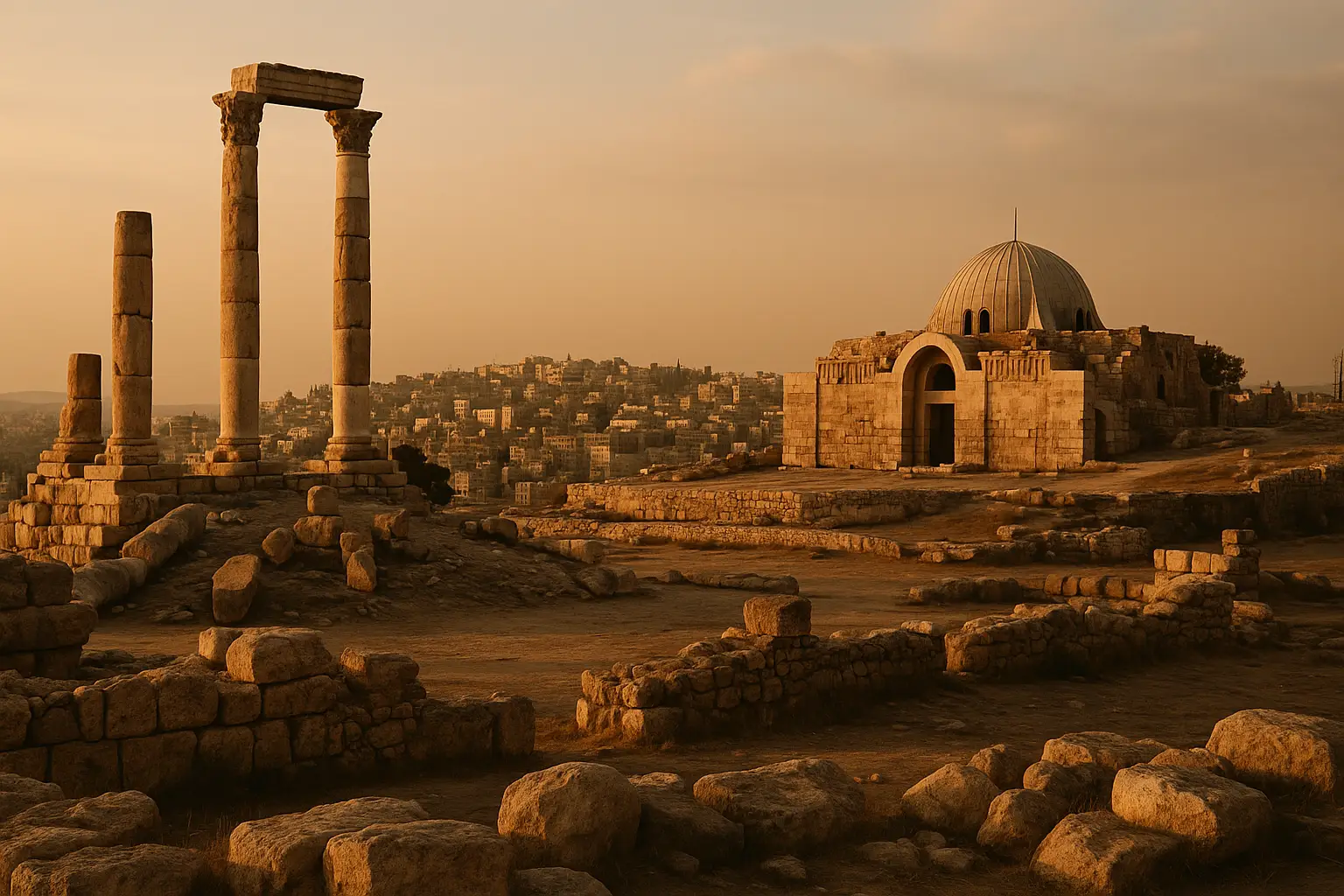
Amman Citadel Jordan Guide 2026: Temple of Hercules & Ancient Rabbah
Ammonite-Roman-UmayyadExplore Jordan's ancient citadel overlooking modern Amman. Discover the Temple of Hercules, Umayyad ...
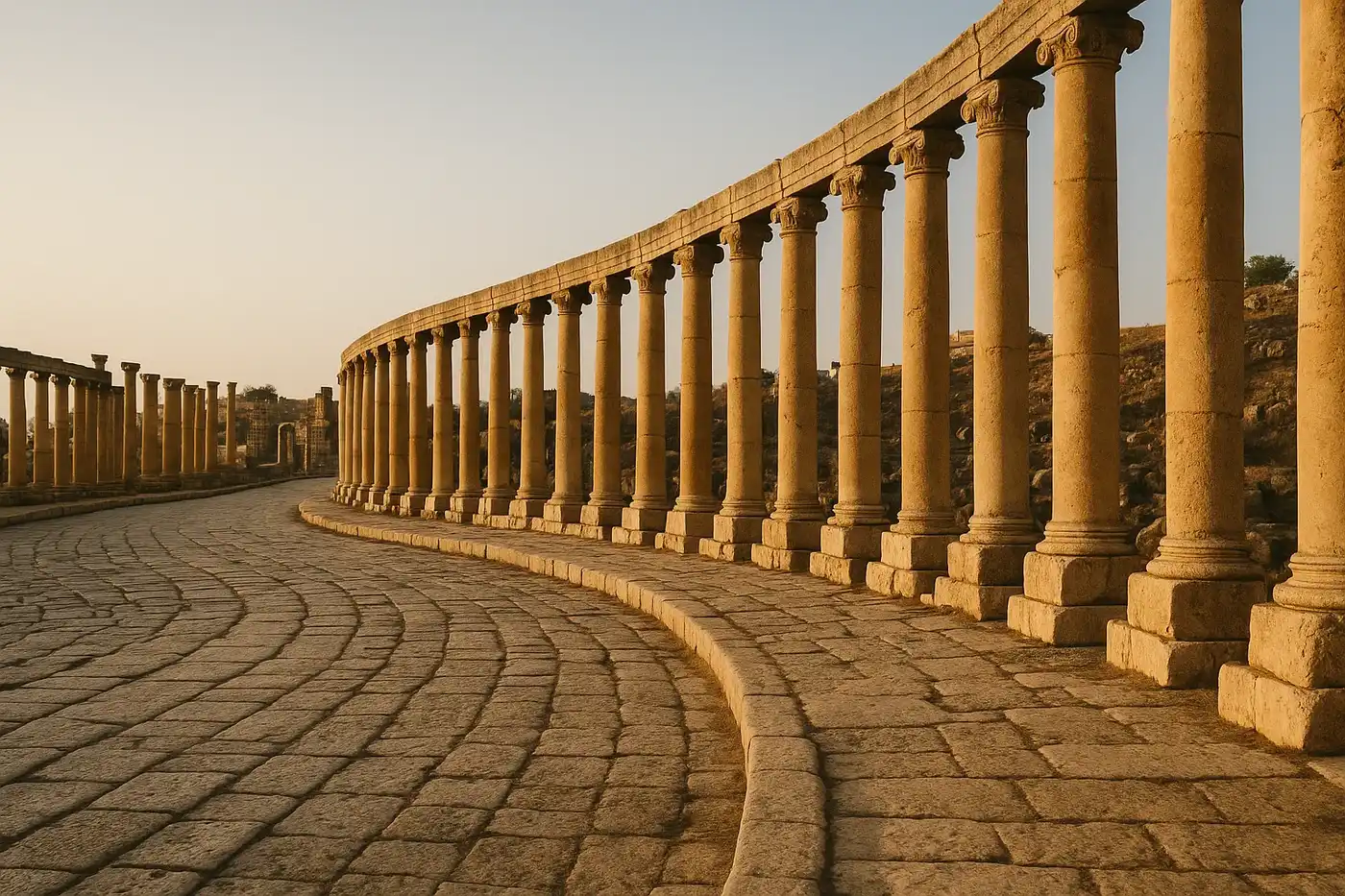
Jerash: The Pompeii of the East and Jordan's Best-Preserved
Roman / NabataeanDiscover Jerash, Jordan's remarkable Roman ruins. Walk the colonnaded streets of ancient Gerasa, exp...
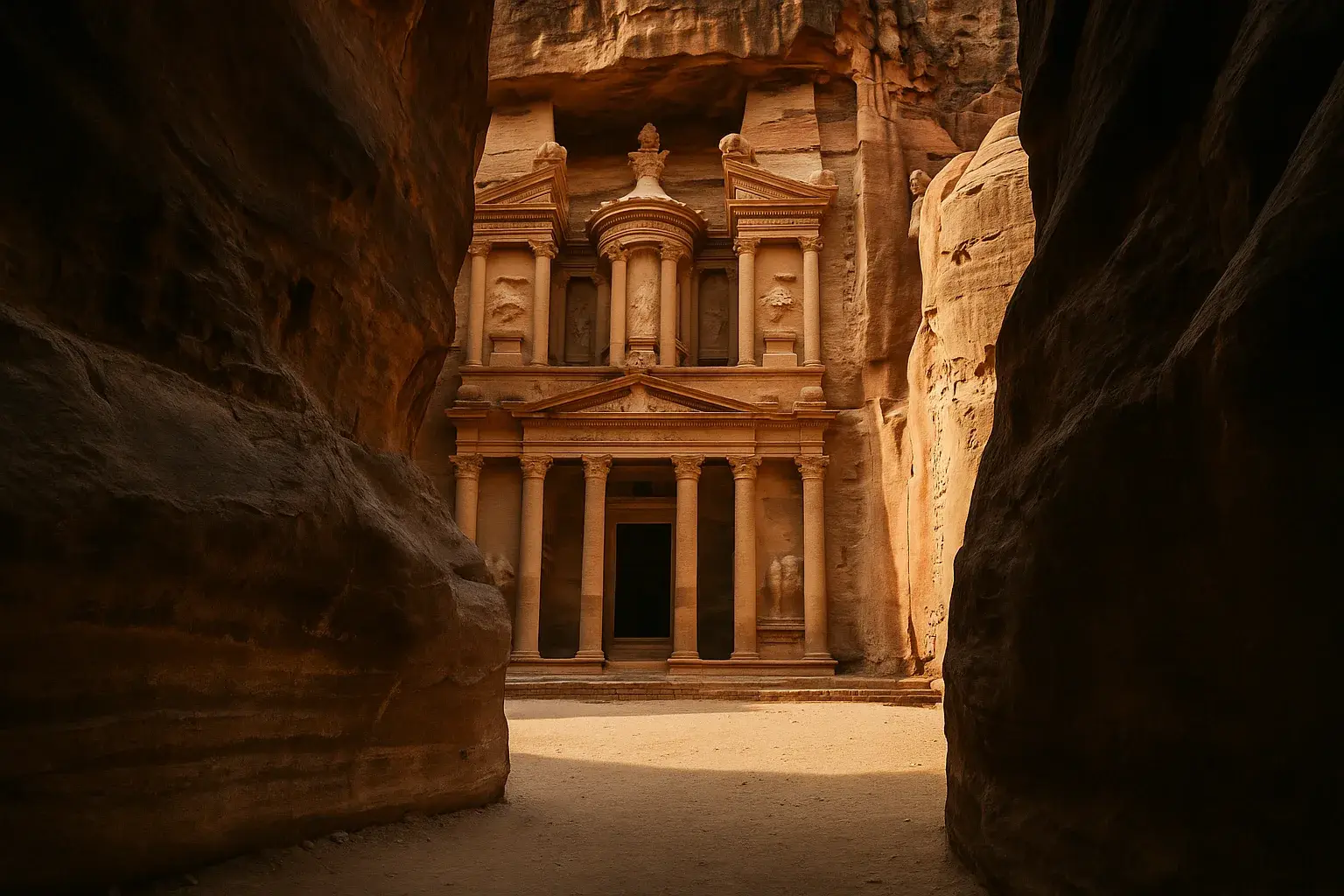
Petra Jordan Travel Guide: Treasury, Monastery & Best Hikes
NabataeanUnlock the secrets of Petra with our comprehensive guide. Walk the Siq to the Treasury, hike to the ...