Quick Info
Curated Experiences
My Son Sanctuary Small-Group Tour from Hoi An
Sunrise Tour of My Son Sanctuary
Half-Day My Son Sanctuary Guided Visit
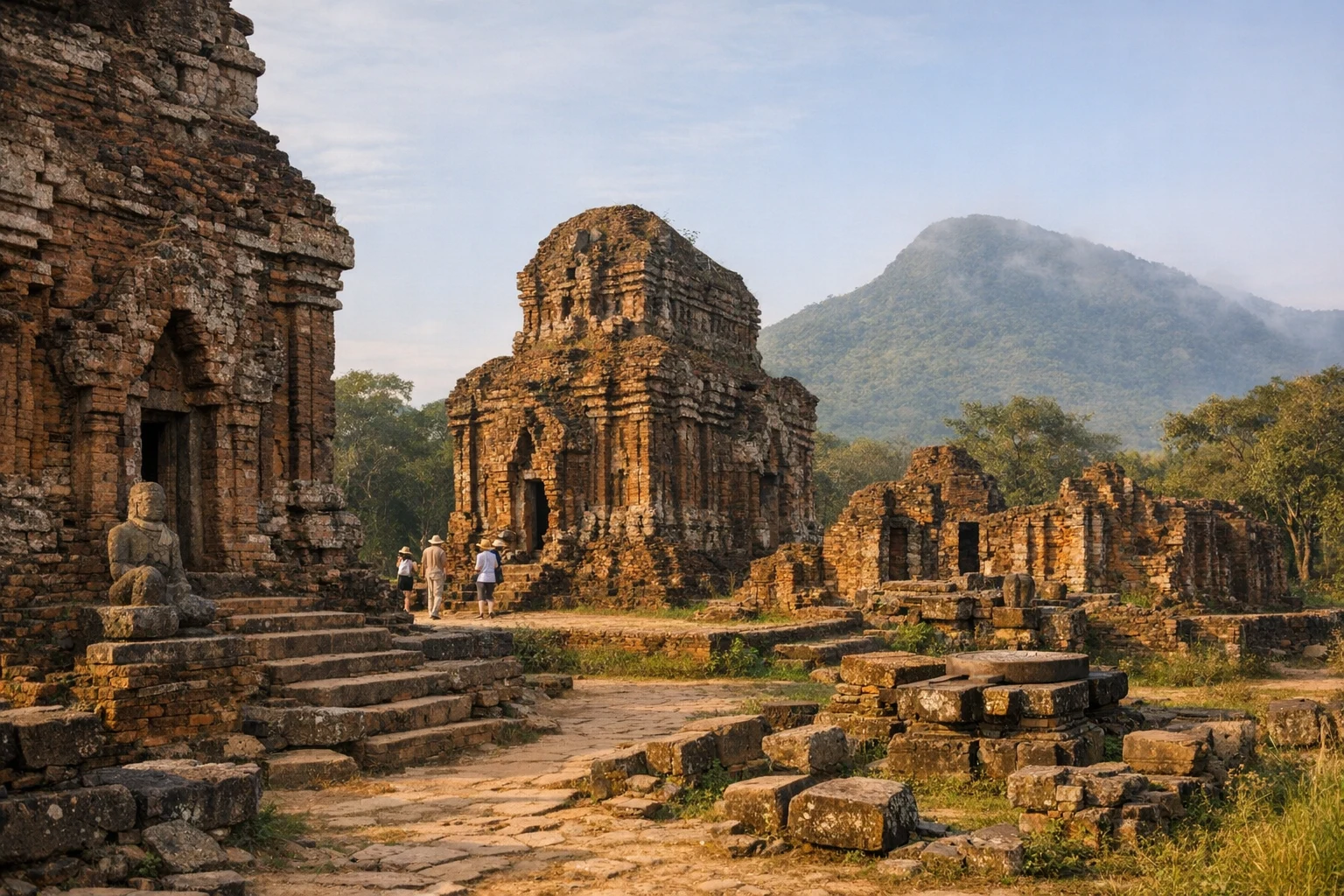
Nestled within the lush, verdant jungles of central Vietnam, My Son Sanctuary stands as one of Southeast Asia’s most evocative remnants of the ancient world. Located just outside the town of Duy Phu in Quang Nam Province, approximately 40 kilometers from the celebrated city of Hoi An, My Son Sanctuary is an extraordinary archaeological site that once formed the spiritual heartland of the Champa Kingdom. As you approach its moss-clad red brick towers and step under the canopy of tropical foliage, you are immediately struck by an atmosphere at once serene and majestic. The resonance of centuries-old prayers seems to linger amidst the ruined sanctuaries, their weathered facades adorned in intricate carvings that speak volumes about the artistic, religious, and political aspirations of the Cham people. Recognized as a UNESCO World Heritage site, My Son Sanctuary is not merely an assemblage of ancient ruins; it is an immersive window into more than a thousand years of Southeast Asian history, spirituality, and cultural exchange.
The journey to My Son is a visual delight in itself, weaving past undulating rice paddies, tranquil villages, and quiet mountain brooks. Upon entering the sanctuary, visitors are greeted by a series of Hindu temple complexes spread across a ravine dotted with towering trees and vibrant flora. Fragrant with the scent of wild herbs and the ever-present dampness of the rainforest, My Son evokes a sense of discovery akin to that experienced by early explorers who first uncovered its wonders in the late 19th century. The interplay of nature and architecture is everywhere evident, as roots curl protectively around crumbling columns and sunbeams filter softly through patches of persistent jungle. Here, time appears to stretch and fold, inviting contemplation and awe.
For those with a passion for ancient civilizations, religious architecture, or the drama of jungle-clad ruins, My Son Sanctuary offers an experience unmatched in Vietnam. Its temples and towers, constructed by generations of Cham kings, recount a saga of religious devotion, dynastic ambition, and cross-cultural exchange. Whether you are an intrepid explorer, a history enthusiast, or simply someone who appreciates tranquil, atmospheric places, My Son Sanctuary delivers a journey back through the ages, enveloped by both nature and legacy.
History
The story of My Son Sanctuary is woven tightly with the fate and fortune of the Cham people, one of Southeast Asia’s most vibrant and enigmatic civilizations. Emerging sometime in the late 4th century CE, the Kingdom of Champa established its heartland along the central coast of present-day Vietnam. My Son, strategically positioned in a secluded valley, became the principal religious sanctuary of this kingdom—a site revered for centuries as both the spiritual and political core of Champa power.
Early Beginnings (4th to 7th Century)
The foundation of My Son began in the mid-4th century under King Bhadravarman I, who dedicated the site to Shiva, the supreme Hindu deity. Early architecture consisted predominantly of wooden structures, which, unsurprisingly, did not endure the tropical climate. Yet, these earliest temples affirmed both the spiritual and temporal significance of My Son, setting the precedent for later kings to contribute their own monuments. The site’s remote valley offered both seclusion and a sense of sacred enclosure, ideal for devotion and royal rituals alike.
Architectural Flowering (8th to 13th Century)
It was between the 8th and 13th centuries that My Son experienced its golden age. Successive Cham rulers, inspired by Indian architecture but adapting techniques to local conditions and materials, introduced the signature red brick temples that typify the sanctuary today. Beyond their aesthetic beauty, these temples were masterful feats of engineering. The Cham masons employed a secret, now-lost mortar recipe, resulting in brickwork that has defied centuries of weather and invasion. Each ruling dynasty sought to reaffirm its legitimacy by constructing new temples, embellishing façades with bas-reliefs of deities, dancers, and mythological scenes.
This period also saw My Son become a crucible of cultural and artistic exchange. The spread of Hinduism from India profoundly influenced Cham religion, language, and art. Yet, the Cham retained distinct motifs and beliefs, creating a syncretic culture that blended indigenous animism with Hindu symbolism—evident in the temple iconography and sculptural detail. My Son’s recognition and regional prestige drew priests and scholars from across Southeast Asia, establishing the site as both a pilgrimage destination and an academic center.
Political Decline and Rediscovery (14th Century–Present)
The 14th century marked the onset of the Cham decline, hastened by military conflicts with the expanding Dai Viet Kingdom to the north and later, the Khmer to the west. With the capture of Champa’s main cities and the collapse of royal patronage, My Son’s temples gradually fell into neglect. Encroaching jungle swallowed up the once-majestic towers, and by the time French archaeologists arrived in the late 19th century, the sanctuary was almost entirely forgotten.
Twentieth-century wars inflicted further wounds: My Son, unfortunately, lay within a conflict zone during the Vietnam War, resulting in the destruction of many monuments by aerial bombing. Despite these losses, the core of the sanctuary endured—testament to the robust engineering of the Cham and the reverence the site continues to inspire.
In 1999, UNESCO granted My Son World Heritage recognition, catalyzing new efforts at conservation, restoration, and research. Today, My Son stands as a symbol of Vietnam’s rich multicultural past, a bridge between Cham heritage and global audiences, and an ever-evocative monument to resilience and spiritual devotion.
Key Features
My Son Sanctuary’s architectural and artistic splendors are revealed in a series of grouped temples (labeled A through H by contemporary archaeologists), each nestled amid rolling hills and dense vegetation. The signature feature of the sanctuary is its red brick towers and sanctuaries, which rise in elegant tiers from the valley floor. The distinctive reddish hue of the bricks, enhanced by centuries of sun and rain, creates a vivid contrast with the vibrant greens of the surrounding jungle. The resourcefulness of Cham craftsmanship is evident at every turn: intricate brickwork, elaborate bas-reliefs, and unified proportions speak to an artistic tradition deeply informed by both Indian prototypes and indigenous innovation.
Among the most significant structures is Group B, which holds the remnants of the largest and oldest temples. These include the grand B1 tower, originally dedicated to Shiva and once housing a sacred linga—a symbol of divine energy. Though damaged over the centuries and scarred by war, the ornate facades of these temples still display magnificent carvings of apsaras (celestial dancers), floral motifs, and depictions of Hindu legends, all rendered in a style uniquely Cham. The temples’ interiors, though small, exude a sense of intimacy and sanctity, their dim light and fragrant incense echoing with ages-old rituals.
The sanctuary’s brick construction remains a captivating puzzle. Cham builders employed a dry construction method: instead of mortar, bricks were joined with a plant-based resin, the formula for which has eluded modern archaeologists. This technique explains the smooth, virtually seamless fit of the bricks and likely contributed to the structures’ extraordinary durability. With many towers still partially standing after more than a millennium, My Son’s architectural resilience bears witness to the sophistication of Cham engineering.
Another key feature is the elaborate sculpture and bas-relief work. Amid the ruins, visitors can discern meditative figures of Shiva, Vishnu, and Brahma, as well as scenes from the Mahabharata and Ramayana. The courtyards and surrounding gardens contain scattered lion figures, mythical creatures, and once-grand pillars fallen to time and war. The atmosphere is contemplative—a landscape designed to evoke a holy mountain, the axis mundi of the Indianized cosmology.
The on-site museum, housed near the entrance, is essential for context. It displays an exquisite array of recovered artifacts: sandstone statues, ceremonial ritual objects, and fragments of architectural detail. These treasures help visitors visualize the magnitude and daily life of the original sanctuary.
Modern travelers to My Son are also treated to traditional Cham dance performances, held several times daily. Dancers in intricate costumes revive the sacred rhythms and stories of the Cham court, resonating within the ancient amphitheater and offering a living connection to past traditions. This interplay of static ruin and living culture remains one of My Son Sanctuary’s most compelling qualities—a simultaneous portal to antiquity and a celebration of persistence.
Getting There
Reaching My Son Sanctuary from the main cities of central Vietnam is straightforward, with multiple transport options catering to different preferences and budgets. The nearest major cities to My Son are Hoi An (about 40 km away) and Da Nang (roughly 50 km). For most visitors, Hoi An serves as the most convenient base for organizing day trips.
Guided tours depart daily from both Hoi An and Da Nang, usually including roundtrip transportation via air-conditioned bus or minivan, the services of a knowledgeable English-speaking guide, entrance fees, and sometimes even lunch. Prices for standard group tours vary from around 500,000 to 900,000 VND ($22–$40 USD) per person, depending on the inclusions and group size. Private tours are also available, generally costing between 1,200,000 and 1,800,000 VND ($50–$75 USD) for a car and driver, which comfortably accommodates up to four passengers.
Independent travelers with some experience can rent a motorbike for the day from Hoi An or Da Nang (current rates are between 120,000 and 180,000 VND, or $5–$8 USD). The route winds through scenic countryside and is well signposted, but caution is advised as the road can be busy with local traffic and is not recommended for novice riders.
Alternatively, taxis or ride-hailing apps like Grab offer a convenient, flexible option. A one-way ride from Hoi An costs approximately 500,000 VND ($22 USD) and takes about an hour. Buses also connect Hoi An to the nearby town of Dong Phu, from where mototaxis can complete the remaining leg.
Upon arrival, there’s a pleasant 2 km electric shuttle from the main visitor center to the temple complex (ticket included in the entrance fee). The site is compact enough to navigate on foot, though good walking shoes are recommended due to uneven terrain.
When to Visit
Timing a visit to My Son Sanctuary can greatly influence your experience, especially given the region’s tropical central Vietnamese climate. The best months, by far, are during the dry season, which spans from February through August. During this period, skies tend to be clear, humidity is moderate, and the lush vegetation offers abundant shade and dramatic backdrops for photos. Early mornings—between 6 and 9 am—are especially magical, as the sanctuary is often shrouded in light mist, and temperatures remain pleasantly cool. This is also when crowds are thinnest, allowing for a more contemplative exploration.
The rainy season begins in late September and usually lasts through January. While the site takes on a mystical quality with the rain-washed vegetation and misty hills, paths can become slippery, and heavy downpours may occasionally disrupt outdoor activities. If you do visit in the wet months, bring a good raincoat or umbrella, and consider waterproof footwear. Warmer, drier afternoons sometimes follow rainy mornings, offering brief windows of sunshine.
Vietnam’s national holidays, especially Tet (Lunar New Year, typically in late January or February), see increased visitation from domestic tourists. The sanctuary is lively and full of energy during these times, but visitors seeking tranquility may wish to plan their trip outside of peak festivities.
Crowds at My Son are rarely overwhelming, particularly in comparison to other Southeast Asian sites like Angkor Wat. However, for the most serene experience and best lighting for photography, plan to arrive just after opening (around 7:00 am) or in the late afternoon before closing.
No matter when you come, the ancient stones, the chorus of cicadas, and the enveloping jungle ensure that My Son retains an atmosphere of wonder—a living testament to the enduring legacies of the Cham civilization.
Quick Facts
| Fact | Detail |
|---|---|
| Country | Vietnam |
| Region | Quang Nam Province |
| Established | Late 4th century CE |
| Primary Civilization | Champa |
| Religion | Hinduism (primarily Shaivism) |
| UNESCO Status | World Heritage Site (inscribed 1999) |
| Number of Temples | Originally over 70, around 20 partially intact today |
| Distance from Hoi An | 40 km (25 miles) |
| Entrance Fee | 150,000 VND (~$6.50 USD) for adults |
| Opening Hours | 7:00 am – 5:30 pm |
| Noteworthy Features | Red-brick temples, bas-reliefs, on-site museum, Cham dance performances |
| Best Time to Visit | February–August (dry season), early morning for minimal crowds |
| Duration to Allow | 2–3 hours |
| Facilities | Visitor center, museum, electric shuttle, bathrooms, souvenir kiosks |
| Nearest City | Hoi An (approximately 1 hour by car or bus) |
Frequently Asked Questions
How far is My Son Sanctuary from Hoi An?
My Son Sanctuary is around 40 km (25 miles) from Hoi An, with the journey typically taking about 1 to 1.5 hours by car or tour bus.
Are guides available at My Son Sanctuary?
Yes, English-speaking guides can be hired at the entrance or booked in advance, providing historical insights and context for your visit.
Is there an entrance fee to visit My Son Sanctuary?
Yes, the entrance fee is generally around 150,000 VND (about $6.50 USD) for adult foreign visitors, including access to the on-site museum.
What should I wear when visiting My Son Sanctuary?
Wear comfortable walking shoes and light, breathable clothing. An umbrella or raincoat is wise during the rainy season. Hats and sunscreen are recommended due to limited shade.
How long does a visit to My Son Sanctuary usually take?
A standard visit lasts between 2 and 3 hours, allowing ample time to explore the site, see a traditional dance performance, and peruse the museum.
Nearby Ancient Sites
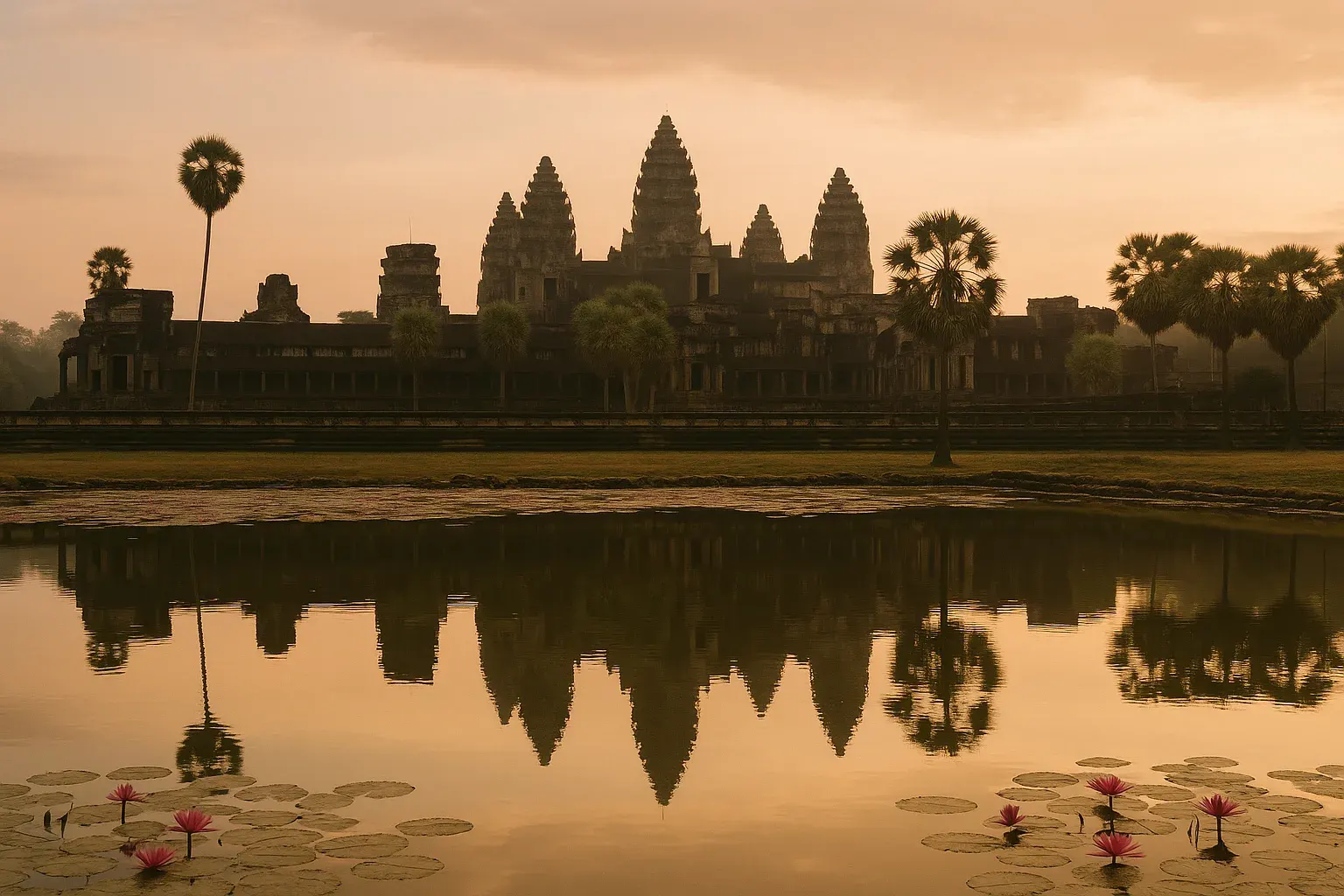
Angkor Wat Travel Guide 2026: Everything You Need to Know
KhmerAngkor Wat, the world's largest religious monument, spans over 400 acres in the heart of Cambodia. T...
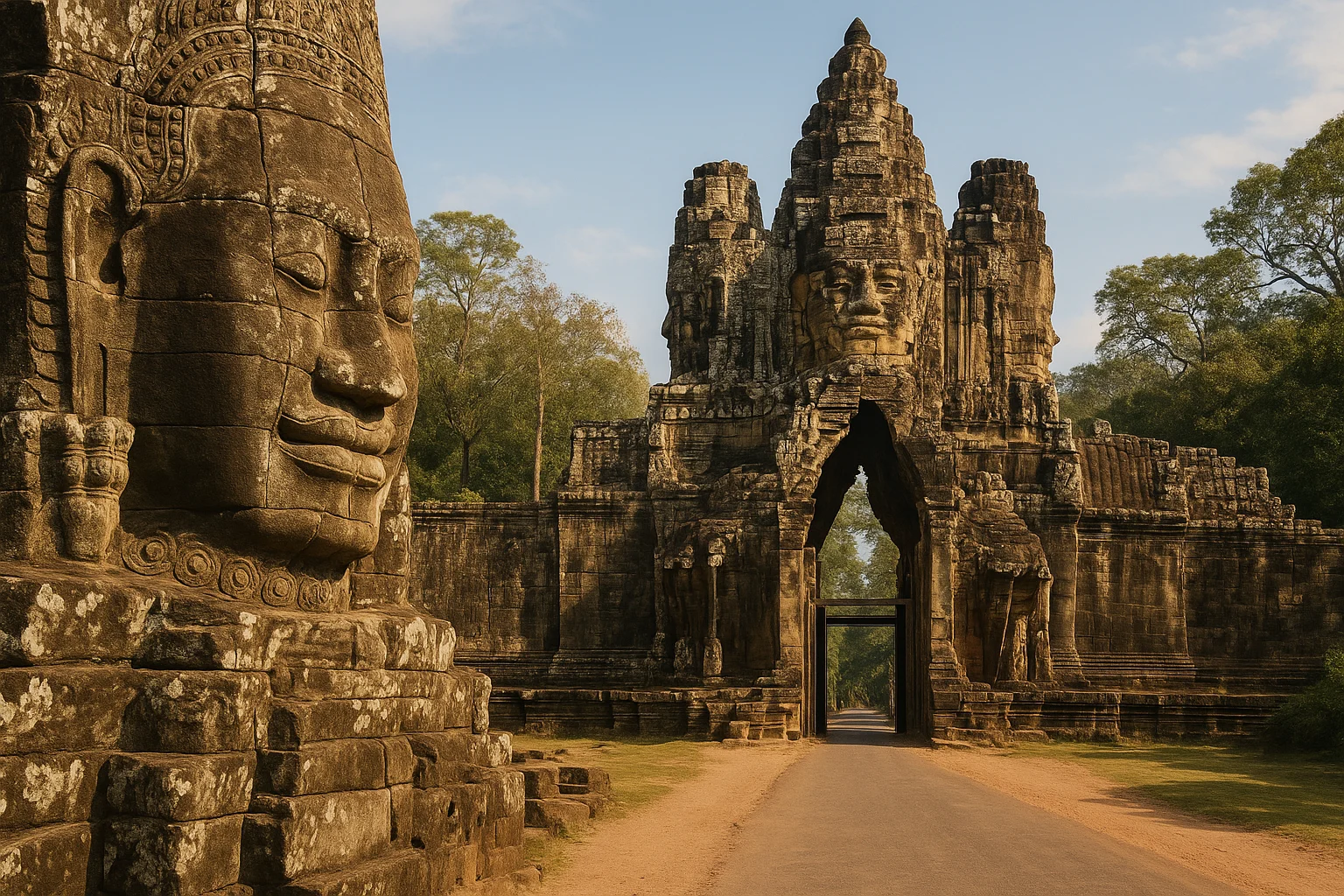
Angkor Thom Travel Guide 2026: Bayon Faces, Gates, and the Khmer Royal City
KhmerAngkor Thom was the last great capital of the Khmer Empire. This guide covers how to visit Bayon, th...
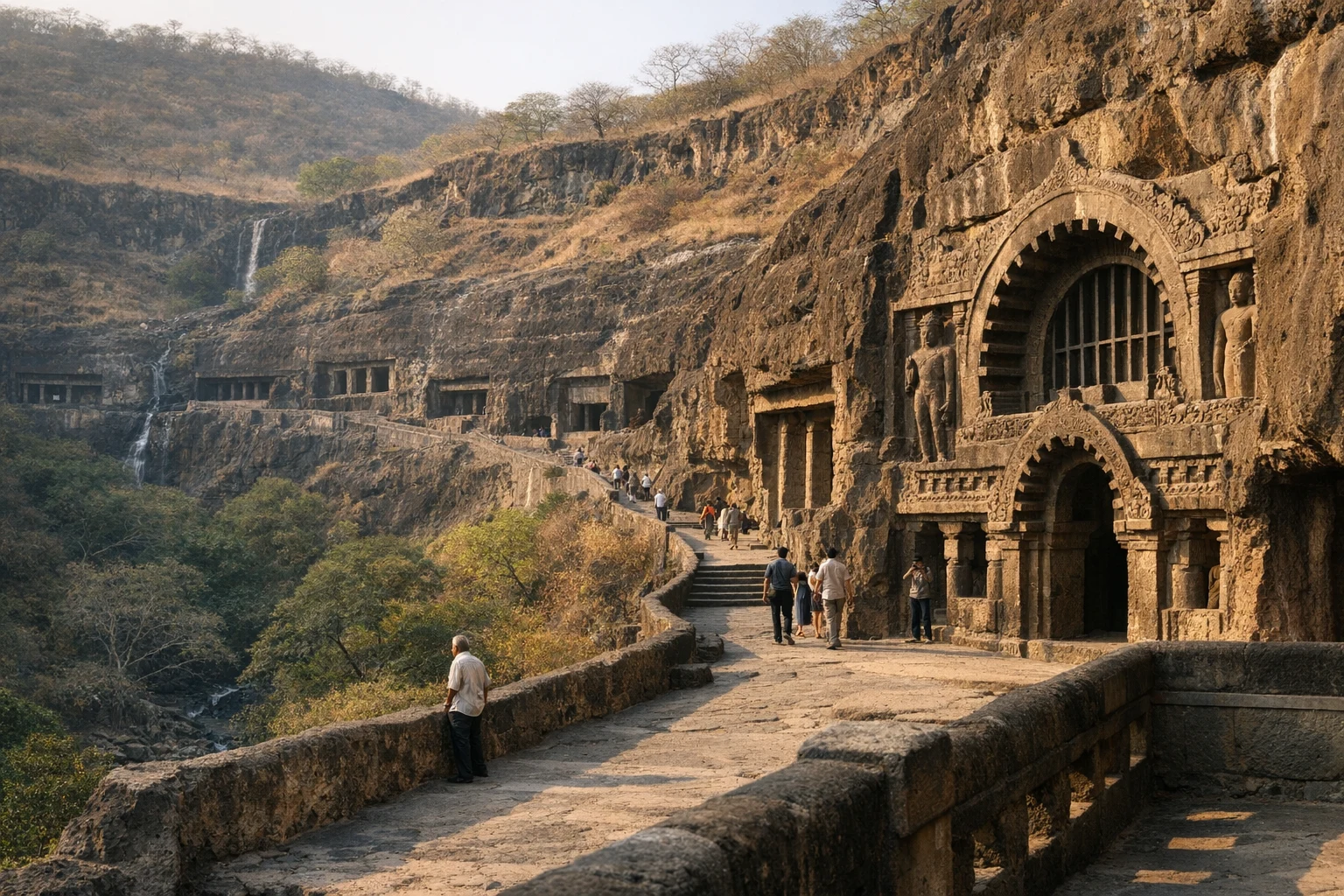
Ajanta Caves
Ancient Indian BuddhistExplore India’s Ajanta Caves, a masterpiece of Buddhist rock-cut art famed for murals, sculptures, a...