Quick Info
At a glance
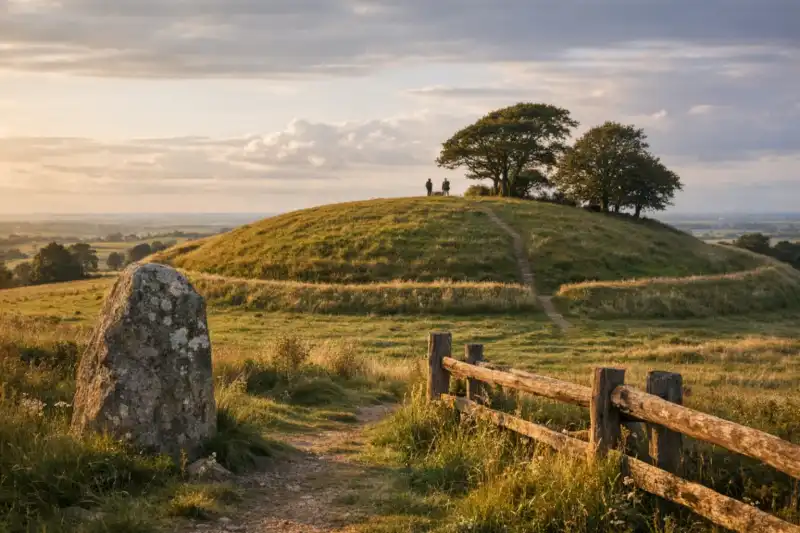
Navan Fort (Emain Macha) in Ireland sits on a low rise outside Armagh, where grassy banks and open skies conceal one of the island’s most powerful ancient landscapes. At first glance, the site can seem understated: an earthen enclosure, rolling pasture, and broad views across the countryside. Yet this quiet hill is wrapped in layers of archaeology, ritual memory, and legend. For centuries, Emain Macha was remembered as the royal seat of Ulster, a place where kings gathered, warriors were tested, and mythic stories unfolded. Even today, standing on the ramparts, it is easy to understand why this place captured the imagination of medieval storytellers and modern archaeologists alike.
What makes Navan Fort so compelling is not a single standing ruin or dramatic stone monument, but the unusual combination of physical earthworks and cultural resonance. Excavations revealed remarkable evidence of ritual construction, including a massive timber building later filled with stones and deliberately burned, suggesting ceremonies of extraordinary scale. The site forms part of a wider sacred complex around Armagh, tied to nearby features such as Haughey’s Fort and the King’s Stables. Together they hint at a ceremonial landscape rather than an isolated monument.
For travelers, Navan Fort offers a different kind of Irish heritage experience. It is quieter than the country’s most famous sites, but no less meaningful. If you are interested in Celtic history, ancient religion, or the point where archaeology and legend overlap, this is one of the most rewarding places to visit in Ireland.
History
Prehistoric beginnings
The hill at Navan Fort appears to have drawn attention long before the famous Iron Age phase for which it is best known. Archaeological evidence suggests activity in the wider area from the Late Bronze Age, indicating that this was already a significant landscape before Emain Macha emerged as a major ceremonial center. Like many ancient high-status sites in Ireland, its importance may have stemmed from visibility, topography, and proximity to routeways and fertile land. The rise itself is not mountainous or imposing, but in a landscape of gentle undulations it offers command over the surrounding countryside.
This early importance matters because it places Navan Fort within a pattern common in prehistoric Europe: sacred places often accumulated meaning over long spans of time. Rather than being founded all at once, such sites developed through repeated gatherings, memory, and ritual use. By the Iron Age, this process had transformed Navan into one of the most symbolically charged places in northern Ireland.
Iron Age ceremonial center
The main enclosing earthwork visible today is usually dated to the Iron Age. It consists of a circular enclosure roughly 250 meters across, defined by a bank and ditch. Although often called a fort, its scale and character suggest a ceremonial function rather than a straightforward military one. The interior is dominated by a raised mound, and it was beneath this mound that archaeologists uncovered the site’s most remarkable discovery.
Excavation in the 1960s revealed traces of an enormous circular timber structure, dated to around the first century BCE. At its center stood a great post, with the whole building arranged in radial form. The structure was relatively short-lived. Soon after construction, it was deliberately filled with stones and then burned. Finally, it was covered by an earthen mound. This sequence points strongly toward formal ritual behavior. The effort involved was immense, implying organized labor and elite control. Rather than an ordinary hall or settlement building, it seems to have been a symbolic monument built for ceremony, transformation, and perhaps public display.
The wider complex reinforces this interpretation. Nearby Haughey’s Fort, a substantial hilltop enclosure, and the so-called King’s Stables, thought to have been a ritual pond or artificial water feature, suggest a broader sacred and political landscape. Navan Fort was likely a place where rulership, religion, feasting, and assembly intersected.
Navan Fort in myth and early tradition
By the early medieval period, Emain Macha had entered Irish literary tradition as the capital of the kings of Ulster. In the Ulster Cycle, one of the great bodies of early Irish saga literature, Emain Macha appears repeatedly as the royal court of Conchobar mac Nessa and the setting for episodes involving the hero Cú Chulainn. Whether these stories preserve direct memory of Iron Age political realities remains debated, but the association is ancient and culturally important.
The name itself links the site to Macha, a powerful female figure in Irish tradition, sometimes understood as a goddess or sovereignty figure. Several stories explain the naming of Emain Macha, emphasizing themes of kingship, fertility, endurance, and sacred authority. Such associations are typical of royal ceremonial sites in early Ireland, where landscape and mythology were deeply intertwined.
Although the archaeological and literary chronologies do not align neatly, they are not unrelated. Medieval authors remembered certain sites as ancient royal capitals because those places still carried prestige. Navan Fort’s survival in tradition suggests that its monumental earthworks and lingering local significance kept it alive in cultural memory long after its original ceremonial role had faded.
Rediscovery, archaeology, and preservation
In modern times, Navan Fort became increasingly important to archaeologists seeking to understand prehistoric and early historic Ireland. Excavations transformed public understanding of the site, especially the discovery of the burned timber temple-like structure. This interpretation helped move discussion beyond simple labels like “fort” and toward a more nuanced understanding of ceremonial landscapes.
Today, Navan Fort is protected as a major archaeological monument and interpreted through the nearby visitor center. Conservation focuses on balancing access with the fragility of the earthworks. Because the site depends so much on topography rather than standing masonry, preservation is especially important. Erosion, trampling, and weather can all affect how the monument survives.
For visitors now, Navan Fort is both an archaeological site and a place of story. Its history is not a straightforward sequence of kings and battles, but a layered record of ritual, remembrance, and reinvention that stretches from prehistory to the present.
Key Features
The most striking feature of Navan Fort is the great circular enclosure itself. From ground level, the bank and ditch do not overwhelm the visitor in the way a stone fortress or cliffside citadel might. Instead, they create a subtle but unmistakable sense of entering a defined ceremonial space. Walking the perimeter gives a clearer impression of the monument’s scale. The enclosure draws a boundary between ordinary landscape and a space that was once set apart for elite or sacred use. That transition is central to the site’s atmosphere.
Inside the enclosure, the central mound is the key archaeological focus. It marks the place where the extraordinary timber structure was found beneath later deposits. Nothing of the original wooden building now stands above ground, so appreciating it requires imagination informed by archaeology. Yet this is also part of Navan Fort’s appeal. The site invites you to think in terms of process rather than spectacle: a giant circular building raised with intention, then transformed through stone-filling, fire, and burial. Few ancient monuments in Ireland reveal ritual action so vividly through excavation evidence. Even without visible architecture, the mound feels charged by what happened there.
The wider setting is another essential feature. Navan Fort should not be understood in isolation. The surrounding landscape forms a broader ceremonial and political zone, including nearby monuments linked to ancient Ulster tradition. This context helps explain why the site mattered. It was not just a ring of earthworks on a hill, but part of a connected ritual geography. Looking outward from the enclosure, especially on a clear day, you can appreciate how visibility and placement contributed to the monument’s power.
The interpretive experience offered through the visitor center adds another dimension. Because the archaeology is not immediately obvious from the surface, interpretation is especially valuable here. Exhibits typically help explain the site’s place in Iron Age society, the evidence from excavation, and its role in mythic literature. Depending on programming, there may also be demonstrations or family-oriented activities that place the monument within a broader Celtic cultural frame. For travelers who enjoy understanding a site before exploring it on foot, this can significantly enrich the visit.
Navan Fort’s strongest feature, though, may be its fusion of tangible and intangible heritage. Some ancient sites impress through surviving walls or carved decoration. Navan Fort works differently. Its power comes from how archaeology, topography, and narrative interact. You stand within a prehistoric enclosure, knowing that beneath the earth once stood a massive ritual building, while also hearing echoes of legendary courts and heroic tales. This combination gives the place unusual depth. It rewards patient visitors, especially those willing to linger, walk slowly, and let the landscape speak.
Another notable quality is the comparative tranquility of the site. Even in a region rich with history, Navan Fort remains less crowded than many headline destinations in Ireland. That makes it easier to absorb the scale of the enclosure and the quiet of the setting. Wind across the grass, changing light on the banks, and the distant patchwork of fields all contribute to a mood that feels reflective rather than touristic. For many visitors, this calm is part of what makes Navan Fort memorable.
Getting There
Navan Fort is located about 3 kilometers west of Armagh city center, making it relatively easy to reach once you are in the area. The most convenient option is by car. From central Armagh, the drive usually takes around 10 minutes, and parking is typically available at or near the visitor center. If you are coming from Belfast, allow about 1 hour 15 minutes by car; from Dublin, roughly 1 hour 45 minutes to 2 hours depending on traffic and your route.
Public transport is possible, though it usually involves one additional step. Buses from Belfast to Armagh commonly cost around £10-£16 one way if booked close to travel time, while buses from Dublin to Armagh can range from about €15-€25 depending on operator and season. Once in Armagh, the simplest onward option is a local taxi to Navan Fort. A short taxi ride from the city center generally costs around £8-£12. If the weather is good, confident walkers can also make the journey on foot, though you should allow 35 to 45 minutes and expect stretches without especially scenic pedestrian infrastructure.
Guided day tours focused specifically on Navan Fort are less common than tours to larger headline attractions, so independent travel is often the easiest approach. However, private heritage tours from Belfast or broader Northern Ireland excursions may include Armagh and its ancient sites. If you are self-driving, combining Navan Fort with Armagh’s ecclesiastical heritage and nearby archaeological points makes for an excellent half-day or full-day itinerary.
When to Visit
Late spring through early autumn is the best time to visit Navan Fort. From May to September, longer daylight hours make it easier to enjoy both the visitor center and the open-air earthworks without rushing. Summer brings the warmest temperatures, usually pleasant rather than extreme, and the grassy enclosure often looks its most inviting under bright skies. This is also the easiest season for combining the site with other stops around Armagh.
That said, shoulder seasons can be especially rewarding. April, May, and September often offer a good balance of mild weather and lighter visitor numbers. Because Navan Fort is fundamentally a landscape site, visibility matters a great deal. A clear, dry day lets you appreciate the enclosure, the views, and the wider setting far better than a wet or misty one. If possible, check the forecast and aim for a dry afternoon.
Winter visits are still possible and can be atmospheric, but conditions are more challenging. The site may feel stark and beautiful under low light, yet paths can be muddy, winds can be strong, and daylight fades early. Good waterproof footwear is important at any time of year, but especially from late autumn through early spring.
For photographers, early morning and late afternoon provide the most interesting light, with shadows helping define the earthworks. For general sightseeing, midday can be practical, especially if you want time indoors at the interpretive center before heading out. Whenever you go, allowing flexibility for Irish weather will make the experience much more enjoyable.
| Quick Facts | Details |
|---|---|
| Location | Near Armagh, County Armagh, Ireland |
| Ancient Name | Emain Macha |
| Main Period | Iron Age |
| Site Type | Ceremonial enclosure and royal ritual landscape |
| Best Known For | Association with the kings of Ulster and the Ulster Cycle |
| Key Archaeological Find | Large circular timber structure deliberately burned and buried |
| Time Needed | 1-2 hours |
| Closest City | Armagh |
| Best Season | Late spring to early autumn |
| Footwear | Sturdy shoes recommended due to uneven or muddy ground |
Navan Fort is a place for travelers who do not mind looking beneath the surface. It does not present itself through towering ruins or ornate stonework. Instead, it offers something rarer: a chance to stand in a landscape where ancient ceremony, political symbolism, and national myth all meet. The banks and mound may appear simple at first, but they guard one of the most intriguing archaeological stories in Ireland. Once you understand what happened here, the site becomes far more than a grassy enclosure.
For anyone interested in Iron Age Europe, Celtic tradition, or the old royal centers of Ireland, Navan Fort deserves a place high on the itinerary. Its significance lies in both what survives and what must be imagined: the timber monument, the ritual fire, the gathered elites, and the storytellers who later turned Emain Macha into the heart of heroic Ulster. That blend of evidence and legend gives the site enduring power. Visit with time, good shoes, and curiosity, and Navan Fort will reward you with one of the deepest historical experiences in Ireland.
Guided tours: worth it?
Most travelers can visit Navan Fort (Emain Macha) independently. Compare a tour only if you want a tighter history-focused visit, easier logistics, or a guide who can answer questions on the spot.
Best for
- Short visits where a planned route saves time
When to go self-guided
Go independently if you prefer setting your own pace, reading as you go, and checking official hours or ticket rules directly before you arrive.
What I’d avoid
Skip paid tours that bundle unrelated stops you do not actually want. The best option should either save meaningful planning time or add historical context you would miss on your own.
Armagh and Ancient Ulster Heritage Tours
Useful when: you want to compare guided formats before deciding
Northern Ireland Day Tours from Belfast
Useful when: transport or pickup logistics matter
Ireland Celtic History and Mythology Tours
Useful when: you want to compare guided formats before deciding
Some tour links are affiliate links, which may earn Ancient Travel a small commission at no extra cost to you. I try to surface options that make practical sense for the site—not just anything bookable.
Frequently Asked Questions
What is Navan Fort (Emain Macha)?
Navan Fort, or Emain Macha, is a major Iron Age ceremonial earthwork near Armagh in Ireland, traditionally associated with the ancient kings of Ulster and important episodes in Irish mythology.
Is Navan Fort the same as a castle or military fort?
No. Despite the modern name, Navan Fort was primarily a ceremonial and ritual complex rather than a conventional defensive fortification, although it is enclosed by substantial earthworks.
Can you go inside the main monument?
Visitors can walk the site and view the earthworks, but access arrangements can vary depending on conservation needs, weather, and management guidance at the visitor center.
How long should I allow for a visit?
Most travelers spend 1 to 2 hours at Navan Fort, including time at the interpretive center, a walk around the enclosure, and views across the surrounding landscape.
Is Navan Fort suitable for families?
Yes. The visitor center and open landscape make it a good family stop, though paths can be uneven and muddy in wet weather, so sturdy footwear is recommended.
Do I need a car to reach Navan Fort?
A car is the easiest option, but you can also reach Armagh by bus from Belfast or Dublin and then continue by local taxi to the site.
Why is Navan Fort important in Irish mythology?
Navan Fort is closely linked with the Ulster Cycle, including stories of Conchobar mac Nessa and Cú Chulainn, making it one of Ireland's most evocative places where archaeology and legend meet.
Nearby Ancient Sites
Boyne Valley Passage Tombs Travel Guide 2026: Newgrange, Knowth, and Dowth Visit Strategy
Neolithic IrelandPlan your first Boyne Valley passage tombs visit with practical timing, Brú na Bóinne access flow, a...
Dowth
Neolithic communities of Brú na BóinneAncient passage tomb in Ireland's Boyne Valley, famed for Neolithic art, winter light, and sweeping ...
Clonmacnoise Travel Guide 2026: Monastic Ruins, High Crosses, and River Shannon Context
Early Medieval IrelandPlan a first visit to Clonmacnoise with practical timing, monastic-site context, and clear route adv...