Quick Info
Curated Experiences
Small-Group Angkor Temples Tour Including Neak Pean
Private Guided Excursion to Neak Pean and Ancient Angkor
Angkor Wat Sunrise and Ancient Temples Day Tour
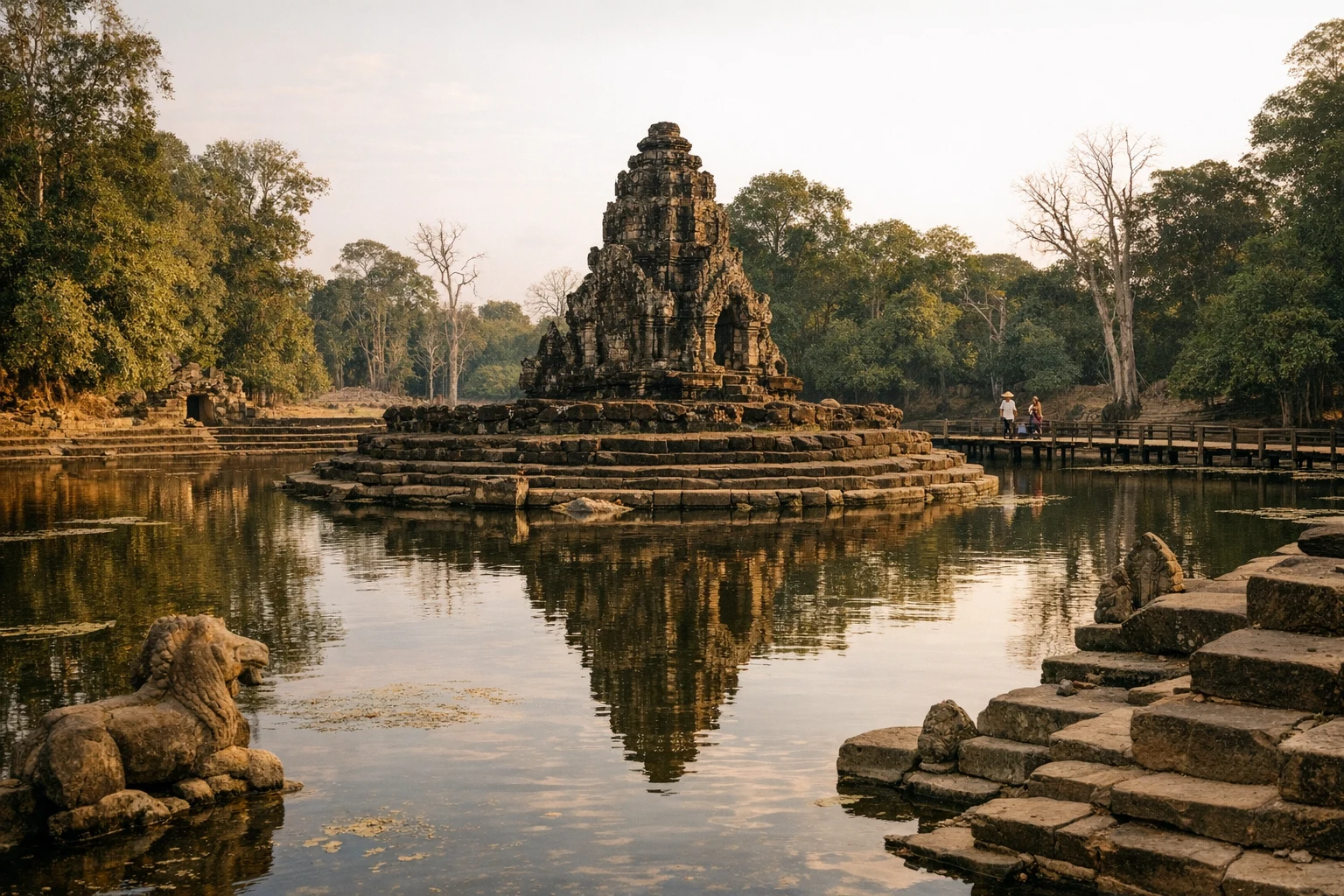
It is sunrise in the heart of Cambodia’s timeless Angkor Archaeological Park. The gentle fog lifts to reveal a sight seemingly conjured from a legend: Neak Pean, the mysterious island temple, floating serenely in the midst of a vast, lotus-dappled reservoir. Here, ancient stone nagas—mythical water serpents—coil protectively around sacred waters that once drew pilgrims from afar. Neak Pean is an astonishing relic of the Khmer Empire, purpose-built not as a monumental temple but as a symbol of healing and equilibrium. Located in Siem Reap Province, just a short journey from the bustling town of Siem Reap, Neak Pean is easily overshadowed by its colossal neighbors like Angkor Wat and Bayon. Yet, for travelers who make the stroll along its lengthy wooden causeway, the reward is a tranquil retreat defined by water, myth, and Khmer ingenuity.
Long before tourists arrived with cameras and smartphones, Neak Pean was revered as a spiritual and healing sanctuary. The central pond—often swirling with reflections of the sky—evokes the sacred Himalayan Lake Anavatapta, fabled in Buddhist lore as a source of purification and renewal. Unlike the towered silhouettes of Angkor Thom or the architectural wonder of Angkor Wat, Neak Pean’s beauty lies in its harmonious design: a man-made island, accessible only by a narrow wooden bridge, surrounded by mirror-like pools and sculptural figures. Today, the site remains as evocative as ever, its atmosphere intensified by the encroaching forest and the gentle lap of water at every step. As you approach this singular place, the lines between natural landscape, architecture, and spiritual intent blur, inviting each visitor to reflect, recharge, and uncover a quieter side of Angkor’s eternal legacy.
History
Foundations in the Reign of Jayavarman VII
The story of Neak Pean begins in the late 12th century, a period of enormous transformation and religious fervor in the Khmer Empire. Jayavarman VII, widely regarded as Angkor’s greatest builder, commissioned the temple around 1190 CE as part of a grand vision for a renewed, compassionate state. Inspired by Mahayana Buddhist philosophy, Jayavarman VII sought not only to leave monumental stone testaments but also to foster the wellbeing of his people. Central to this mission was the construction of Preah Khan, his royal monastery, and the vast baray (man-made reservoir) of Jayatataka. Neak Pean was conceived as the spiritual and symbolic heart of this hydrological masterpiece.
Unlike the sandstone mountain temples dedicated to ancestral gods, Neak Pean embodied new Buddhist ideals of harmony, healing, and mercy. It was situated at the very center of the Jayatataka baray, accessible only by boat or (today) a wooden walkway. The temple’s unique design—a circular island ringed by serpentine nagas, with four cardinally aligned pools—mirrored the mythical Lake Anavatapta, believed to exist at the center of the world and blessed with the power to cure suffering and disease. This connection was not purely symbolic; Jayavarman VII envisioned Neak Pean as a spiritual hospital, offering ritual purification and renewal to those in need.
A Place of Pilgrimage and Healing
With its establishment, Neak Pean became an essential fixture in Angkor’s elaborate sacred geography. According to ancient inscriptions and architectural evidence, it functioned as both a place of worship and a center for ritual healing. Bathing in the site’s pools, visitors participated in symbolic acts believed to bring physical and spiritual cleansing. Each of the four smaller pools was associated with the four cardinal directions and, by extension, the classical elements (Earth, Water, Fire, Wind). Water released through elegant spouts—shaped in the forms of mythological creatures like elephants, horses, lions, and humans—was intended to channel the properties of each element, ensuring balance and vitality.
Pilgrims, monks, and Khmer royalty alike would journey to Neak Pean, drawn by legends of its power and the temple’s reputation as a sacred hospital. Recent studies even suggest that water engineering at Neak Pean may have supported Angkor’s wider medical infrastructure. Water filtered through plant beds, channeled into the pools, and distributed across the sprawling Jayatataka reservoir hints at a sophisticated system designed for both symbolic purity and real-world healing.
From Decline to Rediscovery
Despite its importance in the era of Jayavarman VII, Neak Pean, like much of Angkor, diminished in prominence after the 15th century. With the gradual decline of the Khmer Empire, changing religious tides, and the eventual abandonment of Angkor, the pools slowly silted up and the site faded back into the jungle. Centuries of seasonal flooding, plant growth, and neglect transformed the once-glimmering island into an overgrown, nearly forgotten relic.
The rediscovery of Angkor by French explorers and scholars in the 19th and early 20th centuries prompted renewed interest in Neak Pean’s history and function. Restoration by French conservators (including the École Française d’Extrême-Orient) began in the 1930s, stabilizing the central shrine and clearing silt from the pools and channels. Today, archaeological research continues to shed new light on the site’s engineering marvels and spiritual significance. Modern visitors—rather than seeking healing from bodily pain—are instead invited to discover the tranquil harmony that made Neak Pean a touchstone of both ancient medicine and enduring myth.
Key Features
The experience of Neak Pean is one of quiet revelation, where every architectural detail and natural reflection tells a deeper story. Unlike Angkor’s towering pyramids and intricate bas-reliefs, this temple’s allure is rooted in its unity with water and sky, forming a serene composition that is both landscape and legend.
Approaching Neak Pean, visitors first traverse a boardwalk that stretches over the Jayatataka baray. In the wet season, waterbirds and lotus blooms line the pathway, and morning mist often drifts across the reservoir, adding a dreamlike quality. This approach underscores Neak Pean’s design as an isolated, contemplative retreat—a space set apart for spiritual renewal.
At the heart of the temple lies the main island, a perfect circle encircled by two massive stone nagas whose tails intertwine at the east, giving the site its name (Neak Pean means “Entwined Serpents”). Within, the central square pool commands attention, ringed by a paved walkway and set with a cruciform pattern of four smaller subsidiary pools, each accessed by a short causeway. The arrangement is a literal mandala, designed not only for visual harmony but also to embody cosmological principles important to both Hinduism and Buddhism.
Each subsidiary pool channels water from the central basin through exquisitely carved spouts. These spouts represent the mythical guardians of the four quarters: the elephant (north), the horse (west), the lion (south), and the human figure with a conch shell (east). The figures are not only decorative but imbued with meaning, intended to transmit curative powers based on ancient medicinal theory. When Neak Pean’s reservoirs are full, the placid water—often reflecting the shrine and trees beyond—creates a mesmerizing sense of endless tranquility.
Rising from the center is the main sanctuary, a small, elegant tower built in classical late Bayon style. The sanctuary was originally set atop a circular platform bordered by nagas, accessible via four staircases. Within the structure once stood revered images, likely of Avalokiteshvara (the Bodhisattva of Compassion), symbolizing Jayavarman VII’s Buddhist convictions. Laterite and sandstone blocks are joined by delicate carvings of lotus petals, water motifs, and celestial dancers, all softened by centuries of lichen and moss.
Neak Pean, unlike most Angkorian temples, was conceived with water management at its core. Subtle engineering channels water into and out of each pool, ensuring a constant flow and maintaining symbolic purity. Recent restoration has ensured the pools retain some water year-round, but the ambiance can dramatically change with the seasons—at the height of the rains, the temple appears to float on a shimmering, endless pond. The subdued echoes, scent of wet earth, and rippling reflections make Neak Pean one of Angkor’s most poetic and photogenic sites, a sanctuary where architecture, myth, and nature are inextricably linked.
Getting There
Neak Pean is situated in the north-central reaches of the Angkor Archaeological Park, approximately 25 kilometers from downtown Siem Reap. The journey is straightforward, and its relative isolation ensures a less crowded visit compared to Angkor Wat or Bayon.
Most travelers begin in Siem Reap, Cambodia’s vibrant tourism hub, where a variety of transportation options are available. The most popular choice for independent visitors is hiring a tuk-tuk—a three-wheeled, open-air motor carriage. Tuk-tuks typically cost between $20 and $30 USD per day, making them ideal for visiting Neak Pean as part of a day-long tour of Angkor’s northern circuit. The ride takes about 45 minutes, passing through lush countryside, rice paddies, and the magnificent gates of Angkor Thom.
For those preferring greater comfort or air conditioning, private taxis can be arranged at most hotels for $35–$50 USD per day. An increasing number of visitors also opt for cycling, with bike rentals in Siem Reap available for $5–$10 USD per day. The route to Neak Pean, however, is exposed and can be challenging in the midday heat; it is recommended only for experienced cyclists.
Many guided tours include Neak Pean alongside other major sites such as Preah Khan and Ta Som, often providing the added benefit of expert commentary and seamless transportation. Entrance to Neak Pean is covered by the Angkor Pass (costing $37 for one day, $62 for three days, and $72 for seven days), which includes access to all the temples within the Angkor park. After arriving, visitors cross a 700-meter wooden causeway built over the Jayatataka baray, offering a unique and atmospheric approach to the temple island. Although there are no food stalls directly at Neak Pean, refreshments and restrooms can be found near the entrances to the temple complex and at the larger Angkor park gates.
When to Visit
Neak Pean can be visited year-round, but the experience varies dramatically with the Cambodian seasons. The cool, dry season from November to March is considered the most favorable time. During these months, temperatures range from 20°C to 30°C (68°F to 86°F), humidity levels drop, and skies tend to be clear. The pools and reservoir are sufficiently full, accentuating Neak Pean’s reflective beauty and allowing visitors to appreciate the full magic of water and architecture in harmony. Morning hours offer especially serene conditions, with golden sunrise light amplifying the tranquil ambiance.
From April to June, the weather becomes hot and dry, with temperatures often soaring above 35°C (95°F). Water levels begin to drop; while the site is still accessible, the pools may be less striking, and the intense midday heat can make the walk from the car park to the temple less comfortable. Travelers prone to sun sensitivity should plan early morning or late afternoon visits and bring hats, sunscreen, and plenty of water.
The rainy season, spanning July to October, transforms Neak Pean into a lush oasis. Heavy monsoon rains refill the Jayatataka baray and restore the pools to their full glory, making the temple appear to float on the glassy surface of the water. This is the best season for photography, with dramatic skies and emerald vegetation. However, the boardwalk can become slippery, and brief downpours are frequent. Visitor numbers tend to be lower, offering a peaceful and atmospheric experience for those undeterred by occasional showers.
Regardless of season, it is recommended to visit Neak Pean in the early morning or late afternoon, when soft lighting and lighter crowds highlight the reflective serenity that makes this sacred water temple an enduring treasure of Angkor.
Quick Facts
| Attribute | Detail |
|---|---|
| Location | Central Jayatataka Baray, Angkor Archaeological Park, Siem Reap, Cambodia |
| Civilization | Khmer Empire |
| Built By | King Jayavarman VII |
| Year Established | Circa 1190 CE |
| Religious Affiliation | Mahayana Buddhism |
| Key Materials | Sandstone, Laterite |
| Distinctive Features | Central sanctuary, circular island, four directional pools, naga sculptures |
| Symbolism | Inspired by Himalayan Lake Anavatapta, representing healing and harmony |
| Entry Fee | Included in Angkor Pass (from $37 USD/day) |
| Distance from Siem Reap | Approximately 25 km |
| Best Time to Visit | November to March (cool, dry season) |
| Accessibility | 700-meter wooden causeway walkway; no steps at entrance |
| UNESCO World Heritage | Yes, as part of Angkor |
| Nearby Major Sites | Angkor Wat, Angkor Thom, Preah Khan, Bayon, Banteay Kdei |
| Local Name | Prasat Neak Pean |
| Estimated Visit Duration | 30–45 minutes |
Let Neak Pean’s gentle waters and ancient stones refresh your spirit as they once did for pilgrims centuries ago. In its poetic unity of healing, myth, and natural beauty, the island temple stands as a living bridge between past and present, inviting all to pause, reflect, and reconnect with the mysteries of Cambodia’s greatest civilization.
Frequently Asked Questions
What is Neak Pean famous for?
Neak Pean is renowned for its central pond, surrounded by four smaller pools, and is believed to have been built for healing purposes during the Khmer Empire.
How do I reach Neak Pean from Siem Reap?
Neak Pean is about 25 km from Siem Reap. You can get there by tuk-tuk, taxi, or on a guided Angkor tour.
Is there an entrance fee for Neak Pean?
Entrance to Neak Pean requires an Angkor Pass, which starts at $37 for one day and includes access to all Angkor sites.
What should I wear when visiting Neak Pean?
Wear modest, respectful clothing covering shoulders and knees, as Neak Pean is a sacred temple site.
When is the best time to visit Neak Pean?
The best months are November to March when the weather is cooler and water levels are optimal for appreciating the pools.
Nearby Ancient Sites
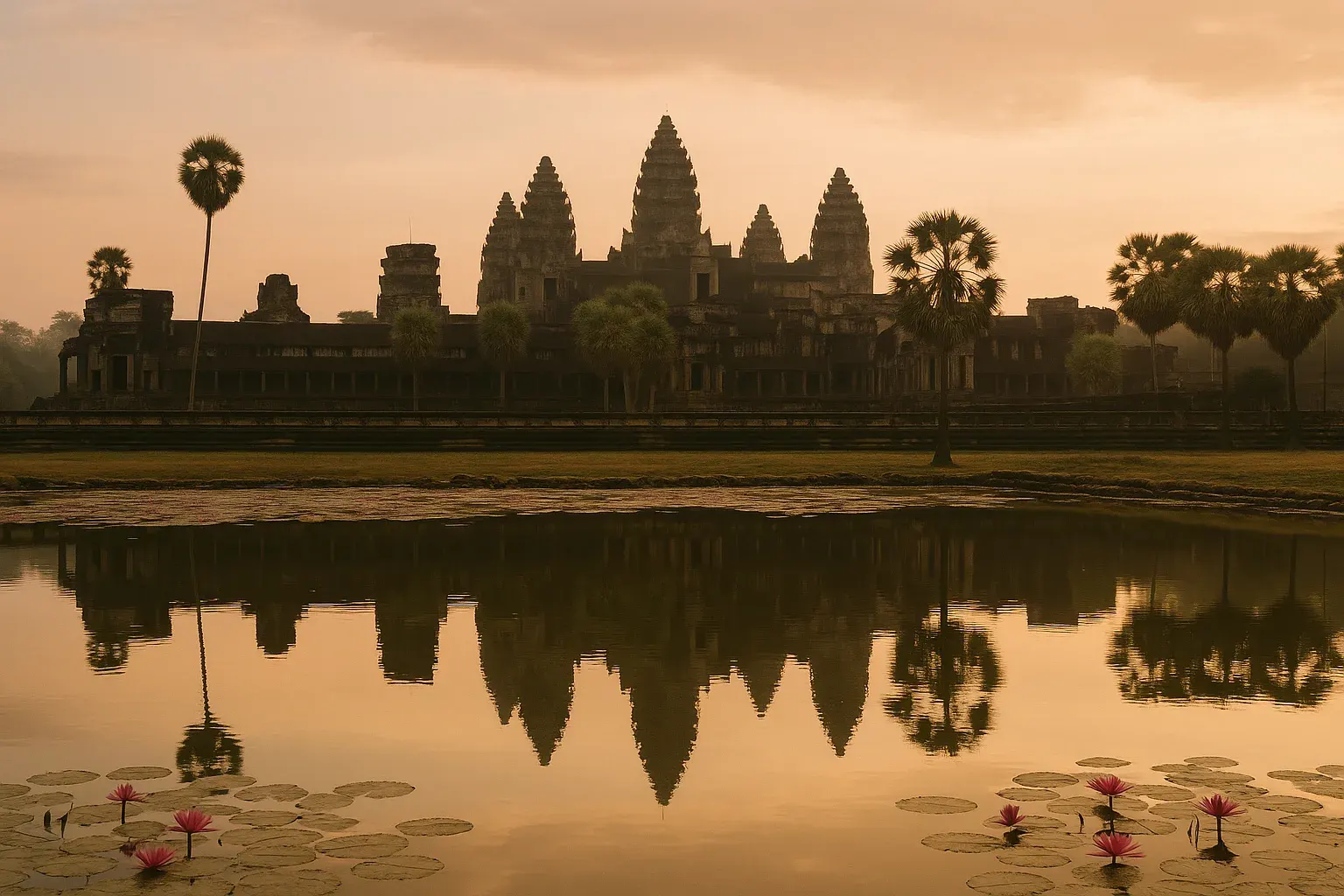
Angkor Wat Travel Guide 2026: Everything You Need to Know
KhmerAngkor Wat, the world's largest religious monument, spans over 400 acres in the heart of Cambodia. T...
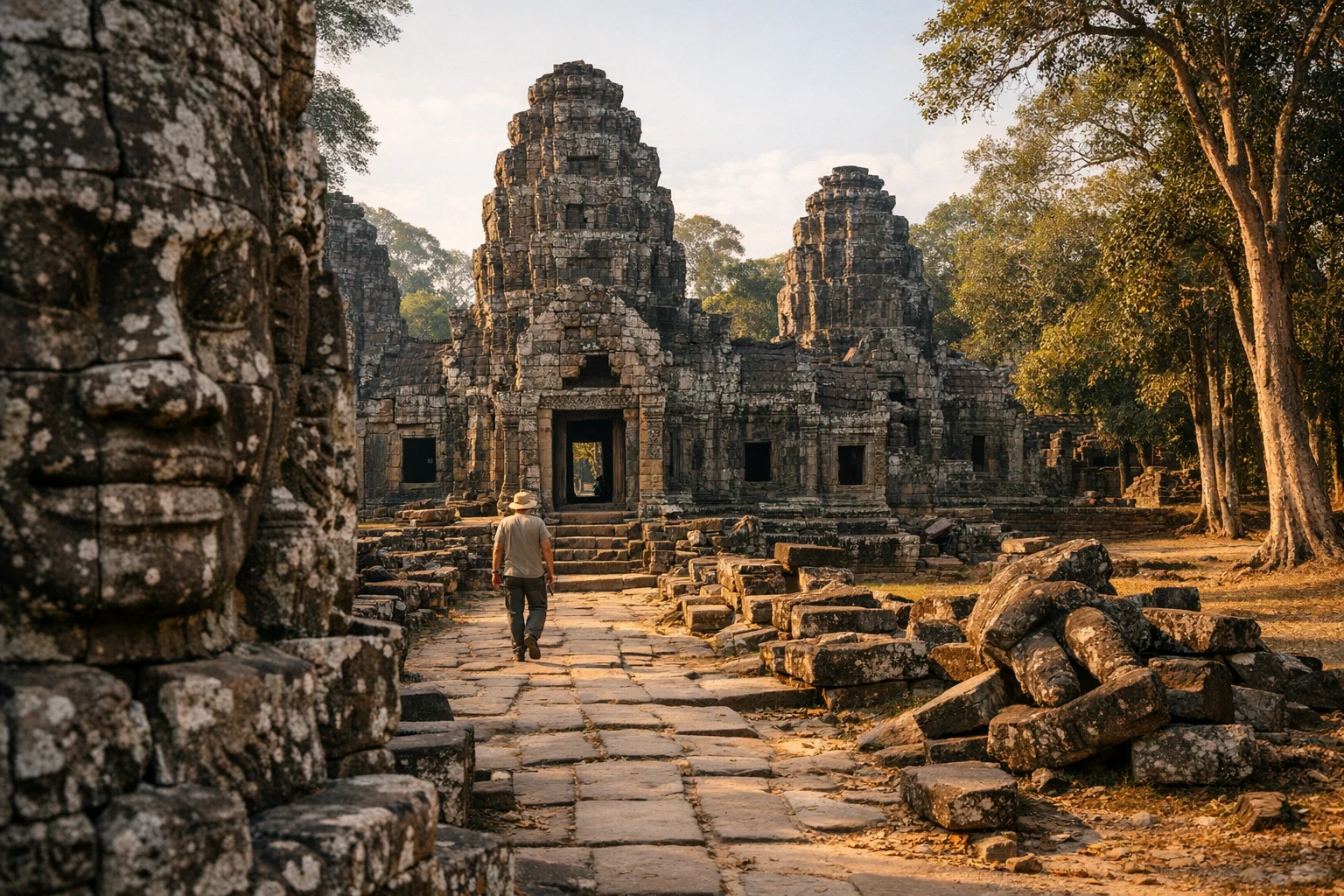
Banteay Kdei
KhmerExplore Cambodia’s Banteay Kdei, a atmospheric Angkor temple-monastery of quiet courtyards, worn car...
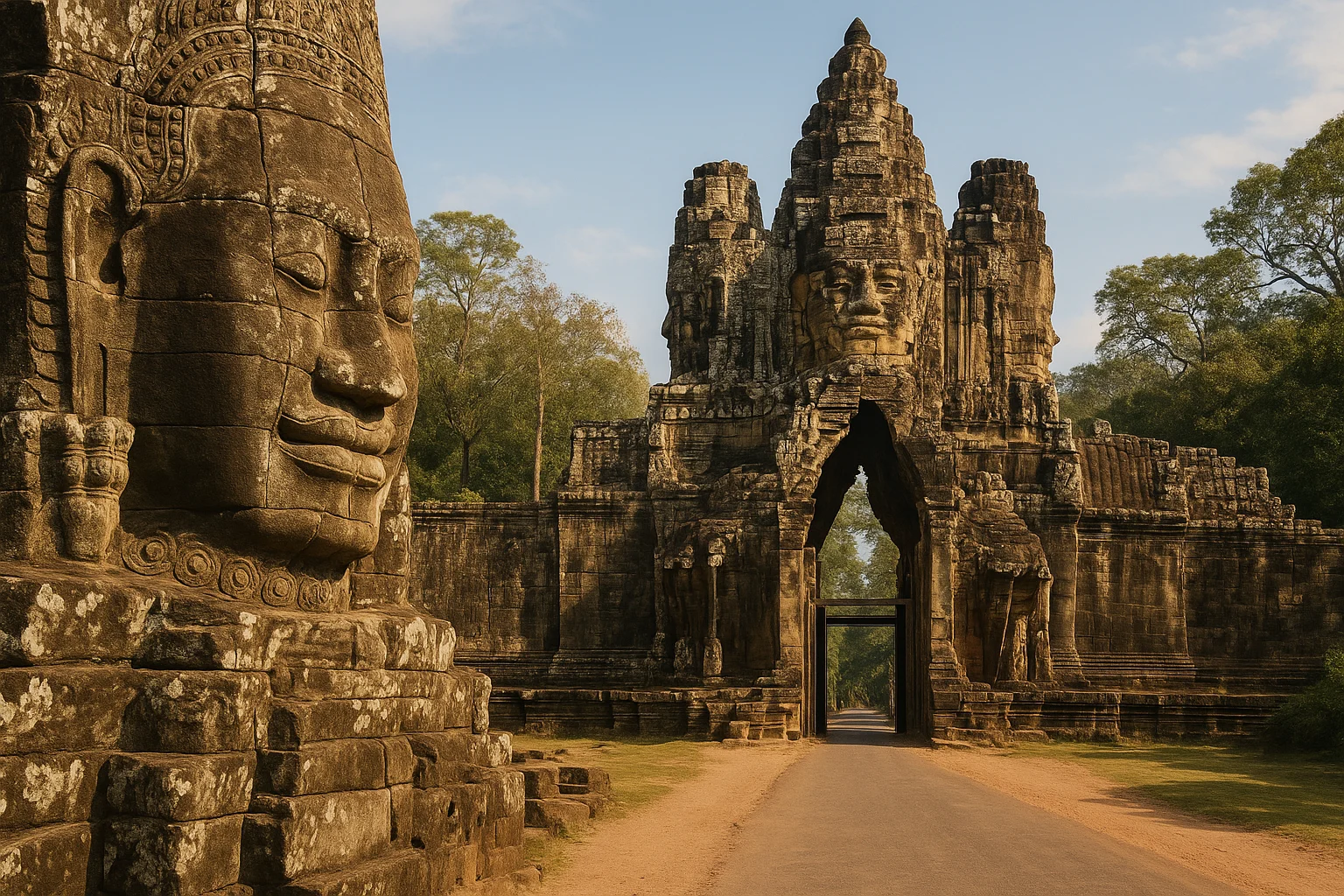
Angkor Thom Travel Guide 2026: Bayon Faces, Gates, and the Khmer Royal City
KhmerAngkor Thom was the last great capital of the Khmer Empire. This guide covers how to visit Bayon, th...
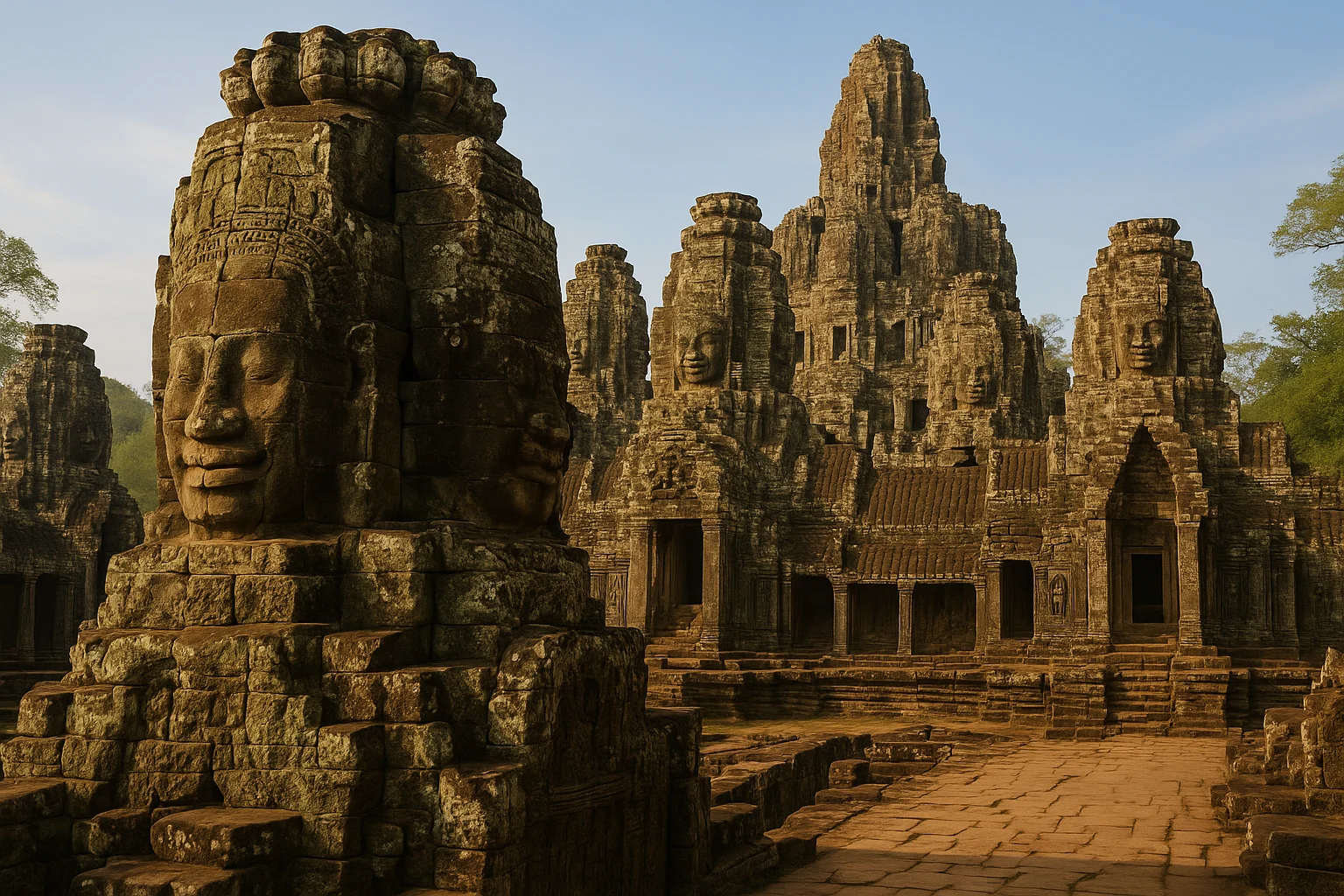
Bayon Temple Travel Guide 2026: Face Towers, Bas-Reliefs, and Best Visit Timing
KhmerBayon Temple sits at the center of Angkor Thom and is famous for its carved stone faces. This guide ...