Quick Info
Curated Experiences
Nemrut Mountain Sunrise Tour from Adiyaman
Mount Nemrut Full-Day Tour from Sanliurfa
Private Nemrut Dag Sunset Tour with Commagene Sites
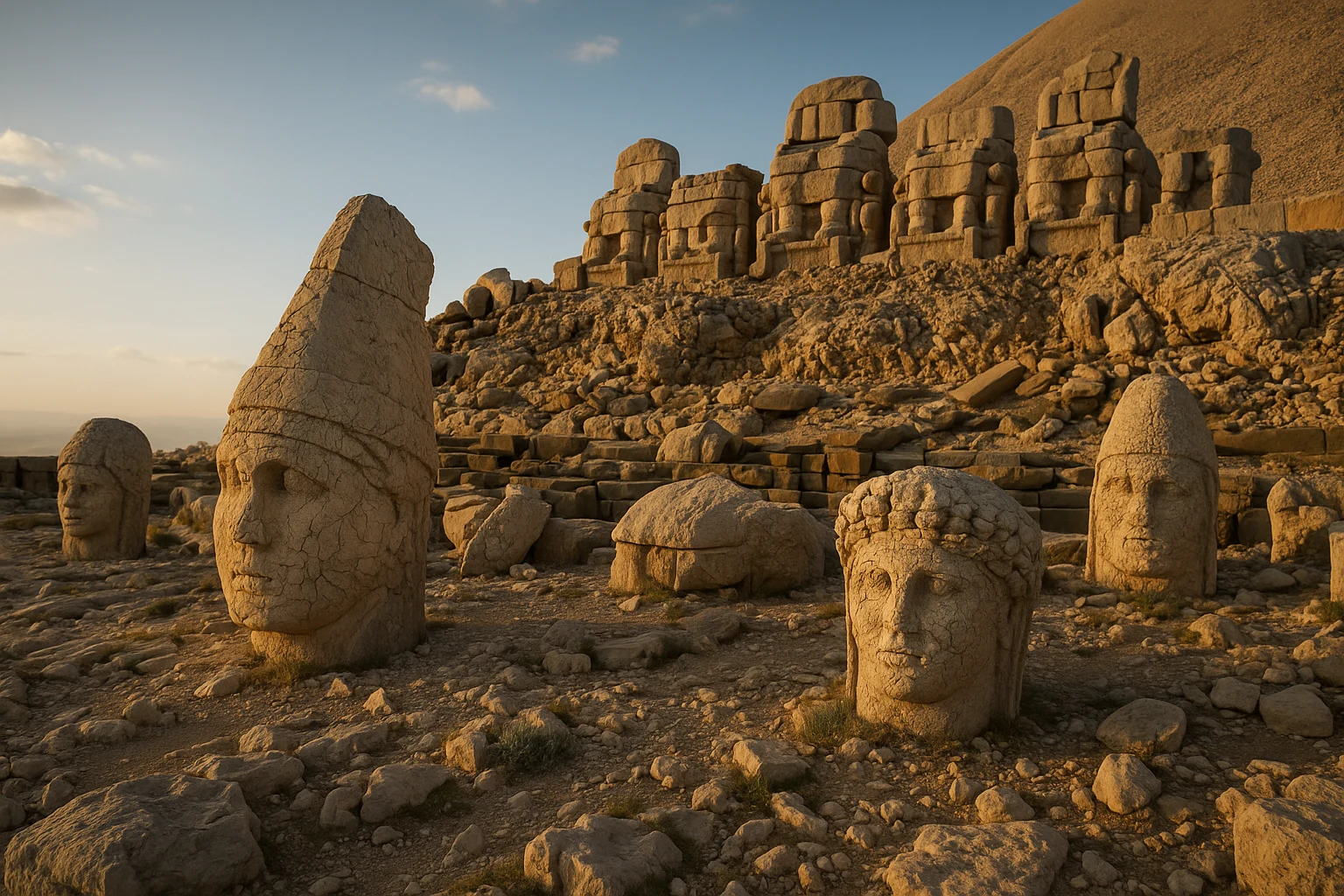
By the time you reach the summit of Nemrut Dağ in Turkey, the sky is usually still dark and the mountain wind cuts through every layer you packed. Then the horizon starts to glow, and enormous stone heads begin to emerge from shadow: gods, kings, and animals from a vanished kingdom staring across the highlands of southeastern Anatolia. For a few minutes, before the first buses chatter and camera shutters take over, the place feels less like a ruin and more like a staged encounter with ancient ambition.
Nemrut Dağ is not just a dramatic photo stop. It is the royal mountain sanctuary of King Antiochus I of Commagene, built in the 1st century BCE as a political theology carved in limestone. Here, Greek and Persian traditions were deliberately fused into a single dynastic statement, with colossal seated figures, ceremonial terraces, and a massive tumulus that likely conceals Antiochus’s still-unfound tomb chamber. This guide shows you the history behind the monument, what to see on both terraces, how to get there from Kahta and Adıyaman, and how to combine the summit with nearby Commagene sites for a complete day in one of Turkey’s most unforgettable landscapes.
History: A Mountain Kingdom Between Empires
Commagene emerges between Rome and Parthia (2nd-1st century BCE)
The small kingdom of Commagene occupied a strategic zone between two superpowers: Rome to the west and the Parthian Empire to the east. Rather than dominate through military scale, Commagene survived through diplomacy, intermarriage, and symbolic politics. Its rulers claimed descent from both Persian Achaemenid and Macedonian-Greek lines, crafting legitimacy from dual ancestry. By the 1st century BCE, this frontier kingdom had developed a court culture that was highly theatrical, using architecture and religious imagery to project stability in a volatile border region.
The vision of Antiochus I (c. 70-31 BCE)
Under King Antiochus I Theos of Commagene, Nemrut Dağ became the centerpiece of dynastic propaganda. Around c. 62 BCE, Antiochus commissioned a summit sanctuary unlike anything else in Anatolia: giant seated figures representing syncretic deities, lion and eagle guardian statues, and long inscriptions proclaiming his piety, lineage, and cosmic role. The site was designed as a ritual stage where royal power, divine favor, and ancestral memory converged. By merging Greek and Persian divine names into hybrid forms, Antiochus was not simply honoring both traditions; he was asserting that his own kingship completed them.
Roman absorption and ritual decline (1st century CE)
After Antiochus and his immediate successors, Commagene’s autonomy narrowed. Rome eventually annexed the kingdom in 72 CE under Emperor Vespasian, and regional political priorities shifted. Nemrut Dağ likely continued to hold symbolic value for some time, but the highly specific royal cult centered on Antiochus faded as imperial structures took over. Remote, high-altitude, and difficult to access, the sanctuary avoided dense later construction, which helped preserve its core layout even as statues fractured and inscriptions weathered in extreme mountain conditions.
Centuries of exposure on the summit
For nearly two millennia, freeze-thaw cycles, earthquakes, and wind erosion reshaped the monument. The colossal heads detached from the seated bodies and rolled or settled onto terrace platforms, creating the haunting arrangement travelers now recognize. The tumulus itself, a cone of crushed limestone, remained visually dominant but resistant to definitive excavation. The mountain’s isolation preserved Nemrut Dağ from large-scale spoliation, yet also left it vulnerable to natural damage. What survives is both monumental and fragmentary: an intact concept broken into dramatic pieces.
Modern rediscovery and archaeology (1881-present)
Modern scholarship began in 1881 when German engineer Karl Sester reported the summit remains. Systematic study followed through late Ottoman and early Republican periods, with major contributions from German and Turkish teams in the 20th century. Researchers documented the terraces, inscriptions, and sculptural program, while geophysical work attempted to locate Antiochus’s burial chamber within or beneath the tumulus. UNESCO inscribed Nemrut Dağ as a World Heritage Site in 1987, recognizing both its artistic uniqueness and its testimony to cultural fusion on an imperial frontier. Archaeology continues, but the tomb chamber remains one of Anatolian archaeology’s enduring mysteries.
The Key Monuments: What to See at Nemrut Dağ
East Terrace: The ceremonial heart at sunrise
The East Terrace is the emotional center of a Nemrut visit, especially before dawn. Here, the monumental seated figures originally formed a formal divine audience behind detached heads now lined up at ground level. The ensemble includes Zeus-Oromasdes, Apollo-Mithras-Helios-Hermes, Heracles-Artagnes-Ares, the goddess Commagene, and Antiochus himself, each blending Greek and Persian identities in name and iconography. The surviving heads stand roughly 2 meters tall, with stylized hair, beards, and headdresses that remain legible despite heavy erosion.
What makes the terrace remarkable is not just scale but intention. The arrangement was choreographed for ritual movement, with processional space and inscription zones reinforcing Antiochus’s political theology. At sunrise, light gradually defines each face from the east, making the sculptural program feel sequential rather than static. Photography tip: set up early and shoot both tight portrait frames and wide contextual shots that include the tumulus slope and first-light sky.
West Terrace: The most iconic silhouette at sunset
The West Terrace holds a parallel sculptural program, but with a different visual mood. Its fallen heads, often framed by open sky and sweeping valley views, create some of the site’s most recognizable images. This side receives warm late-day light and is typically favored for sunset tours. Erosion is pronounced, yet key features remain clear enough to appreciate the sculptors’ original hierarchy: divine figures and royal representation presented at comparable monumental scale, a deliberate statement about Antiochus’s chosen proximity to the gods.
The west side is also where many visitors first grasp the theater of placement. These were not isolated statues but parts of a mountain-wide ceremonial complex with directional symbolism and controlled vistas. On windy evenings, sound drops away quickly between tour groups, and the terrace regains a stark, almost lunar stillness. Photography tip: during golden hour, shoot side-light profiles to bring out carved facial planes and crown details.
The Tumulus of Antiochus: Monument and mystery
Between the two main terraces rises the artificial tumulus, a steep cone of loose limestone chips about 50 meters high. Ancient sources and inscriptions suggest this marks Antiochus’s burial monument, yet no confirmed chamber has been excavated. The mound’s composition likely served a defensive purpose: unstable stone fill makes deep penetration difficult without major structural disturbance. For archaeologists, it is one of the eastern Mediterranean’s great unresolved royal tomb questions.
For visitors, the tumulus is the site’s central axis and psychological anchor. It turns the summit into a designed sacred topography rather than a simple statue platform. As you move between east and west terraces, you are effectively circling a sealed royal claim to eternity. From certain angles, especially in low light, the tumulus dominates every frame and reminds you that Nemrut was built as a funerary and cosmic statement, not merely as decoration.
Lion and eagle guardians
Flanking key zones of the terraces are guardian statues of lions and eagles, symbols associated with kingship, vigilance, and celestial protection. Though heavily damaged, these animals were crucial to the sanctuary’s message. The lion conveyed royal force and terrestrial authority, while the eagle suggested elevation and divine mediation. Their placement helped articulate ritual boundaries and likely framed processional or votive actions performed on the terraces.
One of the site’s most discussed reliefs, often called the Lion Horoscope, has fueled debate about astronomical dating and symbolic intent. Even where details are worn, the use of animal guardians reveals that Nemrut’s builders thought in integrated visual systems: gods, king, animals, inscriptions, and landscape all operating together as ideological architecture.
Inscriptions and ancestral reliefs
Nemrut Dağ is not just sculpture; it is text-rich propaganda in stone. The Nomos inscription and related texts describe Antiochus’s religious program, his genealogy, and the rites expected at the sanctuary. These inscriptions are essential for interpretation because they provide rare first-person royal framing of the monument’s purpose. Nearby ancestral reliefs and dexiosis (handshake) scenes symbolize sanctioned ties between king and divinity, further legitimizing Commagene’s dynastic narrative.
Even if you do not read ancient Greek, stopping to view inscription panels changes how the site feels. Without them, Nemrut can look like an enigmatic ruin. With them, it becomes a direct political voice from a minor kingdom that refused to think small. Bring a guide or detailed app so the text context is not lost.
Getting There: Transportation and Access
Nemrut Dağ is remote but manageable with planning, and most visitors approach from Kahta, Adıyaman, or Şanlıurfa.
From Kahta
Kahta is the most practical base for summit visits and nearby Commagene stops.
- Taxi/private driver: 2,500-4,000 TRY ($78-125 USD) round-trip with waiting time; about 1.5 hours each way depending on route and stops.
- Organized tour: 2,000-4,500 TRY ($62-140 USD) per person depending on group size, sunrise/sunset timing, and whether Arsameia/Cendere are included.
- Rental car: Flexible for independent pacing; roads are paved but mountain segments can be narrow and windy. Parking is below the final pedestrian ascent.
From Adıyaman city and airport
Adıyaman offers more hotels and easier air access than Kahta, but a longer mountain transfer.
- Private transfer/taxi: 4,000-6,500 TRY ($125-203 USD) round-trip depending on season, waiting hours, and pickup time.
- Group day tour: 2,500-5,000 TRY ($78-156 USD), often including multiple Commagene sites and guide service.
- Bus to Kahta + local transfer: Budget option, but requires coordination and can be cumbersome for sunrise departures.
From Şanlıurfa or Malatya
Both hubs are feasible but involve long drives, so full-day or private tours are usually best.
- Long-distance day tour: 4,500-8,000 TRY ($140-250 USD) with early departure and late return.
- Self-drive: Works well if you are combining southeastern Turkey sites over several days.
- Intercity bus + tour join: Possible but time-intensive; best only for flexible travelers.
Admission and Hours
Entry is typically charged in Turkish lira at a rate roughly equivalent to 10-15 EUR ($11-16 USD), but always verify current pricing before departure. In shoulder and peak seasons, sunrise and sunset windows draw the most visitors, while midday can be clearer but flatter for photography. Card systems can be unreliable in mountain settings, so carry cash. The final approach from parking involves a short uphill walk on uneven surfaces; allow extra time in darkness if you are aiming for dawn.
When to Visit: Seasonal Considerations
Spring (March-May)
Spring is the most balanced season, with daytime temperatures often around 10-20°C (50-68°F) at altitude and colder pre-dawn conditions. Visibility is usually good, hills can be green, and crowd levels are moderate. You still need warm layers for sunrise because wind chill can be sharp. For most travelers, late April through May is the ideal mix of access, comfort, and light.
Summer (June-August)
Summer days can rise to 25-35°C (77-95°F) on exposed slopes, though temperatures drop significantly at dawn and after sunset. Crowds are highest in July and August, especially with domestic holiday travel. If visiting in summer, avoid long midday exposure and prioritize either first-light or last-light sessions. Bring extra water, sun protection, and a wind layer for sudden temperature swings.
Autumn (September-November)
Autumn offers stable weather, warm golden light, and generally lighter crowds than peak summer, with typical ranges near 12-24°C (54-75°F) early in the season. October is particularly strong for photography because haze is often lower and sunset tones are rich on the western terrace. This is another ideal period for travelers who want comfortable conditions without spring’s variable showers.
Winter (December-February)
Winter can be stark and beautiful, with temperatures commonly between -5 and 8°C (23-46°F) depending on storms and elevation effects. Snow, ice, and temporary access disruptions are possible, and winds can be severe. Crowd levels are very low, giving a contemplative experience if roads are open. Wear insulated layers, gloves, and grippy boots, and confirm route conditions before departure.
Combining Nemrut Dağ with the Commagene Circuit
The most rewarding Nemrut day is not just the summit; it is the broader Commagene circuit that explains why this mountain mattered. Start from Kahta before dawn and reach the East Terrace by 5:00 AM in summer or adjusted sunrise timing in cooler months. Spend the first hour watching light move across the heads, then walk toward the tumulus and over to the West Terrace by 6:30 AM for changing angles and thinner crowds as group schedules diverge.
By 8:30 AM, descend toward Arsameia, the former summer capital linked to Commagene dynastic ritual. The site is quieter than Nemrut but historically essential, with reliefs and inscriptions that deepen the royal story introduced on the summit. Continue by 10:30 AM to the Cendere Bridge, a Roman-era stone bridge still spanning the gorge with elegant simplicity and excellent photo lines. From there, many itineraries include Karakuş Tumulus, associated with royal female burials, before returning to Kahta around 1:00 PM for lunch.
If you choose a sunset version, reverse the sequence: visit Arsameia and Cendere in afternoon light, then climb for the West Terrace by sunset and remain through blue hour if conditions allow. Either format creates a coherent half-day to full-day journey that turns Nemrut from a standalone viewpoint into a layered historical landscape.
Practical Information
What to Bring
- Layered clothing: Pre-dawn wind can feel cold even in hot months.
- Water and snacks: Bring at least 1.5 liters per person; services are limited.
- Footwear: Closed, grippy shoes for rocky paths and terrace steps.
- Sun protection: Hat, sunglasses, and high-SPF sunscreen for exposed areas.
- Cash in lira: Useful for entry, local transfers, and small purchases where cards may fail.
Dress code and etiquette
Nemrut itself is an open archaeological summit with no formal religious dress requirement, but practical, respectful clothing is wise in rural southeastern Turkey. Avoid climbing on statues, keep distance from fragile stone surfaces, and follow marked paths. Drone use may be restricted; check local rules and permit requirements before launching equipment.
Accessibility
Nemrut Dağ is moderately challenging for travelers with mobility limitations. Vehicle access reaches upper parking areas, but the final ascent and terrace circulation involve uneven stone, inclines, and limited handrails. Travelers needing assistance should arrange private transport with extra time and, ideally, a companion or guide trained for on-site support.
Why Nemrut Dağ Matters
Nemrut Dağ matters because it captures a rare historical moment when a small kingdom answered geopolitical pressure with artistic audacity. Antiochus could not outmatch Rome or Parthia by force, so he built a mountain argument: that identity could be composed, ancestry could be curated, and kingship could be staged as cosmic balance. The result is one of the ancient world’s most unusual monuments, where Greek and Persian languages of power are fused into a single royal script.
For modern travelers, the summit experience delivers something more than scale. You see what political imagination looks like when translated into landscape: statues facing horizons, inscriptions declaring legitimacy, and a sealed tumulus still guarding its secret. Even broken, the monument works. The fallen heads do not diminish the message; they sharpen it, reminding you that empire fragments, weather erodes, and yet certain acts of cultural ambition still hold their gaze across two thousand years.
Stand there at first light, with cold air and stone faces turning gold, and Nemrut stops feeling remote. It feels immediate, as if history has climbed the mountain with you.
Quick Facts
| Attribute | Details |
|---|---|
| Location | Near Kahta, Adıyaman Province, Turkey |
| Ancient Name | Hierothesion of Antiochus I |
| UNESCO Status | World Heritage Site (1987) |
| Established | c. 62 BCE royal sanctuary |
| Distance from nearest hub | ~43 km from Kahta (about 1.5 hours by road) |
| Entry Fee | Typically ~10-15 EUR equivalent in TRY ($11-16 USD) |
| Hours | Best visited at sunrise or sunset windows; verify seasonal access |
| Best Time | Late spring and autumn; sunrise for classic light |
| Suggested Stay | 2-3 hours on site (half-day+ with nearby Commagene stops) |
Explore More Turkey
- Göbekli Tepe: The world’s oldest known monumental sanctuary, reshaping how we understand prehistory.
- Pergamon: A dramatic acropolis city with major Hellenistic and Roman remains above modern Bergama.
- Ephesus: Turkey’s most complete Roman urban ruin, centered on the Library of Celsus.
Plan your full archaeological route with our Turkey Ancient Sites Guide. For route planning, read our beginner guide to archaeological travel.
Frequently Asked Questions
How long do I need at Nemrut Dağ?
Plan at least 2-3 hours on the mountain, plus travel time from Kahta or Adıyaman. Most travelers choose either a sunrise or sunset visit and stay long enough to walk both the East and West Terraces. If you add Arsameia and Cendere Bridge, it becomes a half-day to full-day excursion.
Is sunrise or sunset better at Nemrut Dağ?
Sunrise is usually the classic choice because the eastern terrace catches first light on the stone heads and crowds are often smaller. Sunset can be dramatic on the western terrace, especially with clear skies, but it tends to be windier and busier in peak season. If possible, stay overnight nearby and do both.
How much is the Nemrut Dağ ticket and can I pay by card?
Entry is generally around 10-15 EUR equivalent in Turkish lira, though official prices can change by season and policy updates. Card facilities are not always reliable in remote mountain settings, so carry enough cash in lira. Tour operators often include entry in package prices.
How do I get to Nemrut Dağ from Kahta or Adıyaman?
From Kahta, most visitors hire a taxi, join a tour, or self-drive to the upper parking area, then walk uphill to the terraces. From Adıyaman city, the drive is longer and guided tours are often the easiest option. Public transport exists between city hubs, but direct mountain connections are limited and infrequent.
What should I wear for a Nemrut Dağ visit?
Dress in layers even in summer because pre-dawn and evening temperatures can be cold at altitude. Wear grippy shoes for stone steps and uneven paths, and bring wind protection. In daytime months, pack sunblock, water, and a hat because shade is minimal.
Why are the famous stone heads separated from the statues?
The colossal seated statues were damaged over centuries by earthquakes, weathering, and possible iconoclastic activity, causing the heads to topple forward. What you see today is the most iconic arrangement: giant heads resting in front of the remaining seated bodies. This collapse is part of what gives Nemrut Dağ its surreal visual impact.
Nearby Ancient Sites
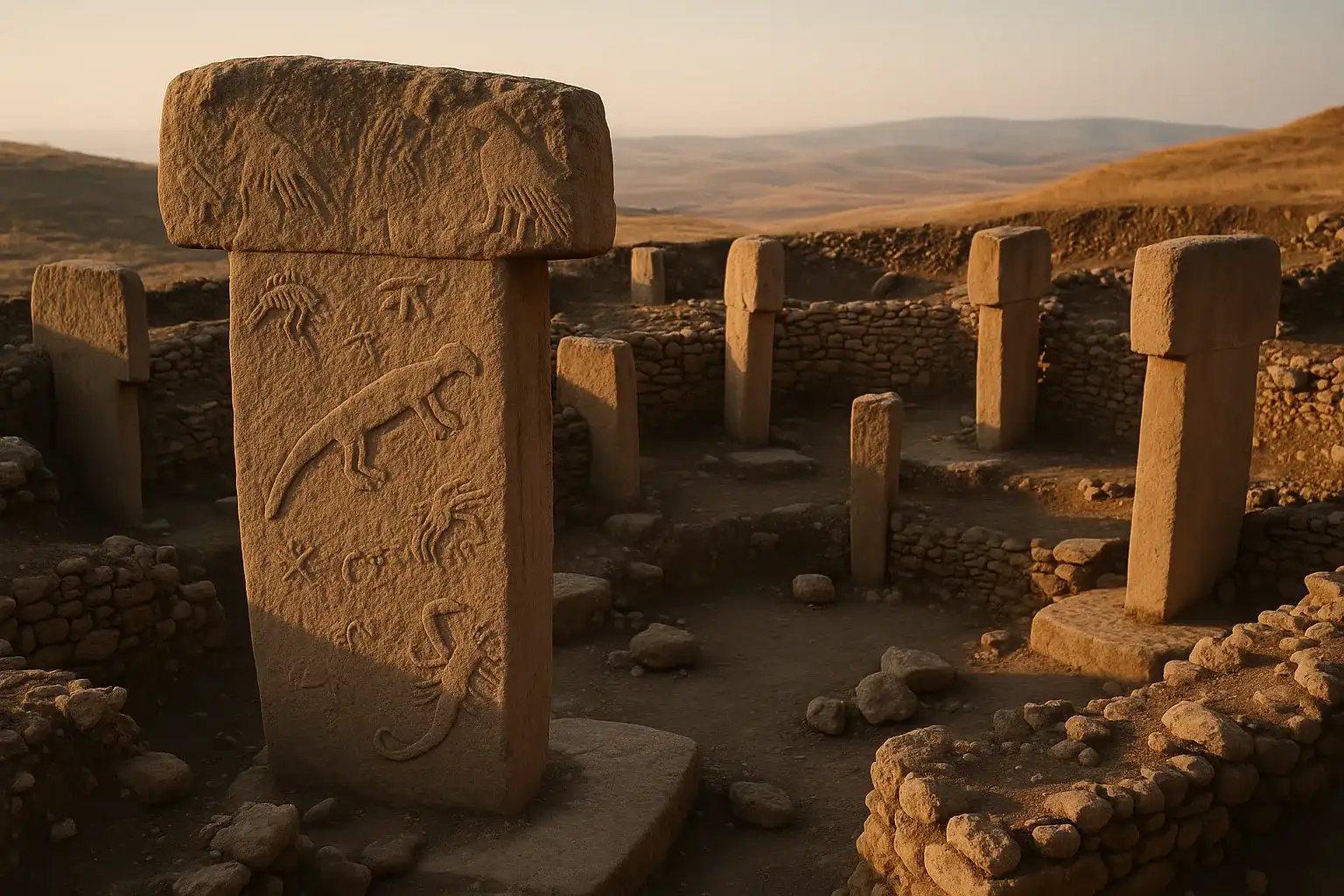
Göbekli Tepe, Turkey: The World's Oldest Temple Complex
Pre-Pottery NeolithicDiscover Göbekli Tepe, the 12,000-year-old archaeological wonder in Turkey that rewrites human histo...
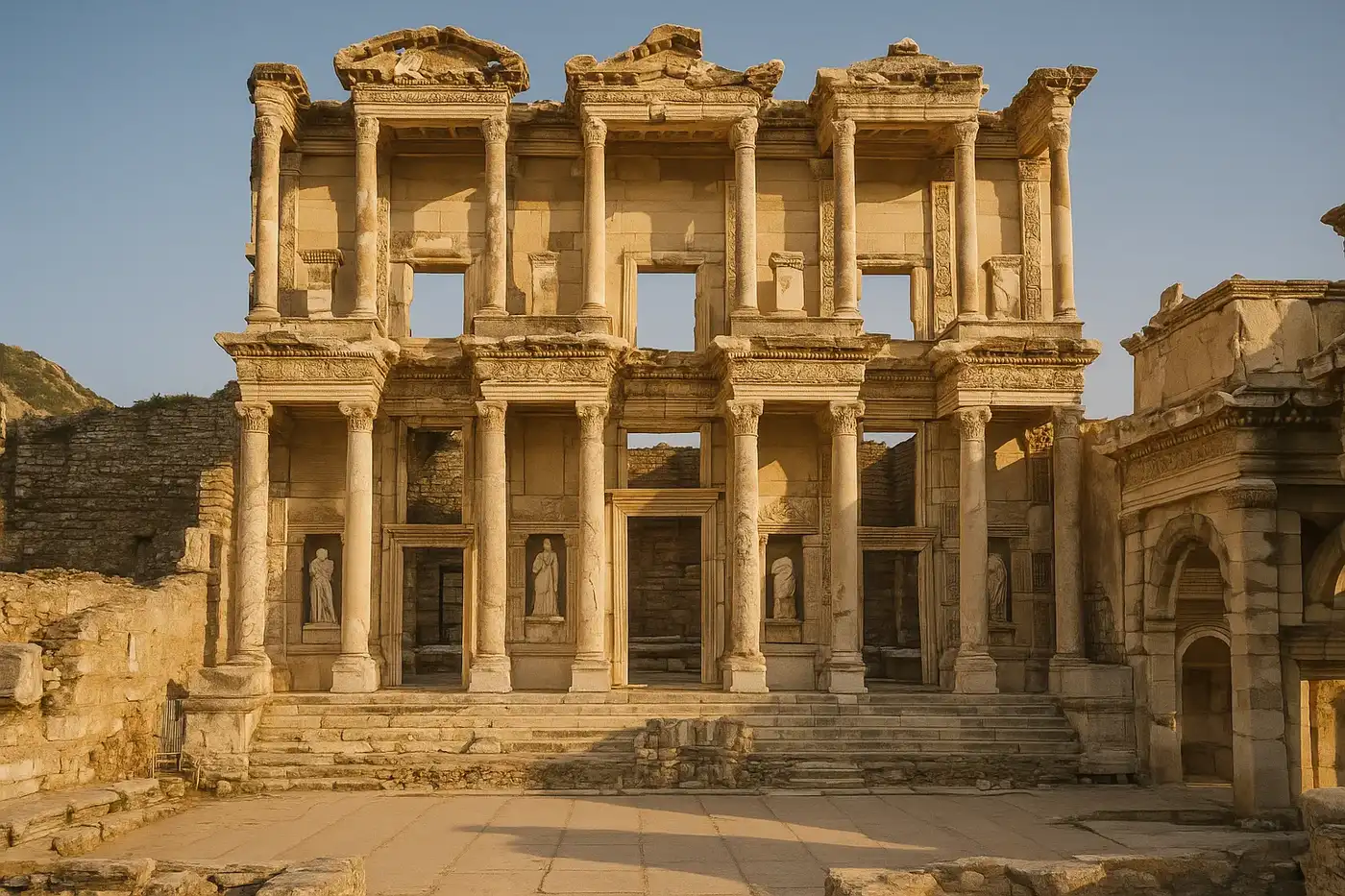
Ephesus Turkey Travel Guide: Library of Celsus & Terrace Houses
Greco-RomanDiscover Ephesus, the best-preserved ancient city in the Mediterranean. Our complete guide covers th...
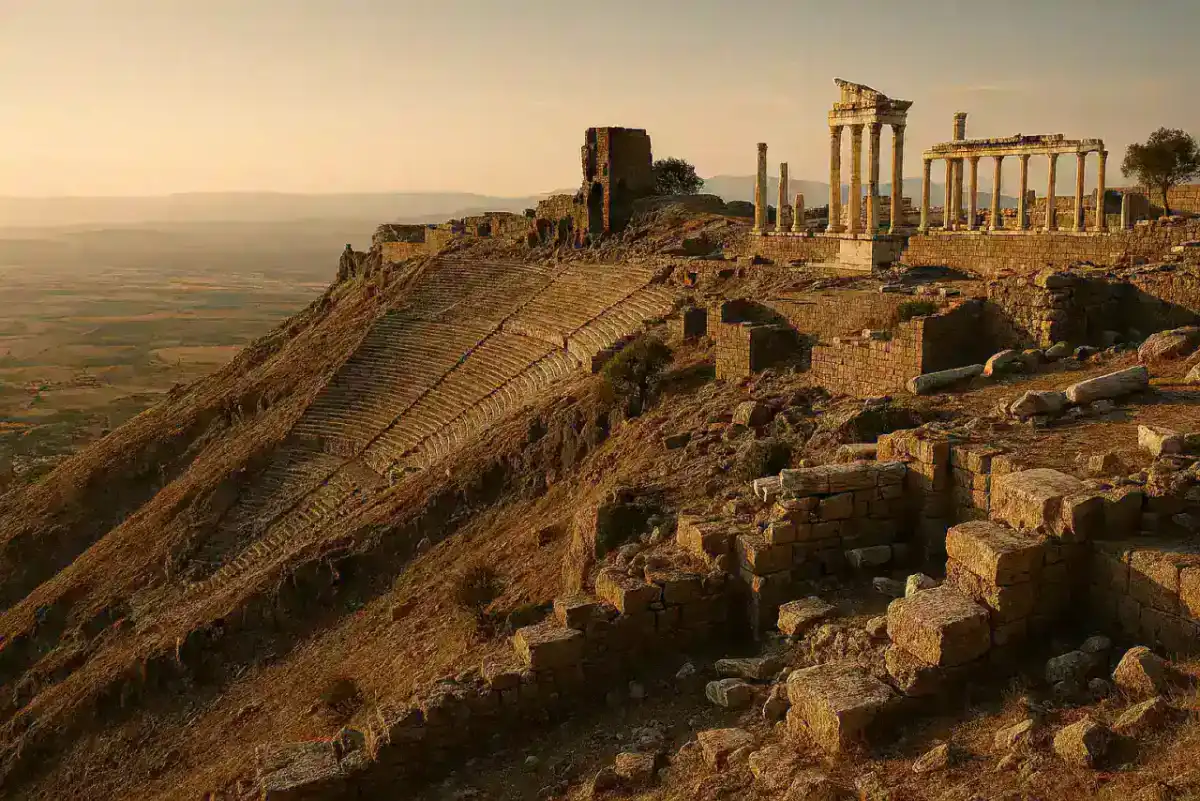
Pergamon Turkey Travel Guide 2026: Acropolis, Altar & Asclepion
Greco-RomanExplore Pergamon's dramatic acropolis, Great Altar, and healing center of Asclepion. Our guide cover...