Quick Info
Curated Experiences
Nessebar Old Town Guided Tour
Private Black Sea Heritage Tour to Nessebar
Nessebar Day Trip from Burgas or Sunny Beach
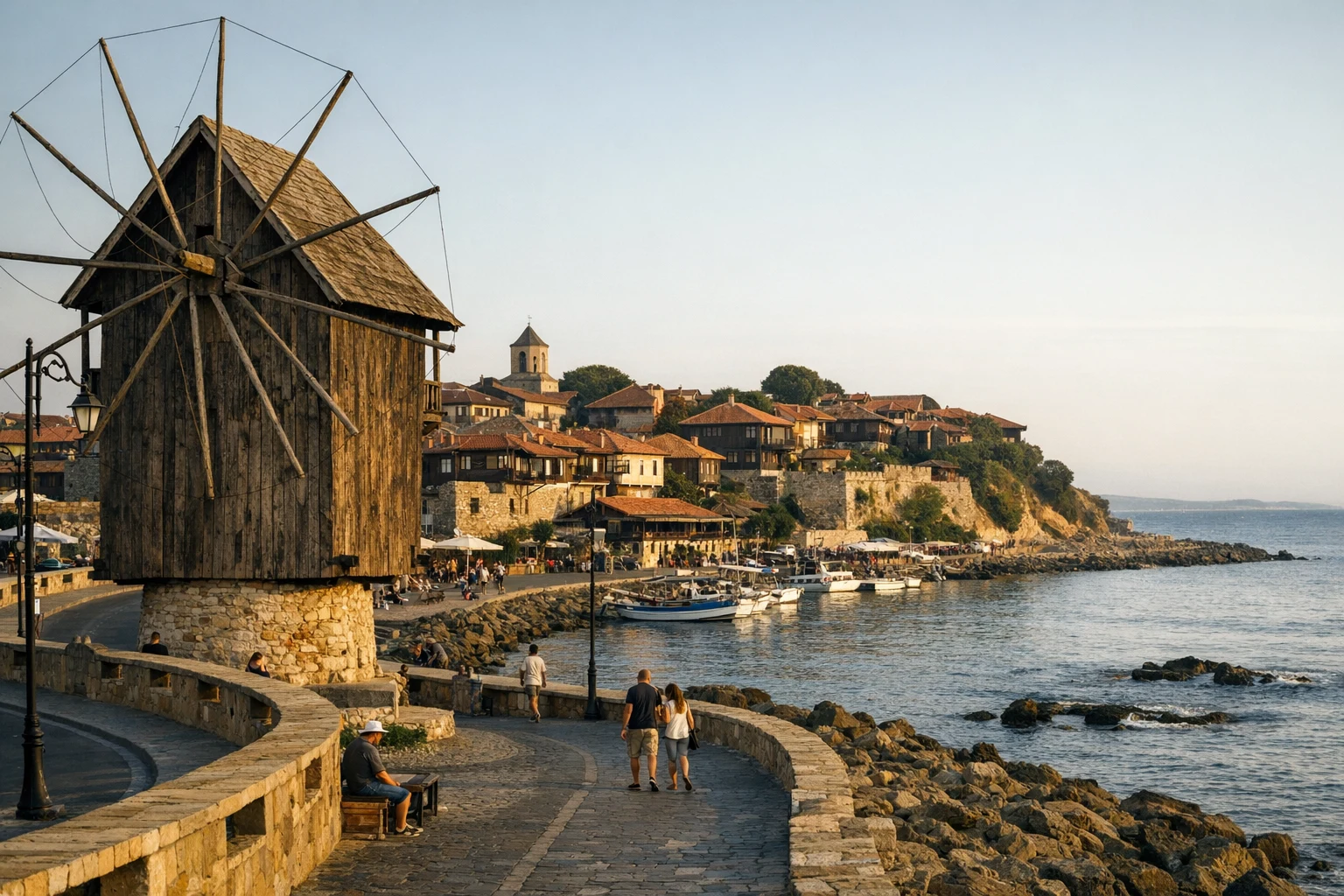
Nessebar in Bulgaria is one of those towns where the sea and history seem to hold each other in place. Set on a rocky Black Sea peninsula linked to the mainland by a narrow isthmus, the old town appears almost staged for memory: fortification walls at the entrance, stone churches rising among wooden houses, and narrow lanes that open suddenly toward water on all sides. Yet the beauty of the setting should not distract from how historically dense the place really is. Nessebar is not just a pretty coastal town with a few old churches. It is one of Europe’s oldest continuously inhabited urban sites, layered with Thracian, Greek, Roman, Byzantine, and Bulgarian histories that remain visible in its walls, foundations, street lines, and sacred architecture.
What makes Nessebar especially compelling is that all these layers fit into such a compact and walkable space. You can cross from ancient fortifications into medieval church districts, pass Ottoman-era and Bulgarian Revival houses, and continue to a sea-facing edge where the horizon seems to erase time altogether. The town is famous for its churches, and rightly so, but it is the whole urban composition that gives the experience its force. Nessebar is a place where geography encouraged continuity. The peninsula protected settlement, framed trade, and made the city simultaneously vulnerable and resilient. For travelers, that means every turn contains two stories at once: one about beauty, and one about why this patch of stone on the Black Sea mattered for so many centuries.
History
Thracian Beginnings and Greek Colonization
The earliest settlement at Nessebar reaches back into the 2nd millennium BCE, when the peninsula was associated with Thracian habitation. Its original strategic value is easy to understand. The site offered a naturally defensible rocky projection into the sea, making it useful for settlement, trade, and regional control. Long before its medieval fame, this geography had already made it important.
The city’s classical identity took clearer shape when Greek colonists from Megara established a colony here, known in antiquity as Mesembria. This transition connected the site to wider networks of the Black Sea Greek world, trade routes, and urban culture. As a Greek colony, Mesembria became a maritime and commercial center, minting coins and taking part in the broader exchange systems of the ancient eastern Mediterranean and Black Sea basin. The city’s position gave it significance not only locally but across an interconnected world of seaborne trade. Even at this early stage, Nessebar was not isolated. It was part of a wider historical web stretching across the Greek world and beyond.
Roman and Early Byzantine Continuity
When Roman power absorbed the region, Mesembria did not lose its importance. Like many strategically valuable Greek-founded towns, it was incorporated into a new imperial order without losing its urban identity. Under Rome, the city continued as a functioning settlement, benefiting from broader imperial stability and trade. The Black Sea remained a meaningful zone within the Roman world, and Nessebar’s continuity through this period helps explain why so many later layers survive in such concentration.
In the early Byzantine era, the city’s strategic position became even more significant. The eastern empire valued Black Sea and Balkan coastal settlements as military, economic, and ecclesiastical centers. Nessebar’s fortifications, urban structure, and sacred buildings developed further in this context. The city was no longer simply a Greek colony with Roman continuity; it had become part of the Christianized and politically contested world of Byzantium. This phase laid the groundwork for the proliferation of churches that would later define the town’s visual identity.
Medieval Bulgarian and Byzantine City
Nessebar’s medieval history is particularly rich because it stood in a frontier zone contested and shared by Byzantine and Bulgarian power. Control of the town shifted across centuries, but its urban and religious significance remained strong. It was during this period that many of the town’s famous churches were built or transformed, producing the dense sacred landscape that still distinguishes the old town today. Brick-and-stone decorative techniques, domed forms, and layered church plans reveal the sophistication of medieval Black Sea architecture at the site.
The city’s many churches were not all grand cathedrals. Some were relatively compact, but their number and variety testify to a town with strong religious and civic identity. Nessebar became a place where ecclesiastical architecture was woven tightly into daily urban life. At the same time, fortifications continued to matter, because the peninsula remained vulnerable to shifting political control and maritime risk. This tension between sacred density and defensive necessity is one of the defining qualities of medieval Nessebar.
Ottoman Era, Revival Houses, and Modern Heritage
Under Ottoman rule, Nessebar continued as an inhabited town, though its role changed. Like many historic settlements in the Balkans, it absorbed new social and architectural layers while retaining earlier structures. Over time, the town acquired many of the wooden upper-story houses now associated with its picturesque historic character, especially during the Bulgarian Revival period. These later domestic forms did not erase the ancient and medieval city beneath them; they added another visible layer to it.
Modern heritage recognition has preserved Nessebar as a UNESCO World Heritage Site because of this remarkable continuity and concentration of urban history. Yet the town remains alive rather than fully museum-like. Tourism, local life, seaside economy, and historic preservation exist in constant negotiation. That tension is part of the present story of Nessebar. It survives not as a dead archaeological shell, but as a historic town still inhabited, walked, and debated.
Key Features
The fortification walls at the entrance to the old town are among Nessebar’s most immediate and effective features. As you cross the isthmus, these stone remains make the city’s defensive logic instantly clear. The peninsula’s geography turns the entrance into a dramatic threshold, and the fortifications reinforce the impression that this was a place whose survival depended on controlling access. Because the walls stand so close to the sea, they also create one of the most memorable first impressions in Black Sea heritage travel: ancient stone facing modern visitors over water and traffic.
The town’s medieval churches are its greatest architectural distinction. Nessebar is often called the “town of forty churches,” a phrase that may be more symbolic than strictly literal in surviving terms, but it captures a real historical density. Churches such as Christ Pantocrator, St John Aliturgetos, St Stephen, and others preserve the decorative brilliance of medieval brick-and-stone construction. Facades are often the highlight, with alternating materials, blind arches, ceramic ornament, and carefully balanced proportions. These buildings are especially rewarding because they are not uniform. Each church contributes its own variation to the town’s sacred topography, and together they create a uniquely layered urban ensemble.
The street fabric is another major feature. Nessebar is best experienced on foot, wandering through narrow lanes that still preserve the scale and intimacy of a premodern town. Here the churches and ruins interact constantly with later houses, stone walls, courtyards, and glimpses of the sea. The old wooden houses with their projecting upper floors add warmth and domesticity to a setting that might otherwise feel purely monumental. This combination of monumental sacred architecture and lived-in domestic character is one of Nessebar’s greatest strengths.
The peninsula setting itself is inseparable from the experience. Because water remains visible from so many angles, the whole town feels suspended between land and sea. The coastline does not just frame the site beautifully; it explains its endurance as a settlement and its historical role in trade, defense, and exchange. Walking the edges of the old town, you understand that Nessebar’s history is maritime as much as urban.
Museums and archaeological fragments scattered through the town add yet another layer. Bases of ancient walls, reused stones, and curated displays in the archaeological museum help connect the visually dominant medieval and revival-town fabric to the deeper Greek and Roman past beneath it. Nessebar works so well because these layers remain in dialogue rather than being separated into isolated zones.
Getting There
Nessebar is located on Bulgaria’s Black Sea coast in Burgas Province and is easy to reach from Burgas, Sunny Beach, and other nearby resorts or cities. From Burgas, the journey by car or bus usually takes around 30 to 45 minutes, while from Sunny Beach it can be as short as 10 to 20 minutes depending on traffic and your exact starting point. Public buses are frequent in the summer season and are often the easiest budget option. Taxi and rideshare-style services are also widely available, though summer traffic can slow journeys considerably.
Many visitors come on organized half-day or full-day excursions from Burgas or coastal resorts, and these can be convenient if you want commentary without worrying about local transport. Independent travel is also very easy. Once you arrive near the old town, the visit becomes almost entirely pedestrian, which is ideal given the narrow streets and compact historic fabric. Parking can be limited during peak season, so if driving, expect some walking from designated areas.
Because Nessebar is compact, transport logistics are relatively simple. The main planning question is really whether you want a quick old-town walk or enough time to include museums, church interiors, and the quieter edges of the peninsula. The latter is strongly recommended.
When to Visit
The best time to visit Nessebar is in late spring and early autumn, especially May, June, September, and early October. These months offer pleasant weather, bright sea light, and more manageable crowd levels than the peak summer season. The town’s beauty depends heavily on walking and on the relationship between architecture and seascape, so mild temperatures make a major difference.
Summer is lively and can be wonderful if you enjoy a more animated atmosphere, but it also brings large numbers of beachgoers and day-trippers, especially from nearby resorts. In July and August, the old town can feel crowded in the middle of the day. If you visit during peak season, morning and evening are by far the best times. Early morning gives you a quieter town and softer light on the stone churches, while evening brings cooler temperatures and a particularly lovely atmosphere as the sea breeze strengthens and the town glows in lower light.
Winter is quieter and more introspective. Some services may be reduced, but travelers who value mood over bustle may find it appealing. However, for most visitors, the ideal balance comes in the shoulder seasons, when Nessebar still feels alive but not overwhelmed. In practical terms, late afternoon may be the single best time of day to explore, especially if you plan to stay through sunset on the peninsula.
| Quick Facts | Details |
|---|---|
| Location | Burgas Province, Bulgaria |
| Best Known For | Ancient Black Sea town with medieval churches and layered urban history |
| Earliest Origins | Thracian settlement, later Greek colony of Mesembria |
| UNESCO Status | World Heritage Site |
| Signature Features | Fortification walls, medieval churches, and the old town peninsula setting |
| Recommended Visit Length | Half day minimum, full day ideal |
| Best Nearby Base | Burgas or Sunny Beach |
| Best Season | Late spring and early autumn |
| Main Experience | Walking the old peninsula town, churches, museum, and sea edges |
| Practical Tip | Stay into the evening if you can, because Nessebar is at its most atmospheric once the hottest part of the day and largest crowds have passed |
Frequently Asked Questions
What is Nessebar best known for?
Nessebar is best known for its exceptionally layered history, ancient fortifications, medieval churches, and dramatic old town setting on a small Black Sea peninsula.
Is Nessebar really very old?
Yes. Nessebar has origins stretching back to Thracian settlement and developed through Greek, Roman, Byzantine, and Bulgarian periods, making it one of Europe’s oldest continuously inhabited towns.
How much time should you spend in Nessebar?
Most visitors should allow at least half a day, though a full day or overnight stay is better if you want to explore the churches, museums, and quieter corners of the old town.
When is the best time to visit Nessebar?
Late spring and early autumn are ideal, with pleasant weather, sea views, and fewer crowds than the height of the summer holiday season.
Do you need a guide in Nessebar?
A guide is not essential, but one can be very helpful in explaining the town’s many historical layers and the significance of its churches and fortifications.
What are the main sights in Nessebar?
The main sights include the old fortification walls, numerous medieval churches, the archaeological museum, the isthmus approach, and the historic wooden houses of the old town.
Nearby Ancient Sites
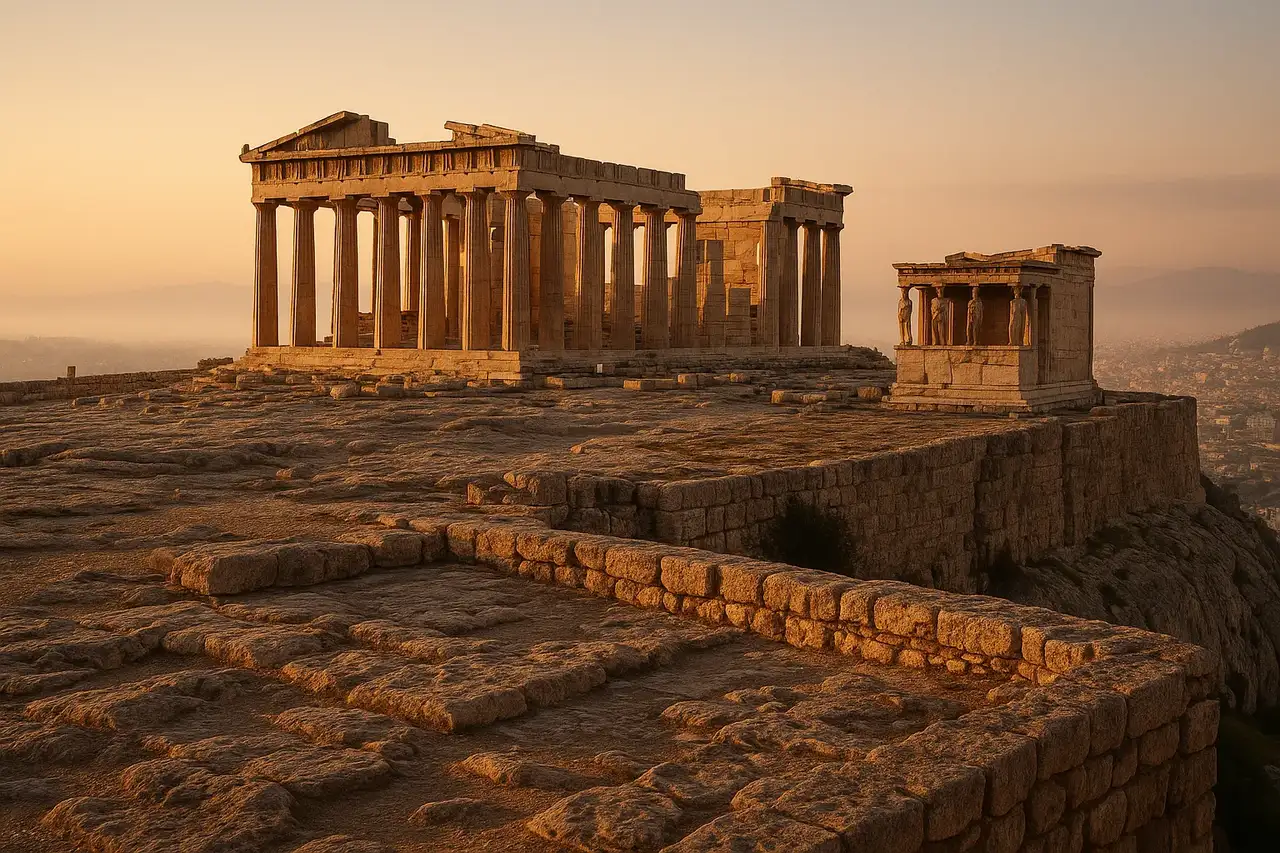
The Complete Acropolis Athens Travel Guide: Temples
Ancient GreecePlan the perfect visit to the Acropolis of Athens with our 2026 guide. Discover the Parthenon, best ...
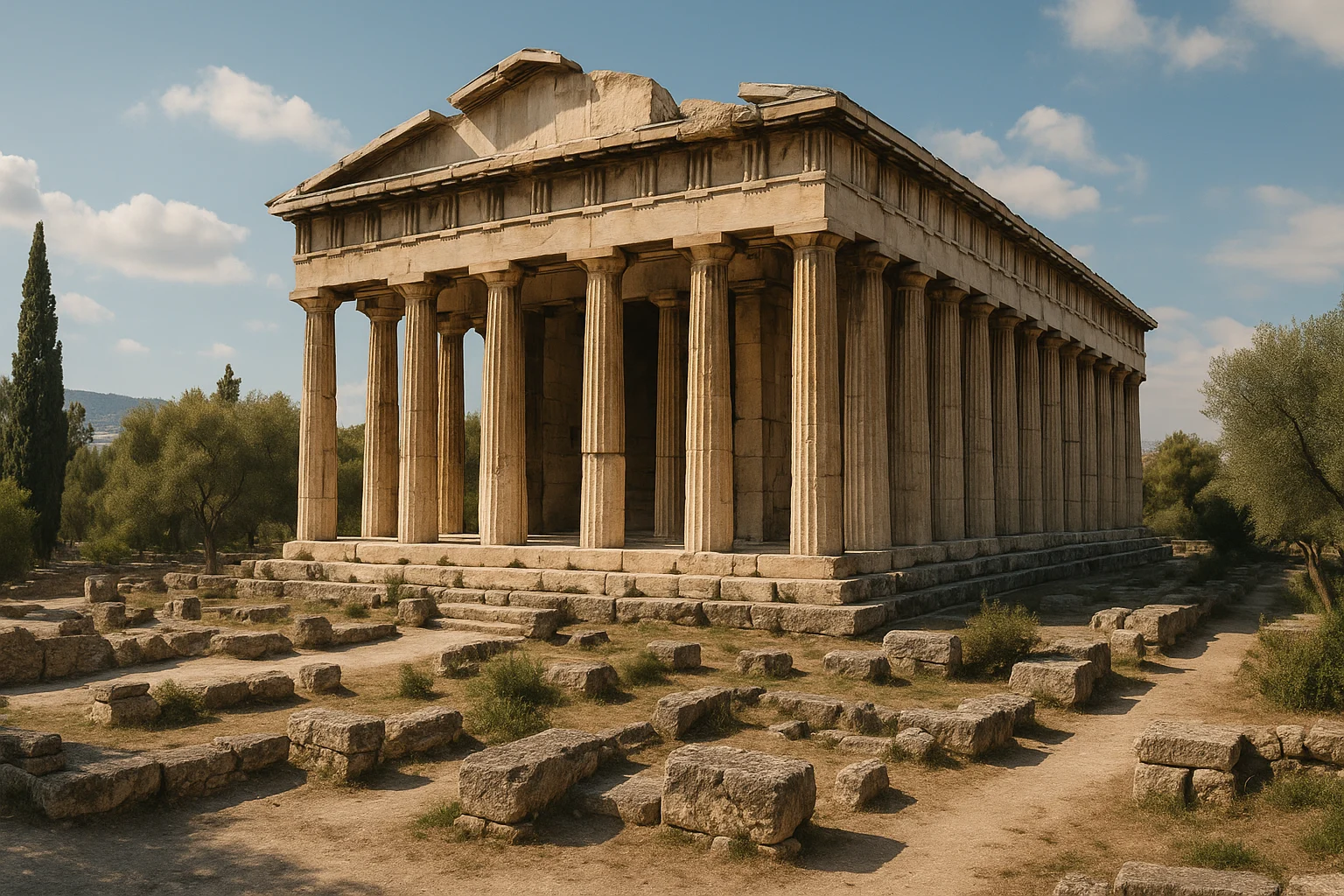
Ancient Agora of Athens Travel Guide 2026: Route, Tickets, and Context
Classical GreekPlan a better Ancient Agora visit with practical timing, monument priorities, and clear historical c...
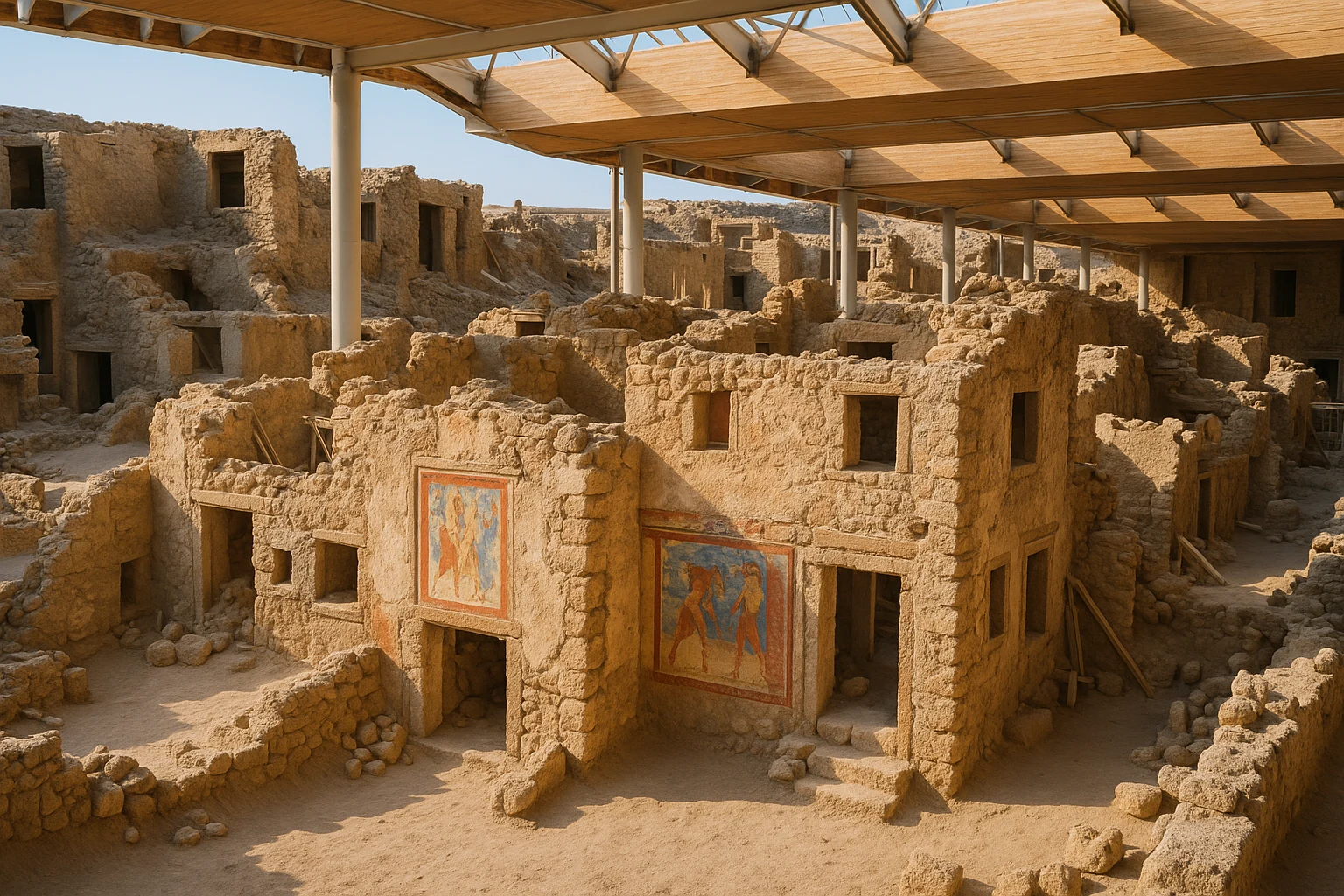
Akrotiri
Minoan / CycladicExplore Akrotiri, the Bronze Age Minoan city buried under volcanic ash on Santorini around 1613 BCE ...